AEIOU
Installed 2002
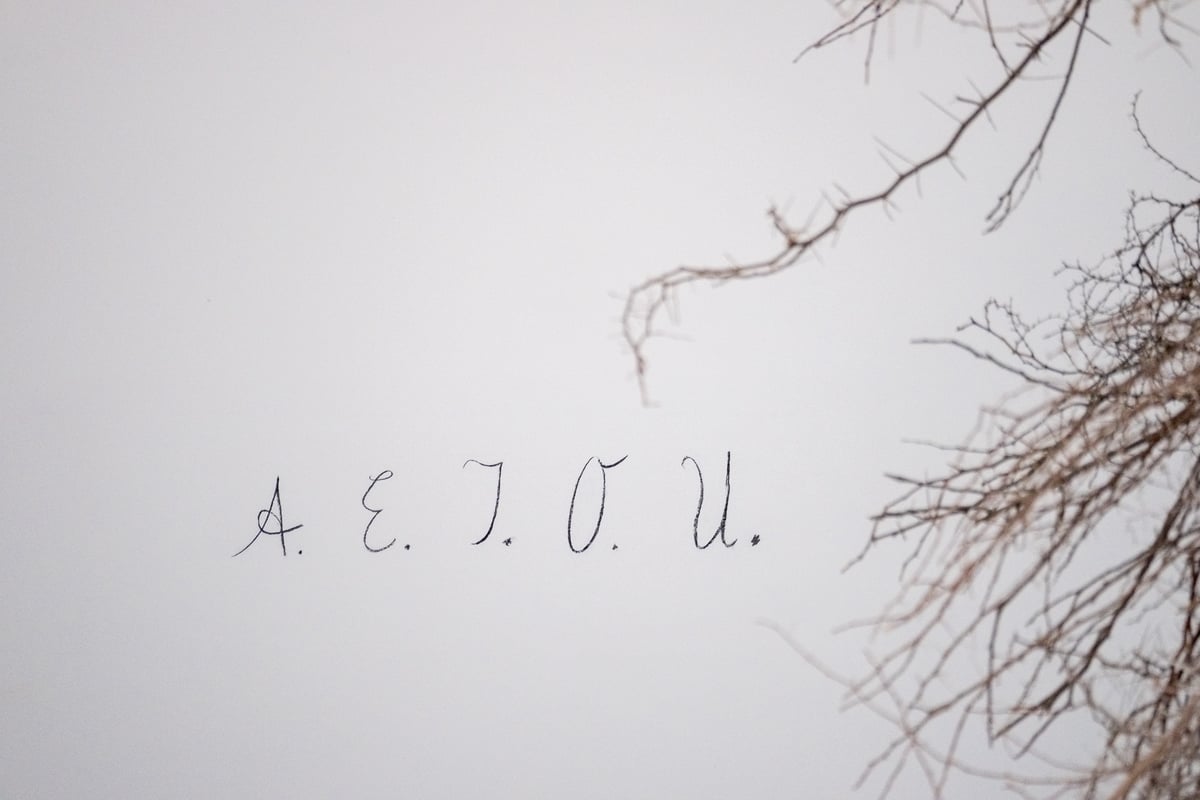
A cubic art pavilion by Anselm Kiefer (2002) in Furtwänglerpark. Walk of Modern Art #1, the very first commission. Named after the enigmatic Habsburg motto Alles Erdreich ist Österreich Untertan.
Painter
8 March 1945, Donaueschingen, Germany
Anselm Kiefer is the only artist who bookends Salzburg’s entire Walk of Modern Art programme, creating both the inaugural commission in 2002 and the final one in 2019. No other artist has left a comparable mark on the city’s public art landscape.
Kiefer’s Salzburg presence begins in 2002 with AEIOU, a cubic lead-and-glass pavilion installed in Furtwanglerpark, opposite the Festival Halls. The title takes the imperial motto of Friedrich III, the Habsburg formula that medieval chroniclers interpreted as “All the world is subject to Austria,” and turns it into something far more ambiguous. The pavilion is built from lead, Kiefer’s signature material, heavy with the associations of alchemy and radioactive decay, and it uses video and sound alongside the physical structure. It was the very first commission in the Walk of Modern Art series.
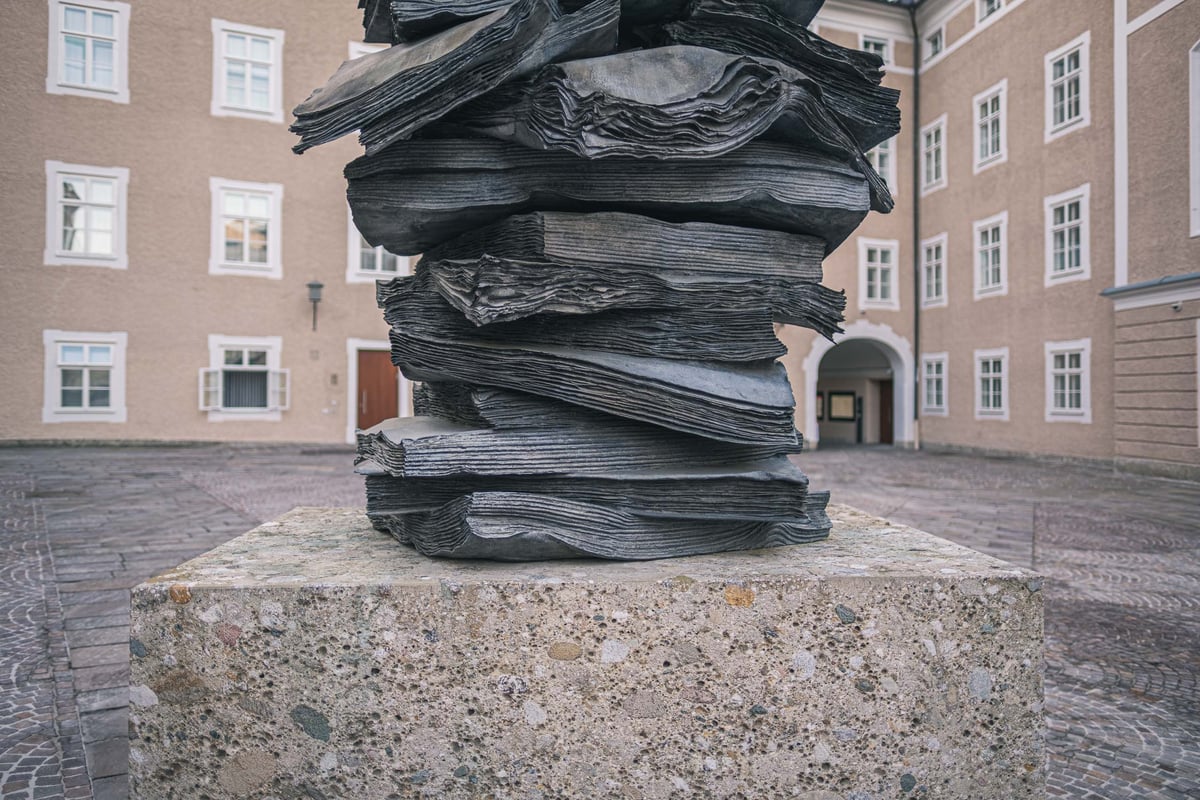
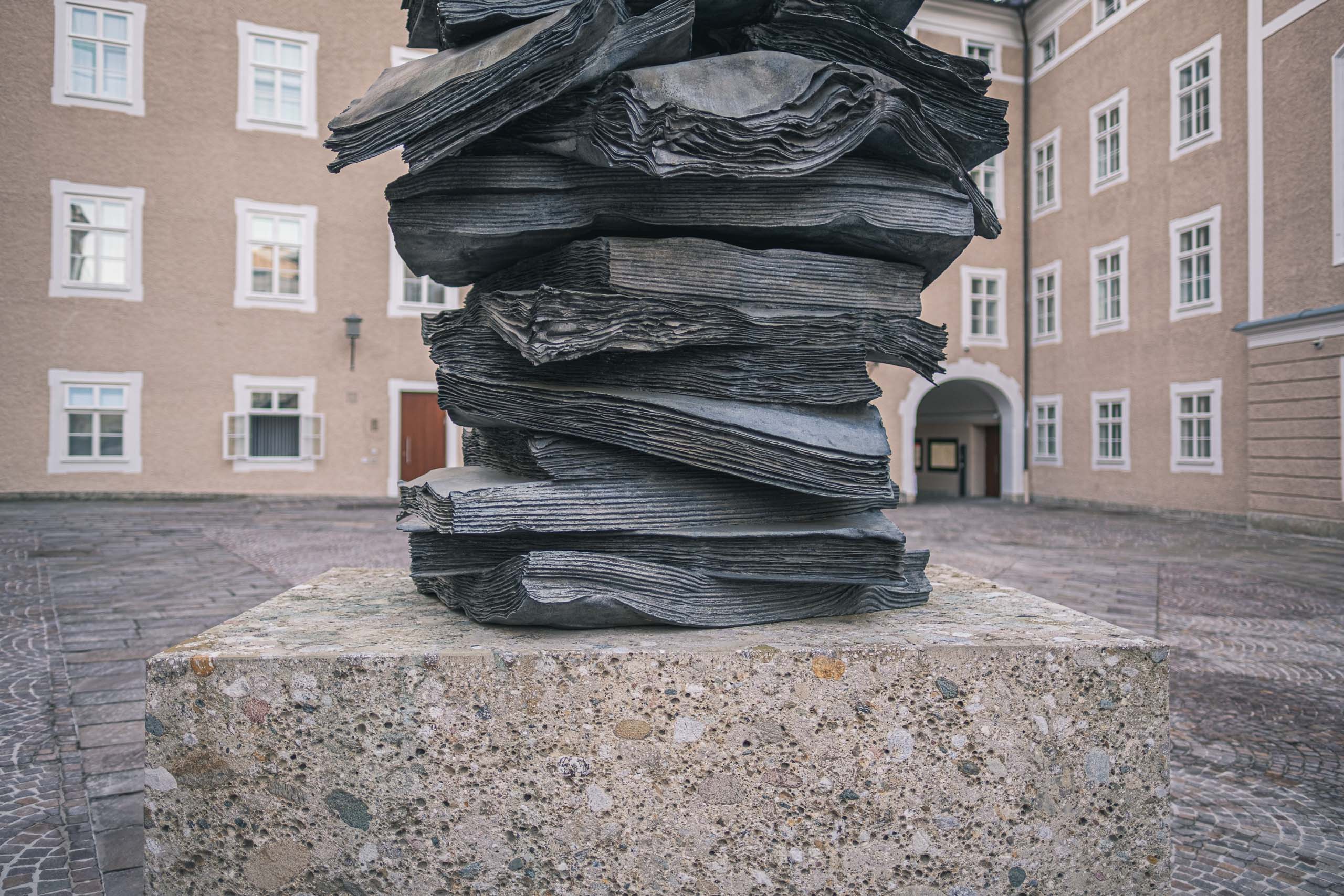
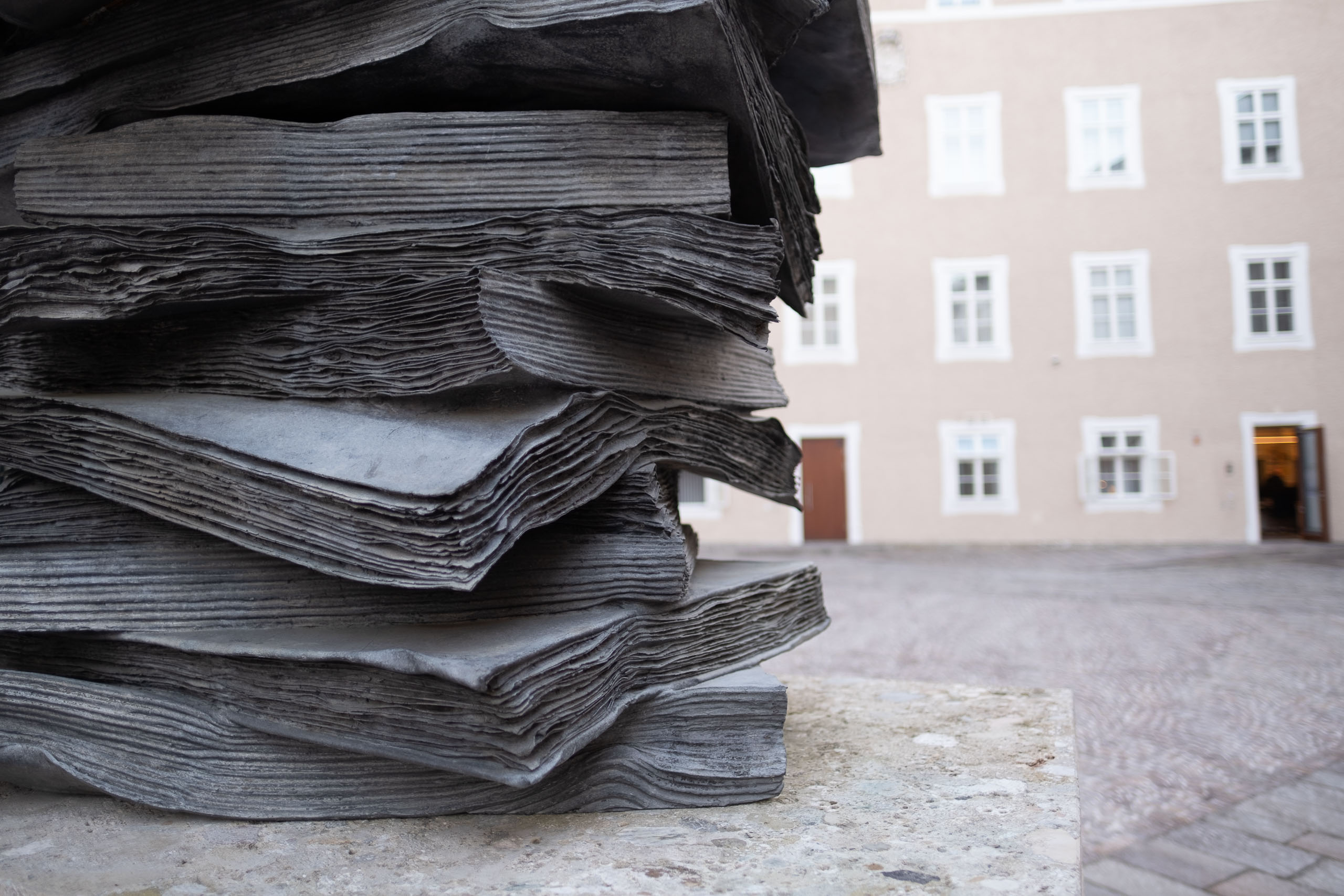
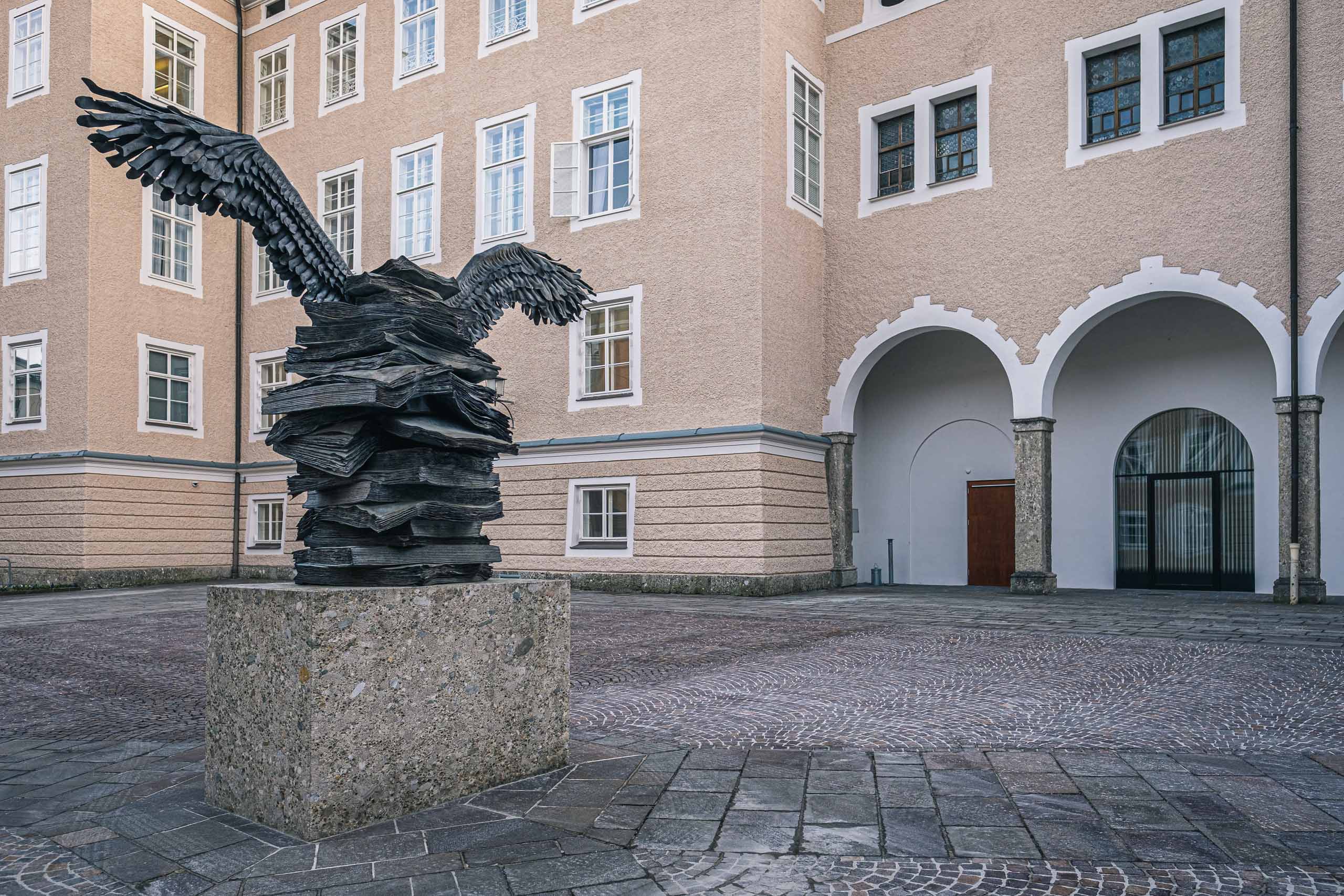
Seventeen years later, the same artist produced the last work in the series. Die Sprache der Vogel (2019) stands in the courtyard of the Chiemseehof, the building that houses the Salzburg state parliament. A four-tonne bronze eagle perches on a seven-tonne stack of books. The eagle is a loaded symbol in German and Austrian history; the books beneath it suggest knowledge, or the suppression of it. Kiefer draws on Fulcanelli’s alchemical “language of the birds,” Paul Celan’s poetry, and the medieval tradition of secret encoded meaning. The piece is enormous and confrontational in the middle of a government building.
His connection to the city also runs through St. Peter’s Abbey, where paintings incorporating gold leaf and imagery of martyred saints hang in the antechamber, and through a long relationship with Galerie Thaddaeus Ropac, which has shown his work in Salzburg for decades. Between the first and last Walk of Modern Art commissions, Kiefer has shaped the frame through which the whole programme is understood.
On the map
The 2 places on this page, where they actually stand.
Locations
Installed 2002
A cubic art pavilion by Anselm Kiefer (2002) in Furtwänglerpark. Walk of Modern Art #1, the very first commission. Named after the enigmatic Habsburg motto Alles Erdreich ist Österreich Untertan.
A monumental bronze sculpture by Anselm Kiefer in the courtyard of the Chiemseehof (Salzburg's parliamentary building). Walk of Modern Art final work. An eagle's wings rising from a towering stack of books, 4.2 metres tall.