Who made it

People

Archbishops, composers, architects and the occasional scandal.

204people

Where they came from

25 countries, one city

187 of the people on this page were born somewhere else and ended up here. Click a country to see who.

Austria 75Germany 39Italy 25Czechia 7United States 7Switzerland 6France 5Poland 2

Search and filter
Role
Show 8 more
Era
Topic
Born in
Show 13 more

Showing 1-24 of 204 people

Abbé Joseph Bullinger

priest1744 - 1810

One of Leopold Mozart's most trusted friends. Bullinger's correspondence with Leopold and Wolfgang is among the most candid in the entire Mozart documentary record. Leopold wrote to him in tones of absolute frankness that he used with almost no one else.
Adalbert Stifter

writer1805 - 1868

One of the greatest Austrian prose writers. Stifter spent extended time at Bad Ischl and in the Salzkammergut, and the lakes, mountains, and villages of the Austrian Alps suffuse every page he wrote. For any visitor who finds the Salzkammergut landscape affecting, Stifter is the writer who can articulate why.

Agathe von Trapp

educator1913 - 2010

Eldest daughter of Georg von Trapp and the eldest of the seven children whose story inspired The Sound of Music. Her memoir Memories Before and After The Sound of Music (2003) is the most detailed first-hand account of the family's Salzburg years. She lived to 97.

Albert Einstein

scientist1879 - 1955

The most famous scientist in history. In September 1909, Einstein came to Salzburg and gave his first major public lecture on the special theory of relativity. He was 30 years old and still an unknown patent clerk. Max Planck, the most eminent physicist in the German-speaking world, was in the audience.

Alexander Moissi

actor1879 - 1935

Reinhardt's greatest lead actor and the man who created the role of Jedermann (Everyman) in the very first Salzburg Festival performance on Domplatz in August 1920. One of the few actors whose performance literally inaugurated a cultural institution.

Alexander von Humboldt

scientist1769 - 1859

One of the last great polymaths. Humboldt passed through Salzburg in 1797, climbed the Kapuzinerberg, and was so moved by the panorama that the Humboldtterrasse viewpoint is named in his memory. One of the few visitors to have a place in the city permanently named after them.

Alfred Roller

artist1864 - 1935

One of the five co-founders of the Salzburg Festival (1920), alongside Hofmannsthal, Reinhardt, Strauss, and Schalk. A founding member of the Vienna Secession and close collaborator of Gustav Mahler, Roller's visual language helped shape the aesthetic identity of the Festival from its opening season.

Alma Mahler

composer1879 - 1964

Composer, muse, diarist, and the magnetic centre of European modernism. She married Gustav Mahler (who insisted she stop composing), had a passionate affair with Oskar Kokoschka, then married the Bauhaus architect Walter Gropius, then the novelist Franz Werfel. As Mahler's wife she was present at the Salzburg Festival's founding era.

Aloysia Weber

singer1760 - 1839

Mozart's first love, and the woman who rejected him. He met her in Mannheim in 1778 and became deeply infatuated. Her younger sister Constanze later became Mozart's wife. Aloysia became a successful soprano at the Vienna court. She died in Salzburg in 1839, three years before Constanze.

Anna Chromy

sculptor1940 - 2021

Czech-German sculptor (1940 to 2021), best known for the Cloak of Conscience: a monumental bronze of an empty, hooded mantle with no body or head inside, where the absence itself is the subject. Casts of it stand in cities across Europe.

Anna Netrebko

singerb. 1971

The soprano who defined the Salzburg Festival's public face for the first two decades of the 21st century. Her 2002 Donna Anna in Mozart's Don Giovanni was the international breakthrough. No singer since Maria Callas has been so completely identified with a single festival house.

The greatest female alpine skier of her era, born in Kleinarl in the Pongau. Six World Cup overall titles. Olympic gold in downhill at Lake Placid 1980. Retired to run the family guesthouse in Kleinarl. An Austrian sporting hero who never left her Salzburg roots.

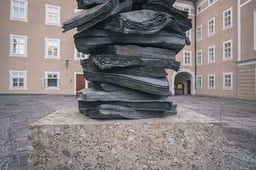
Stacked bronze books of Anselm Kiefer Die Sprache der Voegel sculpture in the Toscaninihof area in Salzburg.

Anselm Kiefer

painterb. 1945

One of the most significant artists of the post-war era. Kiefer has the unique distinction of two permanent Walk of Modern Art commissions in Salzburg: AEIOU (2002), the inaugural commission, and Die Sprache der Vogel (2019), the last and largest work in the series.

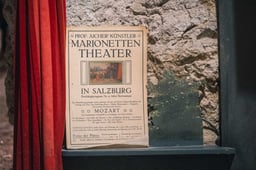
Historic poster for Professor Aicher Marionettentheater in Salzburg displayed at the Marionette Museum.

Anton Aicher

artist1859 - 1930

Styrian-born puppeteer who founded the Salzburger Marionettentheater in 1913, one of the most celebrated puppet theatres in the world. His family ran the theatre for three generations, until his granddaughter Gretl Aicher died in 2012; it is now led by non-family directors.

Anton Cajetan Adlgasser

composer1729 - 1777

Court organist in Salzburg from 1750, colleague of Leopold Mozart and Michael Haydn. He collapsed and died while playing the organ at Salzburg Cathedral during a service on 22 December 1777, at the age of 48. One of the more dramatic exits in music history.

Anton Diabelli

composer1781 - 1858

Born in Mattsee, a small Salzburg Flachgau town. Diabelli circulated a waltz theme to 51 composers asking each for one variation. Beethoven responded not with one but with 33, producing the Diabelli Variations (Op. 120), widely considered the greatest variation work in the piano repertoire.

Anton Faistauer

painter1887 - 1930

Salzburg-born Expressionist whose frescoes for the Grosses Festspielhaus entrance hall (1926) were destroyed by the Nazis as "degenerate art" and later reconstructed. A close friend of Egon Schiele and Oskar Kokoschka. Died at 42.

Antonio Salieri

composer1750 - 1825

Imperial Kapellmeister in Vienna for 36 years and Mozart's most famous rival. The legend of his poisoning Mozart, dramatised in Peter Shaffer's Amadeus, is almost certainly false. He taught Beethoven, Schubert, and Liszt.

Archbishop Arno of Salzburg

archbishop748 - 821

The first Archbishop of Salzburg. His elevation to metropolitan rank in 798, sponsored by Emperor Charlemagne, transformed Salzburg from a regional bishopric into the ecclesiastical capital of Central Europe.

Archbishop Eberhard II

archbishop1170 - 1246

The most powerful Archbishop of Salzburg in the medieval period. Eberhard II held the archbishopric for an extraordinary 46 years (1200-1246), the longest reign of any Salzburg archbishop, and significantly expanded Hohensalzburg Fortress.

The archbishop who commissioned the Zwerglgarten (Dwarf Garden) at Mirabell Palace, one of Salzburg's most quietly fascinating attractions. His archiepiscopate (1709-1727) represents the last golden decade of the independent Prince-Archbishopric's baroque programme.

Archbishop Guidobald von Thun

archbishop1616 - 1668

A baroque patron from the same aristocratic Thun family as the great builder Johann Ernst von Thun. Guidobald's careful stewardship (1654-1668) set the conditions for the explosive building campaign his kinsman would later unleash with Johann Bernhard Fischer von Erlach.

The archbishop Mozart famously fell out with. Colloredo's reforming austerity drove Mozart to leave Salzburg permanently for Vienna in 1781. Under his rule, Salzburg's temporal authority as a prince-archbishopric effectively ended with secularisation in 1803.

The great patron behind Salzburg's high baroque building campaign. Johann Ernst von Thun gave Johann Bernhard Fischer von Erlach his most important commissions, transforming Salzburg into one of the most magnificent baroque cities in the German-speaking world.

The immediate predecessor of Wolf Dietrich von Raitenau. His 26-year archiepiscopate (1560-1586) provided institutional continuity during the Counter-Reformation before the explosive baroque transformation that followed his death.

Archbishop Konrad I

archbishop1075 - 1147

One of Salzburg's most important medieval builders and one of only a handful of Salzburg archbishops declared a saint. Konrad I rebuilt Salzburg Cathedral on a grand Romanesque scale, the church that served the city for over four centuries.

The archbishop most responsible for Hohensalzburg Fortress as visitors see it today. During his reign (1495-1519), Keutschach transformed the fortress from a functional stronghold into an opulent princely residence. His personal symbol, three turnips, appears throughout the fortress carved in stone.

The archbishop behind the Protestant Expulsion of 1731-1732, one of the most dramatic episodes in Salzburg's history. Firmian ordered roughly 20,000 Protestants to convert or leave, triggering one of the most significant forced migrations of the early modern era.

Prince-Archbishop of Salzburg from 1612 to 1619, and a cousin of Wolf Dietrich von Raitenau, whom he deposed with Bavarian military backing. In seven years he built Hellbrunn Palace, planted the Hellbrunner Allee, renamed Wolf Dietrich's "Altenau" to Mirabell, and laid the cornerstone of the Salzburg Cathedral. He died before completing any of them.

One of the most powerful men in the Holy Roman Empire before becoming Archbishop of Salzburg. A cardinal, imperial chancellor to Emperor Maximilian I, and the archbishop who survived a months-long siege inside Hohensalzburg Fortress during the Peasants' War of 1525.

A Counter-Reformation hardliner who in 1684 ordered the expulsion of the Protestants of the Defereggen Valley, then part of Salzburg's territory in East Tyrol. He also commissioned the Kajetanerkirche in the Altstadt.

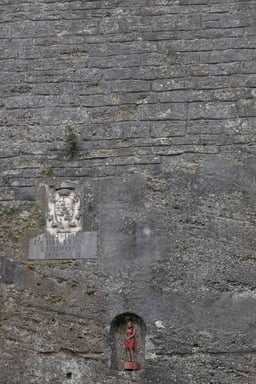
Paris Lodron coat of arms set into the wall of the Toscaninihof courtyard in Salzburg

Archbishop Paris Lodron

archbishop1586 - 1653

The "Father of the Fatherland." Paris Lodron kept Salzburg neutral and unscathed throughout the Thirty Years' War, oversaw the consecration of Salzburg Cathedral in 1628, and founded the University of Salzburg in 1622.

Mozart's first employer. Far more benevolent than his successor Colloredo, Schrattenbach allowed Leopold Mozart repeated extended leaves of absence for the family's European concert tours, effectively subsidising the education of a genius.

Archbishop Thiemo

archbishop1050 - 1102

An archbishop equally skilled with a chisel and a crozier. Before his elevation, Thiemo was a gifted sculptor and metalworker at Stift St. Peter. He was martyred during the Crusade of 1101 and later beatified.

The most transformative Archbishop in Salzburg's history. Wolf Dietrich demolished the old Romanesque cathedral, created Mirabell Palace, rebuilt the Residenz, and began reshaping the city along Italian baroque lines. Deposed and imprisoned in Hohensalzburg Fortress until his death.

Archduke Johann of Austria

royal figure1782 - 1859

The most beloved and unconventional Habsburg of the 19th century. Archduke Johann rejected court life in Vienna, turned to the Alps with passionate intensity, and eventually married the daughter of a postmaster in Bad Aussee. The Salzkammergut and the Styrian Alps were his domain.

Arturo Toscanini

conductor1867 - 1957

The conductor who made Salzburg the unquestioned summit of the musical world. Toscanini conducted at the Salzburg Festival from 1934 to 1937. He reportedly called Salzburg "the most perfect musical event in the world." When Austria was annexed by Nazi Germany in 1938, he refused to return.

Barbara Krafft

painter1764 - 1825

The painter who created the most widely reproduced image of Mozart. Her 1819 posthumous portrait, painted nearly three decades after Mozart's death, became the face most people picture when they think of Mozart.

Barbara von Ployer

musicianb. 1765

One of Mozart's most gifted piano students. Mozart composed two of his greatest concertos specifically for her: Piano Concerto No. 14 (K. 449) and No. 17 (K. 453), both in 1784. K. 453 is among his finest, and Ployer gave its premiere. Her Salzburg origins make her a genuine point of connection.

Baron Gottfried van Swieten

diplomat1733 - 1803

The Viennese aristocrat who reshaped Mozart's late style. In 1782, van Swieten introduced Mozart to Bach and Handel, fundamentally redirecting his late compositional style. The contrapuntal depth of the Jupiter Symphony, the late string quintets, and the Requiem all bear van Swieten's fingerprints.

Beda Seeauer

abbot1706 - 1785

The abbot most responsible for the interior of St. Peter's Church as visitors experience it today. During his long abbacy (1753-1785), Seeauer oversaw a comprehensive rococo redecoration that gave the church its present warm, intimate character.

Bernhard Michael Mandl

sculptor1658 - 1711

The sculptor behind the horse-taming group at the Pferdeschwemme (Horse Pond), completed 1695 under Johann Ernst von Thun. A powerful figure wrestling a rearing horse above the central basin, transforming a functional horse-watering facility into one of the most theatrical baroque set pieces in Salzburg.

Bernhard Paumgartner

conductor1887 - 1971

The man who shaped the Mozarteum and the early Salzburg Festival more durably than almost anyone else. Director of the Mozarteum for over four decades (1917-1959), bridging the Festival's founding generation and the Karajan era.

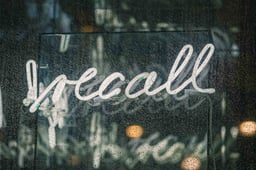
Beyond Recall illuminated artwork by Brigitte Kowanz on the Salzach embankment in Salzburg, part of the Walk of Modern Art

Brigitte Kowanz

artist1957 - 2022

Austrian light and neon artist whose Beyond Recall (2011) on the Staatsbrucke confronts visitors crossing Salzburg's main bridge with four neon cubes addressing the Nazi period and the imperative of remembrance.

Bruno Walter

conductor1876 - 1962

A devoted disciple of Gustav Mahler and one of the foundational conductors of the Salzburg Festival. Walter gave the world premieres of Mahler's Das Lied von der Erde and the Ninth Symphony. Alongside Arturo Toscanini and Furtwangler, he formed the triumvirate that defined the young Festival's artistic identity. Forced to flee after the 1938 Anschluss.

Carl Jung

physician1875 - 1961

The founder of analytical psychology. Jung attended the First International Psychoanalysis Congress in Salzburg in April 1908 alongside Sigmund Freud, at the time Freud's closest intellectual ally. The Salzburg congress represents the moment when both men stood together at the movement's public launch, before their definitive break.

Carl Maria von Weber

composer1786 - 1826

The decisive bridge between Mozart and Wagner. Weber's Der Freischutz (1821) established German national opera. Richard Strauss, co-founder of the Salzburg Festival, grew up within a tradition Weber had fundamentally shaped.

Carl Tomaselli

entrepreneur1734 - 1815

The man whose name Salzburg's most famous cafe still carries. When Carl Tomaselli took over the cafe on Alter Markt in the mid-18th century, it became Cafe Tomaselli, the oldest cafe in Salzburg. Mozart was a customer. The cafe remains in the same location today, a direct living link to 18th-century Salzburg.

Carl Zuckmayer

writer1896 - 1977

Major German playwright who lived on a farm near Henndorf am Wallersee in the Salzburg Flachgau from the early 1930s until 1938. When the Nazis annexed Austria, Zuckmayer fled. His autobiography Als war's ein Stuck von mir (A Part of Myself) is acclaimed.

Carlos Kleiber

conductor1930 - 2004

Widely regarded by musicians as the greatest conductor of the latter 20th century. Carlos Kleiber conducted perhaps 96 concerts in his entire career, compared to hundreds per year for his contemporaries. What he did conduct he performed with an incandescence that left audiences stunned.

Cecilia Bartoli

singerb. 1966

One of the most celebrated mezzo-sopranos of her generation, and Artistic Director of the Salzburg Whitsun Festival (Pfingstfestspiele) since 2012. One of the few singers whose connection to Salzburg is both personal (as performer) and institutional (as director).

Charmian Carr

actor1942 - 2016

Played Liesl von Trapp, "sixteen going on seventeen," in The Sound of Music (1965). Most associated with the gazebo scene, now permanently housed at Hellbrunn Palace. She visited Salzburg on multiple occasions and became one of the most recognisable ambassadors the film ever produced. Her memoir Forever Liesl (1999). Died in 2016 at 73.

Christian Boltanski

artist1944 - 2021

French conceptual artist whose Vanitas (2009) in the Romanesque crypt beneath Salzburg Cathedral places twelve sheet-metal figures casting shifting candlelit shadows alongside a recorded voice announcing the time. The work resonates powerfully with the Jedermann tradition performed outside on the Cathedral forecourt every summer since 1920.

Christian Doppler

scientist1803 - 1853

Born in Salzburg into a family of stonemasons. His 1842 paper describing the Doppler effect underlies radar, sonar, medical ultrasound, GPS, and astronomical redshift. A Salzburg native whose name has become universal across science and technology.

Christian Thielemann

conductorb. 1959

Artistic Director of the Salzburg Easter Festival from 2013, taking over from Seiji Ozawa. One of the foremost interpreters of Wagner, Brahms, and Richard Strauss of his generation. In the conducting lineage of Furtwangler and Bohm.

Christopher Plummer

actor1929 - 2021

Played Captain Georg von Trapp opposite Julie Andrews in The Sound of Music (1965). Famously disliked the film, reportedly calling it "The Sound of Mucus." Won the Academy Award for Best Supporting Actor for Beginners (2011) at 82, the oldest competitive Oscar winner in history.

Claudio Abbado

conductor1933 - 2014

One of the supreme conductors of the late 20th century. Chief Conductor of the Vienna Philharmonic and then the Berlin Philharmonic, Abbado shaped the sound of the two most important orchestras in the German-speaking world and brought both repeatedly to the Salzburg Festival.

Clemens Holzmeister

architect1886 - 1983

The architect who carved a world-class opera stage into the Monchsberg cliff face. Holzmeister worked on Salzburg Festival venues across multiple building phases from 1926, culminating in the Grosses Festspielhaus expansion of 1956-1960.

Clemens Krauss

conductor1893 - 1954

The man who built the Salzburg Festival from a promising young institution into the most prestigious music event in the world. Artistic Director 1926-1934, close friend of Richard Strauss, and co-librettist of Capriccio. Arturo Toscanini then crowned the foundations Krauss had laid.

Constanze Mozart

singer1762 - 1842

Wife of Wolfgang Amadeus Mozart, whom she married in Vienna in 1782. After his death, Constanze dedicated decades to preserving his legacy. She returned to Salzburg in later life, where she died in 1842 and is buried in St. Sebastian's Cemetery.

Count Karl von Arco

official1743 - 1830

The man who kicked Mozart out the door. In June 1781, Count Arco, chief steward of Archbishop Colloredo's household in Vienna, literally kicked Mozart when Mozart sought to resign. The rupture ended Mozart's employment in Salzburg permanently. A minor figure who achieved lasting fame through a single act at a critical moment.

Crown Prince Rudolf

royal figure1858 - 1889

The only son of Emperor Franz Joseph I and Empress Elisabeth. His death at Mayerling in January 1889, one of the great unsolved mysteries of the Habsburg era, accelerated the end of the world his father had built.

Dietrich Fischer-Dieskau

singer1925 - 2012

The greatest baritone of the 20th century and the supreme interpreter of the German Lied. Fischer-Dieskau performed at the Salzburg Festival across four decades. His Lieder recitals there, especially Schubert's Winterreise, are among the most celebrated performances in Festival history. The voice of the German-Austrian musical tradition made audible.

Dietrich Mateschitz

entrepreneur1944 - 2022

Co-founder of Red Bull, Austria's most globally recognised brand. Headquarters at Fuschl am See. Built Hangar-7 at Salzburg Airport as a personal cultural project. Owned FC Red Bull Salzburg. Red Bull is worth over 20 billion euros and defines Austria's most visible global brand identity. He died at Fuschl am See in October 2022.

Dominicus Hagenauer

abbot1746 - 1811

Son of Lorenz Hagenauer, Mozart's landlord and Leopold Mozart's closest friend. When Dominicus celebrated his first solemn mass at St. Peter's in 1769, the seventeen-year-old Wolfgang Amadeus Mozart composed the Missa solemnis in C major (K. 66) for the occasion, known ever since as the "Dominicus Mass."

Elfriede Jelinek

writerb. 1946

Nobel Prize in Literature laureate (2004). Darkly feminist, politically radical, obsessively critical of Austrian society. Her plays have been staged at the Salzburg Festival. Her novel Die Klavierspielerin (The Piano Teacher) was filmed by Michael Haneke. Like Thomas Bernhard, an unavoidable presence in any map of Austrian cultural life.

Elisabeth Schwarzkopf

singer1915 - 2006

One of the supreme sopranos of the 20th century and a defining voice of the Salzburg Festival. She studied with Lotte Lehmann, placing her in direct lineage with Salzburg's interwar golden tradition. Her interpretations of the Marschallin in Der Rosenkavalier under Herbert von Karajan remain the reference against which all successors are measured.

Emanuel Schikaneder

director1751 - 1812

The man who wrote the libretto for Mozart's Die Zauberflote (The Magic Flute) and played Papageno at the premiere. Schikaneder managed the city theatre in Salzburg in the early 1780s, where he personally knew the Mozart family. The Salzburg connection is the starting point of a relationship that ended in Vienna with a masterpiece.

Emperor Charlemagne

royal figure748 - 814

King of the Franks and first Holy Roman Emperor. His sponsorship of Arno of Salzburg led directly to Salzburg's elevation to an archdiocese in 798, transforming the city into the ecclesiastical capital of Central Europe.

Emperor Ferdinand II

royal figure1578 - 1637

Holy Roman Emperor during whose reign Salzburg Cathedral was consecrated in 1628. Archbishop Paris Lodron's success in keeping Salzburg neutral and unscathed throughout the Thirty Years' War (Ferdinand's defining conflict) is one of the remarkable diplomatic achievements of the era.

Emperor Franz II/I

royal figure1768 - 1835

The emperor who made Salzburg Austrian. The last Holy Roman Emperor and first Emperor of Austria. Under his reign, the Congress of Vienna (1814-1815) confirmed Salzburg's permanent incorporation into the Austrian Empire in 1816, a union that has lasted to the present day.

Emperor Franz Joseph I

royal figure1830 - 1916

Emperor of Austria for 68 years, the longest-reigning Habsburg. He summered at the Kaiservilla for over six decades, transforming Bad Ischl into a glittering summer capital of the Empire. He signed the declaration of war against Serbia there on 28 July 1914, triggering the First World War.

Emperor Joseph II

royal figure1741 - 1790

Son of Empress Maria Theresia, Enlightenment reformer, and the emperor who commissioned Mozart's Die Entfuhrung aus dem Serail and Le nozze di Figaro. Archbishop Colloredo was deeply aligned with his reformist ideology.

Emperor Maximilian I

royal figure1459 - 1519

Holy Roman Emperor known as "the Last Knight." Matthäus Lang von Wellenburg served as his chief secretary and chancellor, making Salzburg's future archbishop one of the most powerful men in the Empire.

Empress Elisabeth 'Sisi'

royal figure1837 - 1898

One of the most iconic figures in Austrian cultural memory. Emperor Franz Joseph I fell in love with her at Bad Ischl in August 1853 and proposed on the spot. She was assassinated in Geneva in 1898. The Sisi film trilogy with Romy Schneider cemented her global legend.

Empress Maria Theresia

royal figure1717 - 1780

The greatest Habsburg ruler of the 18th century. In October 1762, the six-year-old Wolfgang Amadeus Mozart and his sister Nannerl performed for her at Schonbrunn Palace in Vienna, famously charming her entirely. The first royal patron of Mozart's genius.

Enrico Zuccalli

architect1642 - 1724

Court architect to the Bavarian Electors and relative of Giovanni Gaspare Zuccalli, the Zuccalli family member who worked directly in Salzburg. Enrico operated in the same patronage world that shaped the archbishops' building ambitions across the border.

Erwin Wurm

artistb. 1954

Austrian conceptual artist best known for his One Minute Sculptures. His Gurken (2011), a cluster of oversized cucumber sculptures in Furtwanglerpark, is a characteristic provocation that places the comic in a formal baroque garden context.

Felix Mendelssohn

composer1809 - 1847

One of the great Romantic composers. Mendelssohn travelled through Salzburg in 1831 on his celebrated Italian journey, writing to his family in enthusiastic terms about the city and the alpine landscape. He died at only 38, having already transformed German musical life.

Ferdinand Fellner

architect1847 - 1916

Co-founder, with Hermann Helmer, of the firm Fellner & Helmer, which designed approximately 48 theatres across the Habsburg Empire, including the Salzburger Landestheater (1892).

Franz Anton Danreiter

architect1695 - 1760

The man who designed the Mirabell Gardens as visitors see them today. Danreiter created the definitive baroque layout around 1730: the symmetrical parterre, the geometric hedging, the rose garden, and the famous Zwerglgarten (Dwarf Garden). The gardens that appear in The Sound of Music are substantially his creation.

Franz Anton Mesmer

physician1734 - 1815

The physician whose private garden theatre gave the twelve-year-old Mozart his first operatic premiere. In 1768, Mozart's Bastien und Bastienne received its premiere in Mesmer's Vienna garden. His name entered the language as "to mesmerise."

Franz Lehár

composer1870 - 1948

The greatest operetta composer of the early 20th century. Lehar spent his summers in Bad Ischl for decades, as part of the same tradition as Emperor Franz Joseph I. His summer villa, the Leharvilla Bad Ischl, is now a museum. He died there in 1948.

Franz Liszt

composer1811 - 1886

The greatest piano virtuoso in history. In 1856, the centenary year of Mozart's birth, Liszt came to Salzburg to participate in the Mozart celebrations, conducting and performing in the city. A lifelong champion of Mozart and a musical grandchild of the Viennese school that formed Mozart's world.

Franz Schalk

conductor1863 - 1931

One of the five co-founders of the Salzburg Festival (1920), alongside Hofmannsthal, Reinhardt, Strauss, and Roller. A pupil of Bruckner and long-serving director of the Vienna State Opera, Schalk brought institutional authority and conducting leadership to the fledgling Festival.

Franz Schubert

composer1797 - 1828

The greatest composer of Lieder and one of the supreme masters of the symphony. Born in Vienna in 1797, died there in 1828 at 31.

Franz Wasner

priest1905 - 1992

The real musical director of the Trapp Family Singers. The character of Max Detweiler in The Sound of Music is loosely based on Wasner. He shaped the ensemble's repertoire, conducted their tours, and was the artistic intelligence behind their professional career. Buried in St. Peter's Cemetery.

Franz Xaver Gruber

composer1787 - 1863

The schoolteacher and church organist who composed the melody of Stille Nacht, Heilige Nacht (Silent Night) after Joseph Mohr brought him the lyrics on Christmas Eve 1818. One of the most consequential premieres in the history of popular music. Gruber later moved to Hallein, where he died in 1863 and is buried.

Franz Xaver Süssmayr

composer1766 - 1803

The man who finished Mozart's Requiem. When Mozart died in December 1791 leaving the work incomplete, Constanze asked Sussmayr to complete it. Every performance of the Mozart Requiem is partly Sussmayr's work, whether the programme notes say so or not.

Franz Xaver Wolfgang Mozart

composer1791 - 1844

Mozart's younger son, born just weeks before his father's death. Had a modest career as a pianist and composer, overshadowed by his father's name. A founding member of the Dommusikverein und Mozarteum, predecessor of the Mozarteum Foundation.

Friedrich Gehmacher

entrepreneur1866 - 1927

The indispensable local figure behind the founding of the Salzburg Festival. While Hofmannsthal, Reinhardt, and Strauss provided the cultural programme, it was Gehmacher who organised the local politics, secured the venues, and ensured that Salzburg was the city chosen. He died in 1927, just seven years after the Festival he helped create.

Friedrich Welz

entrepreneur1903 - 1980

Salzburg art dealer who founded Galerie Welz, still operating on Sigmund-Haffner-Gasse. A close associate of Oskar Kokoschka. His record is shadowed by documented involvement in the acquisition of artworks from Jewish owners under duress following the 1938 Anschluss.

Georg Muffat

composer1653 - 1704

A crucial bridge between Italian baroque and the German-Austrian tradition. Muffat studied in Rome with Corelli and in Paris with Lully, then brought the Italian concerto grosso style to the Salzburg court (1678-1690) under Max Gandolph von Kuenburg. His Armonico Tributo (1682) is a landmark of early baroque chamber music.

Georg Nikolaus von Nissen

diplomat1761 - 1826

Danish diplomat who married Constanze Mozart in 1809. He compiled the first comprehensive Mozart biography, published posthumously in 1828. Buried at Sebastiansfriedhof, the same cemetery that holds Leopold Mozart's grave. Without his patient documentary work and Constanze's cooperation, much of what is known about Mozart's private life would have been lost.

Georg Raphael Donner

sculptor1693 - 1741

The supreme sculptor of the Austrian Baroque. Donner's lead allegorical figures adorn the fountain basin in Mirabell Gardens, among the most graceful sculptural accents in any European baroque garden.

Georg Solti

conductor1912 - 1997

One of the supreme conductors of the 20th century. Solti's Ring Cycle recordings with the Vienna Philharmonic remain the standard against which all subsequent recordings are measured. A major presence at the Salzburg Festival.

Georg Trakl

writer1887 - 1914

One of the most important German-language Expressionist poets, born at Waagplatz 2 in Salzburg's Altstadt in 1887. His dark, image-laden poetry stands as some of the most distinctive work of the early 20th century.

Georg Trieb

sculptorb. 1952

Austrian sculptor whose Berliner Block (2017), a massive rectangular stone block in the Mirabell Gardens, confronts the ordered baroque symmetry of one of the city's most beloved gardens with an elemental, unworked form.

Georg von Trapp

official1880 - 1947

The real Captain von Trapp. Austro-Hungarian naval commander who lived in Salzburg at Villa Trapp in Aigen. His family's flight from Austria after the 1938 Anschluss is the story behind The Sound of Music. The family eventually settled in Stowe, Vermont.

Gérard Mortier

director1943 - 2014

The most transformative post-founding figure in the Salzburg Festival's history. Artistic Director 1992-2001, Mortier completely reinvented the Festival, replacing Karajan-era conservatism with radical new productions. Deeply controversial, but he made the Festival once again the most discussed event in the operatic world.

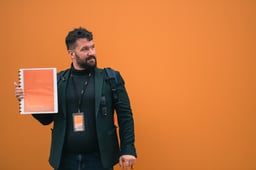
Salzburg-based guide, entrepreneur, and the creator of Introducing Salzburg. Founding figure behind Rikscha Tours Salzburg, Introducing Salzburg, Free Walking Tour Salzburg, and Roam Austria.

Giovanni Gaspare Zuccalli

architect1629 - 1700

Swiss-Italian architect from the Graubunden Zuccalli dynasty who designed the Kajetanerkirche (1685-1697) for Archbishop Max Gandolph. His dismissal by the next archbishop marks the end of Italian-Swiss architectural dominance in Salzburg.

Gustav Klimt

painter1862 - 1918

The supreme figure of Viennese Jugendstil and co-founder of the Vienna Secession. Klimt spent fourteen consecutive summers (1900-1916) at Attersee in the Salzkammergut, producing the remarkable landscape paintings that stand apart from his gilded figure work.

Gustav Mahler

composer1860 - 1911

One of the great late-Romantic composers and supreme conductors of his era. Mahler composed his 2nd and 3rd symphonies at Steinbach am Attersee in the Salzkammergut (1893-1896). The Mahler tradition is deeply embedded in the Salzburg Festival through his influence on conductors from Bruno Walter to Harnoncourt.

Hans Makart

painter1840 - 1884

One of the most celebrated painters of 19th-century Europe, born in Salzburg. So dominant was his influence that the term Makart-Stil entered the language. Makartplatz (where Mozart's Residence stands) was named in his honour. He died in Vienna at just 44.

Hans Waldburger

sculptor1580 - 1630

Swiss-born sculptor who came to Salzburg during Wolf Dietrich's transformative building programme. Part of the first wave of Italian-Swiss craftsmen who replaced Salzburg's Gothic visual character with the early baroque.

Heinrich Ignaz Franz Biber

composer1644 - 1704

The greatest violinist of the 17th century and one of the most important composers of the baroque era. Biber spent almost his entire career at the Salzburg court, rising to Hofkapellmeister in 1684. His Mystery (Rosary) Sonatas are among the most technically and spiritually demanding pieces in the baroque repertoire.

Bronze statue of Herbert von Karajan conducting on Makartplatz in Salzburg

Herbert von Karajan

conductor1908 - 1989

Born in Salzburg, died near Salzburg. Widely regarded as one of the greatest conductors of the 20th century. Artistic director of the Salzburg Festival for much of the postwar period. The square in front of the Grosses Festspielhaus bears his name. His legacy dominates the classical music world to this day.

Hermann Bahr

writer1863 - 1934

One of the most influential cultural critics of the Vienna Secession era and a significant force in the early Salzburg Festival movement. Bahr lived in Salzburg's Maxglan neighbourhood from 1912, and his house became a gathering point for writers and artists. An intellectual ally of Hugo von Hofmannsthal and Max Reinhardt.

Hermann Helmer

architect1849 - 1919

Partner of Ferdinand Fellner in the Vienna firm Fellner & Helmer. Helmer brought structural engineering rigour to the partnership, handling the acoustic and technical design of auditoria. Their Salzburger Landestheater (1892) has served Salzburg's cultural life for over 130 years.

Hermann Maier

athleteb. 1972

One of the greatest alpine ski racers of all time, born in Flachau. "The Herminator." Four World Cup overall titles, two Olympic golds at Nagano 1998 (days after a terrifying crash), and a comeback from a devastating motorcycle accident in 2001. The defining sporting figure of Salzburg State's alpine heartland.

Hugo von Hofmannsthal

writer1874 - 1929

Co-founder of the Salzburg Festival (1920) with Max Reinhardt and Richard Strauss. He wrote Jedermann (Everyman), which has been performed at Domplatz every summer since 1920, the Festival's most iconic event. He also wrote the librettos for Strauss's Der Rosenkavalier and Elektra.

Ingeborg Bachmann

writer1926 - 1973

One of the most important German-language poets of the 20th century. Bachmann's spare, luminous poetry was read at the Salzburg Festival. Her prose works, including the novel Malina, are landmarks of Austrian postwar literature. She died in Rome from burns sustained in a fire.

James Turrell

artistb. 1943

American artist who works exclusively with light and space. His Sky Space (2006) at the Museum der Moderne on Monchsberg is a permanent chamber with an elliptical aperture open to the sky, one of the few Turrell Sky Spaces permanently accessible to the public in a European museum.

Jaume Plensa

sculptorb. 1955

Catalan sculptor whose Awilda (2010), a five-metre white bust of a young woman with closed eyes, stands in the courtyard of the University of Salzburg's law faculty on Kapitelgasse. Named after a legendary Scandinavian pirate queen.

Jean-Pierre Ponnelle

director1932 - 1988

The stage director who shaped the visual identity of the Salzburg Festival's Mozart productions for nearly two decades. Working with Karl Bohm and Karajan, his stagings were filmed and broadcast worldwide. He died after collapsing at the Festival during rehearsals in 1988.

Johann Baptist Hagenauer

sculptor1732 - 1810

Sculptor and son of Lorenz Hagenauer, the Mozart family's landlord and Leopold's closest friend. He grew up in the same house as the young Mozart family (Getreidegasse 9) and created works that are still seen in Nonnberg Abbey and Salzburg Cathedral.

The defining architect of Austrian Baroque. Fischer von Erlach built four major churches in Salzburg, all commissioned by Johann Ernst von Thun, including the Kollegienkirche and the Dreifaltigkeitskirche. The partnership between patron and architect gave Salzburg the architectural character it retains today.

Johann Ernst Eberlin

composer1702 - 1762

Leopold Mozart's direct professional superior and the central musical figure in Salzburg in the generation immediately before the Mozarts. Court Kapellmeister from 1749, Eberlin contributed over 6,000 works to the Salzburg court repertoire. Almost entirely forgotten today, but the young Wolfgang studied several of his works.

Johann Lukas von Hildebrandt

architect1668 - 1745

Leading Austrian baroque architect and contemporary rival of Fischer von Erlach. Designed the rebuilt Mirabell Palace in its current baroque form (1721) after a fire destroyed the earlier structure. Also known for Vienna's Belvedere Palace.

Johann Meinrad Guggenbichler

sculptor1649 - 1723

The master sculptor of the Salzburg Salzkammergut. Guggenbichler spent his entire working life creating altars and sculptures for the churches of the Mondsee and St. Gilgen area. His baroque sculptures stand in the background of the Mondsee church's wedding scene in The Sound of Music, seen by millions who have no idea who carved them.

Johann Michael Rottmayr

painter1654 - 1730

The most important Austrian baroque painter of his generation and the founder of the Austrian baroque painting tradition. In Salzburg his frescoes crown the dome of the Kollegienkirche and the Dreifaltigkeitskirche, the two Fischer von Erlach churches.

Johann Michael Sattler

painter1786 - 1847

Salzburg-born painter who created the monumental 360-degree Panorama of Salzburg (completed 1829), painted from the Monchsberg. The panorama made Salzburg's silhouette one of the most widely seen urban images of the 19th century, long before photography. Now preserved in the Salzburg Museum.

Johann Nepomuk Hummel

composer1778 - 1837

Mozart's most famous private student. From 1786 to 1788, the seven-year-old Hummel lived in the Mozart household in Vienna, studying directly with Mozart as his teacher and guardian. The most direct musical heir of the composer whose name defines Salzburg.

Johann Strauss II

composer1825 - 1899

"The Waltz King." Composer of The Blue Danube, the sonic symbol of Austria. Strauss spent his summers in Bad Ischl in the same imperial spa circle as Brahms, Emperor Franz Joseph I, and Empress Elisabeth.

Germany's greatest writer. Goethe passed through Salzburg in September 1786 during the Italian journey he immortalised in Italienische Reise. He and Mozart were near-exact contemporaries: Goethe heard the boy Mozart play in Frankfurt in 1763 and never forgot it.

Johannes Brahms

composer1833 - 1897

One of the supreme composers of the 19th century. Brahms spent sixteen consecutive summers in Bad Ischl from 1880 onwards, composing his Symphony No. 4, the Clarinet Sonatas, the late piano intermezzi, and the Double Concerto. His close friend Theodor Billroth joined him at Attersee to play chamber music by the lake.

Jonas Kaufmann

singerb. 1969

The defining dramatic tenor of his generation. Kaufmann's appearances at the Salzburg Festival include landmark productions that define what the Festival can be at its most ambitious. He is the tenor the Festival returns to when it wants an event rather than a performance.

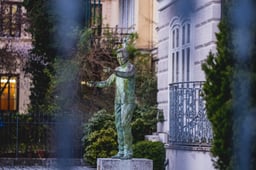
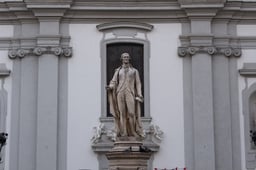
The stone statue of Joseph Haydn holding a quill and a sheet of music, standing on its pedestal in front of the pilastered facade of the Mariahilfer Kirche in Vienna.

Joseph Haydn

composer1732 - 1809

One of the greatest composers of the Classical era and elder brother of Michael Haydn. His warm friendship with Wolfgang Amadeus Mozart is one of the most celebrated artistic bonds of the 18th century. Haydn famously told Leopold Mozart that Wolfgang was "the greatest composer known to me."

Joseph Mohr

priest1792 - 1848

The man who wrote the words to Stille Nacht, Heilige Nacht (Silent Night). Born illegitimate at Steingasse 9 in Salzburg's historic right-bank quarter, Mohr brought the poem to Franz Xaver Gruber in Oberndorf bei Salzburg, and the two performed it together for the first time on Christmas Eve 1818.

Juan Diego Flórez

singerb. 1973

The finest bel canto tenor of his generation and the face of Mozartwoche in Salzburg. His connection to Mozart's birthplace city is deep and ongoing. In 2007 at La Scala, he became the first singer in 74 years to be granted an encore mid-performance.

Julie Andrews

actorb. 1935

The actress whose performance in The Sound of Music (1965) is responsible, more than any other single event, for Salzburg's status as one of the world's most visited tourist destinations. Her opening sequence on the Untersberg meadow, arms outstretched, is one of the most recognised images in cinema.

Karl Böhm

conductor1894 - 1981

One of the greatest conductors of the 20th century, deeply associated with the Salzburg Festival across four decades. Richard Strauss himself chose Bohm to conduct premieres of Daphne and Die schweigsame Frau. He died in Salzburg, the city to which he returned again and again.

One of the most acclaimed Austrian actors, born in Bad Aussee in the Salzkammergut. International fame through Mephisto (1981, Academy Award), Never Say Never Again (1983), and Out of Africa (1985). A major figure at the Salzburg Festival in spoken theatre.

Leonard Bernstein

conductor1918 - 1990

One of the most charismatic musicians of the 20th century. Bernstein's 24 December 1989 performance of Beethoven's 9th Symphony, with Freiheit (Freedom) substituted for Freude (Joy) to celebrate the fall of the Berlin Wall, is one of the most watched concerts in television history. The Salzburg Festival was a recurring stage throughout his career.

Leopold Kohr

scientist1909 - 1994

Born in Oberndorf bei Salzburg, the village where Silent Night was first performed. Kohr's central idea, that systems become pathological when they grow too large, was summarised as "small is beautiful" and adopted by his student E.F. Schumacher. A little-known but original mind born on the Salzach.

Leopold Mozart

composer1719 - 1787

Court musician, Vice Kapellmeister, and the father and first teacher of Wolfgang Amadeus Mozart. Author of the influential Versuch einer grundlichen Violinschule (1756). Lived with his family at Getreidegasse 9 and later at Makartplatz 8. Buried in St. Sebastian's Cemetery.

Lilli Lehmann

singer1848 - 1929

The single most important figure in the prehistory of the Salzburg Festival. Not to be confused with Lotte Lehmann. From 1901, Lilli Lehmann organised the Salzburg Mozart Week, the annual series that directly laid the groundwork for the permanent Festival that Hugo von Hofmannsthal, Max Reinhardt, and Richard Strauss would formally establish in 1920.

Lorenz Hagenauer

merchant1712 - 1792

The Mozart family's landlord at Getreidegasse 9 and Leopold Mozart's closest friend. The extensive correspondence between Leopold and Lorenz is one of the most important primary sources for Mozart biography. Father of Abbot Dominicus Hagenauer and cousin of sculptor Johann Baptist Hagenauer.

Lorenzo da Ponte

writer1749 - 1838

Mozart's librettist for Le nozze di Figaro, Don Giovanni, and Cosi fan tutte. He gave Mozart the words; Mozart gave those words immortality. Da Ponte eventually emigrated to the United States, where he became the first Professor of Italian at Columbia University.

Lotte Lehmann

singer1888 - 1976

One of the greatest sopranos of the 20th century and one of the most significant personalities in Salzburg Festival history. Richard Strauss wrote several roles with her voice in mind. She fled the Nazi regime in 1938 and founded the Music Academy of the West in Santa Barbara. She also played a documented role in launching the Trapp Family Singers.

Luciano Pavarotti

singer1935 - 2007

The most famous operatic tenor in history. Pavarotti made opera accessible to hundreds of millions of people. He performed at the Salzburg Festival on multiple occasions, including a debut recital in 1976 and a celebrated 1983 Idomeneo at the Grosses Festspielhaus. One of the Three Tenors, alongside Domingo and Carreras, conducted by Zubin Mehta.

Ludwig Schwanthaler

sculptor1802 - 1848

The Bavarian sculptor who created the bronze Mozart statue at the centre of Mozartplatz. Unveiled in 1842, 51 years after Mozart's death, in the presence of Mozart's two surviving sons. One of the first major public statues erected in honour of a composer anywhere in the world.

Manfred Wakolbinger

sculptorb. 1952

Austrian sculptor whose Connection (2011), an eleven-metre steel wave at Rudolfskai, creates a dialogue between the medieval city wall and a contemporary organic form. Visitors can step inside the curving steel structure.

Marcel Hirscher

athleteb. 1989

The most successful alpine ski racer in the history of the sport. Born in Annaberg-Lungotz in the Tennengau. Eight consecutive World Cup overall titles (2012-2019), a record that may never be broken. Two Olympic golds at Pyeongchang 2018. The defining sporting figure of Salzburg State's alpine generation.

Maria Callas

singer1923 - 1977

The defining soprano of the 20th century. Despite her famous partnership with Herbert von Karajan, Callas never actually performed at the Salzburg Festival: the Karajan productions sometimes linked to Salzburg, above all their Lucia di Lammermoor, took place elsewhere (a La Scala staging taken to Berlin in 1955 and Vienna in 1956).

Maria von Trapp

educator1905 - 1987

The real Maria. A novice at Nonnberg Abbey before marrying widowed naval officer Georg von Trapp, Maria became world famous through the 1959 musical The Sound of Music and the 1965 film. Her life and the filming locations in and around Salzburg draw millions of tourists to the city each year.

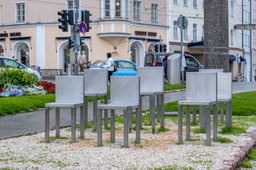
Spirit of Mozart chair sculptures by Marina Abramovic, used as the Free Walking Tour Salzburg meeting point

Marina Abramović

artistb. 1946

The godmother of performance art. Marina Abramovic's Spirit of Mozart (2004) is a stainless-steel chair sculpture at the northern bridgehead of the Staatsbrucke, a tall central chair ringed by smaller ones for quiet contemplation, honouring the city's most famous son through an artist whose practice is built on presence, duration, and the invisible.

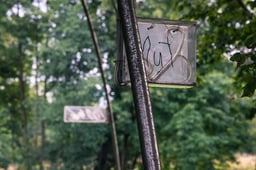
Ziffern im Wald artwork by Mario Merz on the Moenchsberg in Salzburg, part of the Walk of Modern Art

Mario Merz

artist1925 - 2003

One of the leading figures of Arte Povera. His Ziffern im Wald (2003), the second Walk of Modern Art commission, installed Fibonacci numerals in neon on the trees of the Monchsberg forest, visible at night from below. A mathematical poem written across the hill that watches over the city. Merz died the same year the work was completed.

Marko Feingold

official1913 - 2019

One of the last living survivors of the Nazi concentration camps and longest-serving president of the Jewish community in Salzburg. Survived Auschwitz, Neuengamme, Dachau, and Buchenwald. A pedestrian bridge over the Salzach, the Marko Feingold Steg, was renamed in his honour after his death. He died in Salzburg aged 106.

Markus Hinterhäuser

directorb. 1958

Current Artistic Director of the Salzburg Festival since 2017. The person who has spent the longest consecutive period building his career in Salzburg of anyone in the Festival's modern history. Salzburg's living institutional custodian.

Markus Lüpertz

painterb. 1941

German Neo-Expressionist whose Homage to Mozart (2005) at Ursulinenplatz depicts Mozart in a loose, semi-abstract style that departs entirely from the idealised portrait tradition. The most aggressively modernist Mozart monument in the city.

Martino Altomonte

painter1657 - 1745

Italian-born Austrian baroque painter whose altar paintings remain in Stift St. Peter, the abbey that Saint Rupert himself founded. The third member of the painter trio that defined Salzburg's baroque visual world alongside Rottmayr and Troger.

Max Planck

scientist1858 - 1947

The founder of quantum physics. Planck was in the audience in Salzburg in 1909 when the young Albert Einstein gave his first public lecture on relativity. As the foremost physicist in Germany, Planck had been one of Einstein's most important early champions.

Max Reinhardt

director1873 - 1943

Theatre director of extraordinary vision and co-founder of the Salzburg Festival. Reinhardt purchased Schloss Leopoldskron in 1918, which later inspired the Von Trapp villa in The Sound of Music. He staged the first Jedermann on Domplatz in 1920. Jewish, he fled the Nazis in 1938 and died in New York exile in 1943.

Michael Gaismair

official1490 - 1532

One of the most radical leaders of the German Peasants' War (1525-1526). Gaismair led the Tyrolean and Salzburg peasant forces and besieged Hohensalzburg Fortress, where Archbishop Matthäus Lang was sheltering. The fortress held. Gaismair was assassinated in Padua in 1532, almost certainly on Habsburg orders.

Michael Haydn

composer1737 - 1806

Younger brother of Joseph Haydn, Michael Haydn spent most of his career in Salzburg as court musician and organist. A friend and colleague of Leopold and Wolfgang Mozart, he composed over 800 works and is buried in the crypt of St. Peter's Abbey.

Michael Pacher

painter1435 - 1498

One of the greatest artists of the late Gothic period in the German-speaking world. Pacher died in Salzburg in 1498. His masterpiece, the St. Wolfgang Altarpiece (1481), stands in the Pfarrkirche St. Wolfgang and is considered one of the supreme achievements of late Gothic art in Central Europe.

Wolfgang's elder sister, herself a child prodigy who toured Europe to enormous acclaim. Her talent was considered equal to Wolfgang's in their early years. Convention curtailed her performing career. She married and moved to St. Gilgen, returned to Salzburg, outlived Wolfgang by nearly 38 years, and is buried at St. Peter's Cemetery.

Napoleon Bonaparte

royal figure1769 - 1821

The man who ended 1,200 years of the Prince-Archbishopric. Napoleon's armies occupied Salzburg in 1800 and 1809. The political consequences of the Napoleonic era erased Salzburg's status as an independent ecclesiastical state forever.

Nikolaus Harnoncourt

conductor1929 - 2016

The conductor who changed how the world plays and hears baroque and classical music. Harnoncourt founded the Concentus Musicus Wien in 1953 and was a defining presence at the Salzburg Festival and Mozartwoche for decades. He died in St. Georgen im Attergau, a few kilometres from the Attersee.

Oscar Hammerstein II

writer1895 - 1960

The lyricist who wrote the words to "Edelweiss," "My Favourite Things," "Climb Ev'ry Mountain," and "Do-Re-Mi." With Richard Rodgers, he created The Sound of Music (1959). He died in 1960, five years before the film, and never saw what his last work would become. The lyrical vocabulary through which the whole world now pictures Austria.

Oskar Kokoschka

painter1886 - 1980

One of the great Expressionist painters, and the founder of the Schule des Sehens (School of Vision), a legendary painting school held at Hohensalzburg Fortress from 1953 as part of the International Summer Academy. Every summer, artists from across the world gathered at the fortress to study under Kokoschka.

The Venetian sculptor behind the mythological statue groups of the Mirabell Gardens Grand Parterre and, with Bernhard Michael Mandl, the marble dwarves of the Zwerglgarten, both carved around 1690 under the Salzburg prince-archbishops.

Paracelsus

physician1493 - 1541

Revolutionary physician, alchemist, and philosopher who spent his final years in Salzburg and is buried at St. Sebastian's Cemetery. He worked at the salt mines of Bad Durrnberg and practised at a medieval bathhouse on the site that later became the Kajetanerkirche. His grave remains a place of pilgrimage.

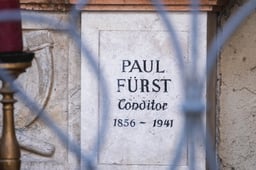
Stone grave plaque of Paul Furst the confectioner who invented the Mozartkugel dated 1856 to 1941 at Petersfriedhof in Salzburg

Paul Fürst

entrepreneur1856 - 1941

The Salzburg confectioner who invented the Mozart Kugel in 1890. The original hand-made version, still produced by Konditorei Furst on Alter Markt, is distinct from the mass-produced variants. Arguably the most successful culinary product ever associated with Salzburg.

Paul Troger

painter1698 - 1762

The leading Austrian baroque fresco painter after Rottmayr. Troger's Salzburg ceilings include his Glory of Saint Cajetan in the Kajetanerkirche and frescoes in Mirabell Palace. If Rottmayr's domes crown the Kollegienkirche and the Dreifaltigkeitskirche, Troger is the other great baroque hand on the city's vaults.

Peter Handke

writerb. 1942

Nobel Prize in Literature laureate (2019). His early work Publikumsbeschimpfung (Offending the Audience, 1966) established him as a radical voice in German-language theatre. His Nobel Prize was controversial due to his political positions on the Yugoslav Wars. A major figure in Austrian literary culture with international reach.

Plácido Domingo

singerb. 1941

The most versatile of the Three Tenors and one of the greatest singers of the 20th century. Has sung over 150 operatic roles across every major style. Performed at the Salzburg Festival across four decades. His range, intelligence, and longevity across over sixty years are without parallel.

Pope Benedict XVI

pope1927 - 2022

Joseph Ratzinger, Pope Benedict XVI, grew up near Salzburg in Traunstein and was a member of the Salzburg-based European Academy of Sciences and Arts from 1991. He became pope in 2005 and was the first modern pope to resign (2013), one of the most consequential theological figures of the 20th century.

Pope John Paul II

pope1920 - 2005

Visited Salzburg in June 1998 and celebrated an open-air mass at Domplatz before an enormous congregation. The visit connected the ancient Catholic centre of Salzburg, built by its Prince-Archbishops, with the contemporary global Church. Later canonised (2014).

Riccardo Muti

conductorb. 1941

One of the most important conductors of the late 20th and early 21st century. Muti has conducted at the Salzburg Festival across many decades, leading the Vienna Philharmonic in opera and concert programmes that have become part of the Festival's core identity. Known especially for Verdi, Mozart, and Cherubini.

Richard Berndl

architect1875 - 1955

Munich architect who designed the Mozarteum main building on Schwarzstrasse (completed 1914), the physical centre of Salzburg's concert life and music education for over a century.

Richard Rodgers

composer1902 - 1979

Composer of The Sound of Music (1959) with Oscar Hammerstein II. Rodgers wrote every note of the music that millions of visitors now hum as they walk through Mirabell Gardens, up to Nonnberg Abbey, and across the hills outside the city. Indirectly, one of the greatest contributors to Salzburg's modern identity.

Richard Strauss

composer1864 - 1949

Co-founder of the Salzburg Festival (1920) alongside Hugo von Hofmannsthal and Max Reinhardt. One of the great composers of the late Romantic and early modern era, celebrated for Der Rosenkavalier, Salome, and Elektra. His relationship with the Festival and with Salzburg remained central to his life.

Richard Wagner

composer1813 - 1883

The most influential opera composer in history. Wagner's operas became central to the Salzburg Festival's identity from the postwar era onwards. Herbert von Karajan's legendary Ring cycle productions made Salzburg a Wagner city as much as a Mozart city. Richard Strauss, Festival co-founder, directly built upon the tradition Wagner established.

Robert Wise

director1914 - 2005

Director of The Sound of Music (1965), which won five Academy Awards including Best Picture and Best Director. His decision to shoot on location rather than in a studio made Salzburg itself a character in the film, with consequences for the city's tourism identity that persist six decades later.

Romy Schneider

actor1938 - 1982

The face of Austrian imperial romanticism for global audiences. Romy Schneider rose to worldwide fame playing Empress Elisabeth in the Sissi trilogy (1955-1957). She grew up in the Berchtesgaden-Salzburg border region and attended boarding school at Goldenstein Castle near Salzburg. She later reinvented herself in France as a serious dramatic actress.

Rudolf von Alt

painter1812 - 1905

The great Austrian watercolourist whose detailed, luminous views of Salzburg constitute one of the most important visual records of the city in the 19th century. In 1897, at the age of 84, he became the first honorary president of the Vienna Secession.

Saint Erentrudis

saint660 - 718

The founding abbess of Nonnberg Abbey, the oldest continuously inhabited convent north of the Alps. Niece of Saint Rupert of Salzburg, who founded the abbey for her around 714 AD.

Patron saint of Austria, patron saint of firefighters, and one of the most recognisable saints in the Alpine world. His statue stands at the Florianibrunnen on the Alter Markt, one of the most photographed corners of Salzburg's Altstadt.

The founding father of Salzburg. Around 696 AD, Rupert established the two oldest religious institutions in the city: Stift St. Peter and Nonnberg Abbey. He consecrated the ground where Salzburg Cathedral would later rise, making him the single most important figure in Salzburg's origin story.

The man who kept organised Christianity alive in the Salzburg region during the collapse of the Roman Empire. The direct predecessor to Saint Rupert of Salzburg, and the connecting thread between Roman and medieval Salzburg.

The Irish-born bishop and scholar who built the first great Salzburg Cathedral in 774 AD. Served as Abbot of Stift St. Peter and Bishop of Salzburg for over three decades, and was reportedly one of the first European thinkers to argue that the Earth was a sphere.

Salome Alt

merchant1568 - 1633

Wolf Dietrich's companion, for whom he built Altenau Palace (later renamed Mirabell) in 1606. They had 15 children together, 10 of whom survived. After Wolf Dietrich's imprisonment in 1611, Salome was exiled from Salzburg. She outlived him and died in Wels in 1633.

Santino Solari

architect1576 - 1646

The Italian master builder who designed and built Salzburg Cathedral (1614-1628) and Hellbrunn Palace (1613-1619), two of the most important buildings in the city. He is buried in St. Peter's Cemetery.

Seiji Ozawa

conductor1935 - 2024

One of the first Asian conductors to lead major Western orchestras, and a protege of Karajan whose Salzburg connection ran for decades: he made his Salzburg Festival debut in 1966 and returned for some four dozen performances. From 2002 to 2010 he was Music Director of the Vienna State Opera.

Sigmund Freud

physician1856 - 1939

The founding father of psychoanalysis. Salzburg holds a specific place in the history of the discipline: in April 1908, the First International Psychoanalysis Congress was held in the city, bringing together Freud, the young Carl Jung, Alfred Adler, and the movement's other early figures for the first time. Freud spoke for nearly four hours without notes.

Sigmund Haffner the Elder

merchant1699 - 1772

Wealthy Salzburg merchant and close acquaintance of the Mozart family. For the wedding of his daughter in 1776, Wolfgang Amadeus Mozart composed the Haffner Serenade (K. 250). His family name is permanently attached to two major Mozart compositions.

Sigmund Haffner the Younger

merchant1756 - 1787

Son of Sigmund the Elder. For his ennoblement in 1782, Leopold Mozart requested from Wolfgang a new symphony at short notice. Mozart composed the Haffner Symphony (K. 385) in a matter of days. Sigmund Jr. died at 30, but the symphony bearing his name remains in the standard repertoire.

Stefan Zweig

writer1881 - 1942

One of the most widely translated German-language authors of the 20th century. Zweig lived at Kapuzinerberg 5, Salzburg, from 1919 to 1934. From this house on the forested hill above the right bank, he wrote his celebrated memoir Die Welt von Gestern (The World of Yesterday).

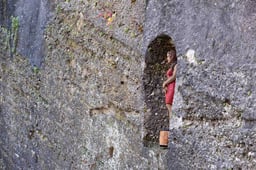
Frau im Fels sculpture by Stephan Balkenhol set into a rock niche on the Festungsberg in Salzburg, paired companion to the Sphaera on Kapitelplatz

Stephan Balkenhol

sculptorb. 1957

German sculptor who created two permanent Walk of Modern Art works in Salzburg: Sphaera on Kapitelplatz (a man standing on a golden sphere) and Frau im Fels in the Toscaninihof (a woman half-emerging from stone).

Thaddaeus Ropac

entrepreneurb. 1960

Austrian gallerist who opened his Salzburg gallery in 1983, two years after a first space in Lienz, making the city the base for one of the most influential contemporary art dealerships in the world. His Salzburg gallery on Mirabellplatz shows Baselitz, Kiefer, Rauschenberg, and Warhol. Later expanded to Paris and London.

Theodor Billroth

physician1829 - 1894

The founder of modern abdominal surgery, who performed the first successful gastrectomy in 1881, and one of Brahms's closest friends. Billroth spent his summers at St. Gilgen on the Wolfgangsee, where the two would play chamber music together by the lake.

Thomas Bernhard

writer1931 - 1989

One of the most important and provocative Austrian authors of the 20th century. Bernhard grew up partly in Salzburg and repeatedly targeted the city and its festival culture in his darkly comic, furiously nihilistic work. He died in Gmunden, in the Salzkammergut.

Tommaso di Garona

sculptor1620 - 1667

The sculptor behind the Residenzbrunnen, the magnificent baroque fountain at the centre of Residenzplatz, completed around 1661. One of the largest and finest baroque fountains in Central Europe, seen by every visitor arriving at the Cathedral square.

Tony Cragg

sculptorb. 1949

British sculptor who created Caldera (2008) on Makartplatz, a large enterable bronze sculpture whose swirling, cave-like interior invites visitors to step inside. Turner Prize winner (1988).

Vincenzo Scamozzi

architect1548 - 1616

A pupil of Palladio hired by Wolf Dietrich von Raitenau to design a monumental cathedral on the scale of St. Peter's in Rome. The project was never realised after Wolf Dietrich's downfall, but Scamozzi's influence on Salzburg's baroque ambitions is part of the city's architectural DNA.

Wilhelm Furtwängler

conductor1886 - 1954

One of the supreme conductors of the 20th century, and perhaps the most controversial. Furtwangler's decision to remain in Germany during the Nazi period made him a figure of perpetual moral debate. His post-war Salzburg Festival performances in the early 1950s are among the most legendary in recording history.

Wolf Haas

writerb. 1960

Crime novelist born in Maria Alm in the Hochkonig region of Salzburg State. His detective novels featuring the unconventional investigator Brenner, written in a unique Austrian vernacular compared to Raymond Chandler, were adapted into hugely successful Austrian films. A Salzburg native whose work is rooted in the Austrian landscape.

Wolfgang Amadeus Mozart

composer1756 - 1791

One of the most celebrated composers in the history of Western music. Born at Getreidegasse 9 in Salzburg's Altstadt on 27 January 1756. Salzburg's entire cultural identity is shaped around his legacy.

Zubin Mehta

conductorb. 1936

The conductor who brought classical music to genuinely global audiences. Music Director of the Israel Philharmonic for over fifty years and one of the Vienna Philharmonic's most beloved conductors. Conducted the legendary Three Tenors concert in Rome (1990), watched by an estimated 800 million people.