
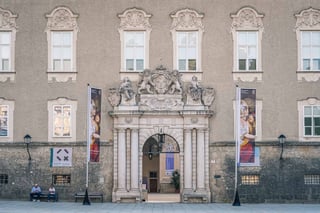
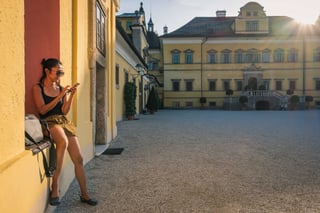
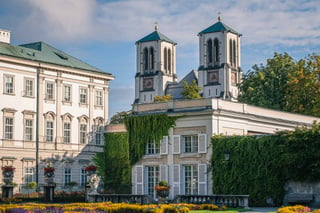
Day one, hour by hour
One Day in Salzburg
Day one of this plan with the timings and the reasoning. Read it before you go.
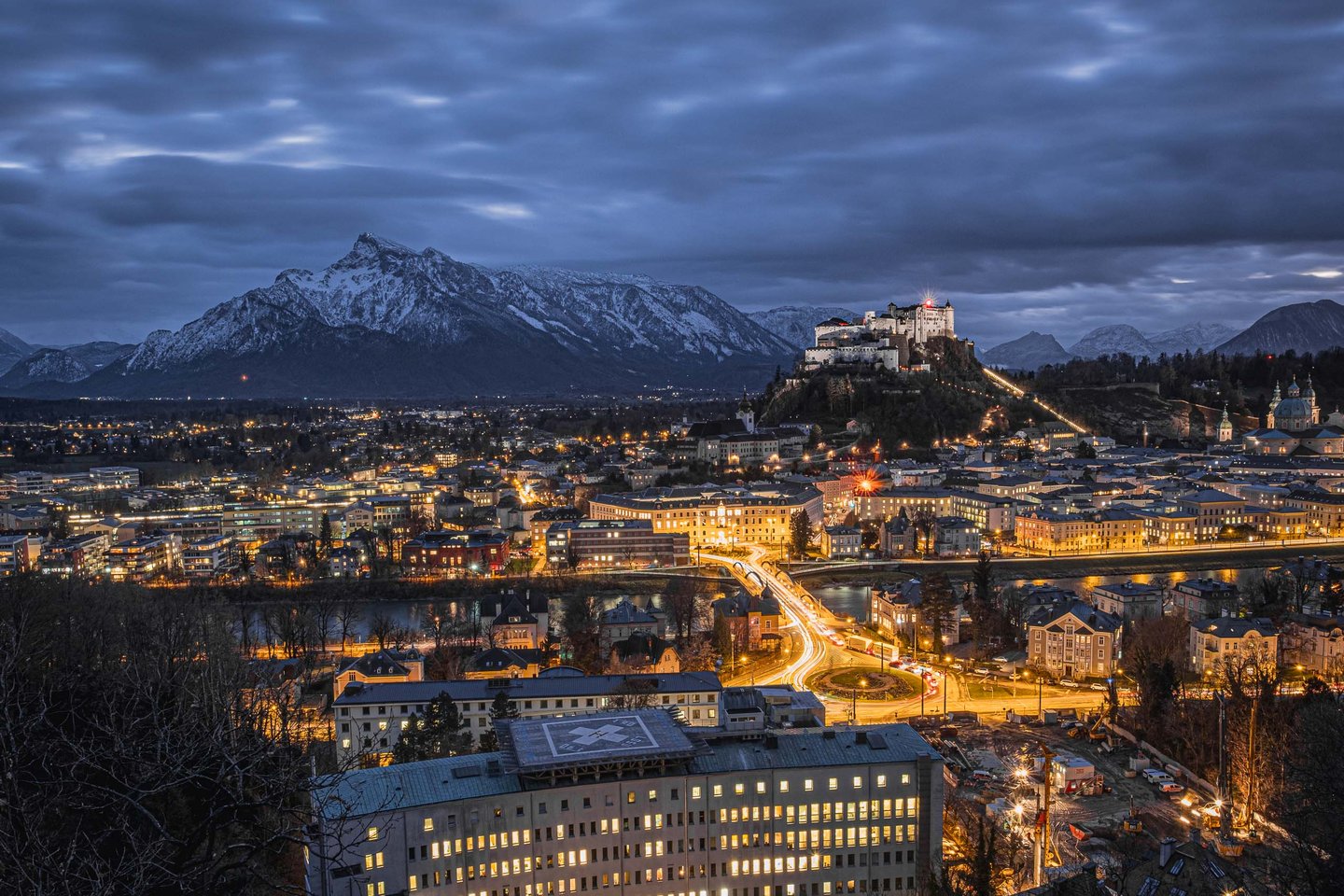
Two full days
One day covers the essentials. Two days covers the essentials plus the depth and the height that make the city make sense. This is the route I give my own guests: the classics on foot, then inside and above them. No car needed, working legs required.
The shape of it
The skeleton before the detail. Day one is the classic route, unchanged from my one-day itinerary. The full reasoning sits below.
Morning
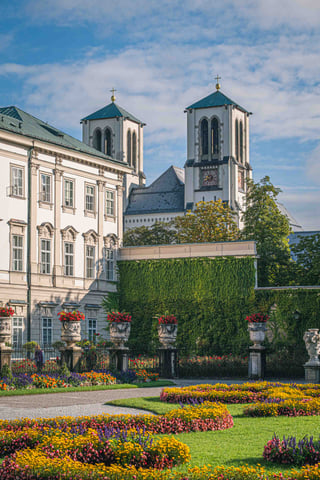
Mirabell Gardens while they are still half empty, then across the river for Getreidegasse, Alter Markt, and the cathedral squares.
Midday
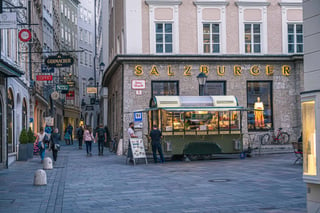
A Bosna at Balkan Grill in the Getreidegasse passage, eaten standing. No sit-down meals on Getreidegasse.
Afternoon
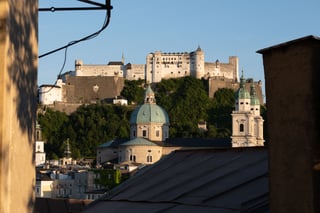
The Festungsbahn funicular up to Hohensalzburg Fortress, then down the southern path through Petersfriedhof.
Evening
The Augustiner Braustuebl, or save the barrel for tomorrow.
The shape of it
Morning
Coffee at Cafe Bazar, then the DomQuartier if you did the fortress yesterday, or the fortress rooms if you skipped them.
Afternoon
Hellbrunn with children, the Untersberg cable car with a Salzburg Card, or the two city mountains on foot for free.
Evening
The Augustiner barrel again, or a Marble Hall concert if the evening calls for a collar.
The full reasoning
Two days is the number I give when someone asks how long Salzburg needs. Most visitors pass through on the route between Munich and Vienna, give the city half a day, and then wish they had given it two. I have watched that regret happen from the front of a tour group for over a decade. One day covers the essentials. Two days covers the essentials plus the depth and the height that make the city make sense.
This plan is for anyone with two full days and working legs: first-timers, Sound of Music pilgrims, and everyone who suspects half a day will not be enough. They are right. If you would rather pick from a menu than follow a route, read Things to Do in Salzburg instead. This page makes the decisions for you.
Day one is my one-day itinerary, unchanged. Having a second day available does not improve the route, it only takes the pressure off. The full hour-by-hour version, with the timings and the reasoning, is in One Day in Salzburg. Read that before you go. Here is the compressed shape:
If you want a local voice on the ground for the first half of that route, my Free Walking Tour Salzburg covers Mirabell and the cathedral quarter in about two hours, twice daily, tip-based. I am biased. I founded it.
The morning of day two is when you go inside something. One thing, not two. Back-to-back palace circuits are how you stop seeing anything by noon. Which one depends on what you did yesterday.
Start the morning at Cafe Bazar on Schwarzstrasse, my favourite coffeehouse in Salzburg. It is quieter than the more famous Cafe Tomaselli, the river-facing tables catch the fortress over the water, and an hour here with a Melange costs about 6 EUR. Austrian coffeehouses are not about the coffee. They are about the atmosphere.
The DomQuartier is the door most visitors walk straight past. I have watched thousands of people do it. The 15 EUR ticket connects the Residenz state rooms, the gallery, and the cathedral terrace in one continuous elevated route, 400 years of prince-archbishop power without ever descending to street level. Mozart gave his first court concert in the Residenz at age seven. The terrace view over Domplatz is worth the price on its own.
On Wednesdays the DomQuartier costs 5 EUR on-site, with a free drink included. That might be the best ticket in the city. If your second day lands on a Wednesday, the decision makes itself.
One honest note on the cathedral itself. I used to tell everyone the Cathedral was a must-see. Since the fee came in 2021, I stopped saying that. The interior charges 5 EUR and it is the only paid attraction in Salzburg not covered by the Salzburg Card. The DomQuartier route includes the gallery view of the cathedral from above, which is the better angle anyway.
If day one ended without the fortress interior, correct that this morning. The all-inclusive ticket costs 19.20 EUR and covers the Festungsbahn funicular, the princely rooms, the museums, and the audio guide. Ninety minutes is the right amount of time. The Goldener Saal is among the last intact late-Gothic secular interiors in this part of Europe, and the Reckturm tower gives you the full panorama, with the Watzmann about thirty kilometres south on a clear day.
This is also where the Salzburg Card math flips. On one day, a single paid attraction rarely justifies it. On two days it usually does: the 48-hour Card costs 40 EUR, while the fortress plus the Untersberg cable car alone come to 53.20 EUR bought separately. If your afternoon involves anything paid, run the numbers before buying single tickets.
And if the budget says no to all of it, walk up after closing time. The ticket office closes, but the big gate stays open another hour or two, and the courtyard views are free. I know that sounds bad, but it is legit.
Three good options, and you can only pick one. Children push you toward Hellbrunn. A Salzburg Card pushes you toward the Untersberg. Working legs and an empty wallet push you up the city mountains. Bus 25 serves the first two, and if your accommodation charges the nightly tourist fee, you already hold a Guest Mobility Ticket that covers the ride. Ask at reception.
A word for the Sound of Music pilgrims this page promised to look after. If the film is the reason you came, the afternoon bus tour fits day two: it starts at 2 pm, it is never sold out, and you can just show up at Mirabell Square. It does not cover the old town, so nothing repeats from day one. If the film is not the reason you came, skip the coach. Walk Mirabell and Nonnberg Abbey yourself and watch the film again in the evening.
Marcus Sitticus built Hellbrunn between 1613 and 1615 without a single bedroom. The palace existed for day parties, and its main feature was soaking guests against their will. The hidden jets in the stone dining table, the garden paths, and the benches still work, and the guided tour activates every one of them. Nobody stays dry.
Admission is 16.50 EUR. Bus 25 takes about twenty minutes from the center, and the visit takes about two hours on site. The Sound of Music pavilion stands in the grounds, and the zoo is a five-minute walk away, which makes Hellbrunn the obvious pick with children. On a one-day visit I tell people to skip it because it eats the whole afternoon. On a two-day visit, eating the afternoon is the point.
The Untersberg cable car climbs to 1,776 meters in about eight minutes. Same Bus 25, further down the line, roughly 35 to 40 minutes to the valley station. At the top you get the full panorama of the Salzburg basin, and in summer, real hiking.
The honest part: the round trip costs 34 EUR, and the panorama is the whole product, so save this for a clear day. The Salzburg Card covers the ride completely, which turns the most expensive afternoon into the obvious one for Card holders. The Untersberg is the opening shot of the Sound of Music, and it sits two-thirds in German territory. The von Trapps fleeing across it would have climbed straight into the country they were escaping.
The free option, and the local one. Start on the Monchsberg: take the lift up for 3.40 EUR one way or climb the stairs from Toskaninihof for nothing, then walk the ridge toward the fortress. It takes under an hour without stops, but stop anyway: the Humboldtterrasse, the Museum der Moderne terrace, the Stadtalm at the cliff edge, and the Richterhohe, the highest point, which I only discovered years after already living here.
Then cross the river and climb the 261 steps of the Imbergstiege from Steingasse up Kapuzinerberg. Two viewpoints wait at the top, one facing the fortress, one facing the new town. Most tourists turn around at the Capuchin monastery. That is where the actual walk begins: the Basteiweg along the old city wall has the better views, and Stefan Zweig lived in the villa before the observation deck until he fled from the Nazis. I go up this hill at least once a week. When I have a free afternoon in my own city, this is where I spend it. Not the old town. The mountains above it.
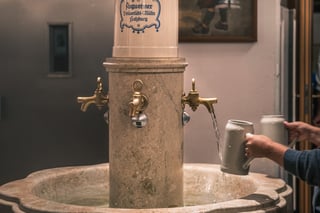
If you followed day one to the letter, you have already stood at the Augustiner barrel once. Go again. Monks have been pouring here since 1621 and the system rewards practice: stone mug from the shelf, rinse it at the fountain, fill at the wooden barrel, pay at the counter, carry it into the garden. A small beer costs about 3.10 EUR, the chestnut-shaded garden seats over a thousand people, and the Schmankerlgang food arcade covers dinner with cold cuts, pretzels, and roast pork. Nobody brings you anything. That is the point.
I will repeat my confession from the one-day guide: I do not like beer. The Augustiner Braustuebl is still one of my favorite places in Salzburg, because the place works on the system, not the drink. Ask for a half litre, buy a lemonade at the cashier, mix your own Radler. If a beer hall is not your evening, my Salzburg food guide has the sit-down alternatives.
The dressy alternative is a concert. For a city this famous for classical music, concerts are surprisingly hard to find, but Mirabell Palace hosts them almost daily and the Marble Hall is one of the finest baroque rooms in Austria. The fortress and St. Peter’s run dinner concerts too; they are pricey. If the budget says no, many student rehearsals at the Mozarteum are open to the public and free. More evening options are in my experiences guide.
If two days turn into three, do not add more city. Salzburg is small, which is its best feature, and after two days you have seen it properly. Day three belongs to the surroundings: Berchtesgaden costs about 11 EUR return by bus and takes about an hour each way, Hallstatt costs about 30 EUR and takes about three hours one way. The full honest ranking is in Day Trips from Salzburg.
Two practical points decide how well this plan works. Sleep inside the old town or just across the river, so day one starts on foot rather than on a bus; my where to stay guide sorts the options honestly. And pick your dates with open eyes, because the same Getreidegasse is a queue in July and a stroll in October; the best time to visit Salzburg covers the seasons.
One more opinion, because two days in Salzburg usually means a weekend. Avoid Saturdays if you can. They are busier, and accommodation is more expensive. Sundays are my all-time favorite day in the city: the streets are quiet, the bells take over, and Sunday Mass at the cathedral comes highly recommended. Mass is also the free way into an interior I no longer call a paid must-see. Just know that the shops stay closed on Sundays. Then book the two days. It is the right amount of this city.
This is the plan I hand to my own visitors, and it has survived a decade of rain, children, and Monday closures. Prices move every season. The shape of the two days does not. If you want the first morning narrated, walk it with me: the free tour covers Mirabell and the cathedral quarter in about two hours, twice daily, tip based.
Where next
Every guide this route leans on, one door each. Open the ones that match your trip, skip the rest.
Day one, hour by hour
Day one of this plan with the timings and the reasoning. Read it before you go.
Start of day one
The fountain sightline to the fortress is the best free view in the city. Go before nine.
The ticket question
Whether the Birthplace museum earns its ticket, and every other Mozart door in the city.
The full menu
Every sight ranked honestly, for people who would rather pick than follow a route.
If you have a third day
Berchtesgaden, Hallstatt, and the honest ranking of what is worth the ride.
Pick your dates
July queues, October strolls. The seasons, weighed the way I weigh them for friends.
Sleep inside the route
Old town or just across the river, so day one starts on foot rather than on a bus.
Evenings and concerts
Marble Hall concerts, dinner shows, and the evenings actually worth booking.