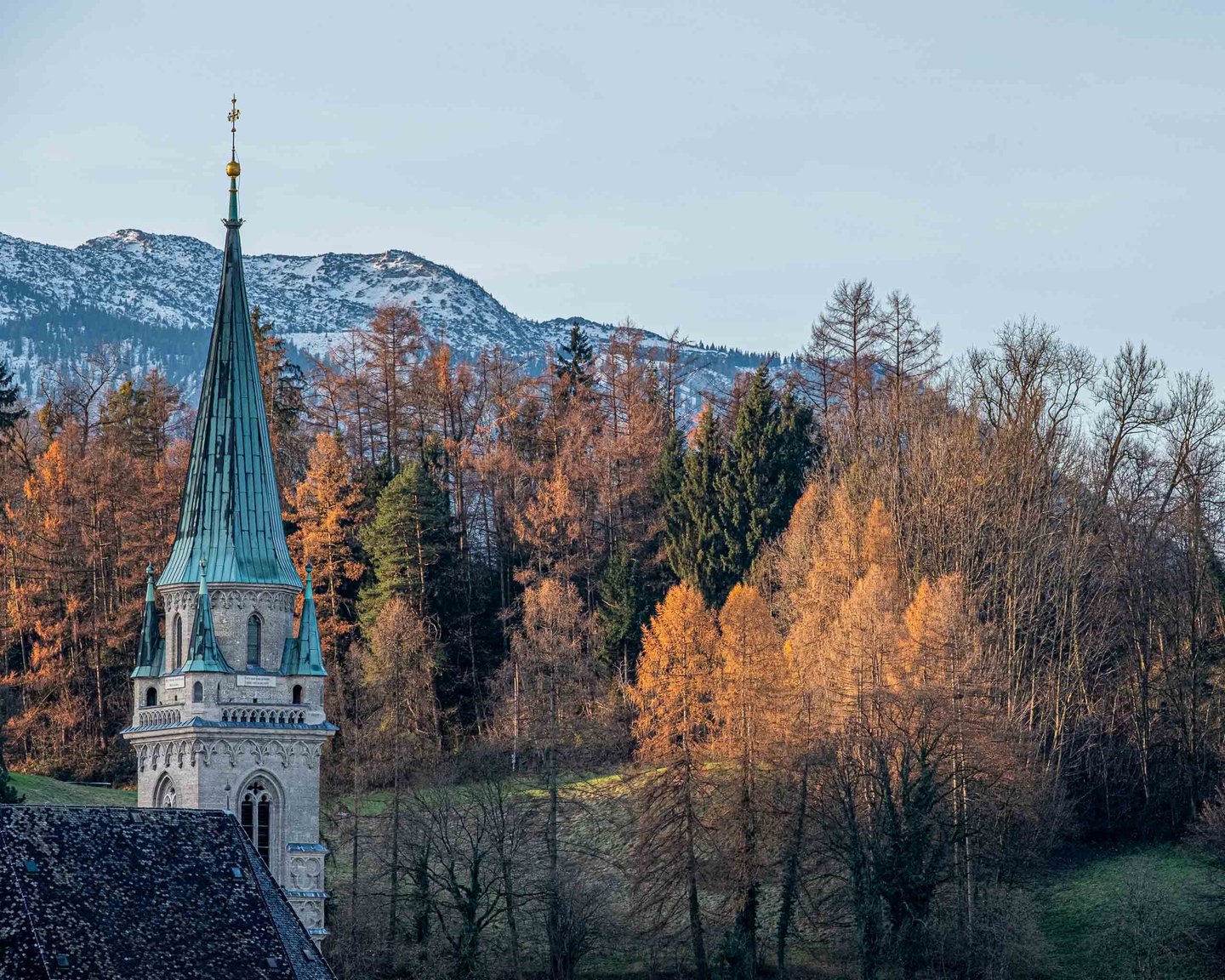
The Franziskanerkirche spire against autumn larches, with the first snow on the ridge behind

When to go

Best Time to Visit Salzburg

Salzburg is beautiful all year round, but beautiful is not the same as worth your money and your patience. The honest answer is that autumn wins. Here is when to actually come, season by season, from someone who has run tours here for fourteen years and checks the (often wrong) forecast every single morning.

The four seasons

The four seasons

Four distinct seasons, and summer and winter here are like night and day. The honest one-liner on each, so you know what you are signing up for before you book.

  1. Spring, April and May: shoulder

    The city reawakens and Mirabell and Hellbrunn come to life, but the weather does what it wants. Snow is still possible in April, and the string rain sets in. Beautiful gardens, unreliable skies.

  2. Summer, June to August: high season

    Warm, long days from 5am to 10pm, and the Salzburg Festival from mid-July. Also the most crowded and expensive time, genuinely hot, often 35C, and most hotels have no air conditioning. Book everything early.

  3. Autumn, September and October: the winner

    Warm enough for a t-shirt by day, fresh mornings, autumn colors on the hills, and the fewest rainy days in October. Come now if you can only come once.

  4. Winter, December to February: low season

    Christmas markets make December magical, but do not count on snow in the valley (a local shop literally bets against it). January is the coldest and the snowiest, February the quietest. Day trips mostly closed.

Best for

Pick by what you came for

The events, the lowest price, or an empty city. Each has a different answer.

  1. Events

    July and August for the Salzburg Festival (classical, crowded, expensive; go the first week for thinner crowds), late September for the Rupertikirtag folk festival, and late November to Christmas Eve for the markets. Salzburg does not do big modern events.

  2. Budget

    Food and ticket prices barely move all year. Accommodation is the whole game. A dorm bed swings from about EUR 11 in low season to EUR 40 in high summer. Come November or mid-January to end of March, and travel mid-week.

  3. Avoiding crowds

    The only time Salzburg truly feels like a ghost town is from the second week of January until mid-March. November is quiet too. September and October are calmer than summer but some weekends now rival July.

In detail

The honest read, season by season

The tourist seasons, honestly

There are two seasons that matter here, high and low, with shoulder seasons in between that combine the best of both. But I have to be honest about how that has changed. In the fourteen years I have been in the tourism game, Salzburg has really evolved. It keeps getting more popular, and so does the crowd. January to Easter is still a bit of a ghost town, but some September and October weekends now are as packed as peak July and August. November used to be low season and is now closer to shoulder.

High season runs June to August, then restarts for a few weeks around Christmas and New Year. Warm, sunny, lively, and crammed. Crowded streets and high prices come with it.

Low season is November to March, with the December holiday break as the exception. Cold, sometimes snowy from January, and quiet from mid-January on. This is the laid-back, authentic version of the city, with room to explore, but remember that some day-trip destinations close in winter.

Shoulder season is April to May and September to October. Mild, pleasant, less crowded. If you want a balance between the summer bustle and the winter quiet, this is it, and September and especially October are my all-time favorites.

The weather, and why it has its own reputation

Salzburg sits on the German border, flat on the Bavarian side, at the foot of the Alps on ours. The mountains block the clouds before they can rise and pass, so Salzburg gets the most precipitation in Austria, roughly 1,185 millimeters a year and 10 to 15 rainy days a month. That gives us the “Salzburger Schnurlregen,” Salzburg string rain, small drops falling continuously for a day or several days at a time.

It is not as grim as it sounds. In summer the rain usually arrives as evening thunderstorms, which are genuinely beautiful and cool the day down. In autumn the daytime string rain brings foggy, mystic moods that pair with the changing leaves. And if it is raining, a Salzburg Card turns a wet day into a museum day, with everything a one to five minute walk apart. See the full rainy-day plan for that.

The four seasons break down like this. Spring starts late March or early April and runs to late May, mild and changeable, 5C to 15C, with the Makartplatz magnolias and Mirabell Gardens coming to life. Summer is June to August, the warmest and busiest, averages in the mid-20s but often 35C in the afternoon, with long days and short, sharp evening storms. Two honest warnings: many homes and hotels have no air conditioning, because the heatwave stretch is short. Autumn starts in September, high 10s to 15C, t-shirt days and cool evenings, the hills ablaze with color. Winter is December to February, the coldest and driest, minus 5 to 5C, with snow and ice some days but far from guaranteed in the valley.

The best month, month by month

If you are choosing by month, here is the honest read on each.

January. Crisp air and, when it comes, snow. This is the month most likely to snow and the coldest, just above 0C by day. Pack a coat, gloves, and a hat.

February. The quietest and coldest month of them all. Nothing is happening. I recommend it only if you want the city entirely to yourself.

March. The weather starts to warm and you get the first hint of spring, but it is still low season and still quiet.

April. Spring has arrived and the gardens come alive, Mirabell and Hellbrunn Palace. But April does what it wants; snow is still possible, and days range from summer-like to deep winter. Mountain tours and excursions start reopening.

May. The city is in full bloom, ideal for a bike ride or a walk. Catch the Maypole festivals for a genuinely traditional Austrian moment.

June. Summer arrives and the outdoor cafes come alive. It is also the rainiest month, though the string rain is turning into evening thunderstorms by now.

July. The Salzburg Festival begins mid-month. Street music, and free open-air screenings on the screen at Kapitelplatz. Bring a picnic.

August. Festival continues, summer heat settles in. Cool off in a lake, hike the Alps or a city mountain like Kapuzinerberg.

September. The summer crowds thin and the city exhales, briefly interrupted by the Rupertikirtag at month’s end before the winter slumber sets in.

October. The city wears its autumn colors, the fewest rainy days of the year, roughly nine, and the perfect month for a drive through the Salzkammergut or a hike up Gaisberg or Monchsberg. My favorite.

November. Cooling down, and honestly nothing much is happening, which makes the experience more authentic. The calm before the December storm.

December. Christmas markets transform the city into a winter wonderland. Just do not count on snow in the valley. A local electronics shop runs a “snow bet,” refunding your purchase if it snows on Christmas Day at noon, precisely because it so rarely does.

The best days of the week

Sundays are my all-time favorite day for tours: peaceful, slow, church bells the only sound, and Sunday Mass at Salzburg Cathedral comes highly recommended. The catch is that shops are closed, and some restaurants too. If you want to shop, skip Sunday. If you want to avoid crowds and high prices, skip Saturday, when weekend tourists flood in and accommodation costs more. Wednesday to Friday is the balanced sweet spot, but check museum schedules, since some close Monday or Tuesday. If you land on a Thursday, the Schranne farmers market is worth building the morning around.

Best time for events

For classical music, July and August during the Salzburg Festival, a world-renowned festival that draws the rich and famous, along with the crowds and the prices. Pair it with the Mozart connection, see Mozart in Salzburg. For tradition and noise, the Rupertikirtag in late September, in honor of St. Rupert, with rides, local food, and folk singing. Easter and most religious holidays are marked at the cathedral, a legacy of the city’s archbishop history. And for festive cheer, the Christmas markets run late November to Christmas Eve, with treats, gifts, concerts, and Krampus parades. The honest caveat: Salzburg does not host large modern events. It is traditional and conservative, so contemporary events struggle to gain traction. There is still something happening near the cathedral nearly 200 days a year, but expect memorable and small, not major.

Best time on a budget

Salzburg is expensive, and accommodation is the reason. There simply are not enough beds, so in high season demand outstrips supply and prices climb. I worked at a hostel here that was fully booked most days from April to October, with desperate walk-ins looking for last-minute rooms in July and August. As soon as places stop selling out in low season, they compete on price, and a dorm bed drops from about EUR 40 in high season to as little as EUR 11.

Food and ticket prices, by contrast, stay stable all year. Even the Salzburg Card only rises a few euros in peak season. So the lever is accommodation and timing. For the lowest prices, come in November or between mid-January and the end of March. You sacrifice warm weather, but you gain an authentic, near-empty city and maybe some snow. Travel mid-week rather than over the weekend, and eat from local cafes and markets. As a reference on costs, day trips are cheap: Berchtesgaden is about EUR 11 round trip and roughly an hour, and even far-flung Hallstatt is about EUR 30 and around three hours each way. In town, the Hohensalzburg Fortress all-inclusive ticket with the funicular is EUR 19.20 (the basic footpath ticket is EUR 12.00), the Untersbergbahn cable car is EUR 34 round trip, and the cathedral nave is free to enter, with only the museum and DomQuartier paid.

Best time to avoid the crowds

During the autumn shoulder season the weather is still comfortable, prices are lower, and there are meaningfully fewer people than in peak summer. But be realistic: September can still be crowded, October less so but still busy with tourists. November is genuinely quiet. And the only time Salzburg truly feels like a ghost town is from the second week of January until mid-March. If you want the festivals without the crush, come in the first or last week of an event. Visit the Salzburg Festival in its opening week, when crowds are thinner and prices lower, and for the Rupertikirtag beer festival, avoid Fridays and Saturdays like the plague.

Before you book

What to skip, and what to expect

Seven honest warnings, so nothing about the season surprises you when you get here.

  1. Spring is overrated for weather

    March and April are notoriously bad, snow is still possible into May, and the string rain sets in. Come for the gardens, not the skies.

  2. Do not expect snow in the valley in December

    Locals literally bet against a white Christmas, because it so rarely happens. The likeliest snow is January, and reliably only up on the mountains.

  3. Do not assume Austria means cool

    July and August often hit 35C, and most homes and many hotels have no air conditioning, because the heatwave stretch is short.

  4. Do not plan winter around day trips

    Many top day-trip destinations, the mountains and lakes, are closed in winter.

  5. Do not come Sunday for shopping

    Every shop is closed, and some restaurants too. Great for peace and Sunday Mass, poor for retail.

  6. Do not come expecting big modern events

    Salzburg is traditional and conservative; it does not host large contemporary events. Expect small and memorable, not major.

  7. Do not trust the forecast blindly

    It is often wrong, and mountain weather differs sharply from the city. I check it every morning for my tours and still get surprised.

The calendar

What the city does each year

The fixtures locals plan around. Exact dates shift; the months never do.

  1. Jan

    Mozartwoche

    Ten days of chamber music, all Mozart, around his birthday on 27 January. The serious one, and it lands in low season, which is the insider's reason to come.

  2. May

    Salzburg Marathon

    Late April or early May, through the old town and along the Salzach. One of the prettiest courses in the German-speaking world, with a city-centre finish.

  3. Jul

    Salzburg Festival

    Late July to the end of August, opera and theatre the whole city arranges itself around. Book months ahead, or come the first week for thinner crowds.

  4. Jul

    Jedermann

    Hofmannsthal's Everyman on Domplatz, almost every summer since 1920, the cathedral as the set. When Death calls, his voice comes off the rooftops.

  5. Aug

    Siemens Festspielleinwand

    The Festival for free: performances screened on Kapitelplatz under the open sky. Bring a picnic. The honest alternative when you have no ticket.

  6. Sep

    Rupertikirtag

    The old town turns into a folk fair for St. Rupert around 24 September. Locals outnumber visitors. The best evening of the year to be on Residenzplatz.

  7. Oct

    Jazz & the City

    Four days of jazz in baroque squares, cellars and courtyards, almost all of it free. No tickets, you just walk in.

  8. Nov

    Christkindlmarkt Salzburg

    The Advent market on Domplatz and Residenzplatz, late November to Christmas Eve. Go on a weekday evening, when the choirs sing.

  9. Dec

    Hellbrunn Advent Market

    The Advent market out at Hellbrunn: seven hundred lit conifers, the palace facade as a giant Advent calendar, and a Krampus run the locals come for.

  10. Dec

    Stille Nacht Konzert

    Silent Night sung on Christmas Eve where it was first sung in 1818, in Oberndorf, half an hour out by S-Bahn. Short, intimate, genuinely moving.

Start on foot

Come in autumn. Then start on foot.

Whenever you land, the first sensible move is the same: get your bearings on foot before you spend a cent. My free walking tour covers the cathedral, Residenzplatz, St. Peter, Getreidegasse, and the festival district in about two hours. Tip based. I am biased. I founded it.

A note on the forecast. I check it every single morning for my tours, and it is often wrong. Mountain weather differs sharply from the city, and the day-trip peaks can be closed while the old town basks. Come in autumn if you can, treat every number here as a guide not a promise, and check the sky the day you actually visit.

Keep reading

All Salzburg guides

This page is the master list. When you know how long you have or what you are after, these go deeper.

Guide

Things to Do in Salzburg

Salzburg is smaller than most visitors expect. You can cross the old town in twenty minutes, and everything worth seeing is packed so tight you trip over history on every corner. Most people give it half a day, then wish they had given it two. I have guided this city for over a decade. Here is what actually earns...

Guide

One Day in Salzburg

One day in Salzburg is enough, if you start early, skip the wrong things, and trust that everything worth seeing sits inside a twenty-minute walk. This is the route a local guide actually walks: one river crossing, one native street food, one attraction you pay for, and a four-hundred-year-old beer garden at the...

Guide

Day Trips from Salzburg

Salzburg is small. Two days and you have seen it. The good news: you are standing at the foot of the Alps, ringed by lakes and one border, and the best of this trip might be the days you spend outside the city. These are the day trips I actually send friends on, ranked by whether they are worth your time, not by...

Guide

Getting around Salzburg

Most of what you came to see sits inside a flat square kilometre between the river and the cliff. You can walk it. I want to save you the rented car, the wrong bus, and the forty minutes you would otherwise lose working it out on the pavement.

Guide

Where to Stay in Salzburg

Most people book a hotel and then find out what kind of trip they signed up for. I'd rather do it the other way around. The old town, the Neustadt across the river, the quiet streets under the Untersberg: they are a ten minute walk apart and feel like different cities. Pick the right Salzburg first, then pick the room.

Guide

Salzburg on a Rainy Day

Salzburg sits against the Alps, so the clouds pile up and let go more often than anyone wants to admit. After fourteen years of guiding here I have stopped fighting it. A grey, wet day pushes you indoors, into the rooms most visitors skip in good weather, and the old town looks its moodiest under a low sky. Here is...