
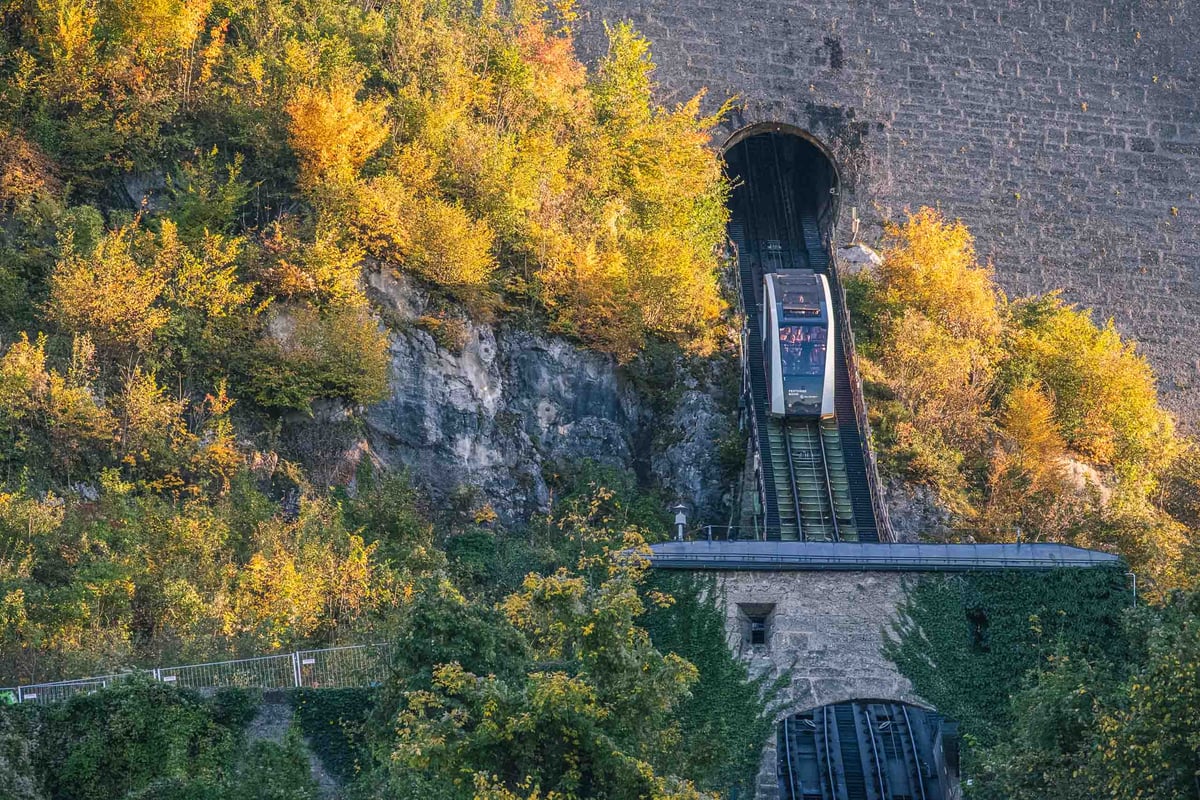
 Sixty seconds
Festungsbahn
The funicular up to the fortress. Sixty seconds of climbing you would otherwise do on foot.
Included in the fortress ticket.
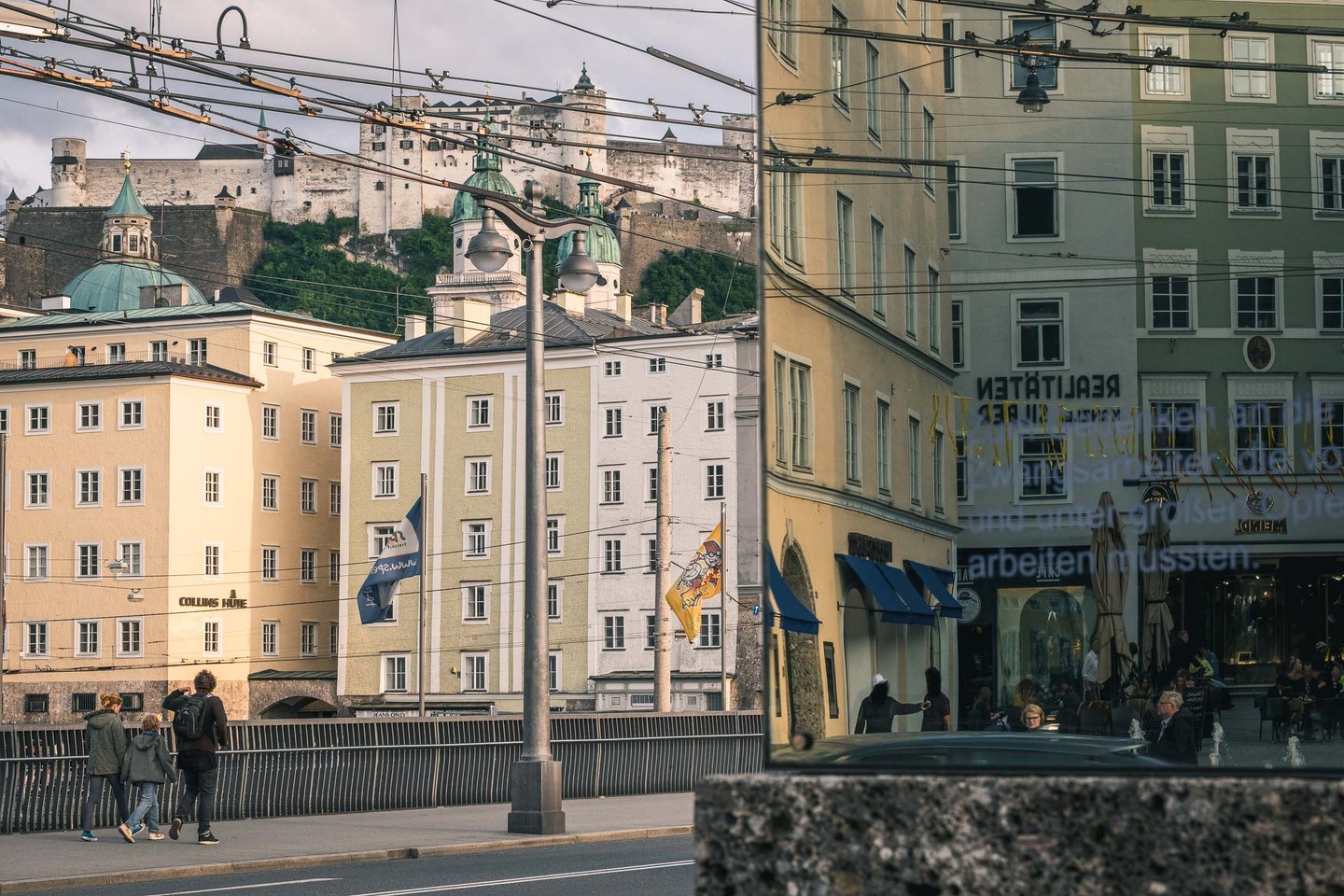
Practical Salzburg
Most of what you came to see sits inside a flat square kilometre between the river and the cliff. You can walk it. I want to save you the rented car, the wrong bus, and the forty minutes you would otherwise lose working it out on the pavement. Fourteen years living here, and I still cross the old town faster on foot than any taxi does.
The shape of it
Corner to corner
15 min
Across the whole old town, on foot, without rushing.
A single bus ride, in euros
2,90
Bought from the driver. Less if you buy it ahead at a Trafik kiosk.
Reasons to rent a car
Zero
If you stay in the centre and are not touring the lakes.
Getting to Salzburg
Most travellers reach Salzburg as one stop on a longer trip, and the train is why. Frequent, central, and the way locals themselves travel.
From Vienna
About 2.5 hours, every half hour, from roughly EUR 30. Two operators (OeBB and Westbahn); on Westbahn you can board and pay onboard. Sit on the left for the mountains.
From Munich
Railjet in 1.5 hours, or the slower regional train with a Bayern Ticket if you are 2 to 5 people. Sit on the right for the Alps and the old-town view on arrival.
From Prague or Budapest
You change in Vienna and join the same Vienna to Salzburg train; from Prague you board it about an hour before it arrives. Plan it as a connection, not a direct run.
The Bayern Ticket (Munich group hack)
A one-day Bavarian regional ticket, about EUR 26 for the first traveller plus a few euros each after, valid to Salzburg as a border station. Worth it for 2 to 5 people or a same-day return; valid only from 9am on weekdays.
Salzburg Hauptbahnhof
The city's only train station and the hub for every bus and taxi. Mirabell is 10 minutes on foot from here; if your bag is light, just walk.
Plane, bus, and car
Honestly, you probably will not fly into Salzburg itself. The airport is small and flights are limited and pricey, so most people land in Munich or Vienna and take the train.
Salzburg Airport, if you get lucky
If you do get a direct flight you are lucky: the airport is only 4km out. Bus 2 or 8 runs every 10 to 20 minutes to the station for a couple of euros; a taxi is about EUR 20.
Via Munich Airport
No direct train: take the S1 or S8 into Munich (the S8 lets you shortcut at Munich East), then the train onward. Or take a Flixbus, which runs from the airport but drops you in south Salzburg.
Via Vienna Airport
The cleaner airport option: a direct OeBB train runs from Vienna Airport to Salzburg, so you skip going into the city first.
Flixbus, cheapest with a catch
Often the least expensive option, especially solo or in low season. But the stop is now at Park and Ride south, so budget another 20-minute bus (line 3 or 8) and about EUR 3 to reach the old town.
Driving in, usually a burden
A car is a burden inside Salzburg (the old town is a pedestrian zone), so only rent one if the drive itself or the day trips are the point. From Vienna it can beat the train for four or five people splitting the cost.
Station to old town: just walk it
Station to Mirabell is 10 minutes, and Mirabell is where the old town begins; the fortress at the far end is another 10 to 15. If you would rather ride, buses 1, 2, 3, 5 and 6 leave from right in front of the station, but a single carries a minimum charge, so a short hop costs about the same as a long one.
Once you arrive
The historic centre is a UNESCO pedestrian zone. Cars are mostly kept out, the lanes are too narrow to drive anyway, and the three things you probably want first, the fortress, the cathedral square, and Mozart’s birthplace, are a six-minute stroll apart. Real door-to-door times I have walked a thousand times, flat the whole way unless you are climbing to the fortress:
| On foot, from | To | Time | Note |
|---|---|---|---|
| Hauptbahnhof (train station) | Old town centre | 18 min | Flat, straight down Rainerstrasse |
| Mirabell Gardens | Getreidegasse | 8 min | Across the Makartsteg footbridge |
| Residenzplatz | Mozart’s birthplace | 5 min | Through the cathedral arches |
| Kapitelplatz | Fortress on foot | 12 min | Steep last stretch up Festungsgasse |
| Staatsbruecke | Kapuzinerberg viewpoint | 20 min | A real climb, worth it for the panorama |
Salzburg runs trolleybuses, the Obus, plus regular city buses. You will only ever need a handful of lines. Forget the rest. Buy your ticket from the driver in coins, or cheaper from any Trafik kiosk and the blue machines before you board. Stamp it once. A single is good for one direction, no return.
| Line | Use it for |
|---|---|
| Obus 1, 3, 5, 6 | The workhorses through the centre, station to old town to suburbs |
| Bus 25 | Hellbrunn Palace and the trick fountains, end of the line |
| Bus 21 | Up toward Untersberg and the cable-car valley station |
| Bus 150 | Out to the lakes, St. Gilgen and the Wolfgangsee |
If you are here three days and plan to ride more than four times, the 24-hour or 72-hour ticket pays for itself. Inside the old town itself I never bother. It is faster to walk than to wait.
Salzburg is flat along the river and laced with cycle paths. A bike is wasted inside the old town but perfect for the long green runs out of it.
| Ride | Roughly | Why I send people |
|---|---|---|
| Salzach riverbank loop | 40 min | Both banks, fortress views the whole way, no traffic |
| Hellbrunner Allee | 25 min | A dead-straight avenue of old trees out to Hellbrunn |
| Out to the Saalach | 50 min | Quieter, greener, ends near the German border |
Hire is easy. Most hotels rent or lend bikes, there are shops near the station, and the city bike-share docks sit at the main squares. Helmets are not compulsory for adults here, but the riverside paths are shared with walkers, so ride slow where it is busy. I keep mine in second gear and let the flat do the work.
I will be blunt, because the wrong instinct here costs people real money and real time. The centre is closed to through traffic, the lanes are medieval, and circling for a space you will not find is a miserable way to start a trip. Leave the car at the edge and walk in. It is genuinely faster.
If you are driving here from elsewhere in Austria or Bavaria, the move is simple. Aim for one of the rock-cut garages dug into the Monchsberg cliff, park once, and forget the car until you leave.
| Where to leave it | Walk to centre |
|---|---|
| Altstadt garage, in the cliff | 2 min |
| Mirabell garage | 7 min |
| Park and Ride at the edge | bus in |
Garages run around 20 to 30 euro for a full day. Steep, yes. Still cheaper than the parking fine and the towing fee, which I have watched visitors collect more than once.
The small ways up and across
Salzburg has a few small ways to gain height or cross water. Use them for the view and the rest, not because you have to.
Sixty secondsThe funicular up to the fortress. Sixty seconds of climbing you would otherwise do on foot.
Included in the fortress ticket.
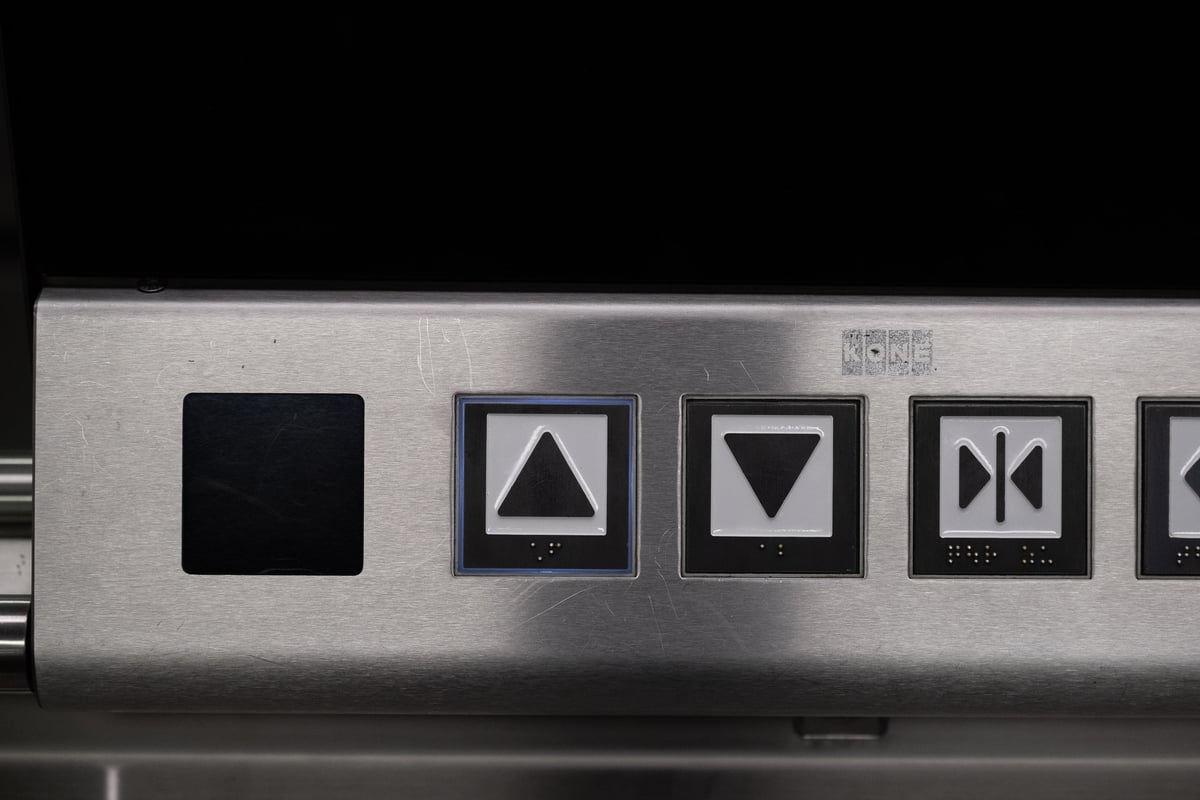 Inside the cliff
An elevator inside the cliff up to the Museum der Moderne and the best free view in town.
A few euros return.
The horse carriages on Residenzplatz. Touristy, slow, and I still think children should do it once.
Set price per ride.
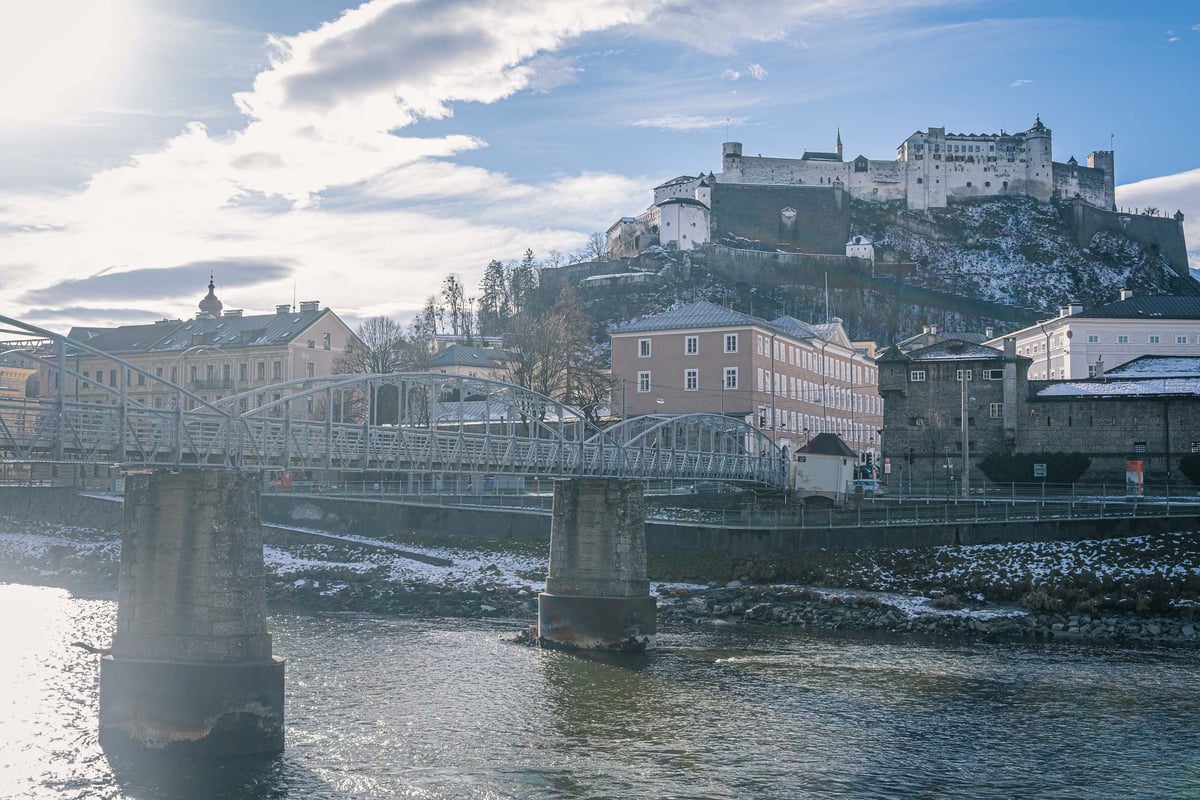 Always free
Free, constant, and the real backbone of crossing the river. The Makartsteg, the Mozartsteg, and the Mullnersteg carry you between the banks without ever touching a road. The Makartsteg is the one with the love locks. I cross it most days.
The passes
The Salzburg Card
Includes all city buses plus entry to the attractions, so do not buy a day bus ticket on arrival if you plan to visit more than one paid sight. Check the current tiers before you commit, or do the math on the Salzburg Card guide.
Free transit for overnight guests
Many Salzburg accommodations give registered overnight guests a free regional transit card. Ask your hotel or host when you book; confirm the exact coverage rather than assuming it.
Day trips are where transit earns its keep
Berchtesgaden is a standout: bus 840, about an hour, roughly EUR 11 for an all-day return ticket. Hallstatt is the crowd-magnet: bus 150 via Bad Ischl, about EUR 30 and near 3 hours each way, but the ride through the lakes is the reward.
How the city actually lays out
It is a river with an old town pinned against a cliff on one bank and the gardens on the other. Left bank, in the cliff shadow: old town, fortress, cathedral, Getreidegasse. Right bank, open and flat: Mirabell Gardens, the Mozarteum, the station beyond. Cross any footbridge in three to five minutes on foot. Once that picture is in your head you will stop reaching for your phone.
Save yourself the trouble
The honest anti-recommendations, so you do not waste money or a morning getting into town.
Do not fly into Salzburg on principle
The airport is small, flights are few and expensive, and locals themselves usually leave and arrive by train via Munich or Vienna.
Do not count on a direct run from Munich Airport
Neither the train nor the Flixbus is truly direct; both leave you with a change or an extra 20-minute city bus.
Do not assume the Bayern Ticket always wins
Solo travellers not returning the same day are often cheaper on a Flixbus, and it is only valid from 9am on weekdays.
Do not rent a car for Salzburg itself
The old town is a pedestrian zone, distances are tiny, and a car is more burden than benefit unless day trips are the whole plan.
Do not default to the bus from the station
If your luggage is light, walking to the old town is faster than it looks and costs nothing.
Do not buy a 24-hour bus ticket the moment you arrive
If you intend to see more than one paid attraction, the Salzburg Card likely covers both the buses and the sights.
Do not ride the bus without a validated ticket
Inspections are rare but merciless, and the fine is EUR 60 with no talking your way out.
Do not expect Uber
It technically is not banned, but there are almost never licensed drivers offering it; use a taxi only for early flights or heavy bags.
Put it to use
Start at the station, cross a footbridge, climb to the fortress, drop back to the cathedral square. Every stop below is one I have walked between in the times on this page. Tap through and string your own route.
Salzburg HauptbahnhofGetreidegasseHohensalzburg FortressFestungsbahnMirabell GardensMozartsteg footbridgeHellbrunn Palace
Off the train
You walked ten minutes from the station and now you are standing in the old town with no plan. That is exactly where my free walking tour picks you up: the cathedral, Residenzplatz, St. Peter, Getreidegasse, about two hours, tip based. I am biased. I founded it.
A note on prices and times. Fares and schedules on this page move year to year, and a few figures here come from the last time I checked rather than today's board. Where a number is genuinely worth confirming, I have said so instead of printing something that goes stale. Always check the live fare and departure for the day you actually travel. The distances do not change. The old town has been this walkable for nine hundred years, and it is the one part of this page I can promise will still be true when you arrive.
Keep reading
This page is the master list. When you know how long you have or what you are after, these go deeper.
Guide
Salzburg is small. Two days and you have seen it. The good news: you are standing at the foot of the Alps, ringed by lakes and one border, and the best of this trip might be the days you spend outside the city. These are the day trips I actually send friends on, ranked by whether they are worth your time, not by...
Guide
Most people book a hotel and then find out what kind of trip they signed up for. I'd rather do it the other way around. The old town, the Neustadt across the river, the quiet streets under the Untersberg: they are a ten minute walk apart and feel like different cities. Pick the right Salzburg first, then pick the room.
Guide
Salzburg is beautiful all year round, but 'beautiful' is not the same as 'worth your money and your patience.' The honest answer is that autumn wins. Here is when to actually come, season by season, from someone who has run tours here for fourteen years and checks the (often wrong) forecast every single morning.
Guide
One day in Salzburg is enough, if you start early, skip the wrong things, and trust that everything worth seeing sits inside a twenty-minute walk. This is the route a local guide actually walks: one river crossing, one native street food, one attraction you pay for, and a four-hundred-year-old beer garden at the...
Guide
Salzburg is smaller than most visitors expect. You can cross the old town in twenty minutes, and everything worth seeing is packed so tight you trip over history on every corner. Most people give it half a day, then wish they had given it two. I have guided this city for over a decade. Here is what actually earns...