Frau im Fels
Installed 2007
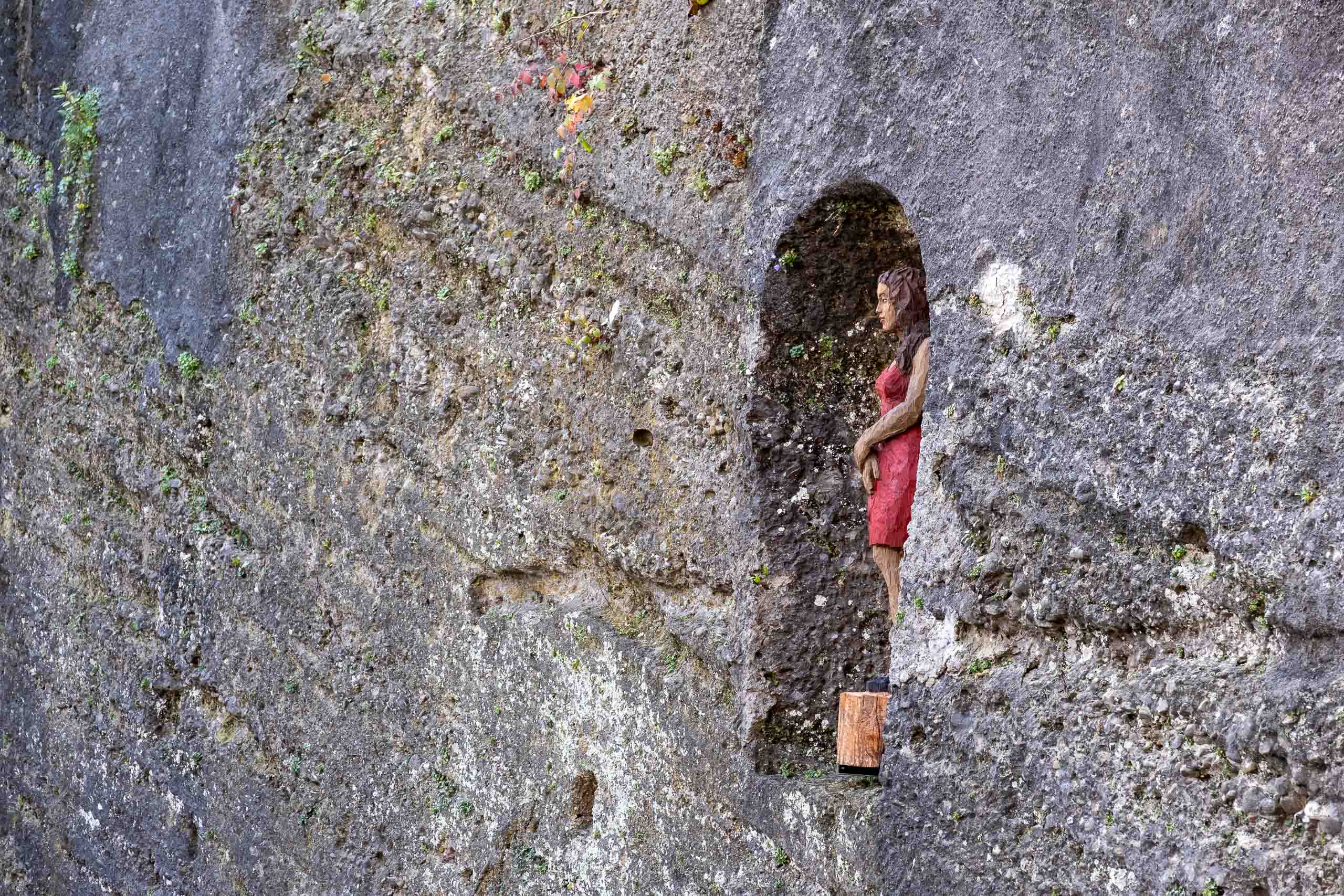
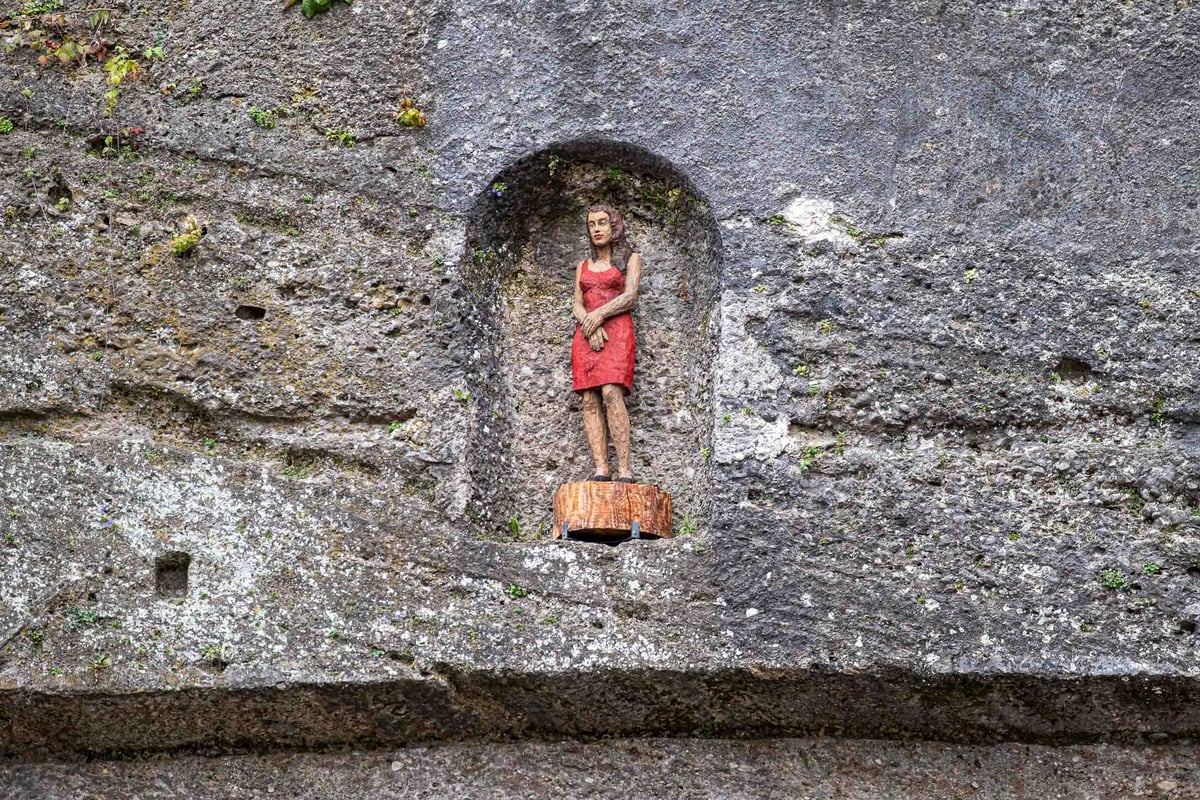
Companion piece to Sphaera by Stephan Balkenhol (2007). Walk of Modern Art #5. A female figure emerging from a stone wall in the Toscaninihof, suspended between presence and absence.
Sculptor
1957, Fritzlar, Hesse, Germany
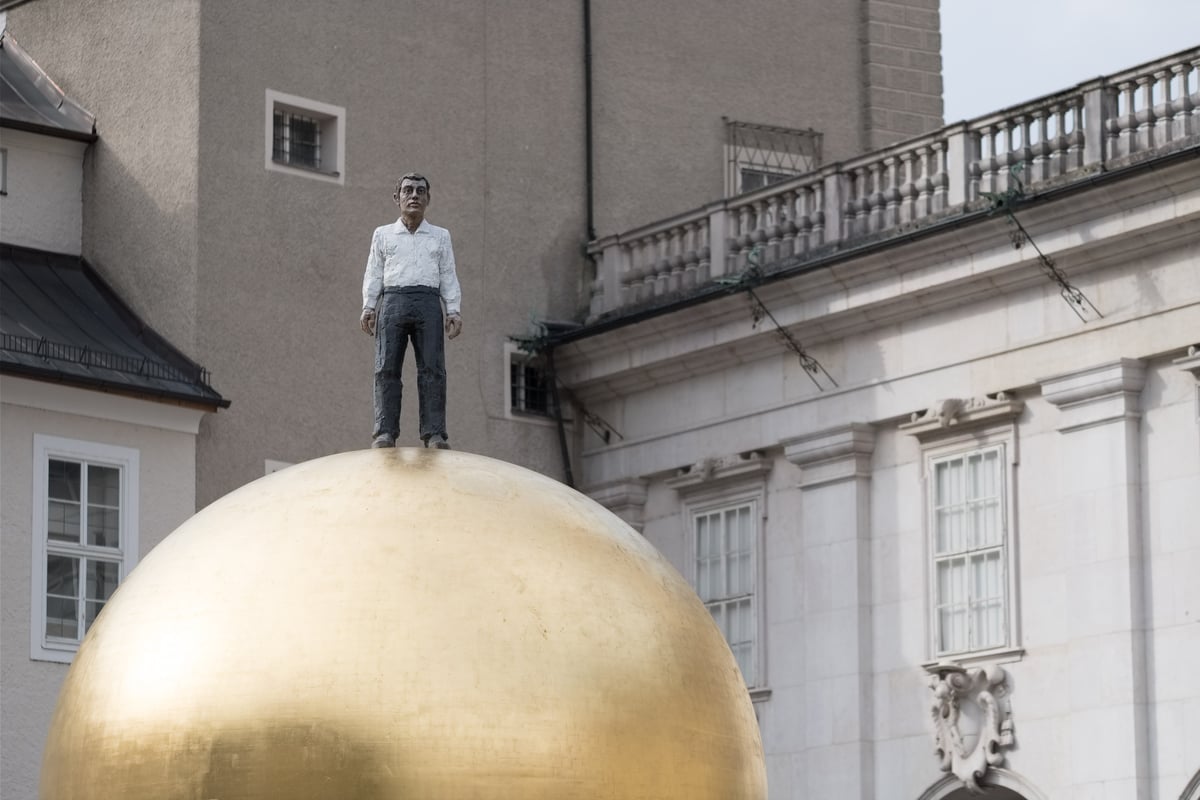
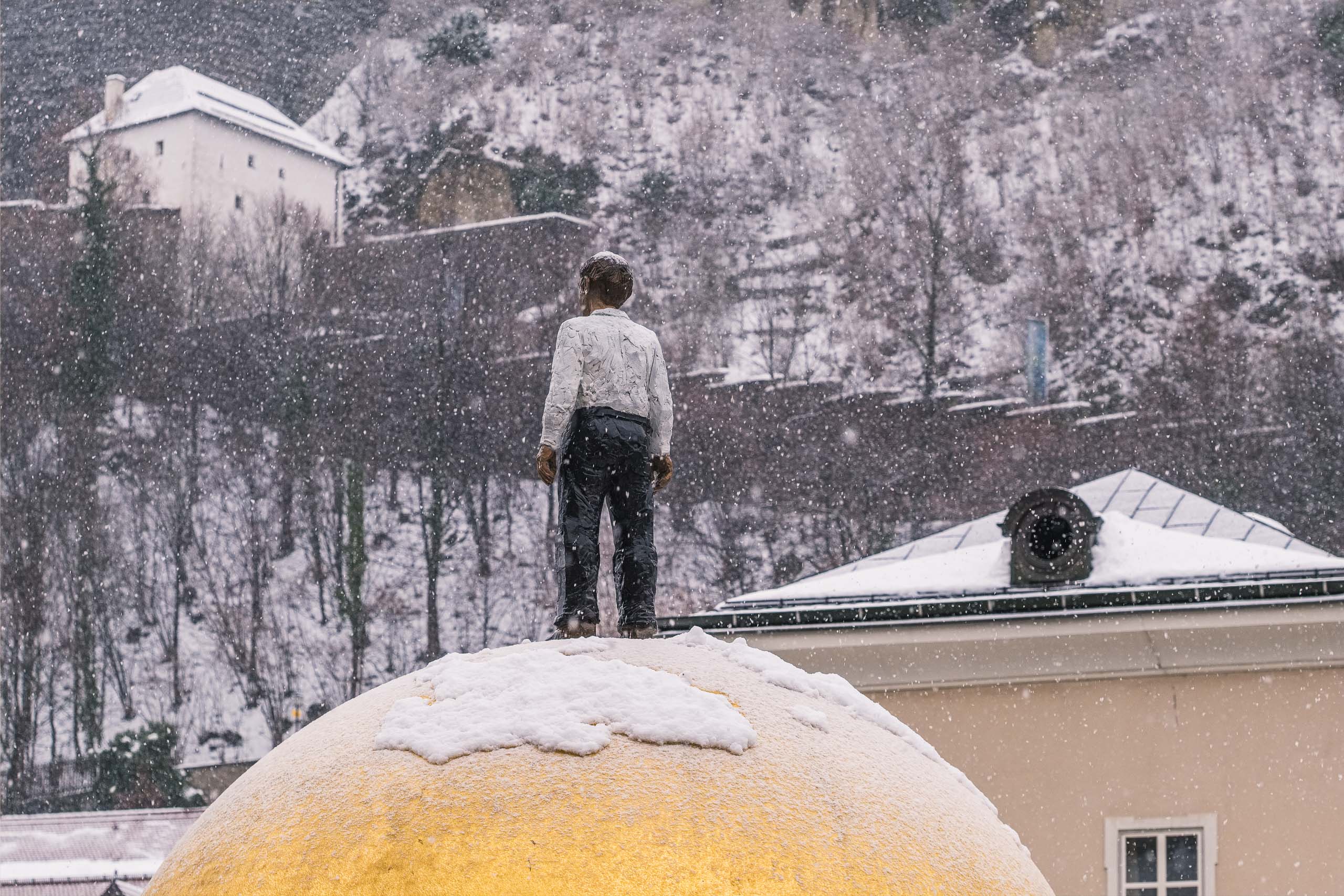
Two works by Stephan Balkenhol occupy Salzburg’s Festival precinct, placed there in 2007 as part of the Walk of Modern Art. Sphaera on Kapitelplatz: a bronze man in a white shirt and dark trousers, standing some nine metres up on top of a five-metre golden sphere. Frau im Fels in the Toscaninihof: a woman half-emerging from a rough stone wall. Both are anonymous, ordinary, and impossible to ignore.
Balkenhol grew up in Fritzlar in Hesse and studied sculpture in Hamburg under Ulrich Ruckriem, who taught a rigorous Minimalist discipline. Balkenhol absorbed the lesson and then rejected the conclusions: he kept the human figure at a time when the art world considered figuration finished. He carved directly from single large blocks of African wawa wood, left every tool mark visible, and refused to sand or polish the surface. The result was figures that looked both ancient and contemporary, neither idealised nor broken, just people standing there.
His 1987 Skulptur Projekte Munster piece, a figure placed on a chimney five metres above the street, drew emergency calls because viewers thought a real person was about to fall. The police response was the clearest possible confirmation that his approach worked: anonymous figures in unexpected places force you to pay attention.
The two Salzburg works stage a deliberate contrast. Sphaera on Kapitelplatz puts the figure in total exposure: a man balanced on a gilded sphere in the middle of a large open square, visible from every direction, nowhere to hide. Frau im Fels in the Toscaninihof is its opposite: a woman in the process of either emerging from the rock or being absorbed by it, half-visible, requiring you to go looking. Together they form a meditation on what it means to occupy a city that is itself a performance.
On the map
The 2 places on this page, where they actually stand.
Locations
Installed 2007
Companion piece to Sphaera by Stephan Balkenhol (2007). Walk of Modern Art #5. A female figure emerging from a stone wall in the Toscaninihof, suspended between presence and absence.
Installed 2007
A five-metre golden sphere on Kapitelplatz by German sculptor Stephan Balkenhol (2007). Walk of Modern Art #5. A 1.4-metre bronze figure of an ordinary man stands on top looking across the square. Companion piece: Frau im Fels in the Toscaninihof. Nine metres total height including pedestal.