
District / Austria
Gnigl
Show all 6 photos
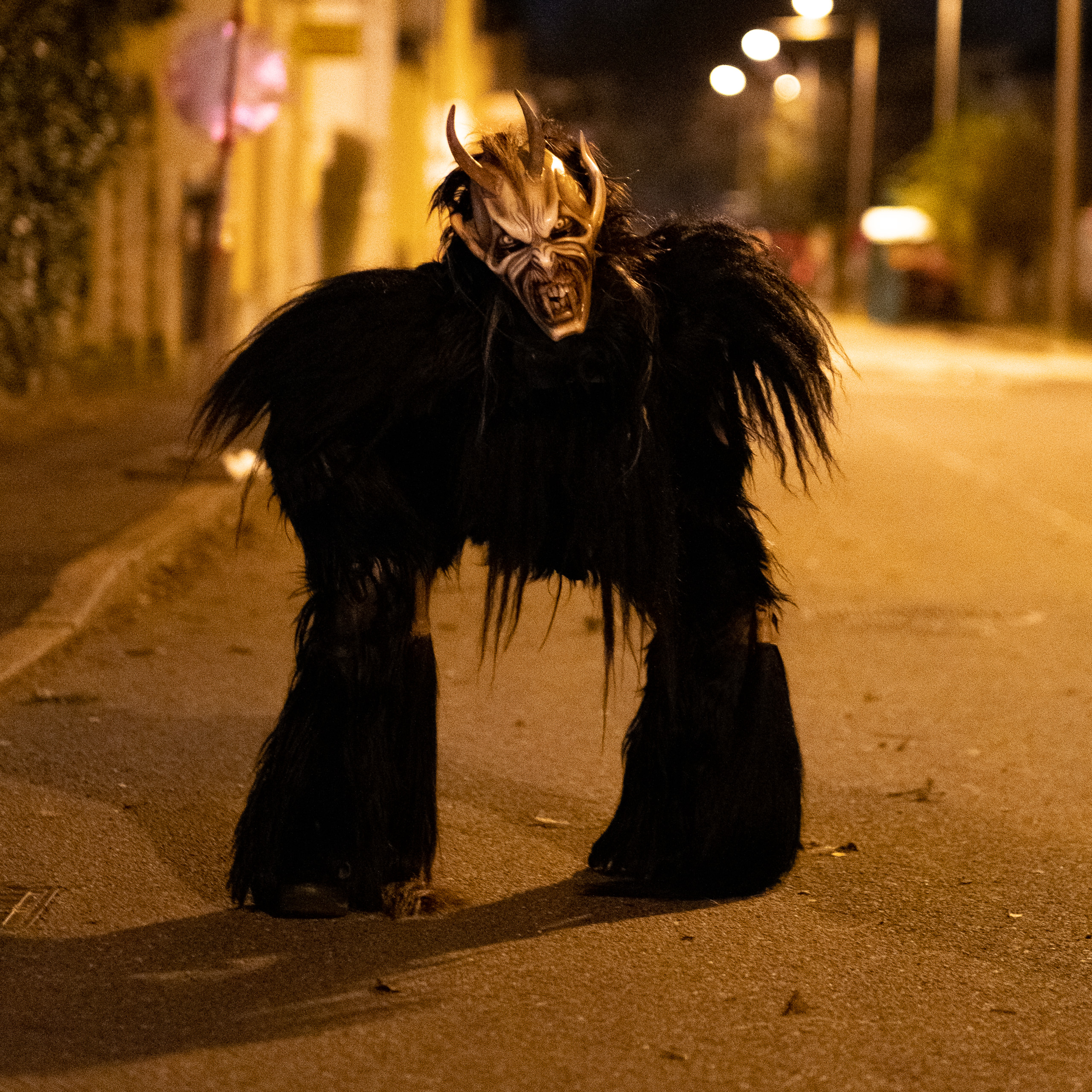
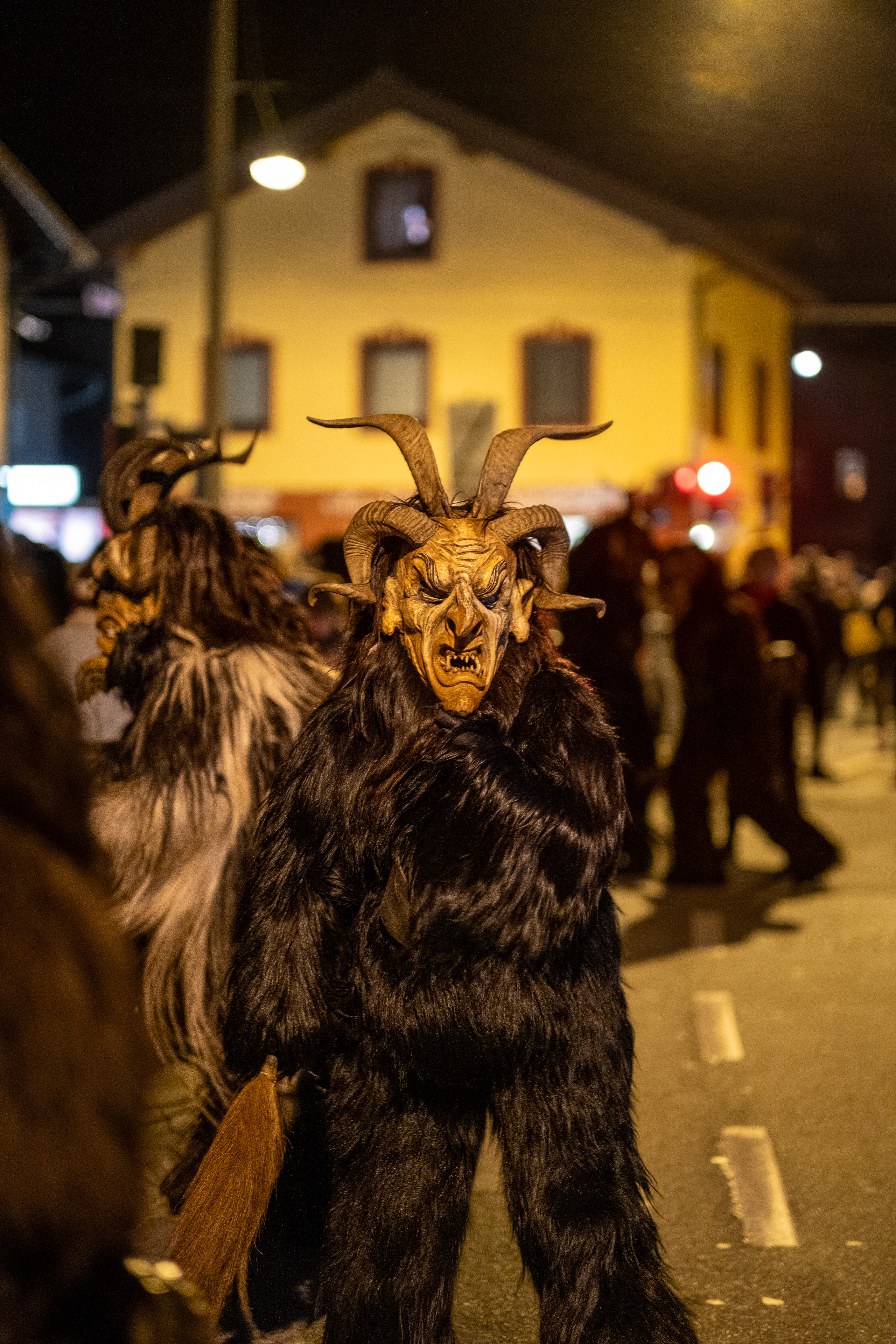
- A single Krampus in black fur with a pale carved mask and swept back horns stands alone in the middle of an empty village street washed orange by sodium lamps. (1 / 6)
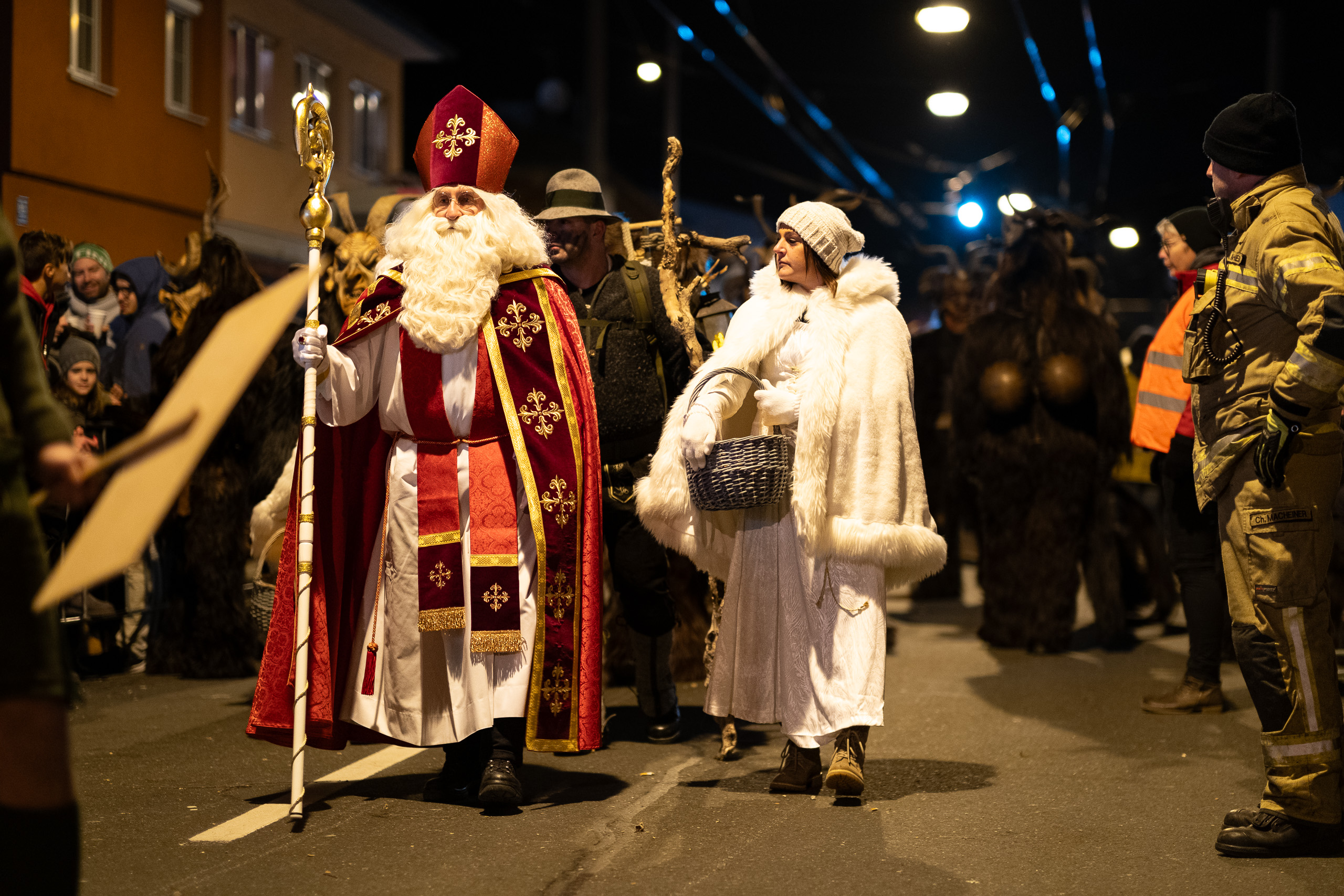
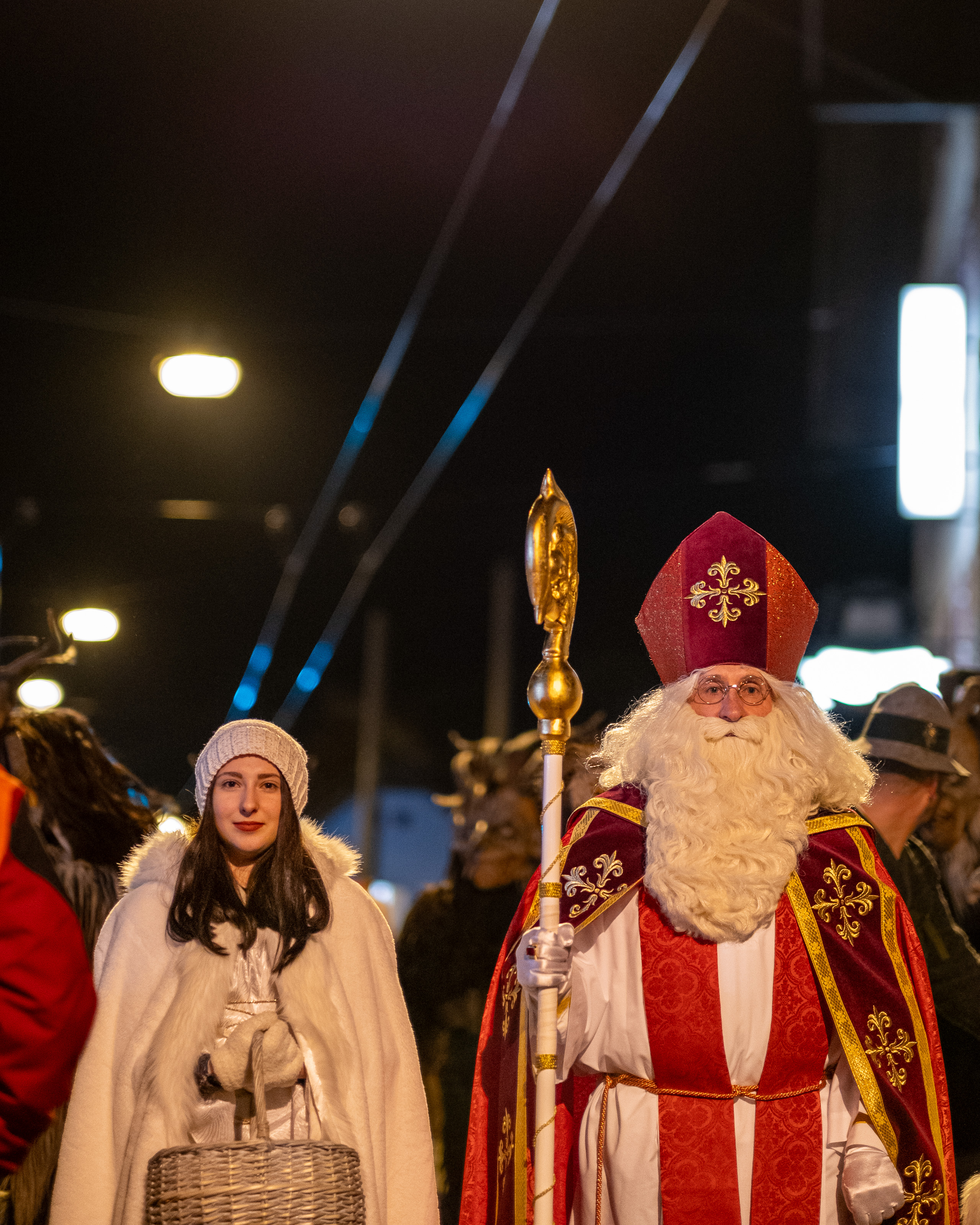
- Saint Nicholas in a red and gold cope with a mitre and crozier walks up a village street beside a woman dressed as an angel in a white fur trimmed cape carrying a wicker basket, with masked figures, a lantern bearer and a firefighter behind them. (2 / 6)
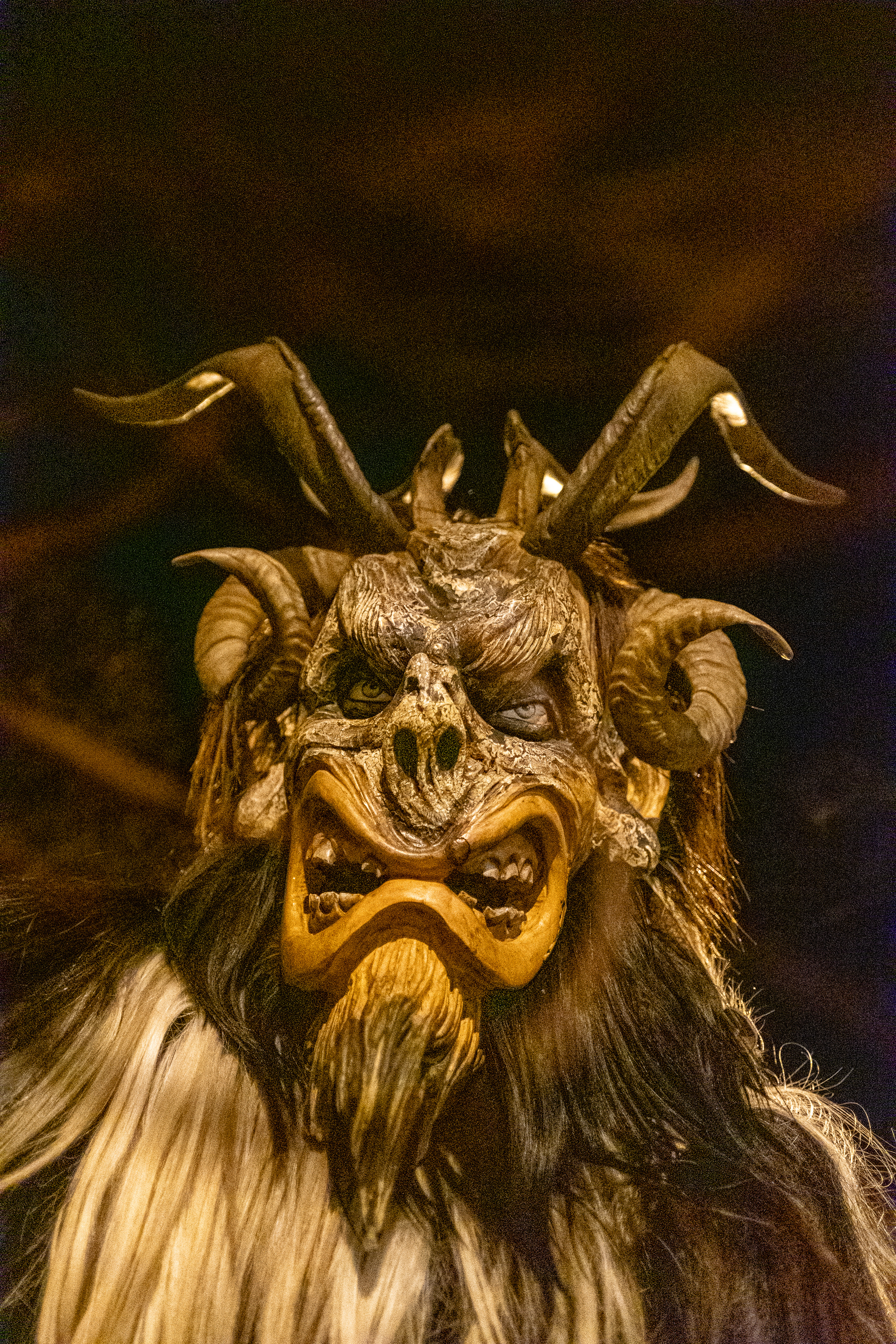
- A close portrait of a carved wooden Krampus mask with curled and straight horns, bared teeth, a hooked wooden beard and pale eyes, lit warm against the black night. (3 / 6)
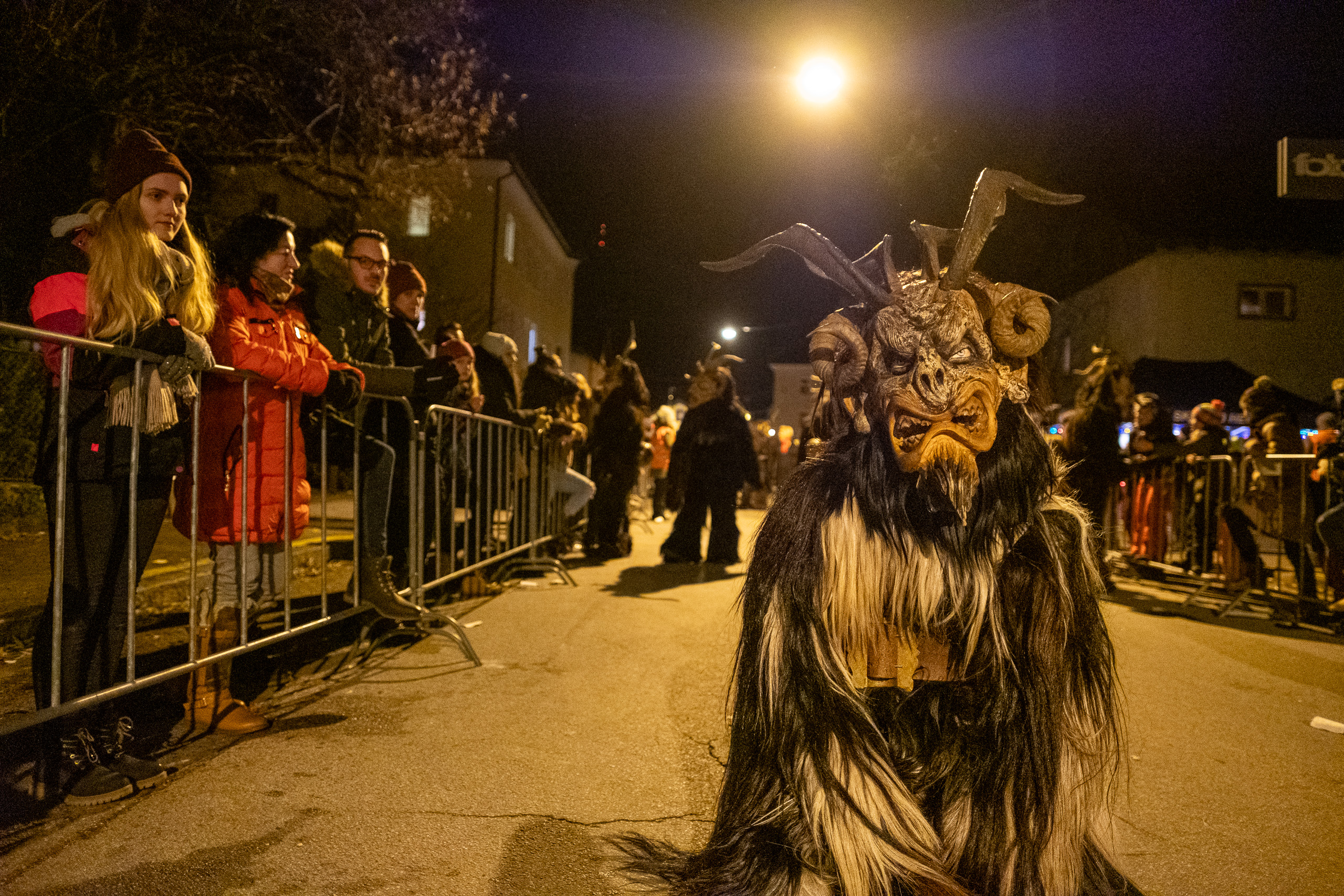
- A Krampus with a long black and white mane and tall antler like horns walks down the middle of a village street lit by a single lamp, while spectators in winter coats watch from behind steel barriers on the left. (4 / 6)
- An angel in a white knitted cap and fur trimmed cape holding a wicker basket stands beside Saint Nicholas in mitre, white beard and red and gold cope, with horned masked figures crowding behind them under blue lights. (5 / 6)
- A Krampus in dark shaggy fur wearing a horned wooden mask with curled ram horns and a broom tail stands in the road in front of a yellow gabled village house, with another masked figure beside him. (6 / 6)
Snapshot
Gnigl is a northeastern district of Salzburg, absorbed into the city in 1935 after centuries as a separate village. It is primarily residential today, but the Rococo St. Michael’s Church and the surviving mill buildings along the Alterbach give it a deeper history than its suburban surface suggests.
The Story
Gnigl’s earliest traces go back to a settlement on the Kapuzinerberg slope dated to around 1000 BC. The area grew slowly around a chapel built in 1585 for St. Michael, and by 1699 Archbishop Thun had founded a cemetery there, tying the community to Salzburg’s ecclesiastical hierarchy.
The church that now anchors the district was commissioned in 1731 by Archbishop Firmian, who hired Tobias Kendler for the design. Construction paused and resumed, and the completed Rococo building opened in 1738, the same year Firmian also expelled thousands of Protestants from the province. The contrast between his architectural patronage and his confessional enforcement is typical of the period.
Along the Alterbach, Gnigl once had a working milling economy. The river’s steady flow supported grain mills, fulling mills, and sawing operations from at least the medieval period. The Haslachmühle, a timber-framed mill complex dating to 1688, is the best-preserved remnant; it now operates as a heritage pension. The mill wheel no longer grinds, but the structure is intact, and the chapel on the grounds retains its 1732 altar.
The railway brought growth and then annexation. Salzburg incorporated Gnigl in 1935. The district is now overwhelmingly residential, with Gnigl Nord in particular given over to post-war block housing and light industry. The historic core of Obergnigl around the church has kept its older character.
Planning
Gnigl is reachable from central Salzburg by public transport; the Linzer Bundesstraße connects it to the city centre. There is nothing requiring a dedicated visit, but the church and the Haslachmühle are worth knowing about if you are passing through the northeast of the city.