Snapshot
Elfriede Jelinek won the Nobel Prize in Literature in 2004 and is the most internationally prominent Austrian author of the post-war era. Her plays have been staged at the Salzburg Festival, where her work turns the prestige of the venue against itself, and her 2026 world premiere took place at the salt works in Hallein, just south of Salzburg.
The Story
Jelinek was born in Murzzuschlag, Styria, in 1946. She trained at the Vienna Conservatory, completing an organ diploma in 1971, and studied theatre and art history at the University of Vienna. The musical training left a permanent mark on how she writes: her prose stacks phrases and repeats motifs in ways that critics and the Nobel Committee described as a “musical flow of voices and counter-voices.” The sentences never release; they pile and circle, exposing the ideological content embedded in ordinary language.
Her novel Die Klavierspielerin (1983) is the work most readers encounter first. It draws on her own relationship with her intensely controlling mother and her years in a conservatory environment that fused discipline with violence. Michael Haneke filmed it in 2001, with Isabelle Huppert in the lead role, and that adaptation gave the novel a second international life. The same themes recur across her work: the female body as contested territory, the class dynamics of Austrian provincial life, the complicity between culture and fascism.
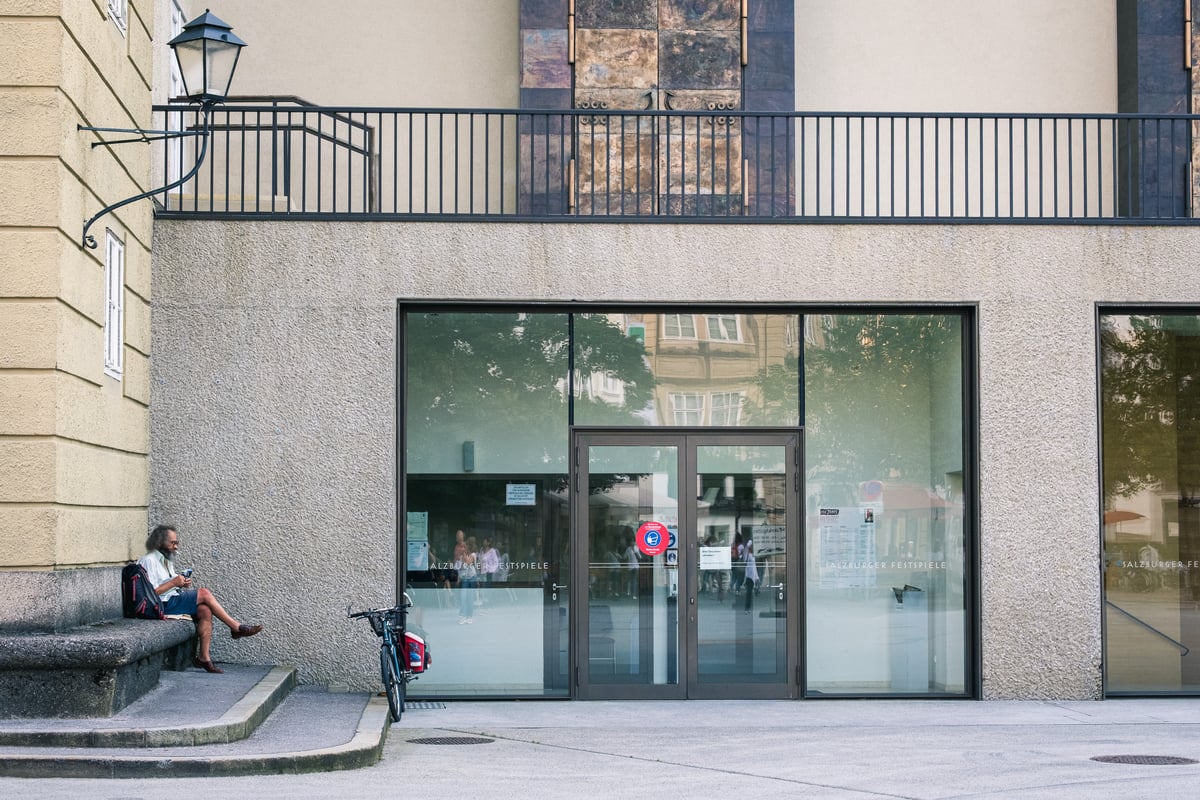
The Salzburg Festival has staged her plays, which take on a particular charge in that context. The festival is one of the most prestigious cultural institutions in the German-speaking world, with a summer programme that draws artists and audiences from across Europe. Jelinek’s work uses that prestige as a subject: the gilded concert hall, the formal programme, the assumption of cultural elevation, all become material for a literature that insists on Austria’s unresolved past. Her 2026 world premiere, Unter Tieren, was staged at the Alte Saline Pernerinsel in Hallein, whose industrial salt-works architecture matched the play’s critique of capitalism and collapse.
Like Thomas Bernhard, she is a figure who cannot be ignored in any serious engagement with Austrian culture. Austria has honoured her and been deeply unsettled by her at the same time. She is the country’s first Nobel laureate in literature.