Topic
Salzburg Festival
84 entries tagged Salzburg Festival on Introducing Salzburg.
Café Bazar
Opened 1930
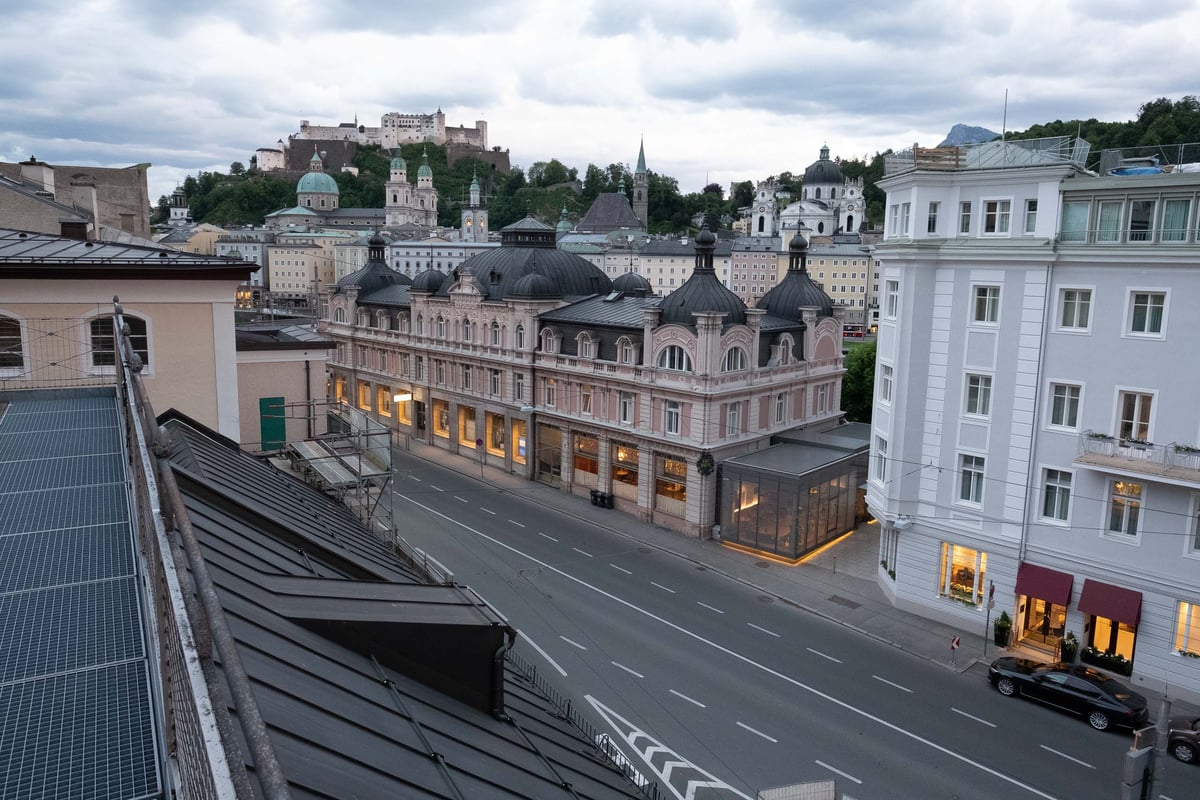
Stefan Zweig, Max Reinhardt, and Hugo von Hofmannsthal used to sit at these marble tables, and the view across the Salzach toward the Altstadt and fortress hasn't changed since. Cafe Bazar is the literary coffeehouse that locals recommend when tourists ask about Tomaselli.
Domplatz
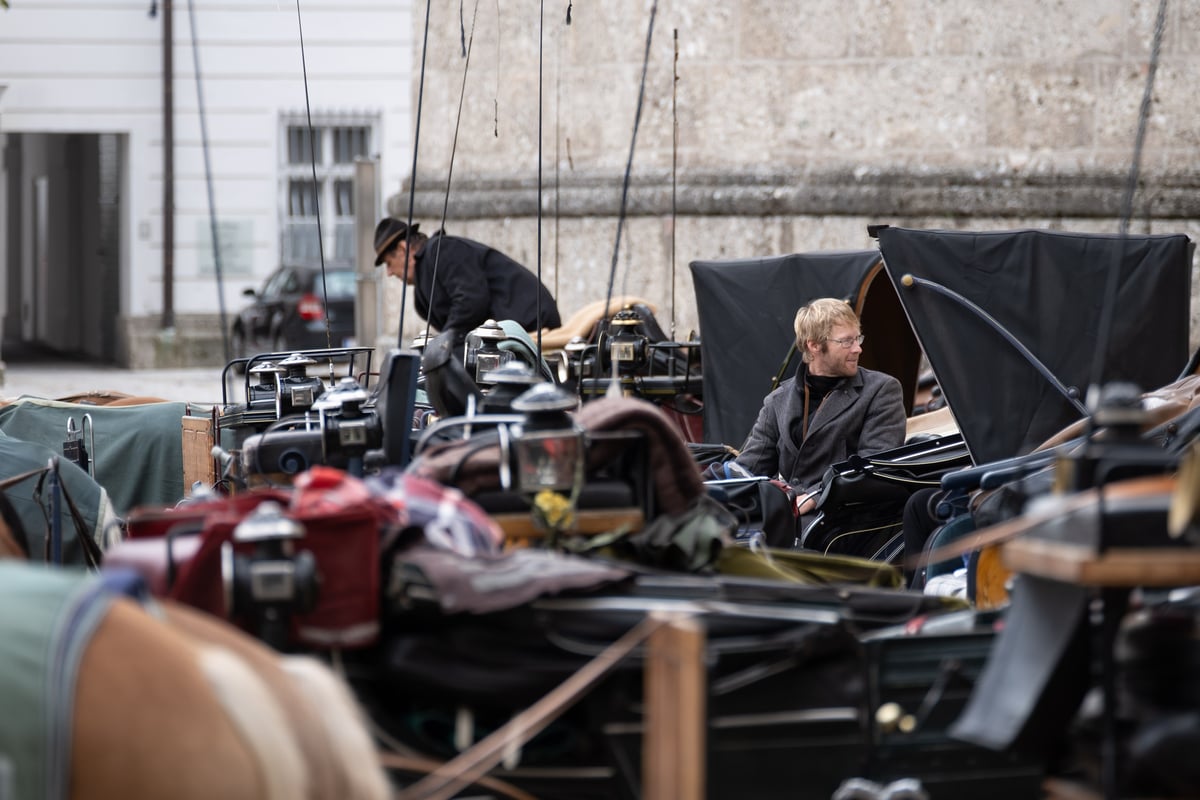
The square directly in front of the Salzburg Cathedral, flanked by the Cathedral arches and the DomQuartier buildings. Site of the famous annual Jedermann performance during the Salzburg Festival.
Felsenreitschule
Built 1693
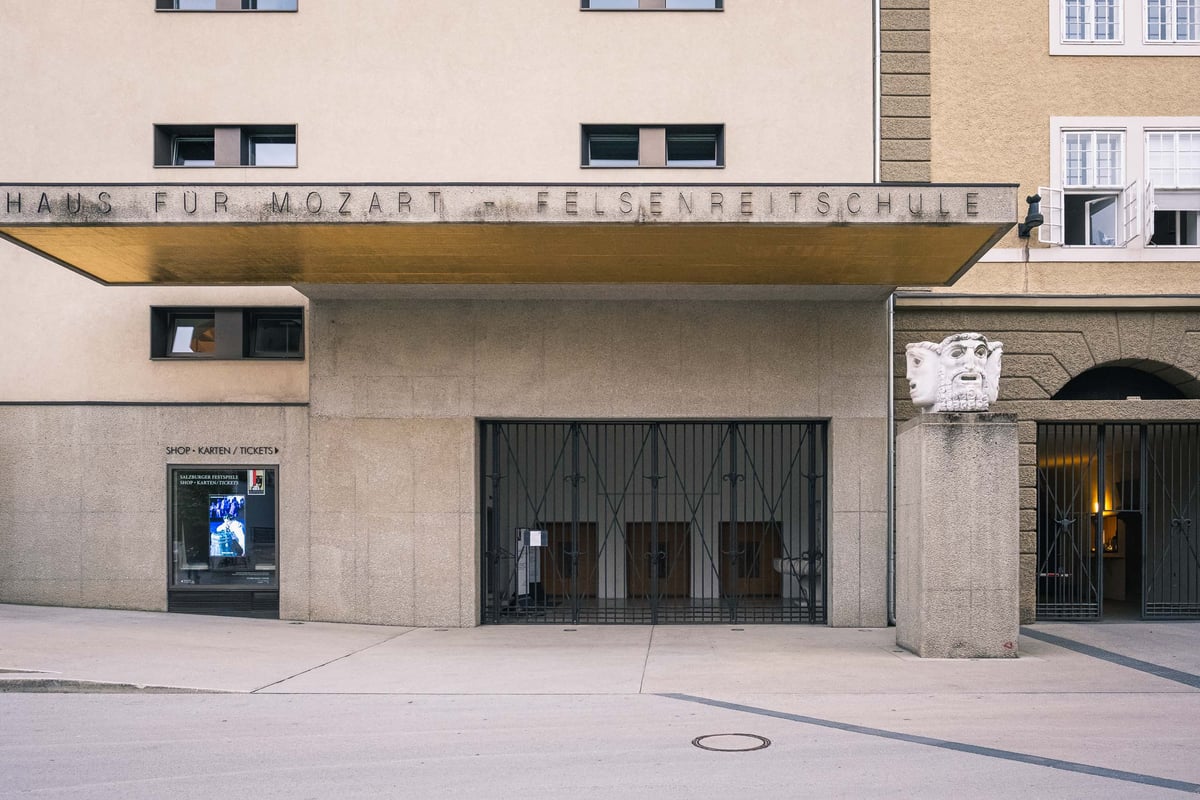
The Felsenreitschule is a theater carved directly into the Moenchsberg cliff face, which means the backstage wall is living rock and three tiers of 17th-century arcades form the auditorium. It was originally built in 1693 as a summer riding school for the Archbishop's horses.
Furtwänglerpark
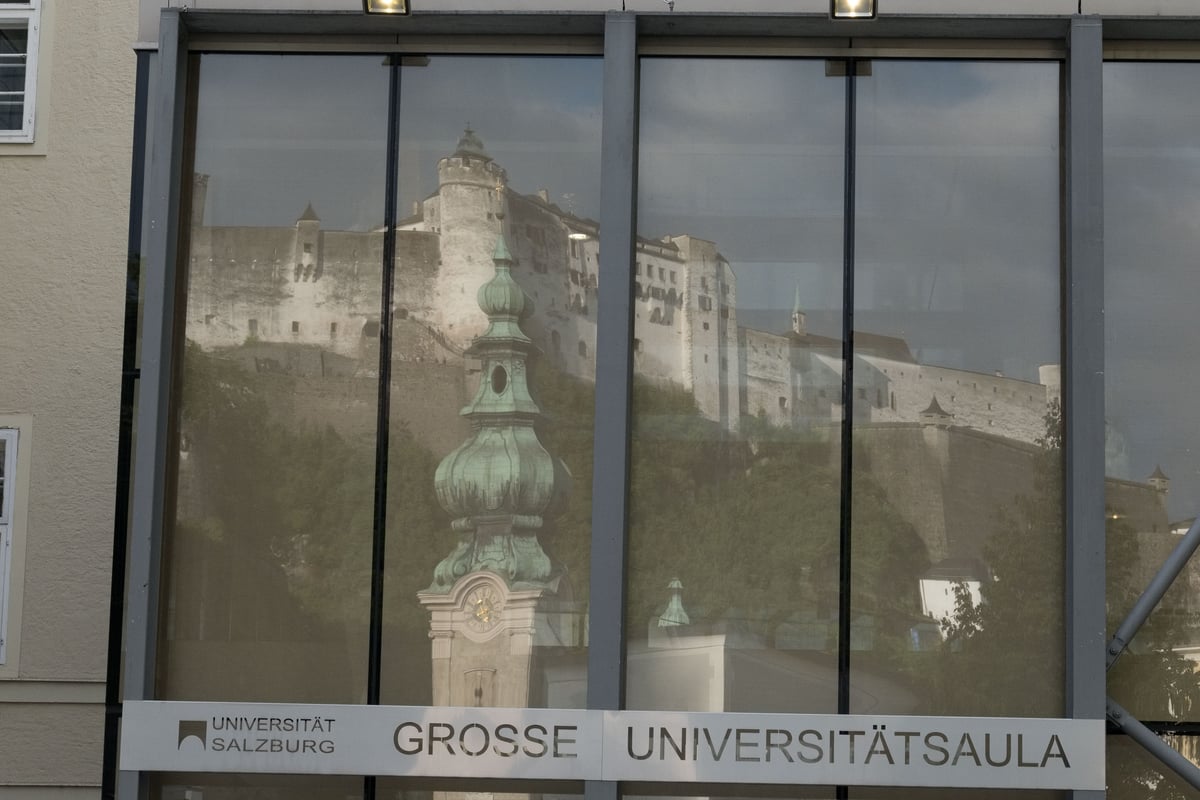
A small park between the Festival halls and the Mönchsberg cliff face, named after Wilhelm Furtwängler. Home to the Gurken sculpture and AEIOU pavilion. A breathing space in a dense part of the city.
Galerie Thaddaeus Ropac
Founded 1983
One of the world's leading contemporary art galleries, founded by Thaddaeus Ropac in Salzburg in 1983 before expanding to Paris, London, and Seoul. Exhibitions timed partly around the Festival season.
Großes Festspielhaus
Completed 1960
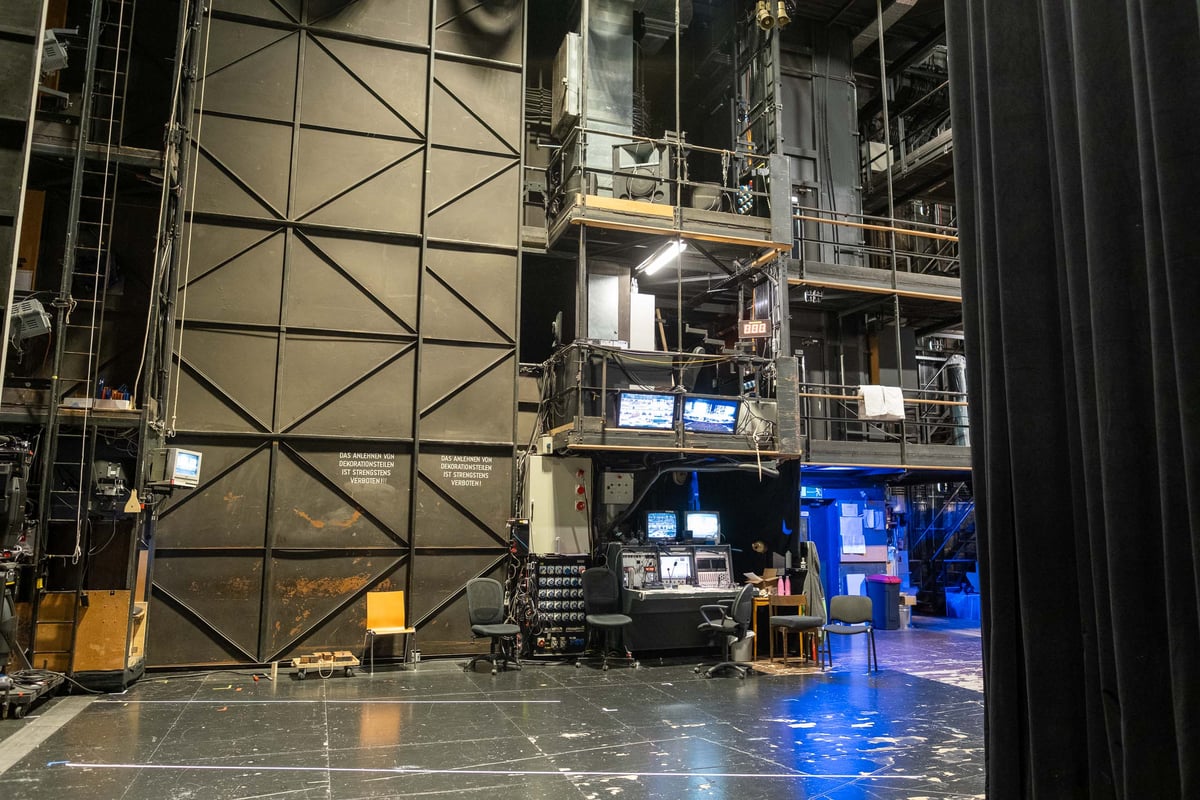
The Grosses Festspielhaus (Large Festival Hall) opened in 1960 as a major expansion of Salzburg's Festspielhaus complex, carved in large part from the Moenchsberg cliff face to achieve its 2,179-seat auditorium. Architect Clemens Holzmeister cut the main stage directly into the rock, creating one of the widest stages in the world at 100 meters.
Gwandhaus by Gössl
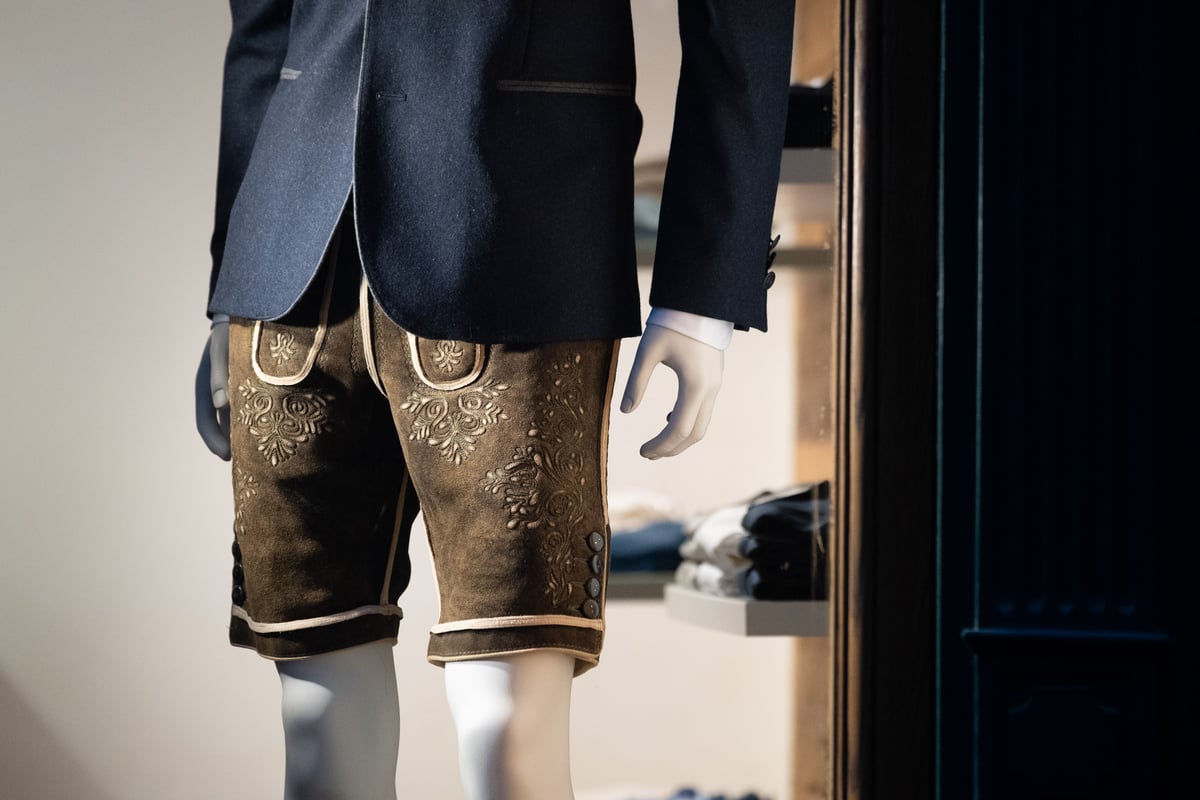
Flagship store of Gössl, Austria's most internationally recognised Trachten brand. Housed in a historic baroque building between the city and Hellbrunn Palace. Gössl designs are worn at the Salzburg Festival.
Haus für Mozart
Renamed 2006
Formerly the Kleines Festspielhaus, renamed "Haus für Mozart" in 2006 after major renovation. Primarily used for Mozart operas during the Salzburg Festival. Acoustically designed for the scale and intimacy of Mozart's operatic works.
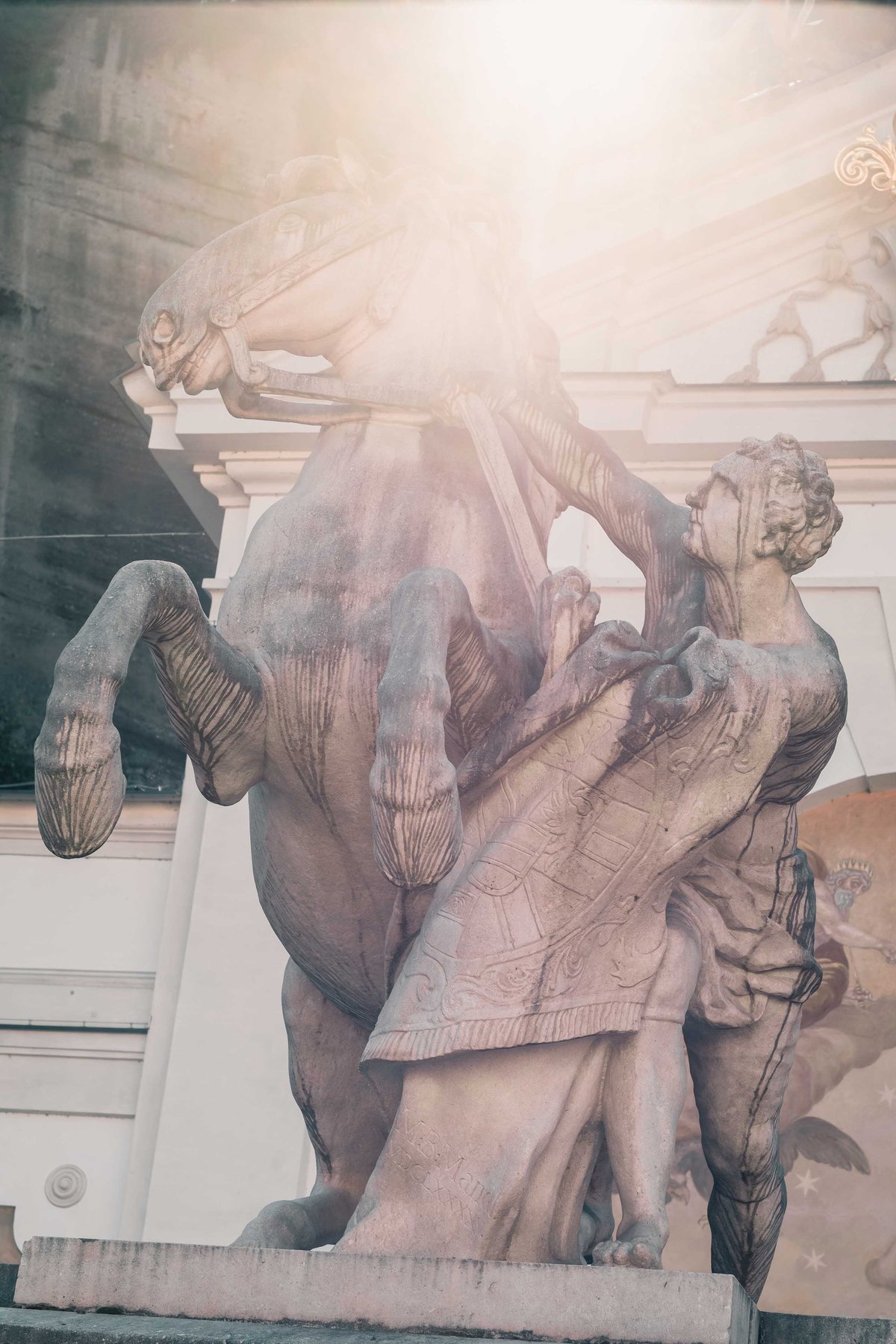
Herbert-von-Karajan-Platz
The square in front of the Grosses Festspielhaus, named after Herbert von Karajan. Central gathering point during the Festival. Home to the Pferdeschwemme (baroque horse trough). The Mönchsberg cliff face forms its dramatic backdrop.
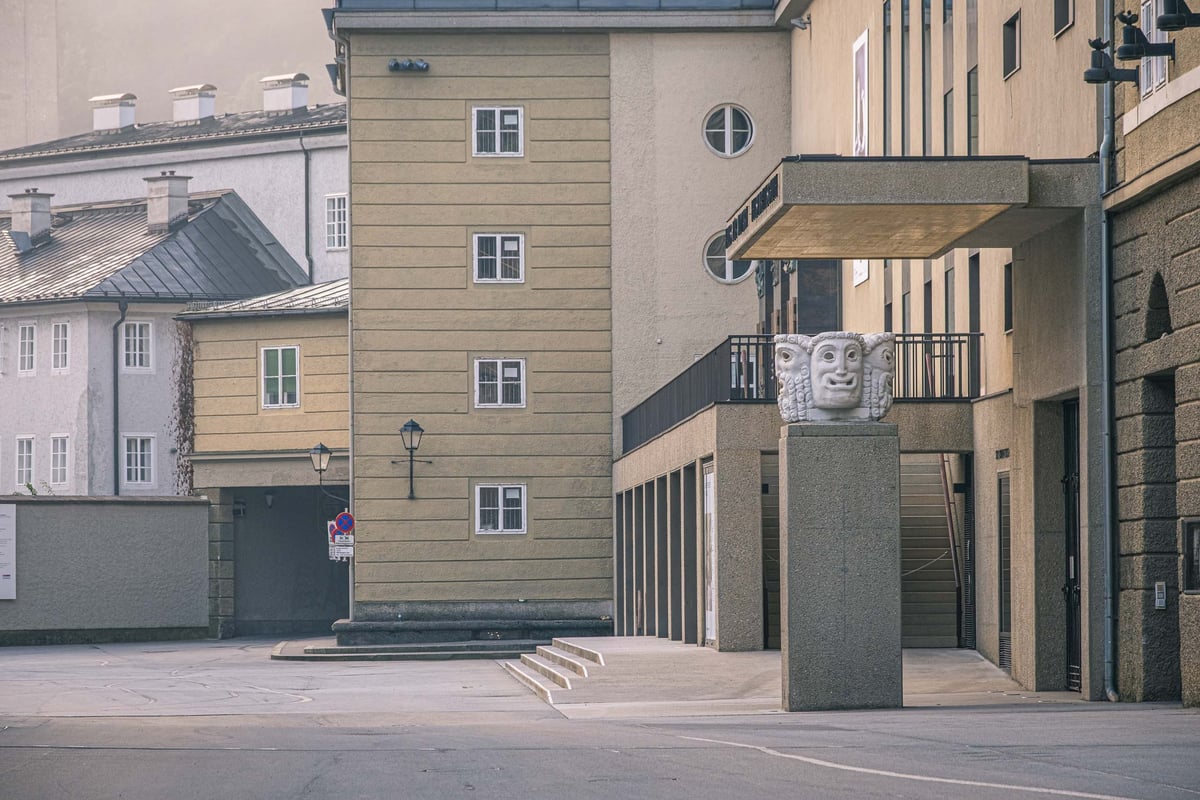
Hofstallgasse
The spine of the Salzburg Festival precinct, running along the Mönchsberg cliff face. The Grosses Festspielhaus, Haus fur Mozart, and Felsenreitschule all open from this street. During the Festival, the most concentrated point of cultural energy in the city.
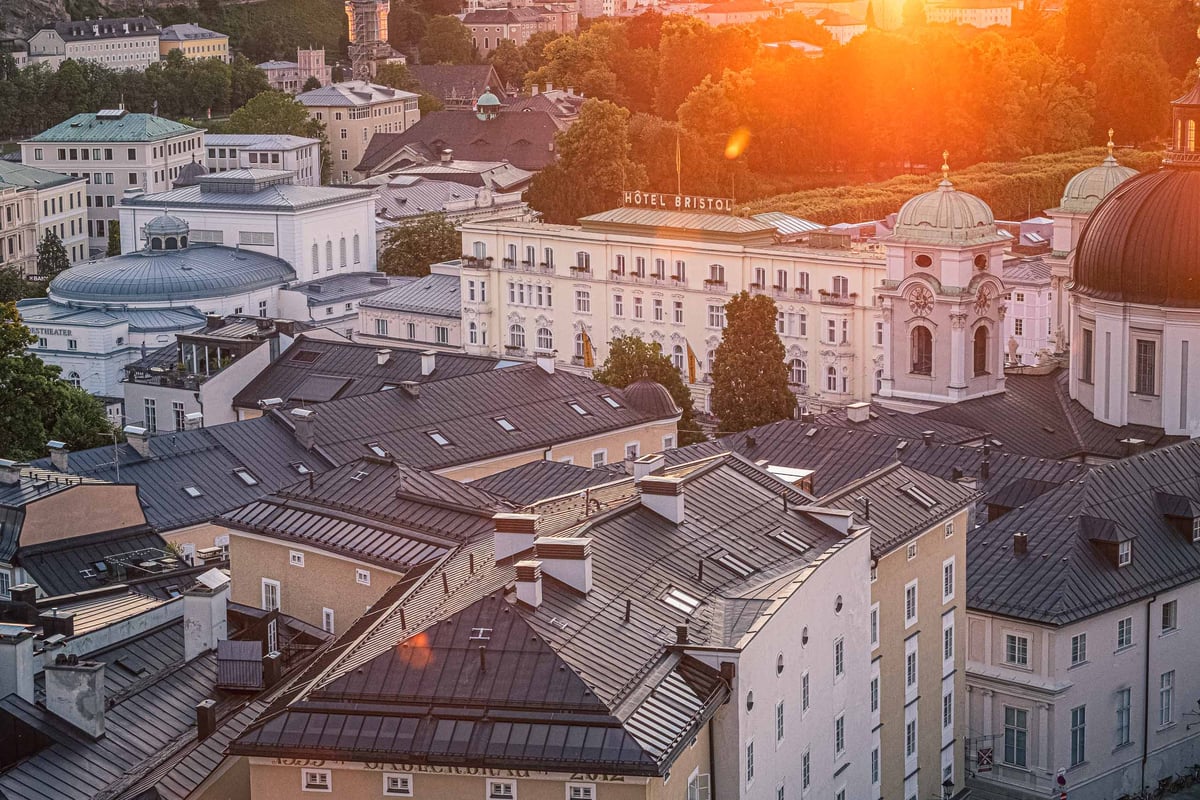
Hotel Bristol Salzburg
A classic grand hotel on Makartplatz, opposite the Mozarteum and adjacent to Mozarts Residence. A Festival institution: conductors, soloists, and the international music world gather here each summer.
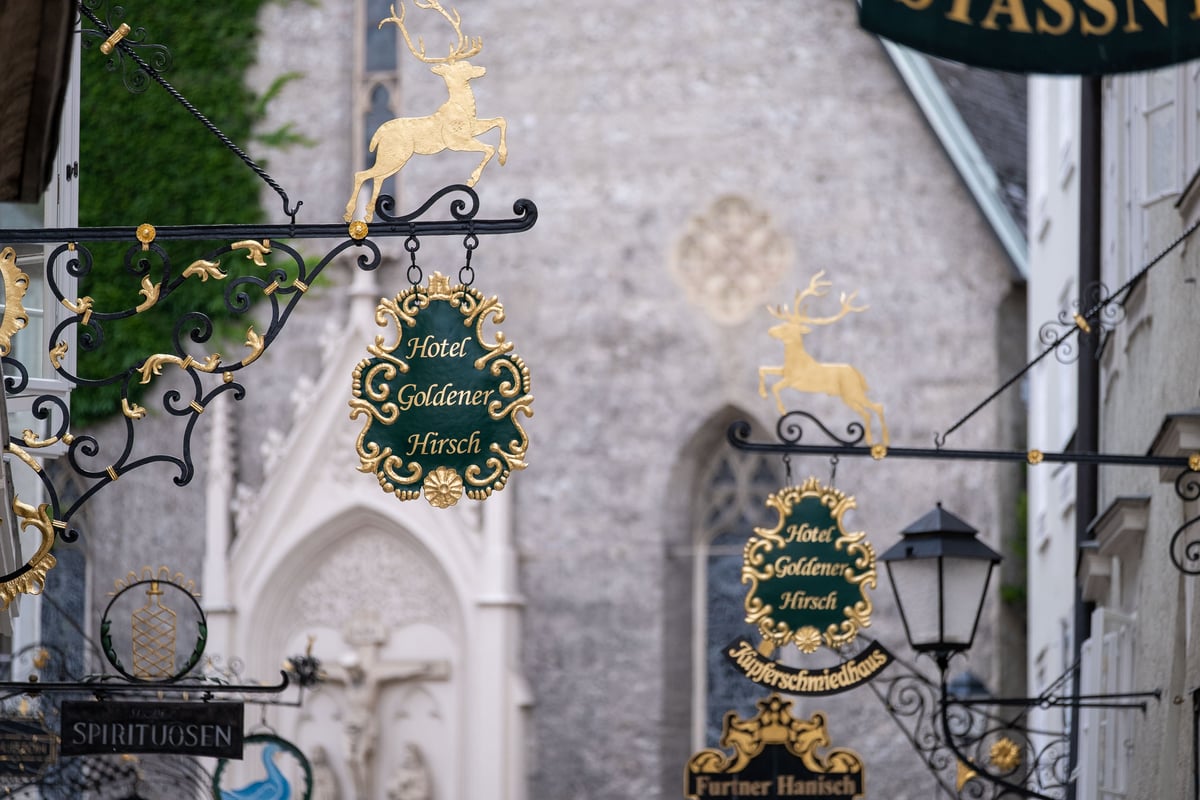
Hotel Goldener Hirsch
Since 1407
Salzburg's most storied luxury hotel, on the Getreidegasse since 1407. Herbert von Karajan, Maria Callas, Leonard Bernstein, and countless conductors, singers, and heads of state have stayed here. The preferred hotel of the Salzburg Festival world.
Hotel Jedermann
Charming boutique hotel on Rainerstraße named after Hofmannsthal's Jedermann. Personally managed, individually styled rooms, warm atmosphere. Well-regarded mid-range.
Hotel Sacher Salzburg
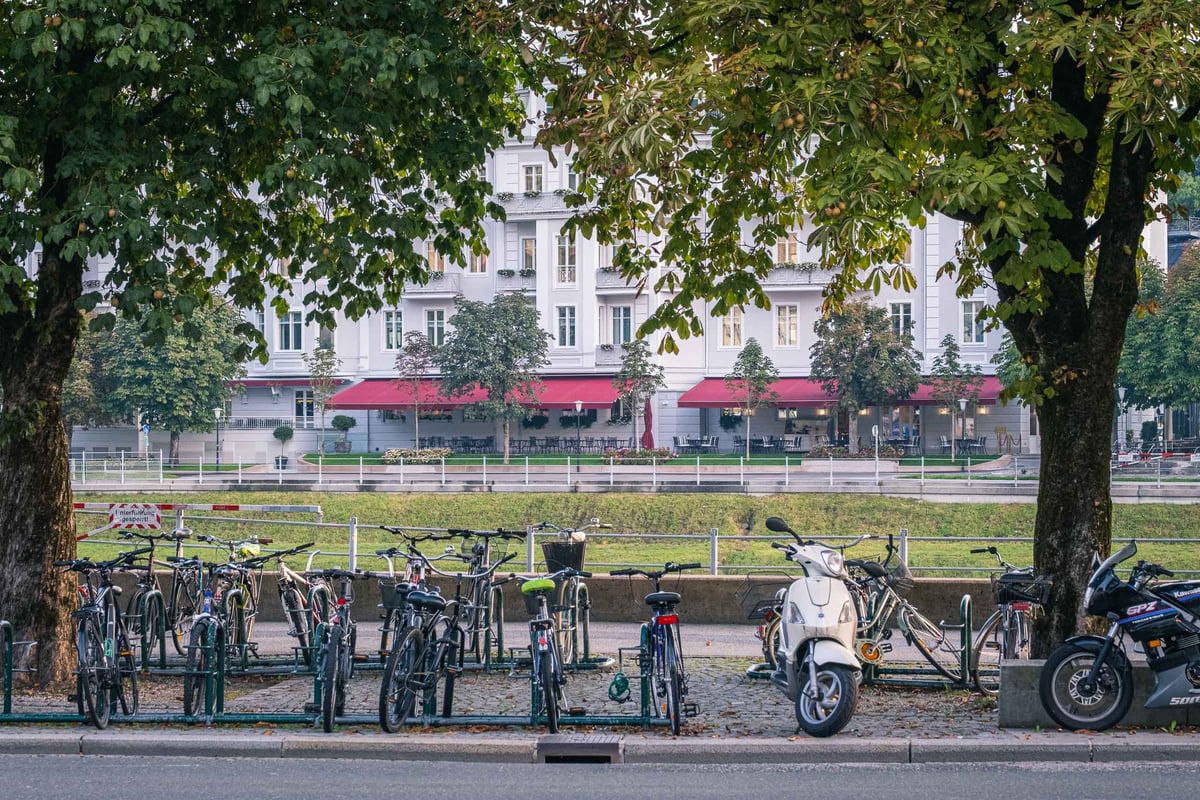
The Salzburg outpost of the famous Sacher brand, on Schwarzstrasse facing the Salzach and the Altstadt skyline. A Salzburg Festival institution. Its terrace and bar are among the most atmospheric places in the city during the summer season.
Jedermann
Hugo von Hofmannsthal's morality play, performed on Domplatz almost every summer since 1920. The longest continuously running open-air theatrical tradition in the German-speaking world. When Death calls from offstage, his voice echoes from the rooftops and towers. The Cathedral facade as backdrop, the square as auditorium, the city as stage.
Leonardo Hotel Salzburg City Center
The Leonardo Hotel Salzburg City Center is a hotel in Salzburg's Altstadt, the UNESCO World Heritage historic core, positioned to give walking access to the Cathedral, Getreidegasse, and the Mozartplatz.
Markuskirche
Designed 1926
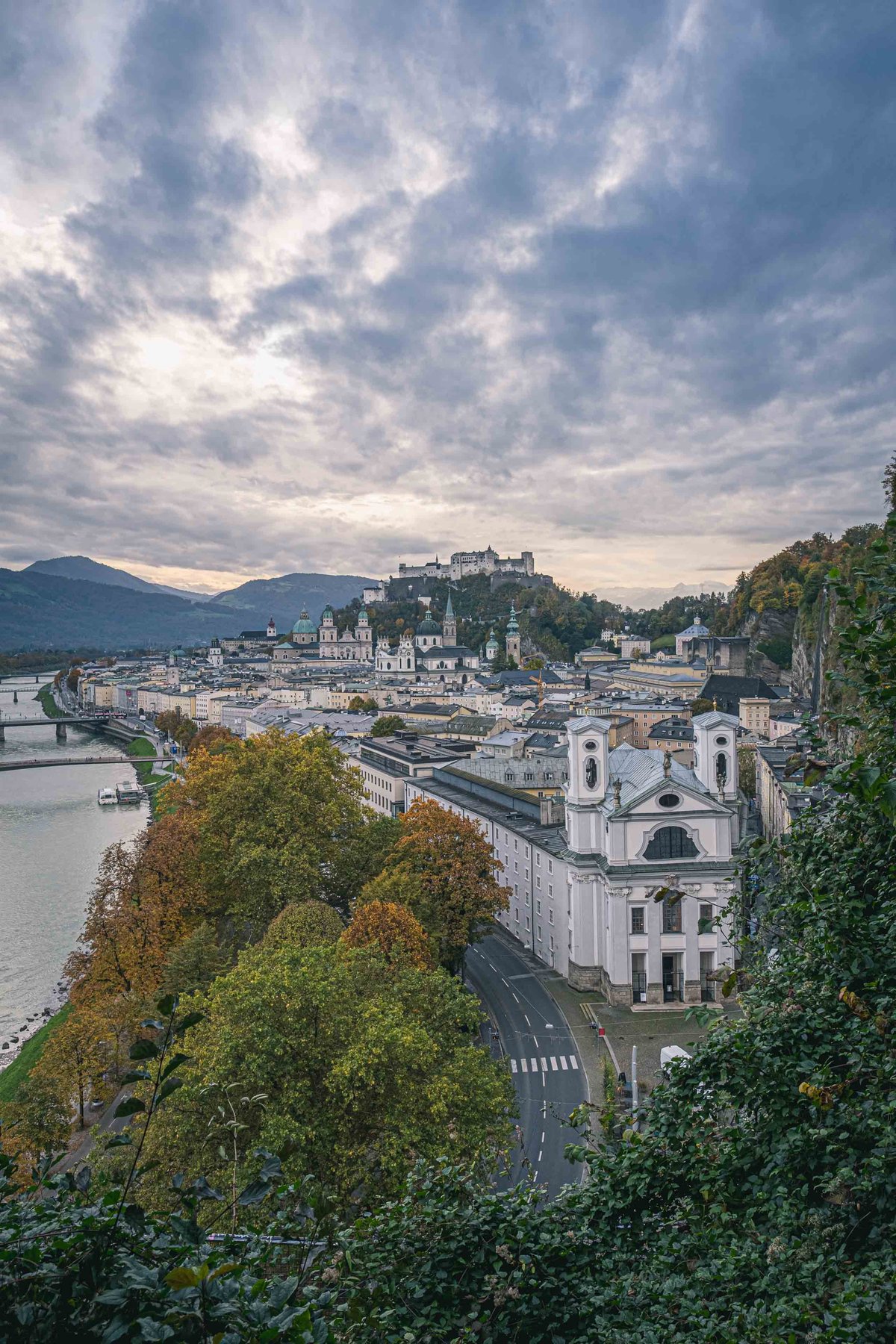
A rare example of modernist sacred architecture in Salzburg, designed by Clemens Holzmeister in 1926 for the growing Maxglan district. The same architect responsible for the Grosses Festspielhaus.
Mönchsberg
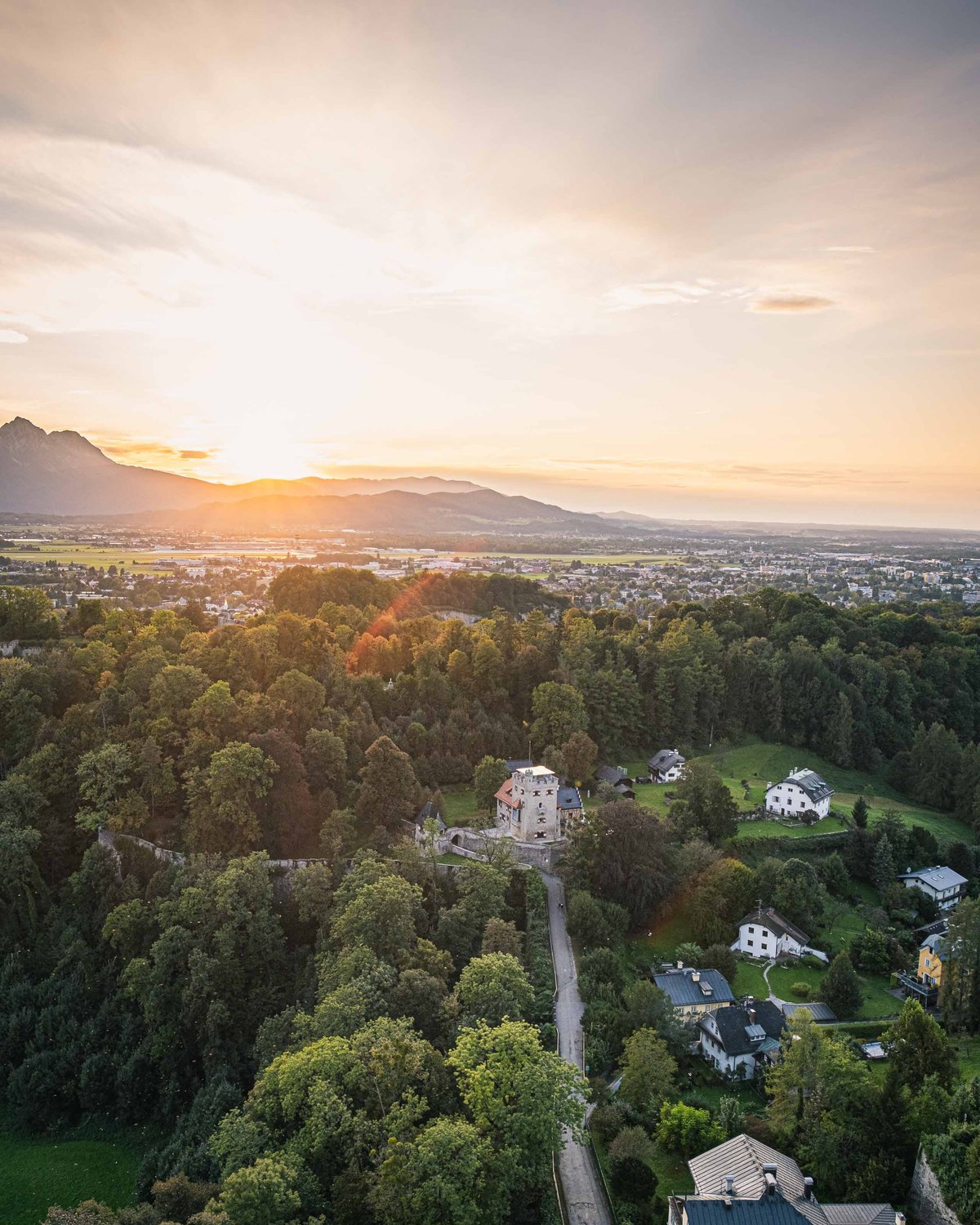
The prominent cliff-faced hill on the western edge of the Altstadt, rising directly above the city. Topped by the Museum der Moderne Monchsberg and criss-crossed with walking paths. The cliff face forms the backdrop of Stift St. Peter, the Felsenreitschule, and the Grosses Festspielhaus.
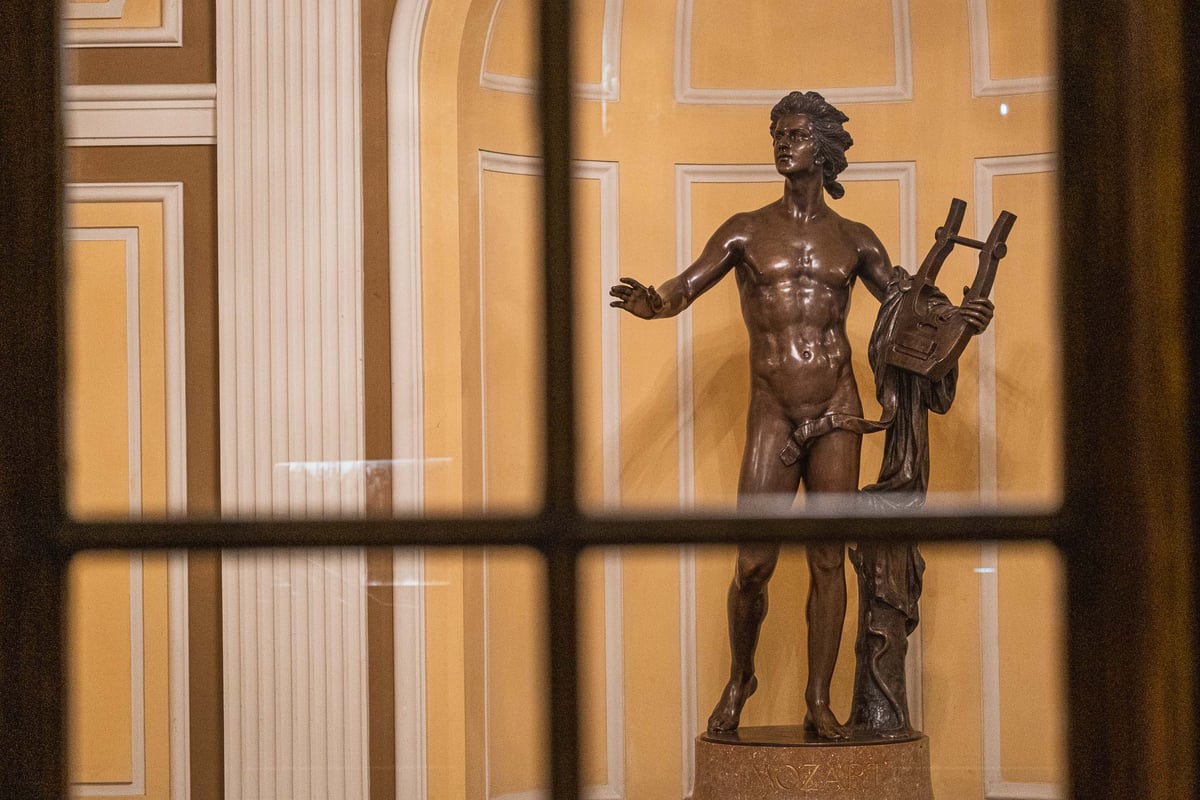
Mozarteum
Built 1910-1914
The Mozarteum Foundation is the institution that runs both of Salzburg's Mozart museums, organizes the Mozart Week festival each January, and operates the concert hall on Schwarzstrasse where major chamber and orchestral programming happens outside the Salzburg Festival.
Mozartkino
An art house cinema on Kaigasse in the Altstadt, one of the oldest continuously operating cinemas in Austria. Programmes international and Austrian art house films year-round.
Salzburg Airport W.A. Mozart
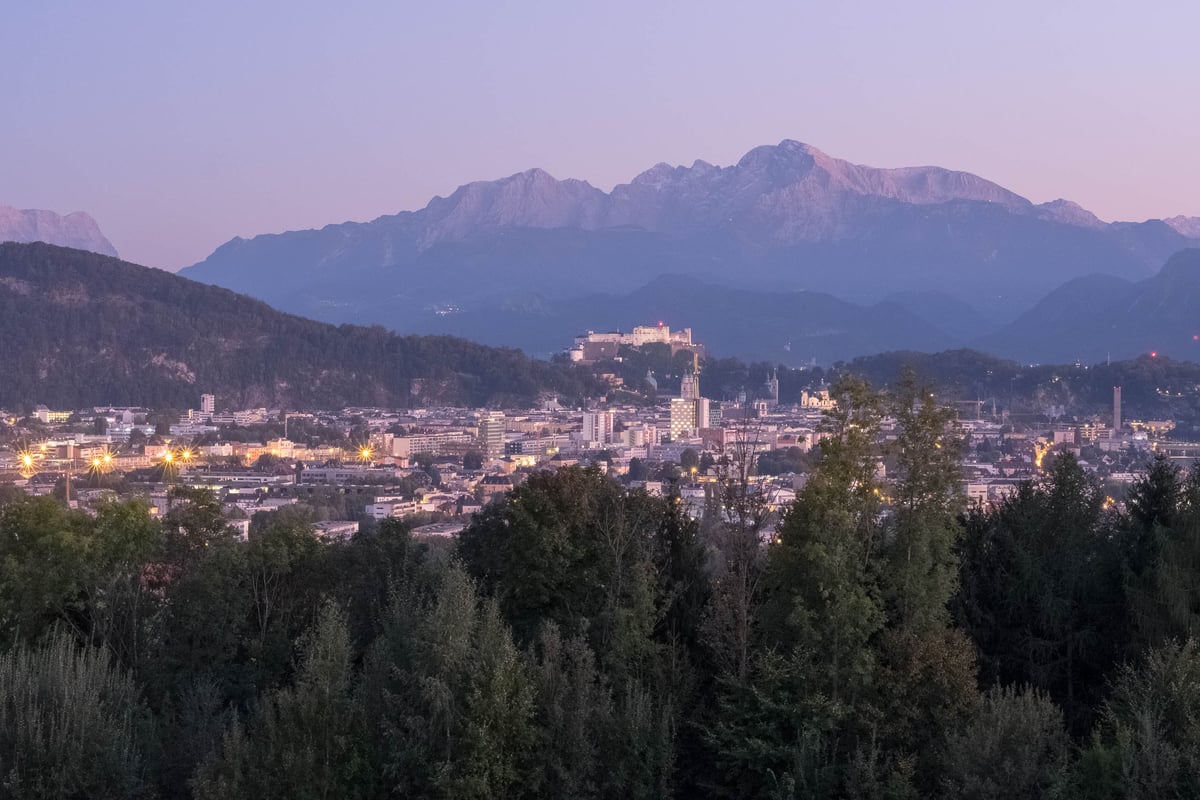
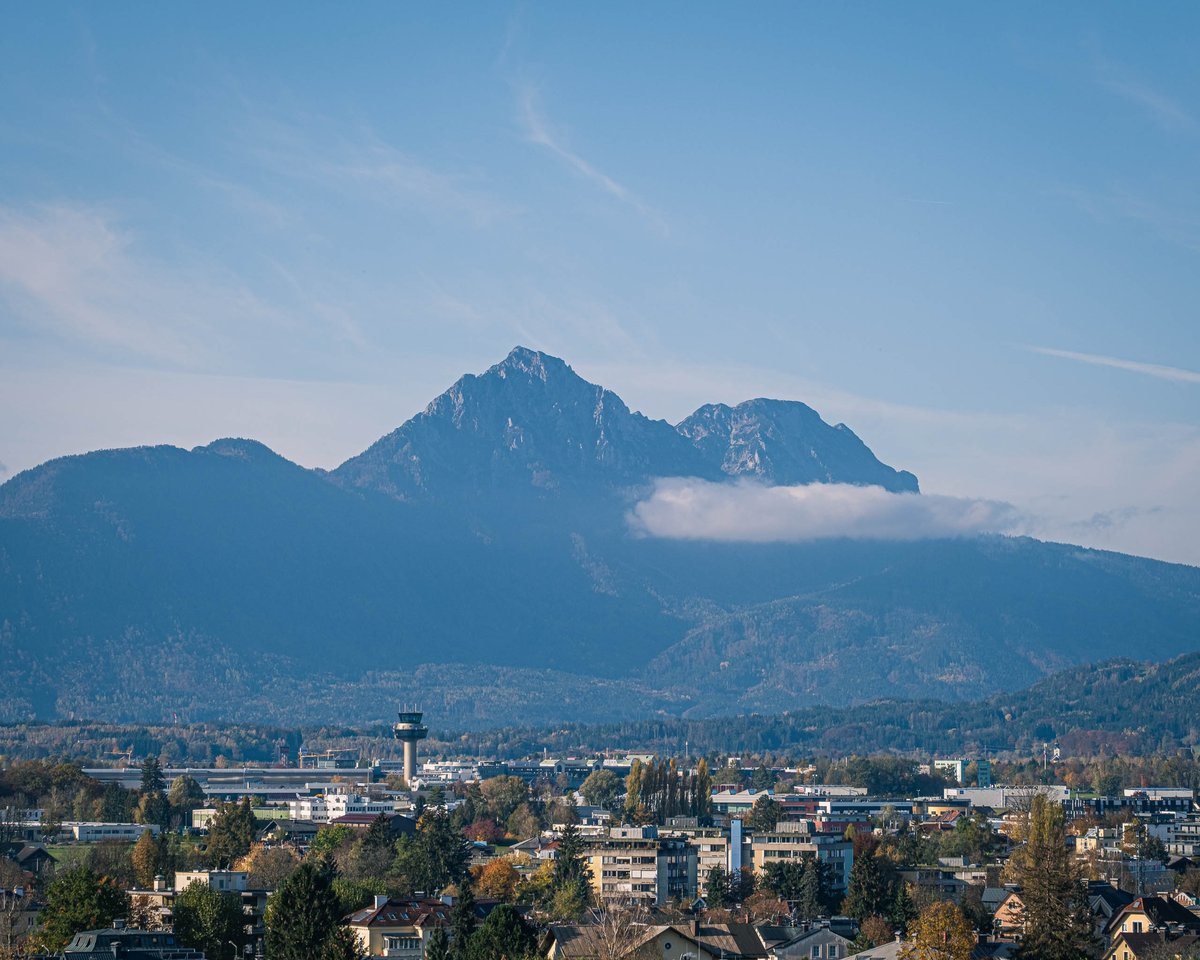
Salzburg's international airport, named after Mozart. One of the few airports named after a composer. Few kilometres from the Altstadt, reachable by bus in 20 minutes. Adjacent to Hangar 7.
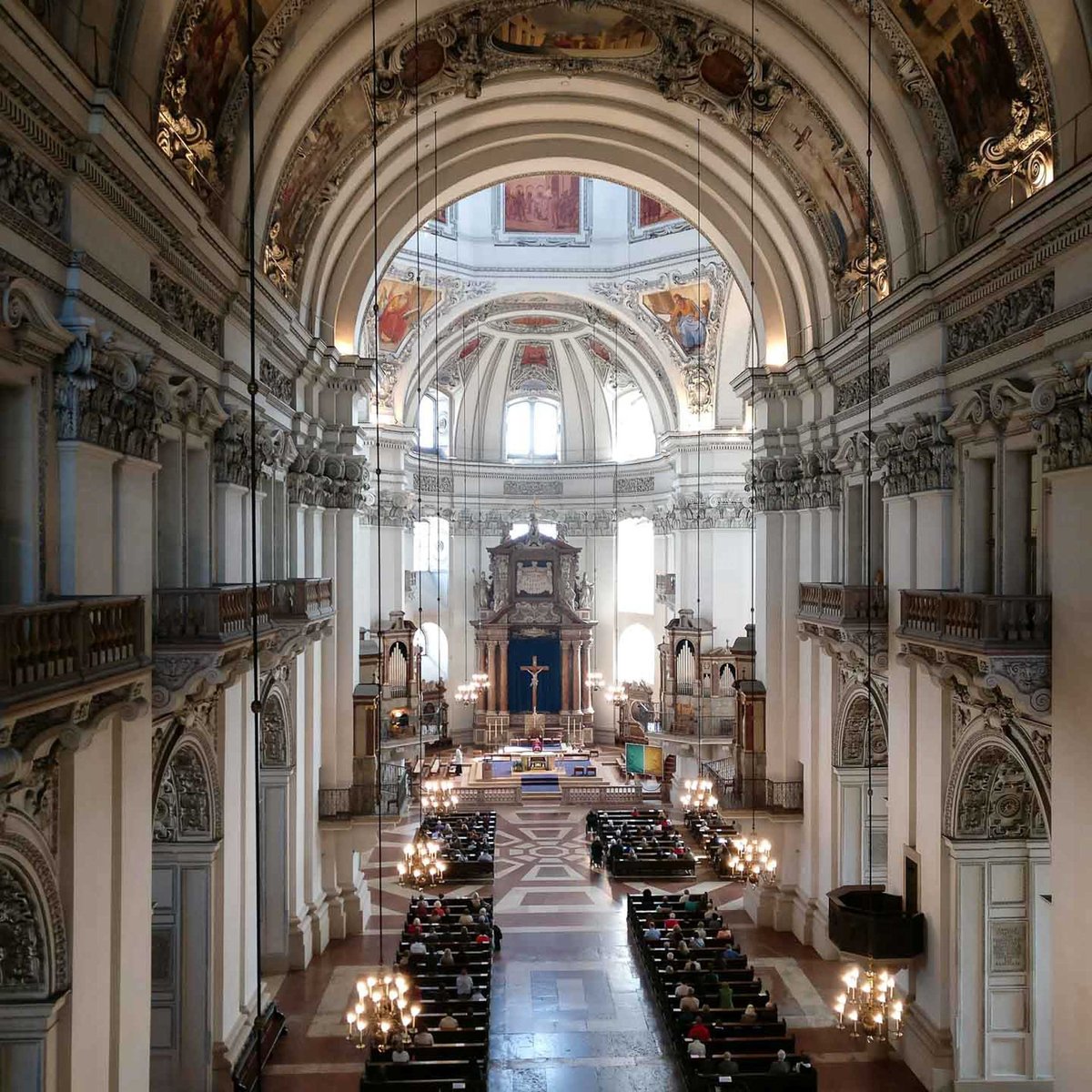
Salzburg Cathedral
Consecrated 1628
The first baroque cathedral built in the German-speaking world, and the dominant church at the heart of Salzburg's Altstadt. Wolfgang Amadeus Mozart was baptised here on 28 January 1756. The site has held a cathedral since 774, when Saint Virgil of Salzburg consecrated the first one.
Salzburg Easter Festival
Prestigious Easter classical music festival. Founded 1967 by Herbert von Karajan with the Berlin Philharmonic. Now associated with Christian Thielemann and the Staatskapelle Dresden. One major opera plus concerts and recitals.
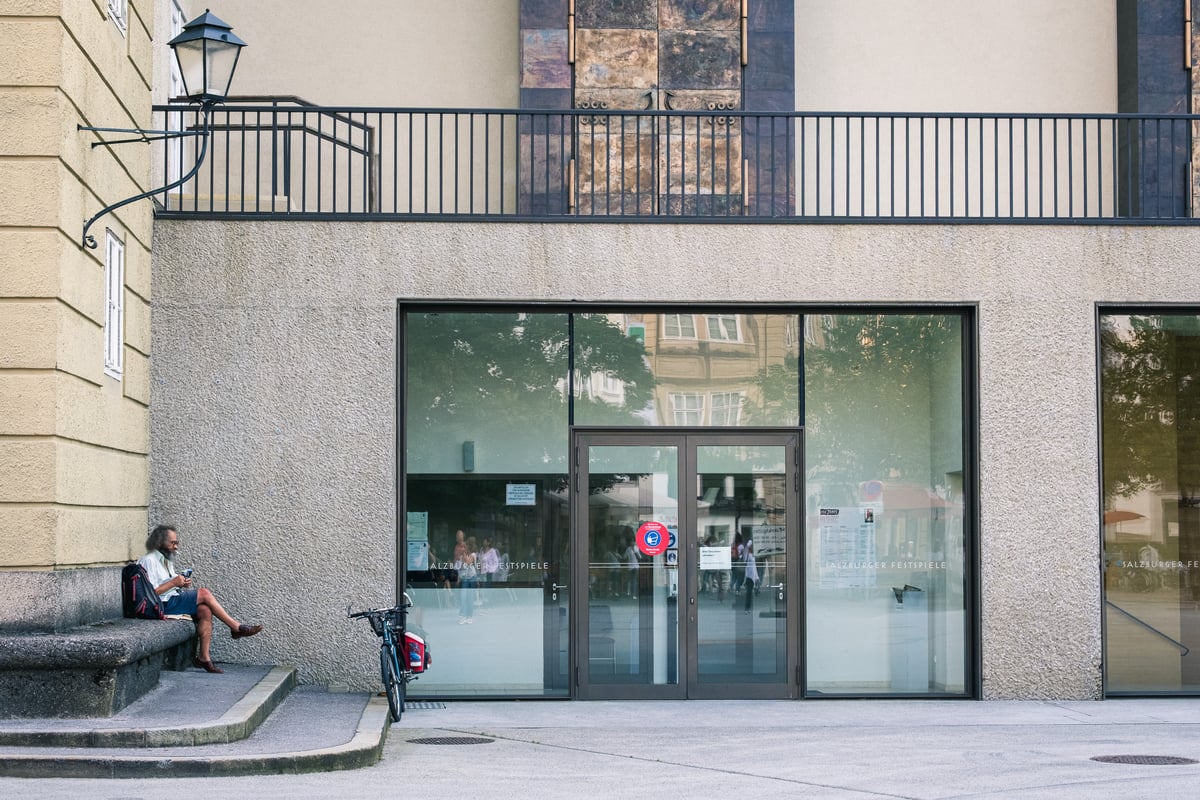
Salzburg Festival
One of the world's most prestigious performing arts festivals. Held annually late July to end of August. Founded 1920 by Hugo von Hofmannsthal, Max Reinhardt, Richard Strauss, Franz Schalk, and Alfred Roller. Inaugural event: Jedermann on Domplatz. Herbert von Karajan defined the postwar era. Opera, drama, concerts.
Salzburg Festival Halls Guided Tour
The Salzburg Festival Halls Guided Tour gives access to the three main Salzburg Festival venues on Hofstallgasse: the Grosses Festspielhaus with its 30-meter-wide stage, the Felsenreitschule carved directly into the Mönchsberg cliff, and the intimate Haus fur Mozart.
Salzburg Whitsun Festival
Compact Whitsun weekend festival. Directed since 2012 by Cecilia Bartoli. Historically informed performance, Baroque opera, rare repertoire. Intimate, focused, stylistically adventurous.
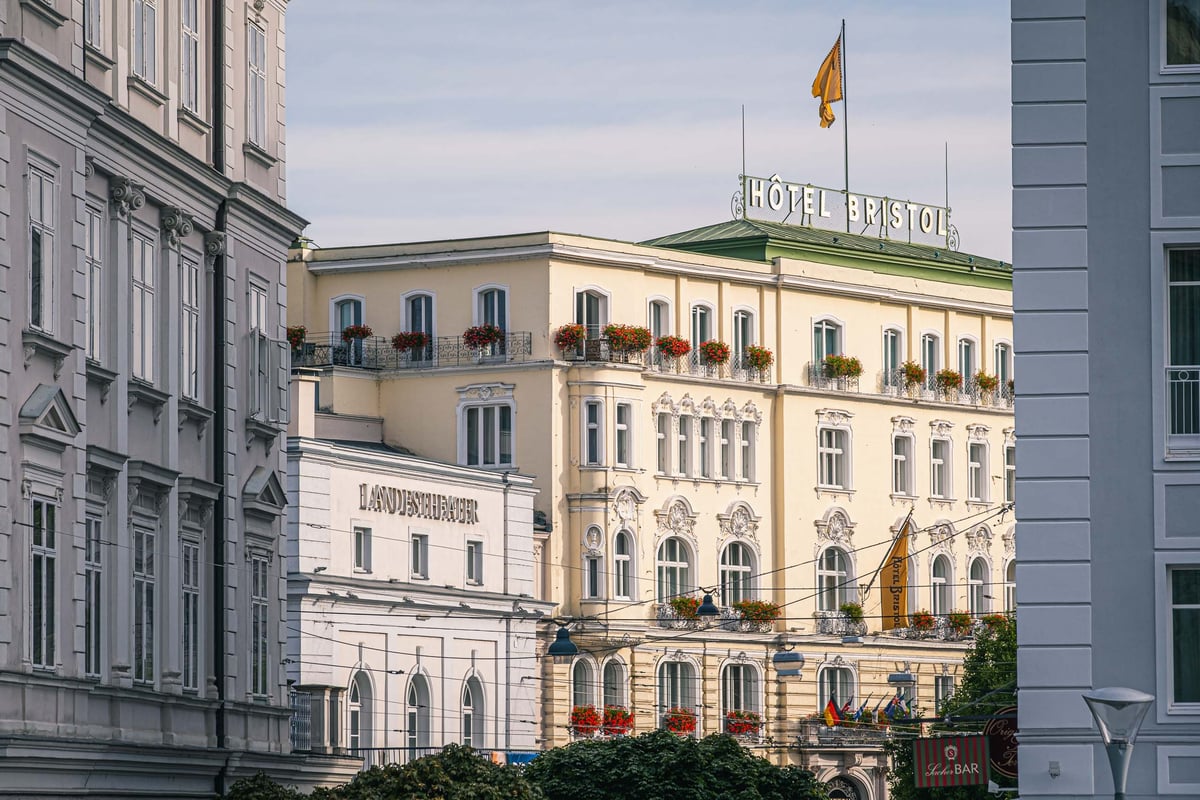
Salzburger Landestheater
Built 1893
Salzburg's main permanent theatre for opera, drama, and ballet, operating a full season year-round. Built in 1893 by Ferdinand Fellner and Hermann Helmer. Located on Schwarzstraße as part of the cultural cluster.
Salzburger Landestheater
Salzburg's permanent state theatre company. Year-round opera, operetta, musicals, drama, dance. The counterpart to the summer Salzburg Festival. Resident ensemble. Associated Salzburger Philharmoniker orchestra.
Schloss Fuschl
Late Gothic / Baroque
A 15th-century hunting lodge on a lake promontory, 30 kilometres from Salzburg, now operating as one of Austria's most celebrated luxury hotels. The setting is genuinely spectacular.
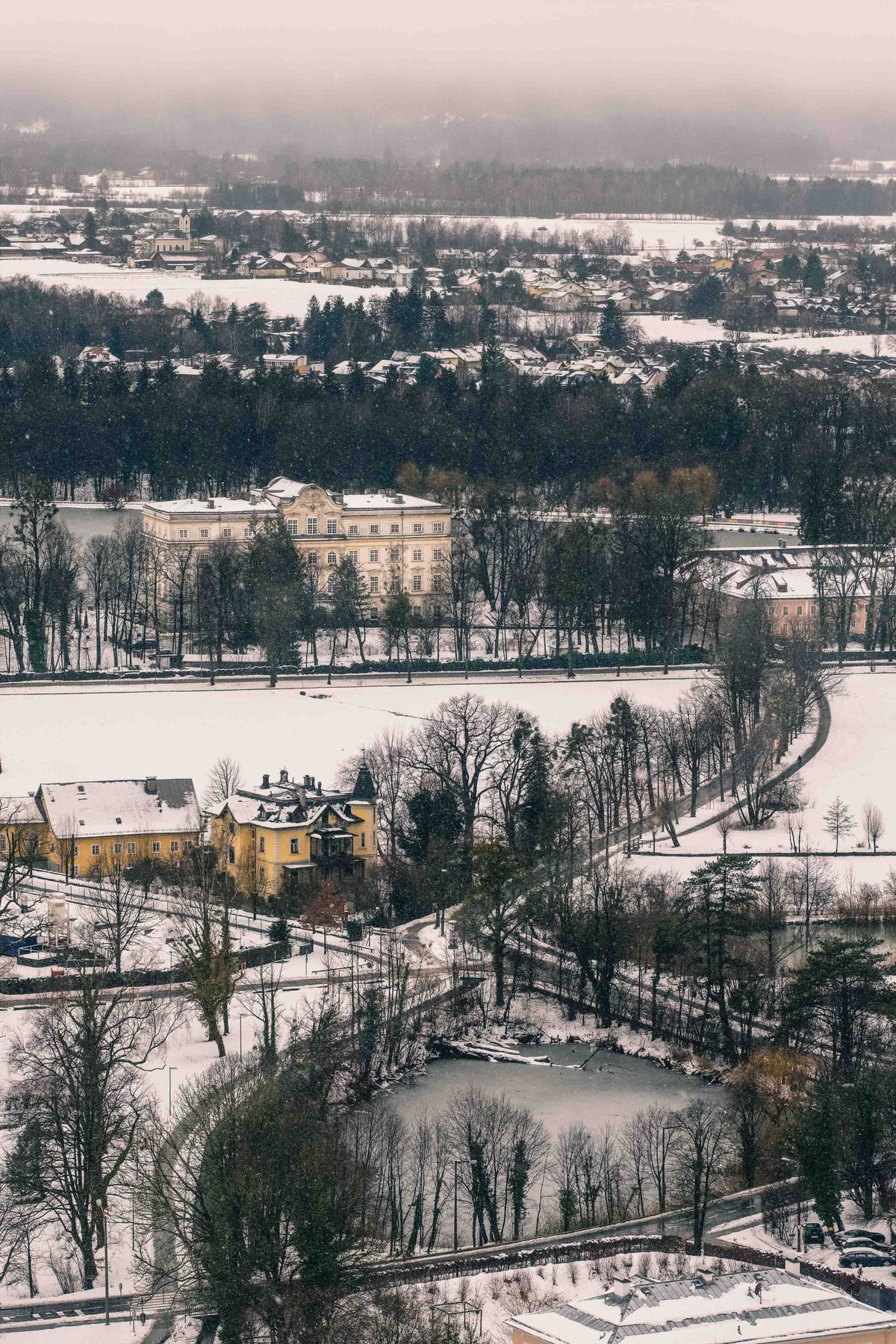
Schloss Leopoldskron
Built 1736
Rococo palace on the shores of Leopoldskroner Weiher, commissioned in 1736 by Archbishop Leopold Anton von Firmian and purchased by theatre director Max Reinhardt in 1918. Reinhardt turned it into the creative headquarters of the early Salzburg Festival and his own artistic home. The Nazis confiscated it in 1938 after Reinhardt fled.
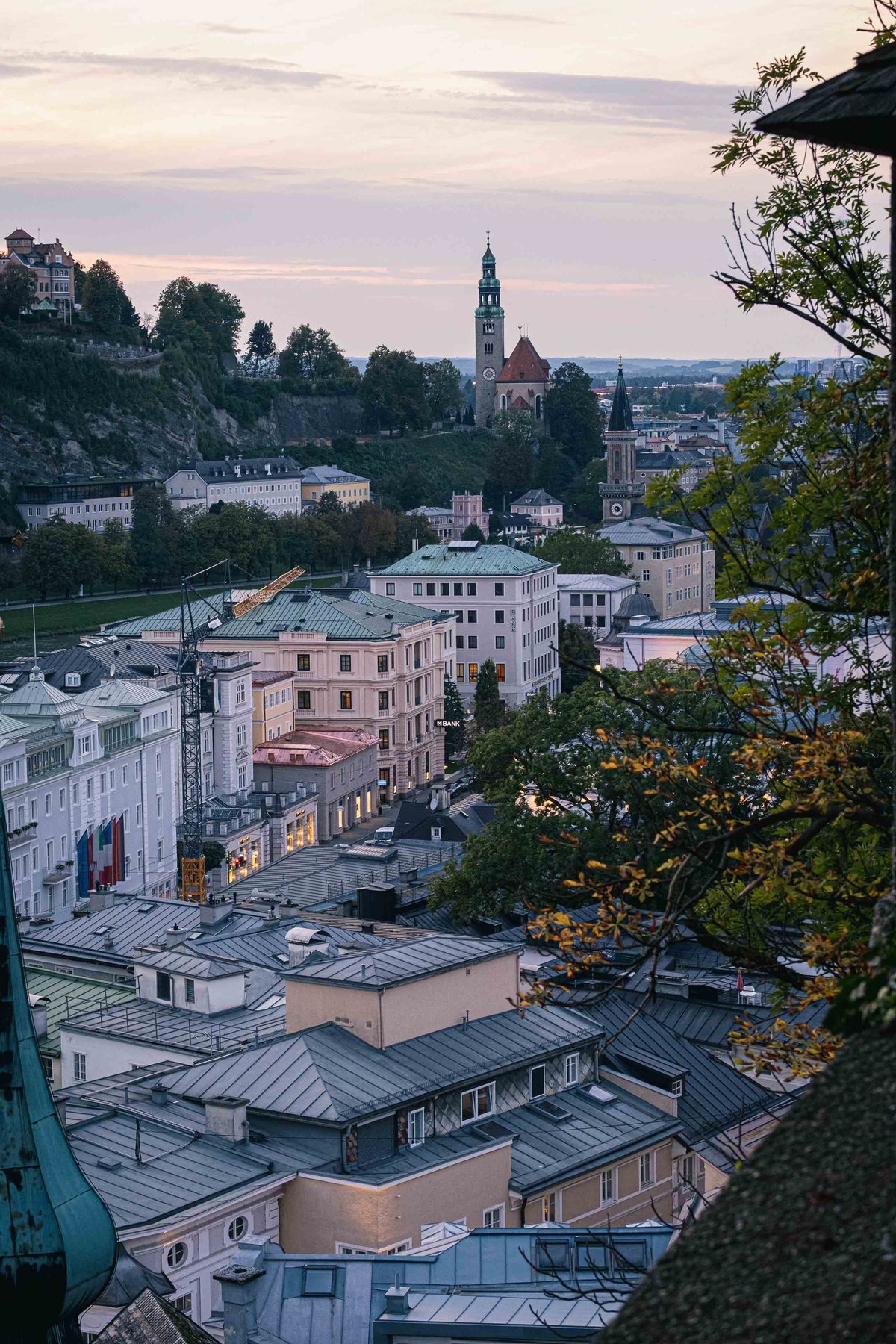
Schwarzstraße
The principal cultural boulevard of the right bank, densely packed with the Salzburger Landestheater, Mozarteum, Marionettentheater, Cafe Bazar, and Hotel Sacher Salzburg. During Festival season, one of the most animated streets in the city.
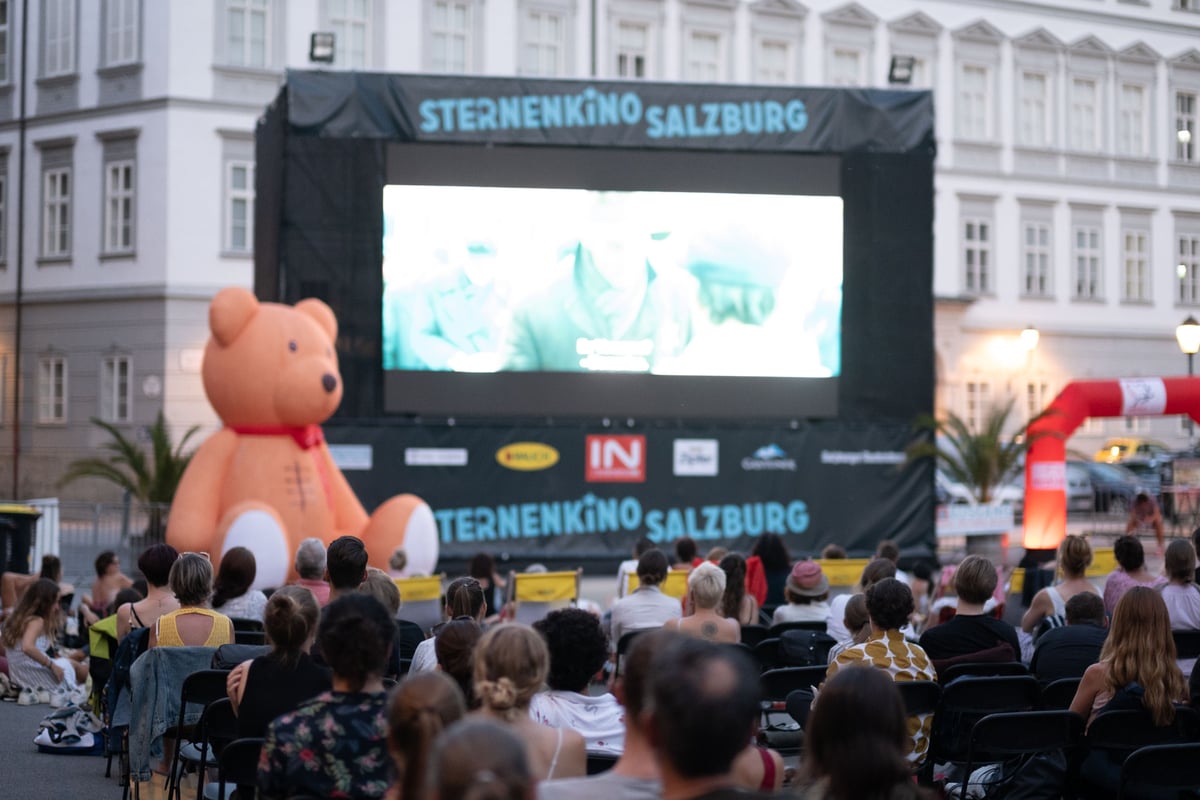
Siemens Festspielleinwand
Free outdoor screen at Kapitelplatz during the Salzburg Festival. Live and recorded Festival performances broadcast for free. Picnics and drinks under the open sky. The essential alternative for visitors without Festival tickets.
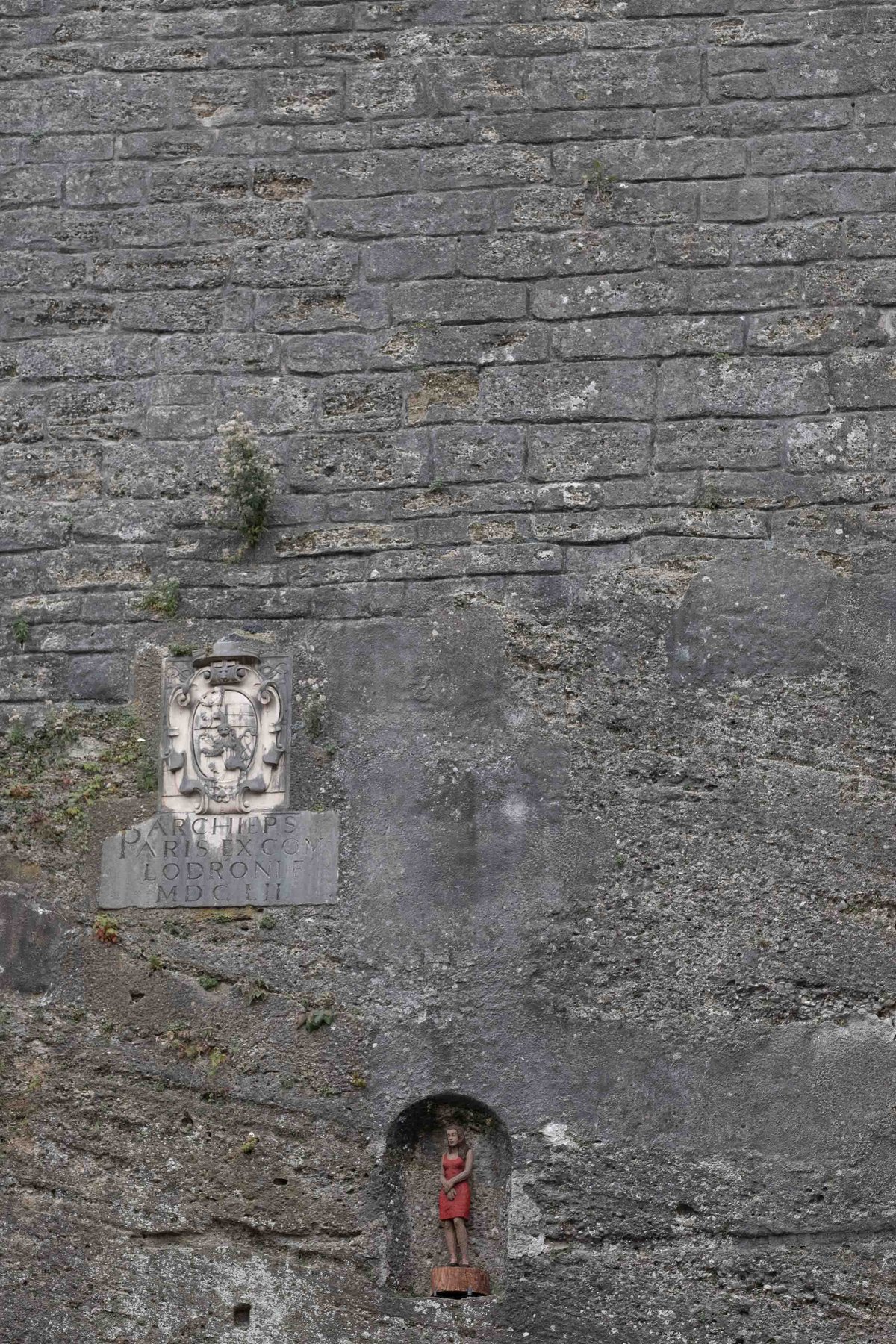
Toscaninihof
An intimate baroque courtyard named after Arturo Toscanini, tucked between the Kollegienkirche and the Festival district. Connects through to the stage entrance of the Felsenreitschule. Largely unknown to visitors.
Triangel
A restaurant and wine bar on Wiener-Philharmoniker-Gasse, steps from the Festival Halls. One of the most reliably excellent and genuinely loved restaurants in Salzburg. Informal enough for neighbourhood feel, good enough for the Festival crowd.
Vienna Philharmonic
Resident orchestra of the Salzburg Festival. Playing every summer Festival since 1925. Self-governing. The musical foundation on which the Festival's prestige rests. Warm, blended strings, particular weight in brass: the sound most associated with the Festival.
The records
People tagged Salzburg Festival
Alexander Moissi
actor1879 - 1935
Reinhardt's greatest lead actor and the man who created the role of Jedermann (Everyman) in the very first Salzburg Festival performance on Domplatz in August 1920. One of the few actors whose performance literally inaugurated a cultural institution.
Alfred Roller
artist1864 - 1935
One of the five co-founders of the Salzburg Festival (1920), alongside Hofmannsthal, Reinhardt, Strauss, and Schalk. A founding member of the Vienna Secession and close collaborator of Gustav Mahler, Roller's visual language helped shape the aesthetic identity of the Festival from its opening season.
Alma Mahler
composer1879 - 1964
Composer, muse, diarist, and the magnetic centre of European modernism. She married Gustav Mahler (who insisted she stop composing), had a passionate affair with Oskar Kokoschka, then married the Bauhaus architect Walter Gropius, then the novelist Franz Werfel. As Mahler's wife she was present at the Salzburg Festival's founding era.
Anna Netrebko
singerb. 1971
The soprano who defined the Salzburg Festival's public face for the first two decades of the 21st century. Her 2002 Donna Anna in Mozart's Don Giovanni was the international breakthrough. No singer since Maria Callas has been so completely identified with a single festival house.
Anton Faistauer
painter1887 - 1930
Salzburg-born Expressionist whose frescoes for the Grosses Festspielhaus entrance hall (1926) were destroyed by the Nazis as "degenerate art" and later reconstructed. A close friend of Egon Schiele and Oskar Kokoschka. Died at 42.
Arturo Toscanini
conductor1867 - 1957
The conductor who made Salzburg the unquestioned summit of the musical world. Toscanini conducted at the Salzburg Festival from 1934 to 1937. He reportedly called Salzburg "the most perfect musical event in the world." When Austria was annexed by Nazi Germany in 1938, he refused to return.
Bernhard Paumgartner
conductor1887 - 1971
The man who shaped the Mozarteum and the early Salzburg Festival more durably than almost anyone else. Director of the Mozarteum for over four decades (1917-1959), bridging the Festival's founding generation and the Karajan era.
Bruno Walter
conductor1876 - 1962
A devoted disciple of Gustav Mahler and one of the foundational conductors of the Salzburg Festival. Walter gave the world premieres of Mahler's Das Lied von der Erde and the Ninth Symphony. Alongside Arturo Toscanini and Furtwangler, he formed the triumvirate that defined the young Festival's artistic identity. Forced to flee after the 1938 Anschluss.
Carl Maria von Weber
composer1786 - 1826
The decisive bridge between Mozart and Wagner. Weber's Der Freischutz (1821) established German national opera. Richard Strauss, co-founder of the Salzburg Festival, grew up within a tradition Weber had fundamentally shaped.
Carlos Kleiber
conductor1930 - 2004
Widely regarded by musicians as the greatest conductor of the latter 20th century. Carlos Kleiber conducted perhaps 96 concerts in his entire career, compared to hundreds per year for his contemporaries. What he did conduct he performed with an incandescence that left audiences stunned.
Claudio Abbado
conductor1933 - 2014
One of the supreme conductors of the late 20th century. Chief Conductor of the Vienna Philharmonic and then the Berlin Philharmonic, Abbado shaped the sound of the two most important orchestras in the German-speaking world and brought both repeatedly to the Salzburg Festival.
Clemens Holzmeister
architect1886 - 1983
The architect who carved a world-class opera stage into the Monchsberg cliff face. Holzmeister worked on Salzburg Festival venues across multiple building phases from 1926, culminating in the Grosses Festspielhaus expansion of 1956-1960.
Clemens Krauss
conductor1893 - 1954
The man who built the Salzburg Festival from a promising young institution into the most prestigious music event in the world. Artistic Director 1926-1934, close friend of Richard Strauss, and co-librettist of Capriccio. Arturo Toscanini then crowned the foundations Krauss had laid.
Dietrich Fischer-Dieskau
singer1925 - 2012
The greatest baritone of the 20th century and the supreme interpreter of the German Lied. Fischer-Dieskau performed at the Salzburg Festival across four decades. His Lieder recitals there, especially Schubert's Winterreise, are among the most celebrated performances in Festival history. The voice of the German-Austrian musical tradition made audible.
Elfriede Jelinek
writerb. 1946
Nobel Prize in Literature laureate (2004). Darkly feminist, politically radical, obsessively critical of Austrian society. Her plays have been staged at the Salzburg Festival. Her novel Die Klavierspielerin (The Piano Teacher) was filmed by Michael Haneke. Like Thomas Bernhard, an unavoidable presence in any map of Austrian cultural life.
Elisabeth Schwarzkopf
singer1915 - 2006
One of the supreme sopranos of the 20th century and a defining voice of the Salzburg Festival. She studied with Lotte Lehmann, placing her in direct lineage with Salzburg's interwar golden tradition. Her interpretations of the Marschallin in Der Rosenkavalier under Herbert von Karajan remain the reference against which all successors are measured.
Franz Schalk
conductor1863 - 1931
One of the five co-founders of the Salzburg Festival (1920), alongside Hofmannsthal, Reinhardt, Strauss, and Roller. A pupil of Bruckner and long-serving director of the Vienna State Opera, Schalk brought institutional authority and conducting leadership to the fledgling Festival.
Friedrich Gehmacher
entrepreneur1866 - 1927
The indispensable local figure behind the founding of the Salzburg Festival. While Hofmannsthal, Reinhardt, and Strauss provided the cultural programme, it was Gehmacher who organised the local politics, secured the venues, and ensured that Salzburg was the city chosen. He died in 1927, just seven years after the Festival he helped create.
Georg Solti
conductor1912 - 1997
One of the supreme conductors of the 20th century. Solti's Ring Cycle recordings with the Vienna Philharmonic remain the standard against which all subsequent recordings are measured. A major presence at the Salzburg Festival.
Gérard Mortier
director1943 - 2014
The most transformative post-founding figure in the Salzburg Festival's history. Artistic Director 1992-2001, Mortier completely reinvented the Festival, replacing Karajan-era conservatism with radical new productions. Deeply controversial, but he made the Festival once again the most discussed event in the operatic world.
Gustav Mahler
composer1860 - 1911
One of the great late-Romantic composers and supreme conductors of his era. Mahler composed his 2nd and 3rd symphonies at Steinbach am Attersee in the Salzkammergut (1893-1896). The Mahler tradition is deeply embedded in the Salzburg Festival through his influence on conductors from Bruno Walter to Harnoncourt.
Herbert von Karajan
conductor1908 - 1989
Born in Salzburg, died near Salzburg. Widely regarded as one of the greatest conductors of the 20th century. Artistic director of the Salzburg Festival for much of the postwar period. The square in front of the Grosses Festspielhaus bears his name. His legacy dominates the classical music world to this day.
Hermann Bahr
writer1863 - 1934
One of the most influential cultural critics of the Vienna Secession era and a significant force in the early Salzburg Festival movement. Bahr lived in Salzburg's Maxglan neighbourhood from 1912, and his house became a gathering point for writers and artists. An intellectual ally of Hugo von Hofmannsthal and Max Reinhardt.
Hugo von Hofmannsthal
writer1874 - 1929
Co-founder of the Salzburg Festival (1920) with Max Reinhardt and Richard Strauss. He wrote Jedermann (Everyman), which has been performed at Domplatz every summer since 1920, the Festival's most iconic event. He also wrote the librettos for Strauss's Der Rosenkavalier and Elektra.
Ingeborg Bachmann
writer1926 - 1973
One of the most important German-language poets of the 20th century. Bachmann's spare, luminous poetry was read at the Salzburg Festival. Her prose works, including the novel Malina, are landmarks of Austrian postwar literature. She died in Rome from burns sustained in a fire.
Jean-Pierre Ponnelle
director1932 - 1988
The stage director who shaped the visual identity of the Salzburg Festival's Mozart productions for nearly two decades. Working with Karl Bohm and Karajan, his stagings were filmed and broadcast worldwide. He died after collapsing at the Festival during rehearsals in 1988.
Jonas Kaufmann
singerb. 1969
The defining dramatic tenor of his generation. Kaufmann's appearances at the Salzburg Festival include landmark productions that define what the Festival can be at its most ambitious. He is the tenor the Festival returns to when it wants an event rather than a performance.
Karl Böhm
conductor1894 - 1981
One of the greatest conductors of the 20th century, deeply associated with the Salzburg Festival across four decades. Richard Strauss himself chose Bohm to conduct premieres of Daphne and Die schweigsame Frau. He died in Salzburg, the city to which he returned again and again.
Klaus Maria Brandauer
actorb. 1943
One of the most acclaimed Austrian actors, born in Bad Aussee in the Salzkammergut. International fame through Mephisto (1981, Academy Award), Never Say Never Again (1983), and Out of Africa (1985). A major figure at the Salzburg Festival in spoken theatre.
Leonard Bernstein
conductor1918 - 1990
One of the most charismatic musicians of the 20th century. Bernstein's 24 December 1989 performance of Beethoven's 9th Symphony, with Freiheit (Freedom) substituted for Freude (Joy) to celebrate the fall of the Berlin Wall, is one of the most watched concerts in television history. The Salzburg Festival was a recurring stage throughout his career.
Lilli Lehmann
singer1848 - 1929
The single most important figure in the prehistory of the Salzburg Festival. Not to be confused with Lotte Lehmann. From 1901, Lilli Lehmann organised the Salzburg Mozart Week, the annual series that directly laid the groundwork for the permanent Festival that Hugo von Hofmannsthal, Max Reinhardt, and Richard Strauss would formally establish in 1920.
Lotte Lehmann
singer1888 - 1976
One of the greatest sopranos of the 20th century and one of the most significant personalities in Salzburg Festival history. Richard Strauss wrote several roles with her voice in mind. She fled the Nazi regime in 1938 and founded the Music Academy of the West in Santa Barbara. She also played a documented role in launching the Trapp Family Singers.
Luciano Pavarotti
singer1935 - 2007
The most famous operatic tenor in history. Pavarotti made opera accessible to hundreds of millions of people. He performed at the Salzburg Festival on multiple occasions, including a debut recital in 1976 and a celebrated 1983 Idomeneo at the Grosses Festspielhaus. One of the Three Tenors, alongside Domingo and Carreras, conducted by Zubin Mehta.
Maria Callas
singer1923 - 1977
The defining soprano of the 20th century. Despite her famous partnership with Herbert von Karajan, Callas never actually performed at the Salzburg Festival: the Karajan productions sometimes linked to Salzburg, above all their Lucia di Lammermoor, took place elsewhere (a La Scala staging taken to Berlin in 1955 and Vienna in 1956).
Markus Hinterhäuser
directorb. 1958
Current Artistic Director of the Salzburg Festival since 2017. The person who has spent the longest consecutive period building his career in Salzburg of anyone in the Festival's modern history. Salzburg's living institutional custodian.
Max Reinhardt
director1873 - 1943
Theatre director of extraordinary vision and co-founder of the Salzburg Festival. Reinhardt purchased Schloss Leopoldskron in 1918, which later inspired the Von Trapp villa in The Sound of Music. He staged the first Jedermann on Domplatz in 1920. Jewish, he fled the Nazis in 1938 and died in New York exile in 1943.
Nikolaus Harnoncourt
conductor1929 - 2016
The conductor who changed how the world plays and hears baroque and classical music. Harnoncourt founded the Concentus Musicus Wien in 1953 and was a defining presence at the Salzburg Festival and Mozartwoche for decades. He died in St. Georgen im Attergau, a few kilometres from the Attersee.
Oskar Kokoschka
painter1886 - 1980
One of the great Expressionist painters, and the founder of the Schule des Sehens (School of Vision), a legendary painting school held at Hohensalzburg Fortress from 1953 as part of the International Summer Academy. Every summer, artists from across the world gathered at the fortress to study under Kokoschka.
Plácido Domingo
singerb. 1941
The most versatile of the Three Tenors and one of the greatest singers of the 20th century. Has sung over 150 operatic roles across every major style. Performed at the Salzburg Festival across four decades. His range, intelligence, and longevity across over sixty years are without parallel.
Riccardo Muti
conductorb. 1941
One of the most important conductors of the late 20th and early 21st century. Muti has conducted at the Salzburg Festival across many decades, leading the Vienna Philharmonic in opera and concert programmes that have become part of the Festival's core identity. Known especially for Verdi, Mozart, and Cherubini.
Richard Strauss
composer1864 - 1949
Co-founder of the Salzburg Festival (1920) alongside Hugo von Hofmannsthal and Max Reinhardt. One of the great composers of the late Romantic and early modern era, celebrated for Der Rosenkavalier, Salome, and Elektra. His relationship with the Festival and with Salzburg remained central to his life.
Richard Wagner
composer1813 - 1883
The most influential opera composer in history. Wagner's operas became central to the Salzburg Festival's identity from the postwar era onwards. Herbert von Karajan's legendary Ring cycle productions made Salzburg a Wagner city as much as a Mozart city. Richard Strauss, Festival co-founder, directly built upon the tradition Wagner established.
Thaddaeus Ropac
entrepreneurb. 1960
Austrian gallerist who opened his Salzburg gallery in 1983, two years after a first space in Lienz, making the city the base for one of the most influential contemporary art dealerships in the world. His Salzburg gallery on Mirabellplatz shows Baselitz, Kiefer, Rauschenberg, and Warhol. Later expanded to Paris and London.
Thomas Bernhard
writer1931 - 1989
One of the most important and provocative Austrian authors of the 20th century. Bernhard grew up partly in Salzburg and repeatedly targeted the city and its festival culture in his darkly comic, furiously nihilistic work. He died in Gmunden, in the Salzkammergut.
Wilhelm Furtwängler
conductor1886 - 1954
One of the supreme conductors of the 20th century, and perhaps the most controversial. Furtwangler's decision to remain in Germany during the Nazi period made him a figure of perpetual moral debate. His post-war Salzburg Festival performances in the early 1950s are among the most legendary in recording history.
Zubin Mehta
conductorb. 1936
The conductor who brought classical music to genuinely global audiences. Music Director of the Israel Philharmonic for over fifty years and one of the Vienna Philharmonic's most beloved conductors. Conducted the legendary Three Tenors concert in Rome (1990), watched by an estimated 800 million people.