Snapshot
Ingeborg Bachmann attended school in Salzburg and later had her poetry read at the Salzburg Festival, the city’s highest cultural stage. She is one of the two or three most important Austrian poets of the 20th century, and her work is inseparable from the postwar Austrian landscape she grew up in.
The Story
Bachmann was born in Klagenfurt in 1926 and came to Salzburg for her secondary education at the Ursulinengymnasium, where instruction in German, Latin, and French shaped what would become one of the most distinctive voices in German-language poetry. She went on to study philosophy in Vienna, writing a dissertation on the critical reception of Heidegger, and emerged into postwar literary life through the Gruppe 47 circle, where a 1952 reading on the Baltic coast turned her from a promising poet into a central figure of the movement. Paul Celan was in that room.
Her first two collections, “Die gestundete Zeit” (1953) and “Anrufung des Grossen Baren” (1956), placed her alongside Celan as the defining lyrical voices of the postwar German-speaking world. The poetry is spare, luminous, and suffused with a sense of catastrophe that never names itself directly. “Harder days are coming,” ends the title poem of the first collection, in a voice that had earned the right to say it.
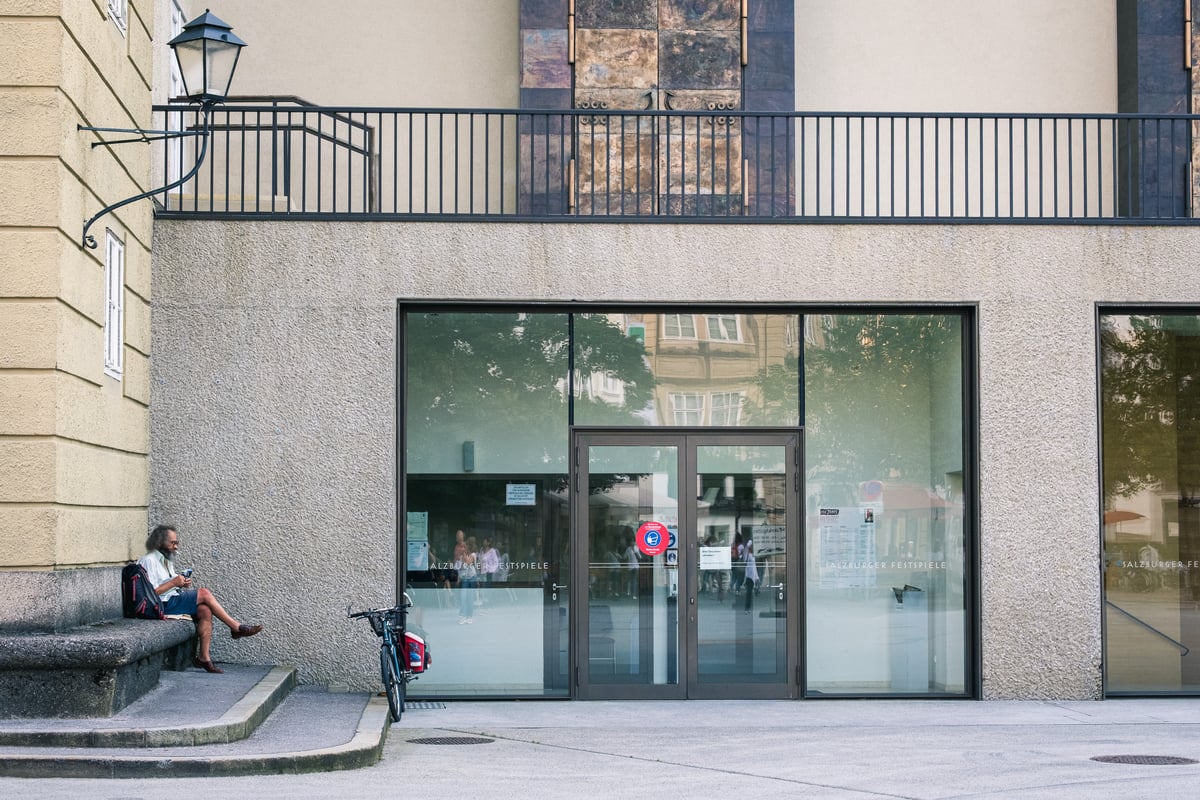
Her connection to the Salzburg Festival gave her poetry the city’s most prestigious cultural stage. She later turned to prose: “Malina” (1971) and the unfinished “Todesarten” cycle explored the violence embedded in intimate life, the psychic residue of fascism, and the systematic erasure of women’s experience. Only “Malina” was published before her death.
She died in Rome on 17 October 1973. The exact circumstances of the fire that burned her apartment and eventually killed her have never been fully resolved. The Ingeborg Bachmann Prize in Klagenfurt, awarded annually since 1977, is among the most important literary honors in the German-speaking world.