
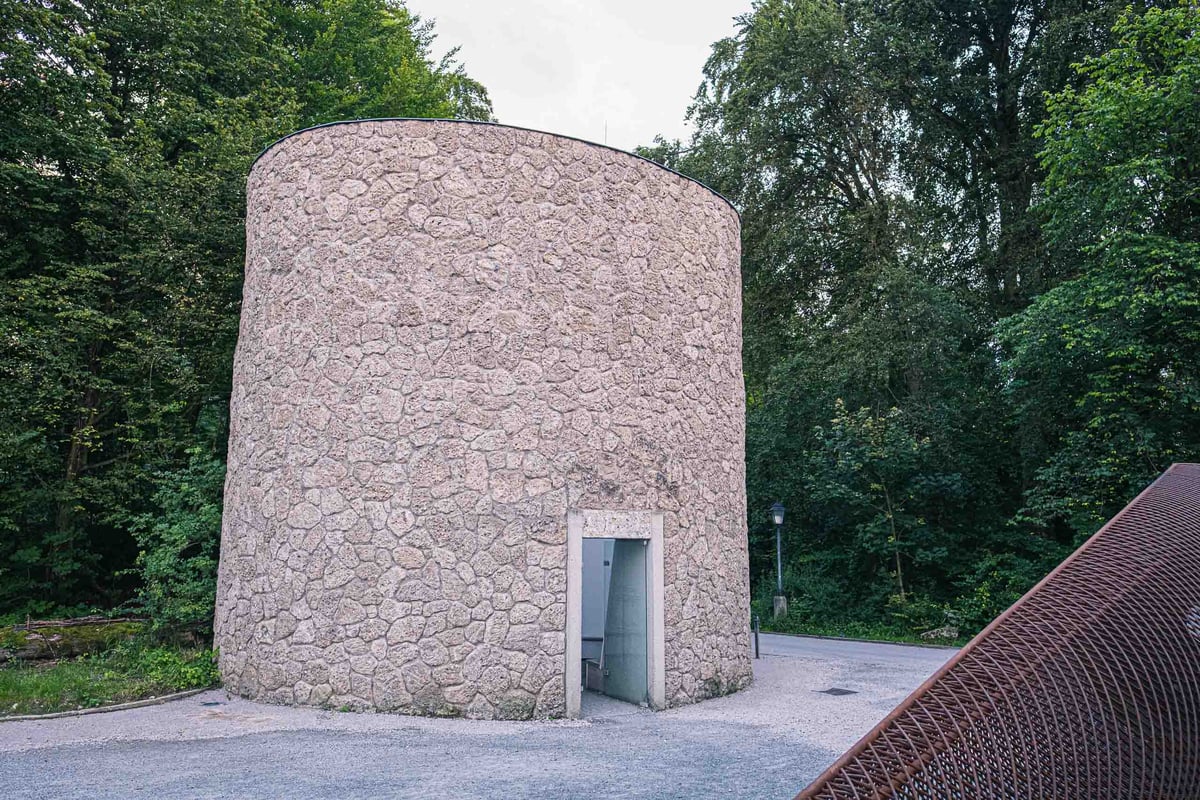
Sky Space
Installed 2006
A permanent Sky Space installation by James Turrell (2006), adjacent to the Museum der Moderne Monchsberg. Walk of Modern Art #4. An architectural chamber with a precisely shaped aperture opening directly to the sky.
Artist
6 May 1943, Los Angeles, California, USA
James Turrell works exclusively with light and perception. His Sky Space at the Museum der Moderne on Monchsberg is a permanent chamber open to the sky, calibrated to make the sky itself appear to change colour.
Turrell studied perceptual psychology before turning to art, and the work never moved far from that starting point. A Sky Space is a room with an elliptical or circular aperture cut into the ceiling, open to the actual sky. The interior surfaces are lit by slowly transitioning LED programmes timed to sunrise and sunset. What the work does, precisely, is make the sky look different from what it actually is: at the right moment the aperture appears to hold a flat disc of luminous colour rather than a window into depth.
The Salzburg installation at the Museum der Moderne Monchsberg is one of over 90 Sky Spaces he has built worldwide, and one of the few permanently integrated into a European museum. His larger project is Roden Crater in the Arizona desert: a volcanic cone he has been shaping for five decades into a naked-eye astronomical observatory aligned to solstices, equinoxes, and stellar events. The Crater is not yet open to the public. The Sky Space offers a concentrated version of the same perceptual proposition.
The Walk of Modern Art places Turrell’s name within Salzburg’s constellation of permanent contemporary commissions, though the work itself requires entering the museum rather than encountering it in the open city.
Locations
Installed 2006
A permanent Sky Space installation by James Turrell (2006), adjacent to the Museum der Moderne Monchsberg. Walk of Modern Art #4. An architectural chamber with a precisely shaped aperture opening directly to the sky.