Snapshot
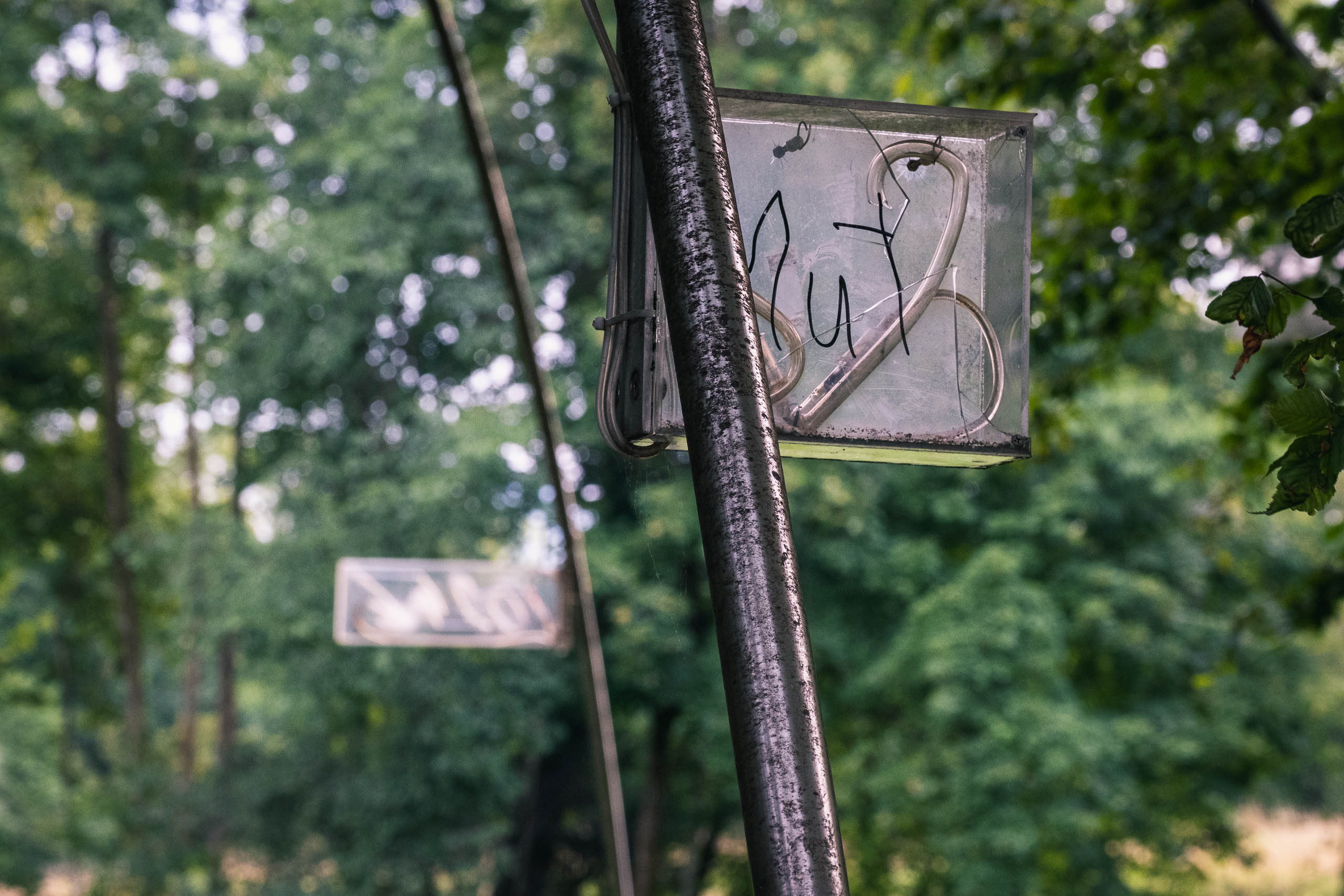
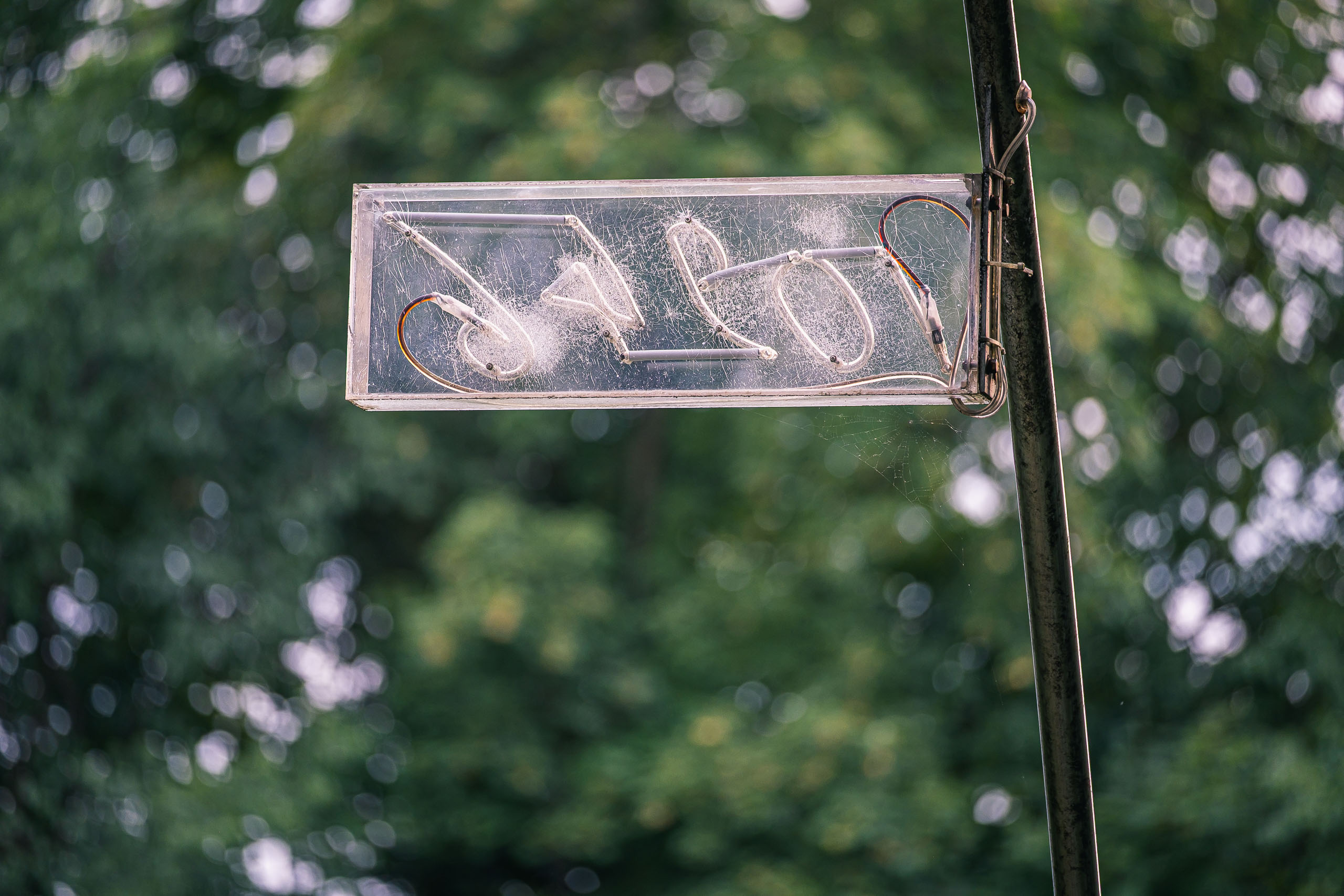
In the forest on the Monchsberg, twelve curved stainless-steel arches rise seven metres among the trees, each carrying glowing neon Fibonacci numerals. Mario Merz’s Ziffern im Wald (2003) is visible from below at night: a mathematical poem written across the hill that watches over the city. It was his last public work. He died three months after its unveiling.
The Story
Merz was born in Milan in 1925 and grew up during wartime Turin, where he joined the anti-fascist underground, was arrested, and spent time in a cell drawing with whatever scraps of paper he could find. After liberation in 1945 he pursued painting, then in the mid-1960s abandoned canvas entirely for everyday objects: jute, coal, pine cones, steel. He became one of the founders of Arte Povera, the Italian movement that insisted art should work with the material world rather than against it.
Two obsessions drove his mature practice: the igloo and the Fibonacci sequence. The igloo, first used in 1968, was his image of the primitive shelter, the minimum structure that holds a human life. The Fibonacci sequence, the numerical pattern that describes growth in nature, became his signature: he inserted neon numbers into galleries, forests, and public squares across his career, treating mathematics as a form of poetry.
Ziffern im Wald brought both obsessions together in Salzburg. The Salzburg Foundation, founded in 2002 by Walter Smerling as a private art consortium, invited Merz to create the second Walk of Modern Art commission. He chose the forest on the Monchsberg, just behind the Museum der Moderne Monchsberg, where the density of the canopy mirrors the growth patterns the Fibonacci sequence describes. The twelve open-sided arches sit half-concealed in the trees, matte-brushed metal that catches the ambient light. At night the twenty-one neon digits glow between the branches, readable from the city below.
Merz died in Milan on 9 November 2003, about three months after the work was unveiled. The Wurth Group owns the piece on permanent loan to the public.