
Mountain
Kitzsteinhorn
Show all 8 photos
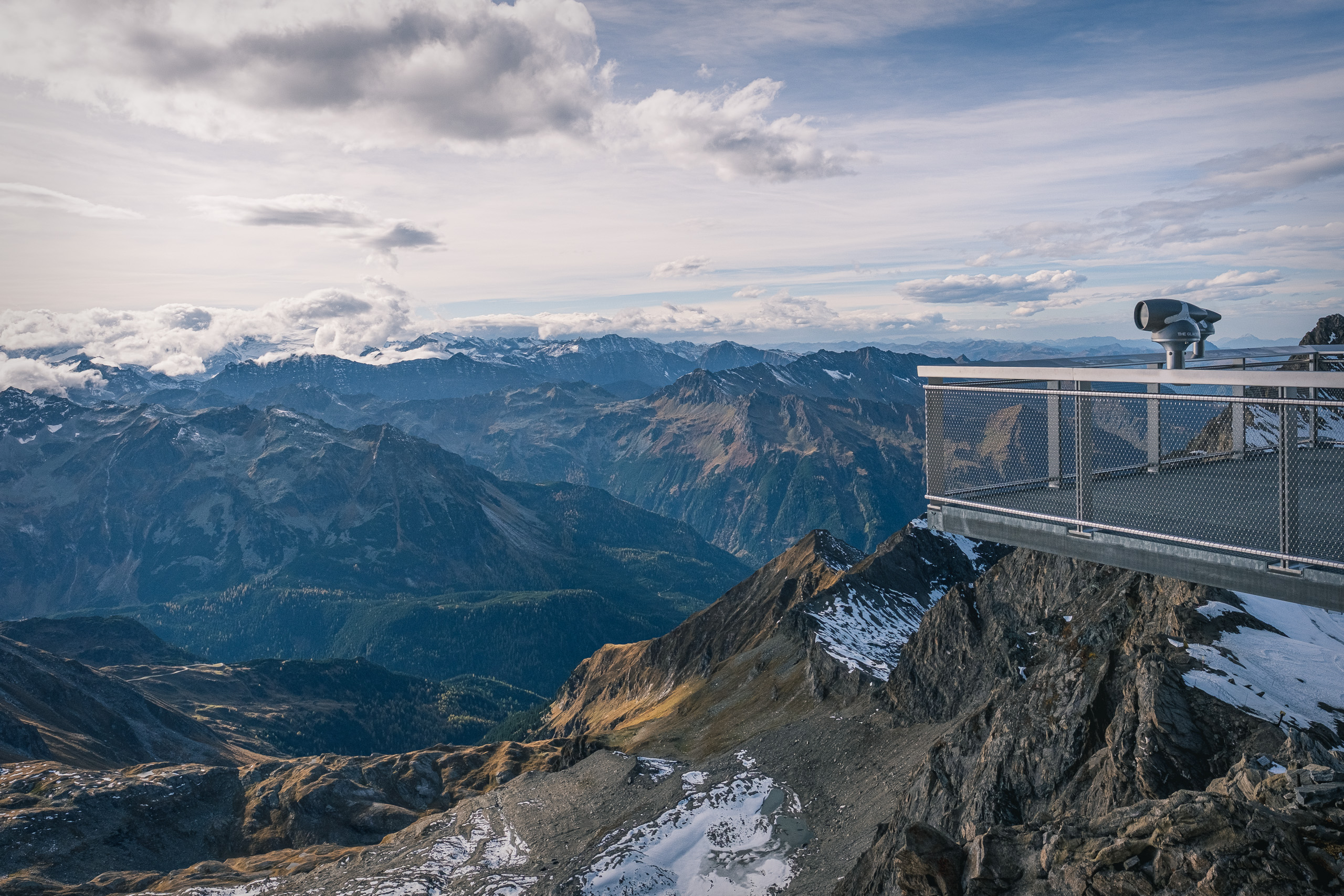
- The Top of Salzburg viewing platform on the Kitzsteinhorn juts out over a rock spur with a coin telescope at its far end, above autumn valleys and range after range of peaks. (1 / 8)
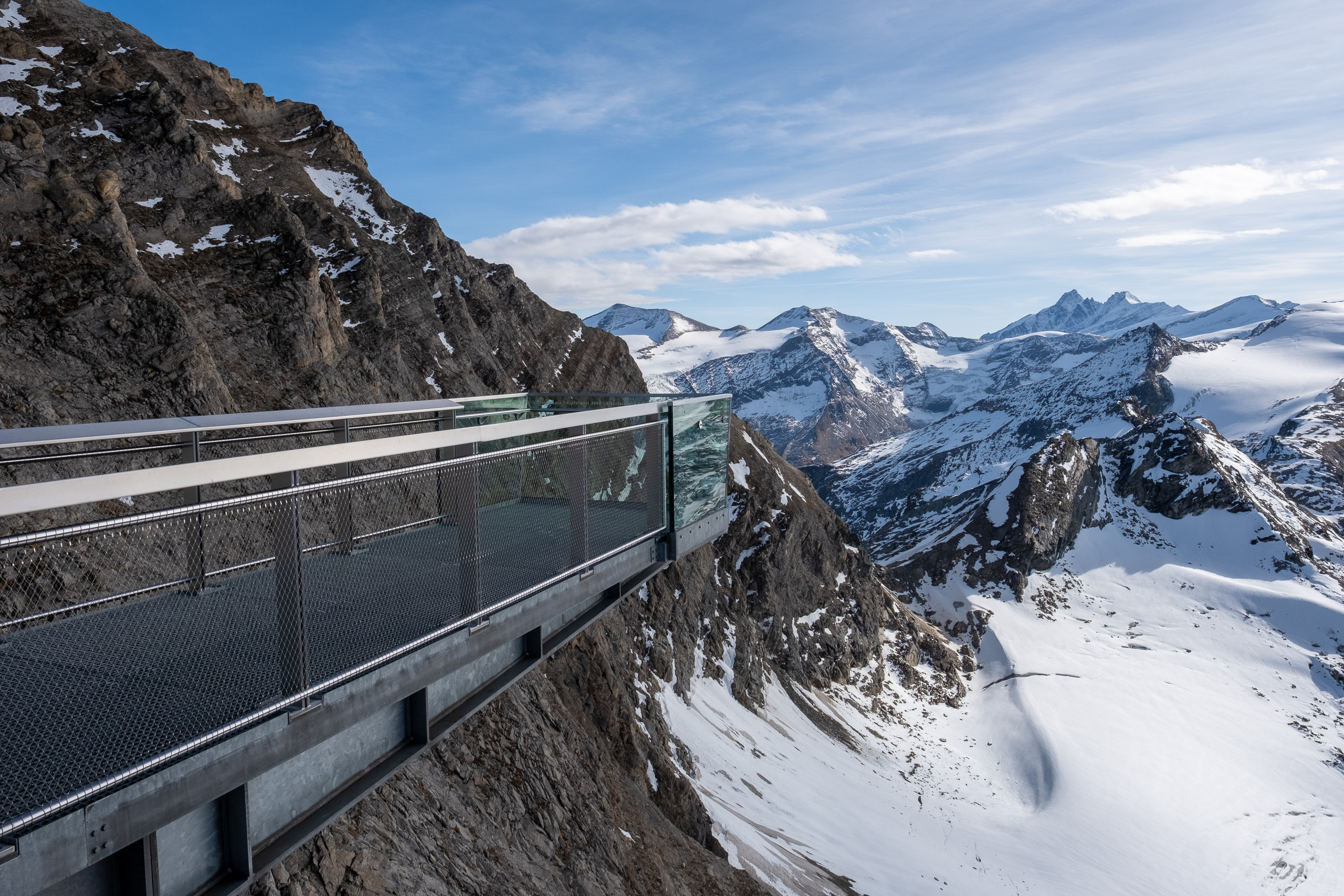
- The steel skywalk gangway at the Kitzsteinhorn summit runs out along the cliff edge, with glaciated Hohe Tauern peaks and one sharp dark summit on the horizon beyond. (2 / 8)
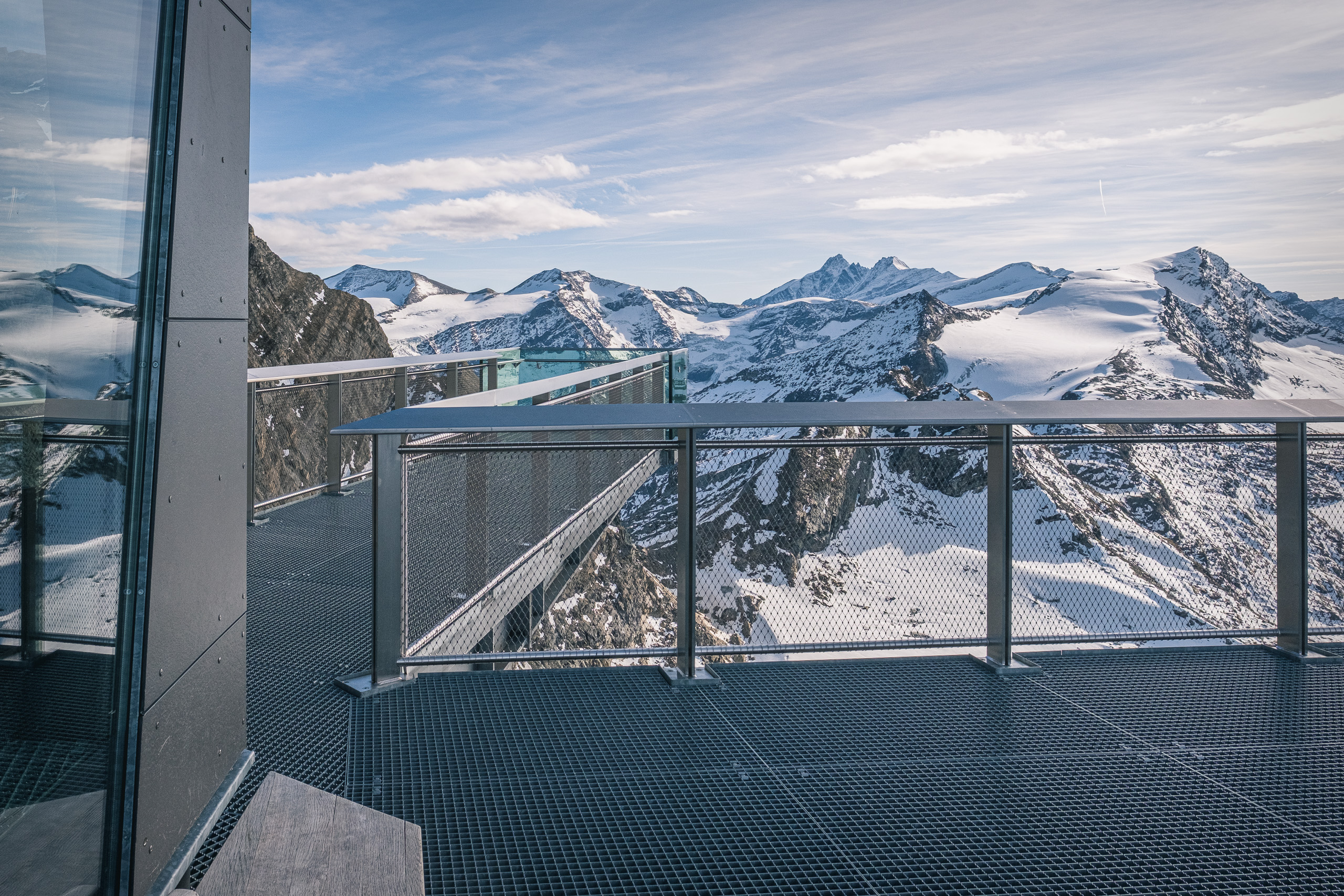
- The empty grated terrace at the Kitzsteinhorn summit, its mesh railings framing a panorama of glaciated Hohe Tauern peaks under high thin cloud. (3 / 8)
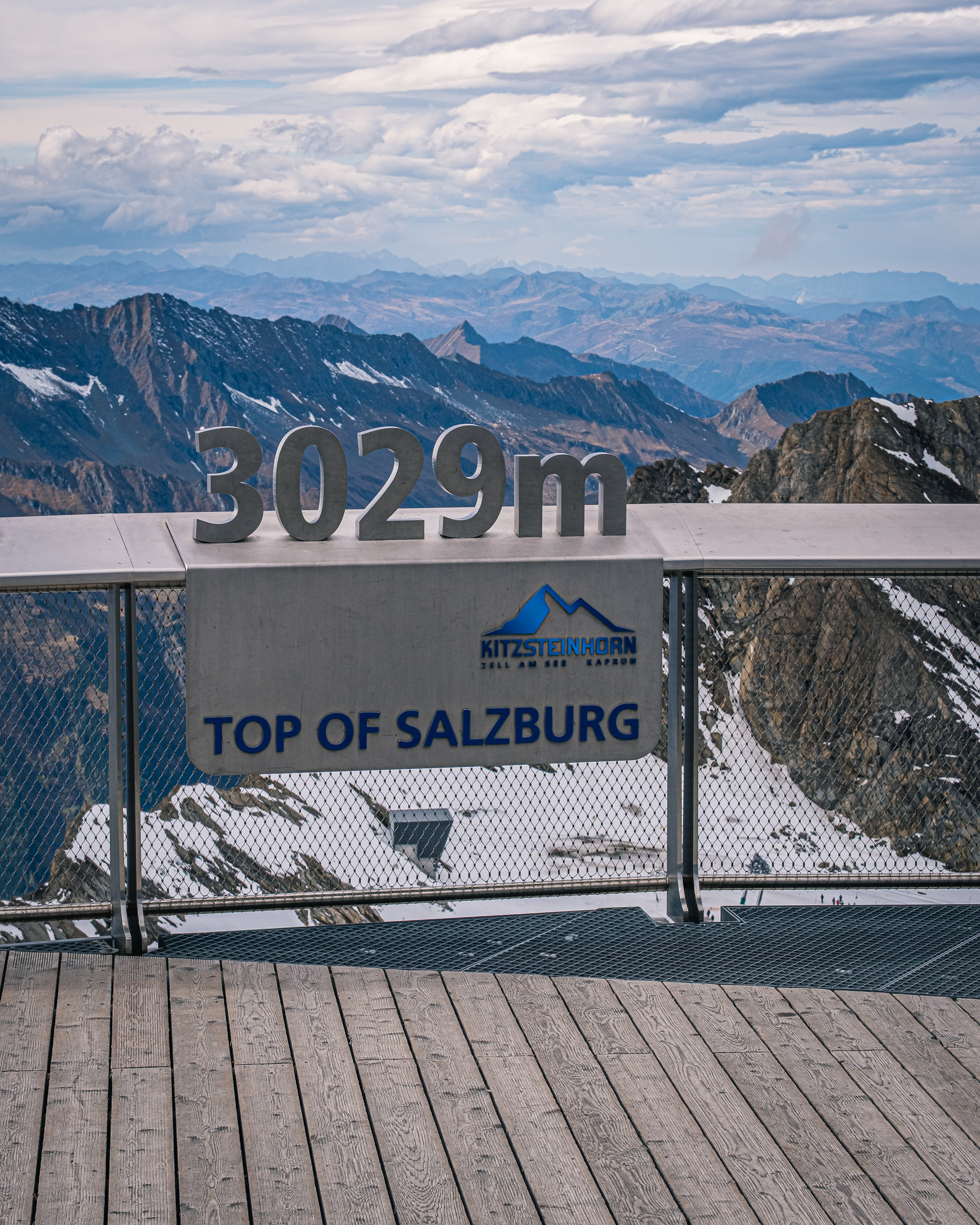
- Steel numerals reading 3029 m stand on the railing of the Kitzsteinhorn summit platform above a panel lettered Top of Salzburg with the resort logo, snow-streaked peaks of the Hohe Tauern beyond. (4 / 8)
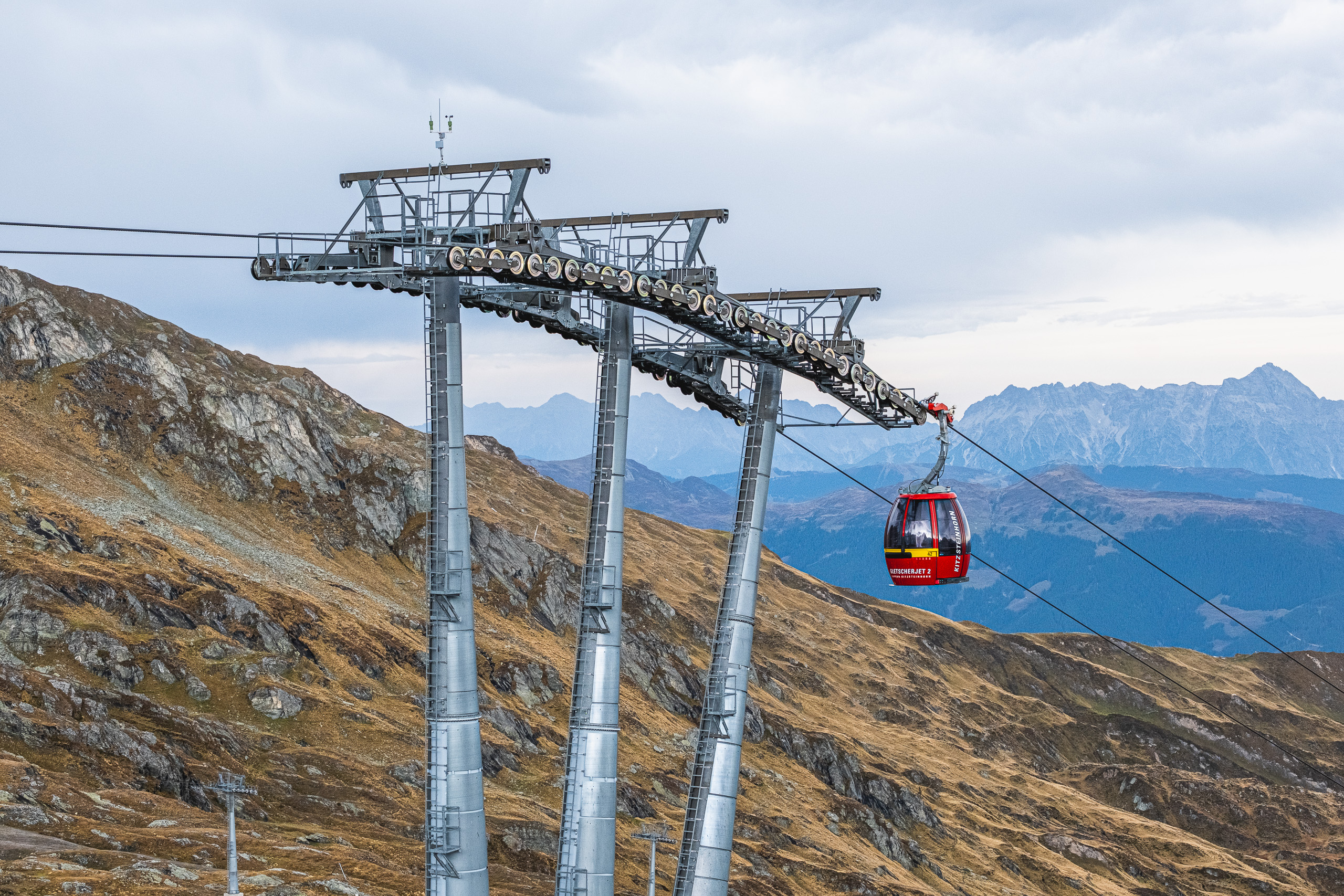
- A red Gletscherjet 2 gondola of the Kitzsteinhorn lifts hangs between three tall steel pylons above brown autumn slopes, with limestone ranges fading into haze behind. (5 / 8)
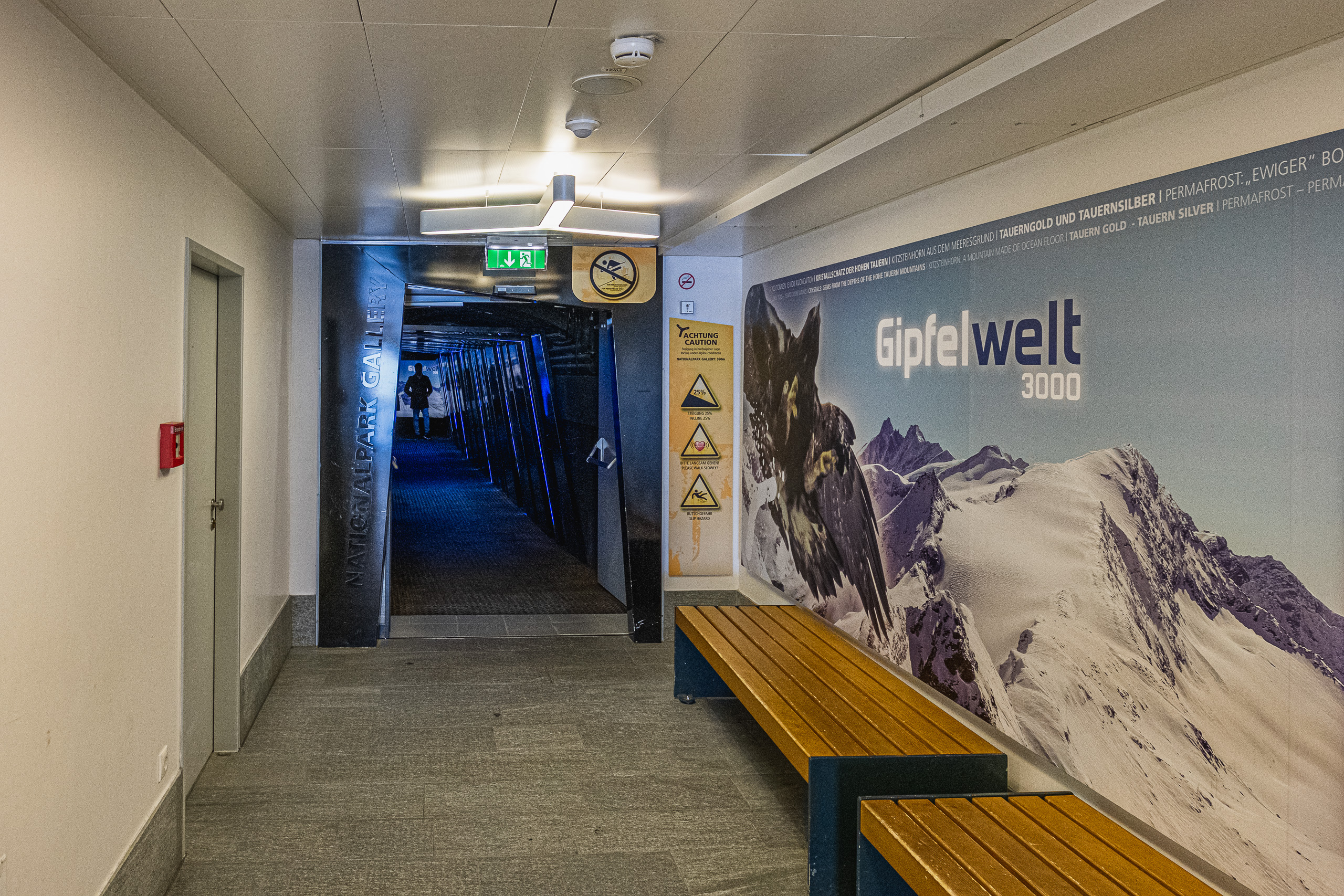
- The lit corridor at the Kitzsteinhorn summit station leading into the dark Nationalpark Gallery tunnel, with the Gipfelwelt 3000 mural and its golden eagle running along the right wall. (6 / 8)
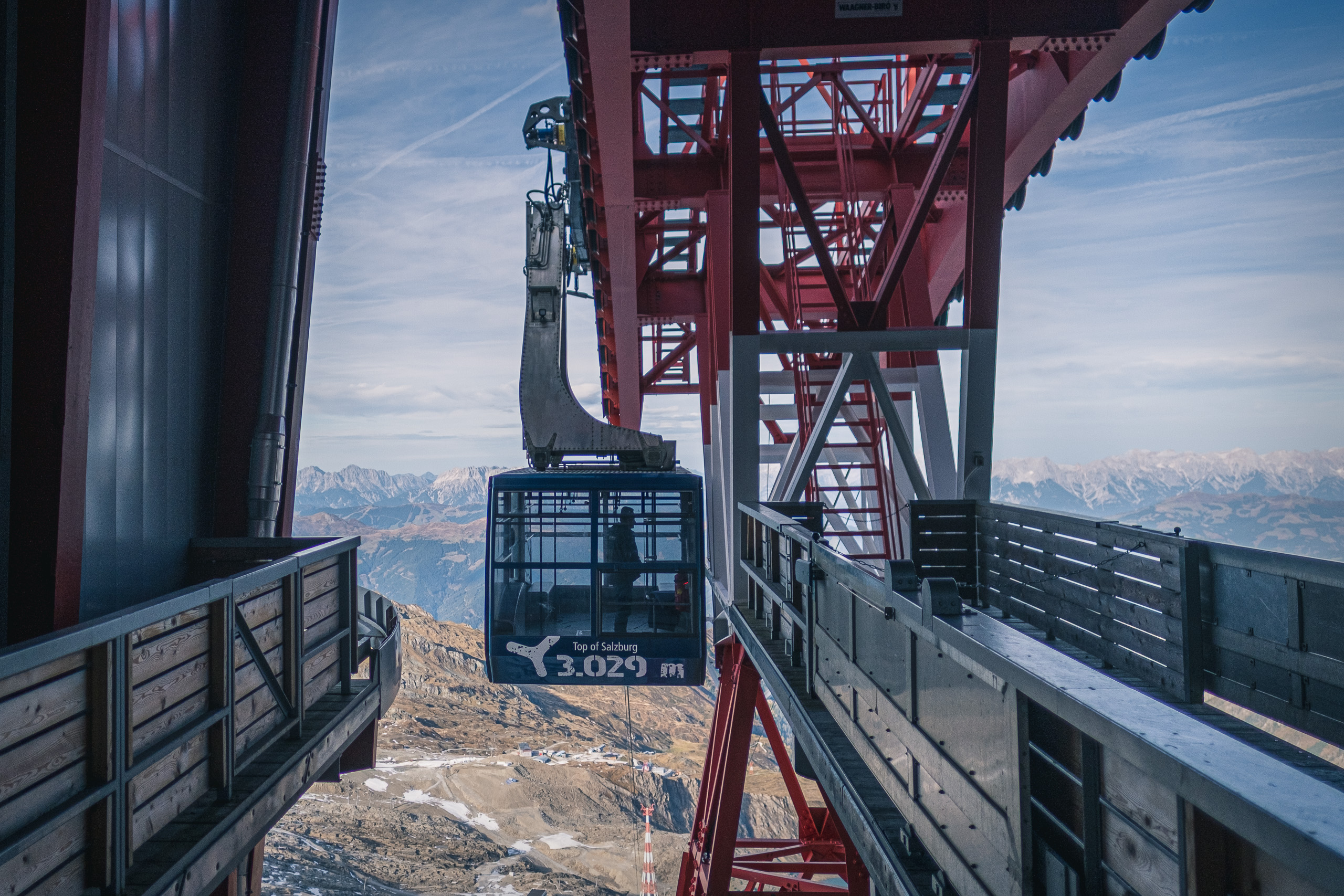
- An aerial tram car lettered Top of Salzburg 3.029 m hangs from its red steel gantry as it leaves the Kitzsteinhorn summit station, with hazy ranges beyond. (7 / 8)
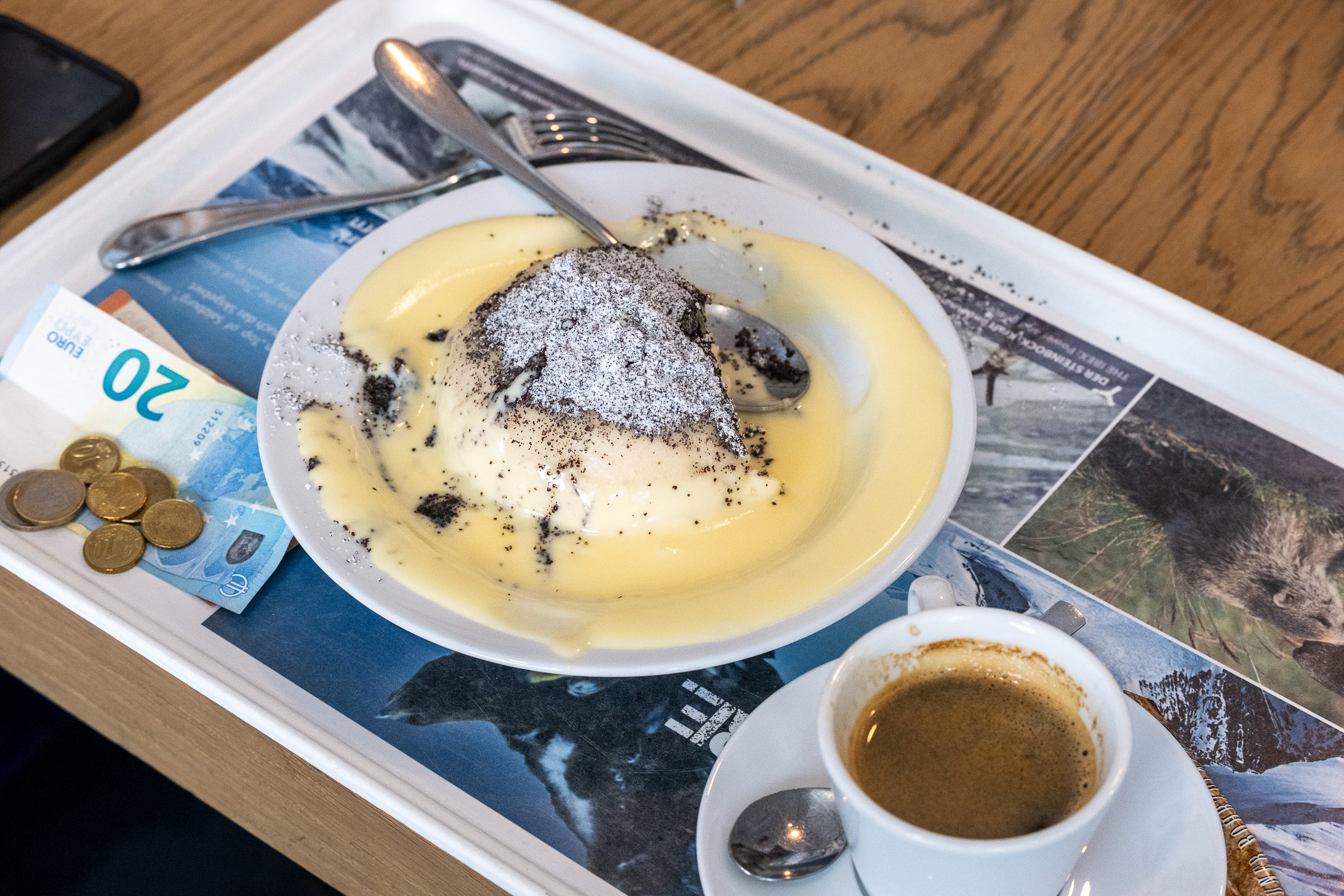
- Seen from above, a cafeteria tray at the Kitzsteinhorn holds a Germknoedel in vanilla sauce, a cup of espresso, cutlery and a twenty euro note with loose coins, all on a printed alpine wildlife placemat. (8 / 8)
Snapshot
The Kitzsteinhorn rises to 3,203 m above Kaprun in the Pinzgau, carrying a glacier that makes it one of Austria’s few peaks offering skiing in every month of the year. It is a mountain of two realities: a year-round mountain sports destination, and the site of the worst cable car disaster in history.
The Story
The Kitzsteinhorn glacier has been drawing skiers and summer visitors since the 1960s, when the first lift infrastructure reached the upper snowfields. At 3,203 m it provides reliable snow cover when lower resorts do not, and the views from the summit platforms, across the Hohe Tauern and directly south toward the Großglockner, are among the more dramatic available from a lift-accessed peak in Austria.
Then there is November 2000. A fire broke out in the funicular tunnel during the morning uplift, and 155 people died. The disaster exposed systemic failures in cable car safety regulation across Europe and led to fundamental changes in how mountain transport systems are designed, inspected, and operated. A memorial marks the site. Coming to the Kitzsteinhorn without knowing this history is possible; it is just incomplete.
The mountain today operates under the strict safety standards that emerged from that investigation, and visitor numbers have returned to high levels. The glacier itself is a separate concern: it has retreated significantly since the 1960s and continues to shrink. The ski infrastructure is adjusted accordingly. How much longer year-round glacier skiing remains viable here is an open question.
The Kitzsteinhorn is usually visited as part of a stay in Kaprun or Zell am See, which together form one of the major resort pairings in Salzburg State. Summer visitors come for the glacier views, the altitude, and the panorama; the mountain does not require skiing to justify the trip.
Visiting
The Kitzsteinhorn cable car system departs from Kaprun town centre. Lift tickets are required; prices vary by season and altitude reached. The glacier summit station at approximately 3,029 m is the main visitor platform; the true summit at 3,203 m requires basic mountaineering equipment and is not accessible by lift alone. Summer glacier visits operate roughly May through October depending on conditions. Winter ski access is year-round on the upper glacier with some seasonal variation in lower connections. The memorial to the 2000 disaster is located at the base of the funicular area; it is worth visiting before or after taking the lifts.