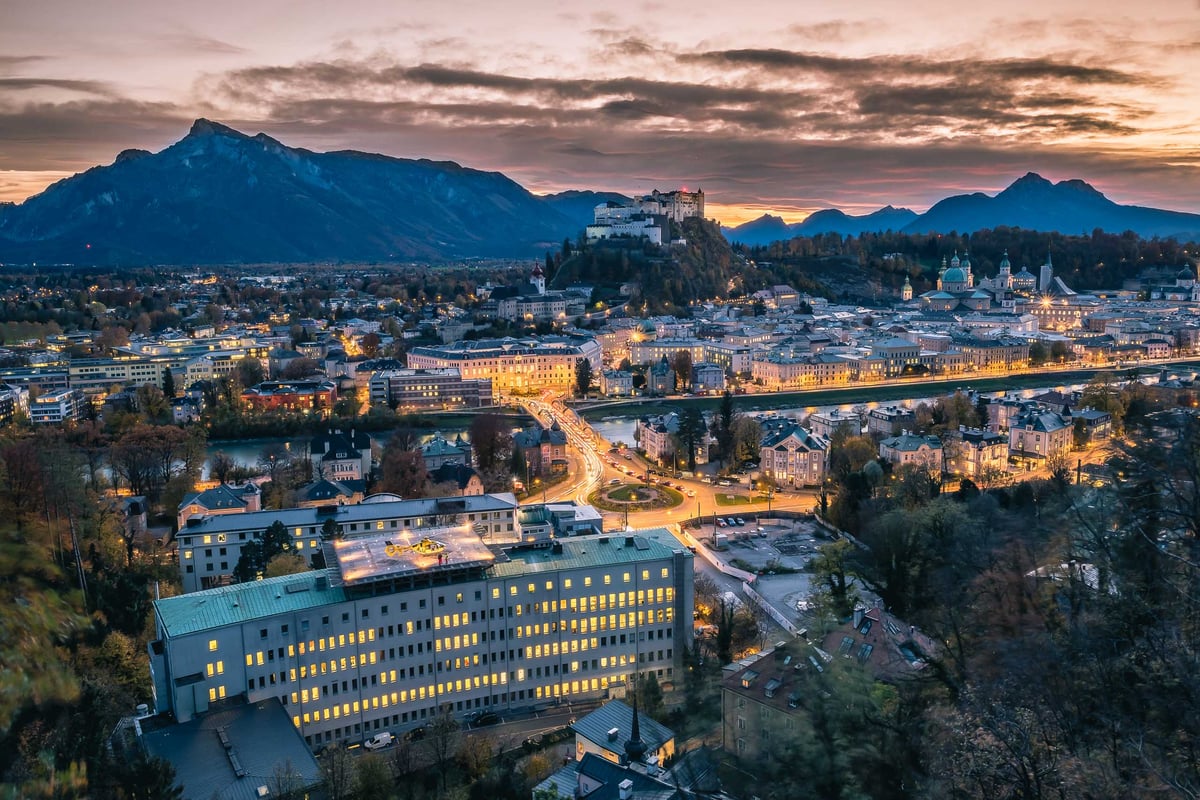
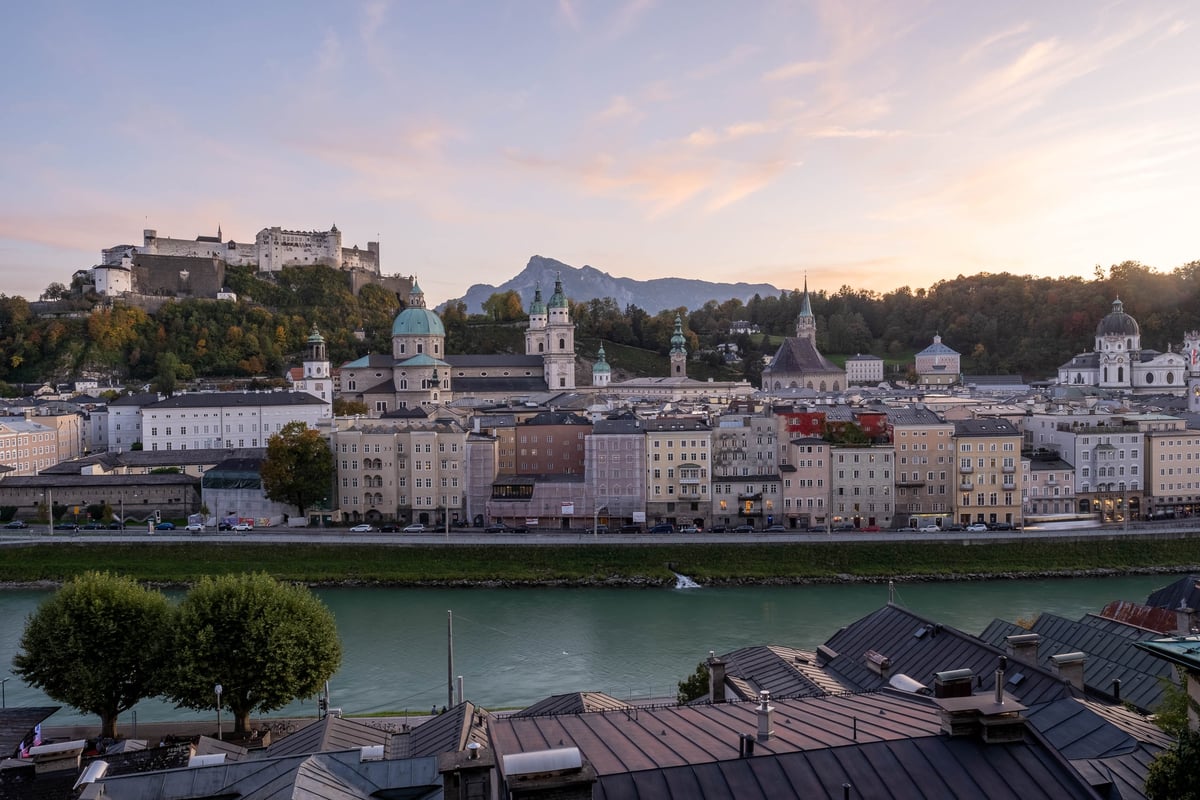
Humboldtterrasse
A formal viewpoint terrace on the Mönchsberg, offering a broad southward panorama. Named after Alexander von Humboldt. Natural stopping point on the ridge walk. Connected to Humboldt Stubn restaurant.
Scientist
14 September 1769, Berlin, Prussia - 6 May 1859, Berlin, Prussia
Alexander von Humboldt spent six months in Salzburg in 1797 and 1798, climbing the Kapuzinerberg and setting up experiments on the ridge. The Humboldtterrasse viewpoint is named in his memory, making him one of the very few visitors the city has permanently honoured.
Humboldt arrived in Salzburg in late October 1797, lodging at Schanzlgasse 14, and stayed until April 1798. He was not passing through; he was in the final stages of equipping himself for the South American expedition that would make him famous. Salzburg offered scientific contacts, a good library, and access to the Alpine geology he needed to calibrate his instruments before heading for the tropics. He met Leopold von Buch, his colleague from the Freiberg mining academy, to compare mineralogical notes, and he used the city as a working base while his plans for the Americas took shape.
The Kapuzinerberg was where he did his observational work. He climbed the ridge, logged his arrival time, unpacked a barometer and hypsometer, and tested them against the Salzach valley slopes, because he needed confidence in their accuracy before facing the Andes. He also ran galvanic experiments on the summit, demonstrations of early electrical theory that he recorded in letters later archived in Vienna. The view from the ridge, looking across the city toward the fortress and the Alps, stayed with him.
The Humboldtterrasse, the terrace viewpoint above the Linzer Gasse on the Kapuzinerberg’s eastern slope, carries his name to this day. His broader legacy, the Kosmos synthesis, the Humboldt Current, the idea that all living systems are interconnected, makes the fact that Salzburg is on his map feel like a small but real piece of the larger story of how one mind tried to understand the whole world.
On the map
The 2 places on this page, where they actually stand.
Locations
A formal viewpoint terrace on the Mönchsberg, offering a broad southward panorama. Named after Alexander von Humboldt. Natural stopping point on the ridge walk. Connected to Humboldt Stubn restaurant.
The Kapuzinerberg is Salzburg's right-bank wooded hill, directly across the Salzach from the Altstadt, and the best panoramic viewpoint in the city for visitors willing to walk 15 minutes uphill.