Berliner Block
Installed 2017
A massive rectangular stone block in Mirabell Gardens by Georg Trieb (2017). Walk of Modern Art. A deliberately plain object contrasting with the surrounding Baroque garden's ordered symmetry.
Sculptor
1952, Austria
Georg Trieb’s Berliner Block sits in the Mirabell Gardens as the least ornamental object in one of the most ornamental settings in Salzburg. That is the whole idea. A massive rectangular stone slab, unworked and unadorned, placed directly inside the baroque symmetry of a garden that has been precisely composed for three centuries.
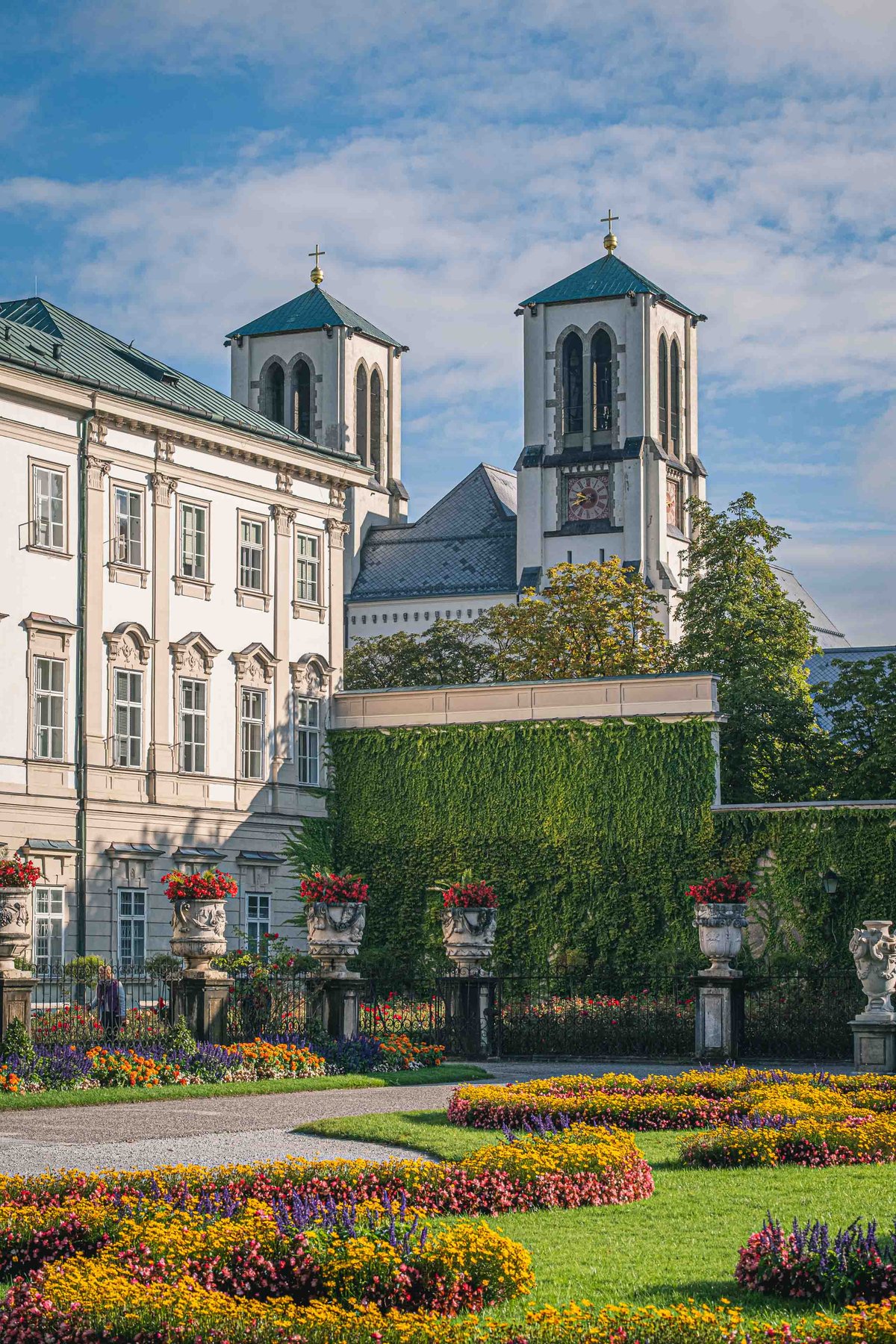
The Mirabell Gardens are a masterclass in controlled beauty. The axes, the fountains, the hedged compartments, the sculpted figures arranged at exact intervals: every element has been considered. Georg Trieb placed a stone block inside all of that, and declined to compete.
Berliner Block (2017) is part of the Walk of Modern Art, the programme through which Salzburg’s historic centre acquired a series of permanent contemporary sculptures. The Walk has brought significant international artists to the city. Trieb’s piece belongs in that company, but it works differently from the others: it does not add to the garden’s visual vocabulary, it interrupts it.
The title points toward the concrete barriers used to divide Berlin, objects that defined a century of European division and have since become a shorthand for rupture, memory, and the politics of what gets built and why. Trieb’s block carries that weight without wearing it loudly. Placed in a garden built for pleasure, it invites the question of what monuments are for, what they commemorate, and what kinds of weight public beauty is asked to carry.
The piece is free to encounter. Walk through the Mirabell Gardens and you will find it, sitting where baroque geometry gives way to something older and harder.
On the map
The 2 places on this page, where they actually stand.
Locations
Installed 2017
A massive rectangular stone block in Mirabell Gardens by Georg Trieb (2017). Walk of Modern Art. A deliberately plain object contrasting with the surrounding Baroque garden's ordered symmetry.
Laid out c. 1730
The formal baroque gardens adjoining Mirabell Palace, freely accessible to all visitors. Franz Anton Danreiter created the definitive layout around 1730. Famous as the location where Julie Andrews performed "Do-Re-Mi" in The Sound of Music. The view toward Hohensalzburg Fortress is one of the most photographed scenes in the city.