Snapshot
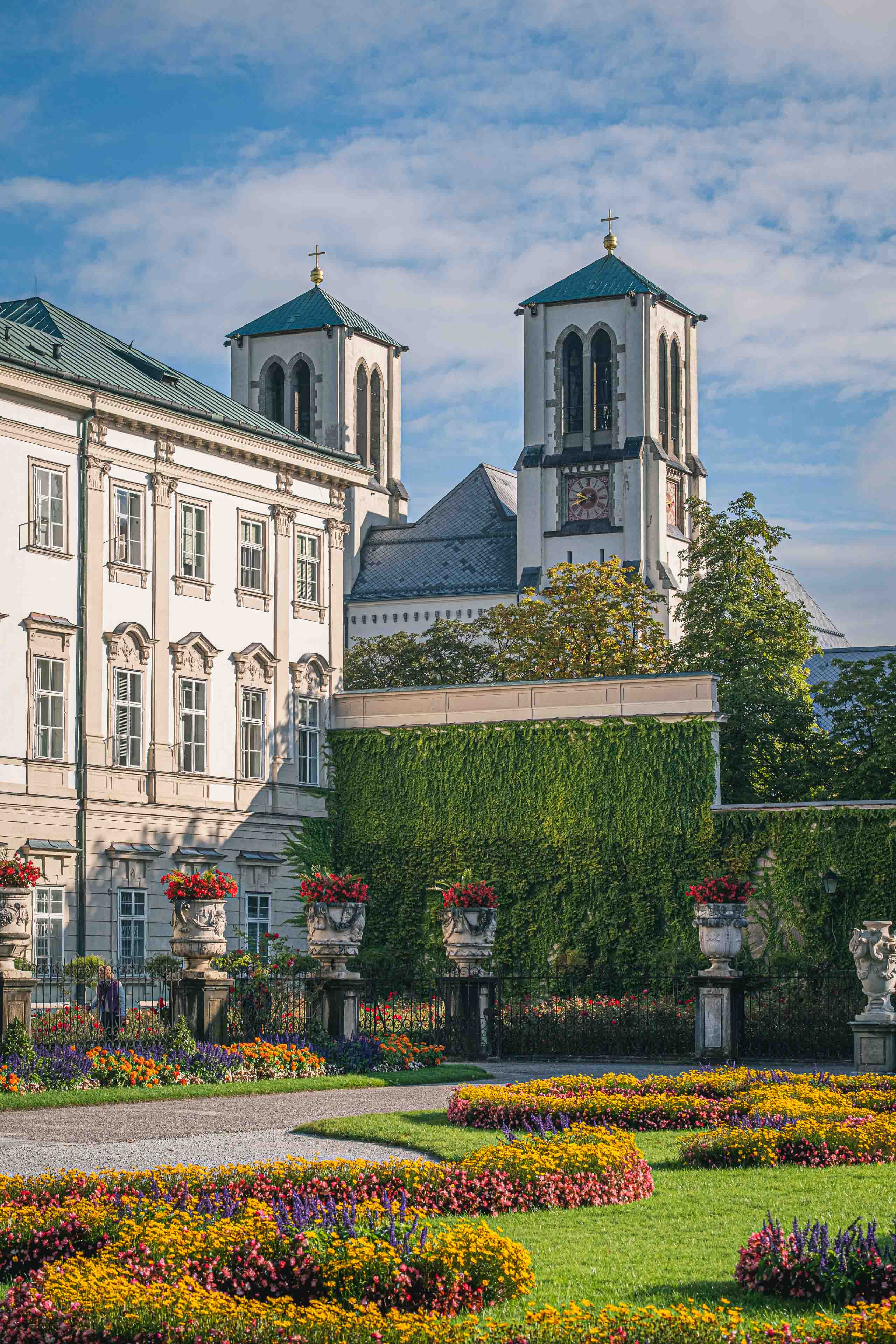
Salzburg’s most visited garden is also its most layered: a baroque formal garden, a UNESCO heritage site, a Sound of Music film location, and home to seventeen stone grotesques that were auctioned off during the Enlightenment and then bought back.
The Story
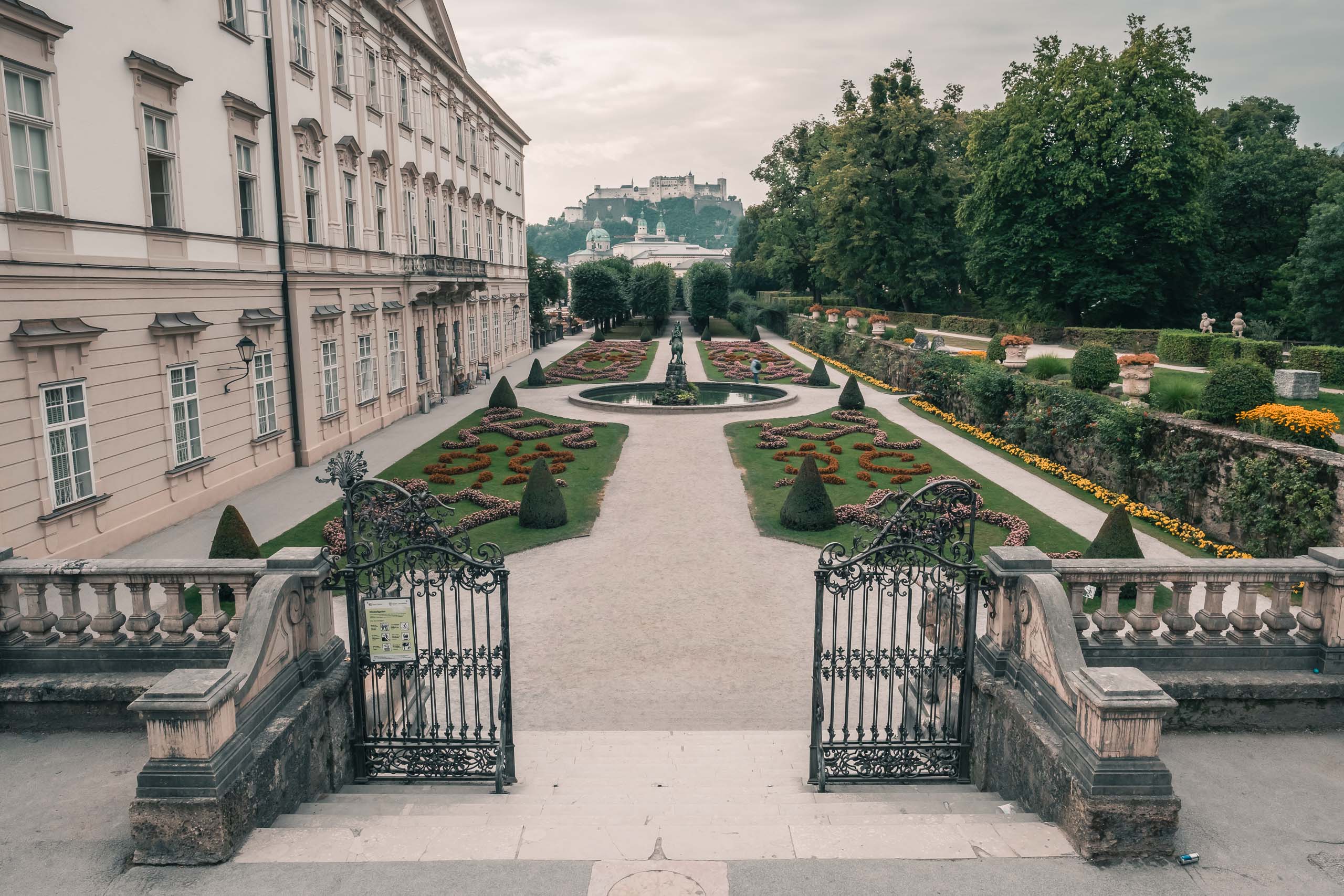
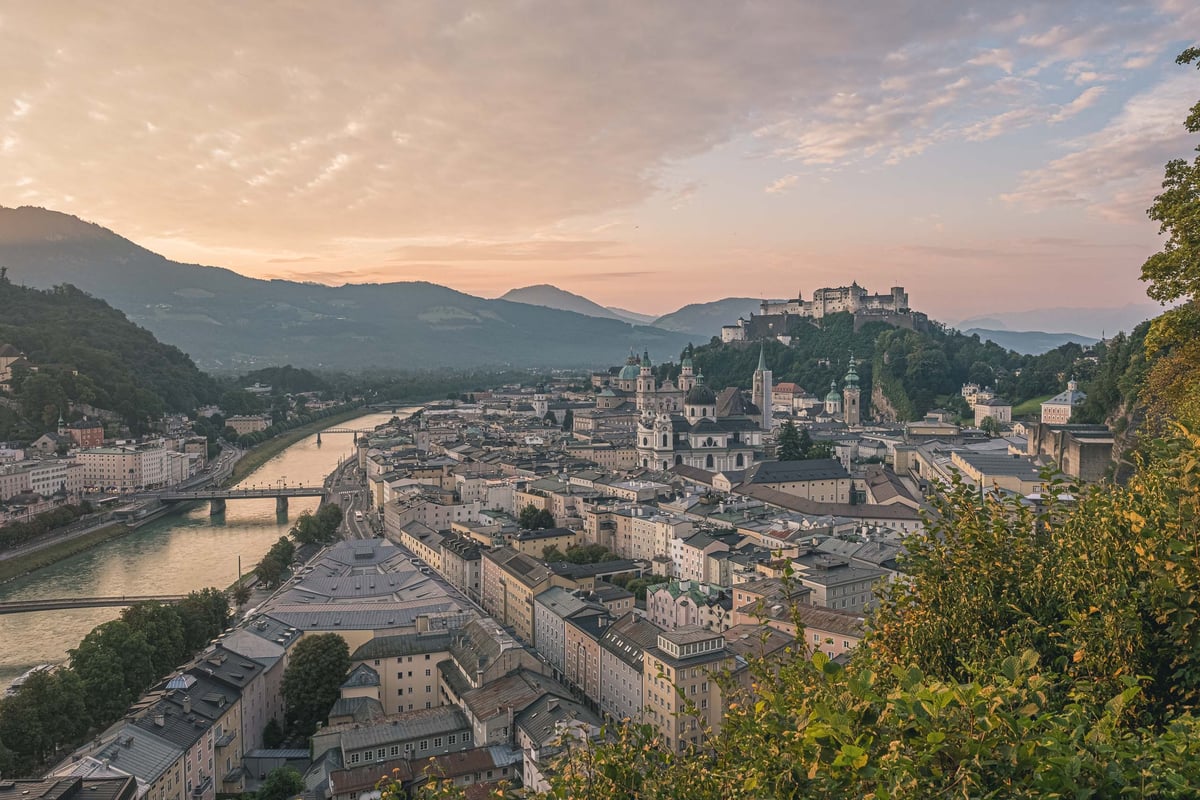
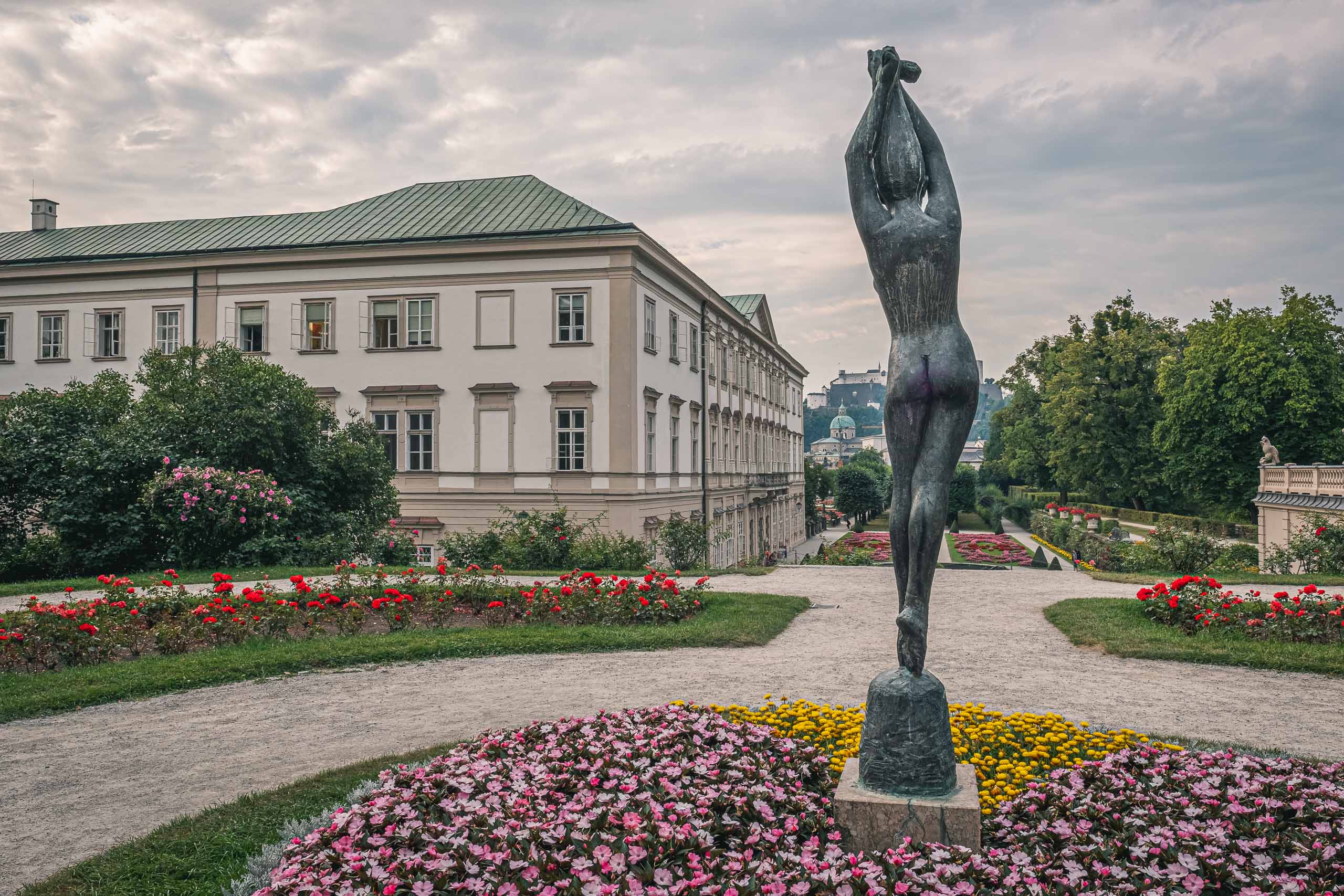
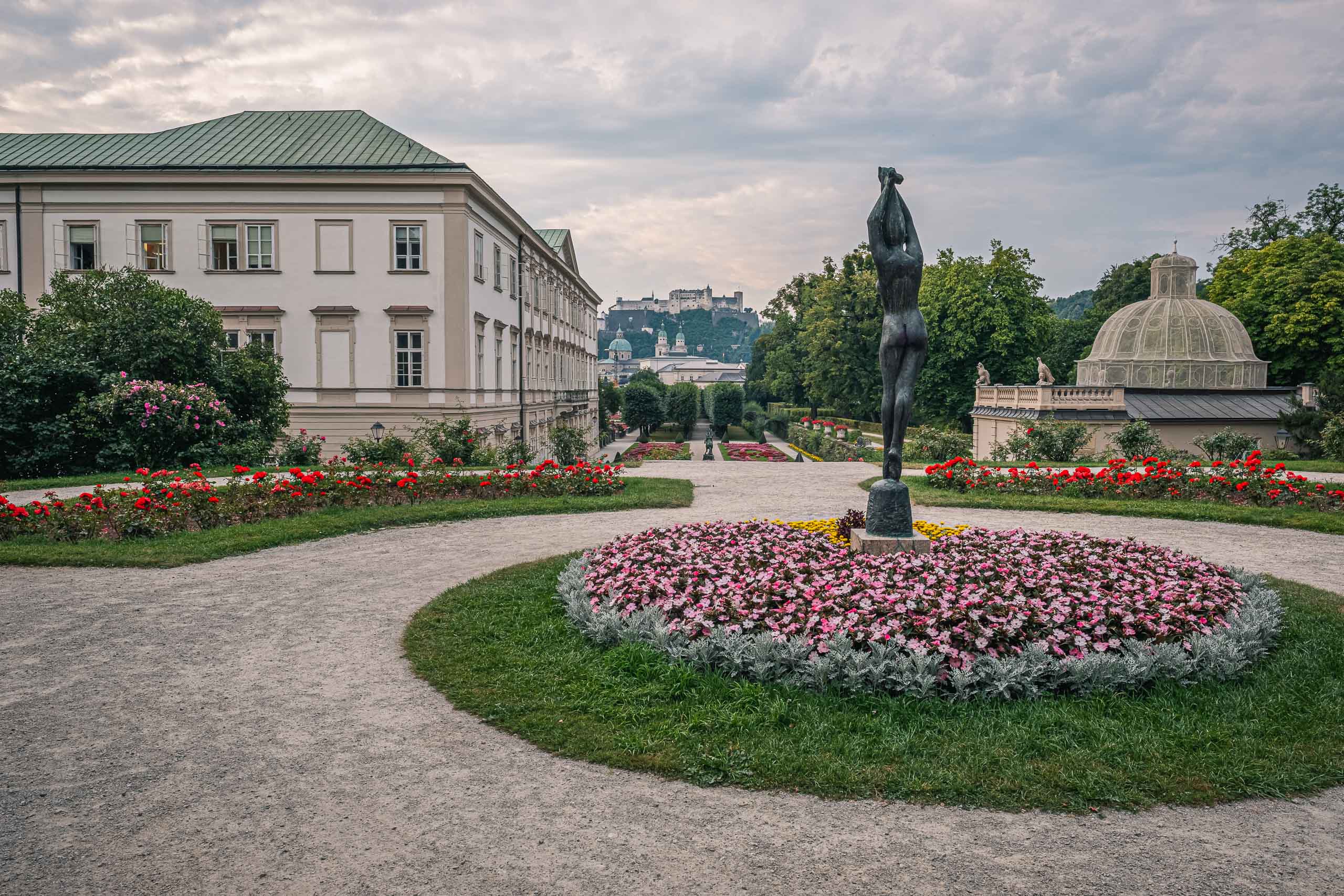
Johann Ernst von Thun, who ruled Salzburg as archbishop from 1687 to 1709, set the garden’s essential structure by commissioning Johann Bernhard Fischer von Erlach to lay out a formal garden behind the rebuilt Mirabell Palace. Fischer von Erlach was already shaping the city’s skyline through the Collegiate Church and Trinity Church, and his approach here followed the same logic: a strict north-south axis aligned with the palace, the Salzach, and the distant silhouette of Hohensalzburg Fortress, creating one long composed view that pulls the eye through the entire garden. The word “baroque” in this context means something specific: clipped parterres in geometric patterns, fountain basins framed by symmetrical paths, and sculptures placed at intervals to reinforce the sense of a designed stage.
Franz Anton Danreiter refined the layout in 1730, giving it the form that is still maintained today. Venetian sculptor Ottavio Mosto carved the mythological statue groups for the Grand Parterre in 1690, four ensembles depicting classical figures from fire, air, earth, and water. The dwarfs were carved around the same time by Mosto together with Bernhard Michael Mandl. Originally 28 in number, they were modeled after real Salzburg courtiers, each given a grotesque pose, hunchback, or exaggerated expression drawn from Jacques Callot’s copper engravings. The Enlightenment found them undignified, and they were scattered at auction. The city bought back 15 in 1919, two more returned in 2018, and the 17 stand in the Zwerglgarten, a small enclosure on the old bastion at the garden’s edge.
The Sound of Music filmed in the garden in 1964, the year before its 1965 release, and the “Do-Re-Mi” montage ends here. The children pose beside the fencer statues at the entrance, jump through the hedge tunnel, run along the rim of the Pegasus Fountain, pat one of the dwarfs on the head, and finish on the outdoor garden staircase by the rose hill. Those steps, not any staircase inside the palace, are the Do-Re-Mi steps people come looking for. Every location can be physically retraced, and many visitors do exactly that.
The Walk
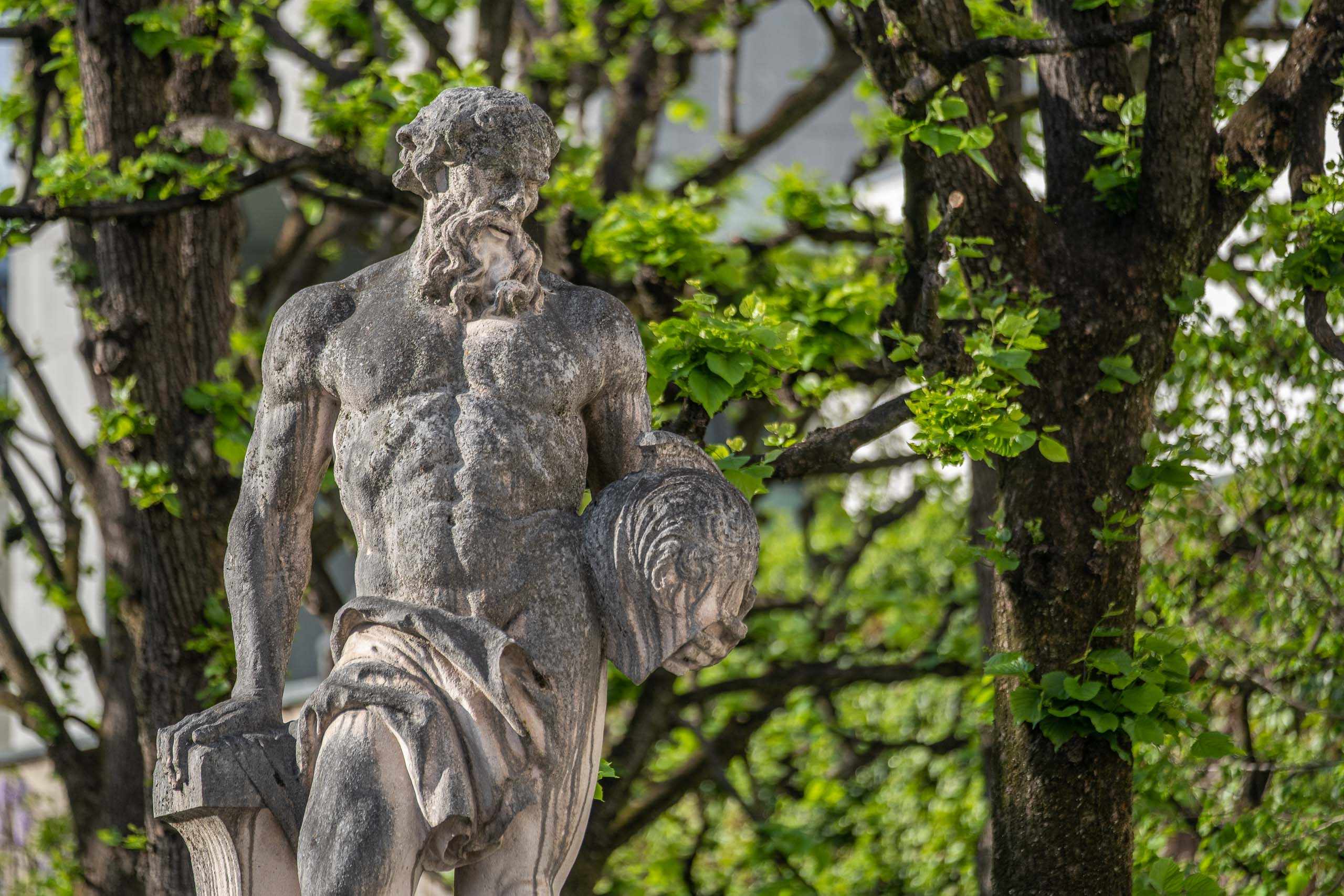
The garden rewards a slow loop far more than a photo stop. At the Makartplatz entrance, four copies of the Borghese fencer guard the gate. The original was dug up near Emperor Nero’s palace in the early 1600s and became the most copied antique statue of its era; the archbishop ordered four. Behind them stand two rows of Greek and Roman gods, sixteen in total. Four of the goddesses, Flora, Ceres, Pomona, and Hestia, stand for the four seasons, which mattered more than any deity when your harvest decided your winter.
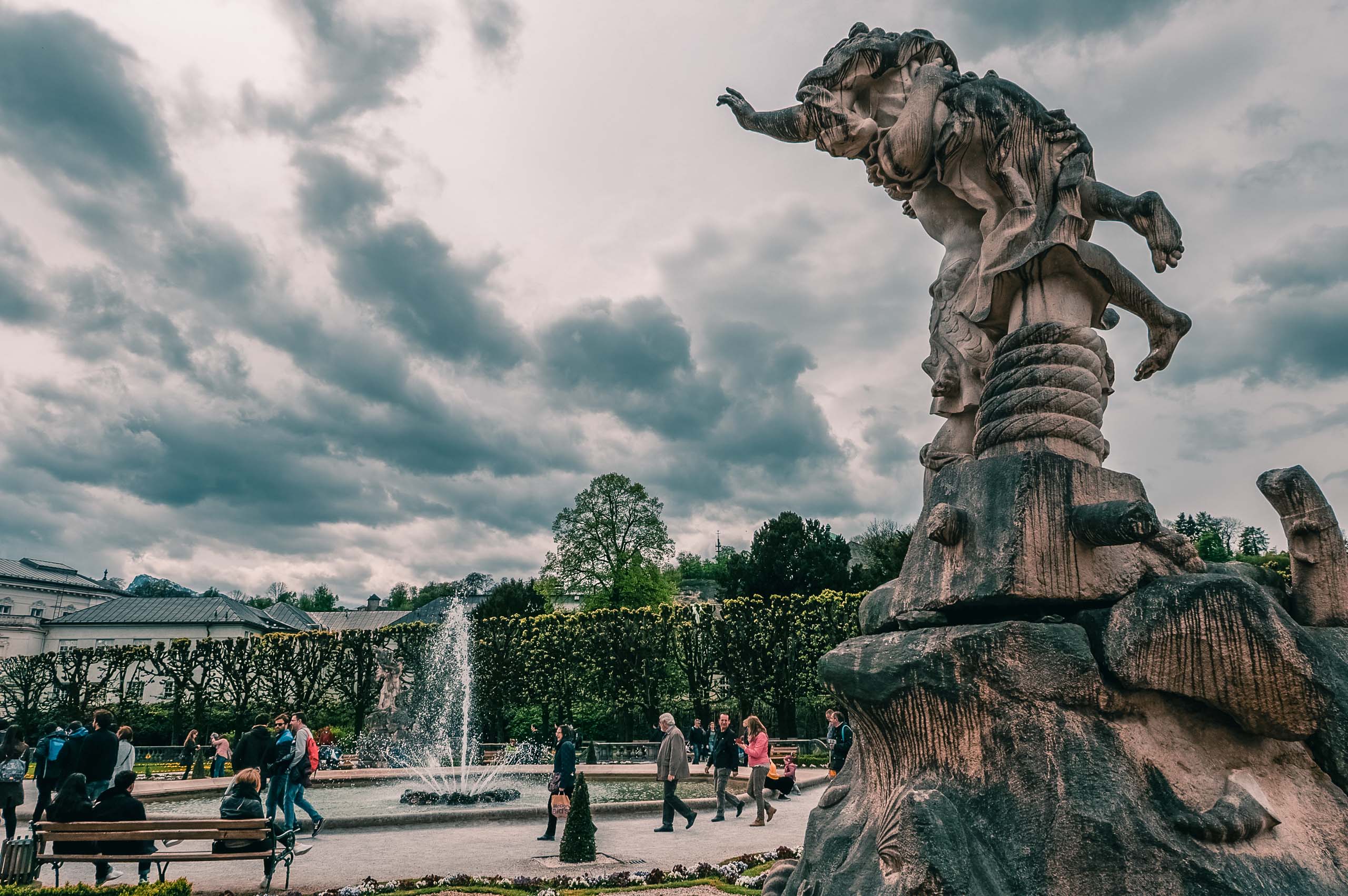
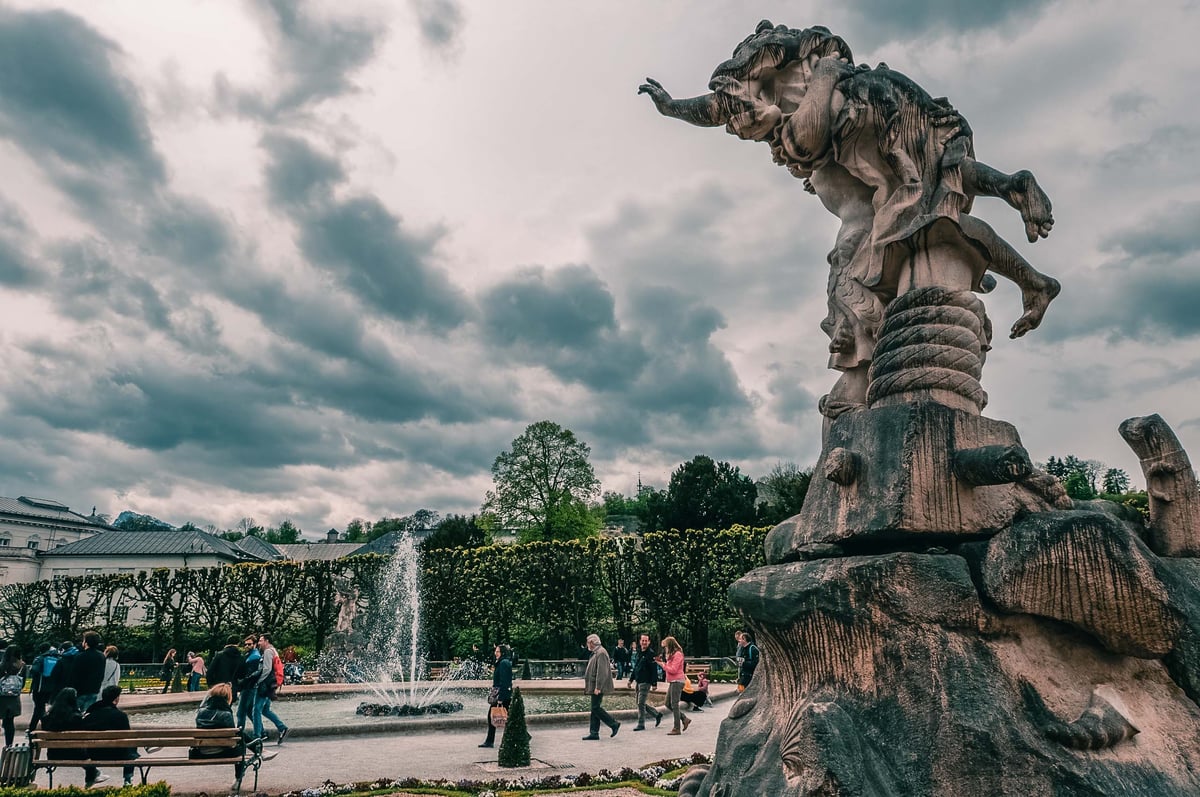
At the center of the parterre, four monumental groups by Ottavio Mosto surround the fountain, one for each element: Paris carrying Helena off across the sea for water, Aeneas hauling his lame father out of burning Troy for fire, Hercules lifting the titan Antaeus off the ground for air, and Hades dragging Persephone into the underworld for earth. Every one of them is a story the archbishops wanted their guests to read as flattery.
West of the fountain stands the Susanna fountain, the last surviving piece from the original palace inventory of Wolf Dietrich von Raitenau’s time. Whether the bathing figure was meant as a tribute to Salome Alt is speculation, but the two did have fifteen children together, so the romance is not.
Up the steps at the garden’s edge, the Hedge Theatre (1704-1718) is one of the oldest natural open-air theaters north of the Alps, with a small maze beside it that once made musicians appear and disappear mid-performance. Just before those steps, the hedge tunnel from the film still stands. Behind the neighboring fence sits the garden of the Mozarteum Foundation with the Magic Flute House, the wooden hut where Emanuel Schikaneder supposedly locked up Wolfgang Amadeus Mozart to make him finish the opera. The story is an urban legend; the hut stood in Vienna, where the opera premiered, and was moved to Salzburg decades later. A few steps away, a small plaque honors Georg Trakl, Salzburg’s great dark poet, who died of a cocaine overdose at 27 after tending ninety wounded soldiers at the Battle of Grodek with no supplies.
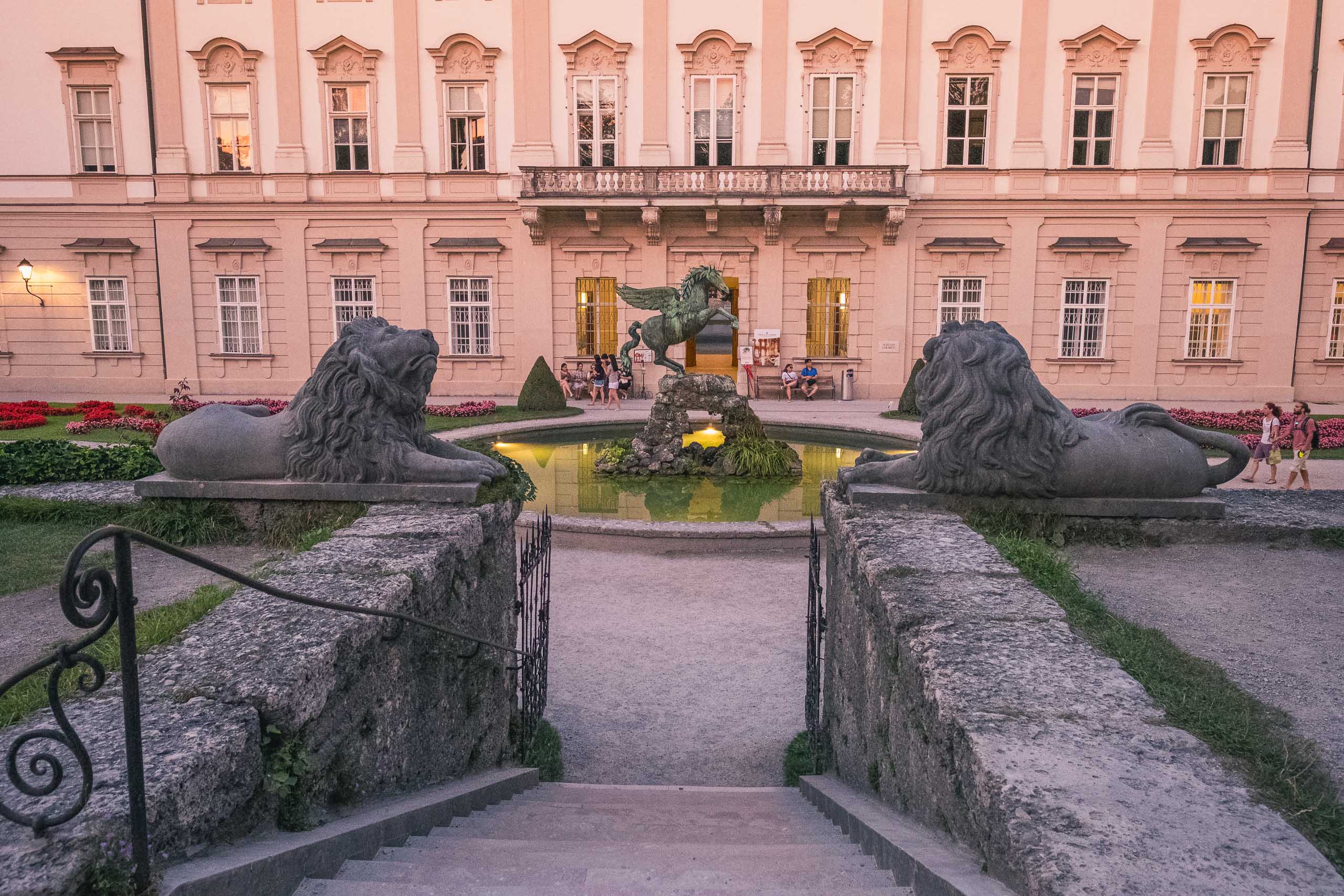
On the old bastion, the Zwerglgarten holds the 17 surviving dwarfs. Nine of them form a months-of-the-year circle, one wears a turban and snaps a branch, the archbishop’s joke about the failed Turkish siege of Vienna in 1683, and the one with the glasses is the dwarf the children pat in the film. Down below, the Pegasus Fountain’s winged horse still faces Salzburg Cathedral, where it originally stood as a symbol of divine backing before being shuffled around the city and landing here in 1913. The Do-Re-Mi steps rise just beyond, with the plaque thanking Emperor Franz Joseph I for handing the garden to the public in 1866.
On the way out, three things most visitors miss: the rose garden gate, one of the best photo spots in the city, the Papagena fountain from Mozart’s Magic Flute (a 1984 addition), and the palm house, open during the day and free. In winter, locals board their pet turtles in its pond. That is not a joke.
Visiting
- Duration: 30-60 minutes for the main parterre, rose garden, Dwarf Garden, and Pegasus Fountain
- Cost: Free, every day of the year
- Hours: Daily from approximately 6am until dusk. Hedge Theatre and Dwarf Garden closed in winter.
- Getting there: Mirabellplatz, a 5-minute walk from the Altstadt across the Staatsbrucke.
- Book ahead: Not needed.
- Combine with: Mirabell Palace directly adjacent (Marble Hall free on weekday mornings); Sebastiansfriedhof a short walk north; Linzer Gasse for coffee afterward.
- Tips: The best view toward Hohensalzburg Fortress is from the south end of the main parterre. Arrive early morning if you want the Do-Re-Mi steps without crowds. The Dwarf Garden is easy to miss; look for the small bastion garden at the west edge. The palm house by the rose garden is open during the day and free.