Snapshot
A wooden board piled with Speck, mountain cheese, pickles, horseradish, and dark bread: the Alpine version of charcuterie, and the reason beer garden afternoons in Salzburg never end on schedule.
The Story
The Brettljause has its roots in Alpine working culture. Hut workers in the mountains needed a portable, high-calorie Jause that could be assembled without a kitchen. The board itself was the answer: bring a plank, pile it with preserved meats and cheese, and eat communally while sitting on whatever was available. By the 19th century the format had migrated to inns, where it became a social institution rather than a practical necessity.
The Salzburg version typically includes Speck, the Alpine cured bacon that has been cold-smoked and air-dried; Verhackertes, a coarse pork-and-bacon spread that is better than it sounds; Liptauer, a spiced curd cheese softened with butter and paprika; sliced Bergkäse or Pinzgauer Bierkäse; pickled gherkins; radishes; mustard; horseradish; and dark rye bread. The components vary by establishment and season. What does not vary is the structure: cold, board, shared, unhurried.
In Salzburg, the canonical setting for a Brettljause is a beer garden with a half-litre of Märzen and an afternoon with nothing urgent in it. The Augustiner Bräustübl in Mülln and the Franziskischlossl on Kapuzinerberg both do it well and provide the necessary environment.
Where to try it
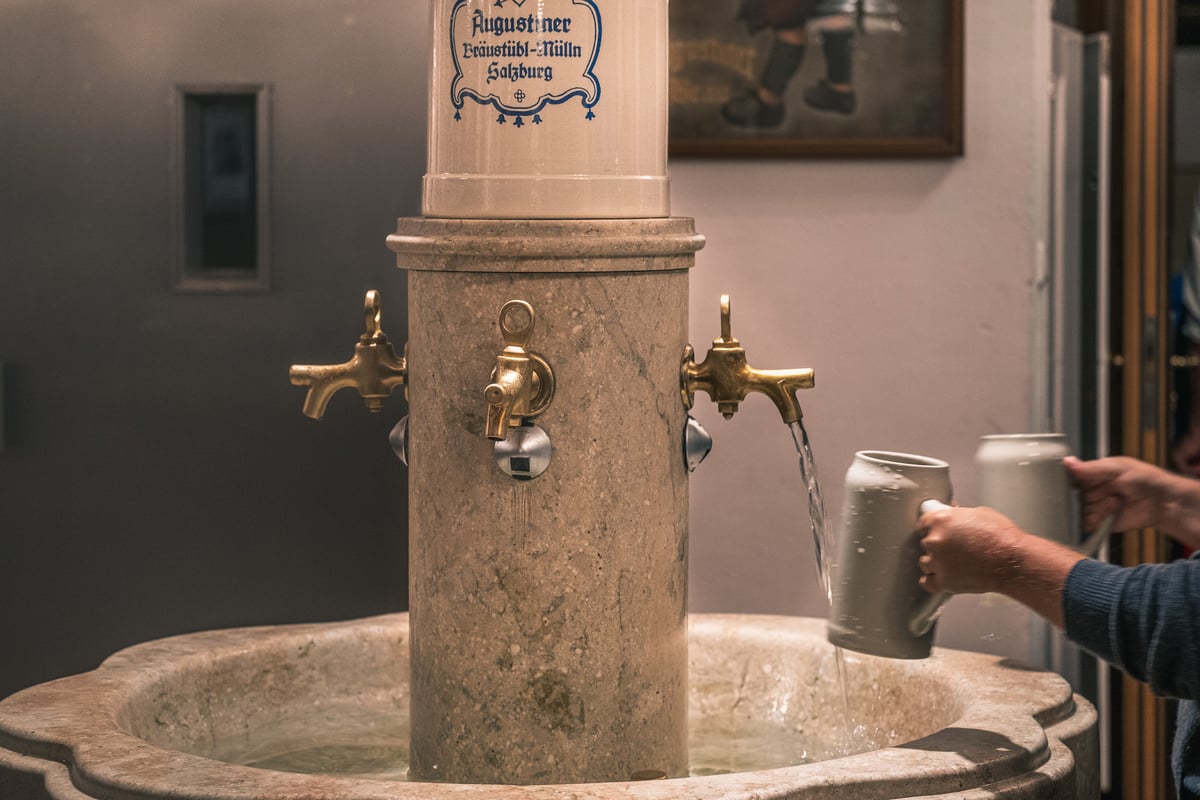
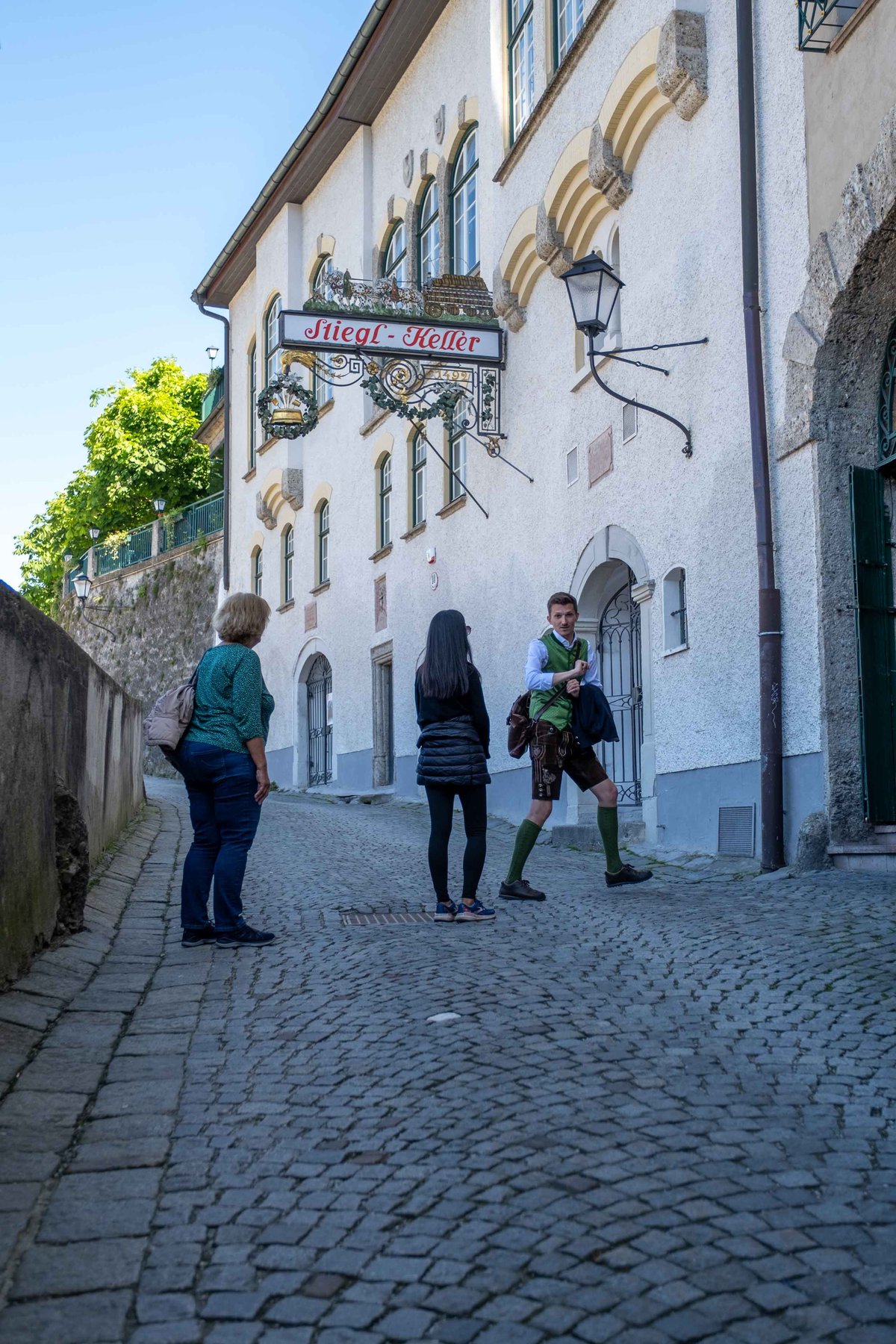
Augustiner Bräustübl in Mülln is the classic setting: a vast beer garden where you carry your own beer from the tap inside and a Brettljause from the food counter. Franziskischlossl on Kapuzinerberg offers the same format with a view over the city. Stieglkeller on Festungsgasse is another reliable option.