
Village / Austria
Filzmoos
Show all 2 photos
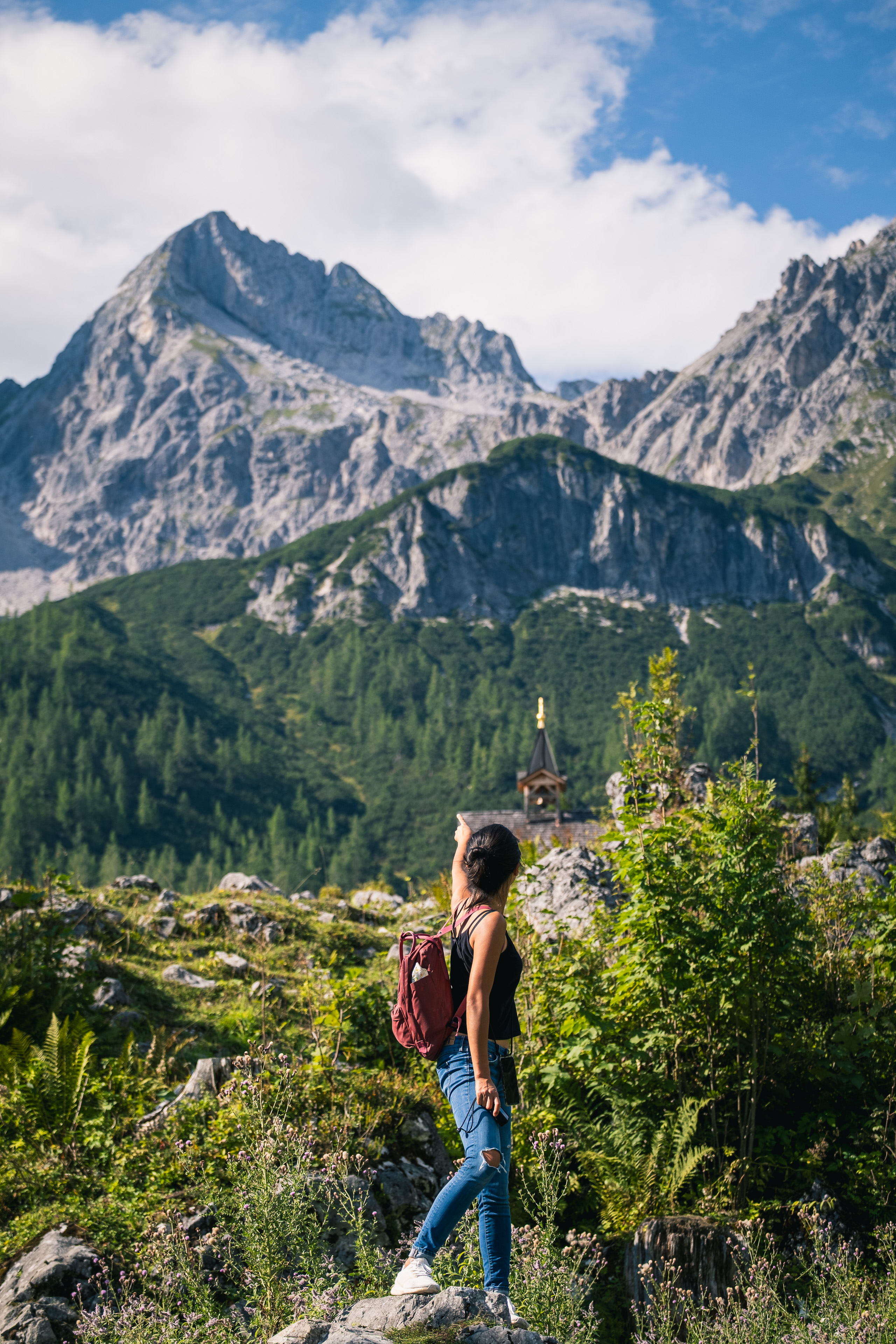
- A hiker with a burgundy daypack stands on a rock and points up at a sharp limestone peak above a small shingled chapel tower in Filzmoos. (1 / 2)
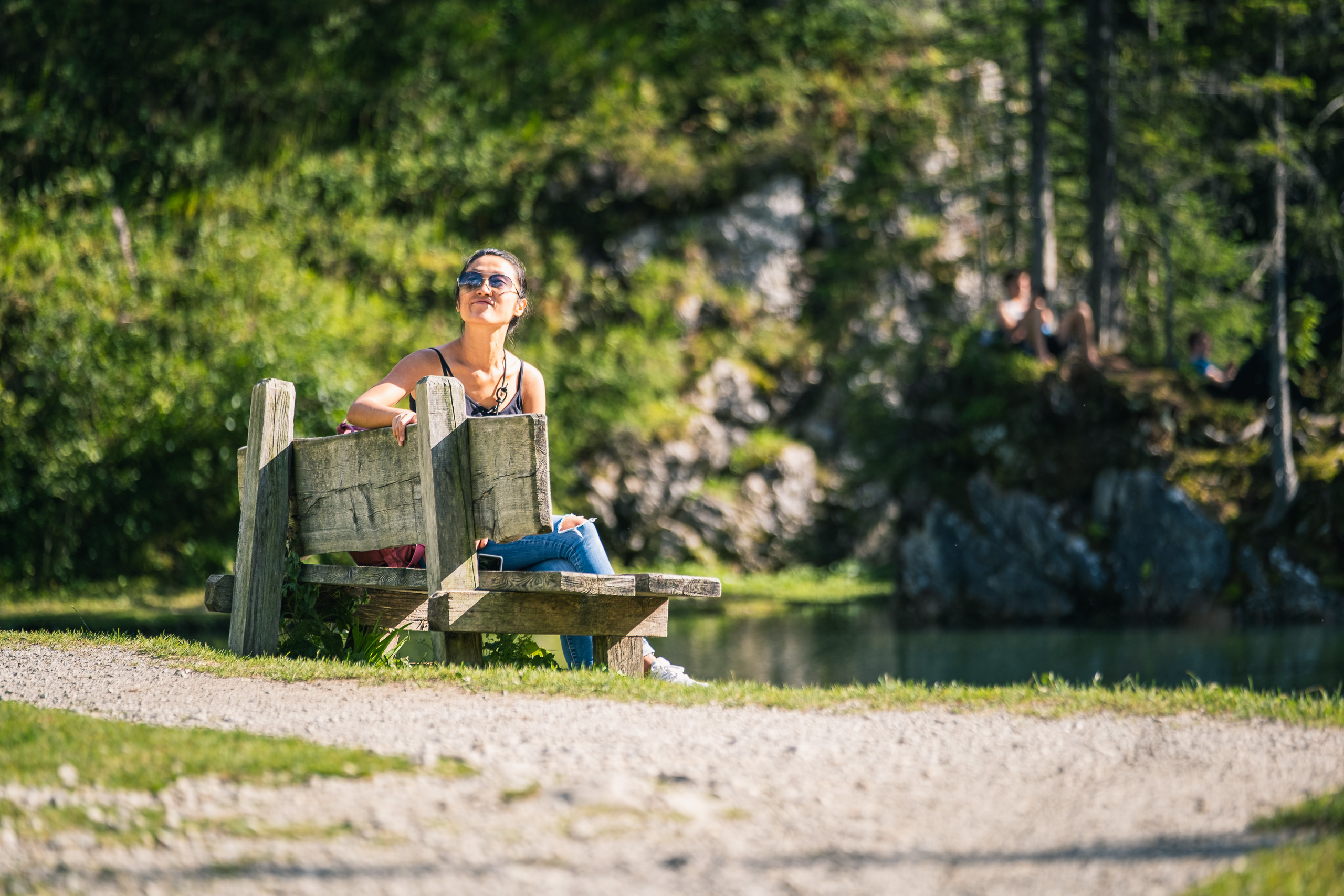
- A woman in sunglasses sits back on a rustic timber bench beside a small dark mountain lake in Filzmoos, with a gravel path in the foreground and sunbathers on the rocks opposite. (2 / 2)
Snapshot
Filzmoos chose not to become a resort. The traditional farmhouse architecture is intact, the village centre has a genuine centre, and the twin limestone towers of the Bischofsmütze rise above it all against the Dachstein massif. Every January, hot-air balloons launched from the Hammerwiese fill the winter sky above all of it.
The Story
The name means “peat moss,” and the earliest settlement cleared this boggy high valley floor, probably in the 13th century, to create alpine pasture. The Oberhofalm dates to 1665, operating as a summer cattle station, and the village pattern of scattered farmsteads around a central pilgrimage church has largely survived. That survival is not accidental. When neighbouring Pongau villages went through resort redevelopment in the 1970s and 1980s, Filzmoos went a different way: low building heights, no large hotel complexes, no gondola station in the village square. What remains is one of the most visually coherent traditional Alpine villages in Salzburg State, with the wooden chalet vernacular and flower-hung balconies that appear on tourism posters elsewhere but which here are the actual present-day reality.
The Balloon Week, running since the 1960s, came to Filzmoos because of its geography. The village sits in a natural bowl at 1,057 metres, surrounded by peaks that funnel predictable winter air currents useful for balloon flight. Over 40 international teams now compete annually, launching from the Hammerwiese field just outside the village. The opening Saturday includes a night glow event when tethered balloons illuminate the snowfield, followed by fireworks over the Dachstein. Winter rides over the Gosaukamm and the twin Gosau lakes run at roughly €290 per person through local operators.
The Bischofsmütze twin peaks above the village are both a hiking destination and a visual constant. The 1993 rockfall on the east face left a permanent scar visible from the village. Above the peaks, the full Dachstein massif and the Gosaukamm ridge encircle the valley, a limestone wall that geologists call the “Salzburg Dolomites” for the vertical abruptness of the rock. The chef Johanna Maier, working at the Neubergerhof in the village, has brought three Austrian chef’s hats to this 1,500-person community, a calibre of cooking that surprised the culinary world and continues to surprise visitors who do not expect it here.
Planning
Filzmoos is about 70 km southeast of Salzburg, roughly one hour by car via the B99 through the Pongau. There is no direct rail connection; the nearest train station is Eben im Pongau (about 20 km), with bus connections. The Balloon Week runs in the second week of January; book accommodation at least three months ahead for that period. Hiking and climbing season runs May through October. The Dachstein West ski area provides winter skiing; lift tickets cover connection into the broader Ski Amade network on some passes. Combine with Gosau and the Gosaukamm circuit for a multi-day Dachstein experience. The village is quiet in November and early December, which suits those who want the architecture without the crowds.