
District / Austria
Pongau
Also known as Bezirk St. Johann im Pongau, Pongau District
10 places18 destinations within
Snapshot
Pongau is Salzburg State’s most Alpine-historic district. People have been digging into its valleys since the Bronze Age, first for copper, then centuries later for salt and iron. Today the same territory is Austria’s largest ski network, but beneath the lifts sits an extraordinary layering of Celtic trade routes, Neolithic settlement evidence, a wartime POW camp, and some of the most dramatic gorge scenery in the Eastern Alps.
The Story
The upper Salzach valley that defines Pongau has been inhabited since at least 6000 BC, when Neolithic camps appeared on the Bischofshofen plateau. By around 1800 BC, Bronze-Age miners were extracting copper from sites including Mitterberg, eventually reaching depths of 200 m, feeding a trade network that stretched to the Danube. The town of St. Johann im Pongau, first recorded in a 1074 deed, grew from these prehistoric foundations into a medieval market hub and is today the administrative capital of the district.
The 1855 fire that destroyed most of St. Johann’s wooden core left a defining mark: the subsequent Neo-Gothic parish church, the Pongauer Dom, was completed by 1861 and its twin spires have anchored the valley skyline ever since. It is entered free of charge and is considered among the finest rural church buildings in the state.
Pongau also holds one of the more difficult chapters in the region’s 20th-century history. Stalag XVIII-C, a multi-national POW camp that held more than 10,000 men from France, Britain, Serbia, Poland and the United States, operated near St. Johann from 1940 until liberation on 8 May 1945. A modest museum and memorial mark the site; entry is minimal and the site is open for respectful visits.
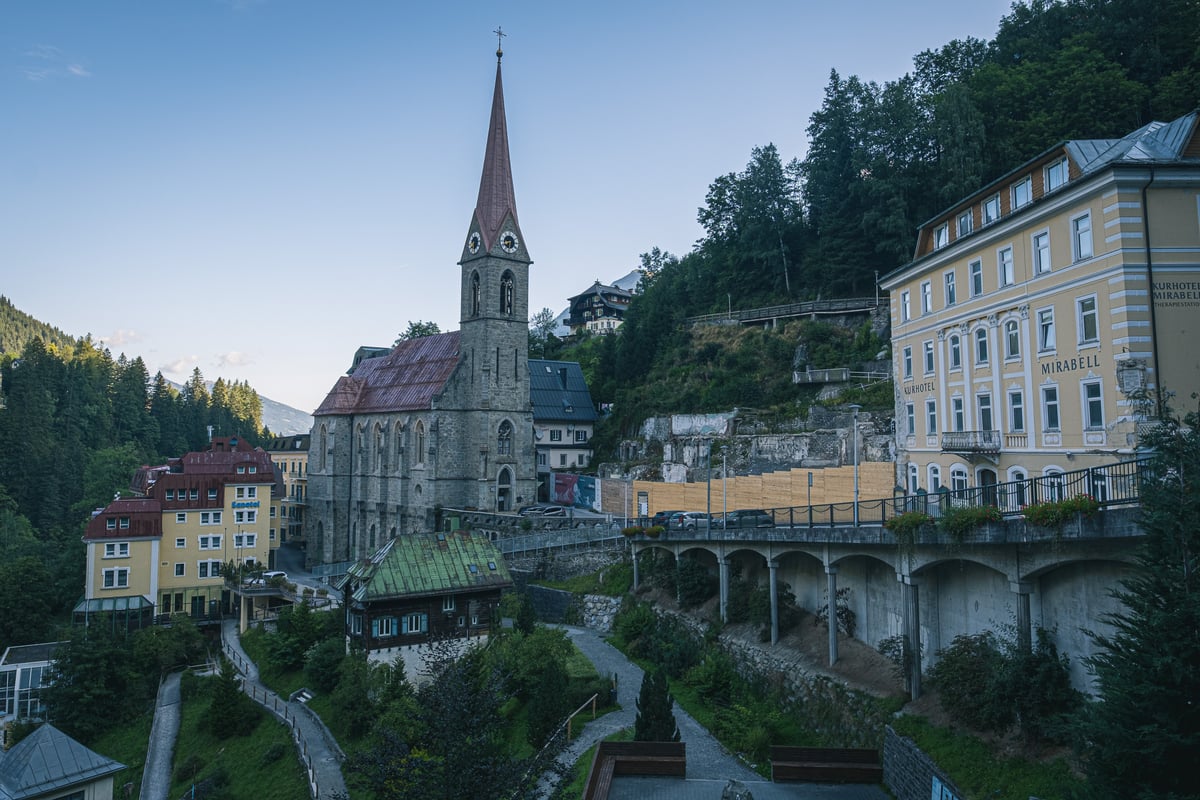
The natural landscape beyond the valley towns is extraordinary. The Eisriesenwelt near Werfen, described as the world’s largest accessible ice cave, draws visitors into a frozen interior of remarkable scale. The Liechtensteinklamm gorge, about four kilometres long with walls reaching 300 m, has been accessible via walkways since 1875. The Bad Gastein spa valley in the district’s south has a separate character entirely: a 19th-century resort town set dramatically in a high alpine gorge, with a waterfall running through the town centre and a thermal spa tradition that predates modern tourism by several centuries.
Planning
St. Johann im Pongau is 53 km from Salzburg, roughly 50-60 minutes by train with frequent daily connections. Free ski buses link the main resort villages in winter. The Ski Amadé network is vast; a single day pass covers 760 km of pistes. For summer visitors, combine the Eisriesenwelt (May-October, timed-entry guided tours) with the Liechtensteinklamm gorge as a half-day itinerary. Bad Gastein warrants a separate overnight. The Stalag XVIII-C memorial is a low-key but meaningful stop near the railway station. The Arthurstollen show mine in St. Johann offers an underground alternative to Werfen’s ice cave.
Go deeper
Destinations within Pongau
One level down the canonical map. Every card is a direct child of this destination.
village - town
town town village - village
village village village village village village town village town village - village
village
Sleep
Places to stay in Pongau
Every hotel, guesthouse, hostel and inn documented inside Pongau. A directory, not a booking site.
Schloss Goldegg
Founded 13th century
A small medieval lake castle in the Pongau. The Rittersaal (Knights' Hall) has an early 16th-century painted wooden ceiling, one of the finest examples of secular Renaissance decoration in Austria. Now a hotel and cultural centre beside the Goldegger See.
Spa Hotel Haus Hirt
A family-run boutique spa hotel in Bad Gastein, in a Belle Époque building. A counterpoint to the grander imperial hotels. Bad Gastein's waterfall, thermal waters, and faded grandeur without the impersonal scale of a resort.
Mapped places
Places in Pongau
Every card is assigned directly to this destination or one of its canonical child destinations.
Eisriesenwelt
Discovered 1879
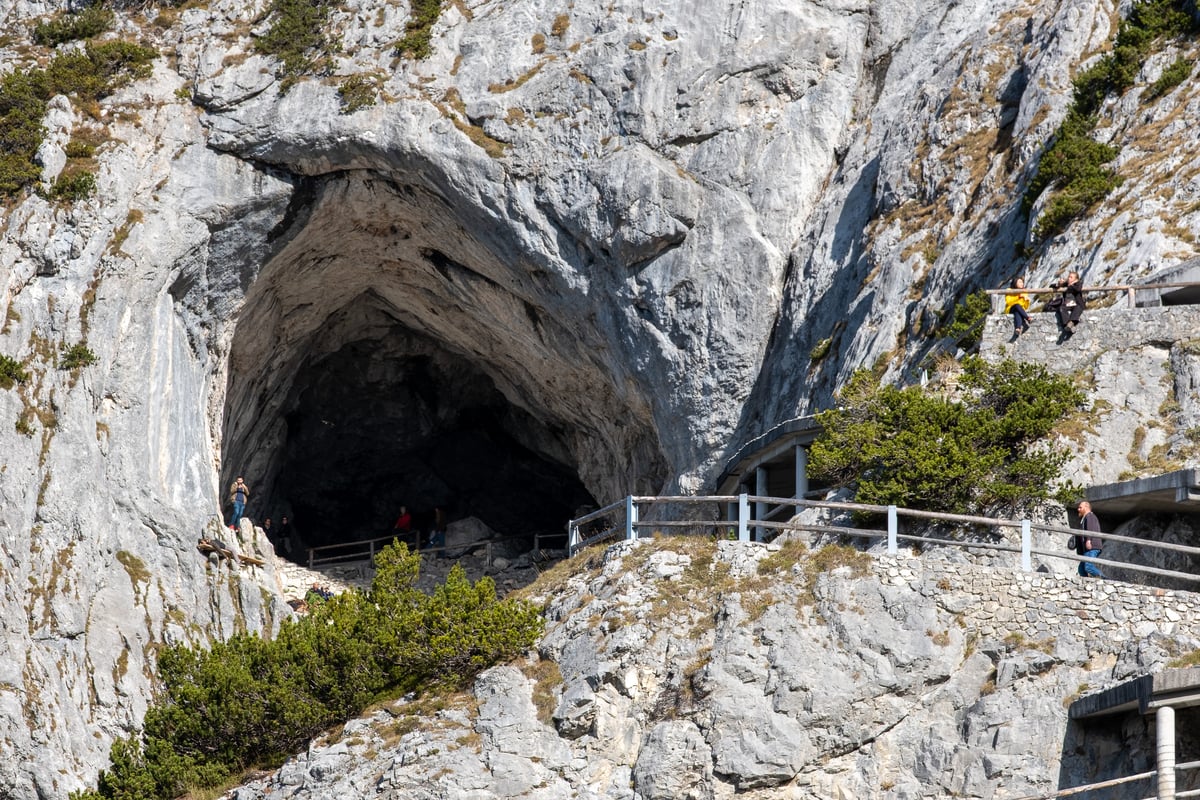
The world's largest accessible ice cave, extending 42 kilometers into the Tennengebirge above Werfen. Guided tours cover about 1 kilometer of ice formations illuminated by magnesium flares. The approach involves a cable car and a 20-minute uphill walk. Bring warm clothing. Open May to October. One of Austria's most dramatic natural attractions.
Falknerei Hohenwerfen (Hohenwerfen Falconry)
Daily bird-of-prey demonstrations at Festung Hohenwerfen. Eagles, falcons, and owls in free flight against the backdrop of the Salzach gorge. One of the best falconry shows in Austria. Included in the fortress ticket. A compelling reason to visit Werfen even for visitors who might skip the fortress museum.
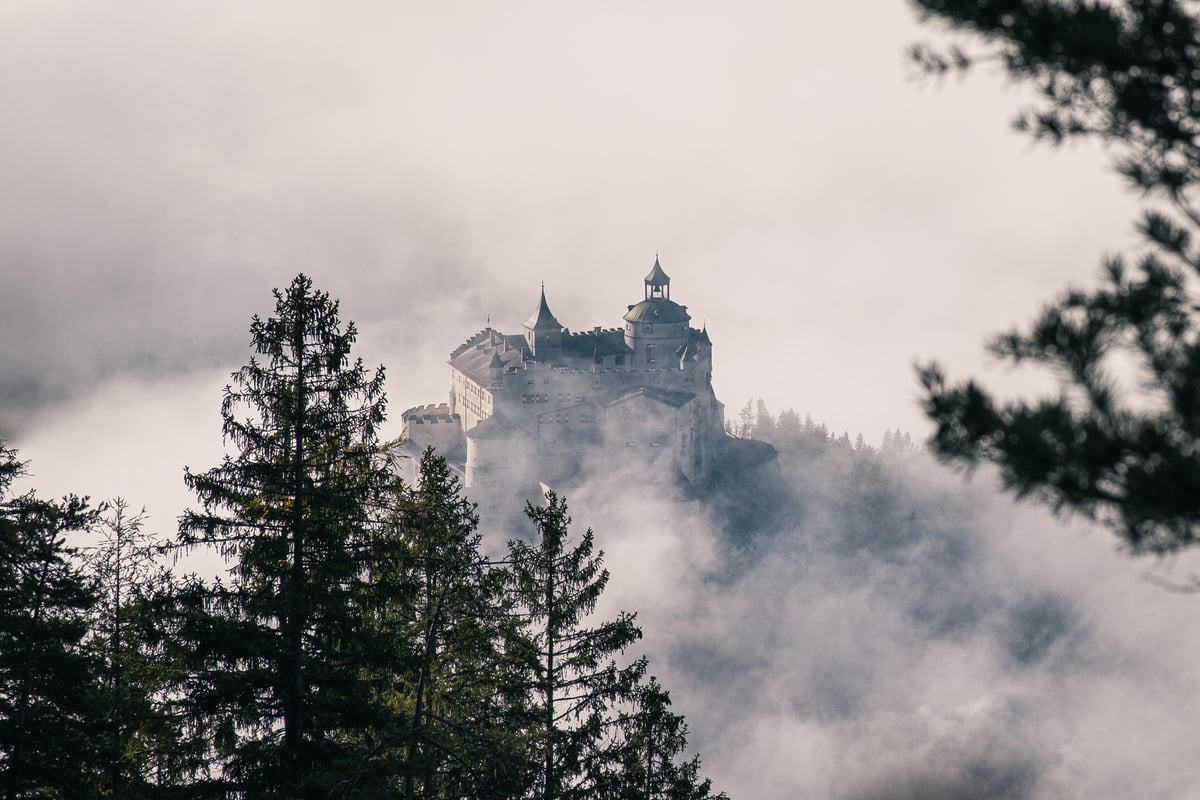
Festung Hohenwerfen
Founded 1077
A spectacular medieval fortress above the Salzach gorge near Werfen, 40 km south of Salzburg. Founded in 1077 by Gebhard von Helfenstein, the same year as Hohensalzburg Fortress. Renowned for daily falconry displays in summer. Also a filming location for Where Eagles Dare (1968). A rewarding day trip from Salzburg.
Gasteiner Heilstollen
A radon healing gallery 2.5 km inside the Radhausberg mountain, where patients lie on beds in warm, humid tunnels for therapeutic sessions. The microclimate (37-41 degrees, high humidity, natural radon) is used to treat rheumatic and respiratory conditions. The Heilstollen is the single most distinctive thing about Bad Gastein beyond the waterfall.
Gasteiner Wasserfälle
The defining spectacle of Bad Gastein: 341 metres cascading through the centre of the Belle Époque spa town, past grand hotels and bridges. Raw alpine force meets 19th-century imperial architecture. Unlike anything else in Europe.
Hochkönig
The great limestone massif of the Pongau, rising to 2,941 m. Highest point in the Berchtesgaden Alps. Multi-day circular hiking trail around the massif is among the finest long-distance walks in the Austrian Alps.
Liechtensteinklamm
One of the longest and deepest gorges in the Alps, with walkways and bridges threaded through a narrow limestone slot. A dramatic spiral staircase descends to the 300-meter depth. The gorge was reopened in 2020 after a major rockfall and reconstruction. Located just south of St. Johann im Pongau.
Schloss Goldegg
Founded 13th century
A small medieval lake castle in the Pongau. The Rittersaal (Knights' Hall) has an early 16th-century painted wooden ceiling, one of the finest examples of secular Renaissance decoration in Austria. Now a hotel and cultural centre beside the Goldegger See.
Sound of Music Meadow, Werfen
The alpine meadow near Werfen where the Do-Re-Mi picnic scene from The Sound of Music was filmed. Overlooks the valley and Festung Hohenwerfen. An official Sound of Music Trail leads up from the village.
Spa Hotel Haus Hirt
A family-run boutique spa hotel in Bad Gastein, in a Belle Époque building. A counterpoint to the grander imperial hotels. Bad Gastein's waterfall, thermal waters, and faded grandeur without the impersonal scale of a resort.
Follow a route
Curated routes through Pongau
Ordered walks with a stop-by-stop plan. Each one passes through this destination.
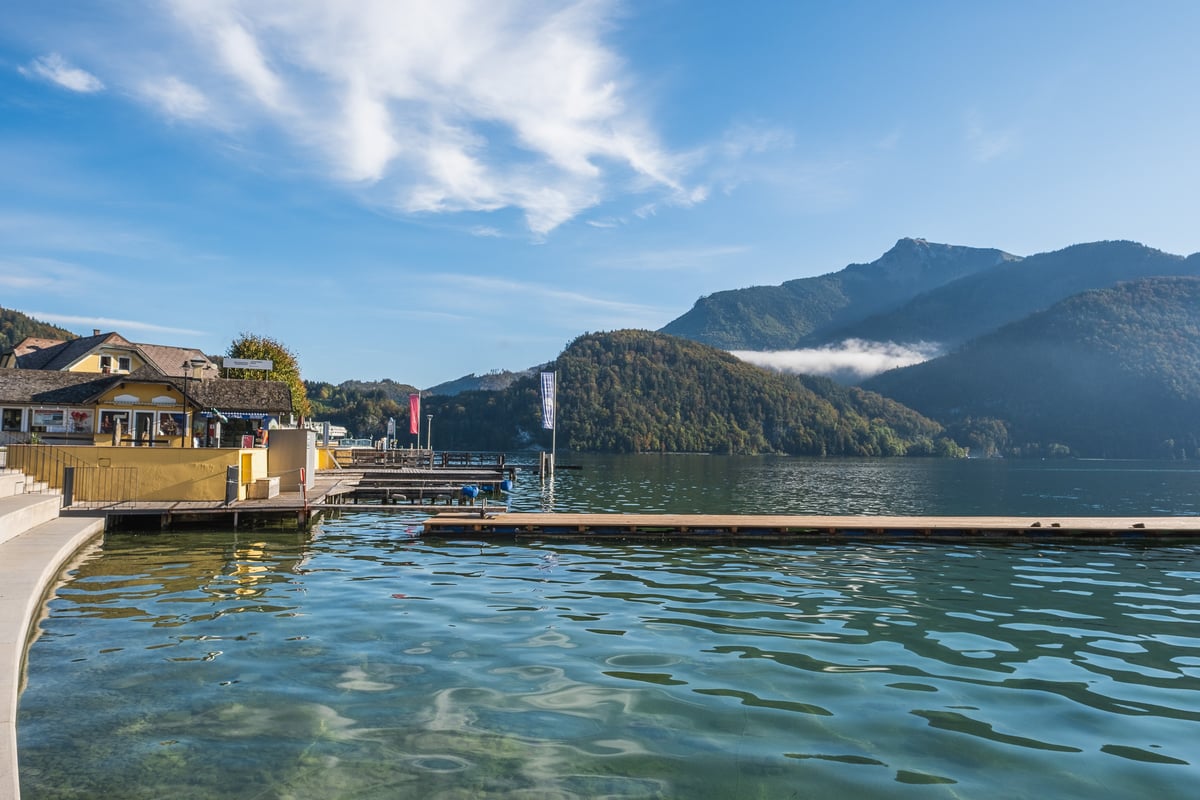
The Sound of Music on Day Trips
The lakes from the opening flight, the church where Maria marries the Captain, and the Do-Re-Mi picnic meadow. Two days out of Salzburg: three stops east in the lake district, easiest by car, and two south in Werfen, forty minutes by train.