Snapshot
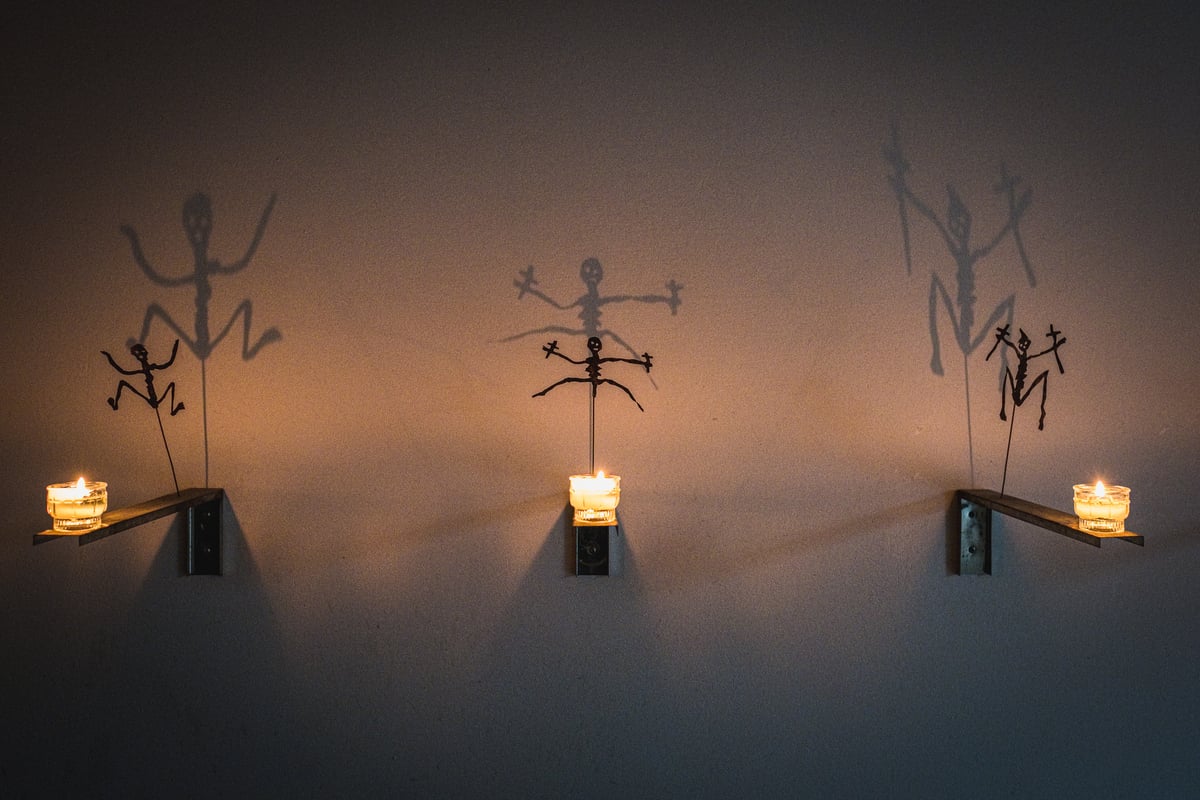
In the Romanesque crypt beneath Salzburg Cathedral, twelve sheet-metal figures catch candlelight while a recorded voice counts the hours. The artist was Christian Boltanski, and the work is Vanitas (2009). Free to enter, impossible to forget.
The Story
Boltanski was born in Paris in September 1944, days after the city’s liberation. His entire practice circled the same territory: memory, anonymous death, and the impossibility of holding onto individual lives. He worked with photographs, candlelight, metal, and sound. He collected heartbeats. He built archives of the nameless. He was one of the most significant French artists of the postwar era.
In Salzburg, all of that converges in a single room. The crypt beneath Salzburg Cathedral was excavated in the 1950s and repurposed for the 2009 installation. You descend the left-hand stairs into a vaulted chamber that once held archbishops’ tombs. The twelve figures stand in candlelight, casting shadows that shift and pulse. A speaker repeats the time in a flat, mechanical voice. The piece is called Vanitas, the Latin word for futility.
What makes the placement remarkable is the context it inherits. Every summer on Domplatz, directly above, Jedermann plays to outdoor crowds: a morality play about a wealthy man confronted by Death, performed in front of the same cathedral since 1920. Boltanski’s version occupies the floor below, private and underground, doing the same work with candlelight and metal. The two works have never acknowledged each other and do not need to.
Vanitas is part of the Walk of Modern Art and is free to enter. It is Boltanski’s most permanent civic installation in the German-speaking world. He died in July 2021.