Snapshot
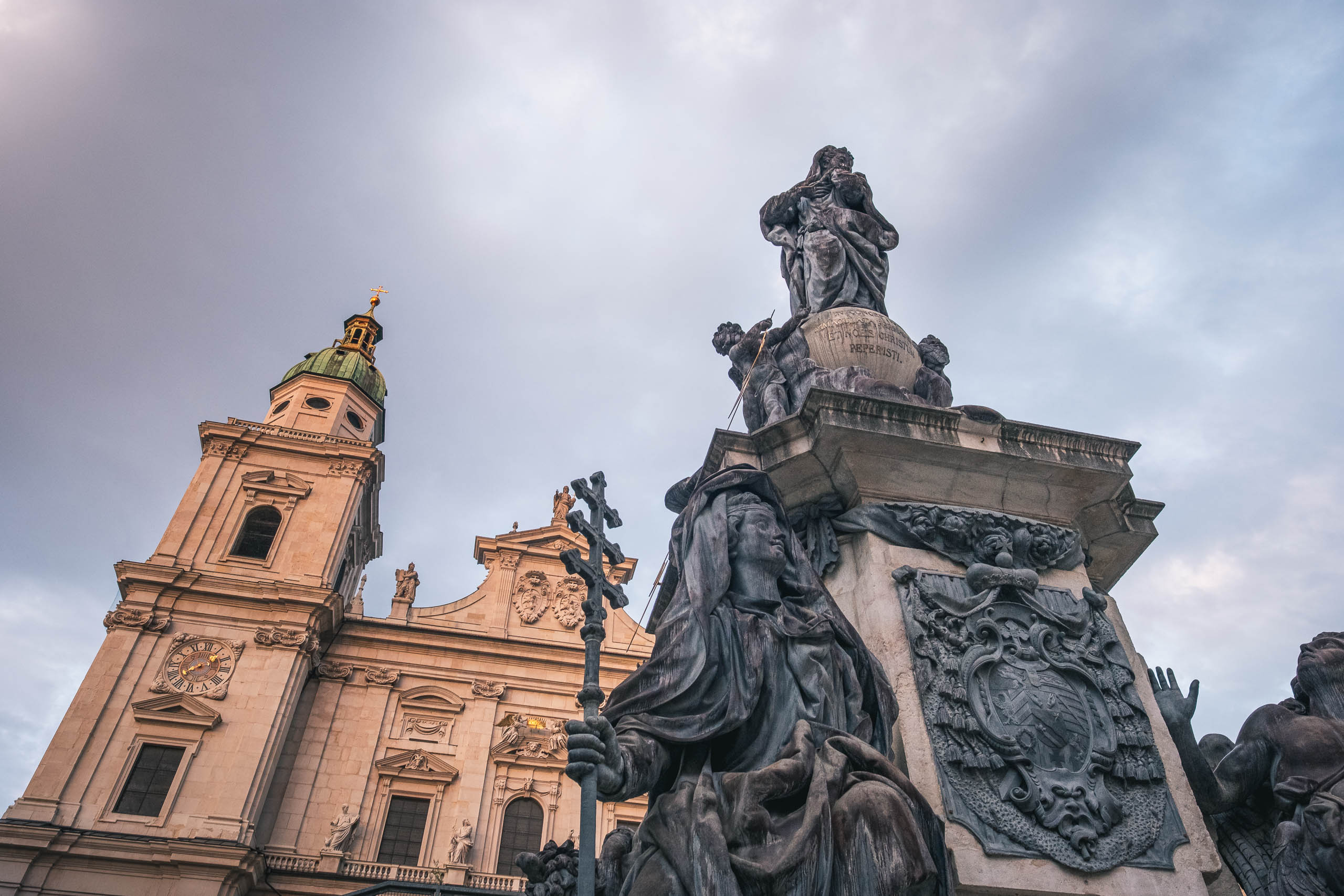
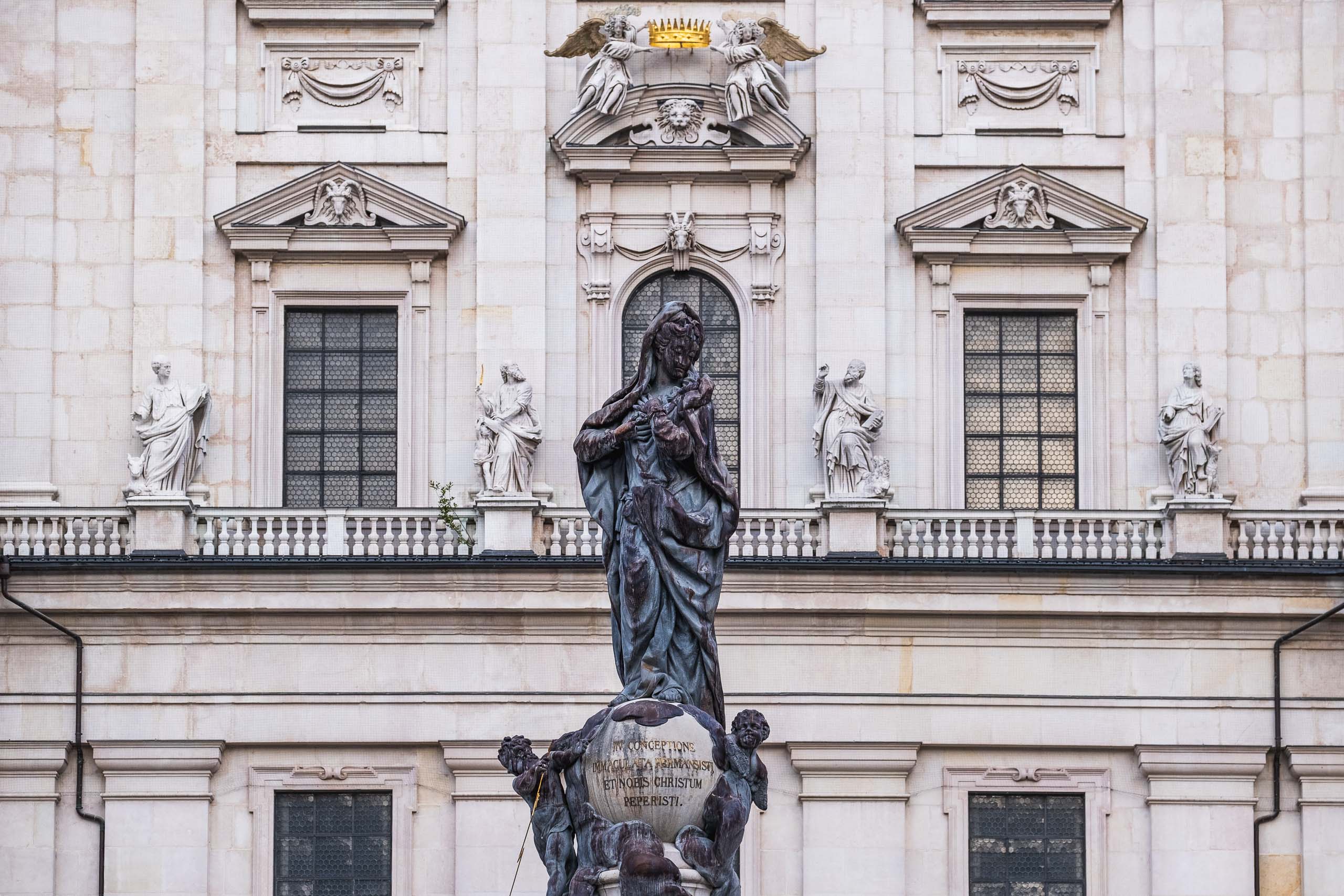
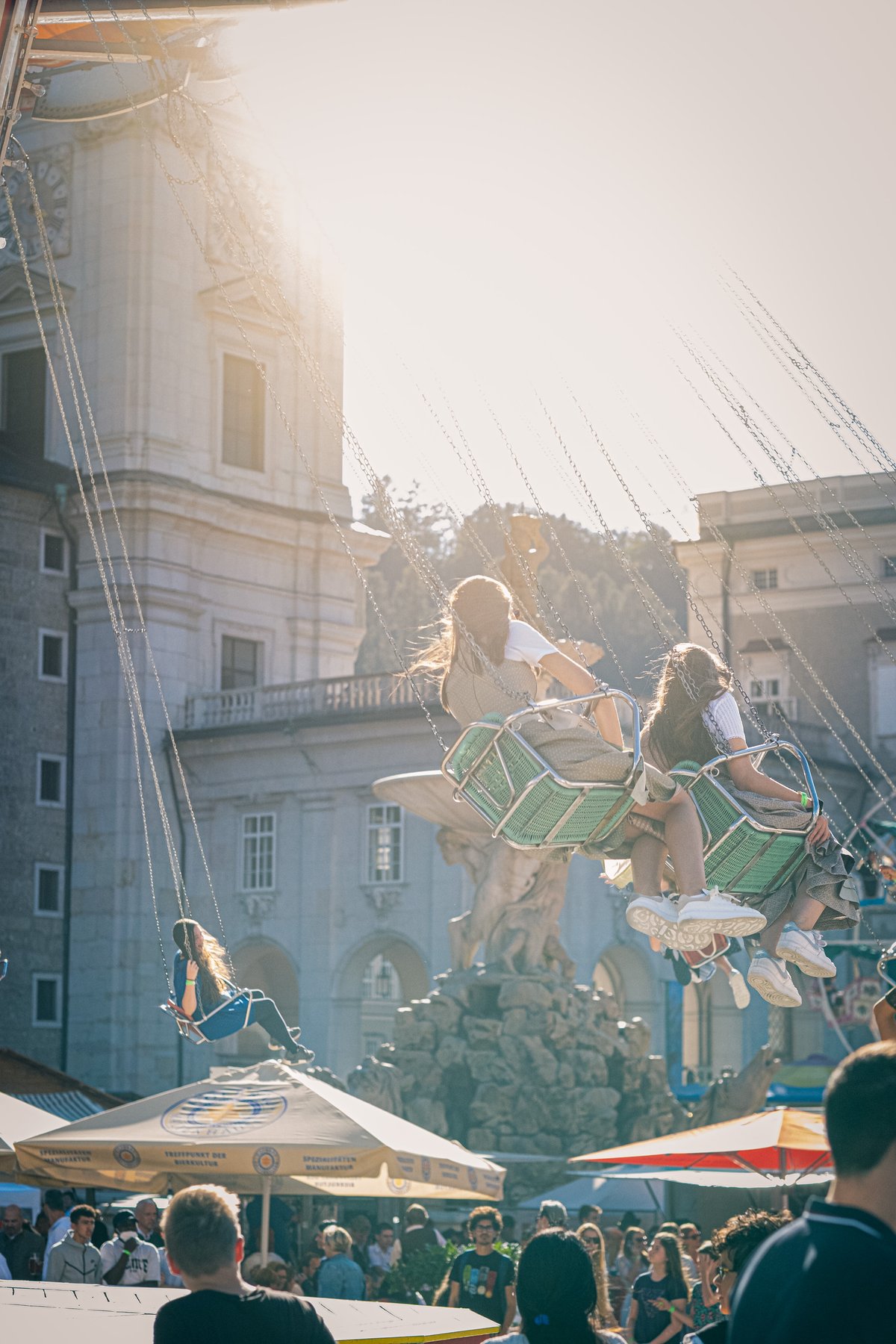
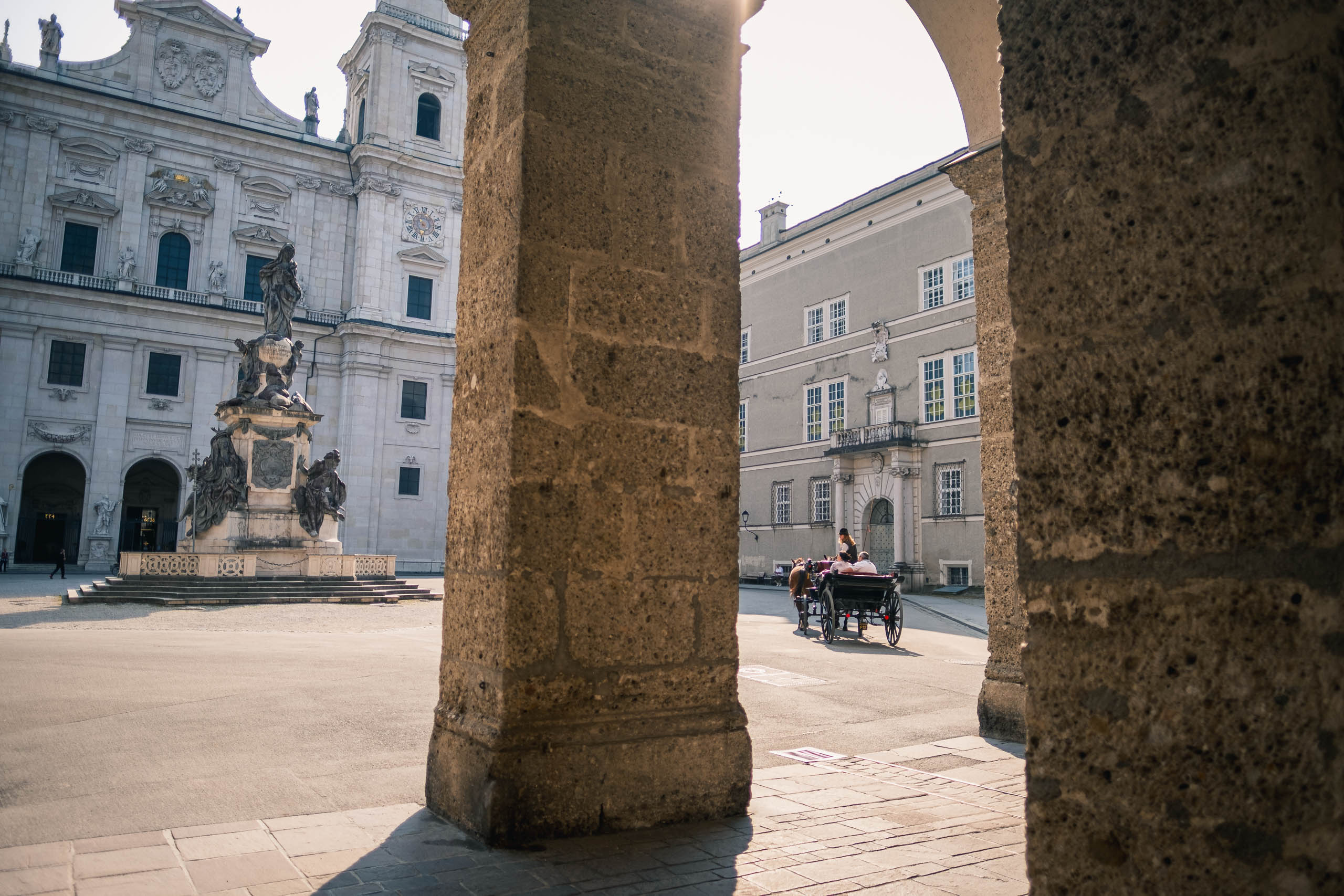
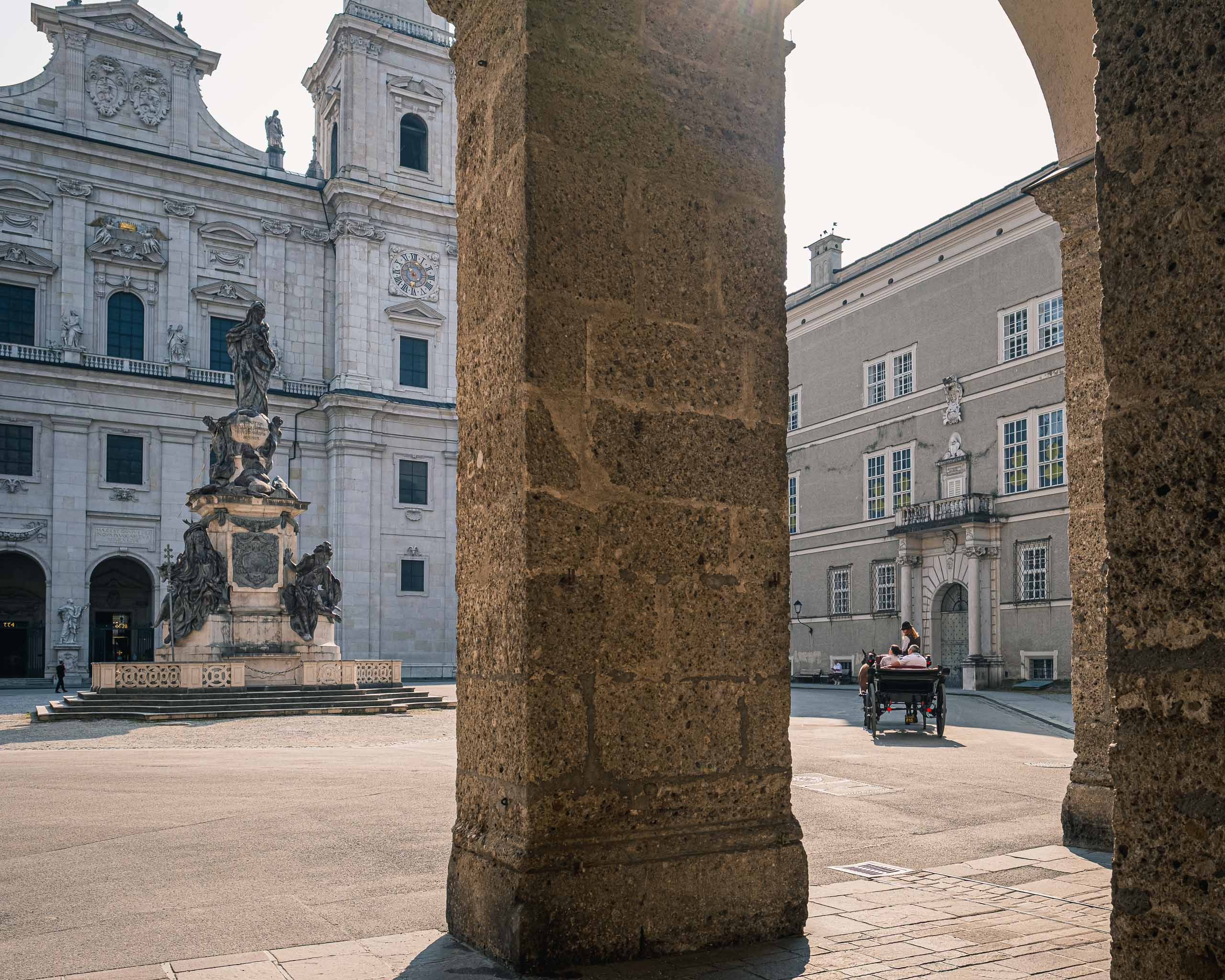
The stone square directly in front of Salzburg Cathedral has served as a stage for Baroque power, Mozart’s baptism, papal Masses, and, every summer since 1920, the most famous open-air theatre performance in the German-speaking world. The twin marble towers and green copper dome have been this city’s visual anchor for four centuries.
The Story
Domplatz was not a square that happened to have a cathedral in it. Wolf Dietrich von Raitenau, the Prince-Archbishop who transformed Salzburg into a Baroque city at the end of the 16th century, designed the relationship between square and church as a deliberate statement of Counter-Reformation authority. He commissioned Santino Solari to build a cathedral large enough to answer Rome, and the square in front was sized to frame it. The result, consecrated on 24 September 1628 with twelve choirs performing a Te Deum, measured 122 metres long and covered 5,200 square metres inside, one of the earliest and most ambitious Baroque churches north of the Alps.
The cathedral on this spot had already burned twice. Archbishop Virgil’s original basilica, consecrated in 774 and dedicated to Saints Rupert and Virgil, lasted nearly eight centuries before fire took it. Wolf Dietrich used the 1598 blaze as his opportunity. He demolished what remained and commissioned a full Baroque rebuild on Roman foundations. Three bronze portal gates installed after the Second World War carry the dates 774, 1628, and 1959, the year the dome was finally restored after a British bomb pierced it in October 1944 and collapsed the vaults into the square.
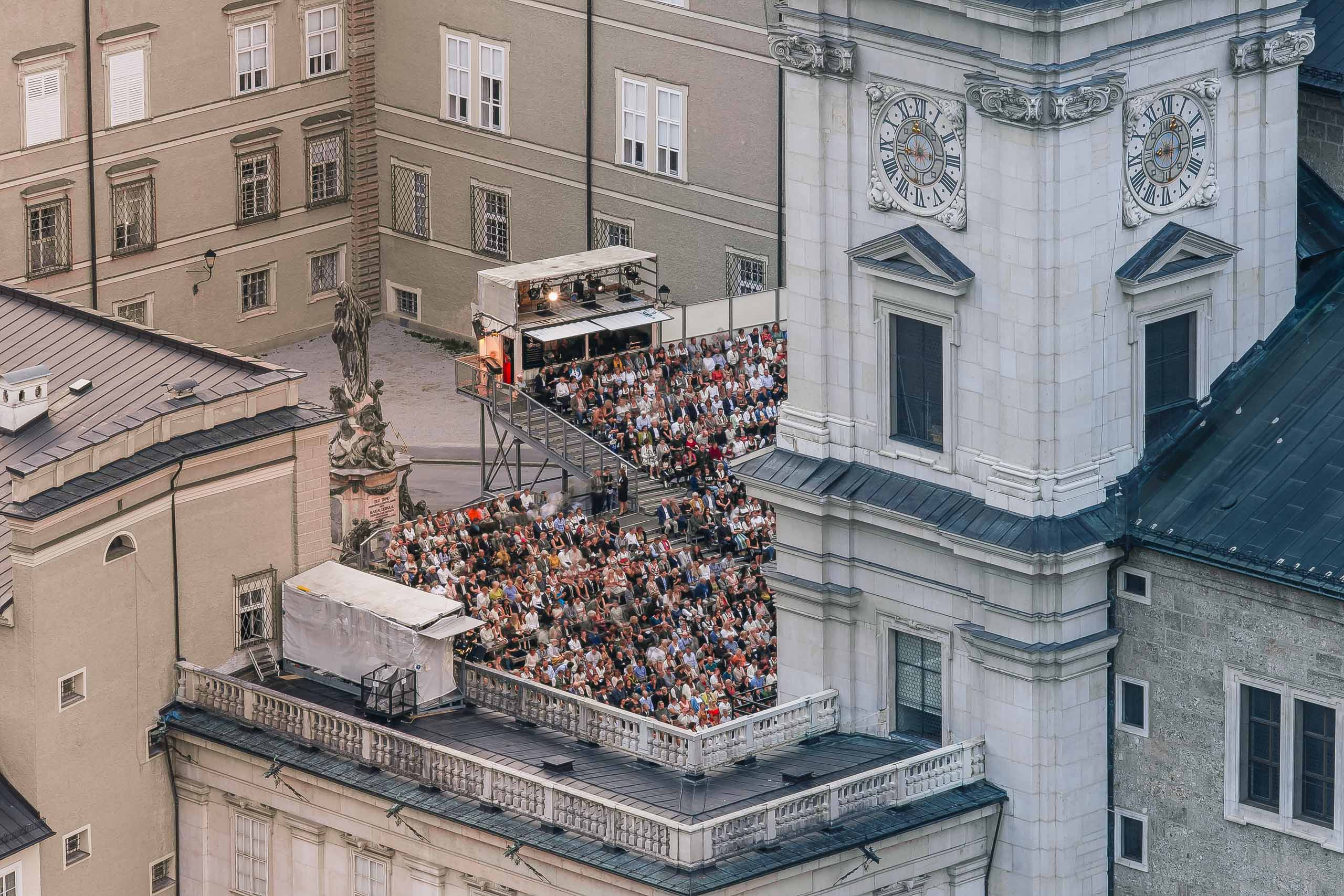
Mozart was baptised at the font inside on 28 January 1756, one day after his birth. His father Leopold worked nearby as court musician to the Prince-Archbishop for decades. That same font still stands inside the cathedral; visitors can see it on any day the church is open. The Jedermann tradition connects the square to another era of Salzburg identity: since 1920, the morality play adapted by Hugo von Hofmannsthal and first staged by Max Reinhardt has used the cathedral’s west façade as its set each summer during the Salzburg Festival. At the climactic moment, Death calls “Jedermann!” from multiple points around the Altstadt, including from the Hohensalzburg fortress above, the voice traveling across the whole city.
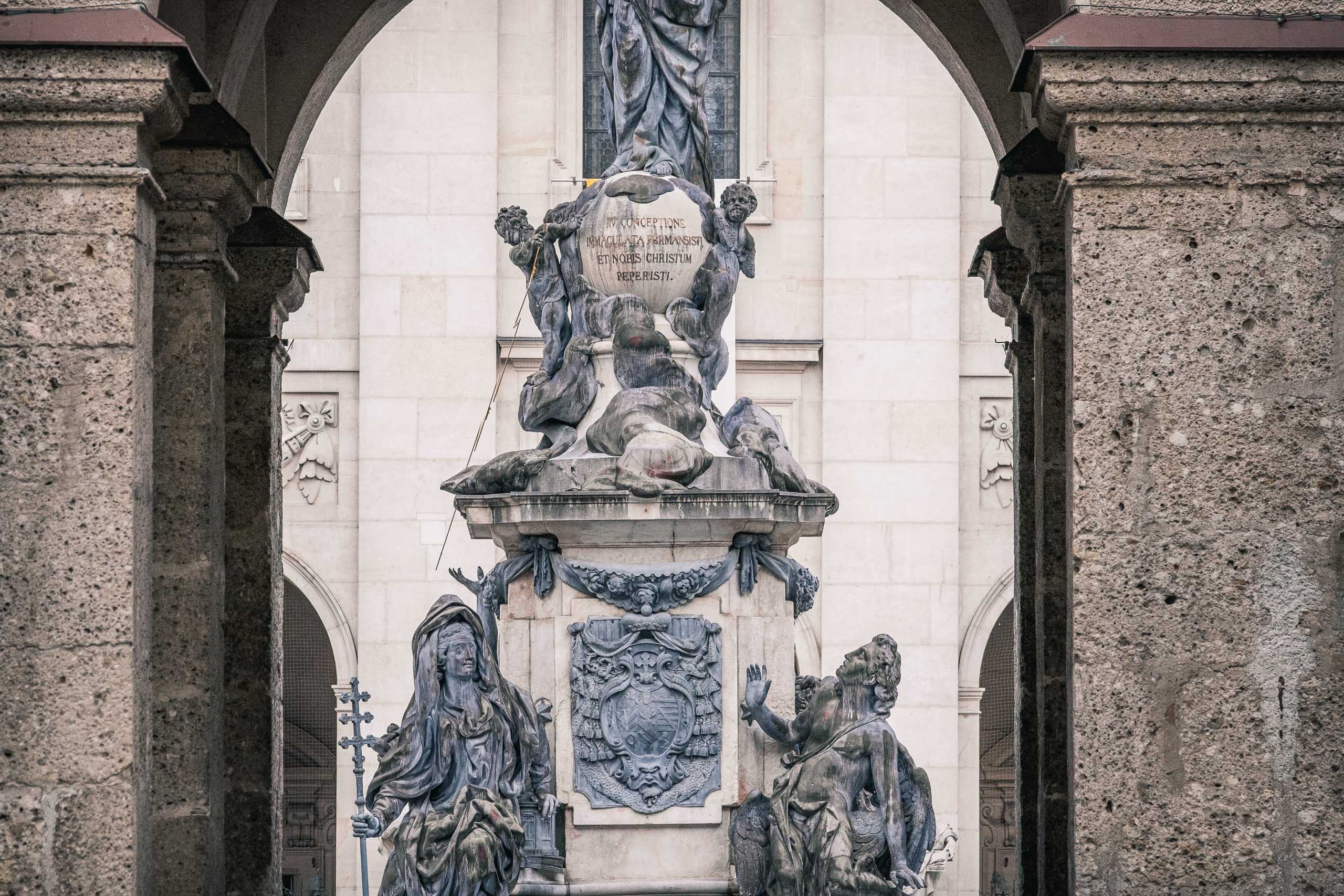
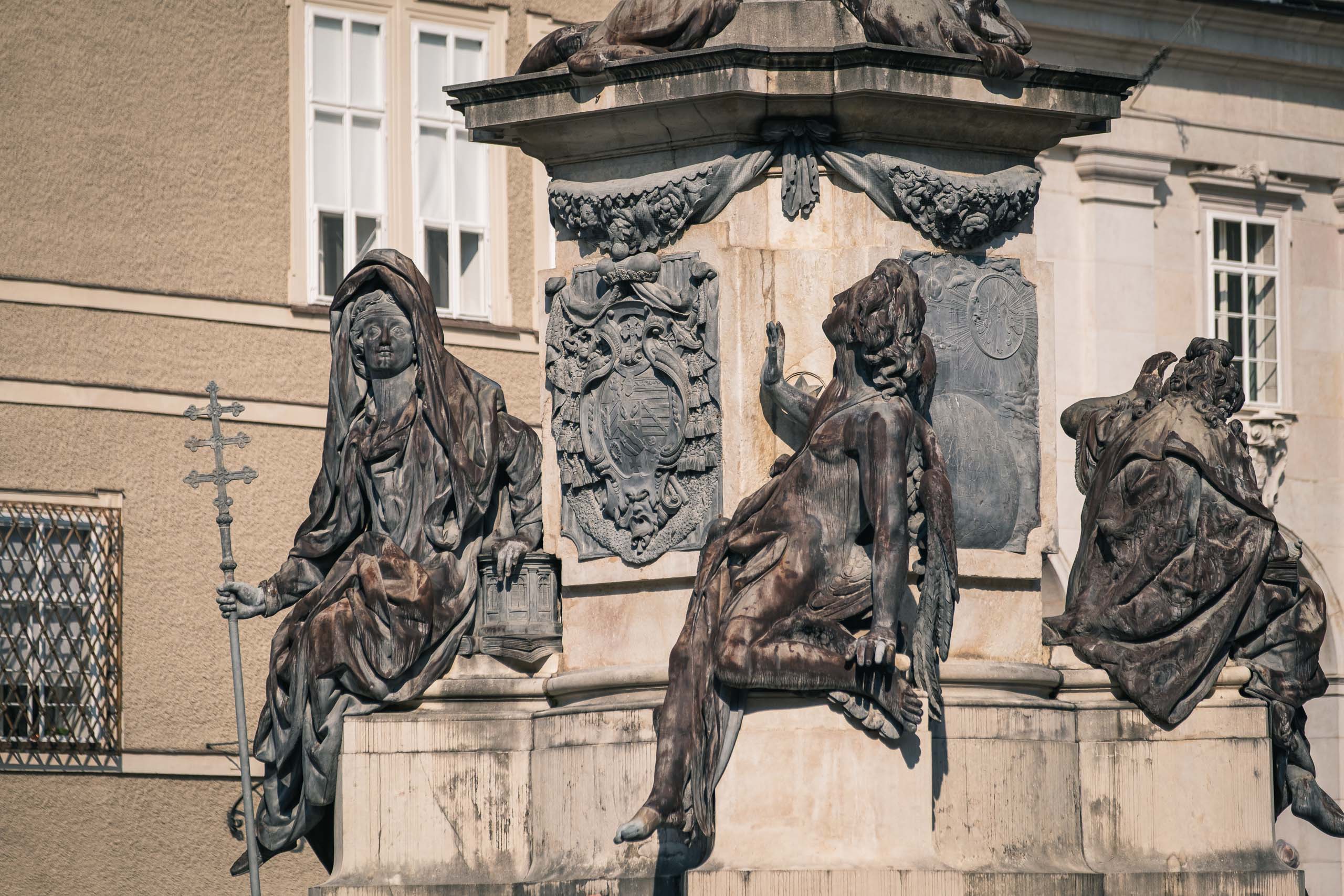
The Maria Immaculata column at the square’s centre, sculpted by Wolfgang and Johann Hagenauer between 1766 and 1771, went up during the final years of Archbishop Sigismund von Schrattenbach, the prince-archbishop under whom the young Mozart served. The three arched passages connecting Domplatz to Residenzplatz and Kapitelplatz were added under Archbishop Guidobald von Thun in the 1650s, completing the Baroque ensemble that gives the whole precinct its unified character.
Visiting
Free and always accessible. The cathedral interior is also free (donation requested). Allow 10 to 20 minutes for the square itself; add 30 to 45 minutes if going inside the cathedral. The DomQuartier museum route, which links the cathedral to the Residenz Palace through connected rooms, requires a separate ticket. Jedermann performances during the Salzburg Festival in July and August sell out well in advance; limited standing areas around the square are free during performances. Walk through the arches to reach Kapitelplatz (one minute) or Residenzplatz (one minute). The Free Walking Tour Salzburg uses this square as a meeting point.