
Lake
Altausseer See
Show all 8 photos
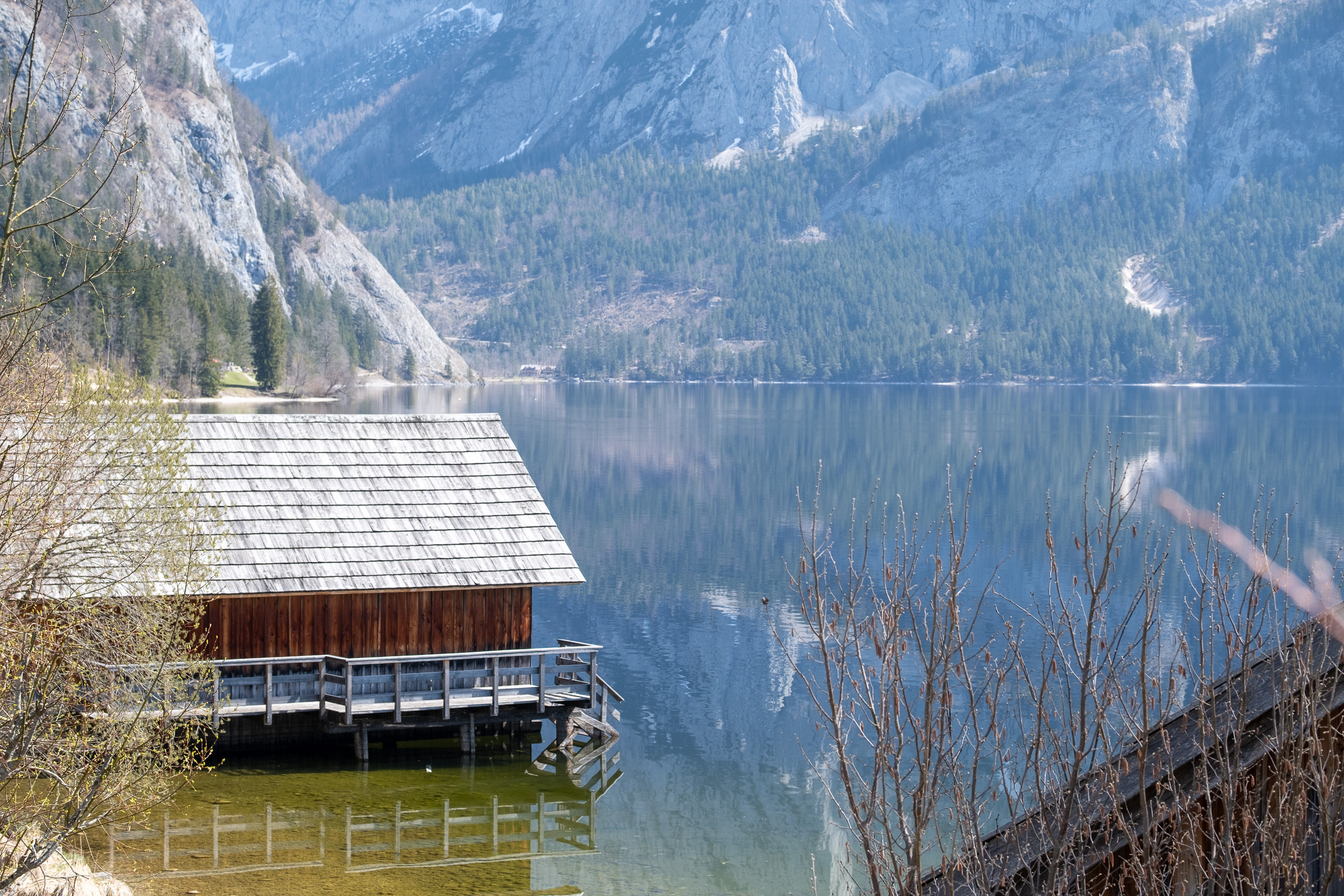
- A shingle roofed boathouse on stilts with a wooden deck juts into the clear green water of the Altausseer See, with grey cliffs and forest reflected on the still surface beyond. (1 / 8)
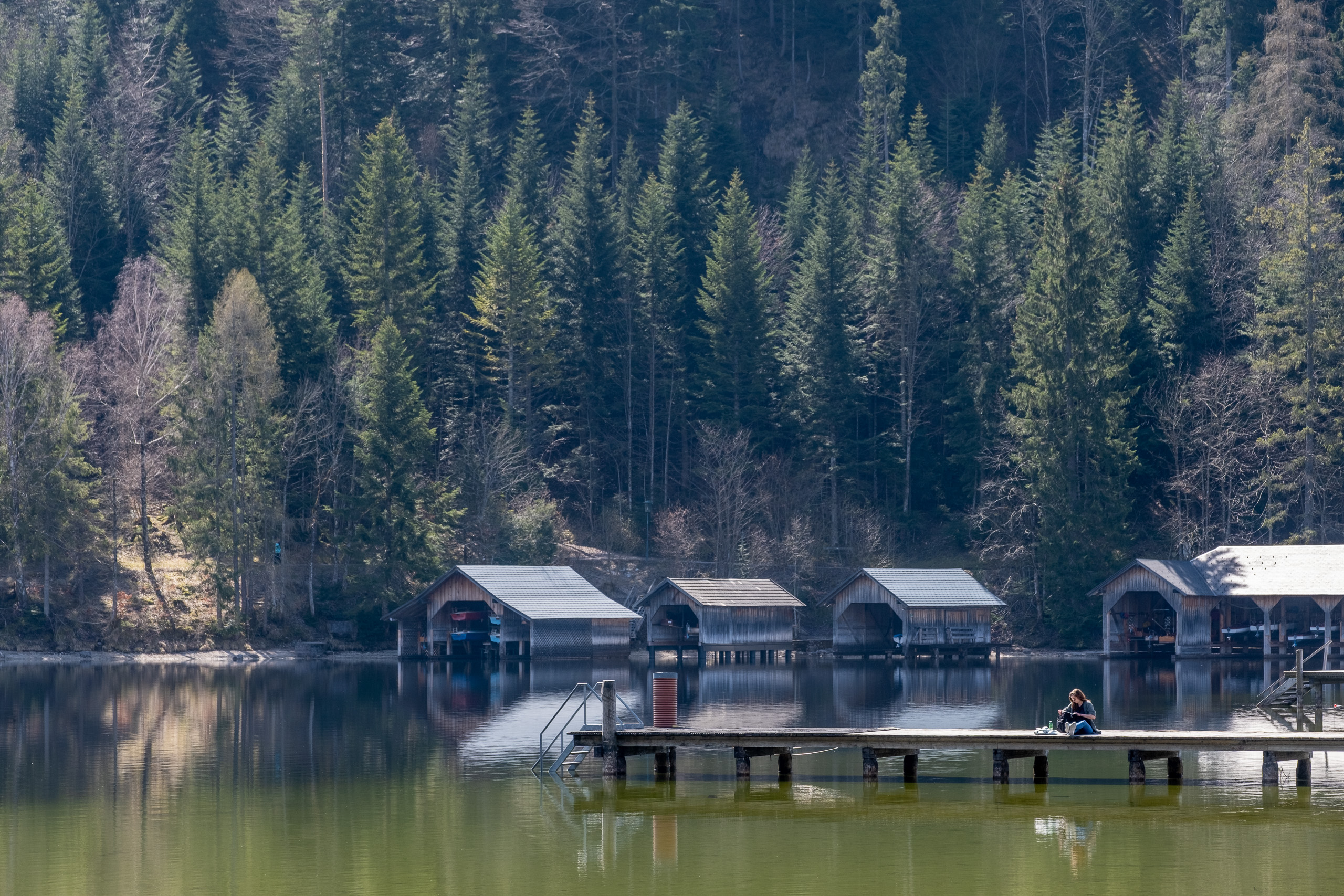
- A row of wooden boathouses on stilts lines the far shore of the Altausseer See below a spruce forest, with a woman sitting alone on the long jetty in the foreground. (2 / 8)
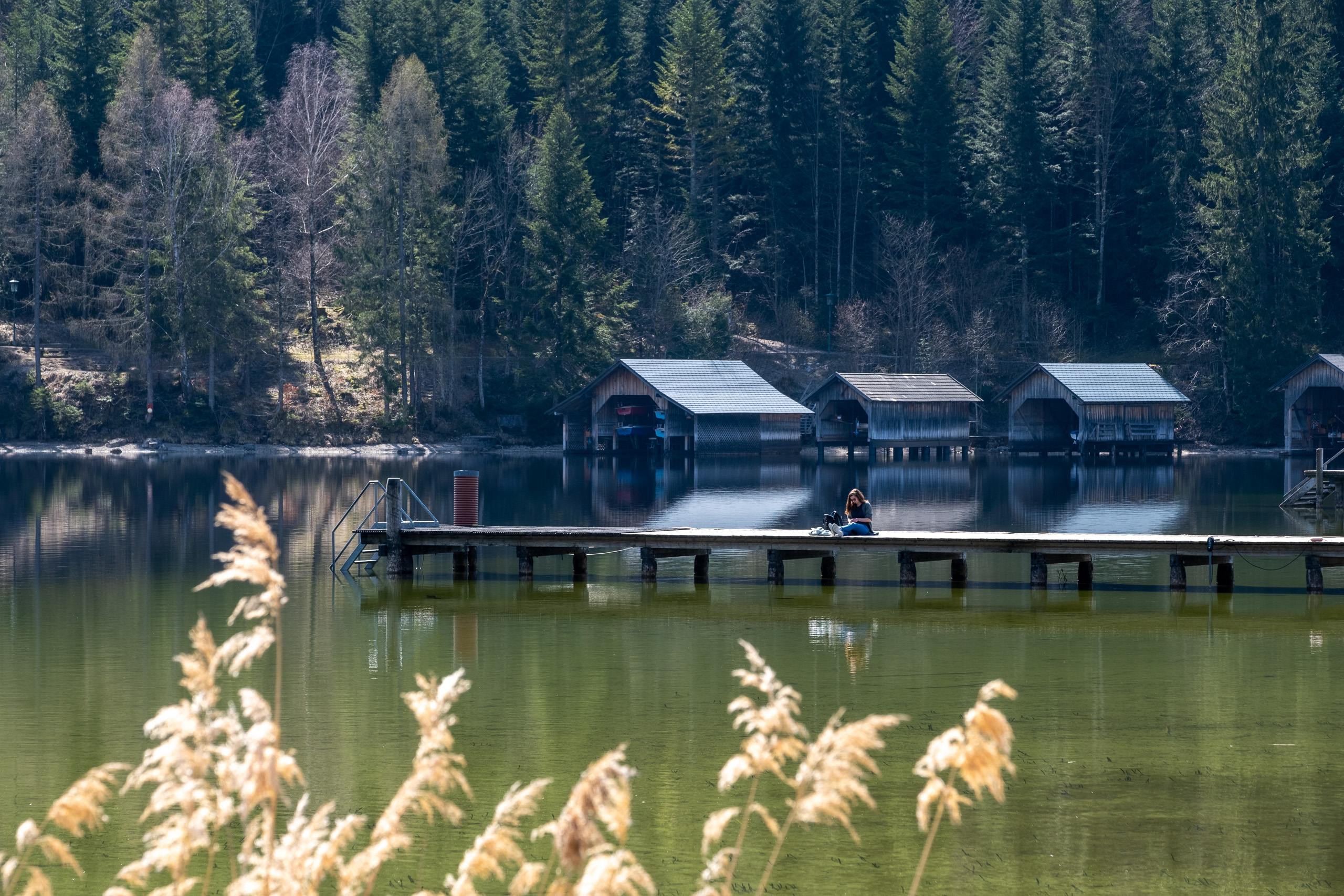
- Dry reed plumes in the foreground frame a row of wooden boathouses across the Altausseer See, with a woman sitting on a long jetty in the middle distance. (3 / 8)
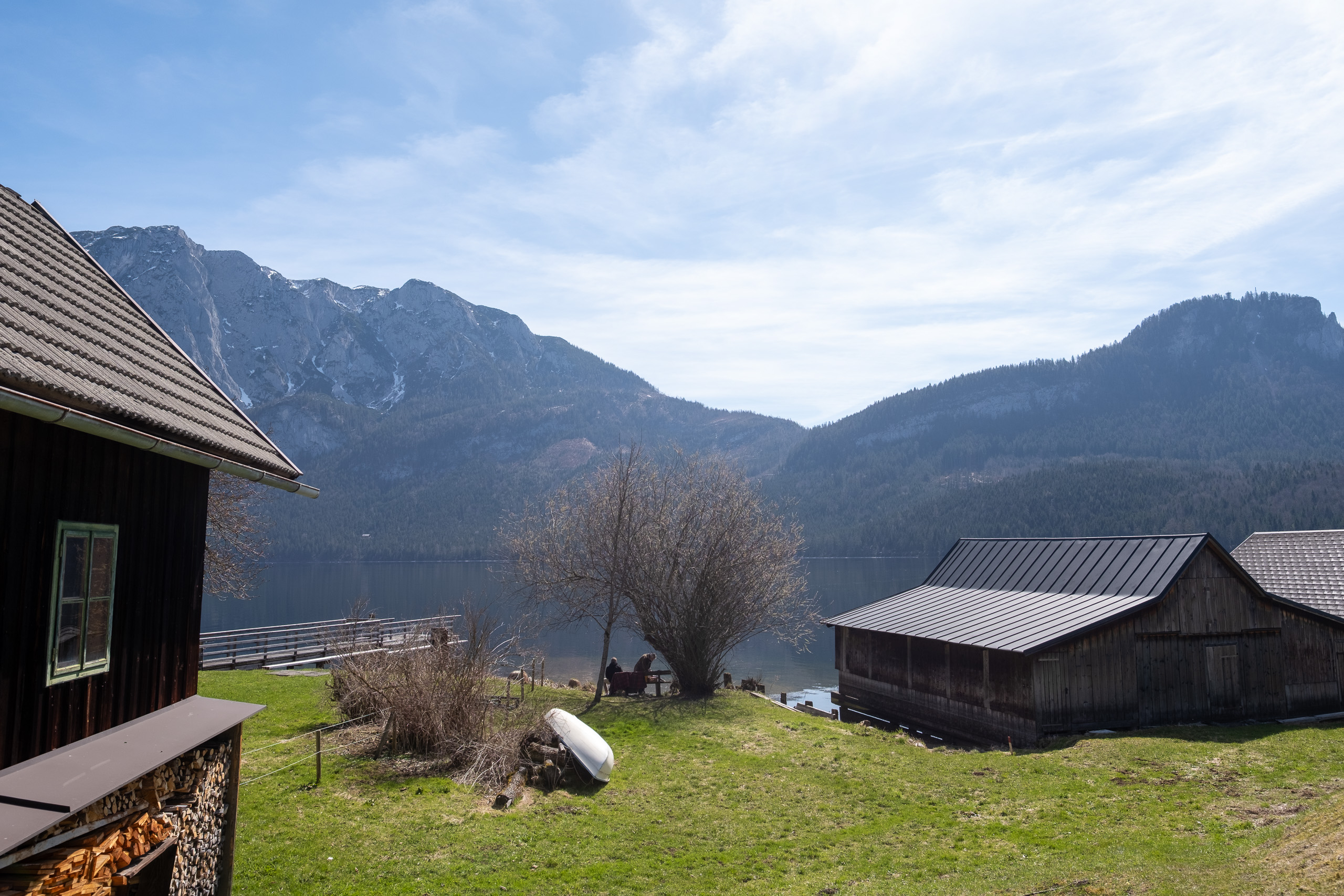
- A dark wooden house with a stacked woodpile and a boathouse stand on a grass slope at the edge of the Altausseer See, with rock faces and forested ridges rising beyond the far shore. (4 / 8)
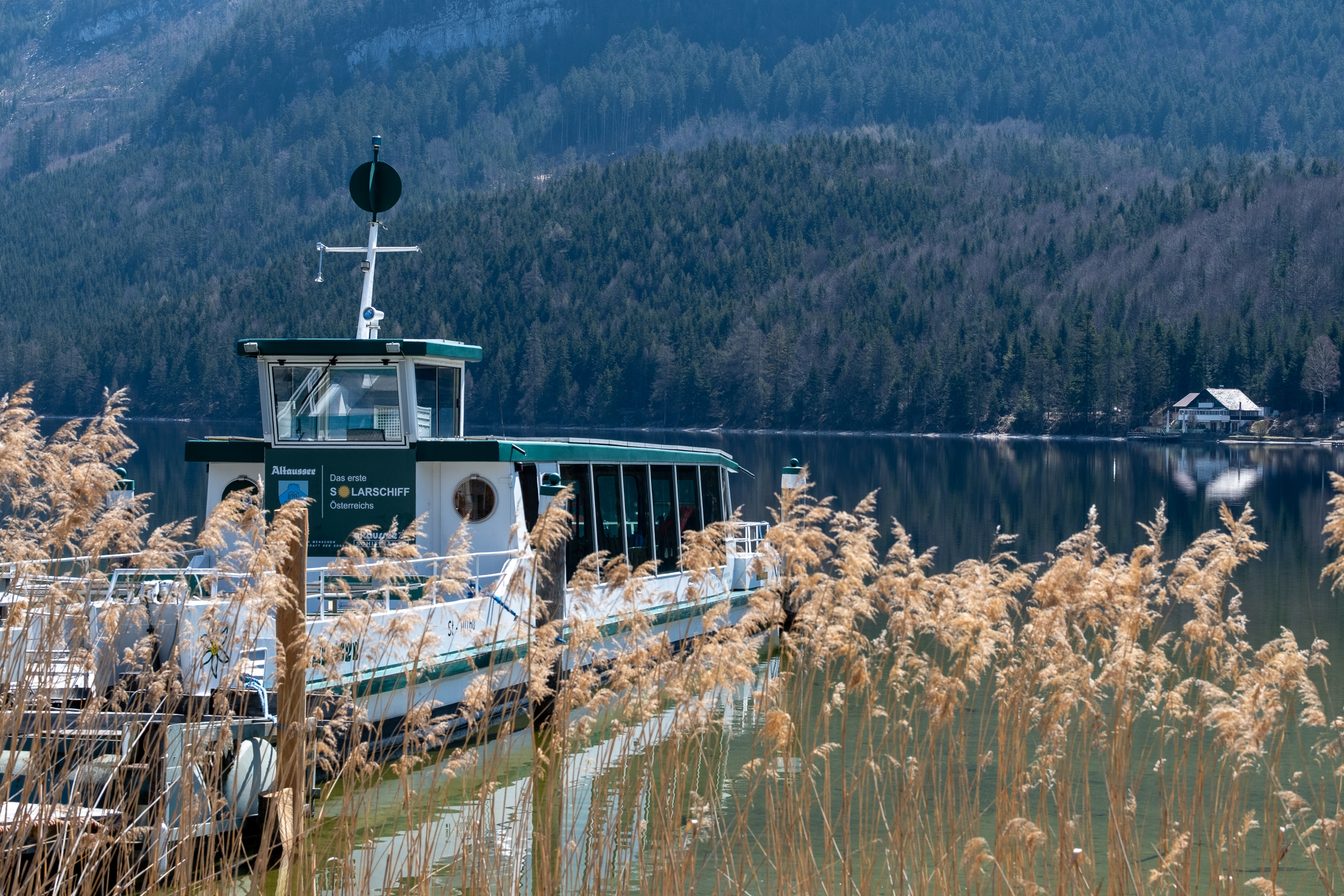
- The solar-powered excursion boat Altausseer lies moored at its jetty on the Altausseer See, seen through tall pale reeds with a forested mountainside dropping to the far shore. (5 / 8)
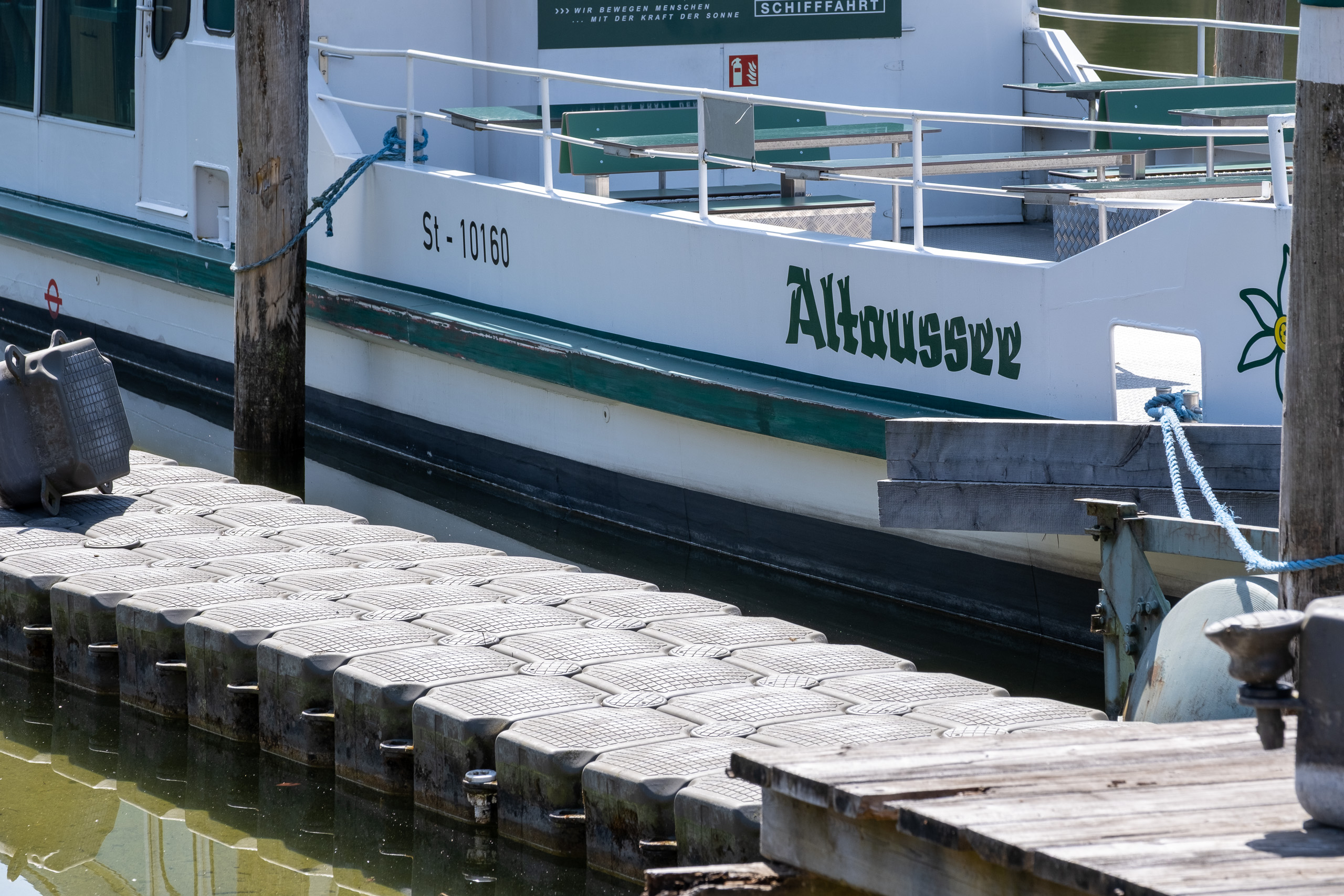
- The excursion boat Altaussee, registered St-10160, lies moored against a floating pontoon dock on the Altausseer See, its green benches empty. (6 / 8)
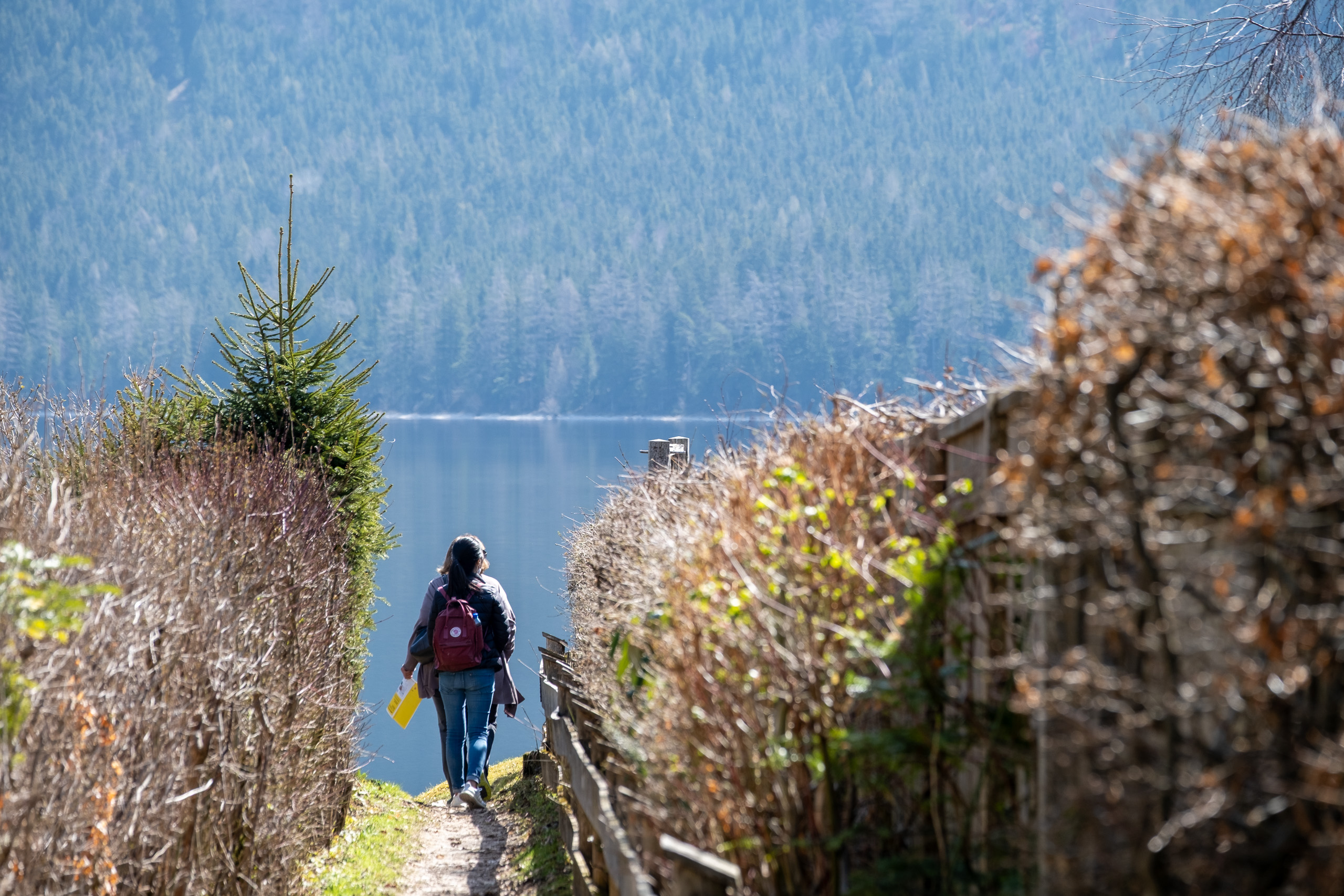
- A woman with a red backpack walks down a narrow path between bare hedges toward the still surface of the Altausseer See in spring. (7 / 8)
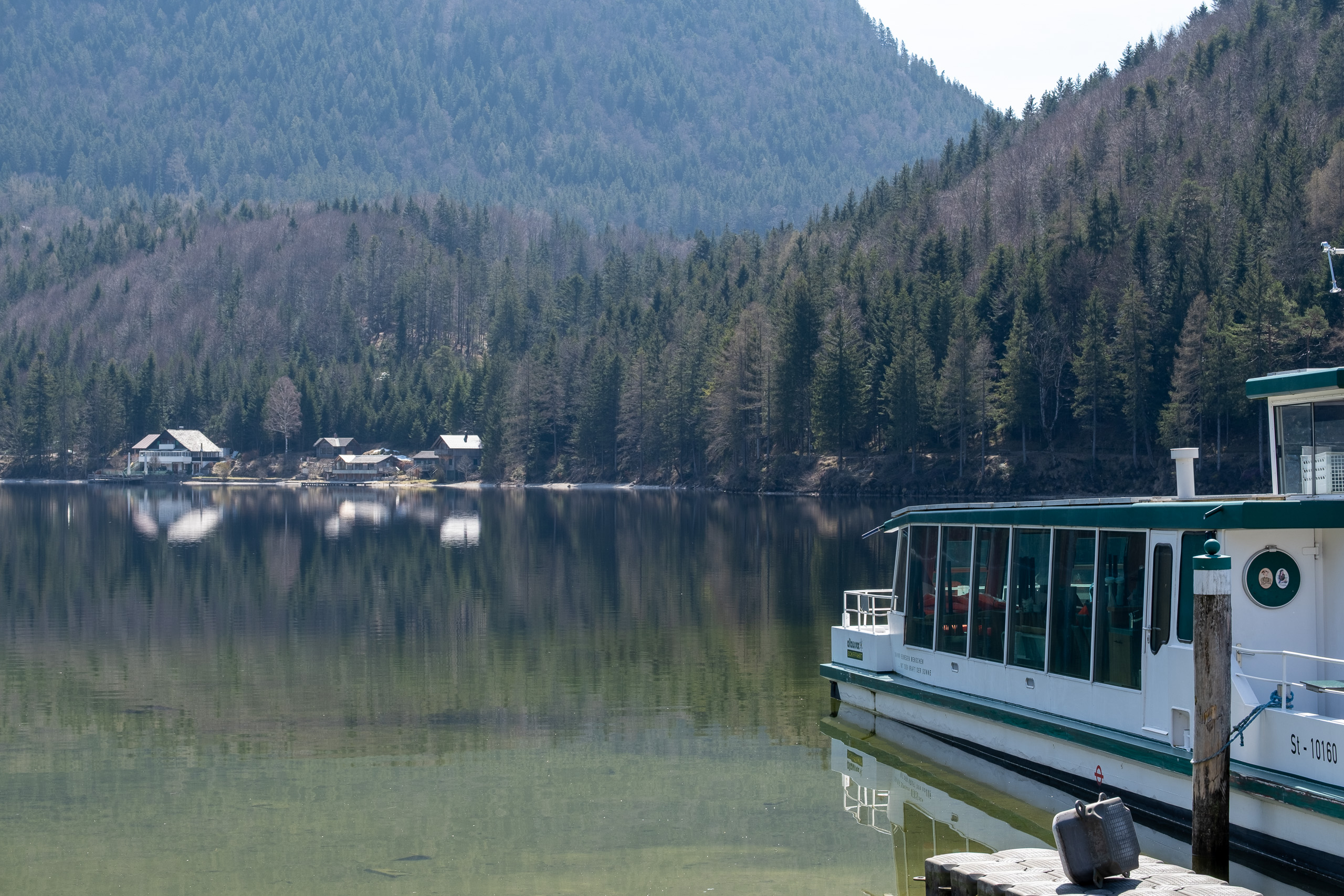
- The moored excursion boat sits at the right edge of a calm view across the Altausseer See to lakeside villas under a steep forested slope. (8 / 8)
Snapshot
At the end of the Second World War, over 6,500 looted artworks, including Michelangelo’s Madonna of Bruges, were hidden in the salt mine above this lake. The Altausseer See sits at 712 metres in the Styrian Salzkammergut, fed by glacial meltwater from the Totes Gebirge. The cold inflow keeps the water exceptionally clear and gives it a turquoise colour unusual for an Alpine lake at this altitude. Shoreline access is free, and the 7.5 km lakeside loop is one of the flattest and most rewarding circuits in the region.
The Story
The Altausseer See occupies a limestone bowl carved by the Totes Gebirge on three sides and open only toward the south, where the village of Alt-Aussee sits on the lower shore. That enclosure shapes everything about the lake: the cold air that settles overnight, the slow warming in summer, and the colour of the water, which reads turquoise rather than the greener or darker tones common in lower-lying Salzkammergut lakes like the Hallstatter See.
The colour comes from the source. Glacial meltwater carries fine mineral particles that scatter light at the blue end of the spectrum. Because the lake stays cold, it does not bloom with algae in summer, and visibility through the surface remains unusual. Locals swim here in July and August, though the water temperature rarely climbs far enough to be comfortable for long. The draw is the setting, not the warmth.
The Altaussee salt mine enters the mountain directly above the village. Salt has been extracted from this massif for centuries, and the mine maintains a constant 12 degrees Celsius year-round, with controlled humidity. Those conditions made it attractive to Nazi authorities in 1944 and 1945, who used the tunnels to store looted art from across occupied Europe: paintings, sculptures, altarpieces, and personal collections seized from Jewish families and major museums. The total reached over 6,500 objects. In the final weeks of the war, orders came to destroy the collection. Local miners disobeyed, sealed the tunnels, and allowed Allied recovery teams to find the cache intact. The story is documented in detail at the mine itself, which still operates as both a working salt operation and a visitor attraction.
The lakeside walking circuit, the Seerundweg, covers 7.5 km with minimal elevation change, staying close to the water for most of its length. It takes around two and a half hours at a relaxed pace. The path moves between meadow, forest, and open shore, with the limestone walls of the Totes Gebirge visible at most points. It is one of the better flat half-day walks in the Styrian Salzkammergut, suited to visitors who want scenery without significant climbing. The combination of the lake loop and a mine visit fills a full day with purpose and contrast.
Visiting
The Altausseer See is reached via Alt-Aussee village, which lies roughly 8 km southeast of Bad Aussee by road. There is no public road around the full lake, so the Seerundweg is walked rather than driven. The Altaussee salt mine is a short uphill walk or drive from the village centre and runs ticketed tours year-round. The lake shore is free to access at all points. Combining the lake circuit with a mine tour is the natural pairing and does not require a car if arriving by bus to Alt-Aussee.