Snapshot
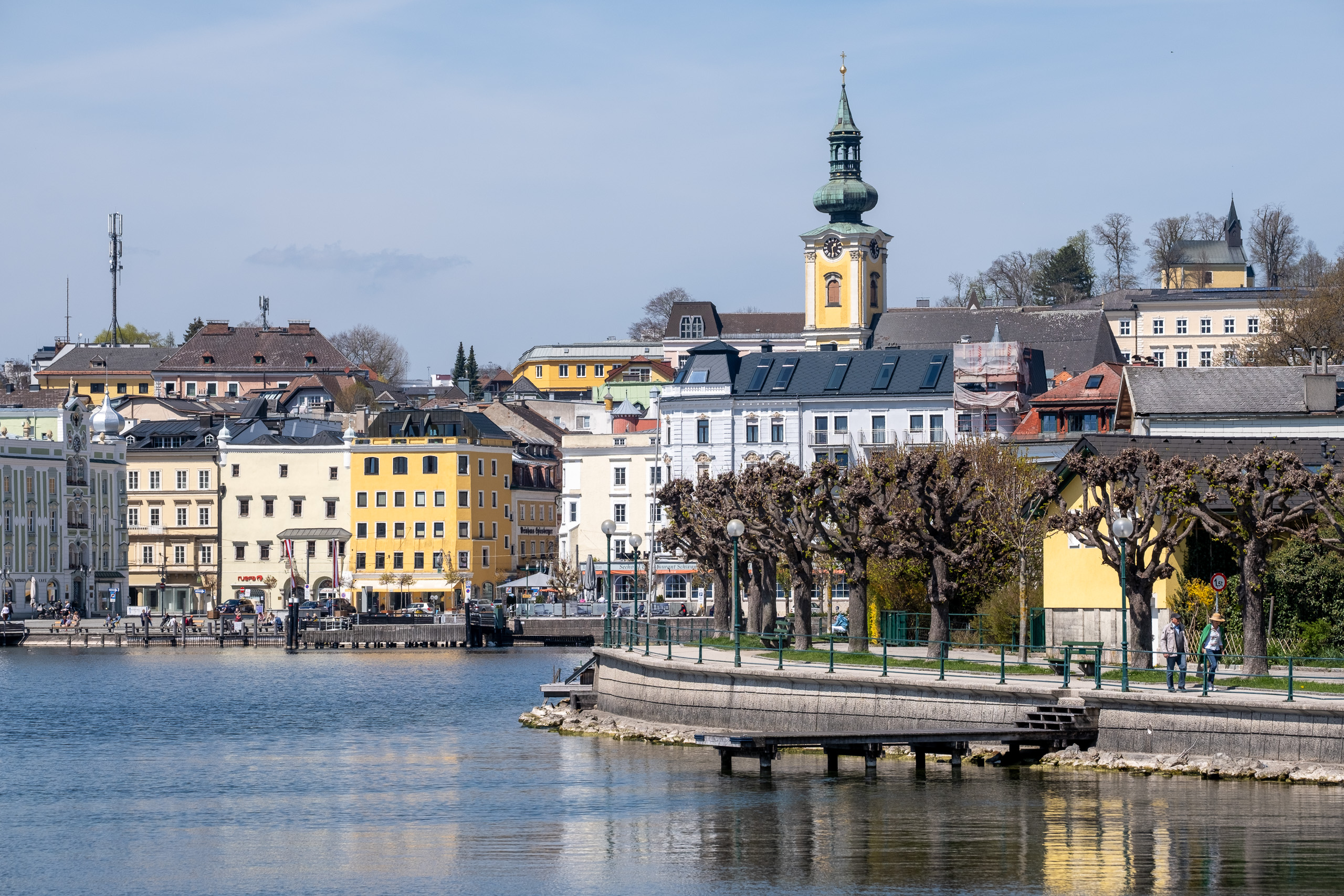
Gmunden sits at the northern end of the Traunsee with a lake castle on an island, a 500-year-old ceramics factory still hand-painting its pieces, and a coat of arms that tells the whole Habsburg salt economy story in four small symbols. It is the most complete small town in the Upper Austrian Salzkammergut.
The Story
The salt trade built Gmunden. The Imperial Salzoberamt, headquartered here, managed the entire Habsburg salt operation across the Salzkammergut, controlling thousands of workers and the brine pipelines that connected Hallstatt, Bad Ischl, and Ebensee. Salt came down the Traun River in wooden barges, was taxed and logged in Gmunden, and continued north to the Danube. The coat of arms Emperor Rudolf II granted in 1593 is a direct record of this: three salt buckets, a flat-bottomed transport barge, a fish from the lake, and the mountain silhouette behind them. Salt, transport, protein, geography. The town had official spa status by 1862, but the identity was always administrative and commercial first.
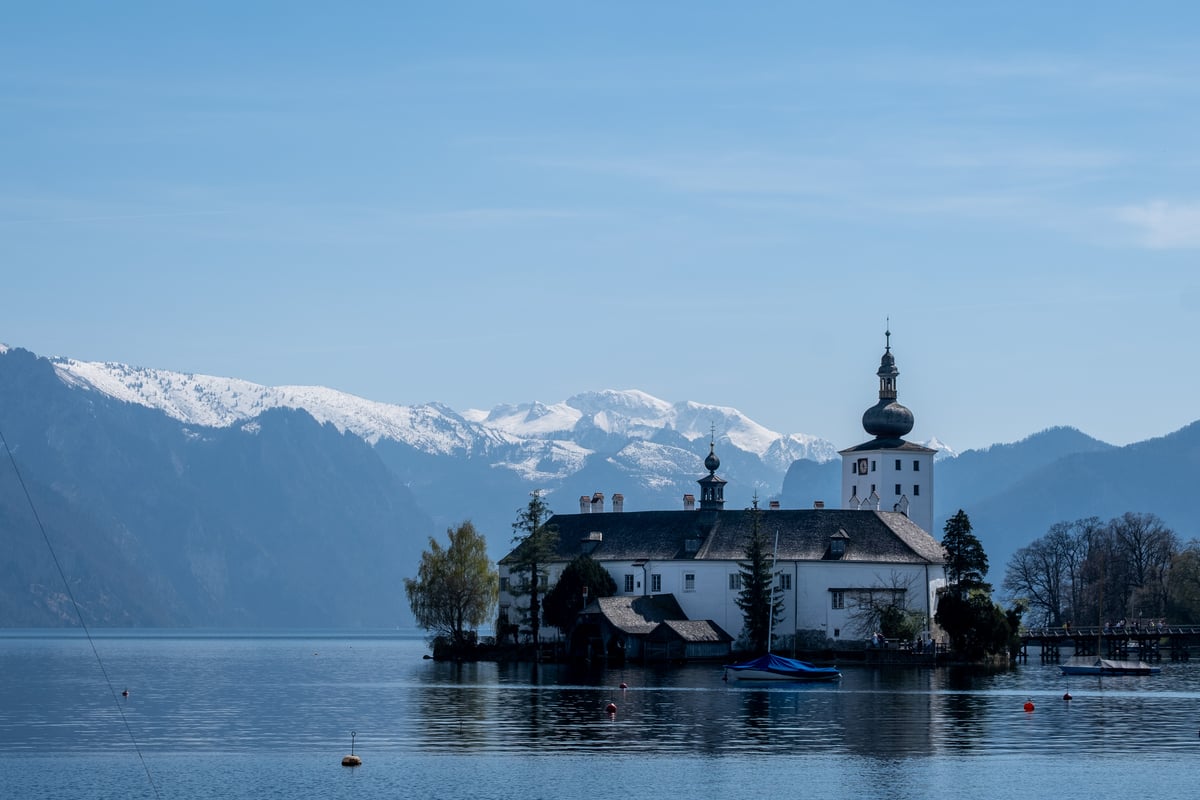
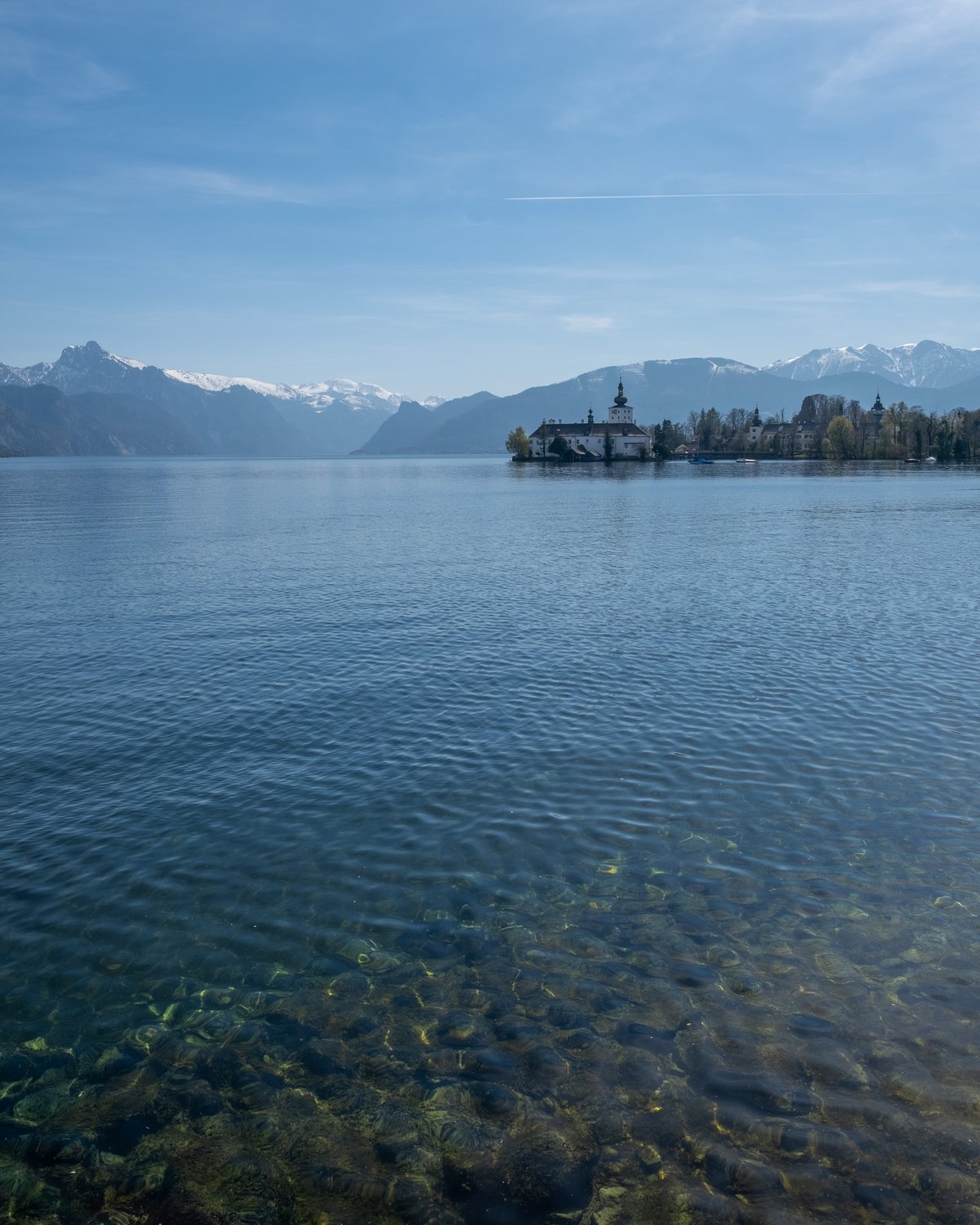
The Seeschloss Ort is genuinely one of the most photogenic structures in Austria. It sits on a small island in the Traunsee, connected to the mainland Landschloss by a 30-metre wooden footbridge, and the first written record of the castle dates to 909 AD, with the Ort family likely establishing the original structure around 1080. Habsburg ownership followed. The Baroque clockwork mechanism inside dates to 1634 and requires daily hand-winding to keep running. The castle hosts several hundred weddings annually and appears frequently as a filming location for Austrian television. The irregular triangular courtyard, rebuilt after a 1626 fire, still has its arcades.
Gmundner Keramik, the green-flame ceramics work, started in a workshop first documented in 1492. Today about 25 painters work side by side in the manufactory, hand-painting each piece with the characteristic green swirl pattern. Approximately 300 people work across the operation, and the factory exports worldwide. Tours are available. The Rathaus on Rathausplatz incorporates a ceramic Glockenspiel made by the manufactory, an integrated example of the town’s connection to its principal craft. The Baroque parish church of Peter and Paul, with 1301 foundations and an 18th-century structure, holds a high altar group by Thomas Schwanthaler and side pieces by Michael Zürn the Younger, a concentrated collection of 17th and 18th-century Salzkammergut religious art.
Planning
Gmunden is about 75 km northeast of Salzburg, roughly 75 minutes by car or just over an hour by train (change at Attnang-Puchheim). The Seeschloss Ort island is reachable on foot across the bridge during opening hours; guided tours include the clockwork room and the courtyard. Gmundner Keramik factory tours require advance booking. The paddle steamer Gisela runs lake tours from the promenade in summer. Combine with Traunkirchen, Ebensee, or extend south toward Bad Ischl for a full Traunsee-Salzkammergut day. The lakeshore promenade in the town centre is free and flat, suitable as a first orientation walk.