Snapshot
The village that gave the Iron Age its name. Hallstatt has been a salt-mining settlement for 7,000 years, and everything here, the narrow lakeside strip, the ossuary with 600 painted skulls, the world’s oldest accessible salt mine, follows from that one fact.
The Story
Hallstatt sits on a sliver of flat ground between the Hallstatter See and near-vertical cliff faces, which is exactly where the salt was. When archaeologists began cataloguing the graves and tools found in the mining valley above the village in the 19th century, they had so much material that they named an entire phase of European prehistory after the place. The Hallstatt period (800-450 BC) is not a local distinction; it is a marker used by archaeologists across the continent.
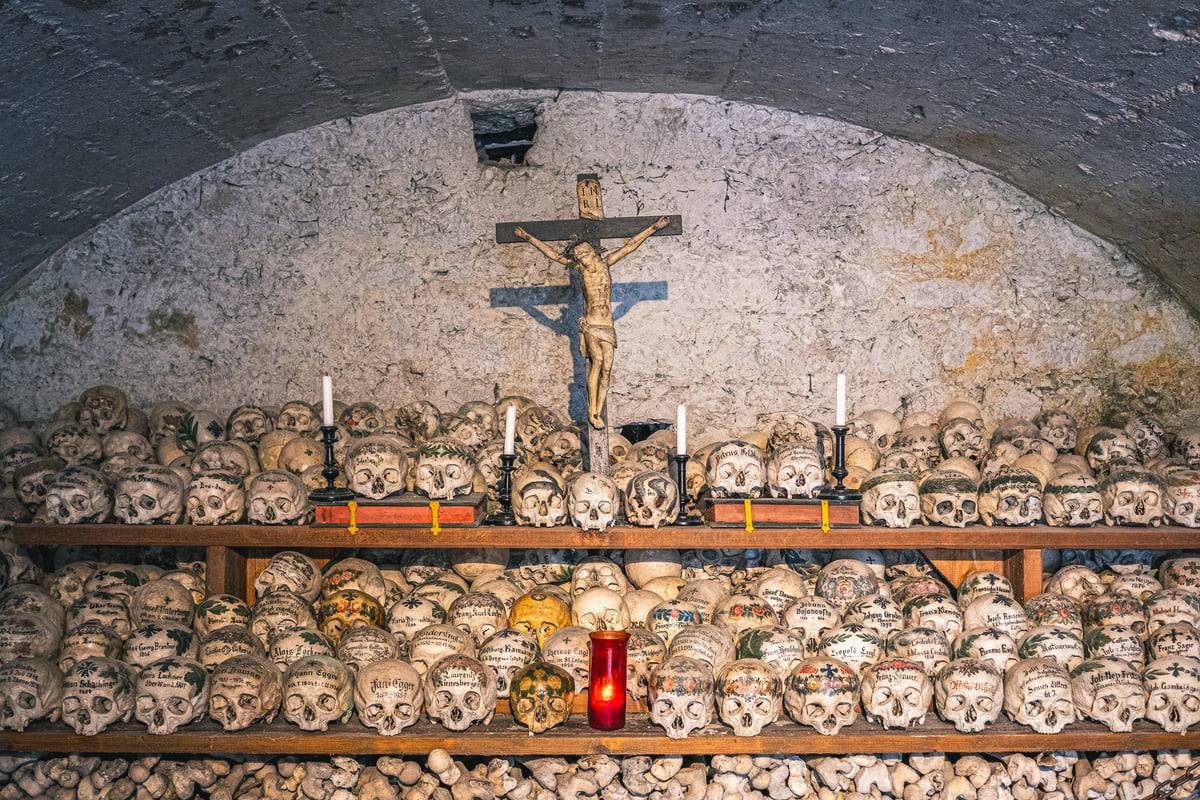
The oldest wooden staircase in Europe, dated to 1344 BC, was found preserved inside the mine. A miner killed by a cave-in around 350 BC was discovered in 1734 with his tools and textile clothing intact, kept whole by the salt. The Hallstatt Beinhaus, the ossuary behind St. Michael’s Church, holds over 600 hand-painted skulls, each decorated with the name and date of the person and a wreath motif. The painting tradition began when the graveyard ran out of space and graves had to be reused after ten years.
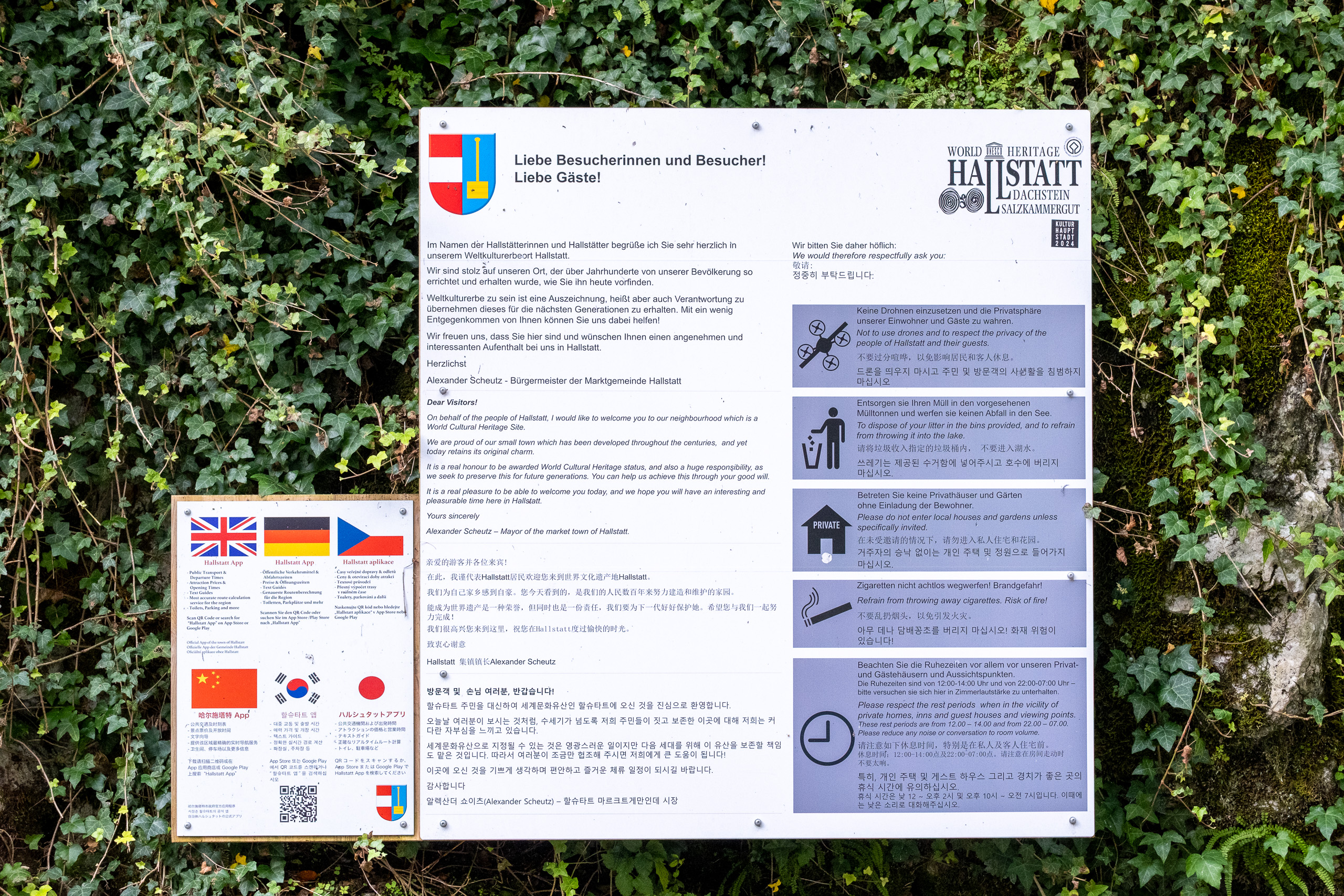
UNESCO inscribed the Hallstatt-Dachstein landscape in 1997. The village became so widely photographed that a Chinese developer built a near-exact replica in Guangdong province, which opened in 2012. The original is still a village of around 700 residents, with a market square that has operated under a town charter since 1311.
Planning
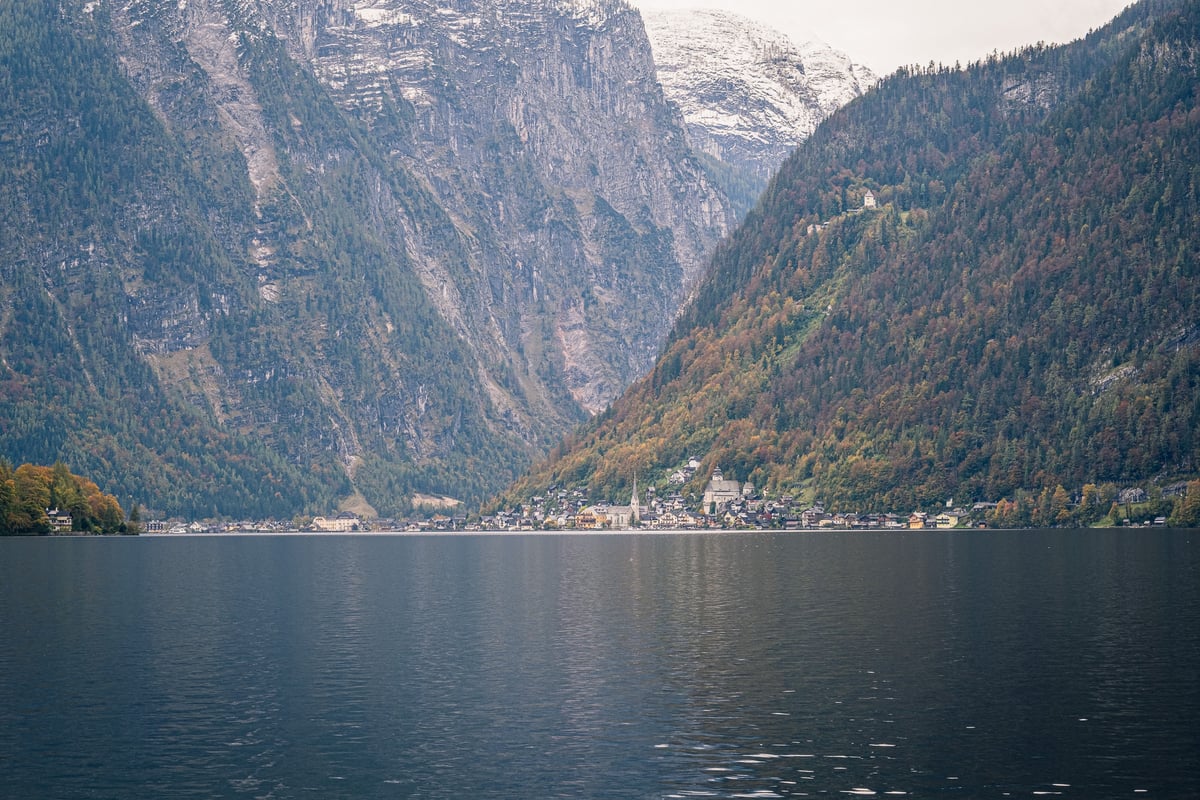
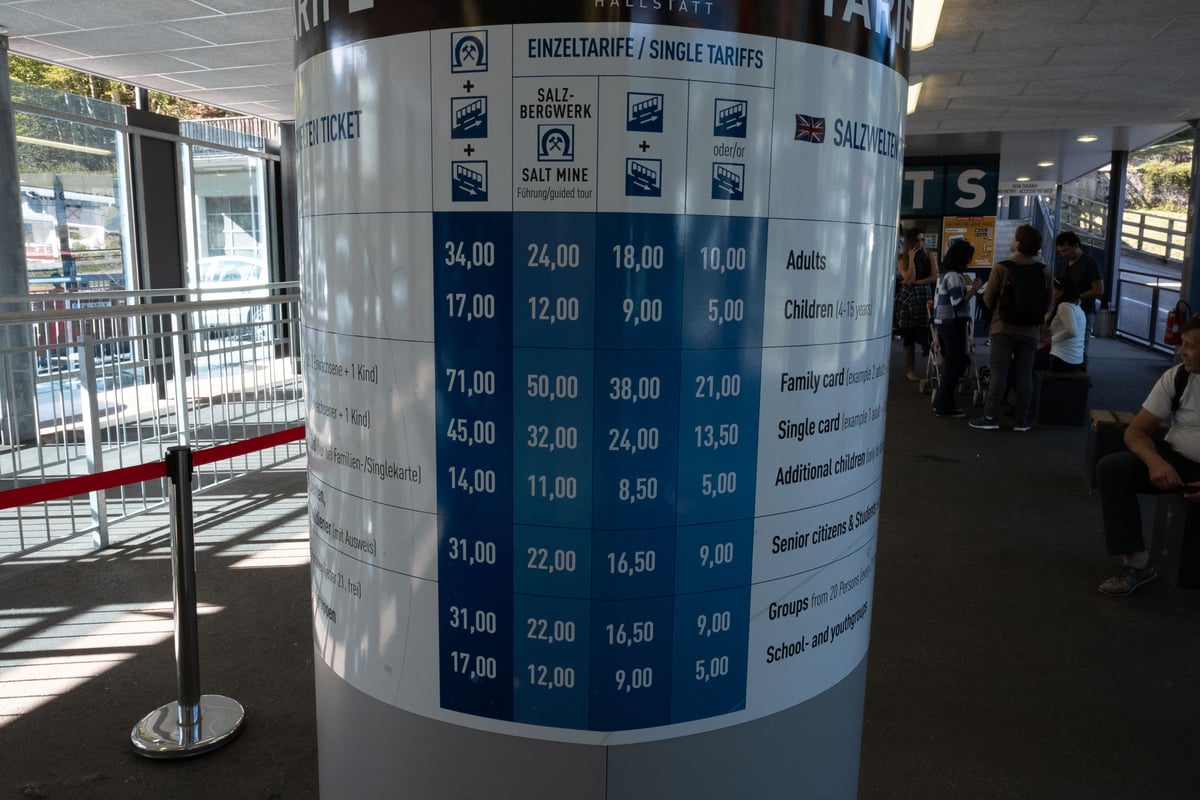
Hallstatt is roughly 75 km southeast of Salzburg, about 1 hour 15 minutes by car via the B158. By train and ferry, take the Westbahn or Salzburg-Linz line to Hallstatt station (on the opposite shore), then the ferry across the lake. The crossing takes five minutes. A day trip from Salzburg is the standard approach. Two to three hours in the village covers the market square, the Hallstatt Beinhaus, and the lakefront. The Salzwelten Hallstatt salt mine tour adds two hours and requires a cable car ride up the mountain. The Hallstatt Skywalk sits at the top of that same cable car. The most photographed view of the village is taken from the eastern shore of the lake, across the water, not from inside the village itself. Combine with Bad Ischl (30 km north) or St Gilgen for a full Salzkammergut loop.