Singer

Cecilia Bartoli

4 June 1966, Rome, Italy

Snapshot

Cecilia Bartoli has done something no other singer in Salzburg has done: she both performs on the stage and programs what appears on it. As Artistic Director of the Pfingstfestspiele since 2012, she rebuilt a minor whitsun gathering into one of Europe’s most focused baroque music events.

The Story

Cecilia Bartoli first appeared at the Salzburg Festival in 1992, singing Rosina in Rossini’s Barber of Seville at the Felsenreitschule. The New York Times called it a breakthrough. She returned in 2000 as Donna Elvira, stepped in for Renee Fleming at a Mozart anniversary concert in 2006, and steadily became one of the Festival’s most trusted performers.

Then in 2012 she took on something no singer typically does: she became Artistic Director of the Salzburg Pfingstfestspiele, the Whitsun Festival. Under her direction the festival shed its broad character and became a highly disciplined event centred on baroque and early music, rediscovered repertoire, and period-instrument performance. The artistic vision is hers and it shows clearly in each season’s lineup.

Her 2021 Whitsun Festival was themed ROMA AETERNA and centred on Handel’s 1707 Roman oratorio Il Trionfo del Tempo e del Disinganno, directed by Robert Carsen and conducted by John Eliot Gardiner, with Jonas Kaufmann also on the program. In 2025 she co-created Hotel Metamorphosis at the Haus fur Mozart with director Barrie Kosky, weaving Vivaldi’s baroque scores through a production that blended mirrors, mythology, and AI-assisted visual art, winning multiple awards after its premiere. In 2026 she sang Corinna in Rossini’s Il Viaggio a Reims at the Whitsun Festival, again with Kosky directing and Gianluca Capuano conducting. Her connection to Salzburg is not a visiting relationship. It is an authorial one.

On the map

Bartoli's Salzburg

The 3 places on this page, where they actually stand.

Locations

Places in the story

These places and destinations are authored on this person entity.
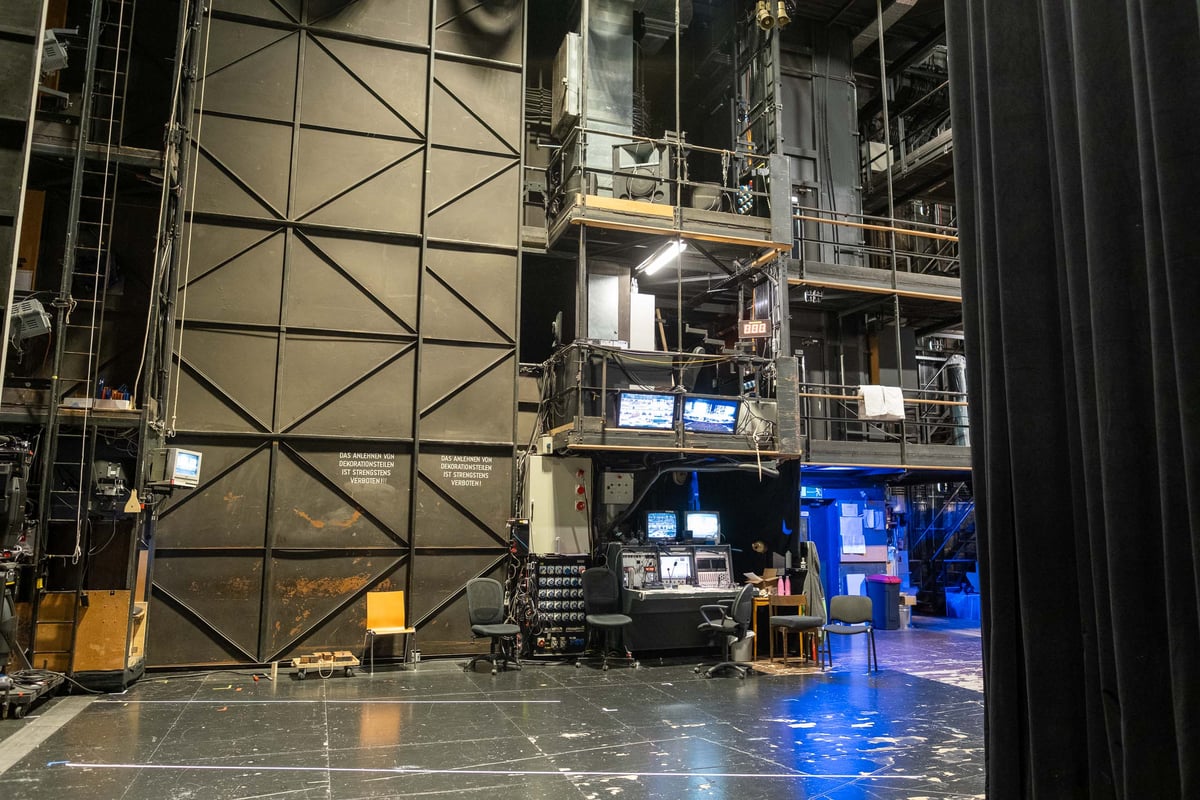
  • Felsenreitschule

    Built 1693

    The Felsenreitschule is a theater carved directly into the Moenchsberg cliff face, which means the backstage wall is living rock and three tiers of 17th-century arcades form the auditorium. It was originally built in 1693 as a summer riding school for the Archbishop's horses.

    Salzburgpaid
  • Großes Festspielhaus

    Completed 1960

    The Grosses Festspielhaus (Large Festival Hall) opened in 1960 as a major expansion of Salzburg's Festspielhaus complex, carved in large part from the Moenchsberg cliff face to achieve its 2,179-seat auditorium. Architect Clemens Holzmeister cut the main stage directly into the rock, creating one of the widest stages in the world at 100 meters.

    Salzburgpaid
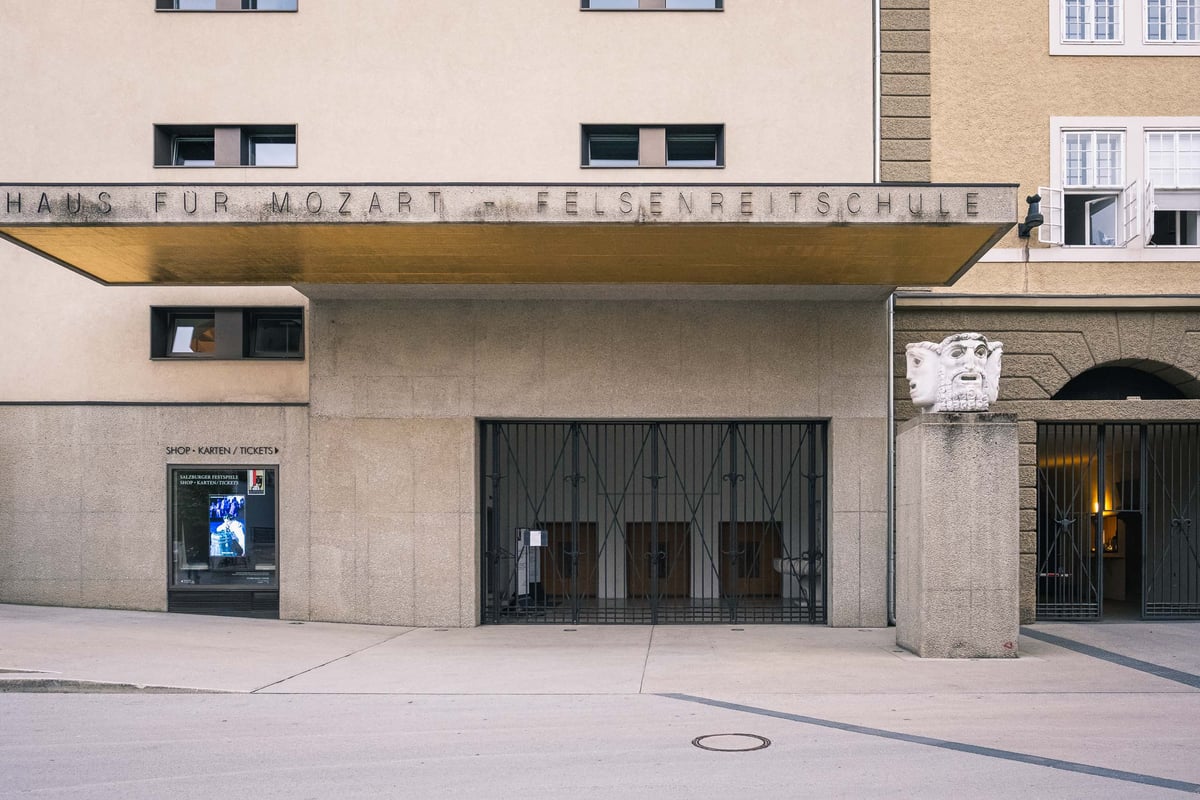
  • Haus für Mozart

    Renamed 2006

    Formerly the Kleines Festspielhaus, renamed "Haus für Mozart" in 2006 after major renovation. Primarily used for Mozart operas during the Salzburg Festival. Acoustically designed for the scale and intimacy of Mozart's operatic works.

    Salzburgpaid

Organizations

Institutional connections

These organizations are authored on this person entity.
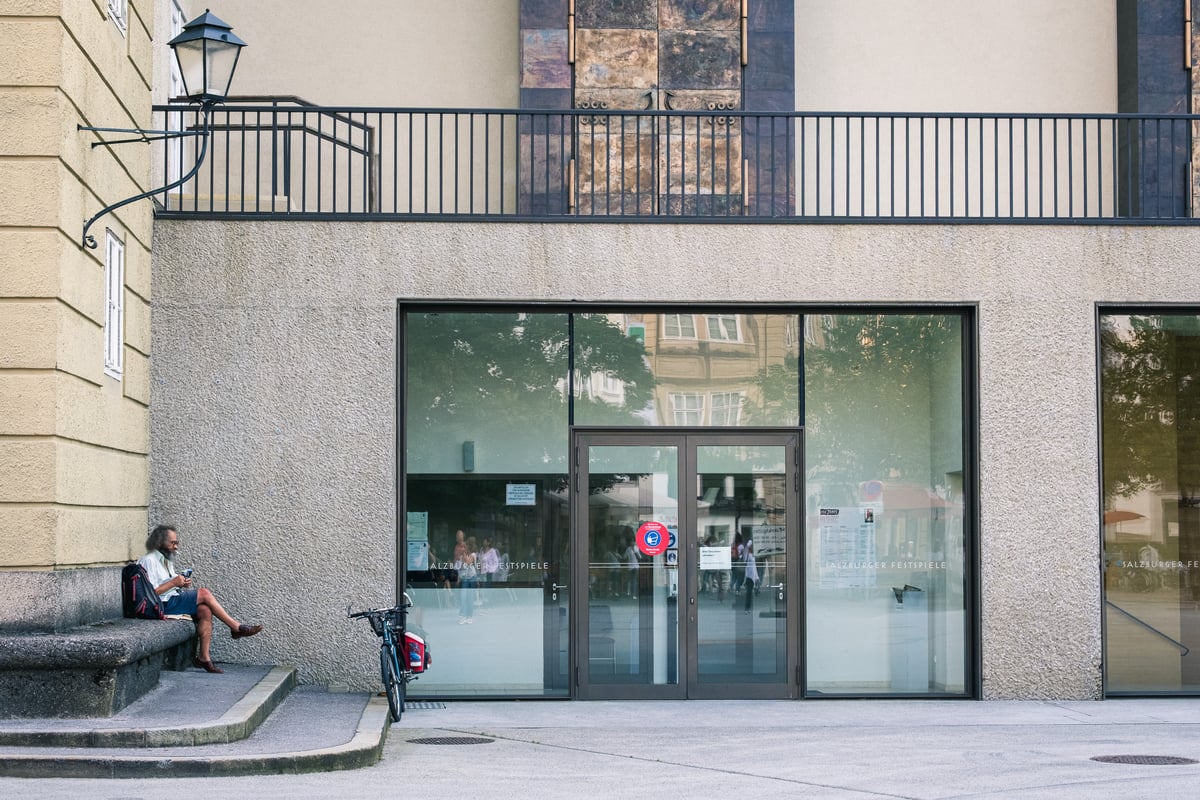
  • A man sits alone on a stone step beside a glass festival entrance lettered SALZBURGER FESTSPIELE, where a poster announces 100 Jahre Salzburger Festspiele, 1 to 30 August 2020.

    Salzburg Festival

    One of the world's most prestigious performing arts festivals. Held annually late July to end of August. Founded 1920 by Hugo von Hofmannsthal, Max Reinhardt, Richard Strauss, Franz Schalk, and Alfred Roller. Inaugural event: Jedermann on Domplatz. Herbert von Karajan defined the postwar era. Opera, drama, concerts.

    cultural institutionFounded 1920