Snapshot
The Felsenreitschule is not built against a cliff: it is carved into one. Three tiers of arcaded galleries cut directly into the Monchsberg provide the backdrop for one of the world’s most distinctive opera stages, open to the sky, inaugurated for the Salzburg Festival in 1926.
The Story
In 1693, Prince-Archbishop Johann Ernst von Thun commissioned a riding school on the edge of the Monchsberg, the long limestone ridge that forms the western boundary of Salzburg’s old town. Architect Johann Bernhard Fischer von Erlach cut 96 arcaded galleries in three stacked tiers directly into the quarry cliff, the same conglomerate that had supplied stone for Salzburg Cathedral for decades. The arena below was for horses; the arcades above were for nobles watching equestrian drills and animal hunts. It was not a theatre. It was a spectator space for military display.
After secularisation in 1803, the Austrian cavalry took over the site as a training ground. Their presence, routine and practical, kept the rock-cut structure intact through the 19th century and the First World War. When the Salzburg Festival was founded in 1920, director Max Reinhardt saw what the quarry could become. In 1926 he opened the space as an outdoor theatre with Goldoni’s Der Diener zweier Herren, the first performance under the open sky between those three tiers of carved stone. The first opera followed in 1948: Herbert von Karajan conducted Gluck’s Orfeo ed Euridice, establishing the venue’s identity as an opera space as well as a drama stage.
Late 1960s renovations by architect Clemens Holzmeister added a proper understage area, an orchestral pit, and lighting infrastructure, but the essential element, the three tiers of rock-cut arcades rising behind the performing space, remains exactly as Fischer von Erlach left it. Capacity is 1,412. Performances are open to the sky. The three-tier rock face is one of the most photographed opera settings in the world.
The venue appears in The Sound of Music (1965) as the concert hall where the von Trapp family perform their farewell before escaping Austria. The scene was filmed here on location.
Visiting
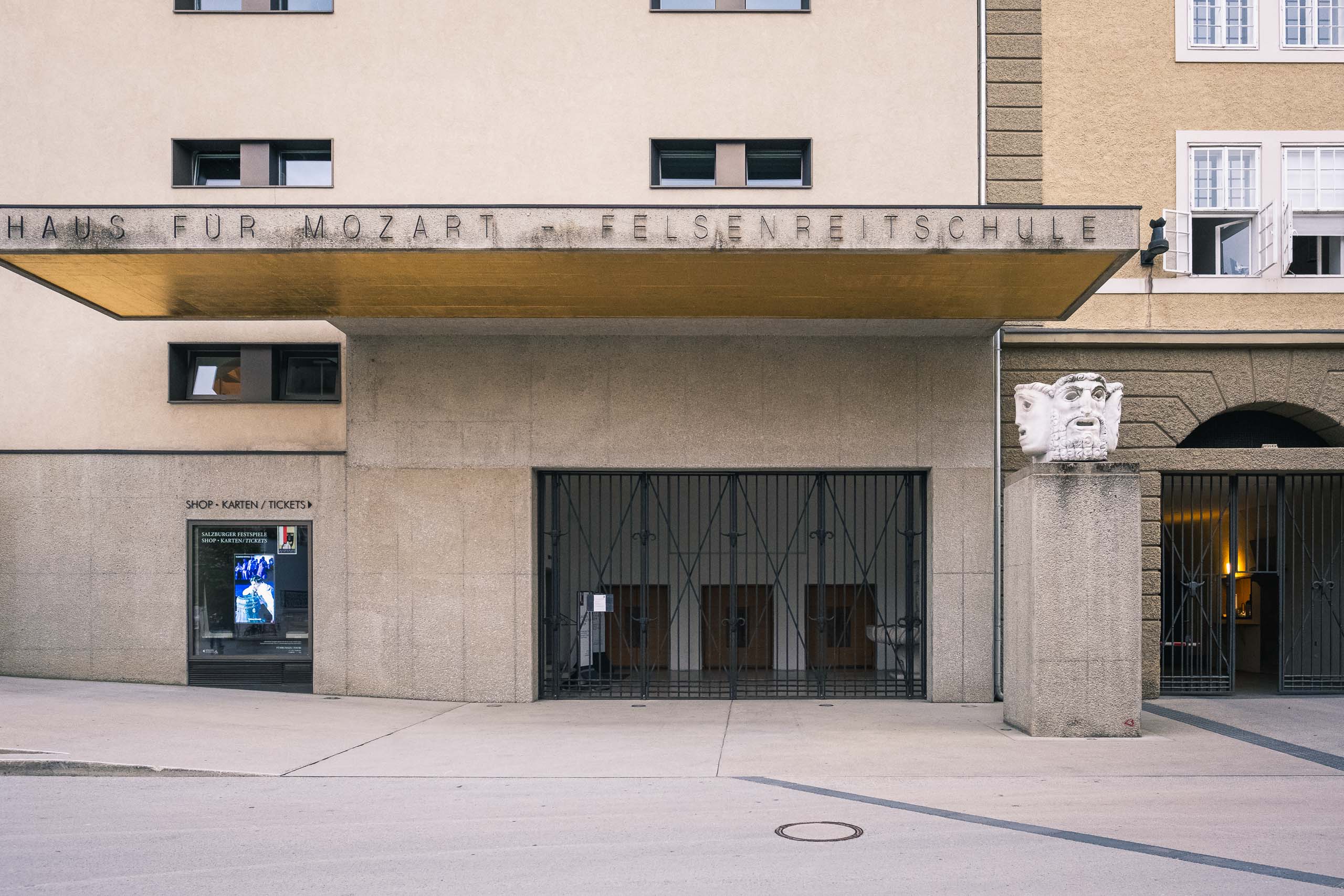
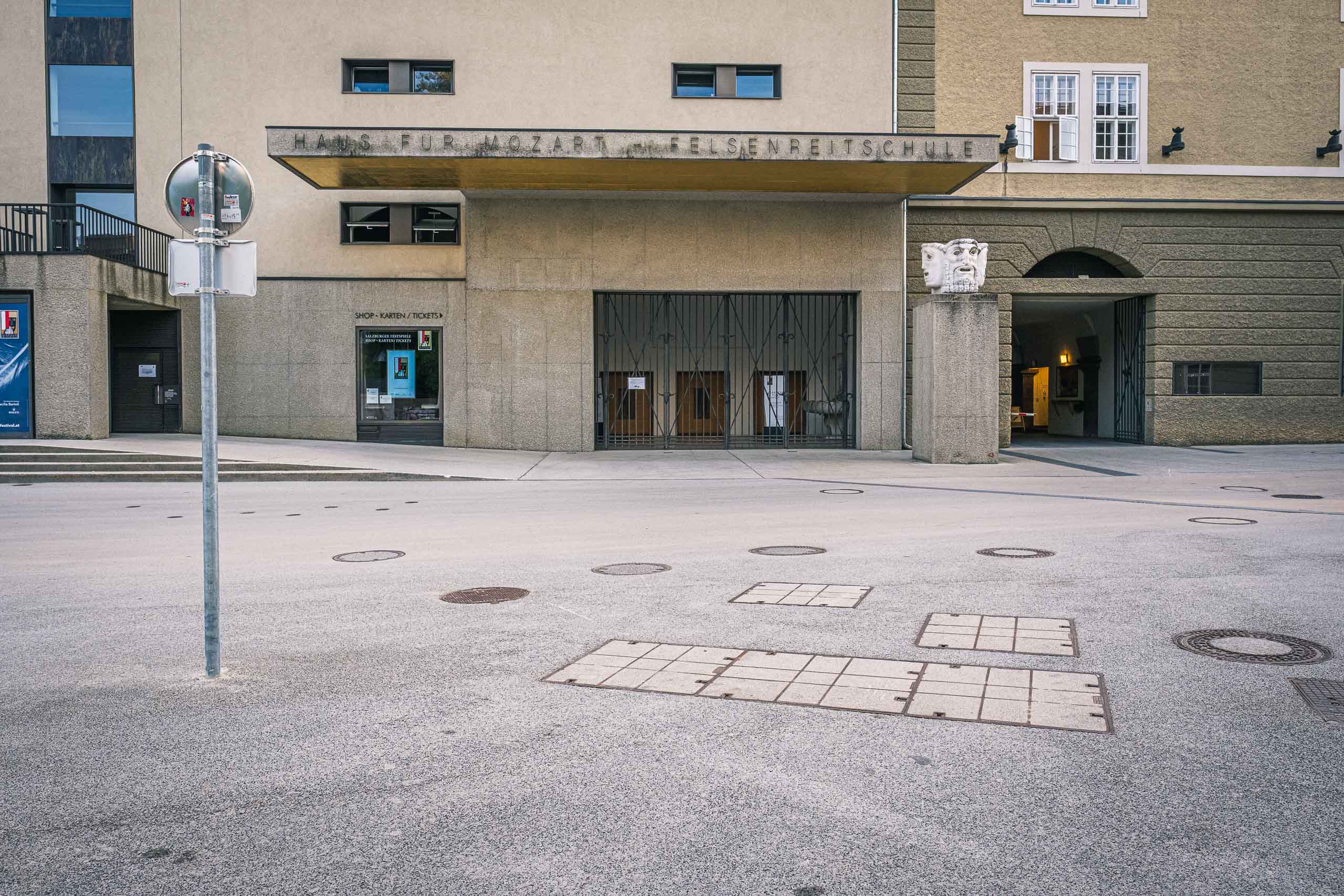
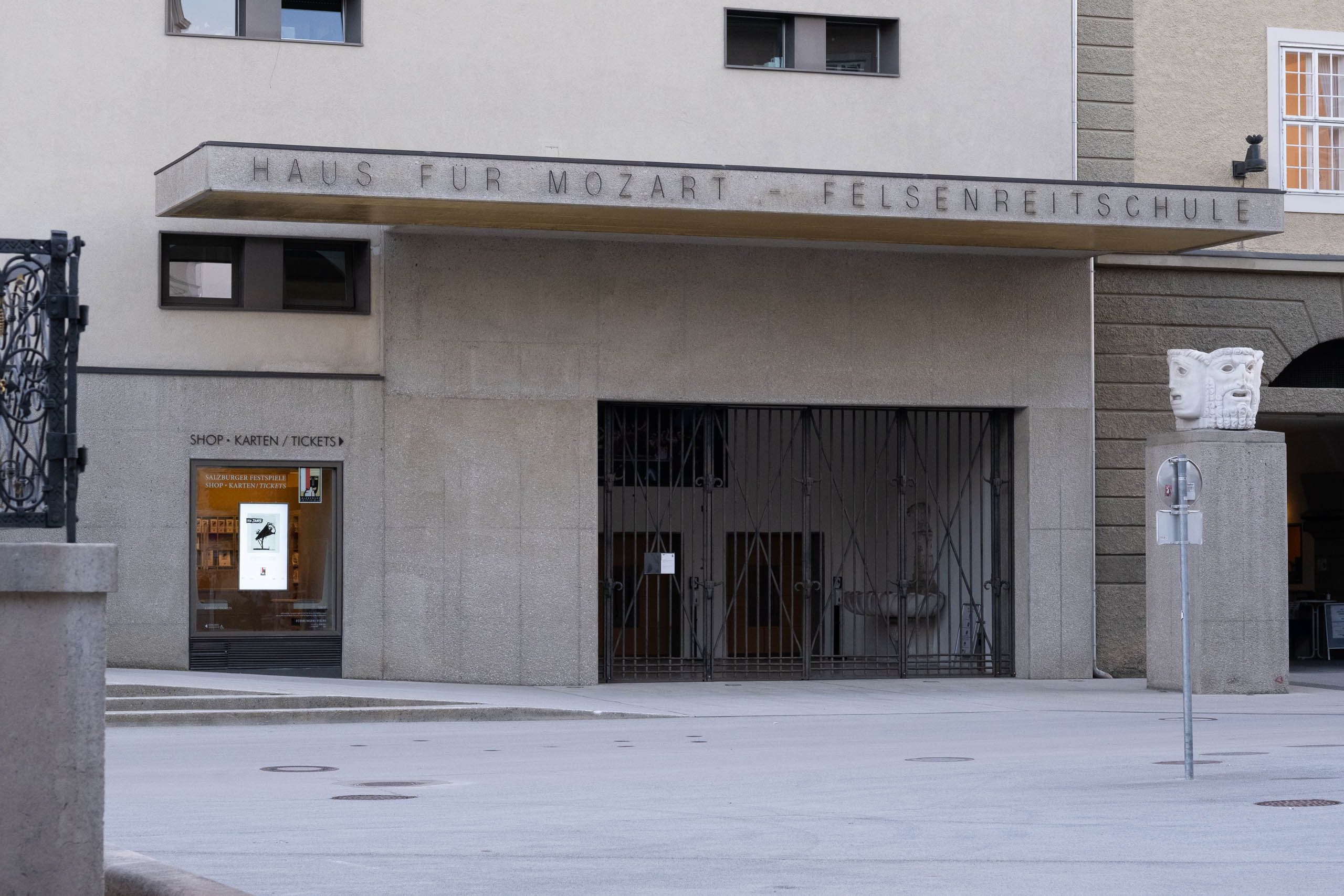
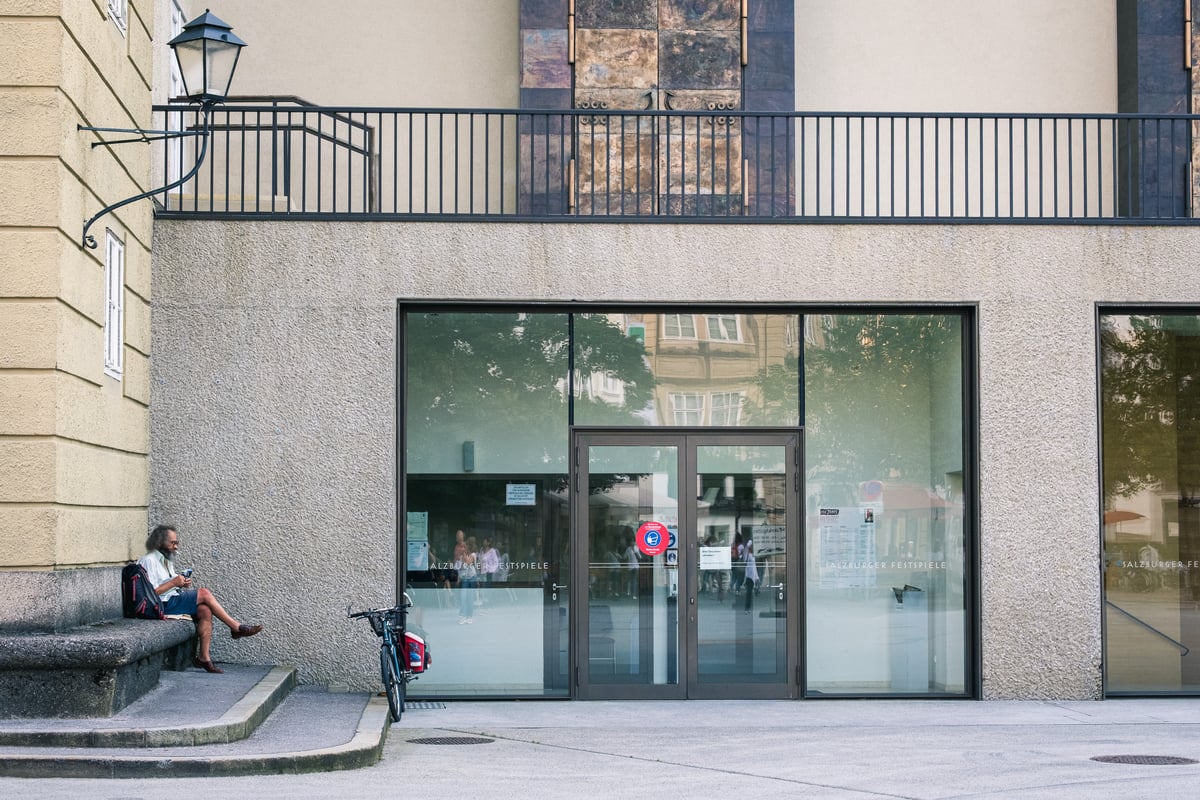
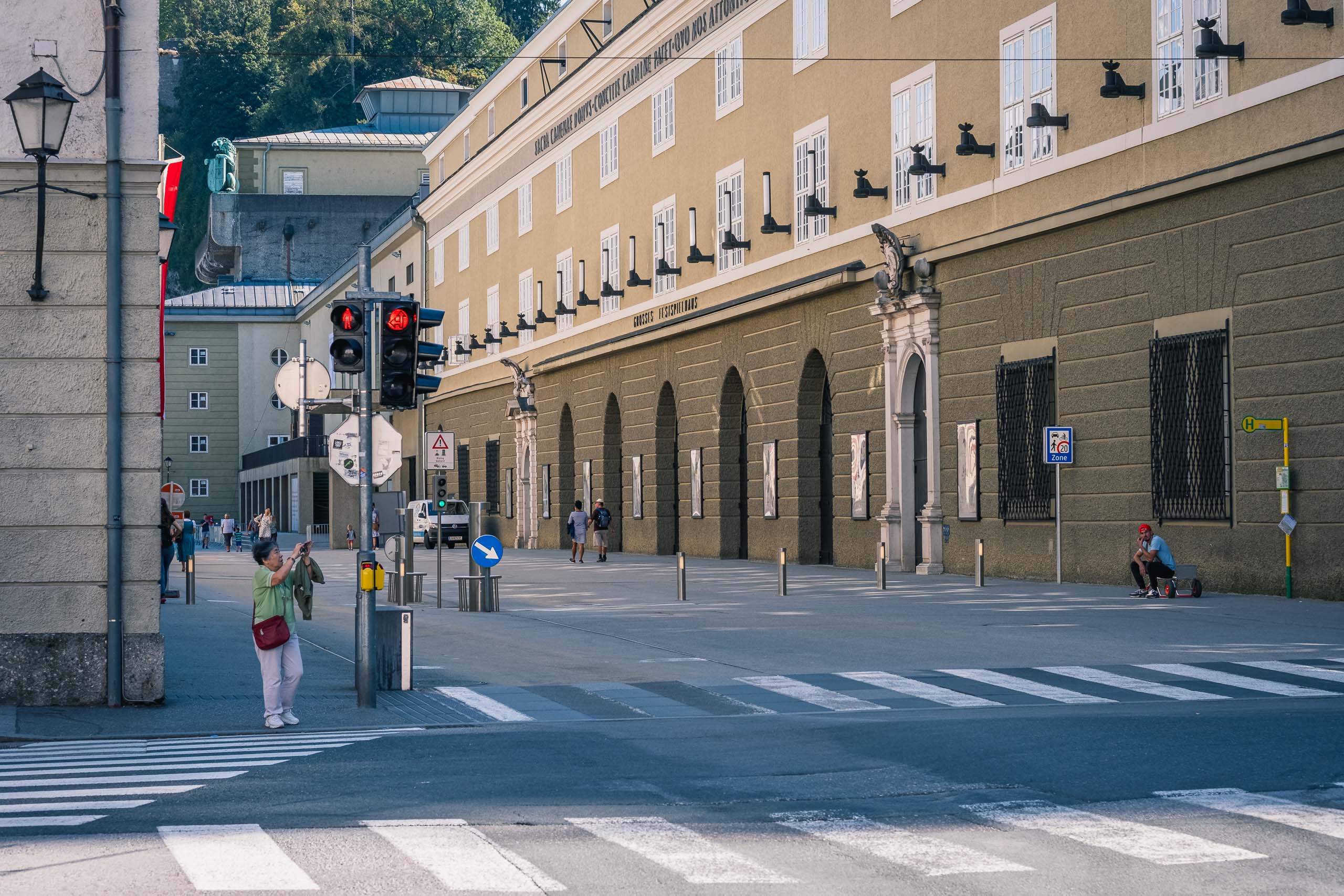
Felsenreitschule is at Hofstallgasse 1, in the same Festival complex as Grosses Festspielhaus and Haus fur Mozart, a short walk from Residenzplatz. Performances run during the Salzburg Festival (July to August) and the Salzburg Easter Festival; tickets range from EUR 30 to over EUR 300 and require advance booking. The building is visible from Hofstallgasse year-round, and guided tours of the Festival complex (check salzburgerfestspiele.at for dates and prices, approximately EUR 8) give access to the interior outside performance season. Allow 2-4 hours for a performance. Combine with Grosses Festspielhaus and Haus fur Mozart for the full Festival district.