Snapshot
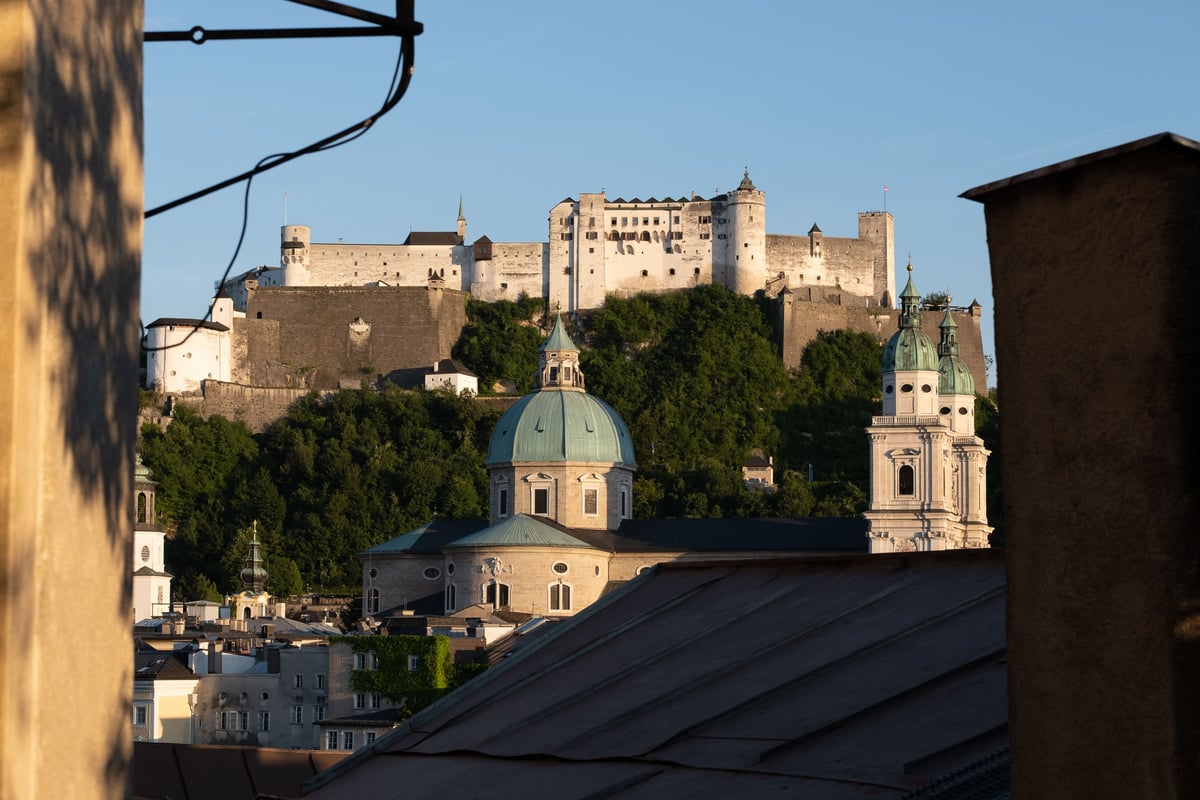
Gebhard von Helfenstein was Archbishop of Salzburg from 1060 to 1088 and founded Hohensalzburg Fortress in 1077. Every stone of the city’s most iconic landmark traces back to a political crisis he chose not to avoid.
The Story
To understand why the fortress exists, you need the Investiture Controversy: a decades-long conflict between the papacy and the Holy Roman Empire over who had the right to appoint bishops and abbots. When Pope Gregory VII excommunicated Emperor Henry IV in 1076, the empire’s bishops were forced to choose sides. Gebhard chose the Pope.
He had started his career as a chaplain and imperial chancellor under Henry III, close to the heart of imperial power. He knew exactly what it meant to break with Henry IV. In 1076 he attended the Diet of Trebur, where German princes gathered to oppose the emperor, and in 1077 he backed the anti-king Rudolf of Rheinfelden. Henry’s forces threatened Salzburg in response.
Gebhard’s answer was the Festungsberg. He ordered a fortified stronghold built on the rocky hill above the city in 1077: a basic wooden bailey, a residential tower, and walls that used the natural cliff as a first line of defense. The site already held Roman foundations and a small chapel. Gebhard gave it military purpose for the first time.
The fortress held. Gebhard did not. The imperial faction regained the upper hand, and in 1085 Gebhard was deposed and driven from Salzburg. He spent nine years in exile in Swabia and Saxony, rallying support for the papal cause across multiple dioceses. He returned briefly in 1086 with Duke Welf I’s military backing, but his hold never recovered. He died in Burgundy on 15 June 1088, buried at Admont Abbey, which he himself had founded in 1074.
The first fortifications he built were timber, not stone. What visitors see today, the massive walls, the towers, the gilded interiors added by Leonhard von Keutschach four centuries later, came from the hands of his successors. Gebhard gave them the location, and the reason.