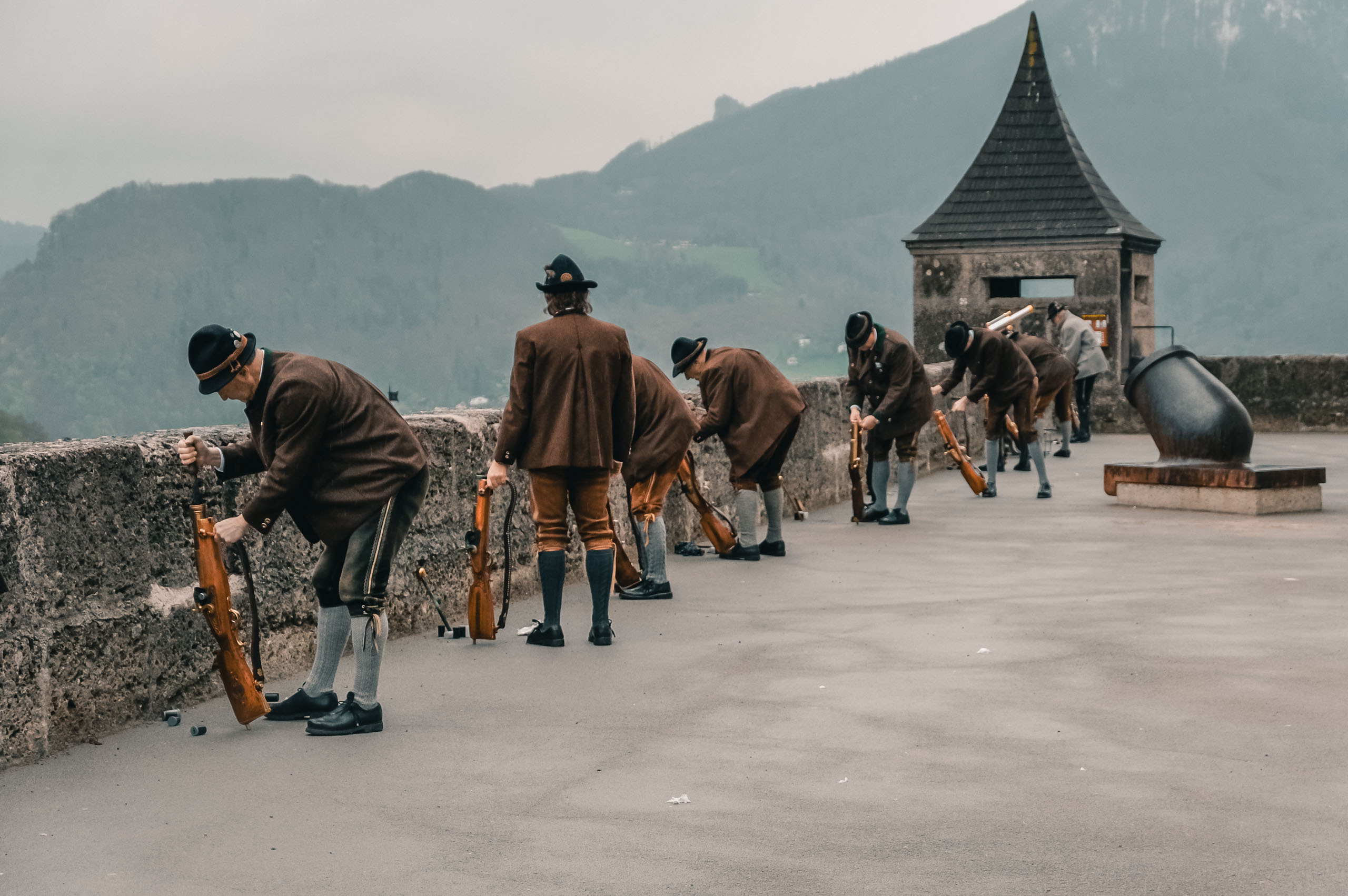
Festungskonzerte
Chamber music in the candlelit Prince's Chamber of Hohensalzburg Fortress. Mozart, Haydn, and contemporaries. Year-round, near-nightly in summer. 900-year-old fortress room by candlelight. No concert hall can replicate it.
Fortress
Also known as Festung Hohensalzburg, Hohensalzburg
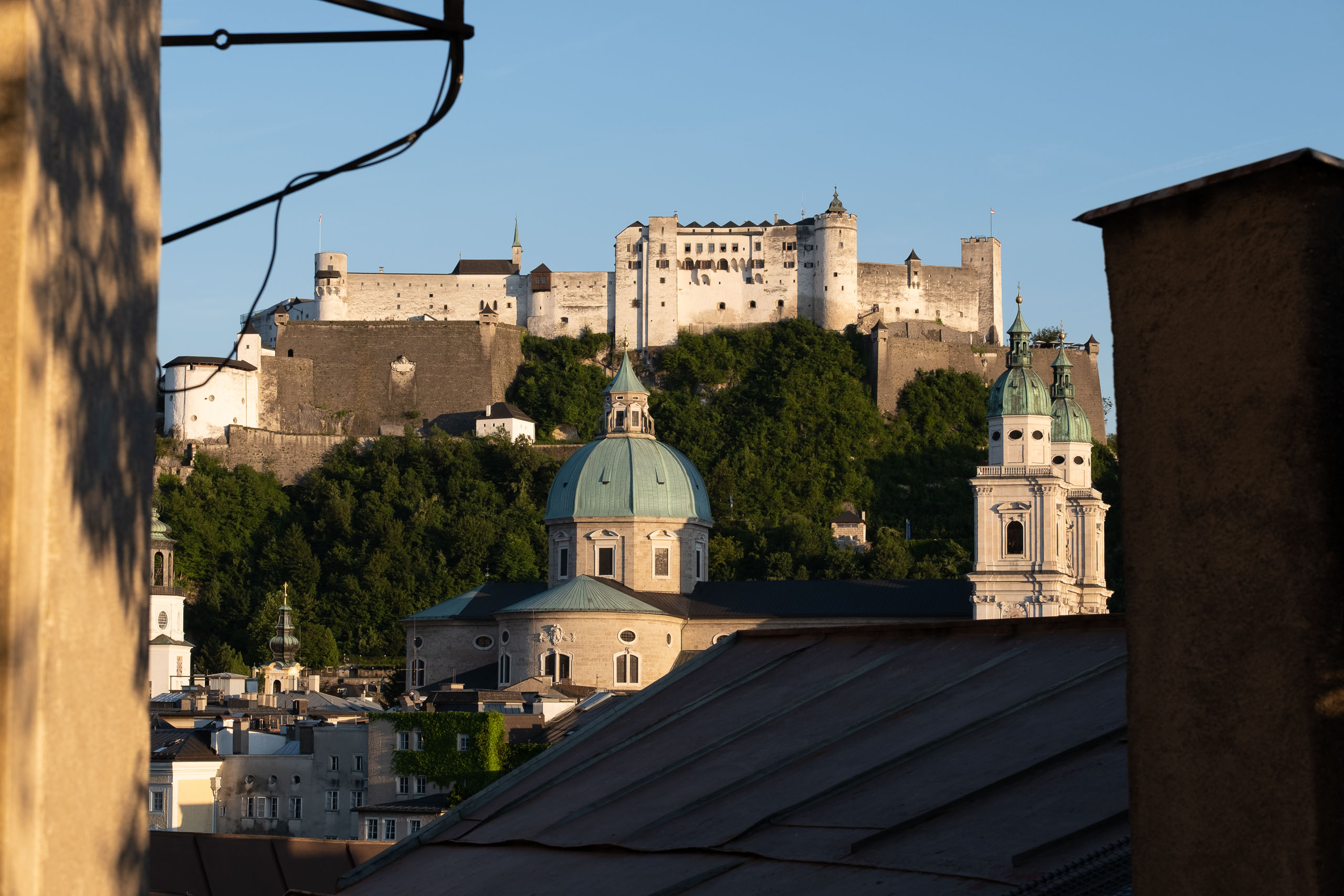
Hohensalzburg was never conquered. The fortress that looms over the Altstadt from Festungsberg hill has changed hands exactly once in nearly 950 years, and that was a diplomatic handover to Napoleon’s forces in 1800, not a siege.
Gebhard von Helfenstein ordered the first walls built in 1077, on the steep cone of Festungsberg, just south of Salzburg’s old town. He was not building a monument. He was choosing a side: papal over imperial during the Investiture Controversy, the struggle between Pope Gregory VII and Emperor Henry IV over who had the right to appoint bishops. The rocky height gave him both a defensible position and a visible statement of ecclesiastical independence. When Gebhard was forced into exile in 1085, the unfinished fortress passed to his successors, who continued reinforcing it in stone.
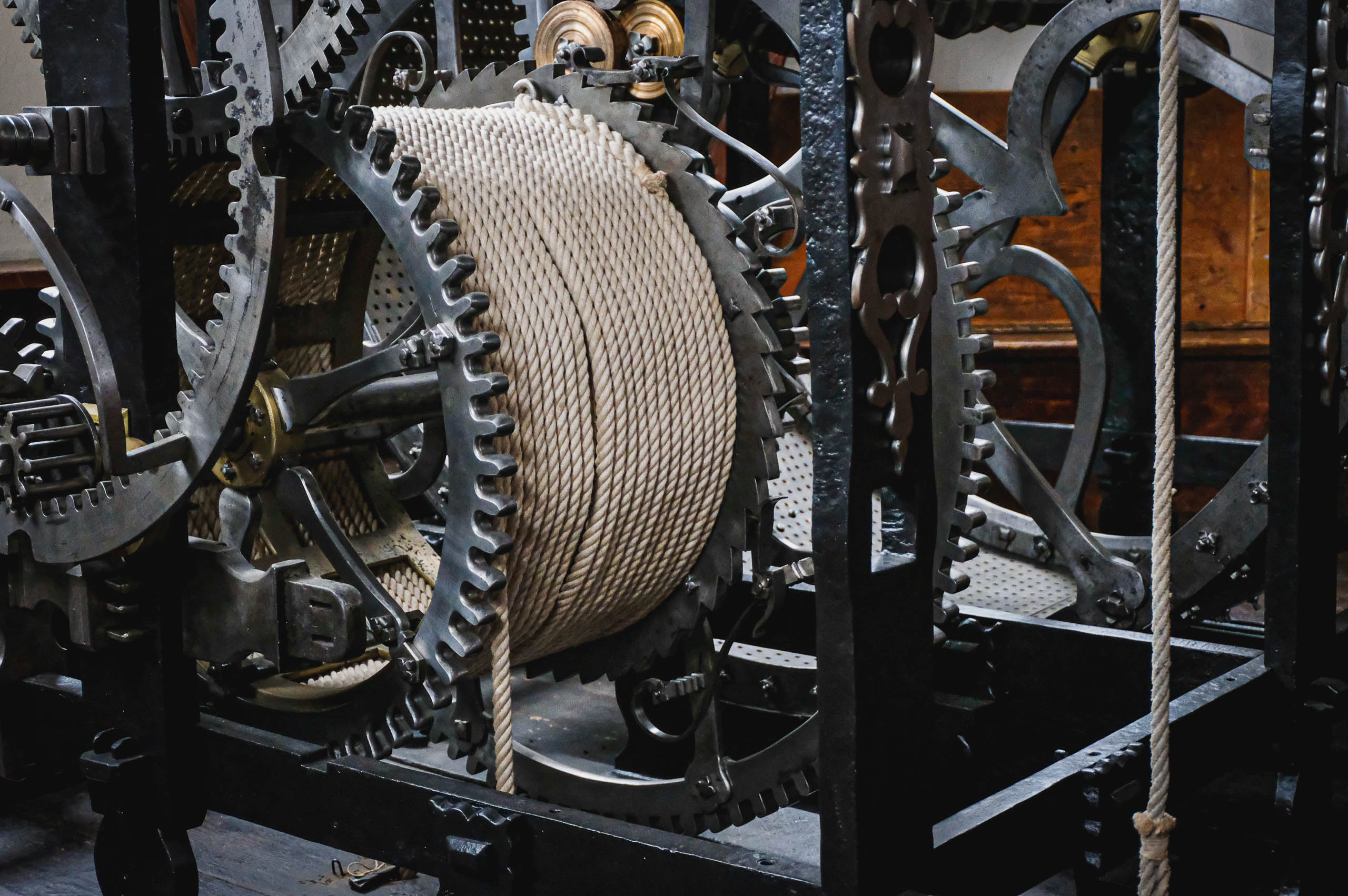
The transformation from military outpost to princely residence came under Leonhard von Keutschach, whose reign ran from 1495 to 1519. Leonhard added the massive Pallas tower (Hohe Stock), thickened the ring walls to absorb artillery, and commissioned the Fürstenzimmer, the Princely Rooms, whose gilded coffered ceilings, Gothic tiled stoves, and 17-metre carved beam bearing the Holy Roman Empire’s eagle remain among the finest surviving examples of late Gothic secular architecture in the German-speaking world. His signature, a turnip coat of arms, is worked into the stone throughout the complex. It was also Leonhard who ordered the Reisszug in 1515: a counter-balanced cable system to haul supplies up the incline, unchanged in principle ever since and considered the world’s oldest still-operational railway.
The fortress then became a refuge and a prison in equal measure. During the Peasants’ War of 1525, Archbishop Matthäus Lang sheltered inside while Michael Gaismair led a months-long siege from below. The walls and cisterns held. A generation later, the Habsburgs, the dynasty that ruled Austria for six centuries, found the fortress useful for a different purpose. Wolf Dietrich von Raitenau, the archbishop who had reshaped much of Salzburg’s Baroque street plan with cathedral squares and broad processional routes, was deposed by his own chapter in 1611 and imprisoned here from 1612 until his death in 1617. The view from his cell over the city he had built was arguably the cruelest part of the sentence.
The fortress’s last unexpected chapter came in 1953, when Oskar Kokoschka opened his Schule des Sehens (School of Vision) inside its walls as part of the International Summer Academy of Fine Arts. The same stone rooms that had housed a garrison, a court, and a prisoner became a working art school, one that ran under Kokoschka’s direction for years.
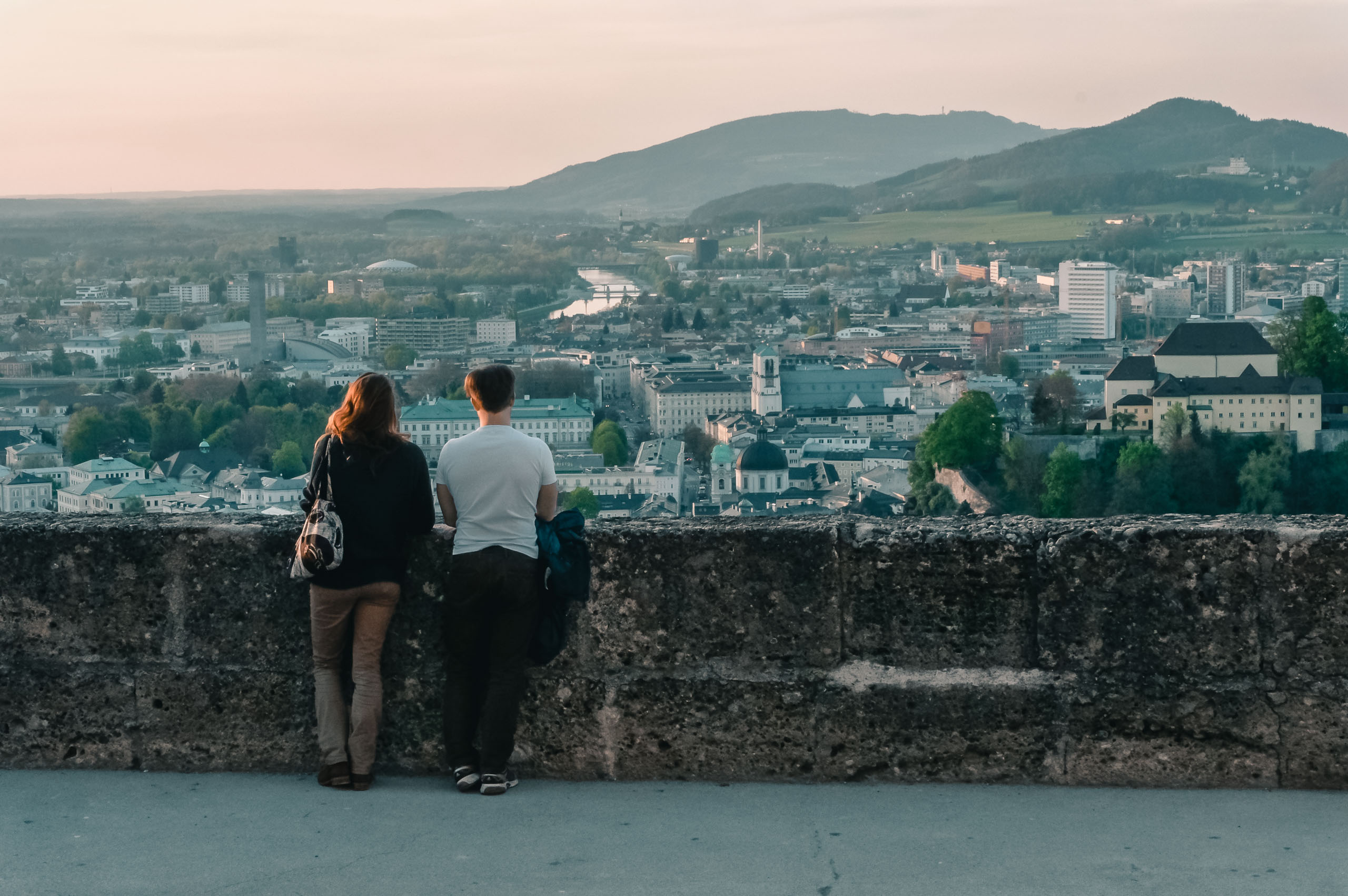
Plan 1.5 to 2.5 hours. The all-inclusive ticket (EUR 19.20) covers the funicular, museums, and the Fürstenzimmer state rooms. A basic ticket (EUR 15.50) includes the funicular but not the state rooms. The Festungsbahn funicular from Festungsgasse takes about one minute and runs during fortress hours. The steep uphill walk from the Altstadt takes 15-20 minutes and is a worthwhile approach if the legs are willing: the walk down afterward is easier and gives better photo angles of the rooftops. The Reisszug runs on its own track and carries freight only; it is not a passenger ride. Good pairings nearby: Stift St. Peter and Petersfriedhof are at the foot of the hill. Jan-Apr and Oct-Dec hours: 9:30am-5pm. May-Sep: 8:30am-8pm.
Do it here
These experiences include this place in their authored route.
Chamber music in the candlelit Prince's Chamber of Hohensalzburg Fortress. Mozart, Haydn, and contemporaries. Year-round, near-nightly in summer. 900-year-old fortress room by candlelight. No concert hall can replicate it.
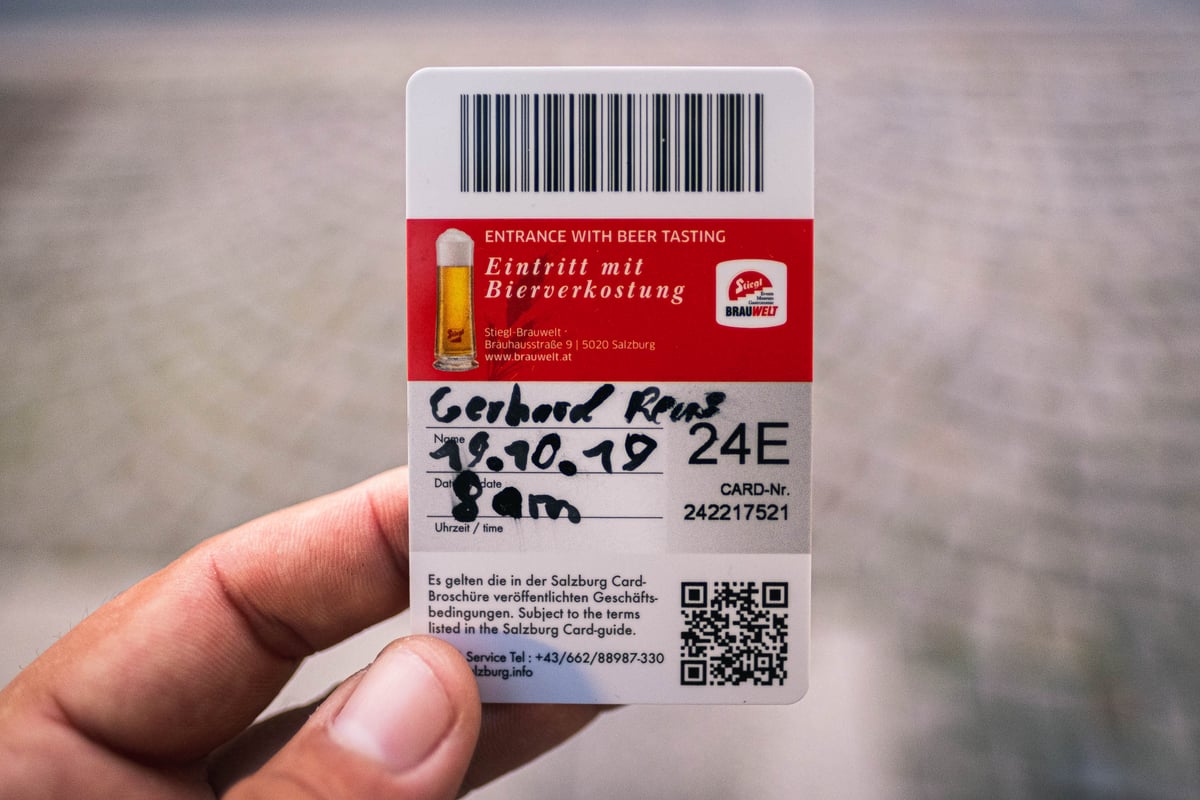
Visitor pass: free entry to most major attractions + free public transport. 24/48/72-hour versions. Covers Hohensalzburg Fortress, Salzburg Museum, Haus der Natur, DomQuartier, Hellbrunn Palace, cable cars. Note: the Salzburg Museum is closed for renovation until approximately spring 2027, so it does not count toward the card's value until it reopens.
People
archbishop1170 - 1246
The most powerful Archbishop of Salzburg in the medieval period. Eberhard II held the archbishopric for an extraordinary 46 years (1200-1246), the longest reign of any Salzburg archbishop, and significantly expanded Hohensalzburg Fortress.
archbishopd. 1088
The archbishop who founded Hohensalzburg Fortress in 1077. The reason Salzburg's most iconic landmark exists at all.
archbishop1442 - 1519
The archbishop most responsible for Hohensalzburg Fortress as visitors see it today. During his reign (1495-1519), Keutschach transformed the fortress from a functional stronghold into an opulent princely residence. His personal symbol, three turnips, appears throughout the fortress carved in stone.
archbishop1468 - 1540
One of the most powerful men in the Holy Roman Empire before becoming Archbishop of Salzburg. A cardinal, imperial chancellor to Emperor Maximilian I, and the archbishop who survived a months-long siege inside Hohensalzburg Fortress during the Peasants' War of 1525.
archbishop1050 - 1102
An archbishop equally skilled with a chisel and a crozier. Before his elevation, Thiemo was a gifted sculptor and metalworker at Stift St. Peter. He was martyred during the Crusade of 1101 and later beatified.
archbishop1559 - 1617
The most transformative Archbishop in Salzburg's history. Wolf Dietrich demolished the old Romanesque cathedral, created Mirabell Palace, rebuilt the Residenz, and began reshaping the city along Italian baroque lines. Deposed and imprisoned in Hohensalzburg Fortress until his death.
official1490 - 1532
One of the most radical leaders of the German Peasants' War (1525-1526). Gaismair led the Tyrolean and Salzburg peasant forces and besieged Hohensalzburg Fortress, where Archbishop Matthäus Lang was sheltering. The fortress held. Gaismair was assassinated in Padua in 1532, almost certainly on Habsburg orders.
royal figure1769 - 1821
The man who ended 1,200 years of the Prince-Archbishopric. Napoleon's armies occupied Salzburg in 1800 and 1809. The political consequences of the Napoleonic era erased Salzburg's status as an independent ecclesiastical state forever.
painter1886 - 1980
One of the great Expressionist painters, and the founder of the Schule des Sehens (School of Vision), a legendary painting school held at Hohensalzburg Fortress from 1953 as part of the International Summer Academy. Every summer, artists from across the world gathered at the fortress to study under Kokoschka.
Curated routes
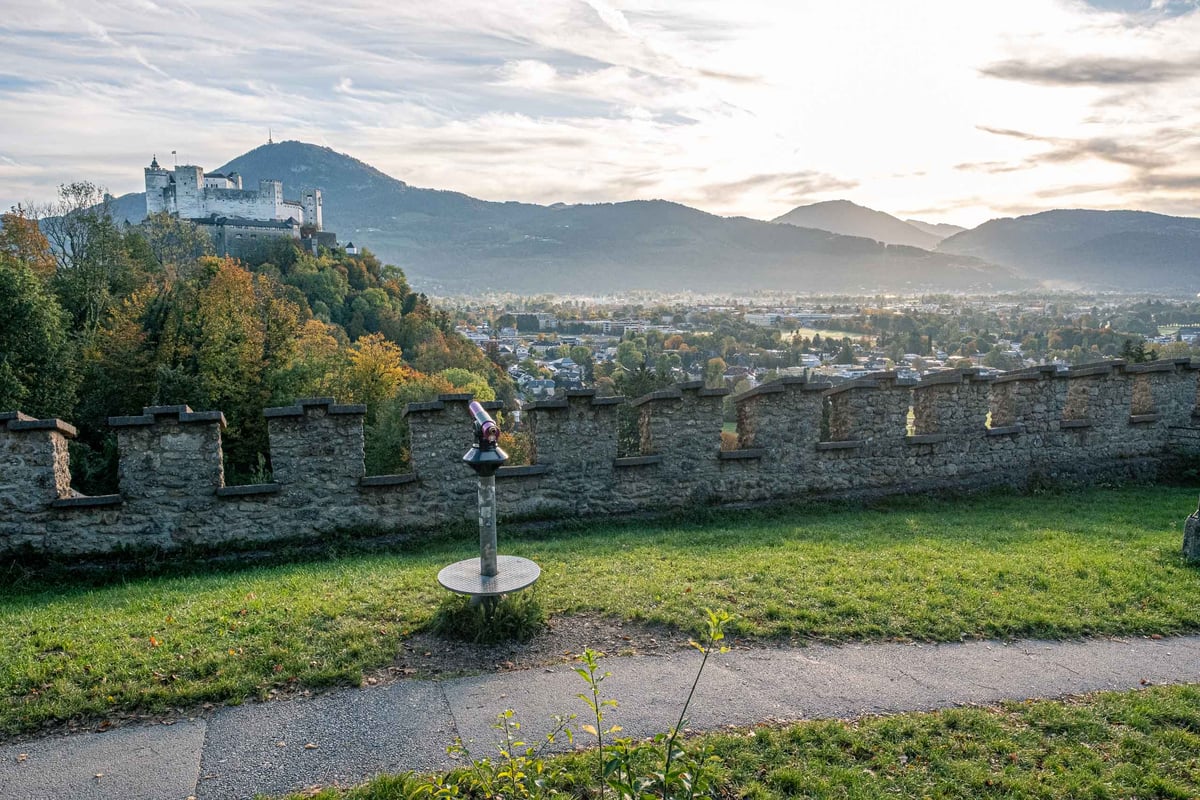
Both city mountains in one walk: the Mönchsberg from Mülln past its viewpoints to the fortress and Nonnberg, down through the old town and over the Mozartsteg, then up the Imbergstiege and round the Kapuzinerberg, the one that feels like a real mountain.
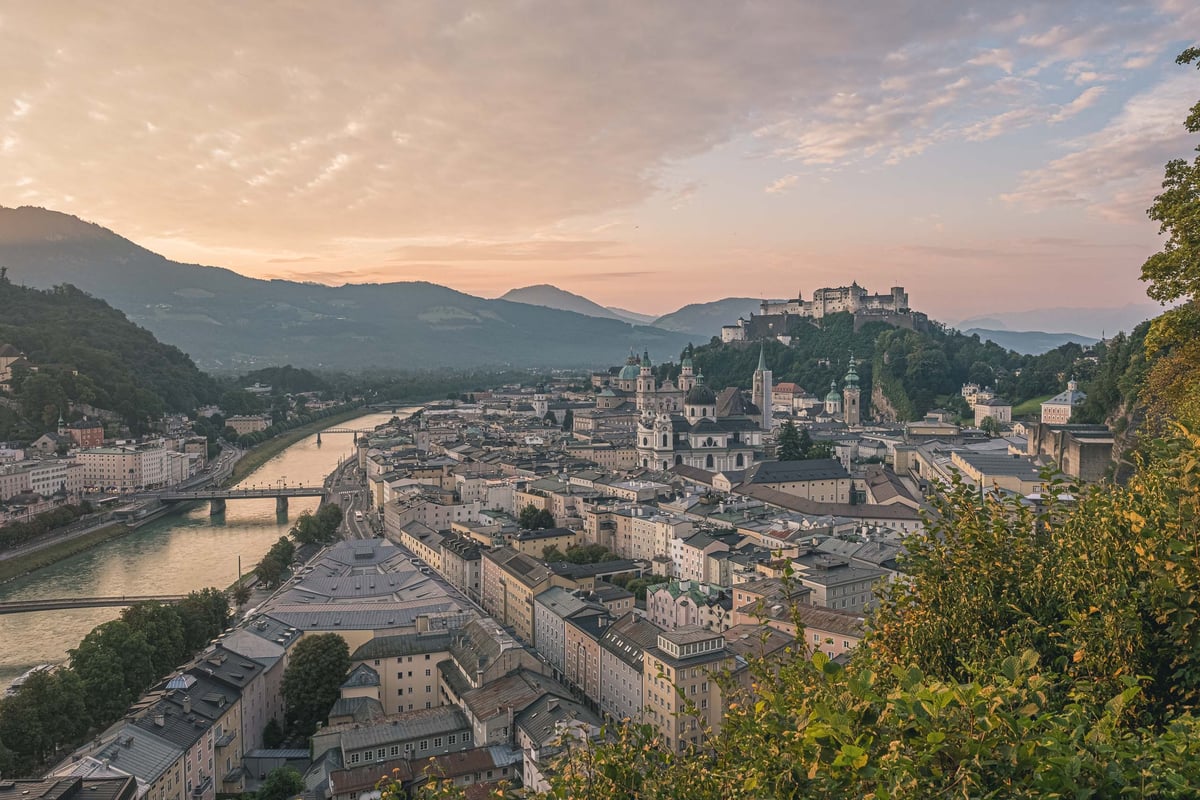
The fifteen sights we mark on the map we hand every guest, in the order I would walk them. It starts on the right bank, crosses into the old town, climbs to the fortress, and comes back over the Mozartsteg. Half a day at a stroll, or a full one if you go inside things.