
Writer
Hermann Bahr
19 July 1863, Linz, Upper Austria - 9 January 1934, Munich, Germany
Snapshot
Hermann Bahr was the writer who championed everything new before it was safe to do so. Critic, playwright, essayist, and the intellectual glue of the Young Vienna circle, he spent the last decades of his life in Maxglan, where his presence helped give the early Salzburg Festival movement its literary seriousness.
The Story
Bahr came to Salzburg for school as a fourteen-year-old and never quite left it alone. He enrolled at the Benedictine Gymnasium in 1877, and the city stayed in his orbit even as his career took him through Vienna, Berlin, Paris, and back. In 1912 he settled in Maxglan, then a village west of the city, and his house became a place where writers, artists, and the cultural ambitions surrounding the new festival idea could meet.
He had built his reputation across two decades as the most restless and consequential critic of the Viennese modern scene. At Café Griensteidl in the early 1890s he was the organising voice of Jung Wien, the group that included Arthur Schnitzler, Hofmannsthal, and Peter Altenberg. He launched the weekly Die Zeit in 1894 and used it to introduce Nietzsche’s ideas, publish Schnitzler’s first essay, and bridge Austrian, Czech, and German literary cultures. He championed Klimt and the Secession when institutional Vienna still resisted them.
His theoretical writing moved fast: Zur Kritik der Moderne (1890), Die Überwindung des Naturalismus (1891), Expressionismus (1914). He did not stay in any movement long enough to become its monument. That restlessness was the point.
In Salzburg he was an intellectual ally to Hofmannsthal and Reinhardt, the two figures most responsible for giving the Salzburg Festival its cultural identity. His presence in Maxglan added weight to the local argument that this city, with its particular mix of baroque beauty and serious culture, was the right place for a great festival.
He died in Munich in 1934, the year before the Mirabell Gardens became a filming location and the Salzburg story started being told in a different register entirely.
Locations
Places in the story
These places and destinations are authored on this person entity.
- district
Organizations
Institutional connections
These organizations are authored on this person entity.
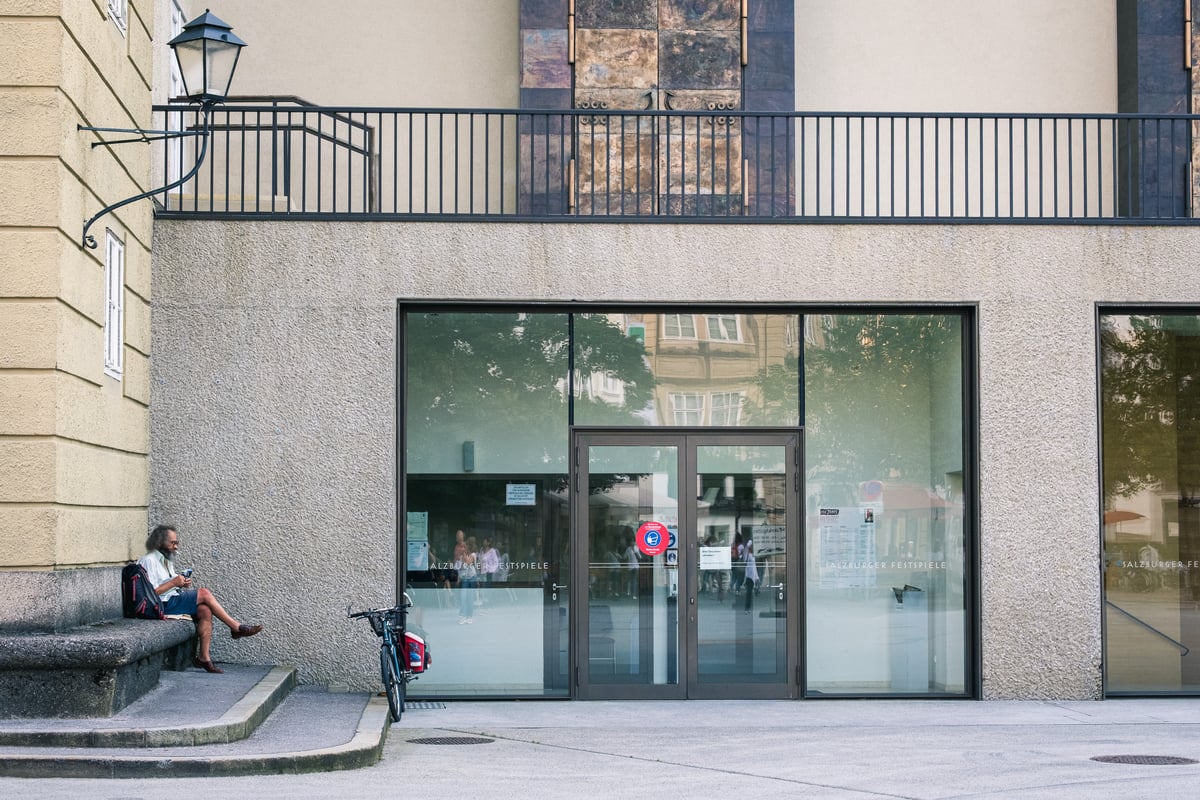
Salzburg Festival
One of the world's most prestigious performing arts festivals. Held annually late July to end of August. Founded 1920 by Hugo von Hofmannsthal, Max Reinhardt, Richard Strauss, Franz Schalk, and Alfred Roller. Inaugural event: Jedermann on Domplatz. Herbert von Karajan defined the postwar era. Opera, drama, concerts.