Domplatz
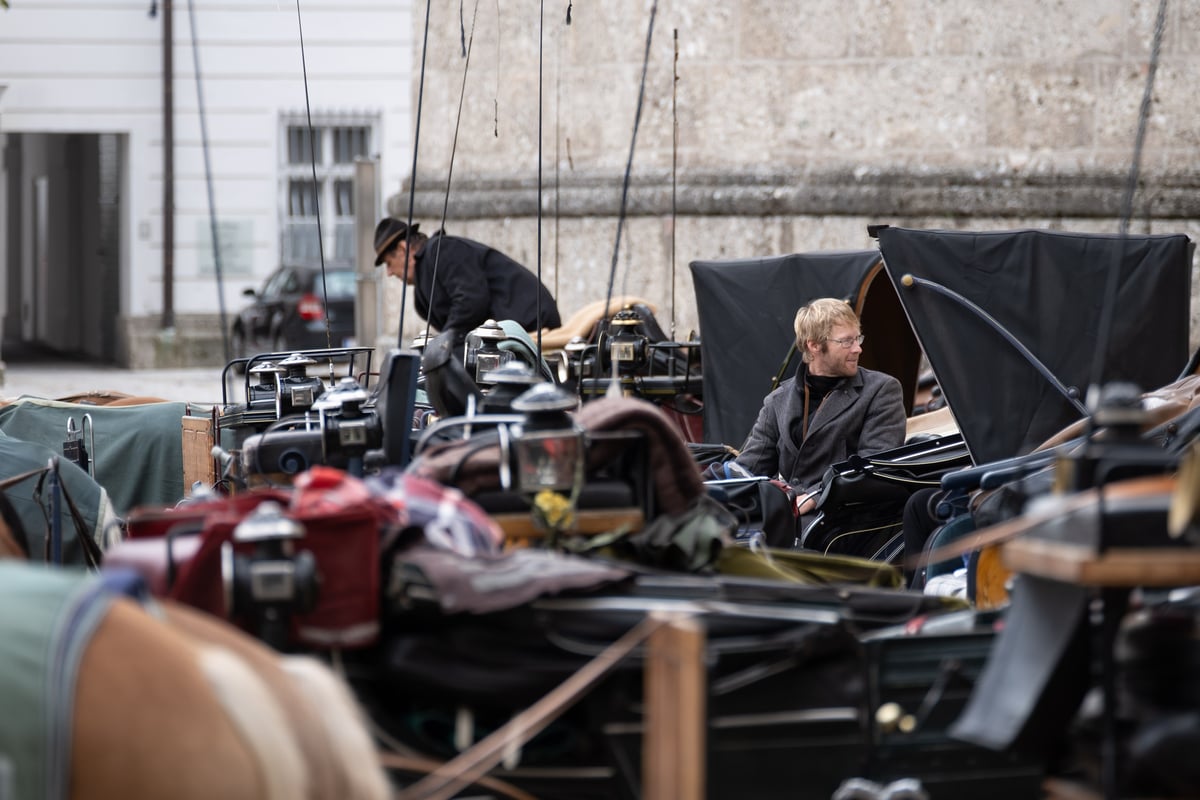
The square directly in front of the Salzburg Cathedral, flanked by the Cathedral arches and the DomQuartier buildings. Site of the famous annual Jedermann performance during the Salzburg Festival.
Director
9 September 1873, Baden bei Wien - 31 October 1943, New York City, USA
Max Reinhardt co-founded the Salzburg Festival and staged the first Jedermann on Domplatz in 1920, establishing the outdoor performance tradition that defines the Festival to this day. He owned Schloss Leopoldskron until the Nazis seized it in 1938; he died in New York exile five years later.
Max Reinhardt arrived in Salzburg with a reputation already built across Berlin and Vienna as the director who had reimagined what theatre could be: large, immersive, using every available space. His instinct for Salzburg was architectural. The Cathedral square, the Baroque facades, the surrounding streets, all of it could become a stage. When the idea for a summer festival took shape after the First World War alongside Hugo von Hofmannsthal and Richard Strauss, Reinhardt was the one who would make it physically real.
On 22 August 1920 he staged the first Jedermann on Domplatz, Hofmannsthal’s morality play performed against the Cathedral’s facade, with the voice of Death called from different points through the surrounding streets. It was an act of theatre unlike anything then running in Austria, and it has been repeated every summer since, with only wartime interruptions.
Reinhardt had purchased Schloss Leopoldskron, the Baroque lakeside palace on Salzburg’s southern edge, in 1918. He restored it and used it as a residence and salon where artists, composers, and writers gathered across the 1920s and early 1930s. Hofmannsthal worked there; Arturo Toscanini, Marlene Dietrich, and Thomas Mann came as guests. The palace’s lakeside facade was later used as the Von Trapp family home in The Sound of Music, a borrowing Reinhardt never lived to see.
He was Jewish, born Max Goldmann in Baden bei Wien in 1873. When Germany annexed Austria in March 1938, the Nazi authorities seized Schloss Leopoldskron immediately. Reinhardt had already left. He emigrated to the United States, continued working, and died in New York on 31 October 1943. The Festival he built was by then operating under an entirely different political reality, and his name was not spoken there until after the war.
On the map
The 3 places on this page, where they actually stand.
Locations
Built 1693
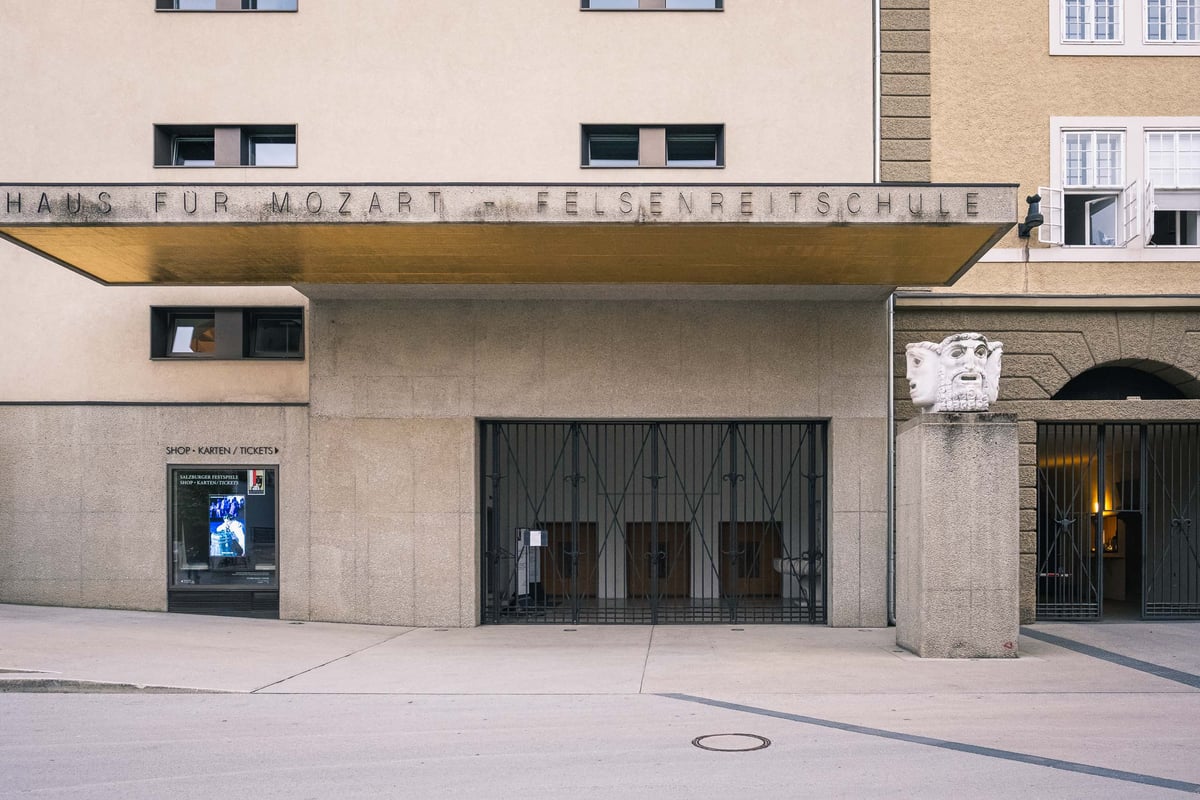
The Felsenreitschule is a theater carved directly into the Moenchsberg cliff face, which means the backstage wall is living rock and three tiers of 17th-century arcades form the auditorium. It was originally built in 1693 as a summer riding school for the Archbishop's horses.
Built 1736
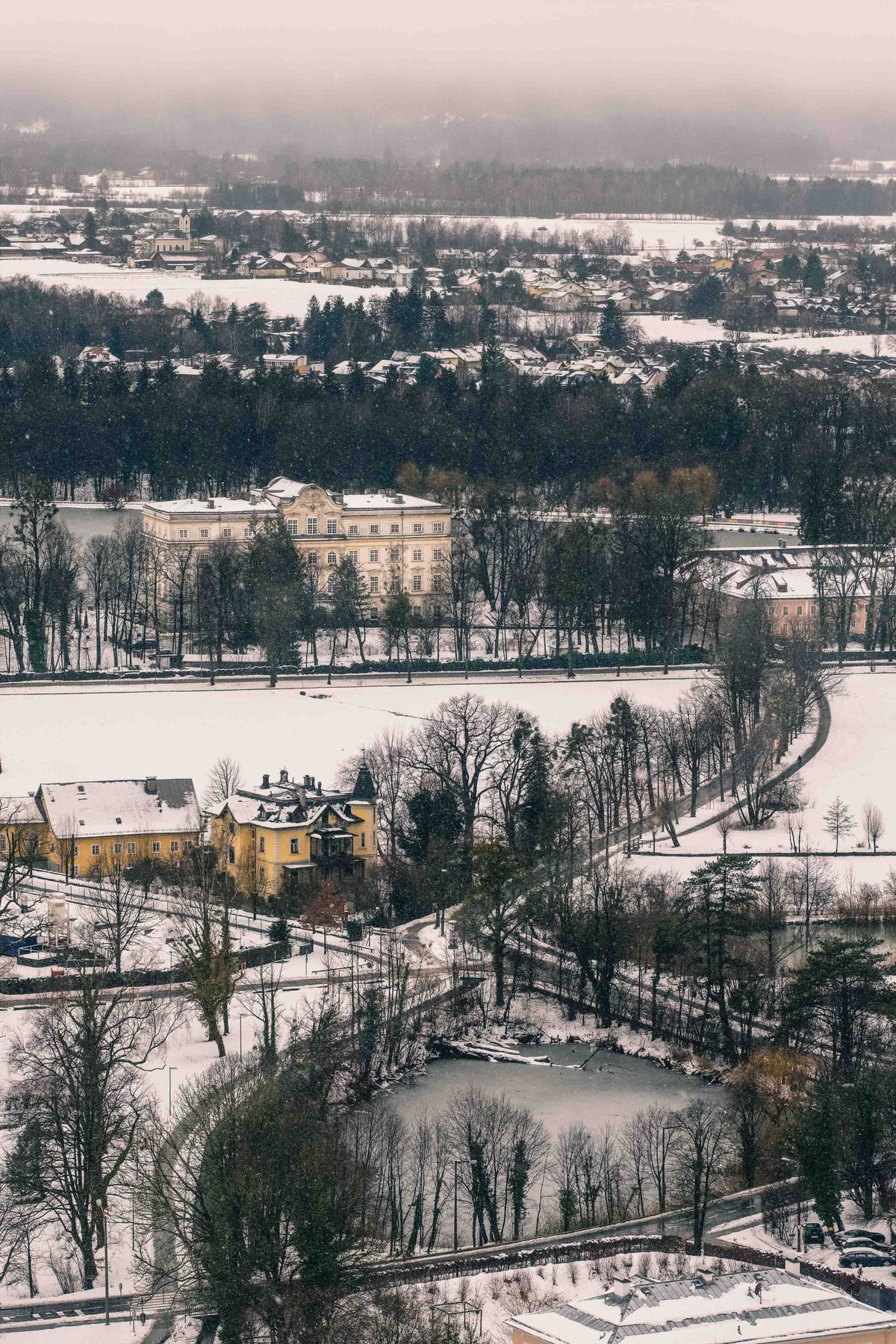
Rococo palace on the shores of Leopoldskroner Weiher, commissioned in 1736 by Archbishop Leopold Anton von Firmian and purchased by theatre director Max Reinhardt in 1918. Reinhardt turned it into the creative headquarters of the early Salzburg Festival and his own artistic home. The Nazis confiscated it in 1938 after Reinhardt fled.
Organizations
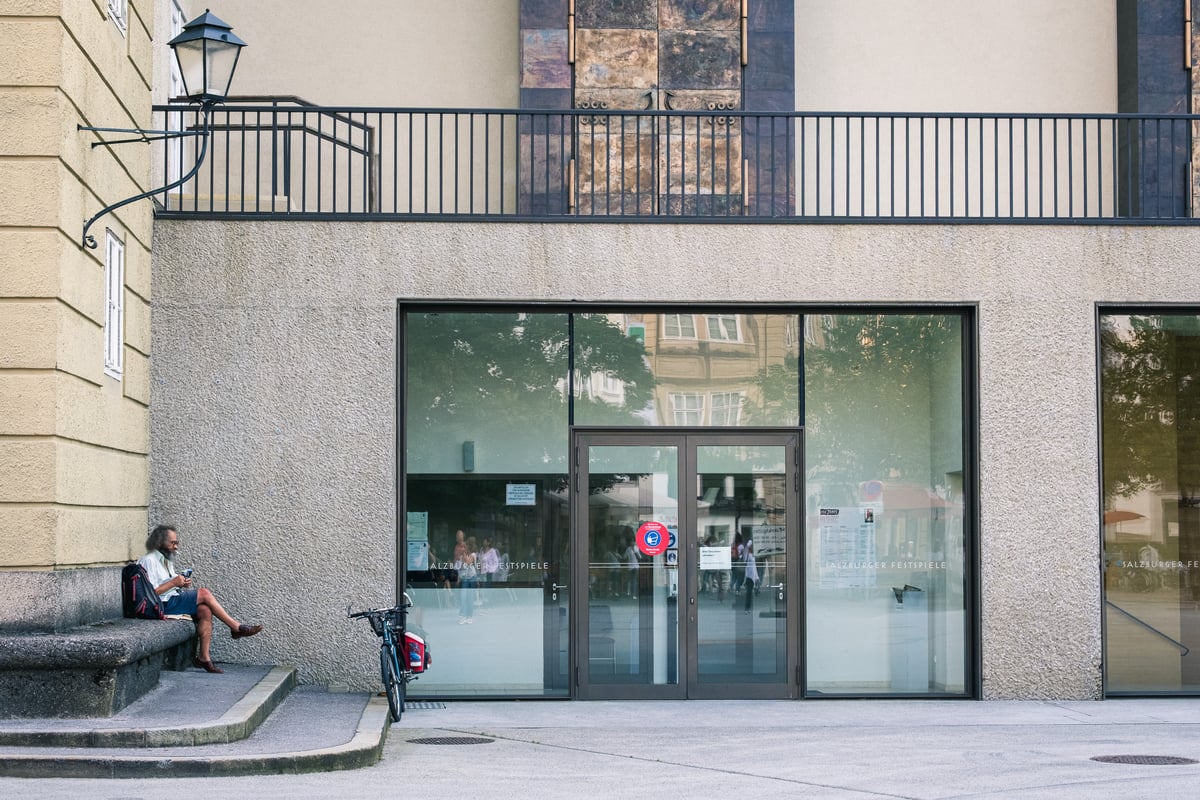
One of the world's most prestigious performing arts festivals. Held annually late July to end of August. Founded 1920 by Hugo von Hofmannsthal, Max Reinhardt, Richard Strauss, Franz Schalk, and Alfred Roller. Inaugural event: Jedermann on Domplatz. Herbert von Karajan defined the postwar era. Opera, drama, concerts.