

Walk of Modern Art
The Walk of Modern Art is a self-guided trail of 15 permanent public sculptures installed across Salzburg by the Salzburg Foundation since 2002.
Public Art
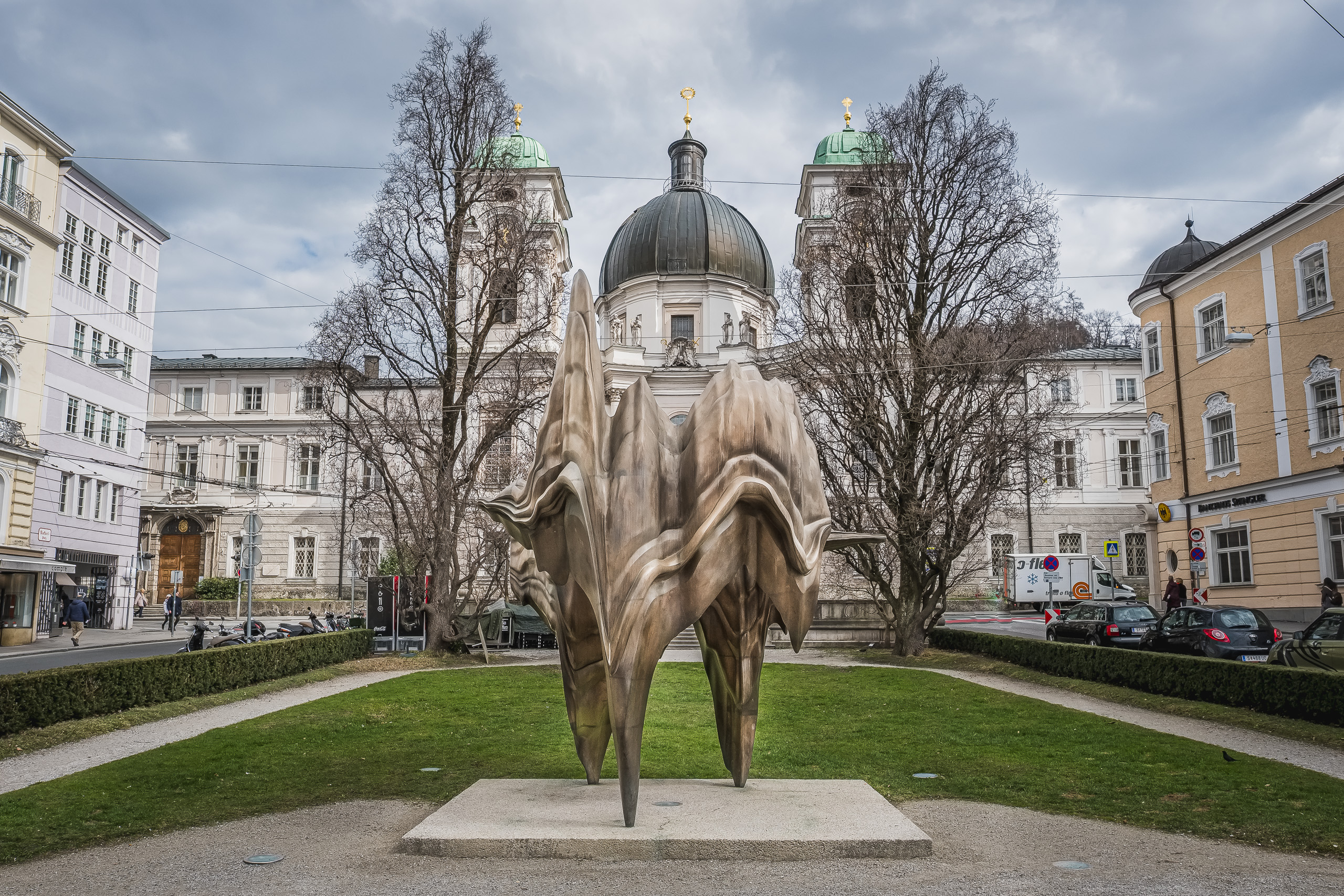
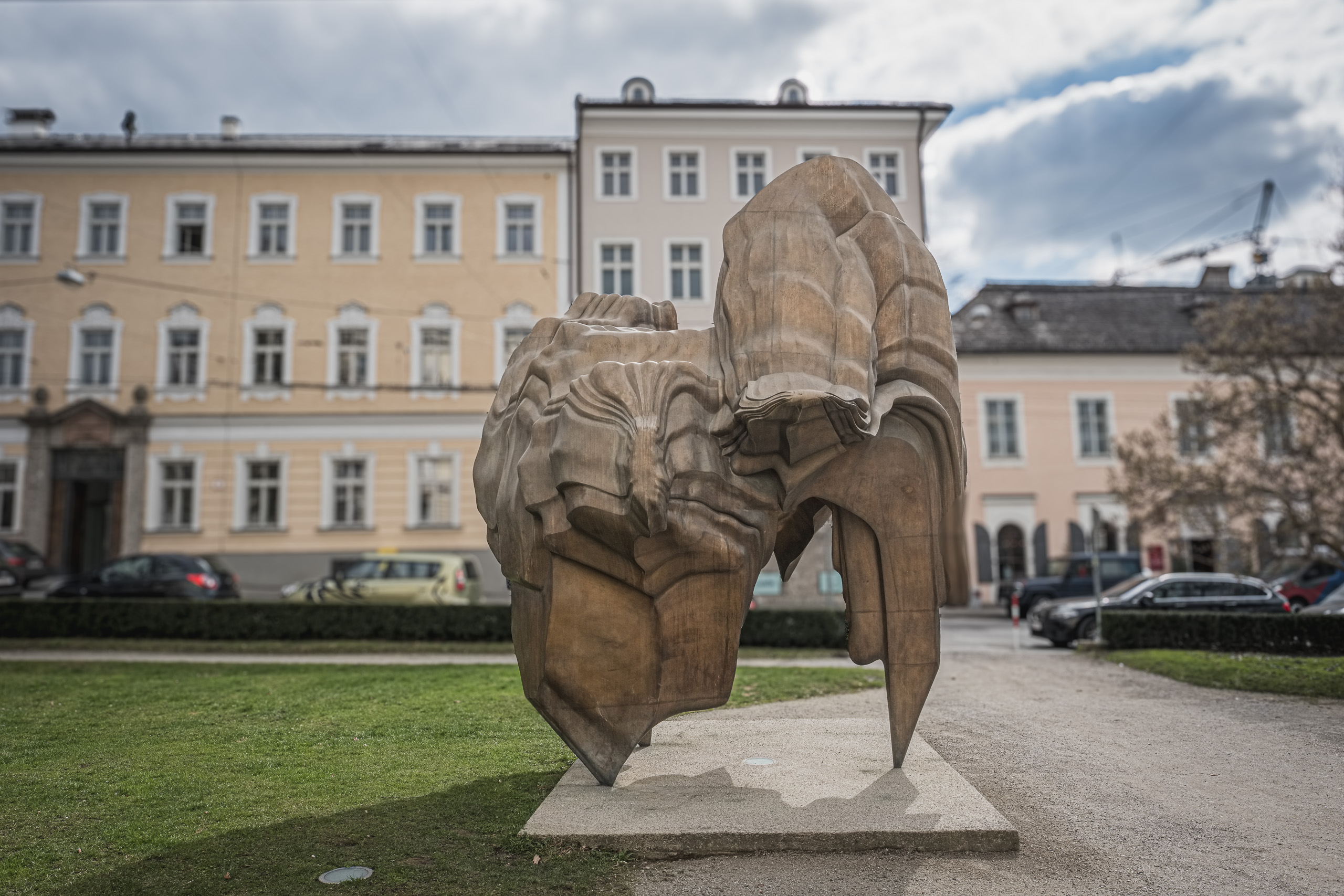
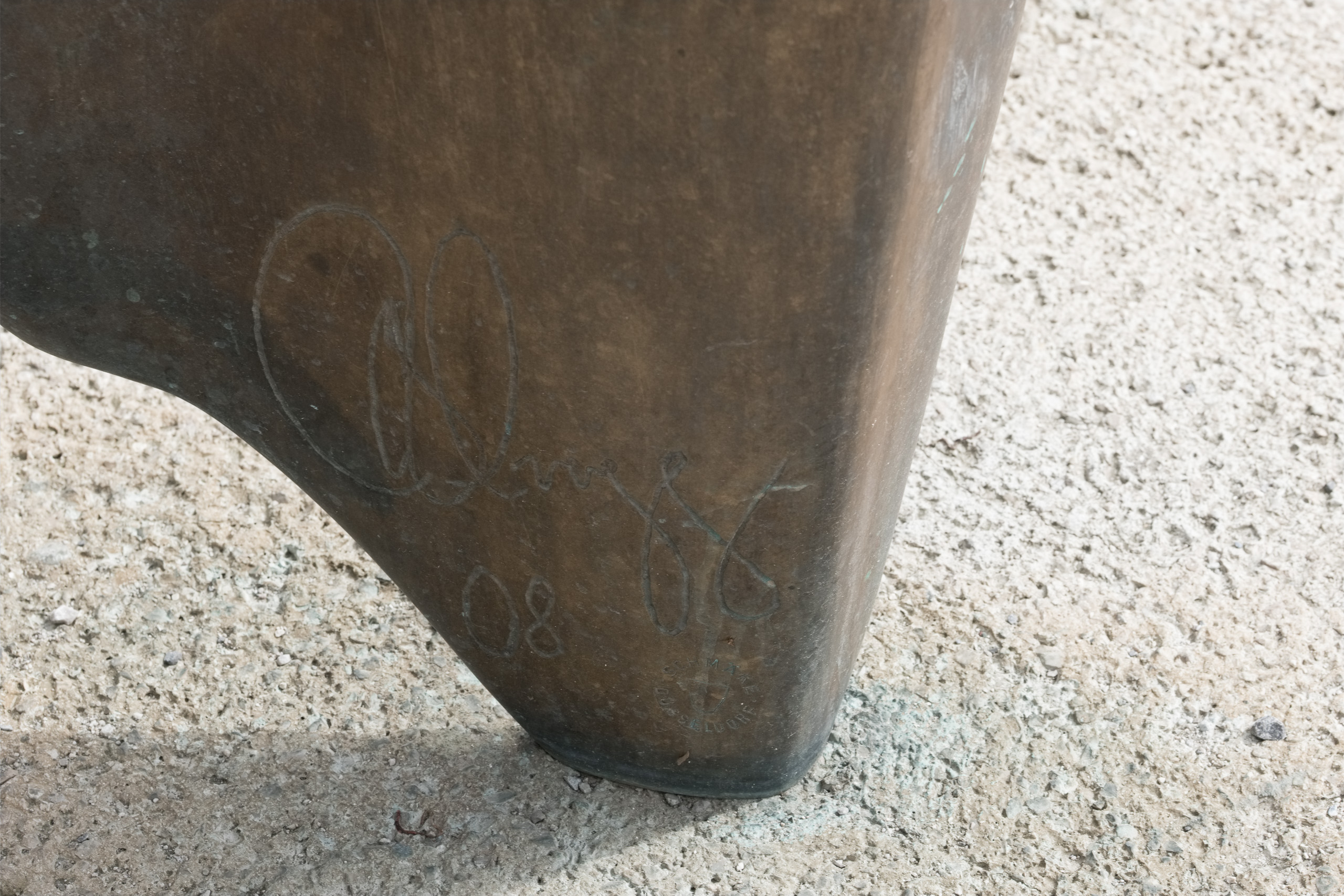
A large bronze sculpture by British sculptor Tony Cragg, installed on Makartplatz in 2008. Walk of Modern Art piece number six. Named after a volcanic crater, and built to be entered: visitors walk inside the swirling form.
Tony Cragg is one of the most significant sculptors working in Europe. He won the Turner Prize in 1988, has lived in Wuppertal since the 1970s, and has spent his career making forms that look like matter caught in the process of becoming something else: geological strata in upheaval, biological structures mid-transformation, industrial material losing its original identity. Caldera is a straightforward example of his central preoccupation.
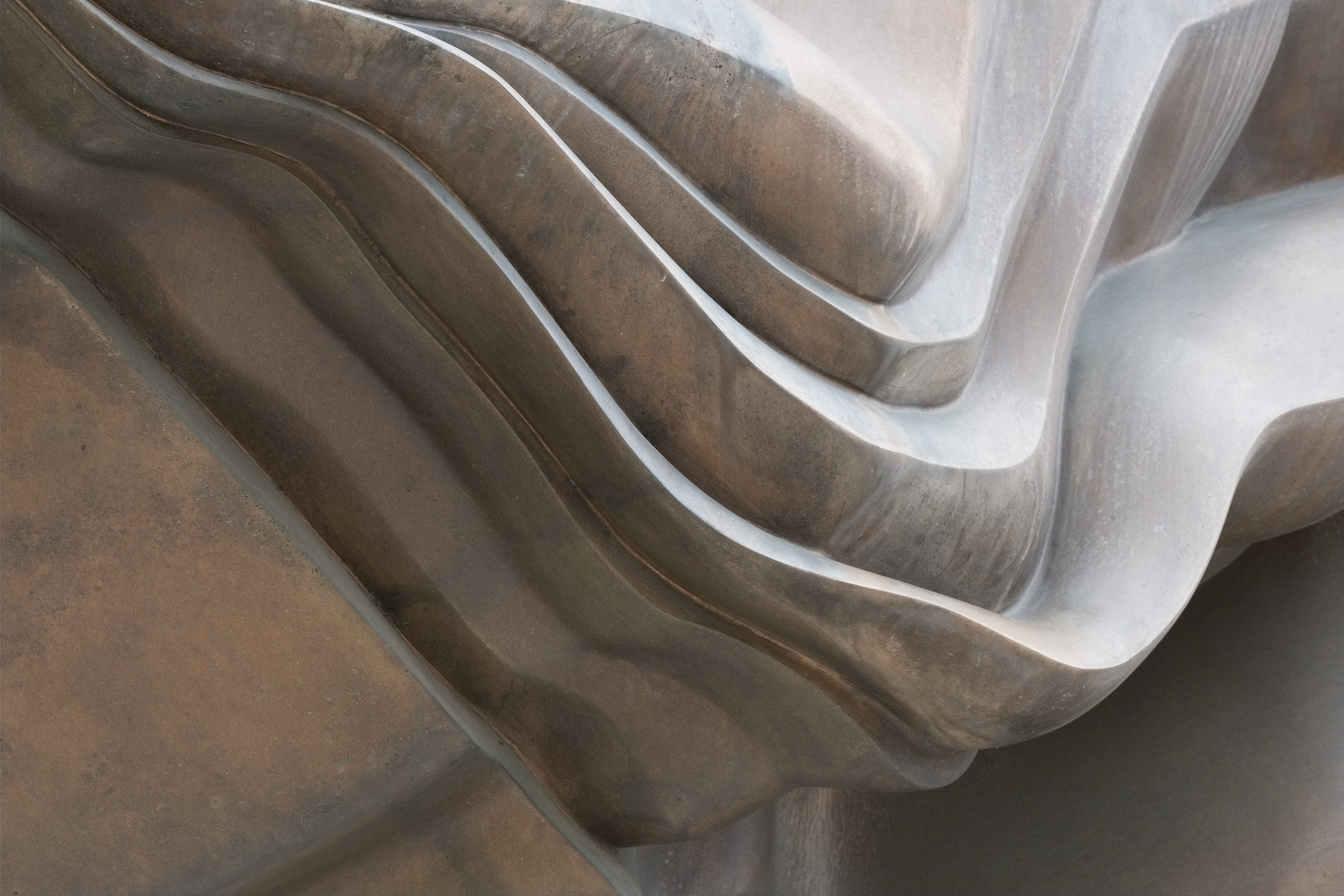
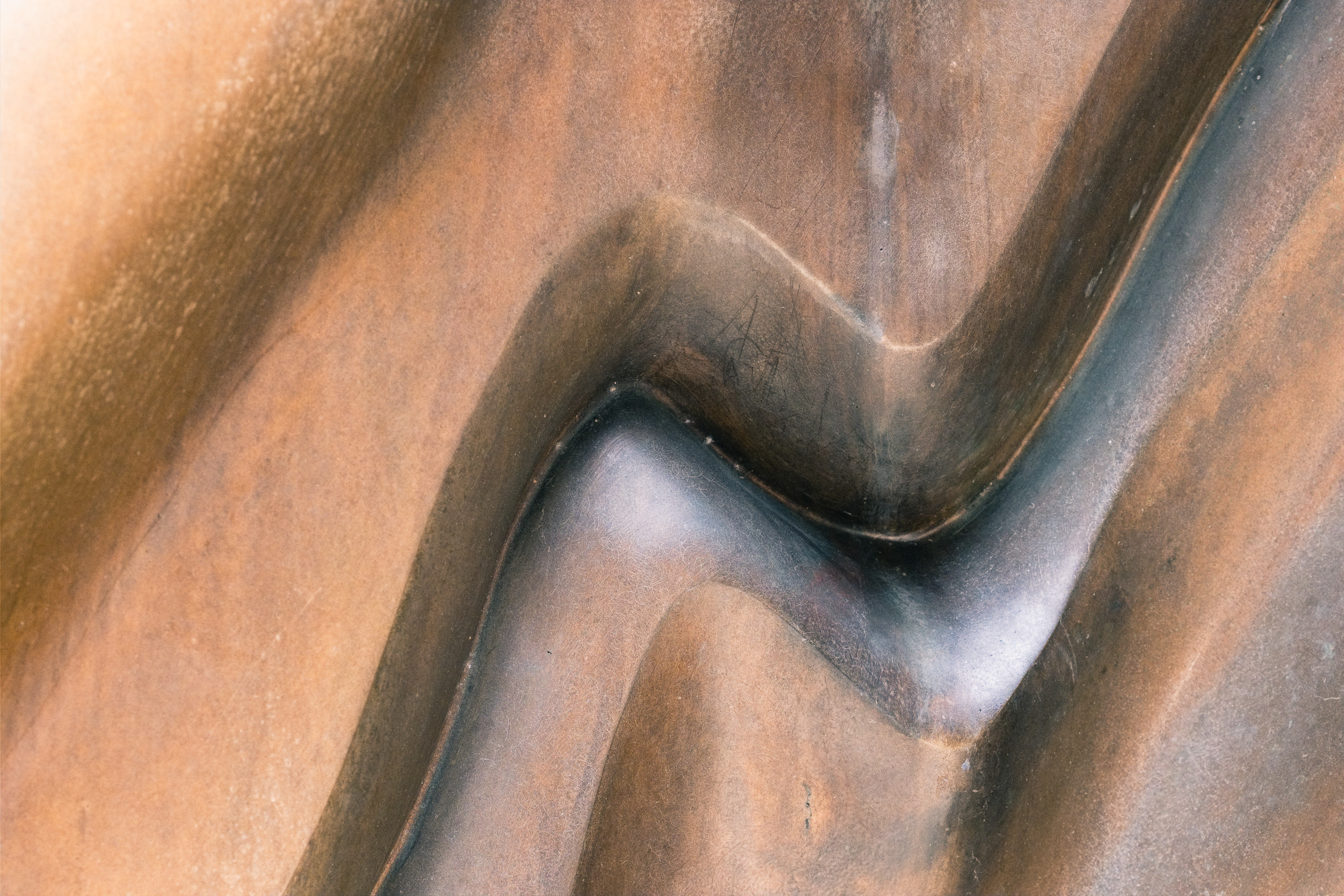
The title means volcanic crater. The bronze does not illustrate a crater so much as perform one: the swirling, layered mass of the sculpture suggests something under internal pressure, a form that has been shaped by forces you cannot see. Set on Makartplatz, beside the Dreifaltigkeitskirche and across the square from Mozart’s former residence, the bronze reads as a geological anomaly in a landscape of Baroque stone, a deliberate collision that the Salzburg Foundation intended when they placed the piece here in 2008.
The sculpture can be entered. You walk inside the form and find yourself in a curved, enclosed space where the exterior becomes an interior. This is unusual for outdoor public bronze at this scale, and it changes the experience entirely: what looked like a swirling mass from outside becomes a containing form from within.
The square itself carries its own context. It is named after Hans Makart, the 19th-century Salzburg painter whose vast, theatrical canvases made him the most fashionable artist in Vienna for a generation. A Cragg on a Makart square is not an accident.
Makartplatz, in the small park in front of the Dreifaltigkeitskirche, right bank of the Salzach. Free, always accessible. Walk inside the sculpture. A short walk from Mirabell Gardens and from the Makartplatz tram stops.
Do it here
These experiences include this place in their authored route.
The Walk of Modern Art is a self-guided trail of 15 permanent public sculptures installed across Salzburg by the Salzburg Foundation since 2002.
People
sculptorb. 1949
British sculptor who created Caldera (2008) on Makartplatz, a large enterable bronze sculpture whose swirling, cave-like interior invites visitors to step inside. Turner Prize winner (1988).
Curated routes
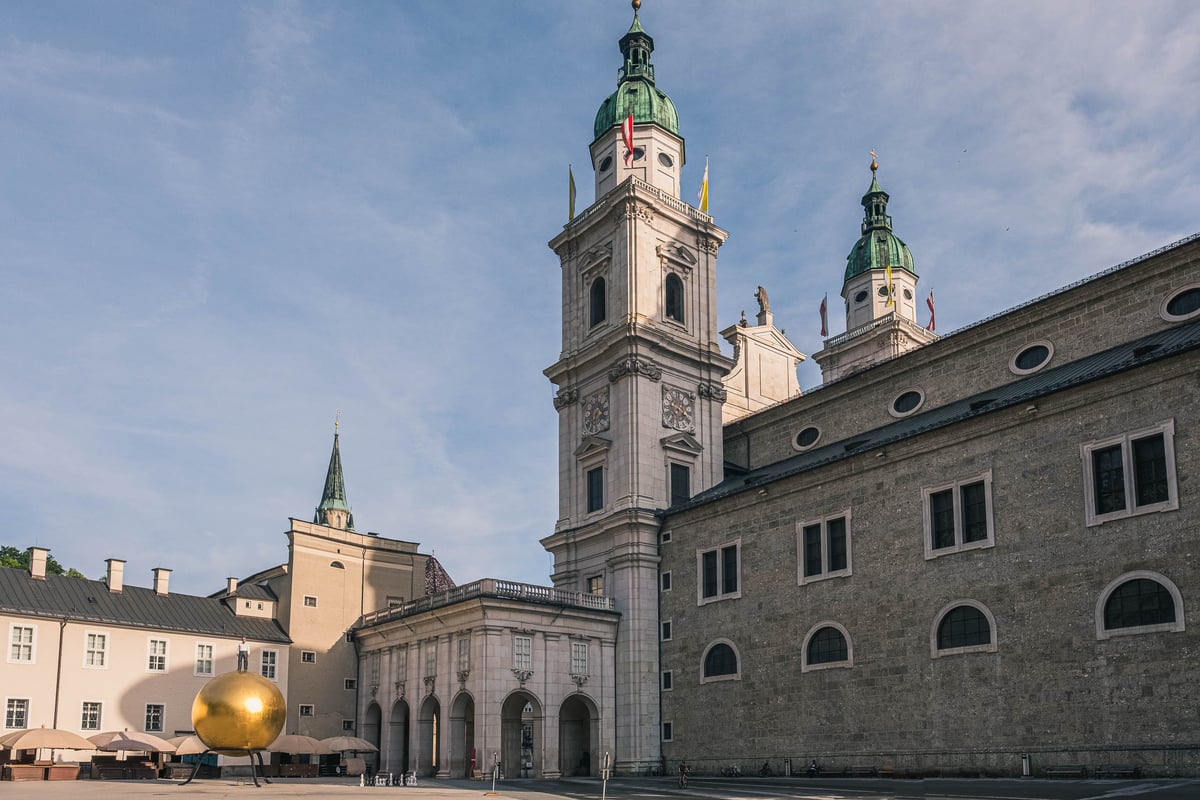
The Salzburg Foundation's thirteen artworks in the order that also makes a tour of the old town, from the free tour's meeting point on the main bridge to a steel wave by the Mozartsteg. I don't like modern art. These grew on me anyway.