Snapshot
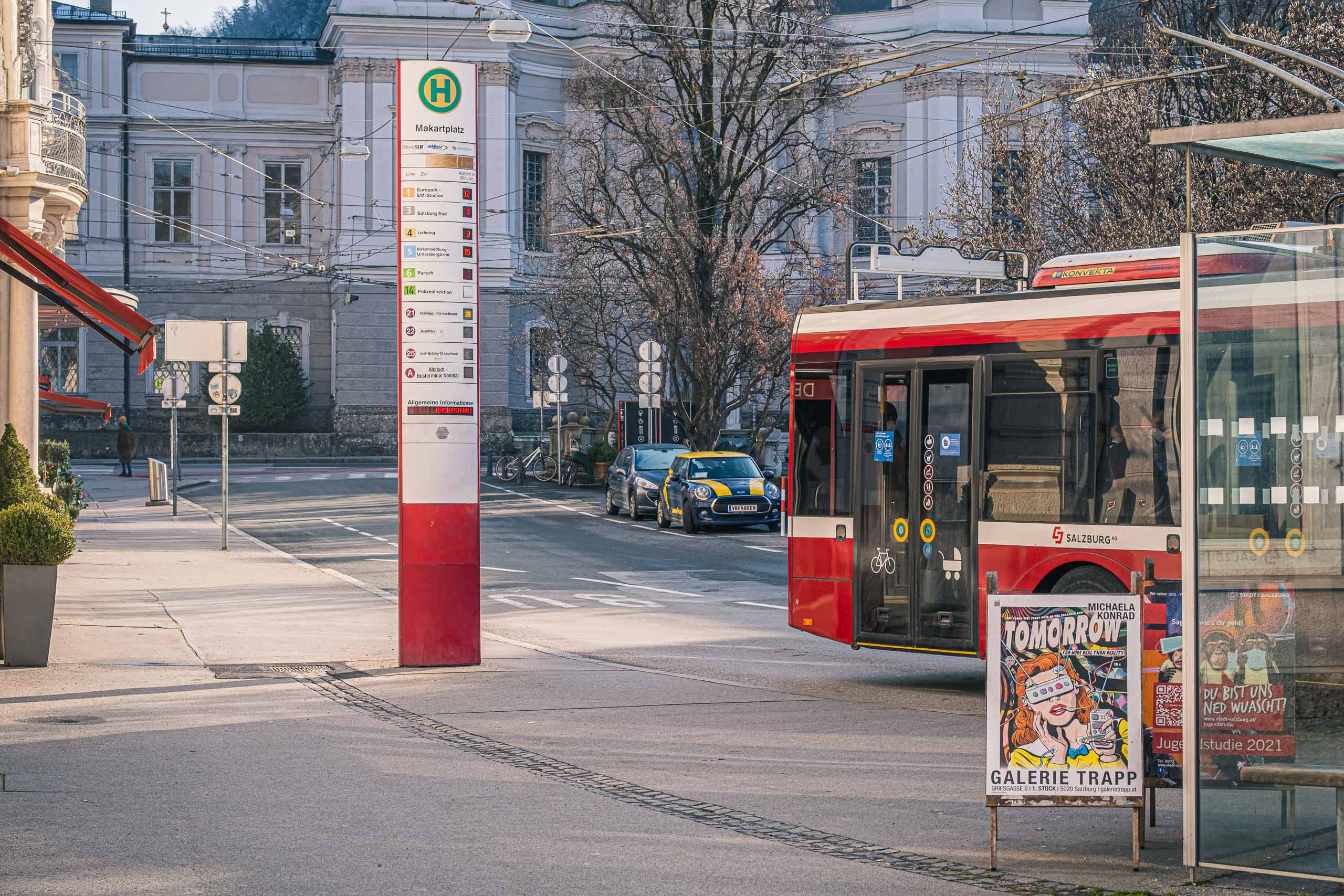
The square was called Hannibalplatz for nearly three centuries before the city renamed it in 1879 after a painter. That painter was Hans Makart, born in Salzburg, and by the time of the renaming his monumental canvases were decorating imperial halls in Vienna.
The Story
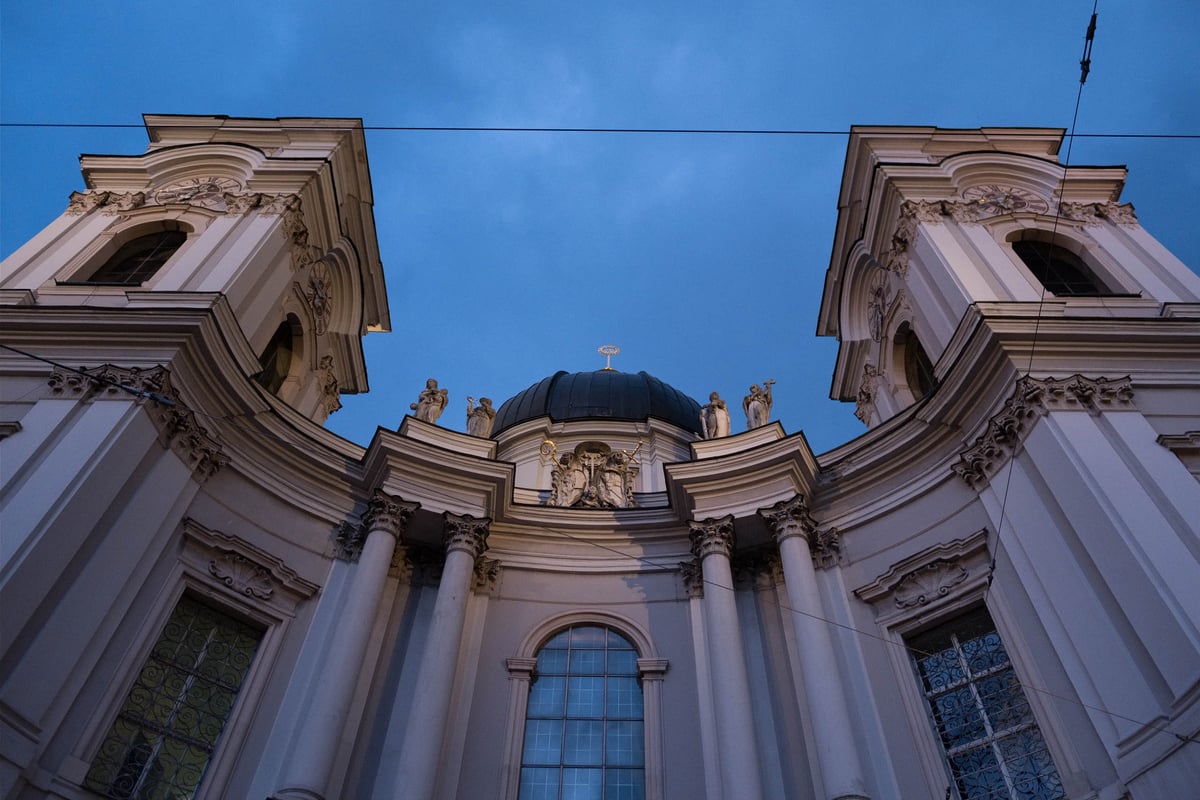
What stands on Makartplatz today is the compressed result of four centuries of decisions made by different people with different intentions. Wolf Dietrich von Raitenau had the original garden here laid out in 1603 and named the square after his brother. When Johann Ernst von Thun became archbishop in 1687, he commissioned Johann Bernhard Fischer von Erlach to build a church on the northeast corner. Fischer von Erlach was then at the height of his career, shaping the look of the entire city from Salzburg Cathedral to the Collegiate Church to the garden at Mirabell. His Trinity Church (Dreifaltigkeitskirche, 1694-1702) brought Rome directly to the right bank: the concave baroque facade, meaning one that curves inward like a stage set, draws the eye up to the dome and twin towers in a single movement. Johann Michael Rottmayr painted the ceiling fresco inside, completed in 1700, showing the Coronation of the Virgin in swirling cloud banks. The church is still an active parish.
The Mozart family moved to No. 8 in 1773. Wolfgang Amadeus Mozart was seventeen. Leopold Mozart had negotiated a better apartment on the right bank, and the family lived there for the next fourteen years. Around 150 works came out of those years, including symphonies and concertos from Mozart’s Salzburg period. Leopold died in that apartment in 1787. The building was leveled by Allied bombing in 1944. The Mozarteum Foundation rebuilt it to the original floor plan using wartime photographs, and Mozarts Residence reopened as a museum in 1996. It holds the family’s original fortepiano, violin, and a rotating collection of manuscripts.
The cultural cluster around the square expanded through the nineteenth century. The Salzburger Landestheater on adjacent Schwarzstrasse traces its origins to Archbishop Colloredo’s court theatre of 1775. The Mozarteum concert building followed. Today the square itself functions as a transit node between Mirabell Gardens to the north and the Altstadt across the Staatsbrucke, but the buildings on its edges hold the full arc of the right bank’s history.
Visiting
- Duration: 10-15 minutes for the square itself; add 60-90 minutes if visiting Mozarts Residence
- Cost: Square free. Mozart’s Residence: adults €12, students €8, free for children under 6; free with Salzburg Card
- Hours: Square always accessible. Mozart’s Residence daily 9am-5:30pm (check current schedule).
- Getting there: Right bank, one block south of Mirabell Gardens; two minutes from the Staatsbrucke.
- Book ahead: Not needed.
- Combine with: Mozarts Residence at No. 8; Dreifaltigkeitskirche open for visits; Mirabell Gardens one block north; Linzer Gasse for food.
- Tips: The combined ticket covering both Mozart’s Residence and Mozarts Birthplace is valid 48 hours. The Trinity Church interior is worth five minutes; the fresco is the main thing to see.