
Snapshot
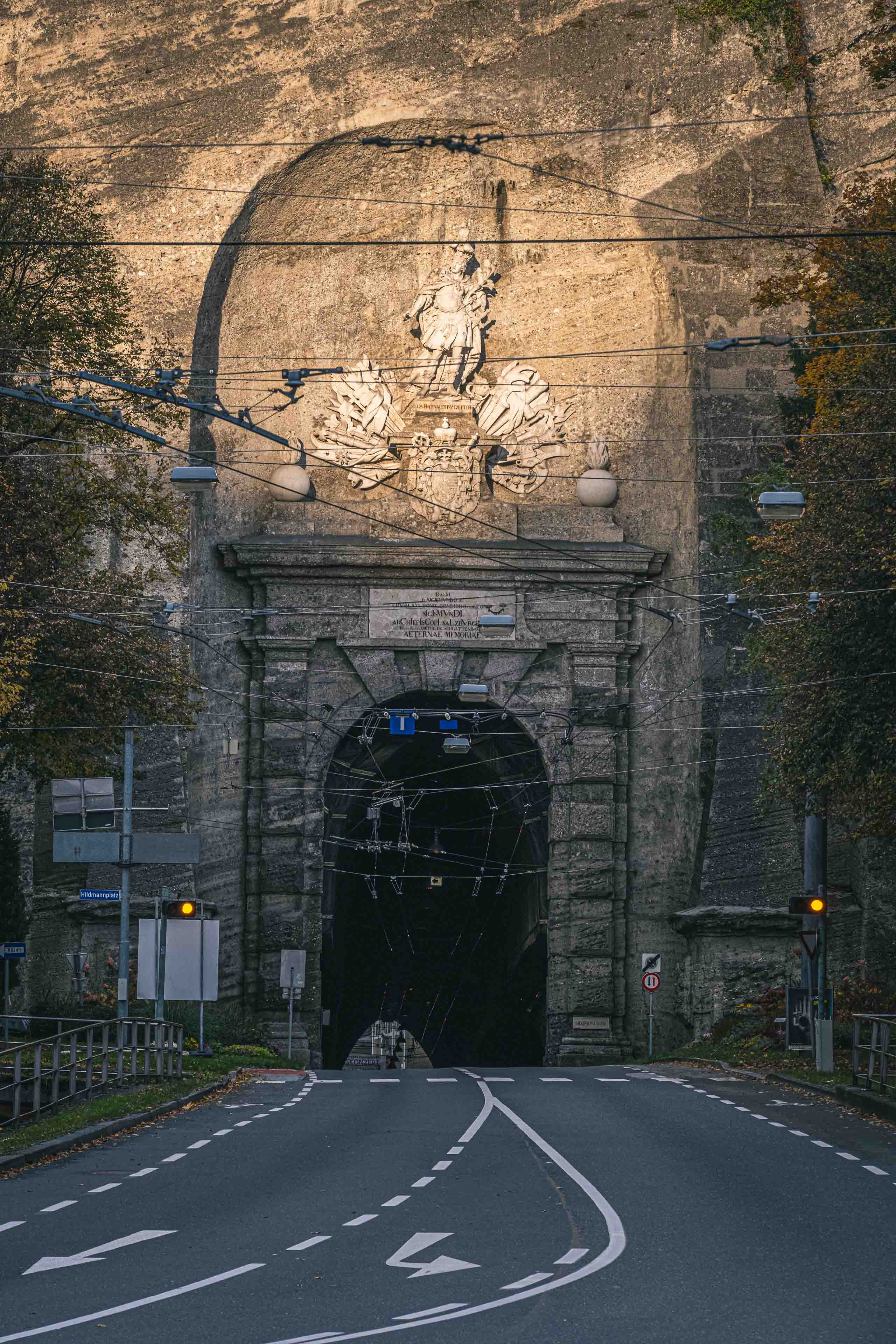
The Neutor is a baroque gateway and tunnel bored 131 metres through the solid limestone of the Mönchsberg, completed in 1767 under Archbishop Sigismund von Schrattenbach. Austria’s oldest road tunnel, it is still in daily use by pedestrians and vehicles and forms one of the most dramatic entrances into the Altstadt.
The Story
The problem was straightforward: to reach the western districts from the old city, travellers had to skirt the entire mass of the Mönchsberg, a significant detour. The solution the Archbishop commissioned in 1764 was radical for its time: bore through the mountain.
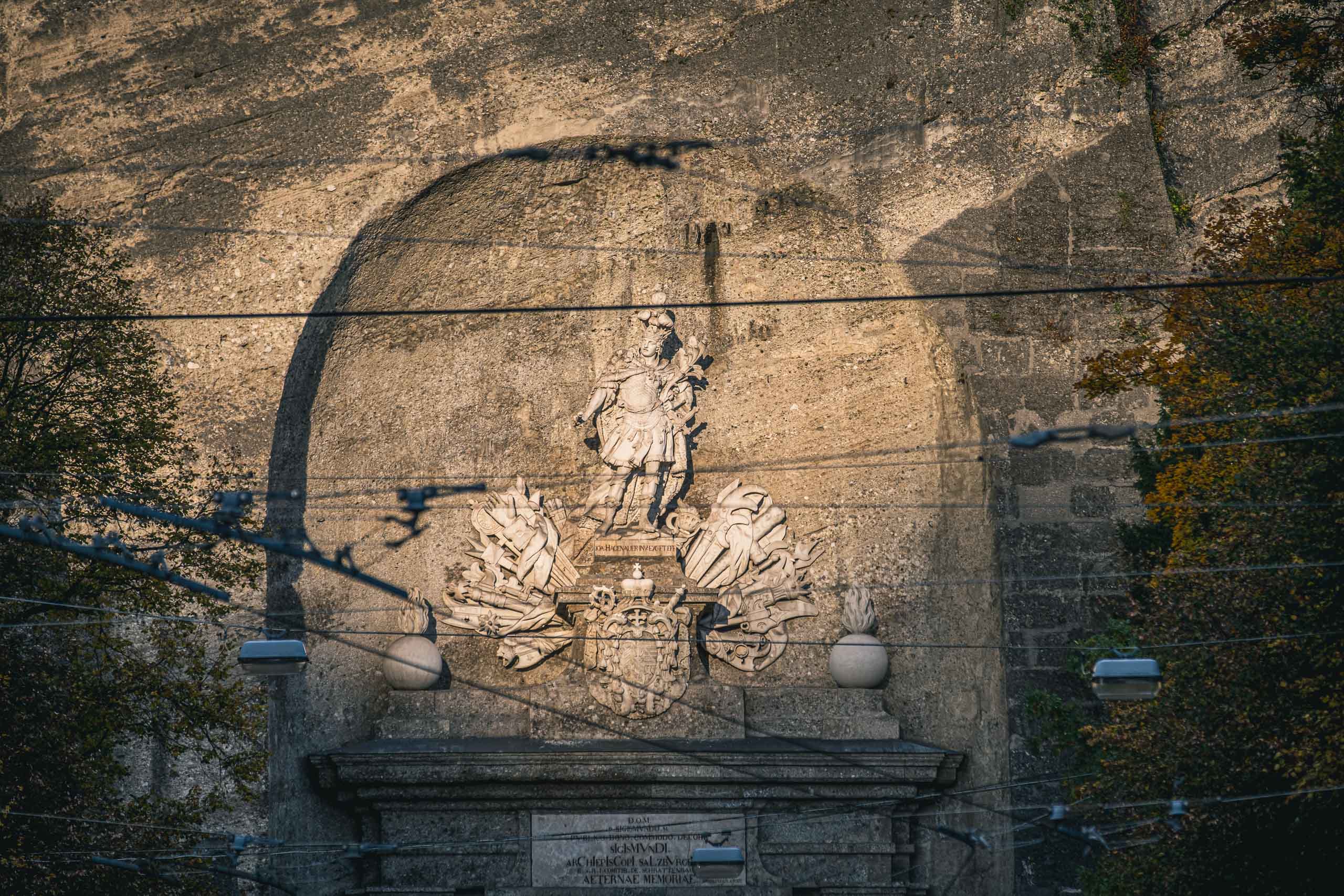
Construction began under Johann Elias von Geyer, who managed crews working with hand-driven drills and early explosives across the two-year project. The portals were designed by Wolfgang Hagenauer, whose brother Johann Baptist Hagenauer carved the decorative reliefs. The outer (western) portal is the more elaborate: baroque framing, the Archbishop’s coat of arms, and the Latin inscription “Te saxa loquuntur” - the stones speak of you. The capital letters of the inscription double as a chronogram that adds up to 1767.
The tunnel opened on 26 June 1766, though the portal decorations were finished in 1768. At 131 metres, it is modest by modern standards but represents a significant feat of 18th-century civic engineering. The parallel pedestrian passage, which runs alongside the vehicle tunnel, was an early acknowledgment that foot traffic and wheeled traffic benefit from separation.
The name tells its own story. The Archbishop dedicated it to Saint Sigismund and called it Sigmundstor; the city called it Neutor (new gate) and never stopped. In the 1990s the nearby square was renamed for Herbert von Karajan, but Neutor remained on street signs and in daily speech. Both names survive on official maps.
The inner portal opens directly onto Sigmundsplatz, beside the Pferdeschwemme and the Grosses Festspielhaus. During the Salzburg Festival, this short tunnel carries a significant portion of the audience walking between the western approach and the Festival Quarter.
Visiting
The inner portal is on Sigmundsplatz / Max-Reinhardt-Platz, beside the Pferdeschwemme. The outer portal exits westward toward Riedenburg. Always open, always free. The western portal carries the more interesting stonework.