
Snapshot
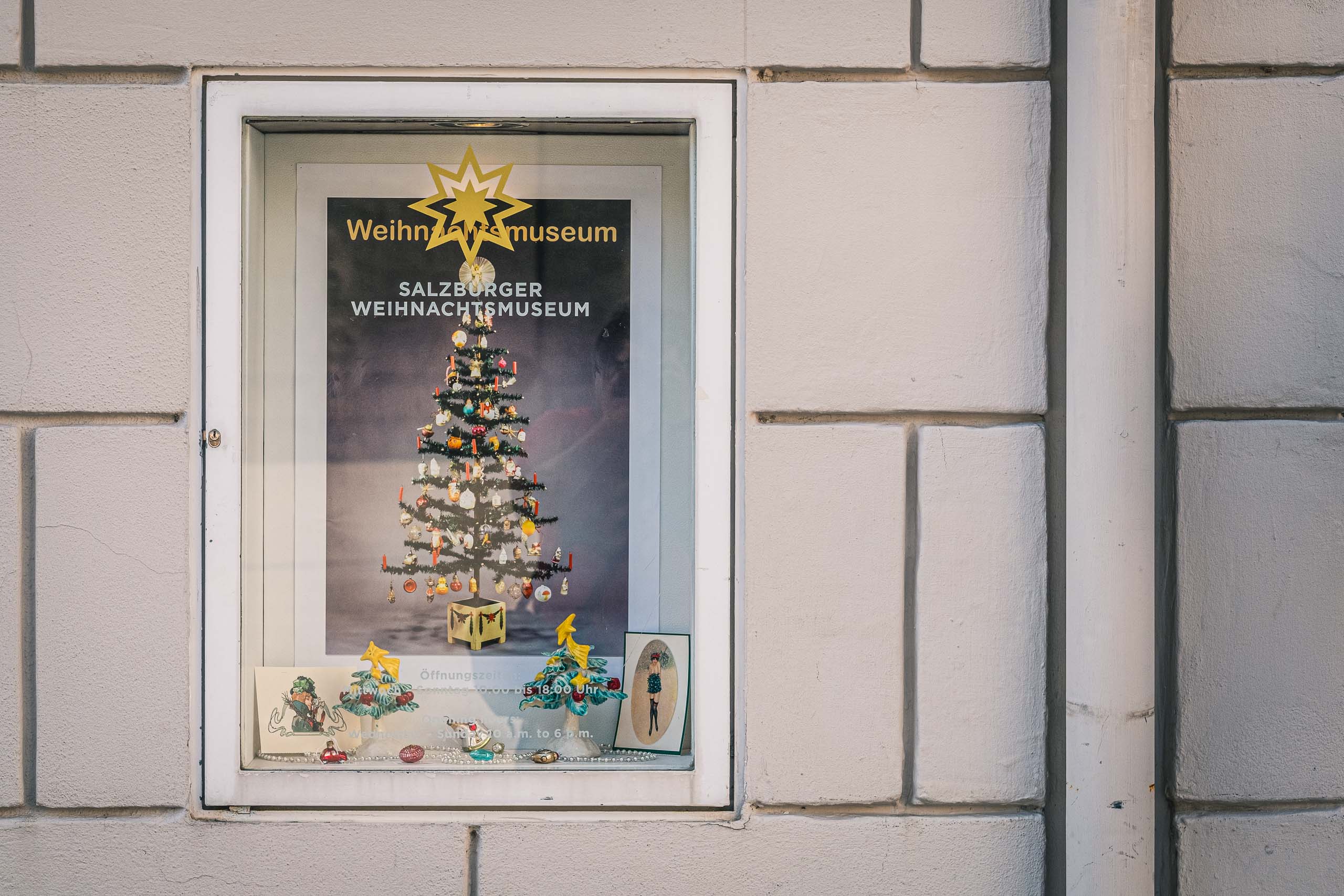
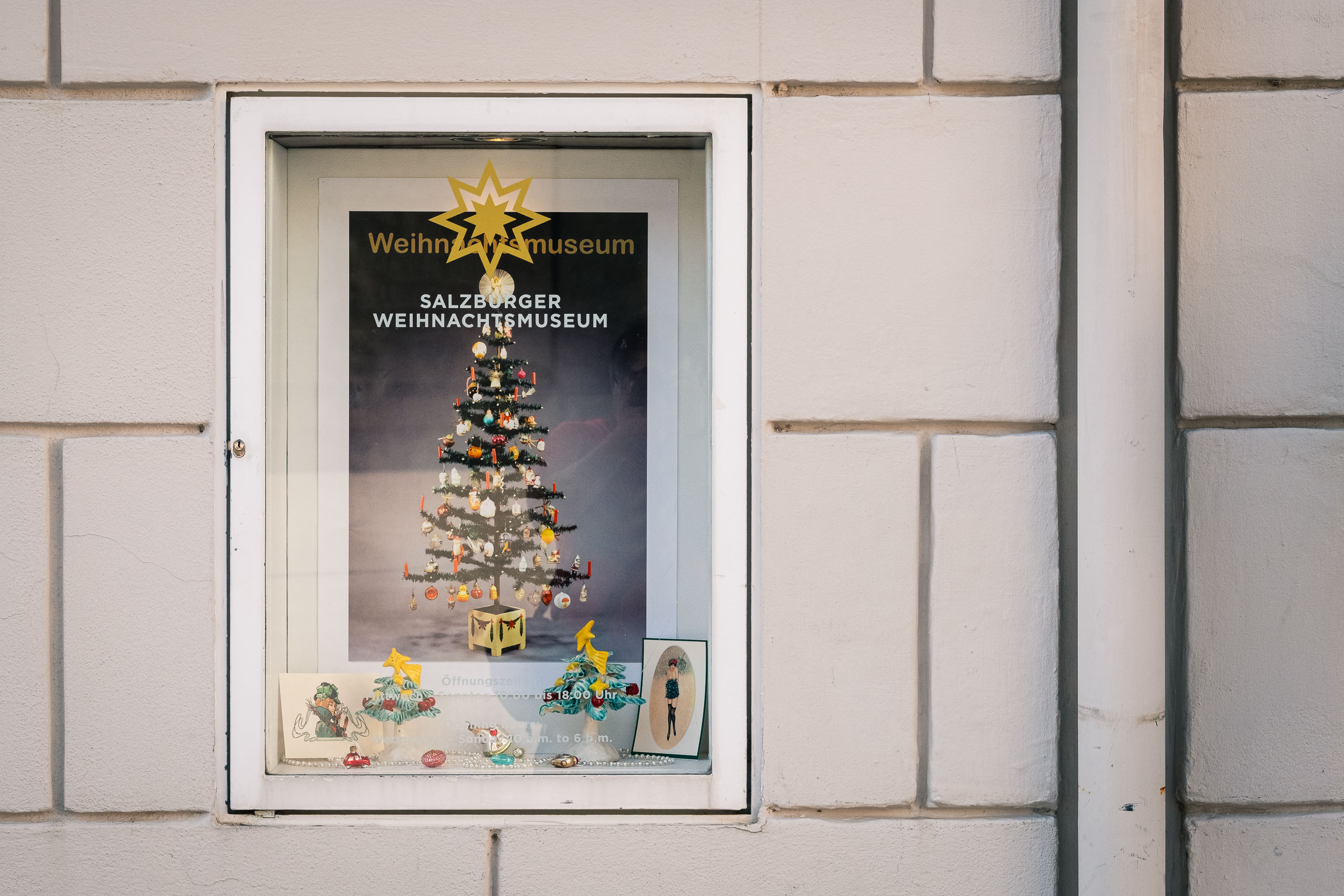
Above Café Glockenspiel on Mozartplatz sits a private museum that collector Ursula Kloiber spent four decades building: antique glass baubles, Krampus figurines, nativity scenes, Advent calendars, and festive objects spanning 1840 to 1940. The Krampus section alone traces an Alpine tradition back to pre-Christian Perchtenlaufen processions.
The Story
Ursula Kloiber did not set out to build a museum. She began with the ornaments from a family Christmas tree and kept going for forty years, travelling to farmhouses in Tyrol, flea markets in Munich, and private collections across the German-speaking world. Each object was documented, labelled, and stored properly. The result is a collection of roughly 1,000 objects spanning 1840 to 1940, with the depth and specificity of a serious historical archive.
The museum occupies an upper floor of an 18th-century building directly above Café Glockenspiel, entered through the café. From the windows, Mozartplatz is directly below, with the Glockenspiel tower to one side and the cathedral district opening to the other. Eleven themed rooms work through the full vocabulary of Central European Christmas culture: hand-carved nativity scenes showing the shift from artisan to factory production after 1900, an Art Nouveau Christmas room with a gold-silver tree and mirrored panels, Advent calendars from 1908 that trace Gerhard Lang’s cardboard-and-doors innovation, biscuit moulds, and early mass-produced glass baubles.
The Krampus section stands out. Kloiber’s collection traces the tradition from its pre-Christian Alpine roots in the Perchtenlaufen to the 16th-century Tyrolean figures, through a 1623 episcopal ban that the Alpine villages ignored, and into the 18th-century fusion of Krampus with Saint Nicholas iconography. Hand-carved wooden masks, early printed imagery, and a 1842 carved wooden St. Nicholas figure appear together, showing the tradition’s evolution with specificity that most Krampus displays do not attempt.
The museum is most atmospheric in December when the Christkindlmarkt fills Mozartplatz directly outside. But Kloiber’s collection makes a strong case for visiting year-round: it is less about the season’s feeling and more about the history of how a culture chose to represent it.
Visiting
The Salzburg Christmas Museum is at Mozartplatz 2, entered through Café Glockenspiel. Open Wednesday-Sunday 10am-6pm; also open during the Salzburg Festival season (daily 10am-6pm). Admission approximately EUR 8 adults, EUR 5 students. Included in the Salzburg Card. No booking required. Combine with Mozartplatz, Residenzplatz, and Salzburg Cathedral on the same walk. Most atmospheric in Advent when the Christkindlmarkt is running directly outside.