
Mountain
Schafberg
Show all 8 photos
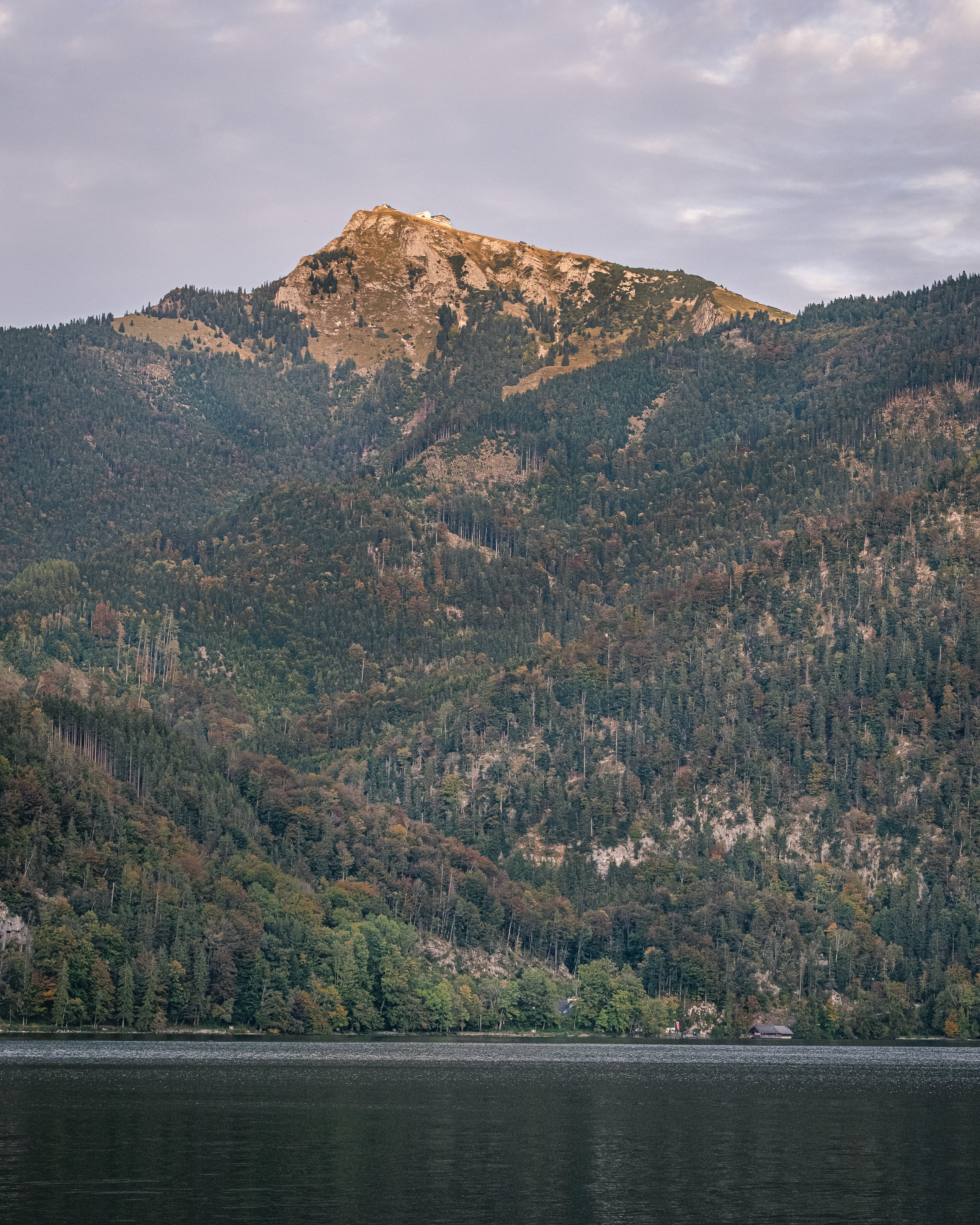
- The rocky Schafberg summit, with the white summit hotel on its crest, catches the last evening sun above a long forested flank that drops to the dark surface of Wolfgangsee. (1 / 8)
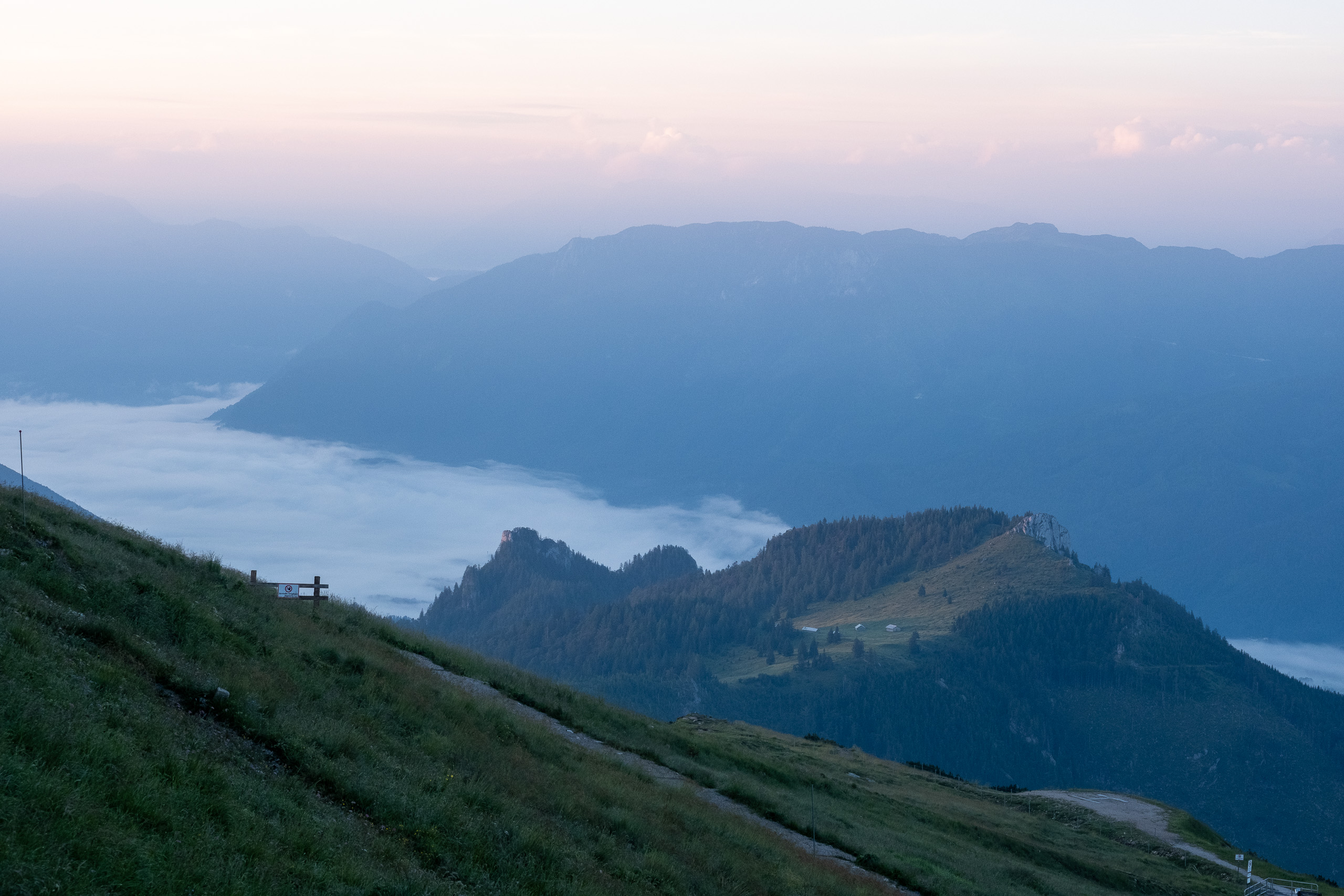
- A sea of fog fills the valley below the Schafberg's grassy summit path and its fence, with a lower forested ridge and its scattered alm huts catching the first warm light. (2 / 8)
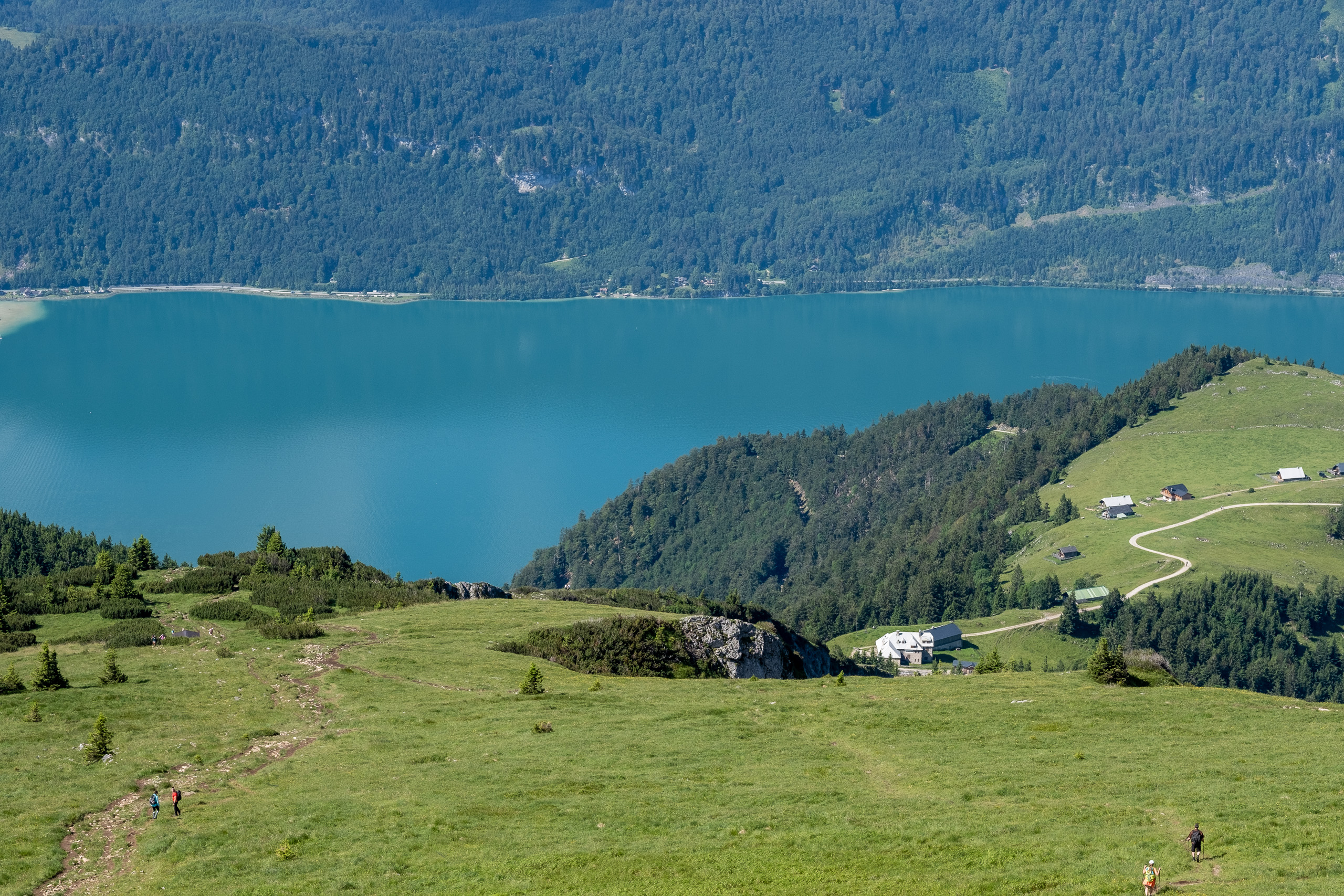
- Hikers cross the wide grassy meadow below the Schafberg summit while the turquoise Wolfgangsee fills the background and a cluster of alm huts sits on the wooded spur to the right. (3 / 8)
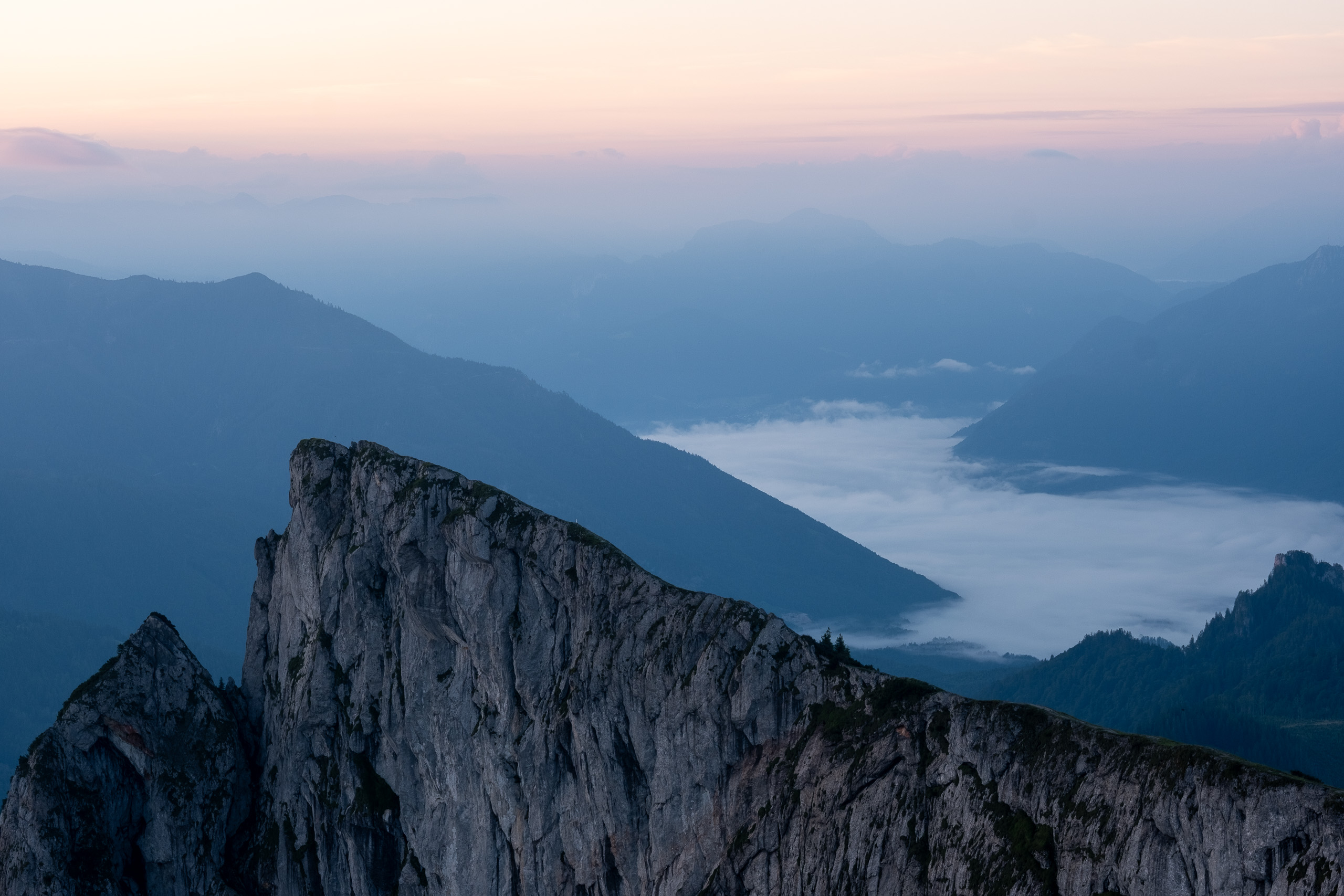
- A pale limestone rib of the Schafberg juts into the frame at dawn, with a river of valley fog running below it and blue ridges receding under a soft pink sky. (4 / 8)
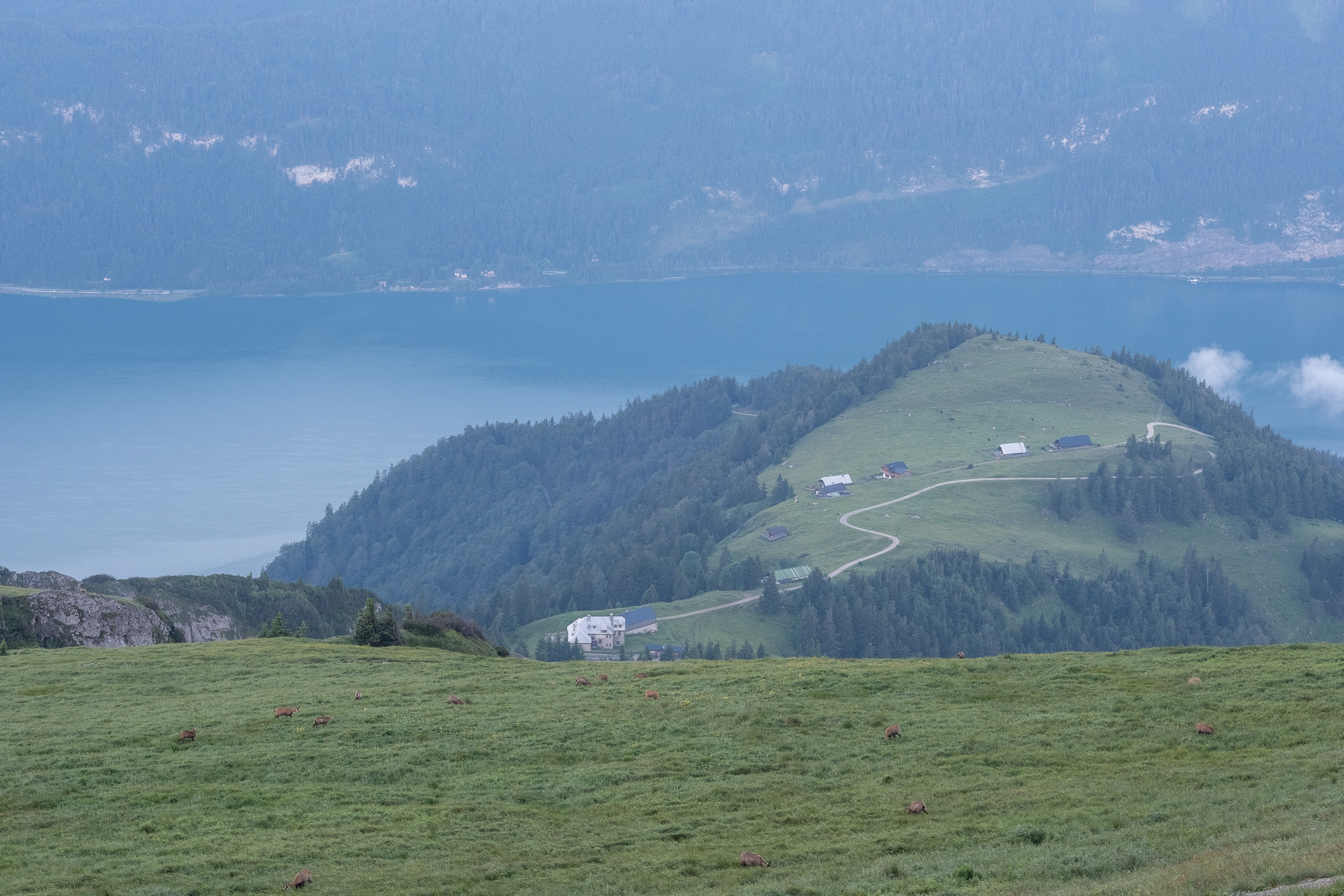
- A herd of chamois grazes across the broad grassy meadow below the Schafberg summit, with an alm knoll of farm huts and the pale blue Wolfgangsee behind them. (5 / 8)
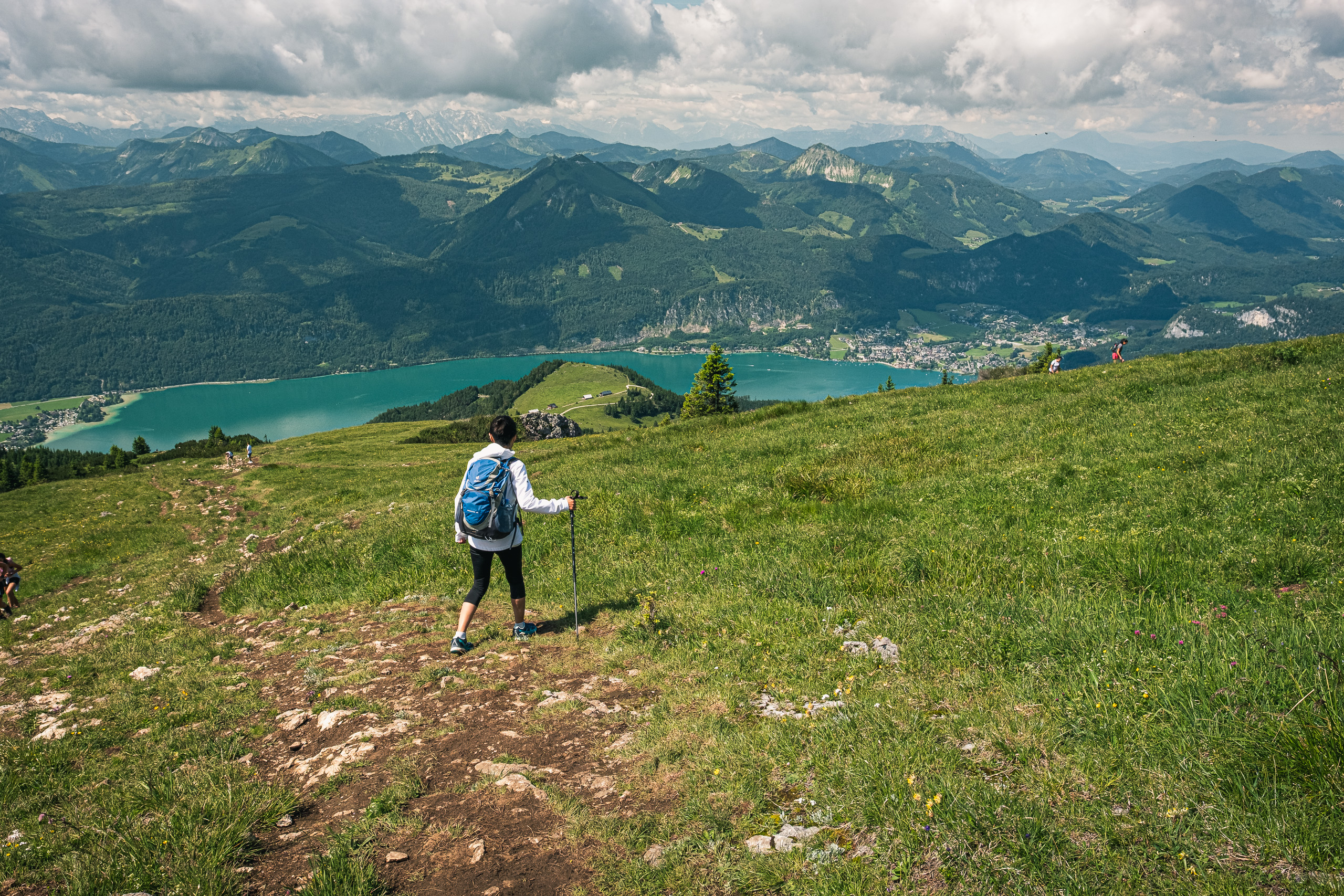
- A hiker with a blue backpack and a walking pole heads down the Schafberg meadow path toward the turquoise Wolfgangsee, with St. Wolfgang spread along the far shore. (6 / 8)
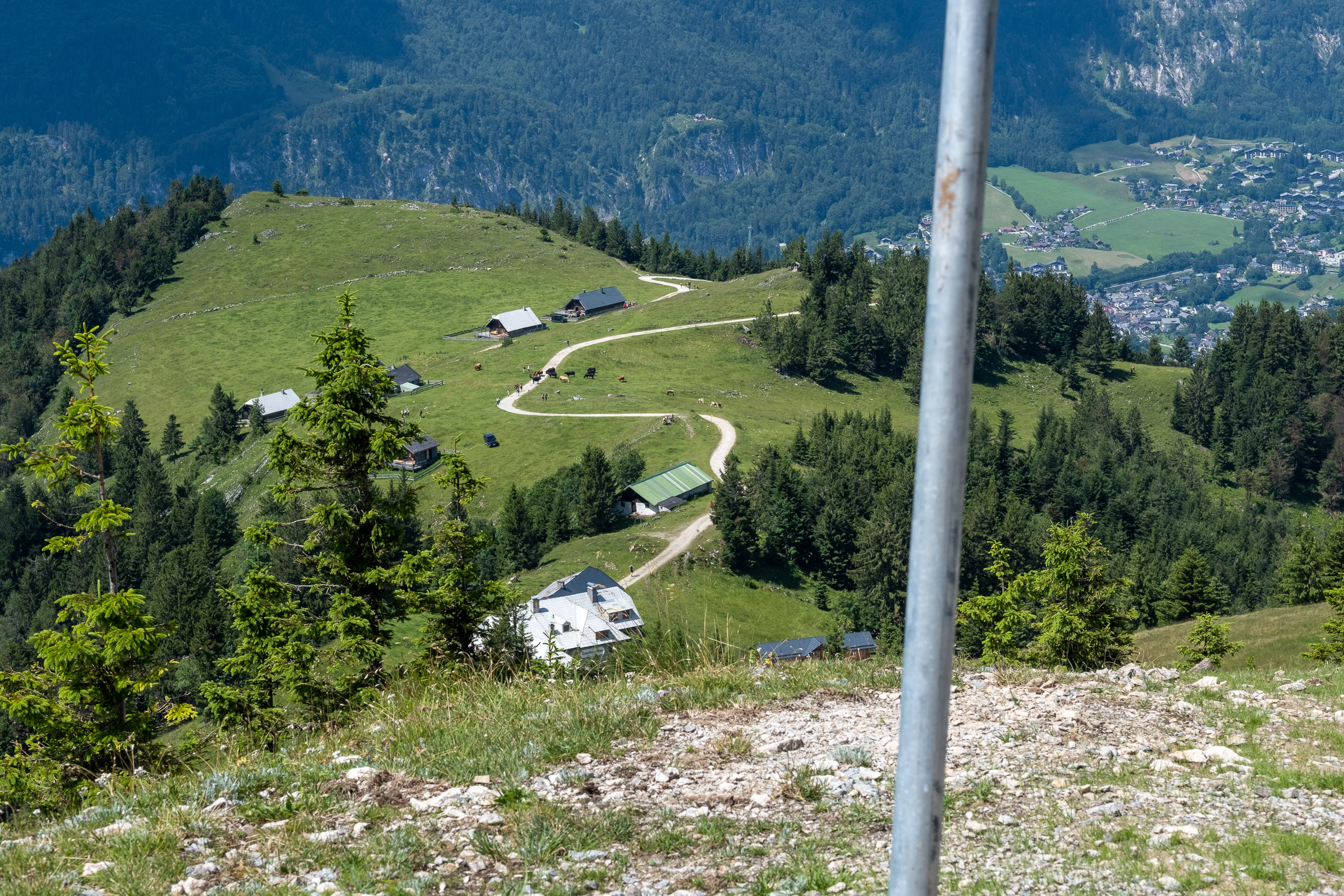
- Looking down from the Schafberg trail onto the huts, the winding gravel track and the grazing cattle of the Schafbergalm, with the roofs of St. Wolfgang across the valley to the right. (7 / 8)
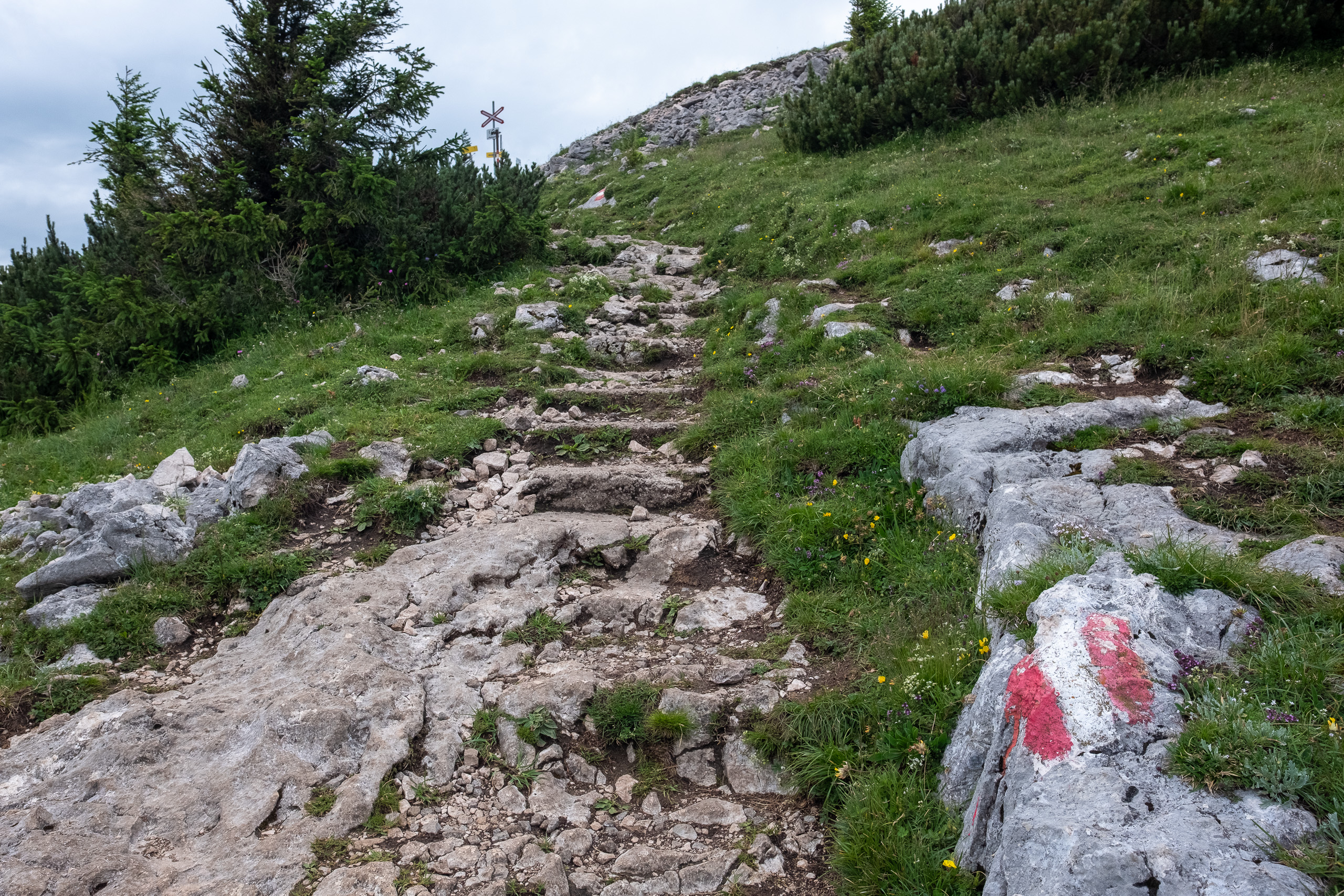
- A stepped path cut into bare limestone slabs climbs the Schafberg between wildflowers and dwarf pine, with a large red and white waymark painted on the rock at the right. (8 / 8)
Snapshot
The Schafberg rises to 1,783 m above St. Wolfgang on the Wolfgangsee, offering one of the most celebrated lake panoramas in the Salzkammergut. It is reachable by foot in three to four hours or by the Schafbergbahn, a steam-powered cog railway in operation since 1893.
The Story
The Schafberg sits above a lake famous for its pilgrimage church and its crowds, and it offers the best answer to both: climb above them. From the summit, the Wolfgangsee appears as one element in a much larger landscape, thirteen lakes spread across the basin on a clear day, the alpine chain running along the southern horizon from the Dachstein to the Tennengebirge.
The Schafbergbahn is part of the experience. The narrow-gauge steam cog railway has been climbing from St. Wolfgang to the summit since 1893, one of the steepest rack railways in Europe, its locomotives unchanged in profile from the original. The journey takes approximately 35 to 40 minutes each way and has become an attraction in its own right. Booking in advance is advisable in summer; the trains fill quickly.
The alternative is to walk. The classic ascent from St. Wolfgang gains roughly 1,000 m of elevation over three to four hours, following marked trails through forest and then across open alpine ground to the summit. Several other approach routes exist, including trails from St. Gilgen and the Falkensteinwand face, giving the mountain a range of options for those who want to ascend and descend by different routes.
The Hotel Schafbergspitze at the summit has been operating since the late 19th century, one of the few hotels directly at a mountain top served by rack railway in Austria. Staying overnight means having the panorama in the evening and morning quiet after the day visitors have gone down on the last train. The Sound of Music filmed its opening hillside sequence on these slopes; some visitors come for this, others discover it incidentally.
Visiting
The Schafbergbahn departs from St. Wolfgang train station (adjacent to the WolfgangseeSchifffahrt ferry dock). The railway operates May through October; timetables vary by season and the trains fill quickly in summer. Advance booking is strongly recommended. The round-trip fare covers ascent and descent; a one-way ticket is available for those combining the railway with a hiking descent. Hiking trails are marked from St. Wolfgang (3-4 hours), St. Gilgen (allow extra time from the western approach), and other starting points. The Hotel Schafbergspitze offers accommodation and food at the summit; book well in advance for overnight stays. Bring warm layers regardless of valley temperatures; conditions at 1,783 m differ significantly.