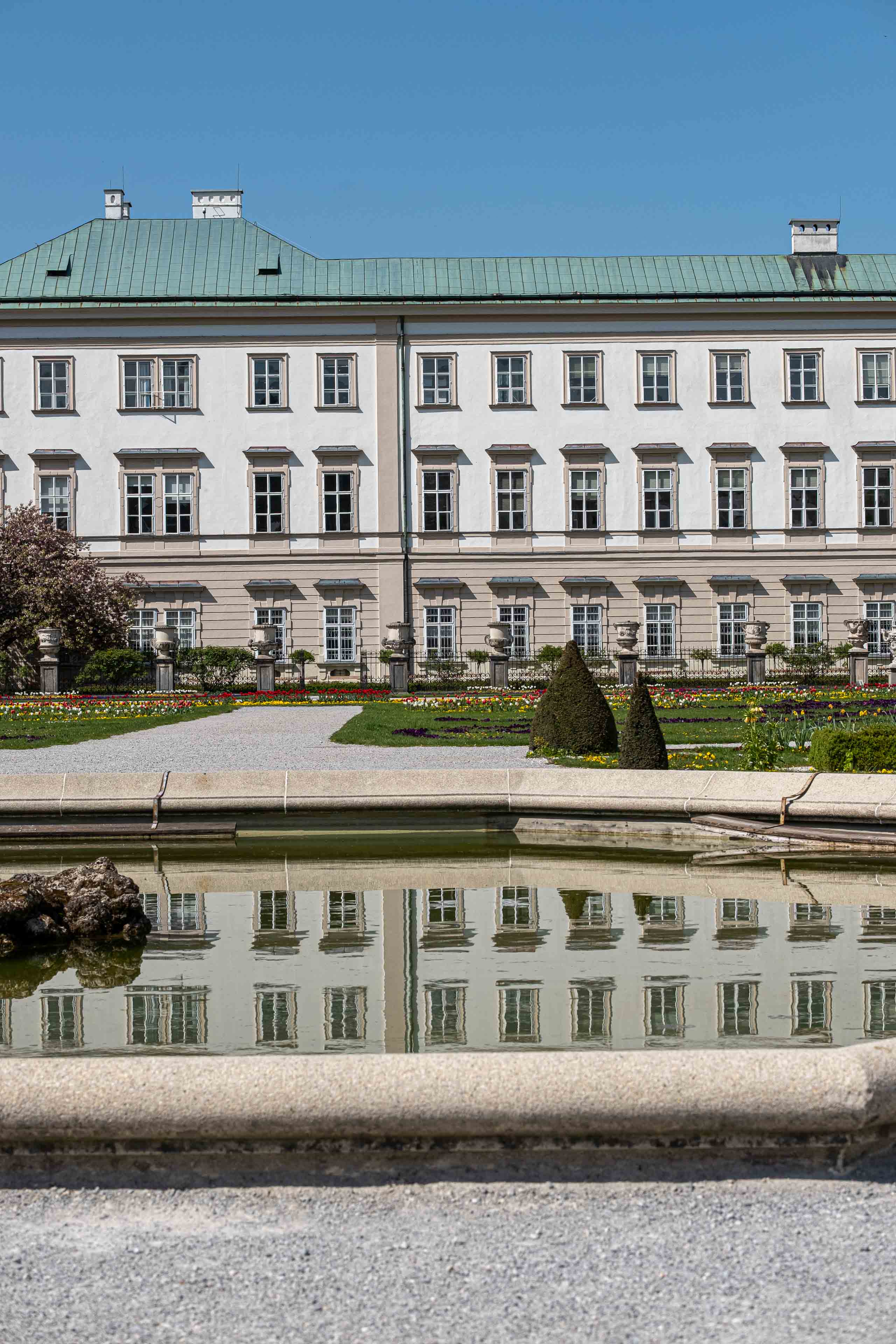
An archbishop built this palace in 1606 not as a seat of power but as a home for his mistress and their fifteen children. The gesture cost him his freedom, and the building outlasted him by four centuries.
The Story
Wolf Dietrich von Raitenau chose a site just north of the medieval walls and built what he called “Altenau,” named for his companion Salome Alt. The palace sat apart from the official archbishopric, a deliberate separation between the public role and the private life he refused to hide. When his rival Markus Sittikus had him arrested in 1612, one of the first acts of the new administration was to expel Salome and rename the building “Mirabell,” borrowing from the Latin for beautiful view, a neat erasure of everything the name Altenau implied.
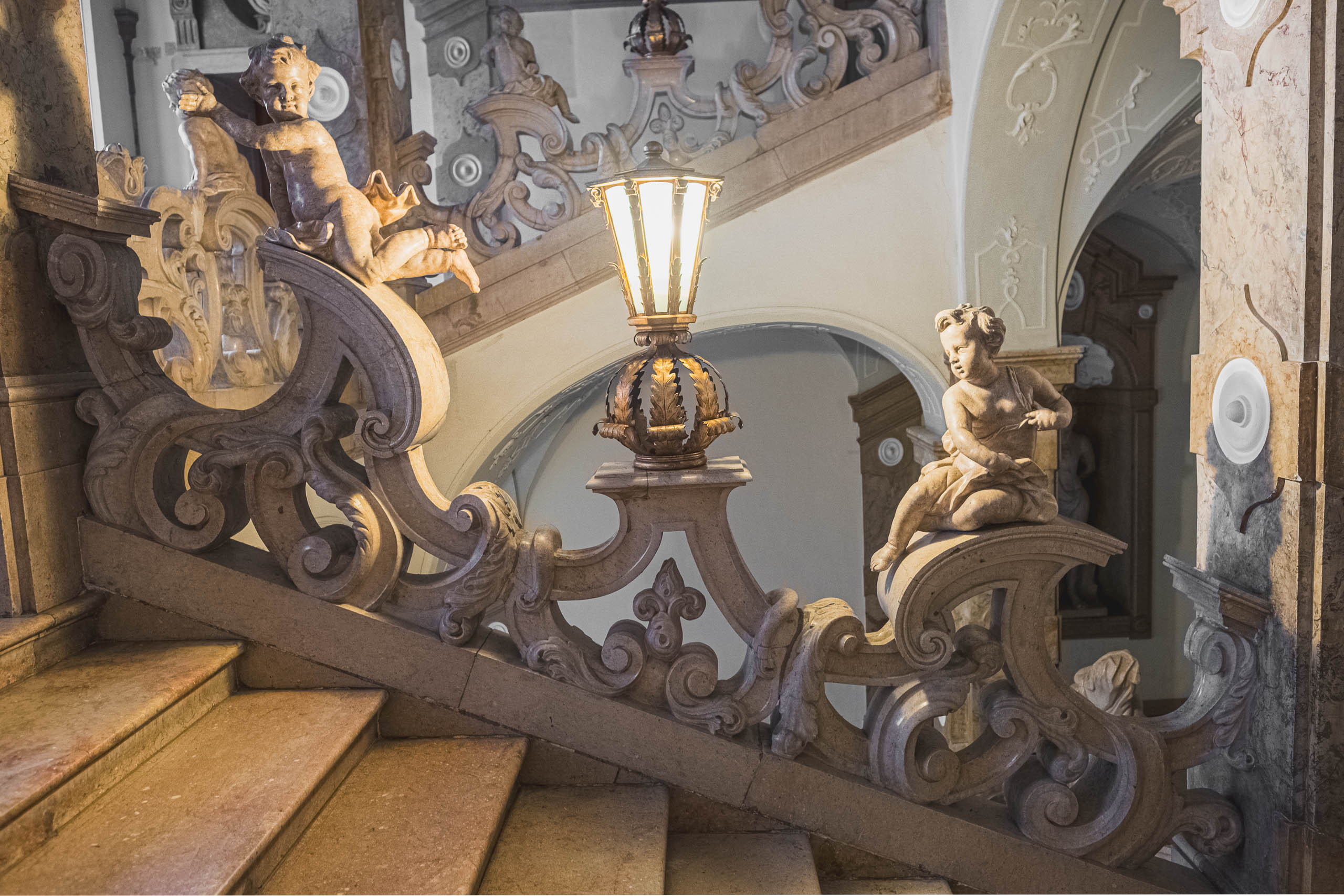
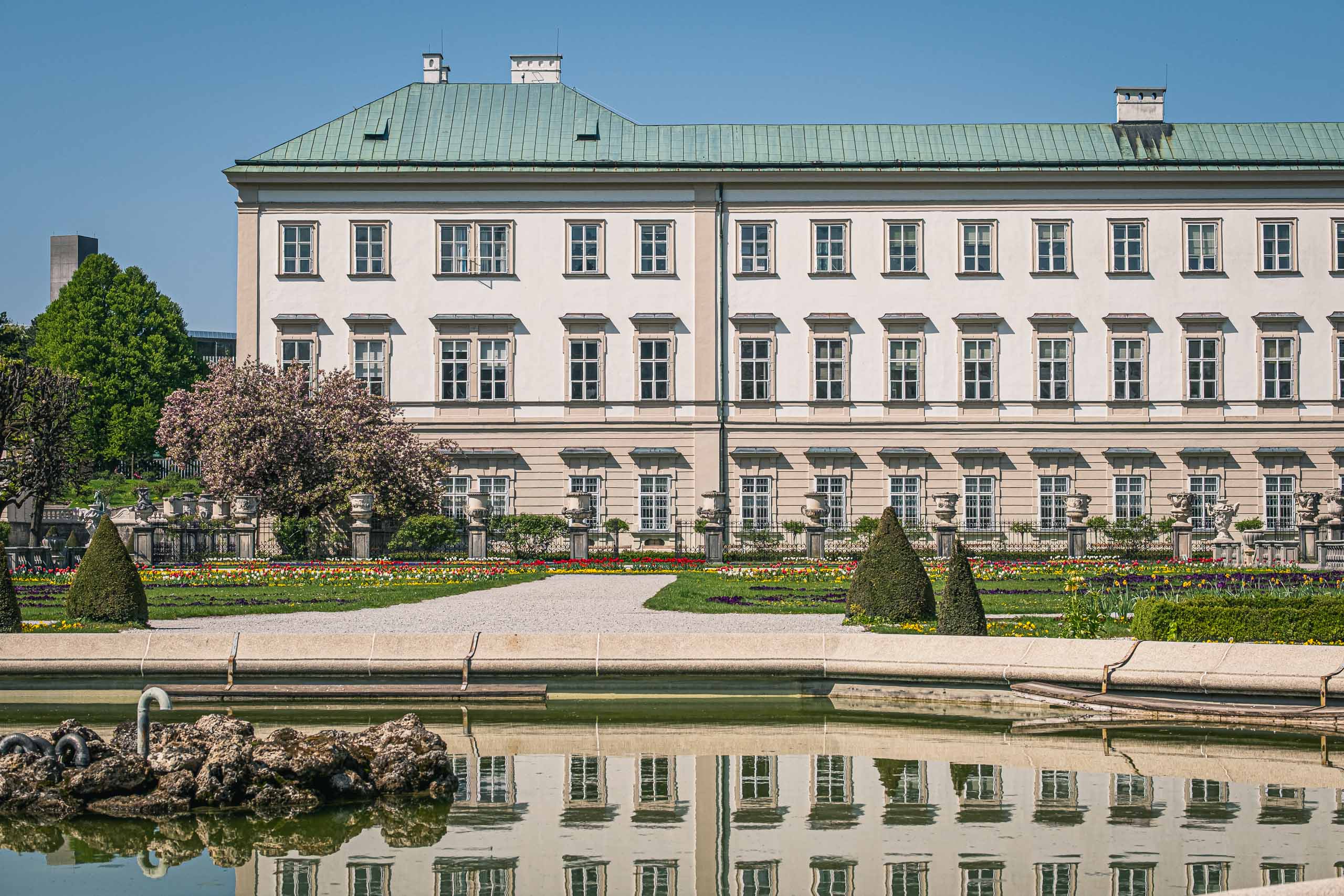
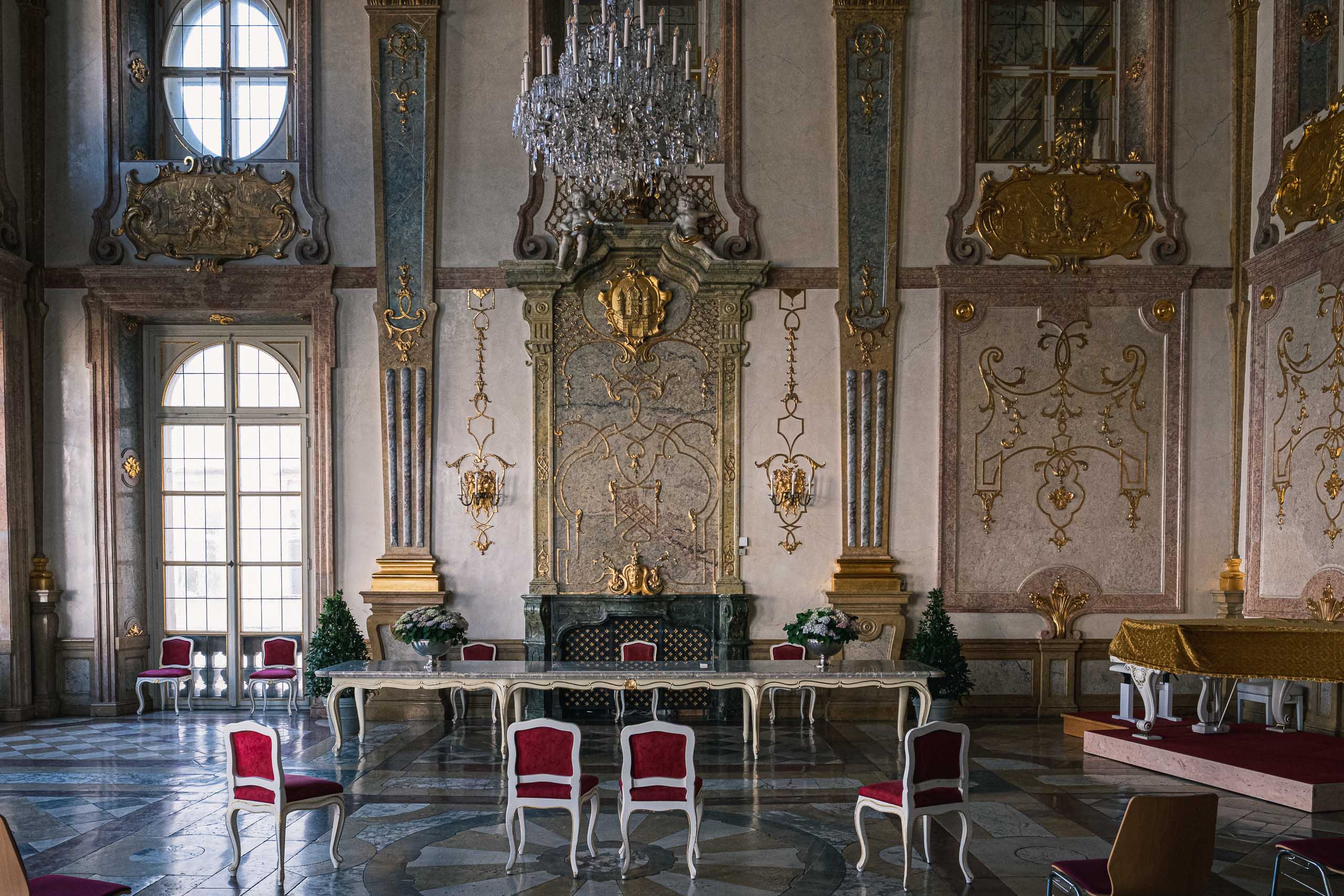
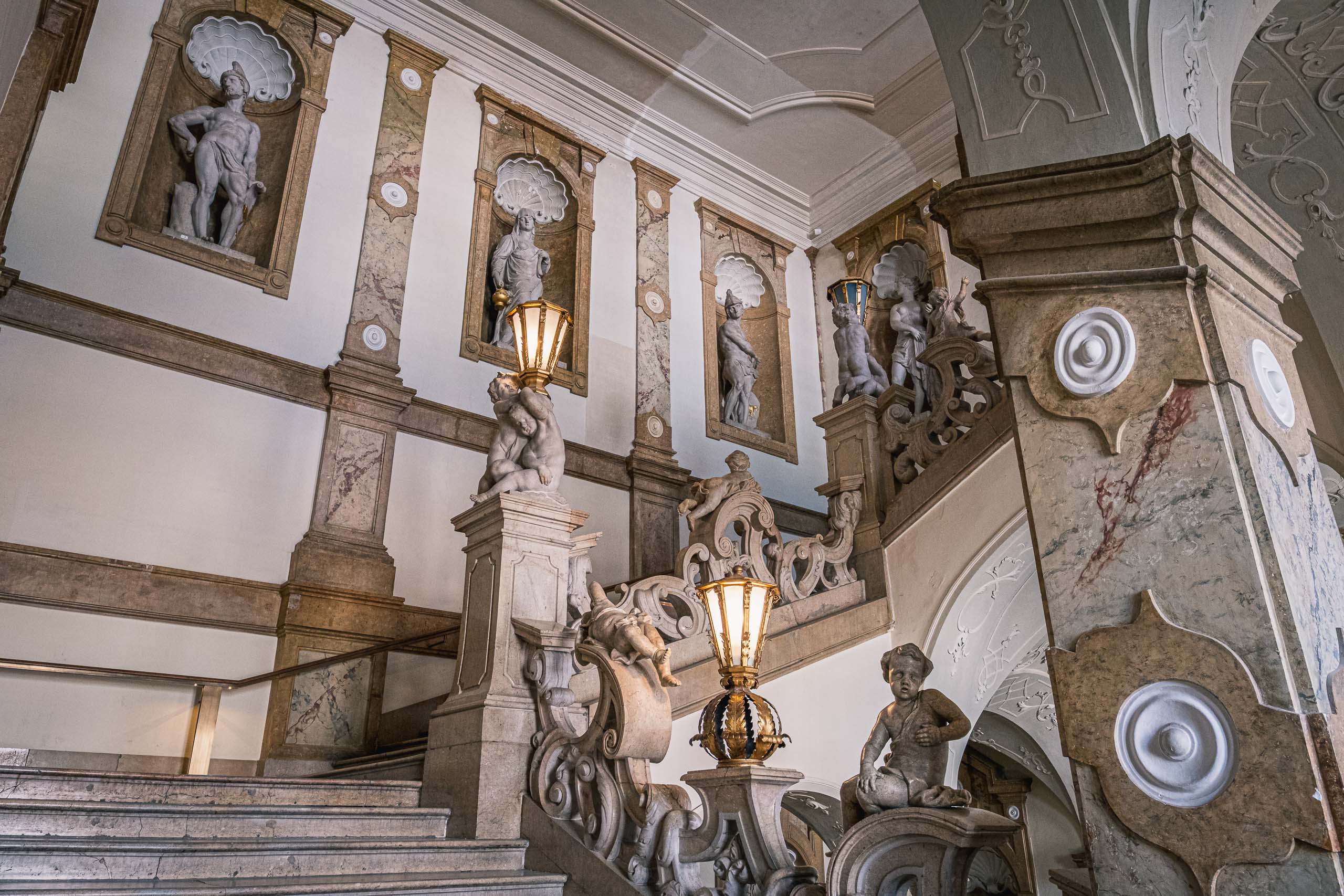
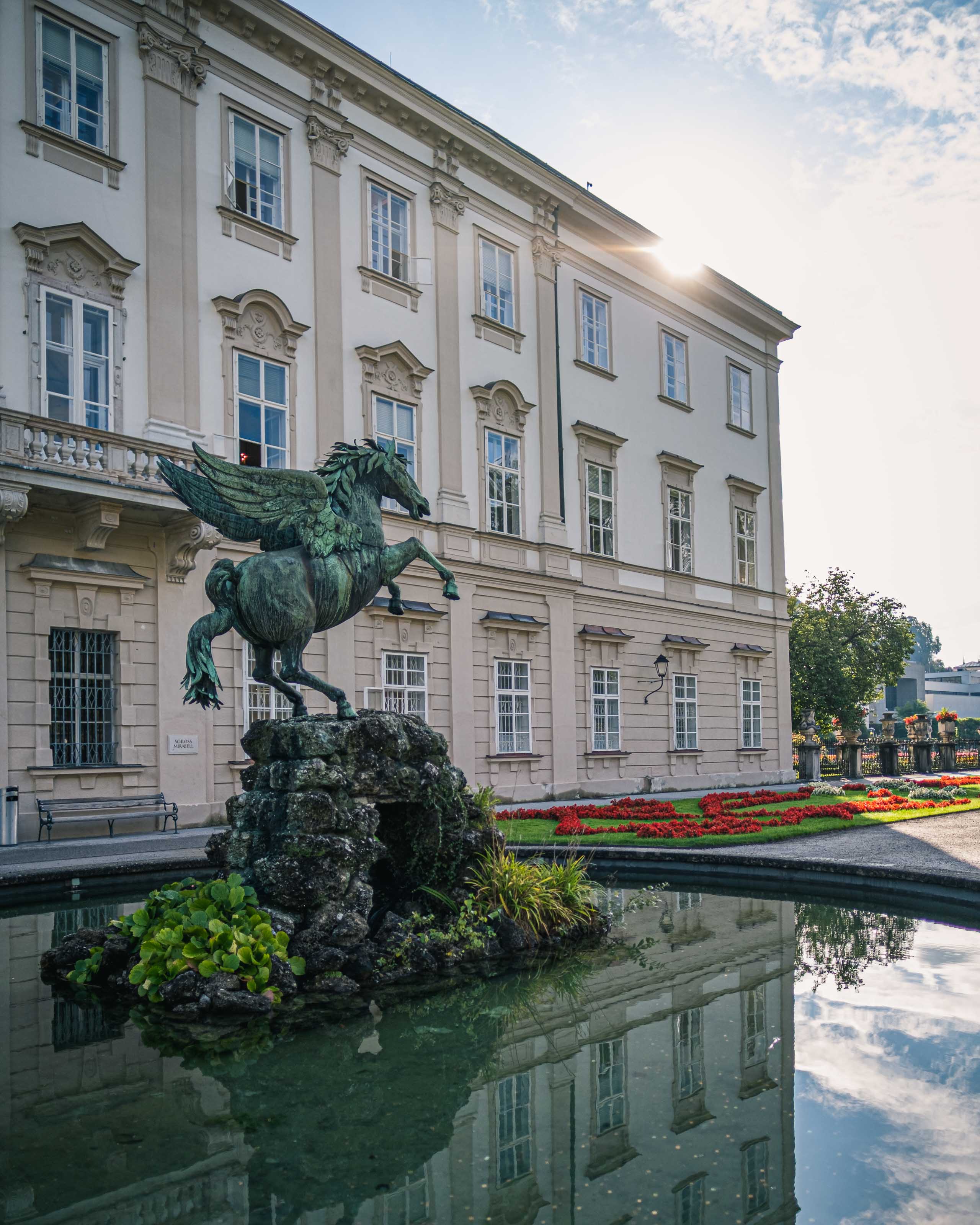
The structure Wolf Dietrich built did not survive the following century intact. Johann Lukas von Hildebrandt gave the palace its current form in 1721, commissioned by Archbishop Franz Anton Harrach. What Hildebrandt delivered was a symmetrical baroque palace, meaning one organized around a central axis with ornate facades, layered ornamentation, and a theatrical sense of arrival. Sculptor Georg Raphael Donner carved the Angel Staircase (Engelsstiege), a white-marble balustrade lined with putti that rises to the Marble Hall above. A fire in 1818 later tore through much of the building but spared the Marmorsaal entirely. Its frescoed ceiling and gilded stucco still look much as they did when Leopold Mozart brought his children here to perform.
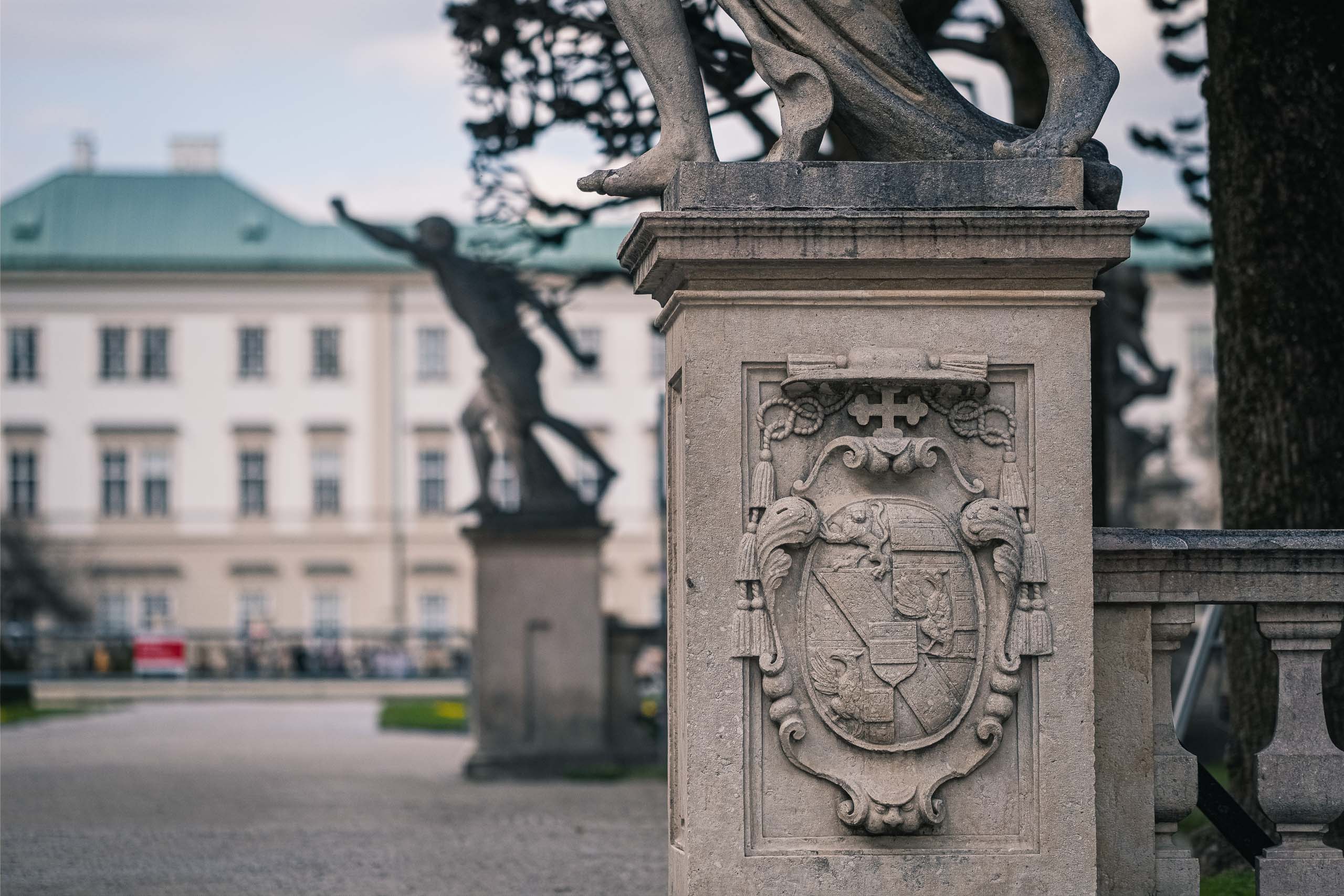
Wolfgang Amadeus Mozart rehearsed and performed in the Marble Hall during his Salzburg years. The room still hosts chamber concerts most evenings, plus more than a thousand weddings a year. The Angel Staircase below carries a story of its own: eleven marble statues telling the founding of Rome, from Aeneas fleeing Troy through Romulus to Caesar and Brutus. During the reconstruction after the 1818 fire someone reassembled them in the wrong order, which is why Caesar and Brutus now greet you at the bottom while Aphrodite and Dido, who belong at the beginning of the story, ended up on the top floor. Look for the round scorch mark on the steps by the Marble Hall door; that is fire damage from 1818, left in place. Entering from the Pegasus Fountain side, the ground-floor Wolf Dietrich Hall has a satellite image of Salzburg laid into the floor and Wolf Dietrich’s coat of arms on the wall, worth memorizing because it appears all over the city.
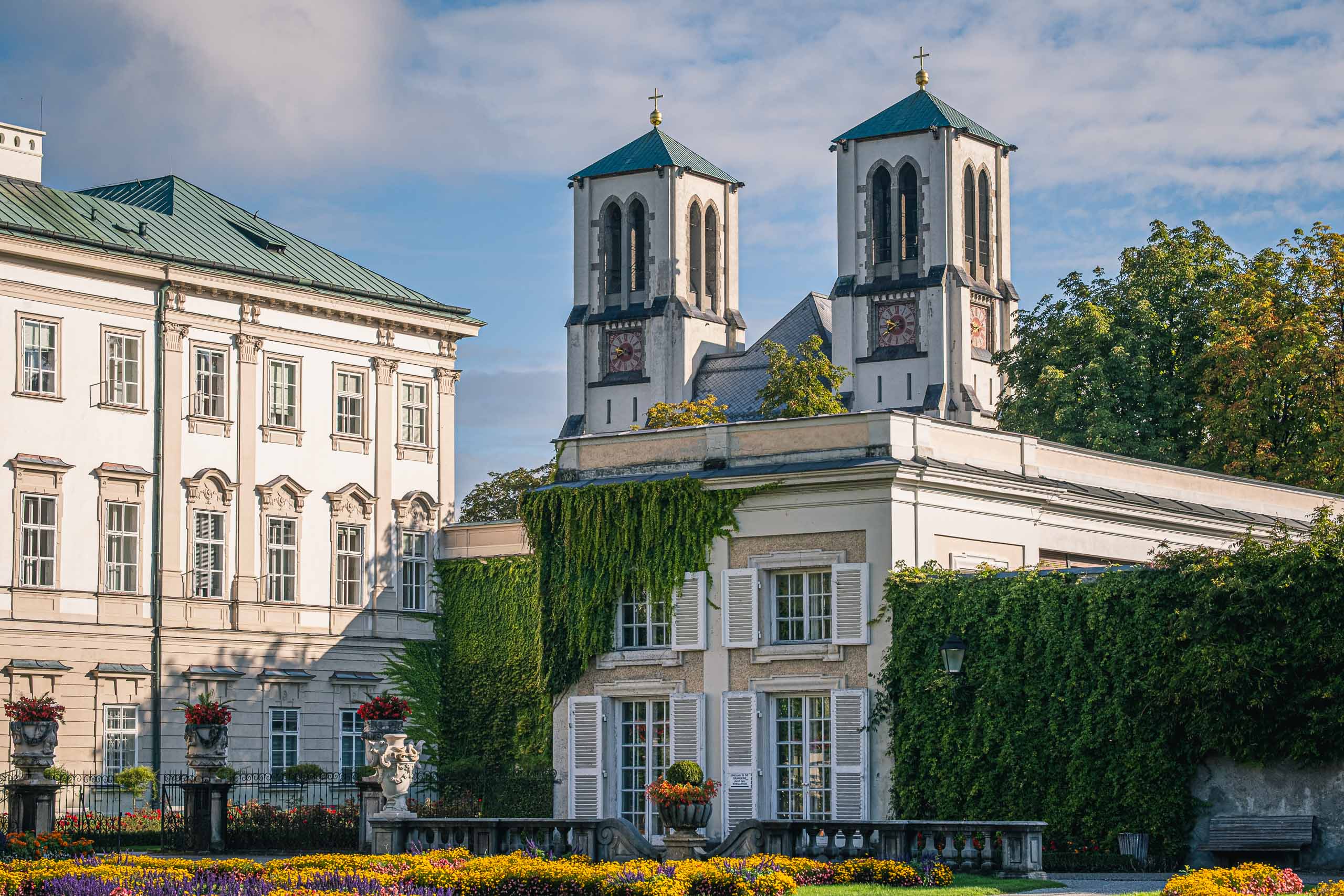
The palace is now Salzburg’s city hall. Most rooms stay closed to visitors because they are working offices: the lost and found, the passport desk, and the place where you register permanent residence in case you fall in love with Salzburg. The staircase and hall are open on weekday mornings, admission free, and the first angel on the handrail taps his forehead at every couple climbing up to get married. The church beside the street entrance belongs to Salzburg’s old catholic parish and is nearly always closed; Sunday service at 10am is the one way in, and it is no loss to skip it.
Visiting
Duration: 20-30 minutes for the Marble Hall and staircase
Cost: Free. Concerts in the Marble Hall are ticketed separately.
Hours: Marble Hall: Mon, Wed, Thu 8am-4pm; Tue and Fri 1pm-4pm. Closed Sunday, public holidays, and during civic events or weddings.
Getting there: Mirabellplatz, a 5-minute walk from the Altstadt across the Staatsbrucke.
Book ahead: Not needed for visiting. Recommended for concerts.
Tips: The Angel Staircase is as worth seeing as the Marble Hall. Check current event schedules before going, as the hall closes without much notice for official functions.
Do it here
See it on a tour
These experiences include this place in their authored route.
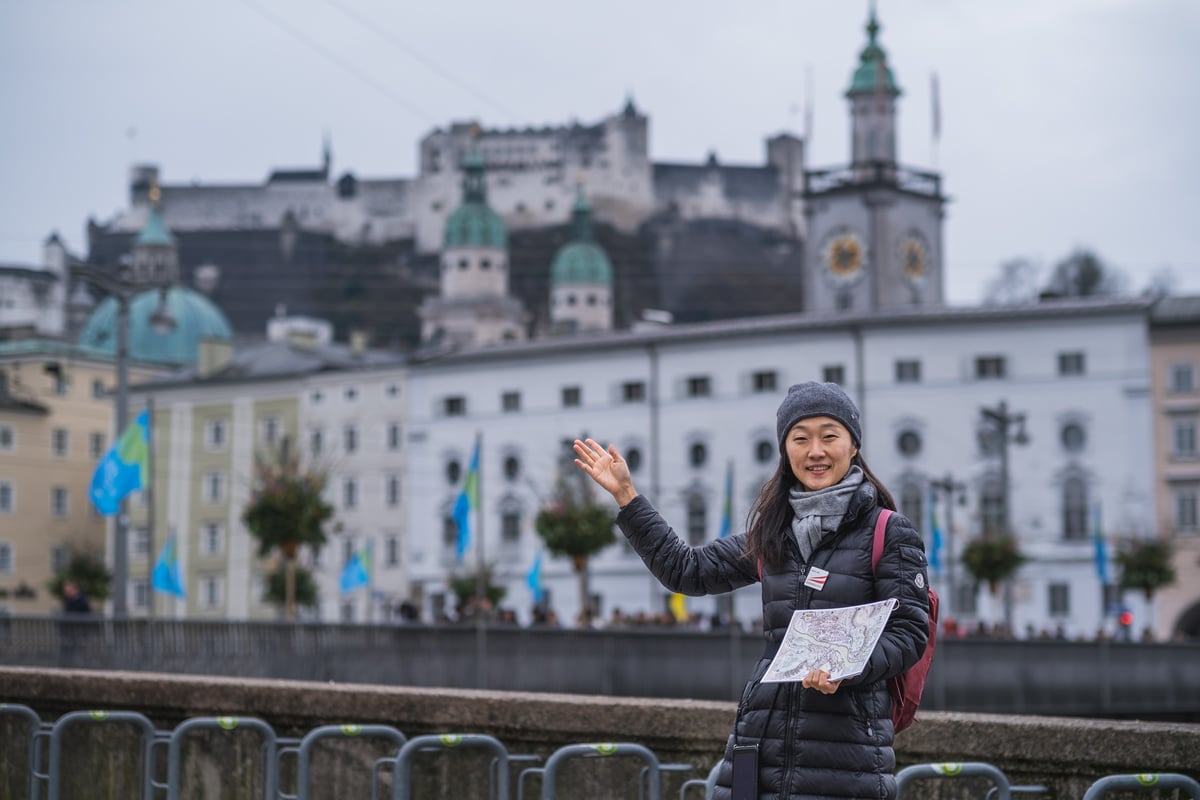
Daily guided walking tour of Salzburg's Altstadt. Tip-based, no fixed price: join free, pay what you think it was worth. Meets at the Spirit of Mozart and covers the essential old town from Mirabell to Mozartplatz in about ninety minutes. Run by Free Walking Tour Salzburg, Gerhard Reus's own brand.
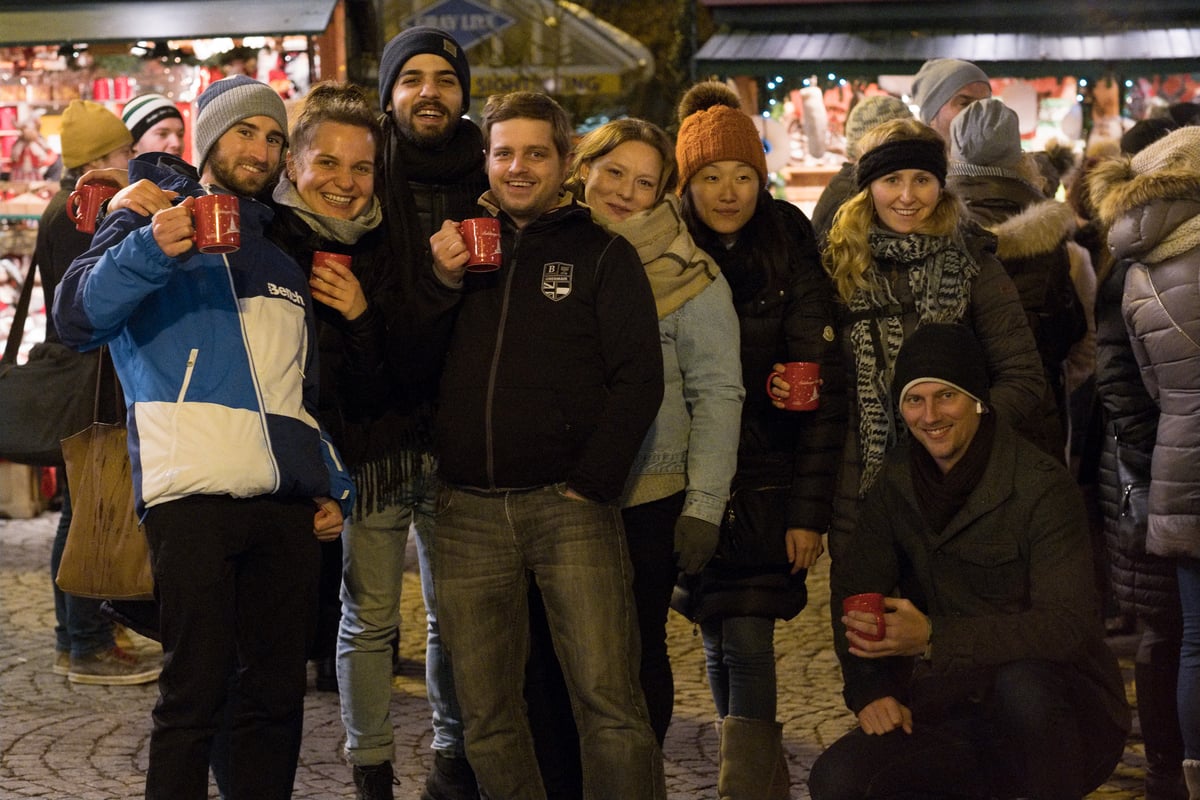
The Mirabell Christmas Market sets up on Mirabellplatz in front of Mirabell Palace from late November to January 1, running daily with extended hours on weekends. It is one of several Salzburg Christmas markets, smaller and calmer than the Domplatz market across the river. The Lions Club Salzburg Mirabell runs it with proceeds going to local charities.
Salzburg2 stops
People
People connected to this place
Each person below explicitly names this place in their authored connections.
The archbishop who commissioned the Zwerglgarten (Dwarf Garden) at Mirabell Palace, one of Salzburg's most quietly fascinating attractions. His archiepiscopate (1709-1727) represents the last golden decade of the independent Prince-Archbishopric's baroque programme.
Prince-Archbishop of Salzburg from 1612 to 1619, and a cousin of Wolf Dietrich von Raitenau, whom he deposed with Bavarian military backing. In seven years he built Hellbrunn Palace, planted the Hellbrunner Allee, renamed Wolf Dietrich's "Altenau" to Mirabell, and laid the cornerstone of the Salzburg Cathedral. He died before completing any of them.
The most transformative Archbishop in Salzburg's history. Wolf Dietrich demolished the old Romanesque cathedral, created Mirabell Palace, rebuilt the Residenz, and began reshaping the city along Italian baroque lines. Deposed and imprisoned in Hohensalzburg Fortress until his death.
Leading Austrian baroque architect and contemporary rival of Fischer von Erlach. Designed the rebuilt Mirabell Palace in its current baroque form (1721) after a fire destroyed the earlier structure. Also known for Vienna's Belvedere Palace.
The leading Austrian baroque fresco painter after Rottmayr. Troger's Salzburg ceilings include his Glory of Saint Cajetan in the Kajetanerkirche and frescoes in Mirabell Palace. If Rottmayr's domes crown the Kollegienkirche and the Dreifaltigkeitskirche, Troger is the other great baroque hand on the city's vaults.
Wolf Dietrich's companion, for whom he built Altenau Palace (later renamed Mirabell) in 1606. They had 15 children together, 10 of whom survived. After Wolf Dietrich's imprisonment in 1611, Salome was exiled from Salzburg. She outlived him and died in Wels in 1633.
Every visitor to Salzburg walks through baroque architecture without knowing what that word actually means. The guides say 'baroque' and point at a church. The audio guide says 'baroque facade' and moves on.