
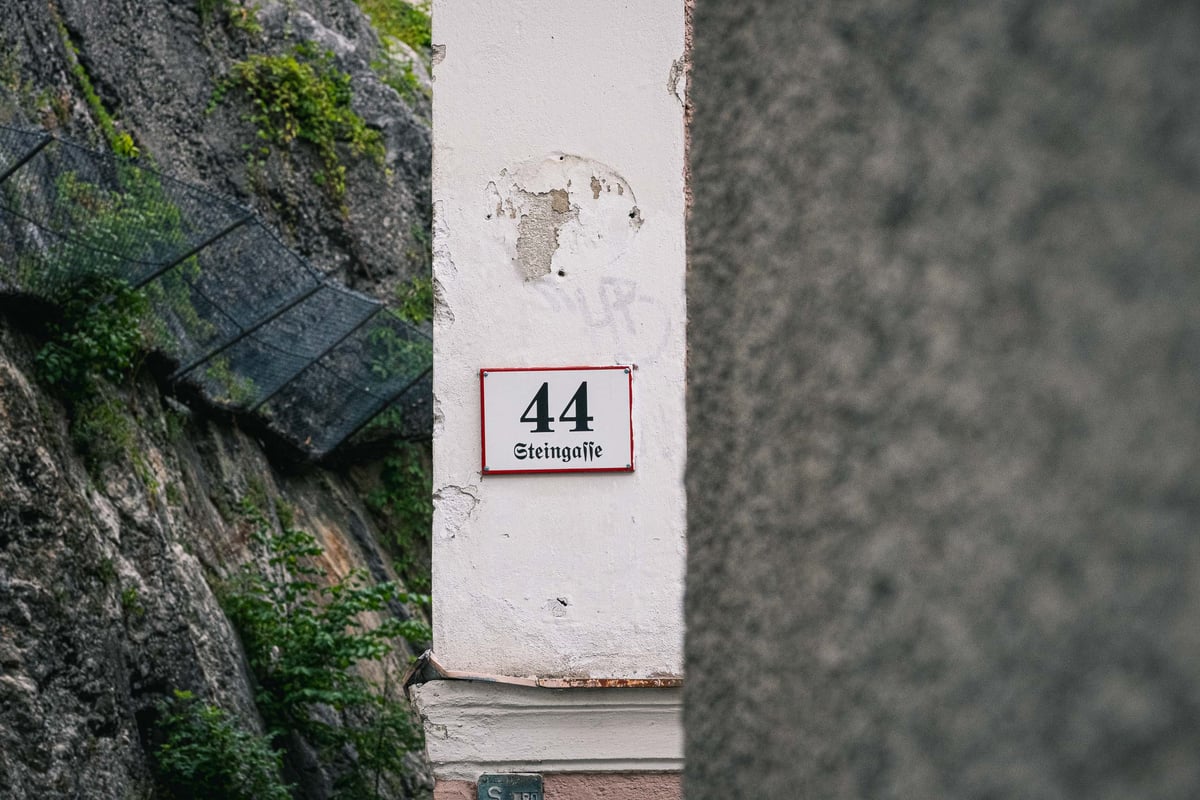
Steingasse
The Steingasse is the narrow medieval lane on Salzburg's right bank that most visitors miss entirely because everyone crosses to the left bank for the cathedral and the Getreidegasse. That is their mistake.
Priest
11 December 1792, Steingasse 9, Salzburg - 4 December 1848, Wagrain, Salzburg
The man who wrote the words to the most performed song in the world was born in poverty at Steingasse 9 in Salzburg, ordained against the usual rules due to his illegitimate birth, and spent his life moving between small parishes in the region. The carol he wrote in a Lungau village became Stille Nacht, Heilige Nacht.
Joseph Mohr was born on 11 December 1792 at Steingasse 9 in Salzburg’s right-bank quarter, a narrow house a short walk from the Salzach River. His father had deserted the military before Mohr was born and was never part of his life. His mother was a knitter from Hallein. The baptism at Salzburg Cathedral required a special dispensation because of his illegitimacy, and the godfather recorded in the register was Joseph Wohlmuth, Salzburg’s last official executioner, who sent his sister-in-law to sign in his place.
The cathedral vicar Johann Nepomuk Hiernle noticed the boy’s musical ability and pulled him into the choir at Stift St. Peter and the University Church. This was the act of patronage that changed the trajectory of Mohr’s life. He was educated at the Kremsmunster Abbey school, then at the Salzburg Lyceum, then at the Archbishop’s seminary, each stage requiring a further dispensation that worked around the stigma of his birth. He was ordained in 1815.
His first posting was as assistant priest at Ramsau, then at Mariapfarr in the Lungau. It was there, in 1816, that he wrote the poem “Stille Nacht, Heilige Nacht”: six verses about peace and a holy night, composed for a Christmas service. He carried the poem with him when he moved to Oberndorf bei Salzburg for a convalescence period.
On Christmas Eve 1818, the organ at the parish church of St. Nicholas in Oberndorf bei Salzburg had broken down. Mohr brought the poem to the schoolmaster-organist Franz Xaver Gruber and asked him to set it to music for two voices and guitar. Gruber did. The two performed it that night at the midnight mass. The congregation in Oberndorf heard the premiere of the most translated and most performed song in the world.
Mohr spent the remainder of his career moving between parishes in the Salzburg region, ending at Wagrain in the Pongau, where he died on 4 December 1848. He died poor; his will listed almost nothing of value except the clothes on his back and a violin. The song had already spread far beyond him, carried first by travelling musicians and then by hymnals across Europe and eventually the world. He never saw it become what it became.
Locations
The Steingasse is the narrow medieval lane on Salzburg's right bank that most visitors miss entirely because everyone crosses to the left bank for the cathedral and the Getreidegasse. That is their mistake.