Snapshot
Paracelsus died in Salzburg in 1541 and is still here: his grave at St. Sebastian’s Cemetery draws pilgrims five centuries later. He came twice, practiced medicine above a bathhouse where the Kajetanerkirche now stands, fled once after siding with the wrong side of a peasant war, and returned at the end of his life at the invitation of the Prince-Archbishop. Salzburg is where his story ends and where the legend begins.
The Story
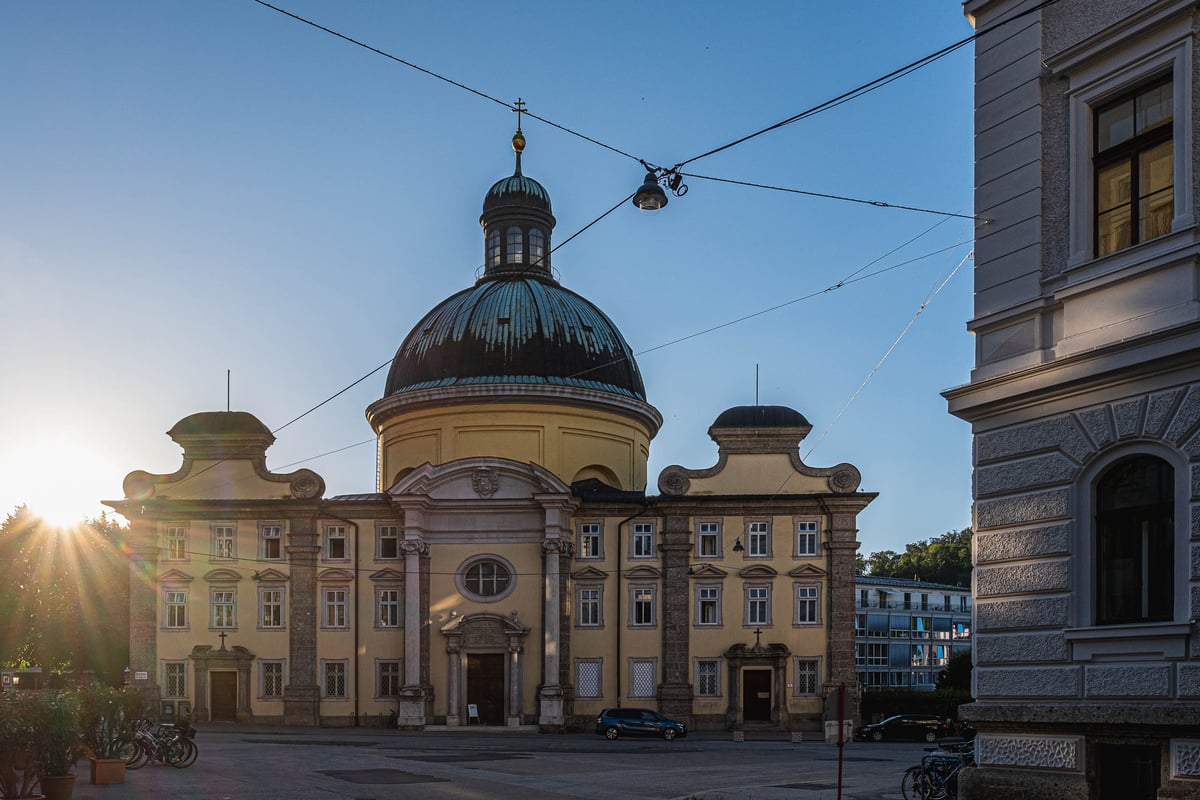
Paracelsus arrived in Salzburg around 1524, renting an attic above the Raplbad, the communal bathhouse on a site now occupied by the Kajetanerkirche. He was already in his thirties, with years of surgical practice behind him, including stints treating miners in Villach, soldiers on campaign, and the poor of a dozen cities. In Salzburg he charged 2 gulden for a consultation and treated the people the university-trained physicians did not: miners with lung disease, bakers, merchants.
He wrote here. The Elf Traktat on eleven diseases and the Volumen Medicinae Paramirum both date from this first Salzburg period, 1524 to 1527, and they mark the point where his accumulated observations from decades of itinerant practice began hardening into systematic theory. He also wrote theological pamphlets attacking the idolatrous decoration of St. Peter’s altars and drafted a letter to Luther, Melanchthon, and Bugenhagen in Wittenberg urging them to integrate health reform into the Reformation project.
When the Peasants’ War erupted in 1525, he sided with the peasants. He was arrested, his belongings were seized, and he fled the city at night, leaving his medical instruments behind. He spent the following years in Basel, Nuremberg, Augsburg, and a series of smaller cities, writing “Der Grossen Wundartzney” (1536), a surgery manual written in German rather than Latin, which spread surgical knowledge to apprentices and tradespeople who could never access university medicine.
He returned to Salzburg in 1541 at the invitation of Prince-Archbishop Ernst of Bavaria, who needed a court physician and had a taste for alchemy. Paracelsus was given a room at a Salzach-side inn and a modest stipend. He died three months later, on 24 September 1541. Whether from illness, a fall, or foul play by enemies from his Basel professorship days, no account has ever settled the question.
His remains were moved to St. Sebastian’s Cemetery in 1752, where a marble tomb in the porch of the Chapel of St. Philipp Neri marks his grave. It is still visited. Salzburg’s Paracelsus Medical University bears his name, and the city’s connection to salt and mining, central to his work, remains visible in the landscape he practiced in.