Snapshot
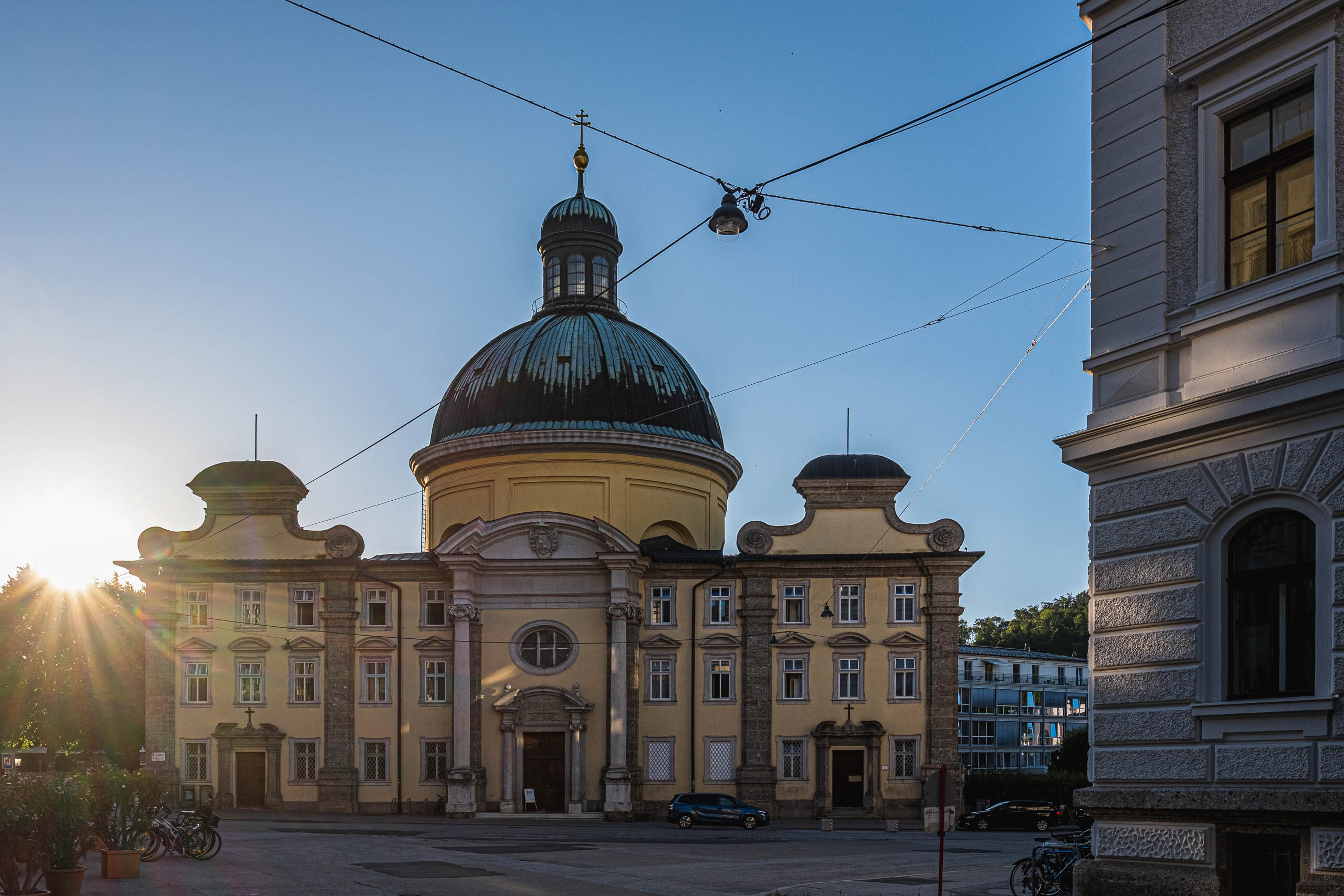
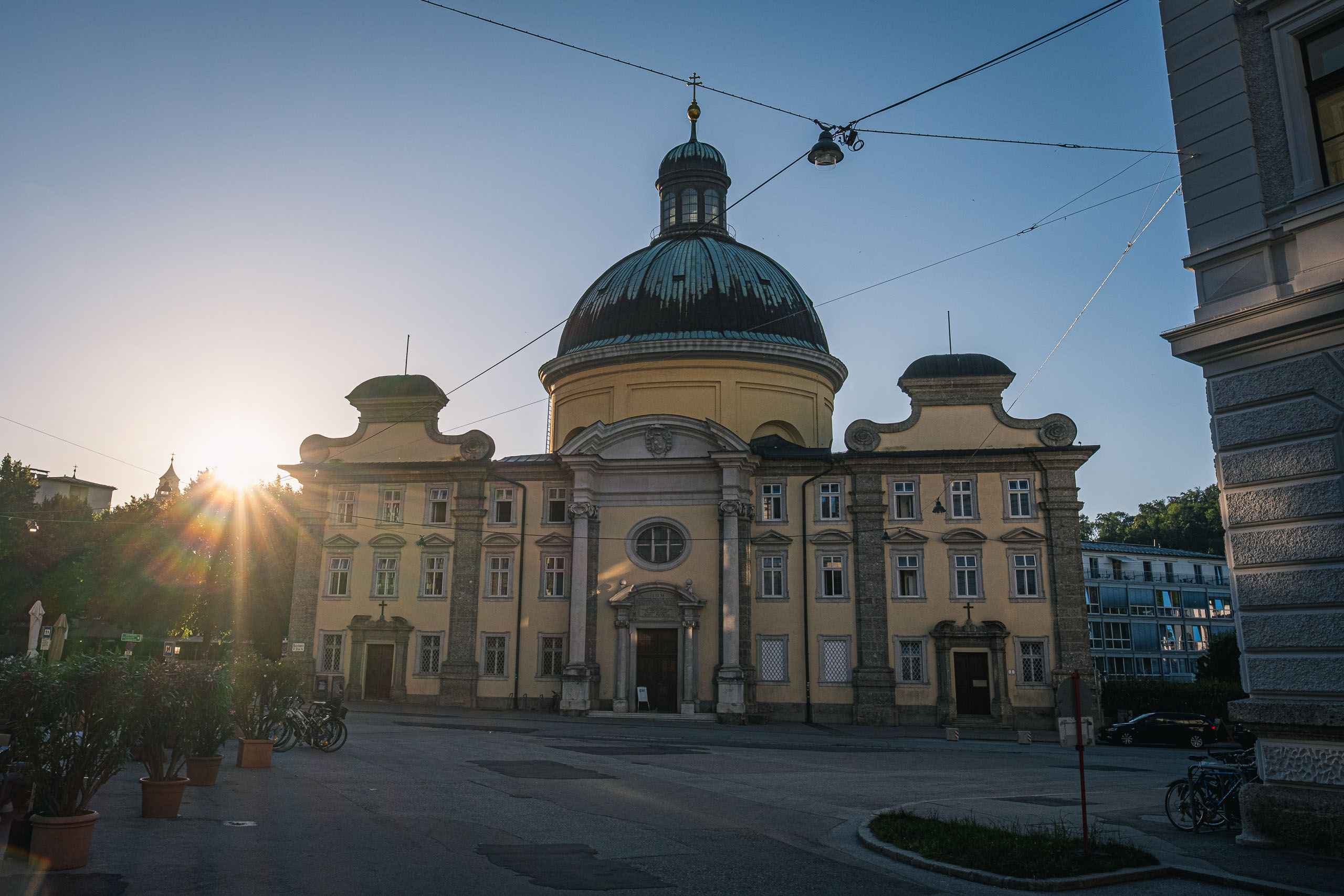
A Baroque church on Kajetanerplatz built 1685-1697 for the Theatine Order by Giovanni Gaspare Zuccalli. The last Italian-designed church in Salzburg, and one of the most politically fraught building projects the city ever saw.
The Story
The Theatines were a Counter-Reformation order founded in 1524 to reform the clergy through strict community life. Max Gandolph von Kuenburg brought them to Salzburg in 1685 and hired Giovanni Gaspare Zuccalli, an Italian master builder fresh from the Theatine Church in Munich, to design the complex on Kajetanerplatz. The broad facade, the large tambour dome flooding the nave with light, and the festive stucco of the Brenno brothers are all distinctively Italian Baroque, transplanted almost intact.
Max Gandolph died in 1687. His successor, Johann Ernst von Thun, had no patience for the Theatines or for what he called the “Welsch Baroque” style. Zuccalli spent years fighting for his final payment. Unknown donors eventually covered the gap and the building was consecrated in 1700. Thun went on to commission Johann Bernhard Fischer von Erlach for every subsequent major project. The architectural era ended here.
The site carries an older charge. Wolf Dietrich von Raitenau had originally intended this as his burial place. A church stood here from around 1150. The medieval Raplbad on the same ground was where Paracelsus worked during his time in Salzburg, before his burial at Sebastiansfriedhof nearby.
Inside, the oldest surviving organ in Salzburg stands in the gallery above the entrance, built around 1700 by Christoph Egedacher. The Heilige Treppe (Holy Stairs), 28 steps modelled on Rome’s Scala Sancta and climbed only on one’s knees, opens to the faithful on Saturday mornings for one hour. Along with St Erhards Church, it is one of the last two Italian-built Baroque churches in Salzburg. Restored 2019-2023.
Visiting
- Hours: Limited opening. Heilige Treppe: Saturdays 10am-11am.
- Cost: Free
- Duration: 15-20 minutes
- Getting there: Kajetanerplatz in the Nonntal district, south of the Altstadt
- Tips: The organ in the gallery is the oldest surviving in Salzburg. Come on a Saturday if you want to see or climb the Holy Stairs.
- Combine with: St Erhards Church, Nonnberg Abbey, Sebastiansfriedhof