Cemetery

Sebastiansfriedhof

Snapshot

An Italian garden cemetery on Linzer Gasse, laid out around 1600 by Wolf Dietrich von Raitenau as a campo santo: a nearly square plaza enclosed by 87 vaulted arcades. The mausoleum he built for himself stands at the centre.

The Story

The site began as a plague cemetery outside the city walls, with a church consecrated to Saint Sebastian in 1511. The saint was invoked against plague, traditionally depicted surviving arrows and a clubbing, his endurance making him a symbol of miraculous protection.

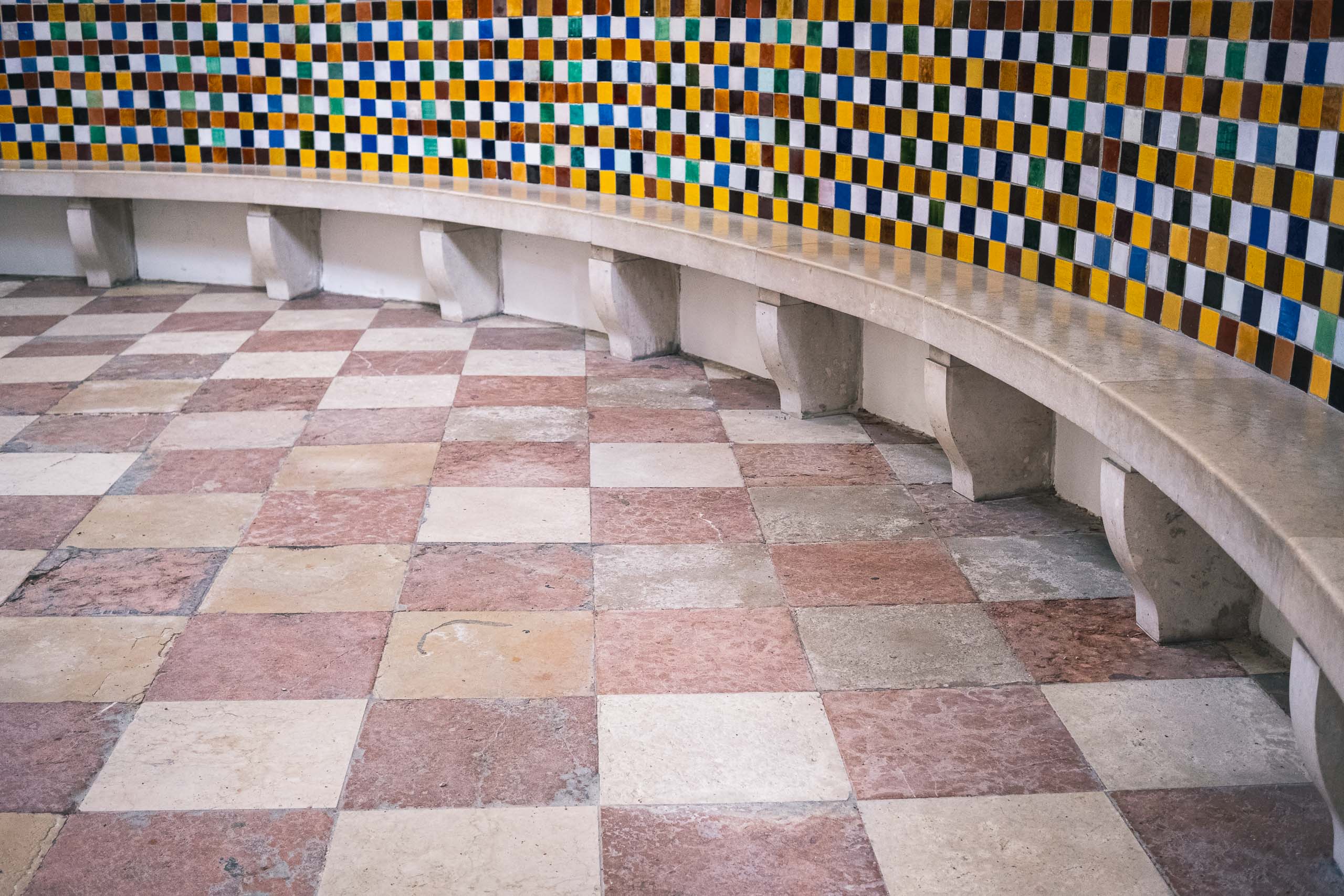
Wolf Dietrich von Raitenau commissioned a complete redesign between 1595 and 1600. He hired Andrea Berteleto to lay out an Italian campo santo, roughly 90 by 80 metres, enclosed by 87 vaulted pillar arcades. The entrance on Linzer Gasse still carries his marble coat of arms and the date 1600. At the centre he placed the Gabrielskapelle, a circular mausoleum tiled inside in multicoloured porcelain, built to hold his own remains. He was imprisoned by Archduke Maximilian III in 1612, held in Hohensalzburg Fortress, and died there in 1617. He is buried in the mausoleum he designed for himself.

Paracelsus, the Swiss-German physician and alchemist who practised in Salzburg, is buried in the chapel porch. His monument has stood here since 1564: a marble plate with coat of arms and an obelisk topped by a portrait medallion. The Latin inscription records cures for leprosy, gout and dropsy.

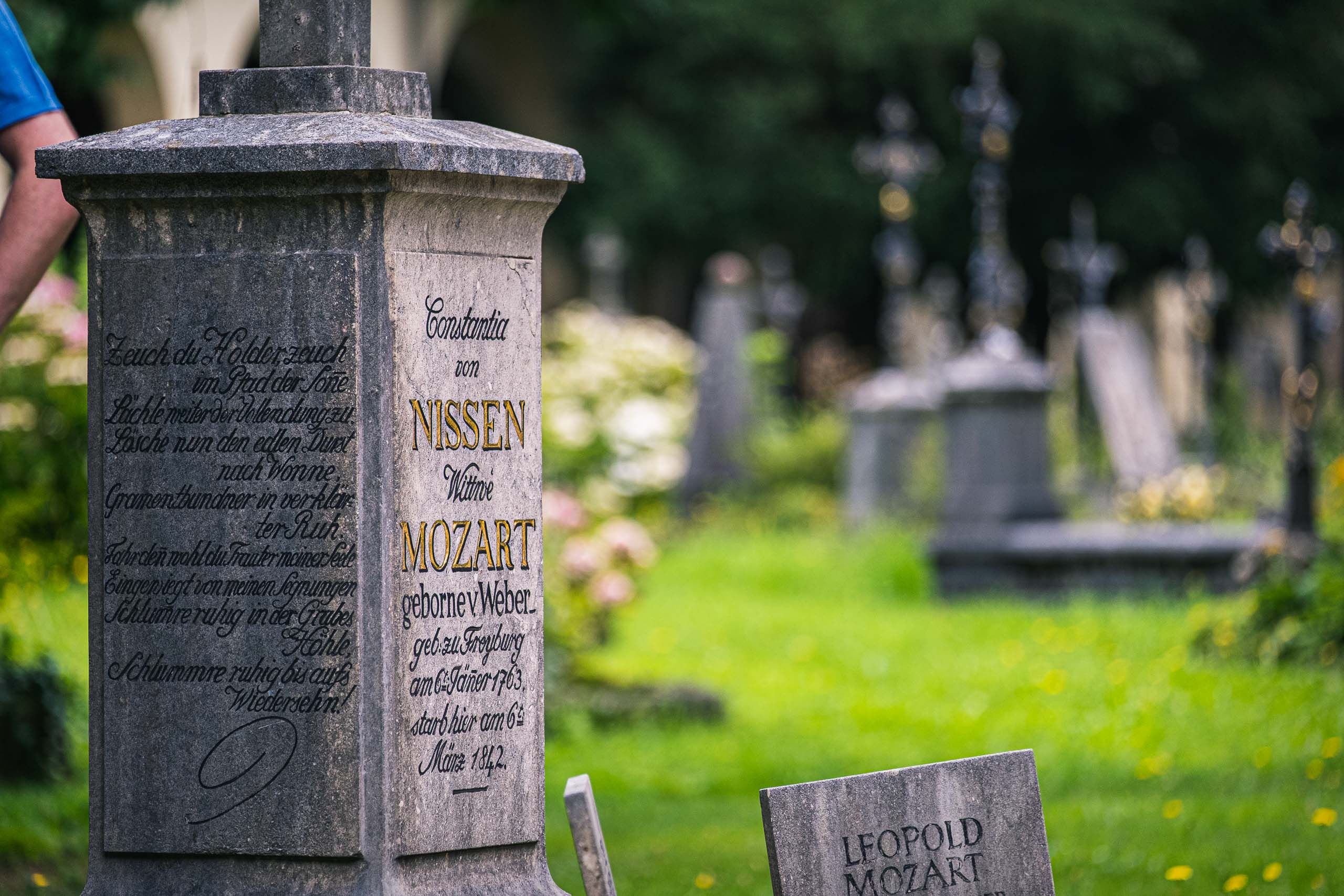
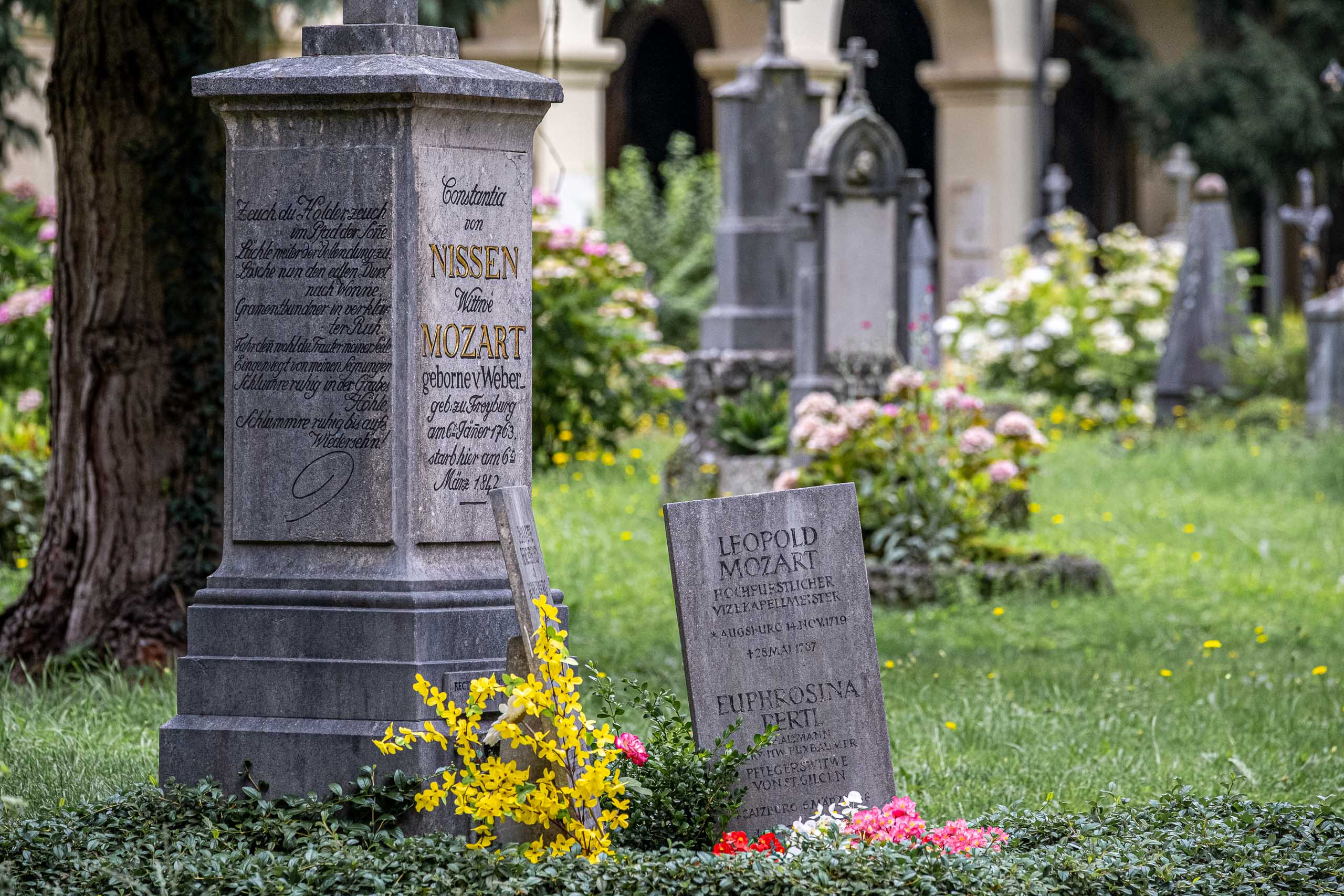
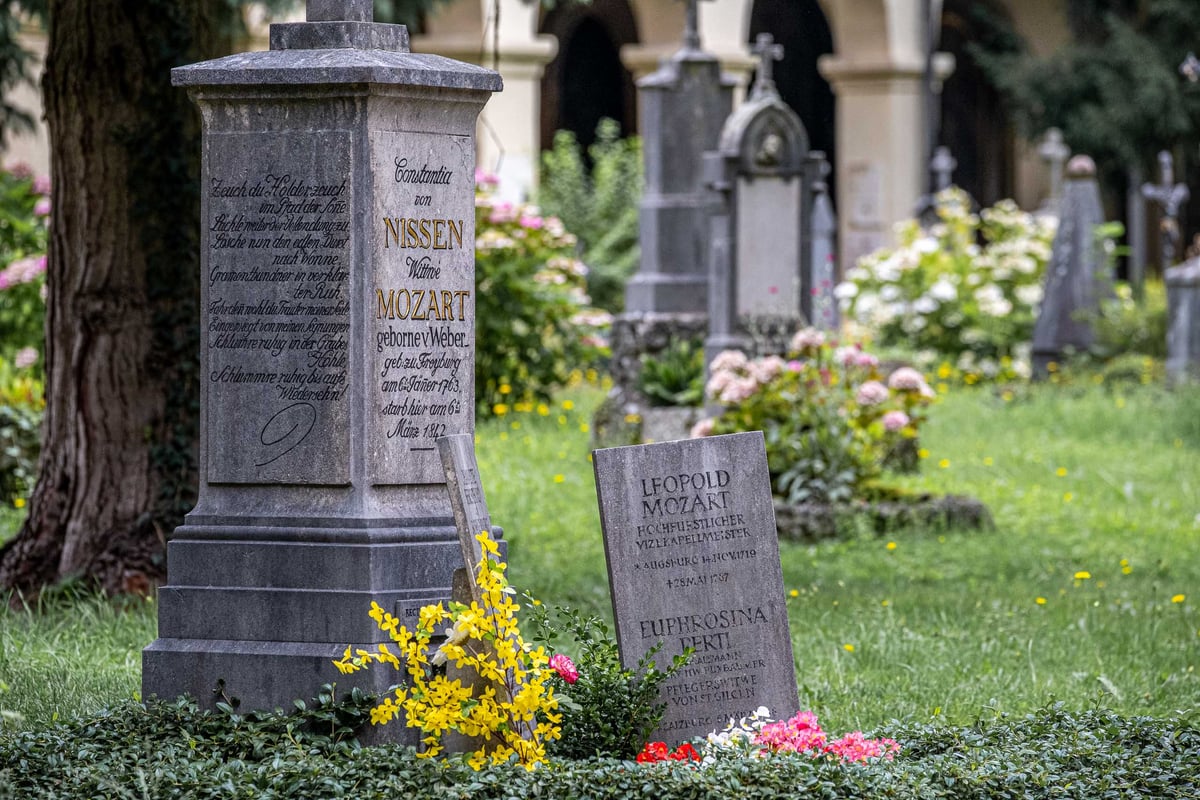
Leopold Mozart rests on the left-hand path toward the Gabrielskapelle. Constanze Mozart lies a few metres away with Georg Nikolaus von Nissen, her second husband, a Danish diplomat.

The cemetery was damaged in the 1818 fire and later restored. It feels entirely different from Petersfriedhof: open, airy, southern in character. Quieter than it should be given what it contains.

Visiting

  • Hours: Daily 9am-4pm (winter), until 6:30pm (summer)
  • Cost: Free
  • Duration: 20-30 minutes
  • Getting there: Linzer Gasse 41, right bank, about 10 minutes from the Staatsbrucke
  • Tips: Wolf Dietrich’s mausoleum is in the centre. Paracelsus is in the chapel porch to the right of the entrance. Barrier-free access via ramp.
  • Combine with: Linzer Gasse, Petersfriedhof, Mirabell Gardens

People

People connected to this place

Each person below explicitly names this place in their authored connections.
  • The most transformative Archbishop in Salzburg's history. Wolf Dietrich demolished the old Romanesque cathedral, created Mirabell Palace, rebuilt the Residenz, and began reshaping the city along Italian baroque lines. Deposed and imprisoned in Hohensalzburg Fortress until his death.

  • Constanze Mozart

    singer1762 - 1842

    Wife of Wolfgang Amadeus Mozart, whom she married in Vienna in 1782. After his death, Constanze dedicated decades to preserving his legacy. She returned to Salzburg in later life, where she died in 1842 and is buried in St. Sebastian's Cemetery.

  • Georg Nikolaus von Nissen

    diplomat1761 - 1826

    Danish diplomat who married Constanze Mozart in 1809. He compiled the first comprehensive Mozart biography, published posthumously in 1828. Buried at Sebastiansfriedhof, the same cemetery that holds Leopold Mozart's grave. Without his patient documentary work and Constanze's cooperation, much of what is known about Mozart's private life would have been lost.

  • Leopold Mozart

    composer1719 - 1787

    Court musician, Vice Kapellmeister, and the father and first teacher of Wolfgang Amadeus Mozart. Author of the influential Versuch einer grundlichen Violinschule (1756). Lived with his family at Getreidegasse 9 and later at Makartplatz 8. Buried in St. Sebastian's Cemetery.

  • Paracelsus

    physician1493 - 1541

    Revolutionary physician, alchemist, and philosopher who spent his final years in Salzburg and is buried at St. Sebastian's Cemetery. He worked at the salt mines of Bad Durrnberg and practised at a medieval bathhouse on the site that later became the Kajetanerkirche. His grave remains a place of pilgrimage.

Curated routes

Routes that stop here

These curated collections include this place as an authored stop.
  • Panoramic sunrise view of Salzburg old town with cathedral domes and Hohensalzburg Fortress on snowy hills.

    Salzburg in Fifteen Stops

    The fifteen sights we mark on the map we hand every guest, in the order I would walk them. It starts on the right bank, crosses into the old town, climbs to the fortress, and comes back over the Mozartsteg. Half a day at a stroll, or a full one if you go inside things.

    trip plan15 stops

Read more

Stories that go deeper

The longer pieces where this comes up.

  • The Mozart family grave in the Sebastiansfriedhof
    Mozart

    Mozart's Death: The Skull, the Grave, and What We Actually Know

    Mozart died in Vienna on 5 December 1791. He was thirty-five. We do not know what killed him. We do not know where he is buried. A skull that spent over a century in the Mozarteum probably is not his. And the family grave in Salzburg contains people who, according to DNA, are not related to each other.

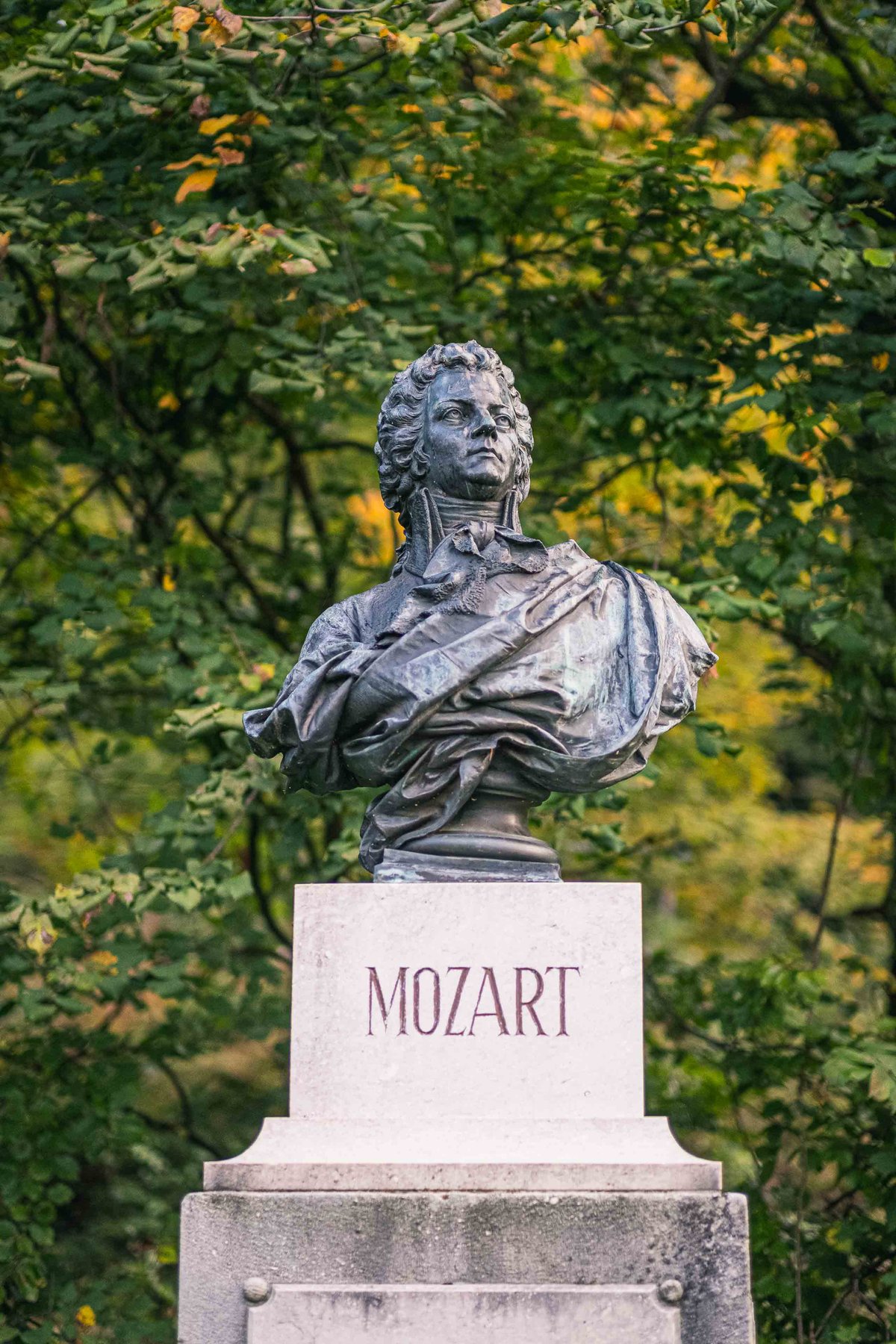
  • The Mozart bust on the Kapuzinerberg
    Mozart

    What Most Mozart Guides Get Wrong

    Every week on my tours, someone asks about Salieri. Every week I explain that Amadeus is a film, not a documentary. That is only the beginning. The popular version of Mozart's life is a mix of half-truths, romantic exaggeration, and Hollywood invention. Here are the things most guides repeat that do not hold up.