Andräkirche
Built 1898-1902
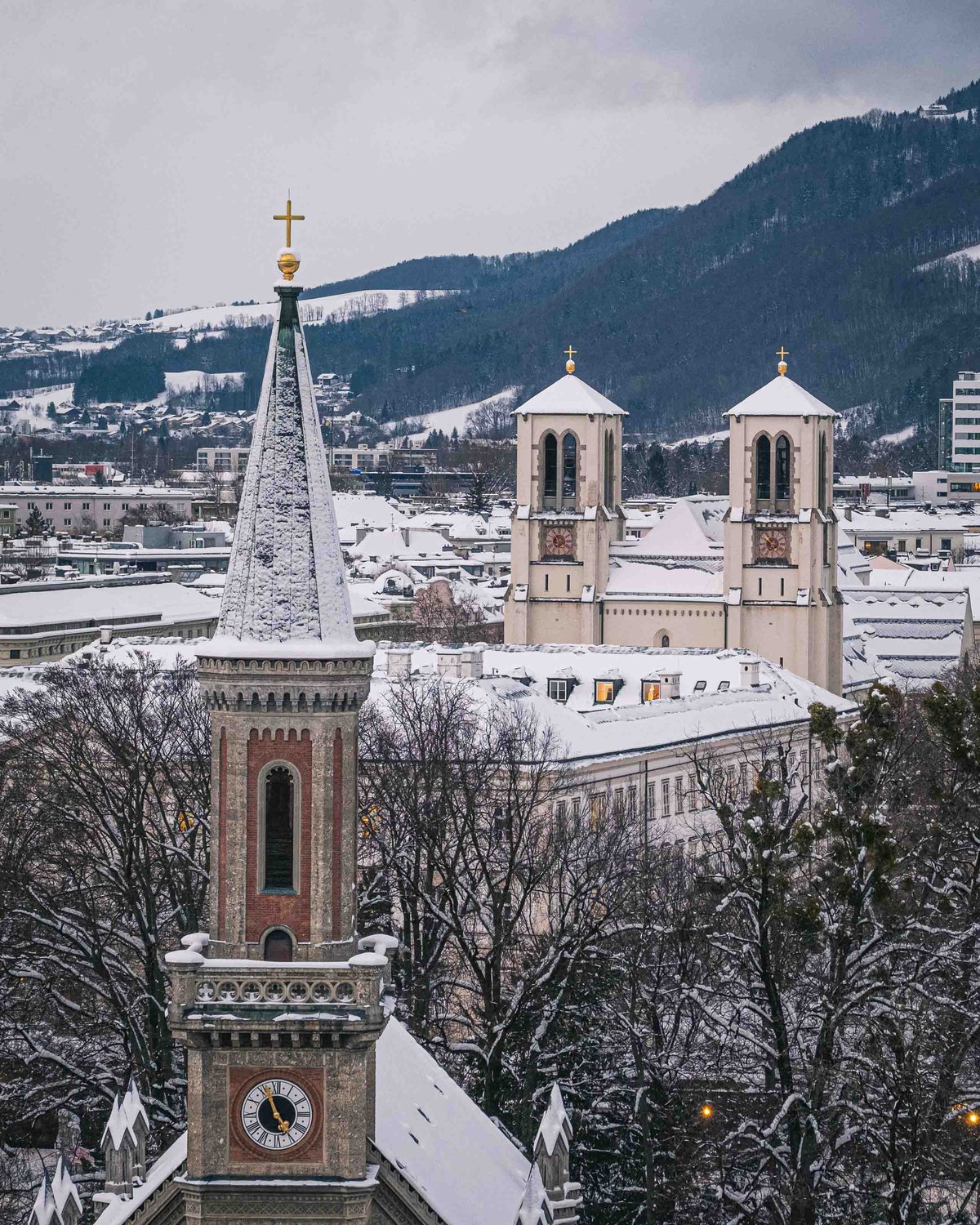
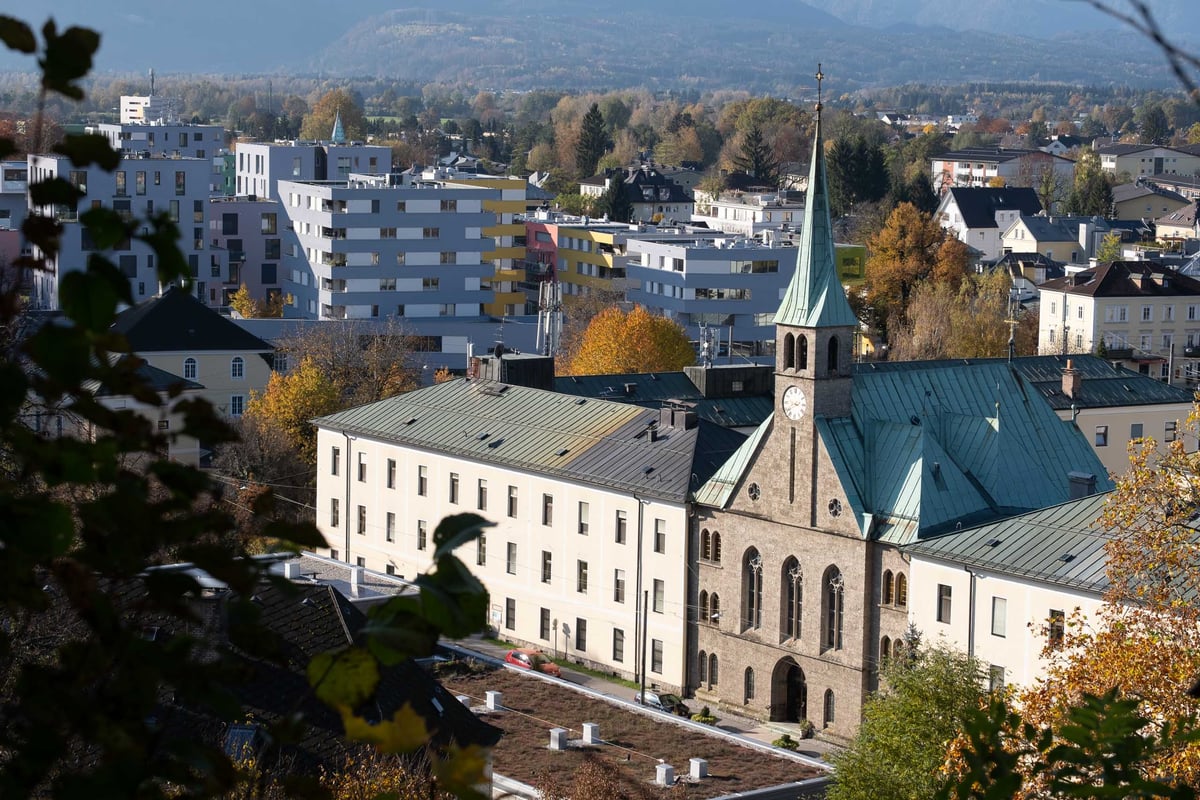
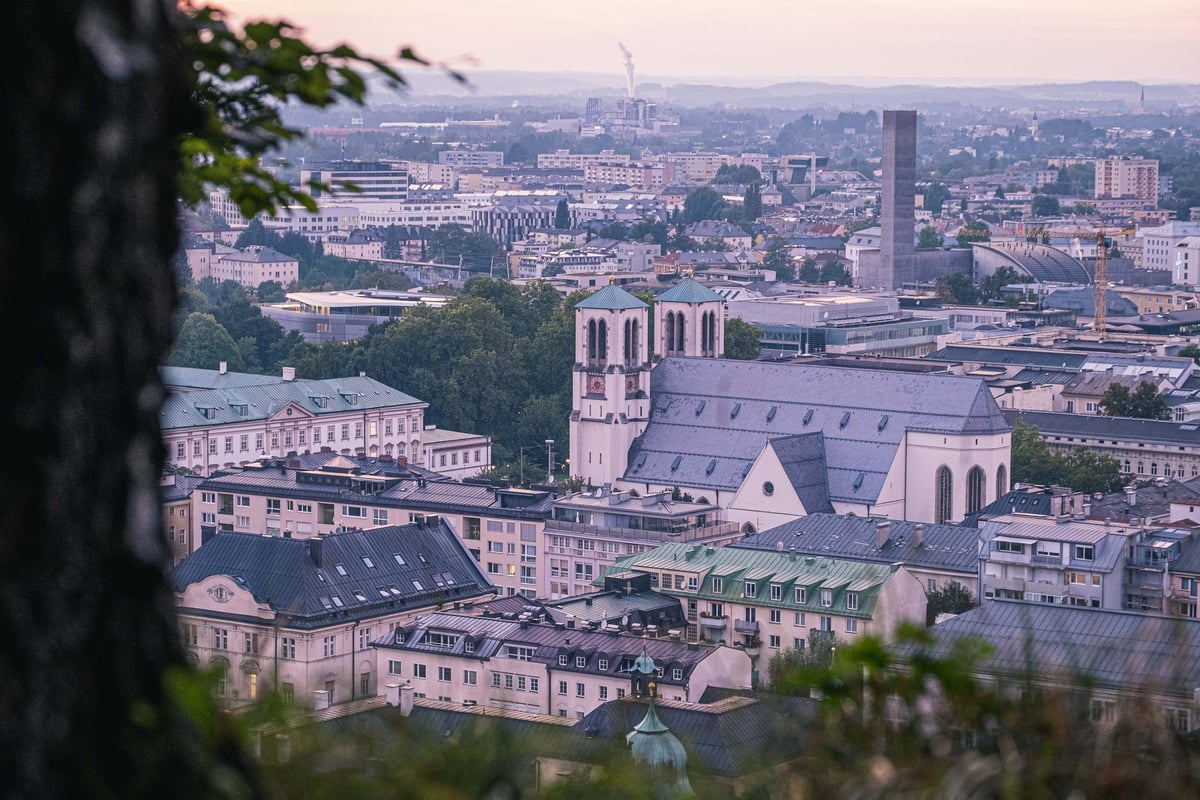
The parish church of the Lehen district, a neo-Gothic structure built 1898-1902 as Salzburg's working-class neighbourhoods expanded north of the Altstadt. The distinctive red-brick tower is a local landmark.
Place type
27 entries tagged Church on Introducing Salzburg.
Built 1898-1902
The parish church of the Lehen district, a neo-Gothic structure built 1898-1902 as Salzburg's working-class neighbourhoods expanded north of the Altstadt. The distinctive red-brick tower is a local landmark.
Founded 748 AD
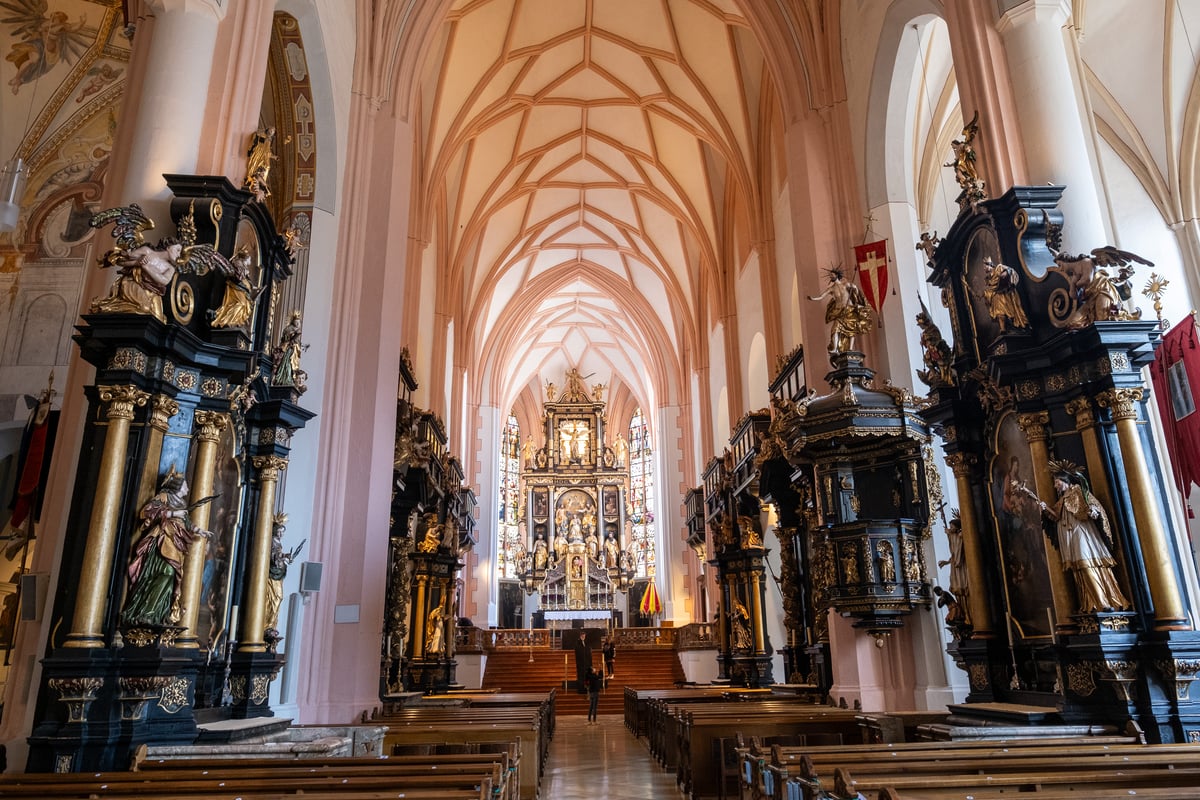
Most people arrive at the Basilika Mondsee because of The Sound of Music: the wedding scene in the 1965 film was shot in this church, and the Marktplatz in Mondsee village now has a small museum devoted to the film. The basilica is genuinely worth visiting for reasons that have nothing to do with Hollywood.
Dating to c. 1330
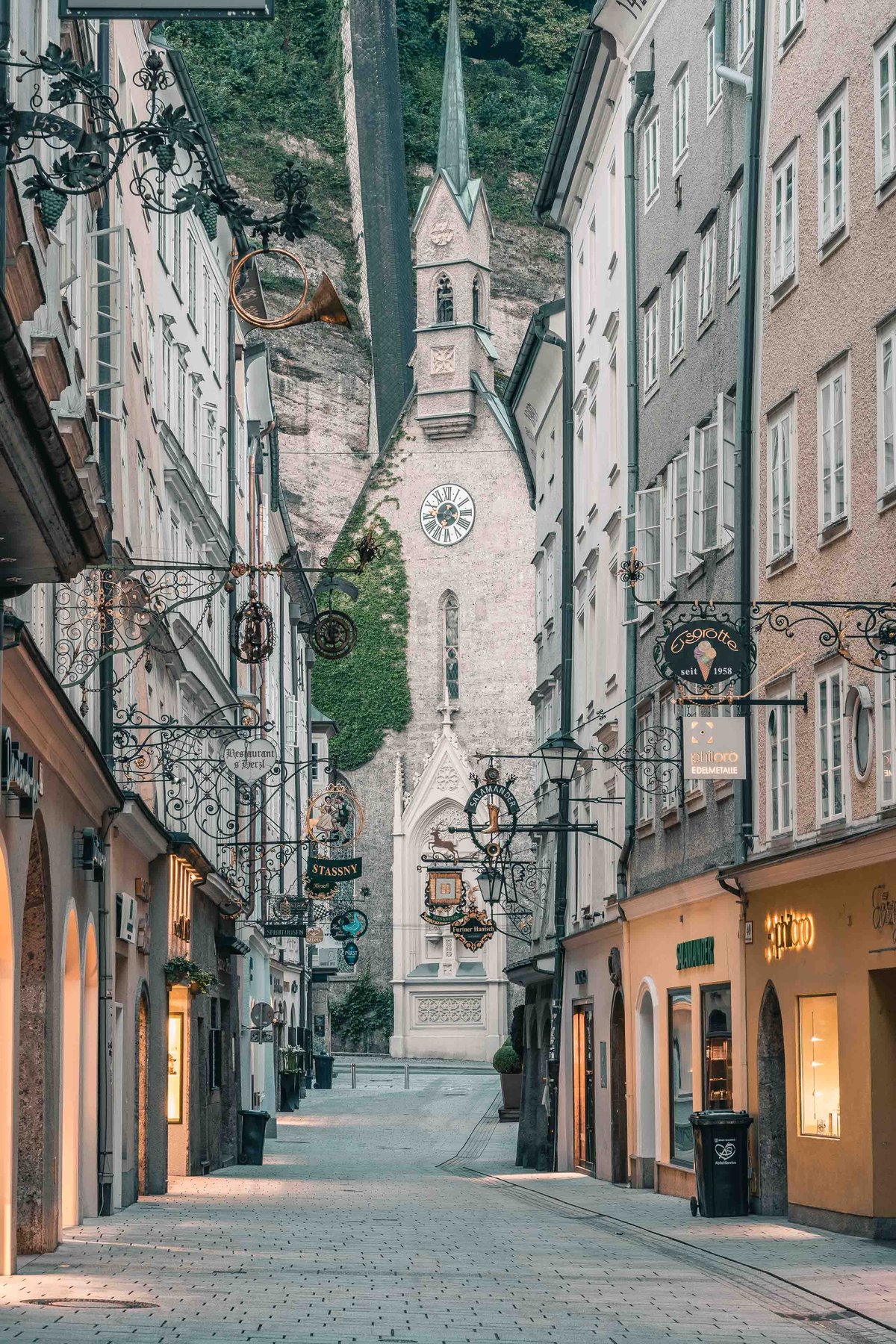
The Gothic church of the former citizens' almshouse, dating to around 1330. One of the oldest Gothic buildings in Salzburg, tucked into the western end of the Altstadt near Getreidegasse.
Built 1685-1697
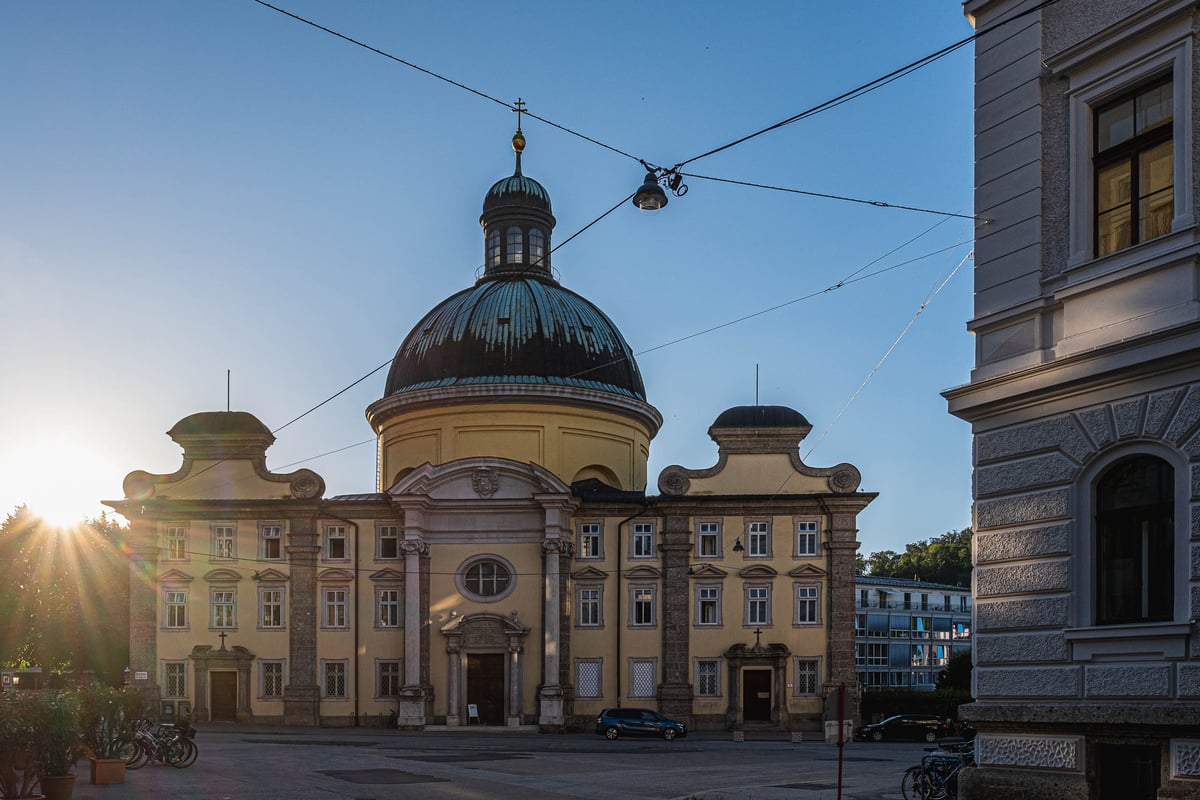
A Baroque church on Kajetanerplatz in the Nonntal district, built 1685-1697 for the Theatine Order by Giovanni Gaspare Zuccalli. The last Italian-designed church in Salzburg, closing one architectural era and opening the door to Johann Bernhard Fischer von Erlach.
Founded 1599
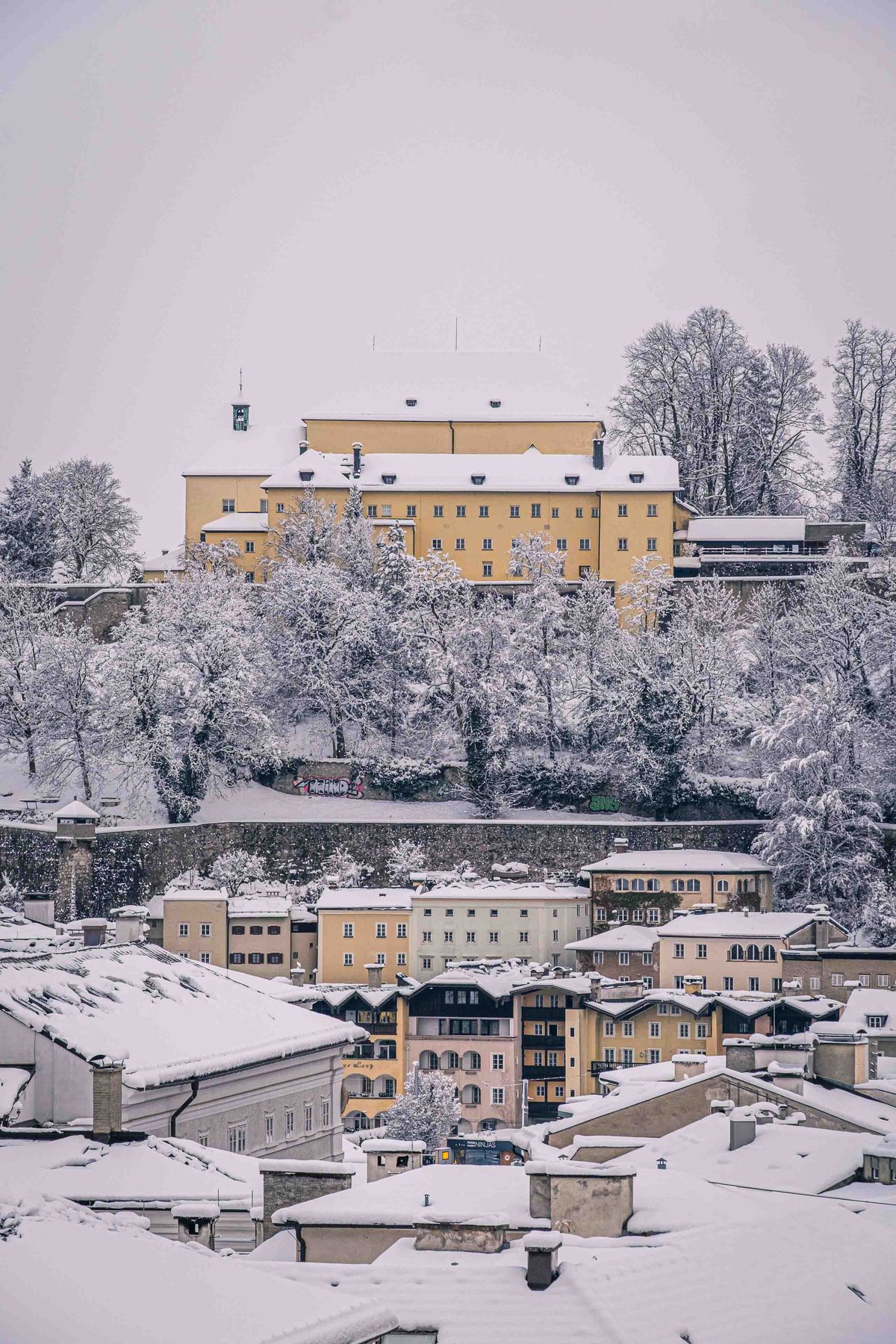
The Capuchin monastery at the summit of the Kapuzinerberg, founded 1599-1602 by Wolf Dietrich von Raitenau as part of his Counter-Reformation programme. The building that gives the hill its name. Stefan Zweig lived on the hill below.
Built 1863-1866
The main Protestant (Evangelical Lutheran) church in Salzburg, built 1863-1866 on Schwarzstraße. Its construction was itself historically significant: Salzburg had expelled its entire Protestant population in 1731-1732 under Leopold Anton von Firmian.
Built 1694-1702
One of Fischer von Erlach's four major Salzburg churches. Notable for its oval dome, paired towers, and convex outward-curving facade, which forms a deliberate architectural conversation with the concave Kollegienkirche across the river. Adjacent to Mozart's Residence on Makartplatz.
Romanesque / Gothic
One of Salzburg's oldest churches, with a Romanesque nave from around 1208, a Gothic choir and tower added in the 15th century, and a Baroque high altar by Johann Bernhard Fischer von Erlach (1709). Three architectural periods in a single building, with the abrupt shift from dark nave to bright choir among the most striking interior effects in the city.
1877-1878
Most visitors never see this one. Tucked inside a working senior-care complex in the Riedenburg district, the Herz-Jesu-Asylkirche carries a name that draws Vienna's most important nineteenth-century architect into a quiet Salzburg backstreet.
Built 1699-1703, consecrated 1704
A Baroque church built 1699-1703 by Johann Bernhard Fischer von Erlach as part of the Johannesspital complex on the right bank, commissioned by Archbishop Johann Ernst von Thun. One of Fischer von Erlach's four major Salzburg churches. A stone labyrinth stands on the lawn beside it.
Built 1696-1707
Fischer von Erlach's masterpiece in Salzburg and one of the finest baroque churches in the German-speaking world. His fourth and final major church in the city. The concave facade creates a deliberate counterpoint to the convex Dreifaltigkeitskirche across the river. On Universitatsplatz. A must-see.
Cornerstone 1633, church completed 1646
A small Baroque pilgrimage church on the right bank, founded in 1633 when Capuchin nuns fled Landshut during the Thirty Years' War. Archbishop Paris Lodron granted the site. The church was completed in 1646 and contains a replica of the Santa Casa from Loreto, Italy, and a 17th-century jewelled Madonna doll that remains an object of local veneration.
Designed 1926
A rare example of modernist sacred architecture in Salzburg, designed by Clemens Holzmeister in 1926 for the growing Maxglan district. The same architect responsible for the Grosses Festspielhaus.
Baroque
The oldest church in Salzburg with origins in the 8th century, located at the corner of Mozartplatz and Residenzplatz. Affiliated to Stift St. Peter and often overlooked despite its prominent position at the heart of the Altstadt.
Founded 1355
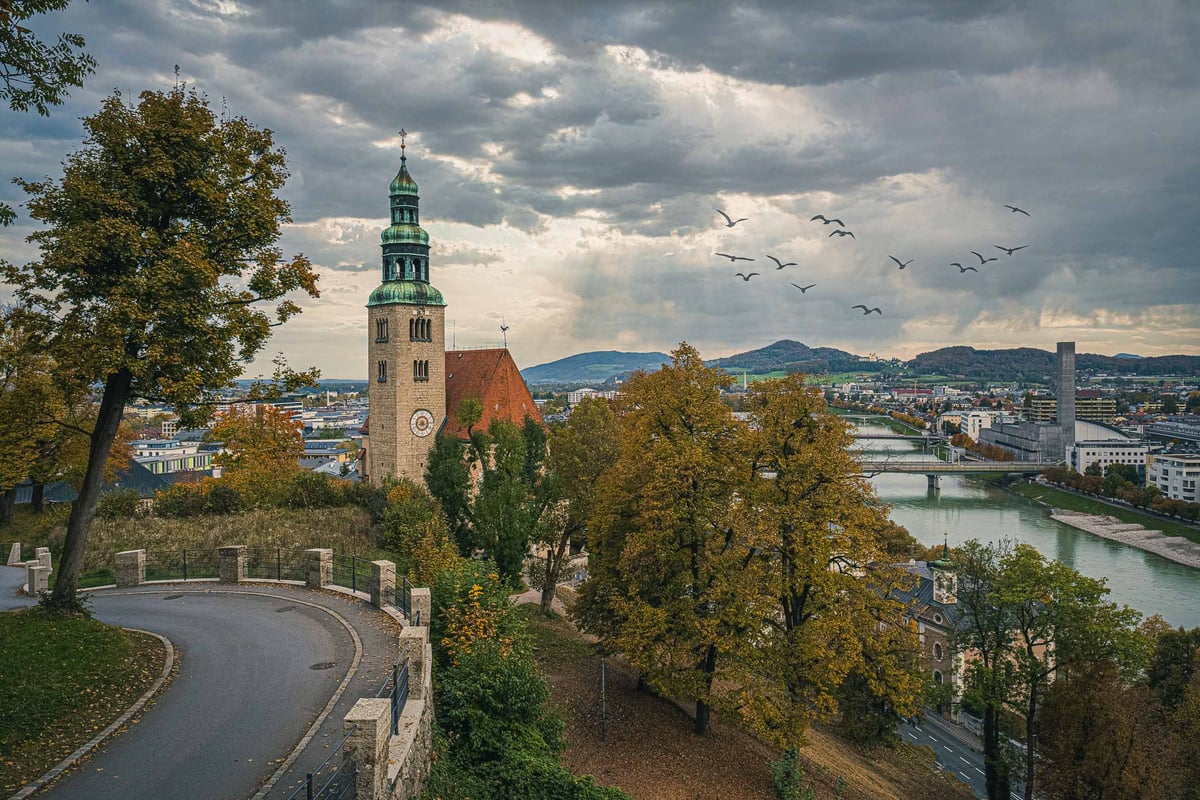
The late Gothic church of the Augustinian friars in the Mülln district, founded in 1355. Inseparable from its neighbour, the Augustinerbräu Müllner Bräu, the biggest beer hall in Austria.
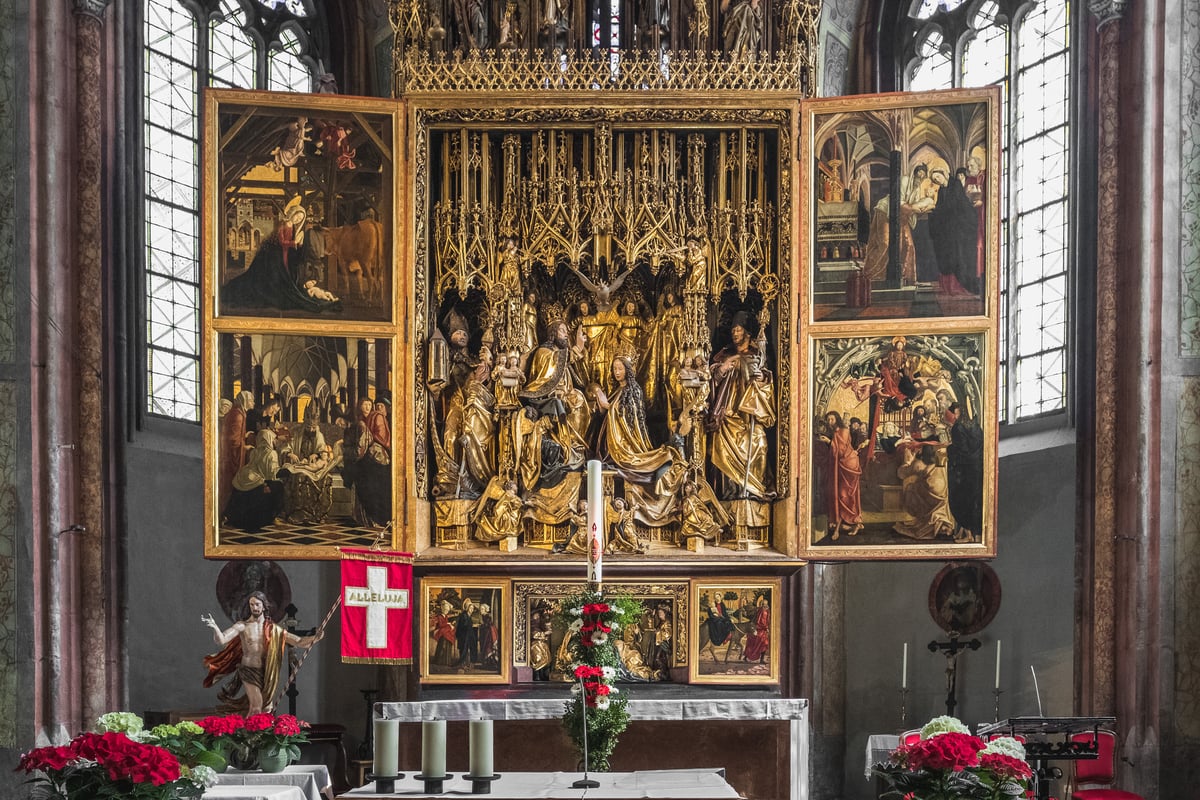
Hallstatt's parish church, Mariä Himmelfahrt (Assumption of Mary), is a 15th-century Gothic church with a late-Gothic winged altar attributed to the workshop of Michael Pacher, the South Tyrolean master who defined alpine late-Gothic painting in the late 1400s.
1481
The pilgrimage church of St. Wolfgang on the Wolfgangsee contains the altarpiece that Michael Pacher spent ten years creating between 1471 and 1481, producing one of the masterpieces of late-Gothic central European art.
Consecrated 1628
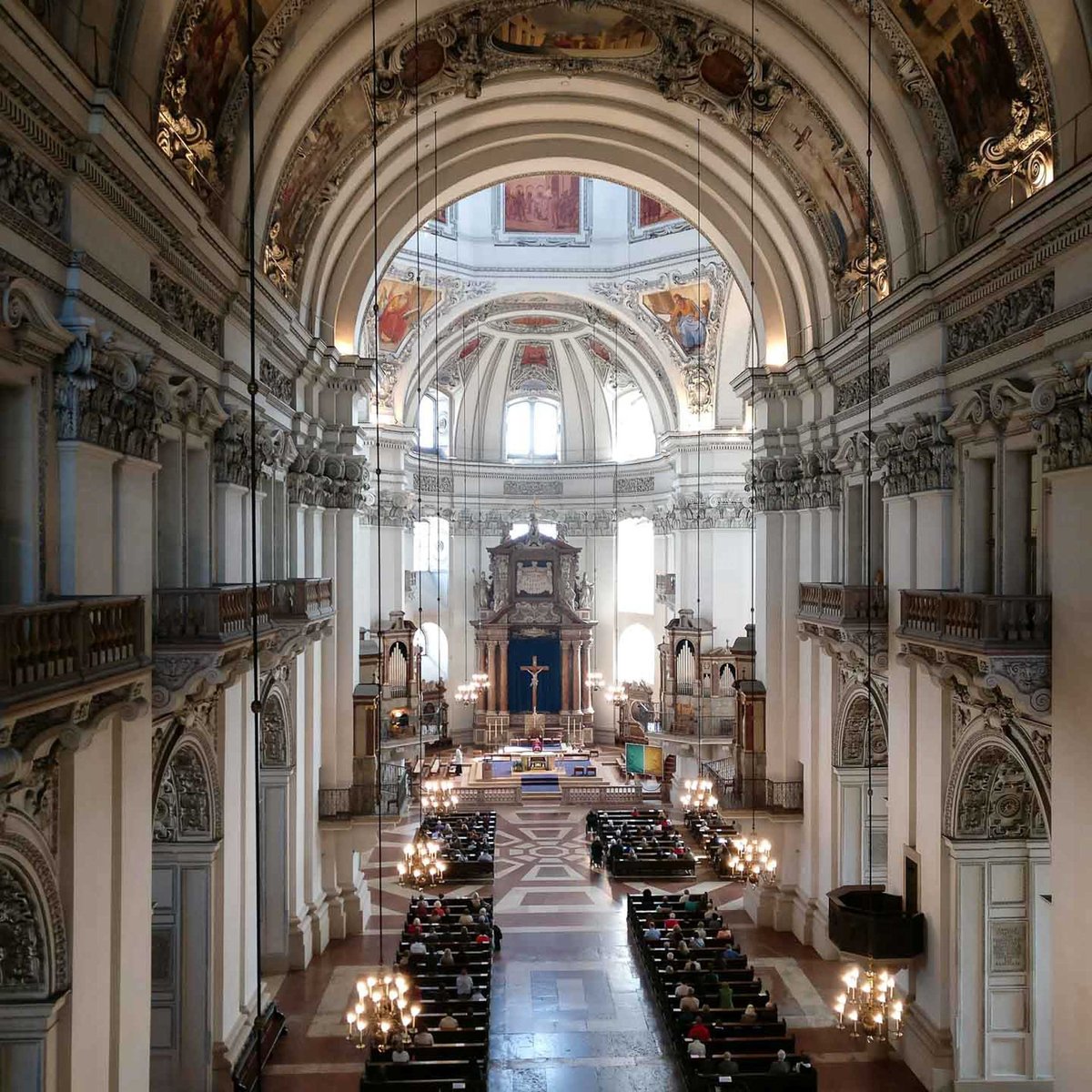
The first baroque cathedral built in the German-speaking world, and the dominant church at the heart of Salzburg's Altstadt. Wolfgang Amadeus Mozart was baptised here on 28 January 1756. The site has held a cathedral since 774, when Saint Virgil of Salzburg consecrated the first one.
Baroque (rebuilt 1749-1753)
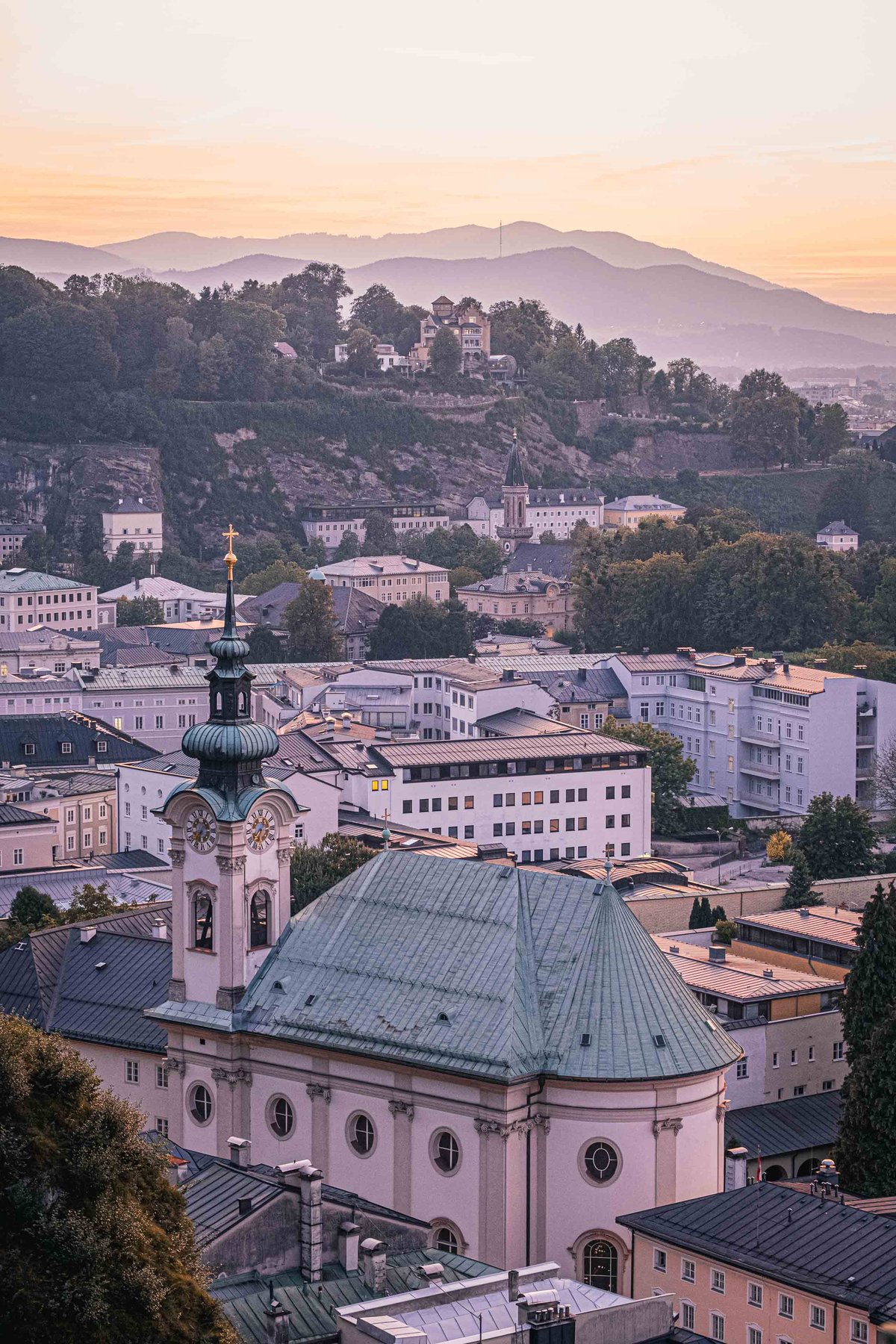
A Baroque parish church on Linzer Gasse on the right bank, rebuilt by Johann Bernhard Fischer von Erlach's pupil Caspar Zuccalli between 1749 and 1753. The entrance leads directly into the Sebastiansfriedhof, the Italian campo santo cemetery commissioned by Wolf Dietrich von Raitenau in 1600.
A parish church in the Neustadt on the right bank, built in Neo-Gothic style in 1892-1898. The original predecessor church on a different site dated from the 1410s and was demolished in 1861 to widen the road to Mirabell Palace. The current church was damaged in WWII and restored. Today it serves Salzburg's Croatian community.
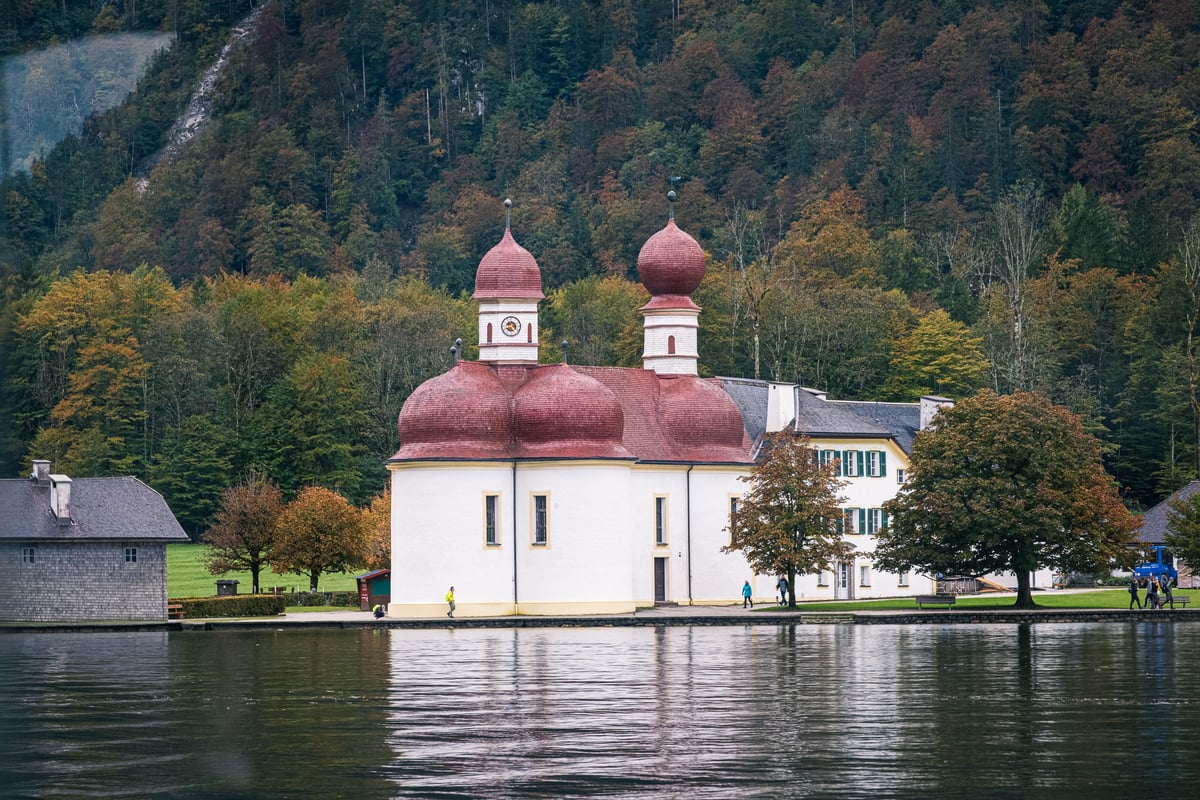
The red-domed pilgrimage chapel on the Königssee western shore. One of the most photographed images in Bavaria. Only accessible by electric boat. Working church, farm, and restaurant. Boat trip includes the famous cliff-echo trumpet demonstration.
Built 1685-1689
A small Baroque church below Nonnberg Abbey in Nonntal, built 1685-1689 by Giovanni Gaspare Zuccalli. Wolfgang Amadeus Mozart composed several works specifically for this church. Along with the Cajetan Church, one of the last two Italian-built Baroque churches in Salzburg.
Baroque
A Baroque church in Nonntal, built on a site with dramatic history: a catastrophic 1669 rockfall from the Festungsberg killed around 220 people sheltering in the predecessor church. Architectural character broadly attributed to Johann Bernhard Fischer von Erlach.
The parish church of Hallein, on Pflegerplatz in the old town centre. Franz Xaver Gruber, who composed the melody of Stille Nacht (Silent Night), is buried here. The church itself is a Baroque structure with earlier medieval foundations, rebuilt and expanded over several centuries. Free to enter.
The collegiate church of the Augustinian Canons at Mattsee, founded by Duke Tassilo III in 777 AD. Emperor Charlemagne visited and held assemblies here. One of the oldest documented ecclesiastical sites in the Salzburg region.
Built 1694-1701
A baroque pilgrimage church at the head of the Kirchental valley near Lofer, designed by Johann Bernhard Fischer von Erlach and set against the dramatic Loferer Steinberge mountains. One of the most beautifully situated churches in Austria.
Built 1671-1674
A twin-towered baroque pilgrimage church crowning the Plainberg hill above Bergheim. Wolfgang Amadeus Mozart composed his Coronation Mass K. 317 for the church's annual celebration of the crowned Madonna image in 1779.