
Street
Goldgasse
Show all 4 photos
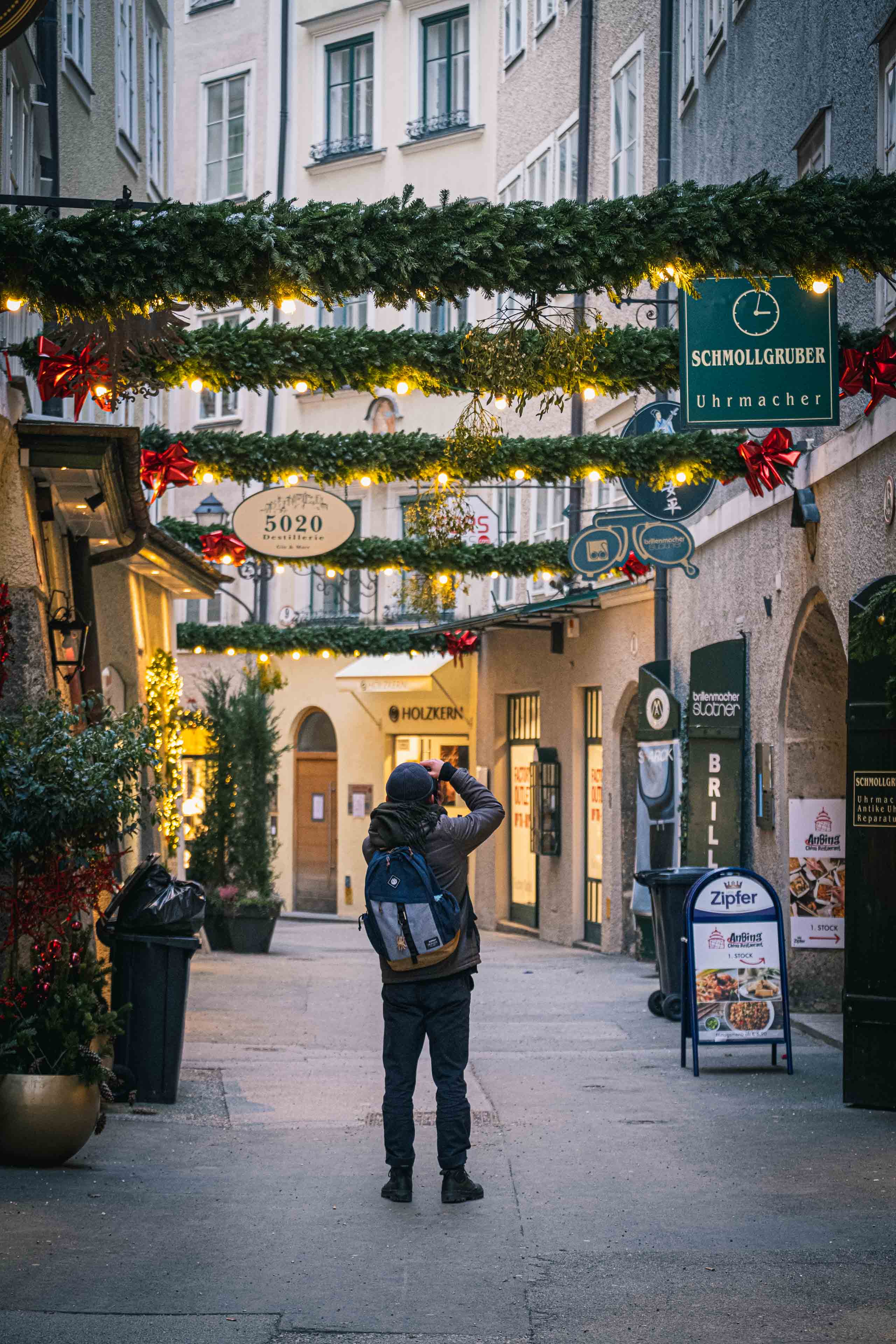
- Christmas garlands and shop signs hang over Goldgasse with a photographer standing in Salzburg old town. (1 / 4)
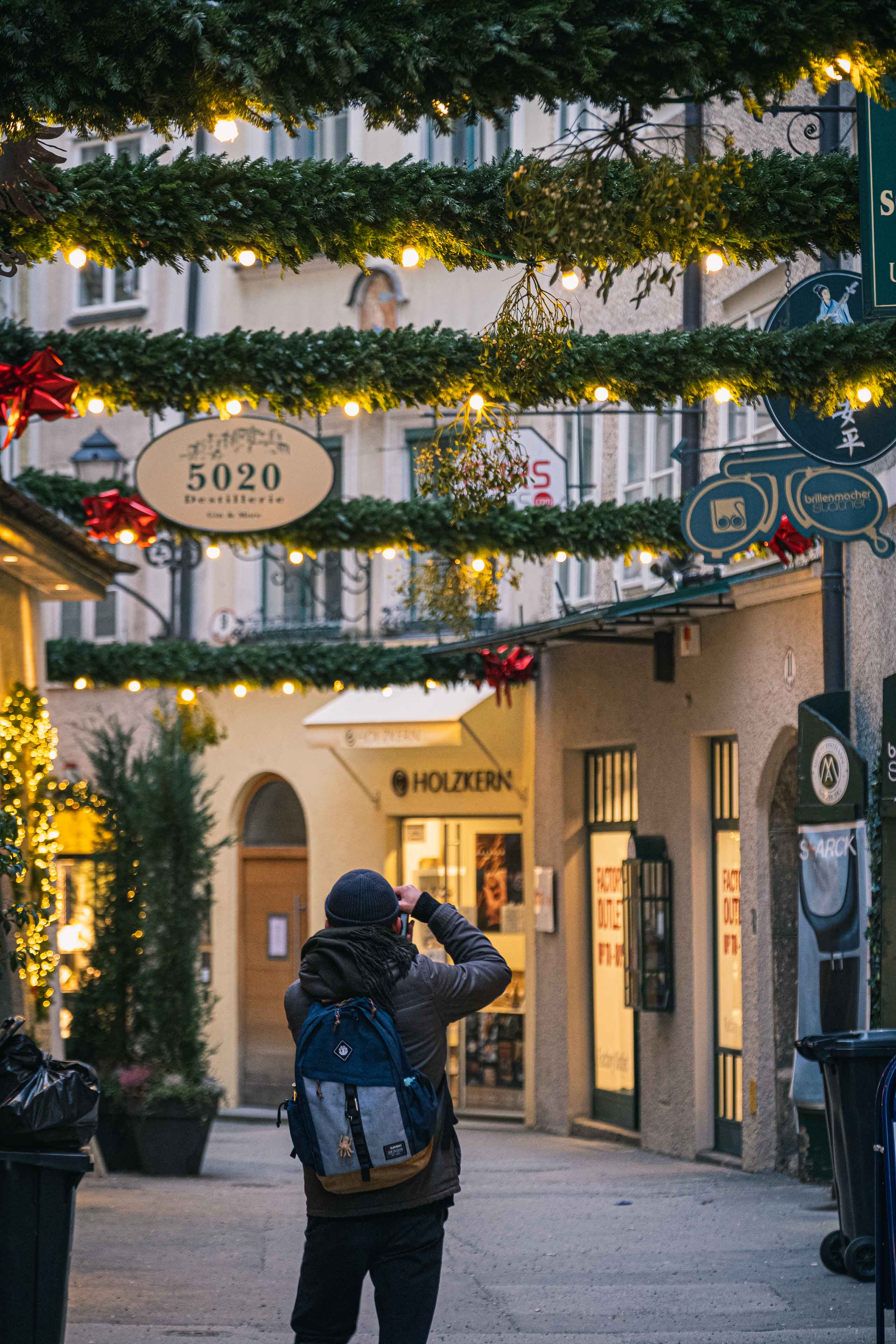
- Photographer under Christmas garlands and guild signs in a decorated Salzburg old town alley. (2 / 4)
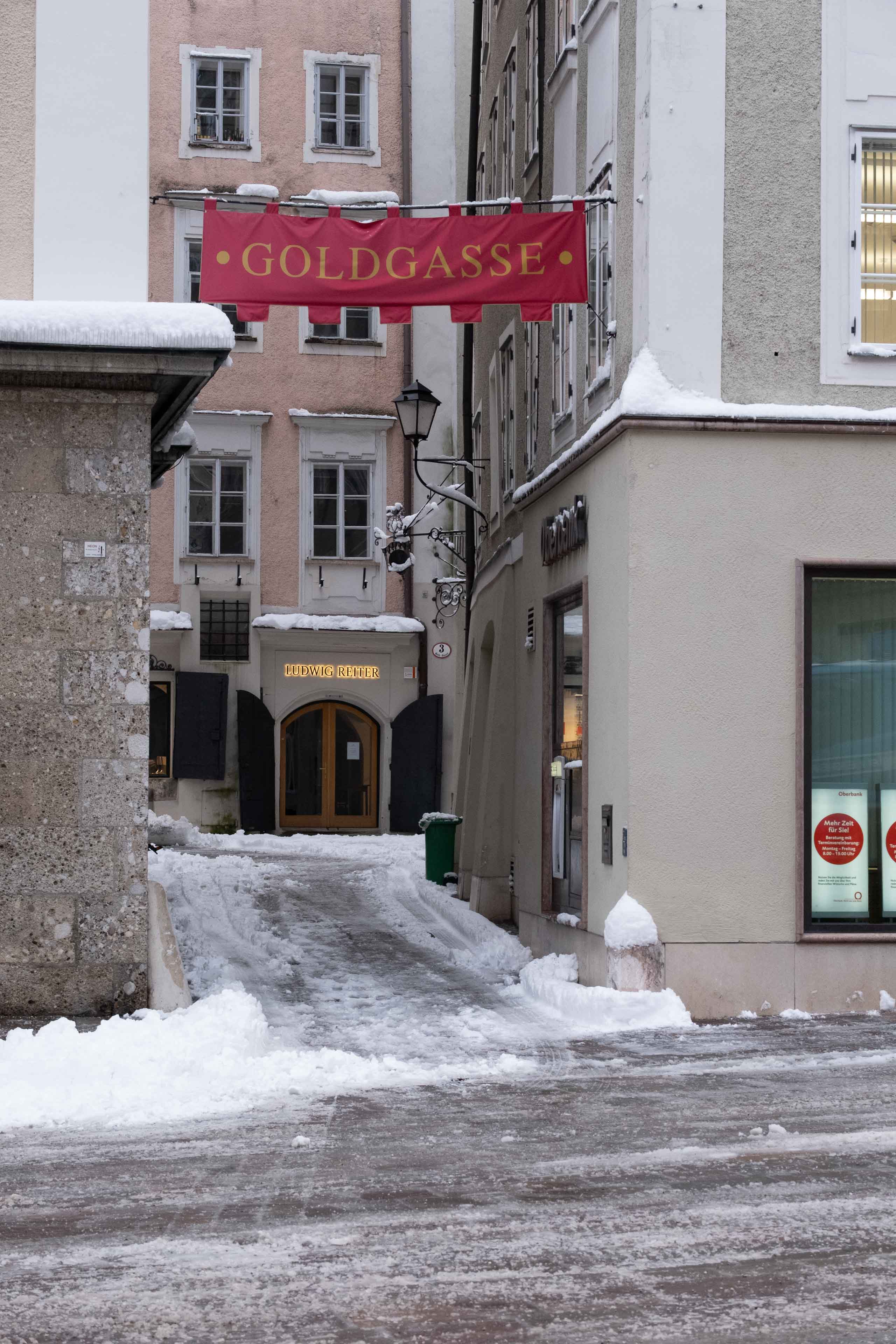
- Red Goldgasse banner hangs over a snowy narrow lane in Salzburg old town in winter. (3 / 4)
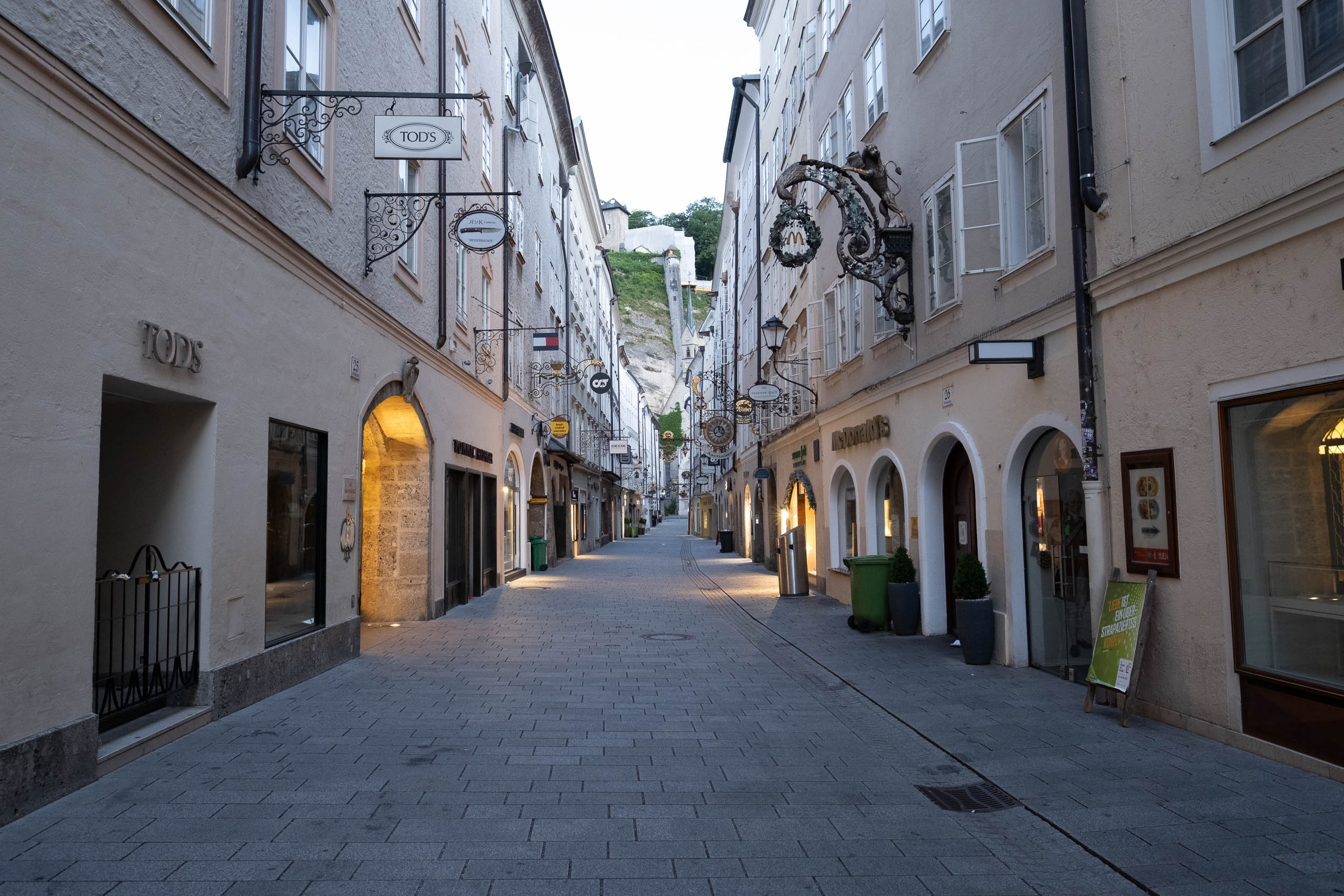
- Quiet narrow shopping alley Goldgasse at early morning with TODs and other shop signs above closed shutters in Salzburg Altstadt (4 / 4)
Snapshot
A medieval lane whose name comes not from gold but from goldsmiths: craftsmen who set up workshops here from at least the 1500s and whose trade outlasted barrel makers, dairy vendors, and locksmiths to give the street its permanent identity.
The Story
Goldgasse runs between the Residenzplatz precinct and the Salzach embankment, a short, narrow lane that most visitors encounter by accident while crossing between the cathedral area and the river. Quieter than Getreidegasse, less ceremonial than Residenzplatz, it occupies the middle register of the Altstadt’s street hierarchy: a working lane for crafts and trade.
The name tells the story. Before it was Goldgasse it was Collatagasse, named for a tax paid to the cathedral chapter by artisans renting space near the market. Then Sporergasse (barrel makers), Milchgasse (dairy vendors), Schlossergässchen (locksmiths). The goldsmiths arrived and stayed, and the name reflects the trade that outlasted all the others. Master smith Anton Singer lived at No. 19 in 1740 and is recorded in city documents as having commissioned a devotional ornament, the kind of small detail that connects a street name to a specific, verifiable person.
The Reitsamerhaus at No. 5 has been recorded in city archives since 1424, making it among the earliest documented addresses on the lane. Its stone base and vaulted cellar survived the fires that periodically swept the Altstadt’s timber-frame upper stories. The building at No. 12 was once the workshop of bell founders, a trade that left the lane with a particular sonic resonance in the records even if no bells are cast there today.
Hotel Goldgasse now occupies the building with the oldest documented presence on the lane, tracing coppersmith workshops from the early 1300s. The conversion in the late 1960s preserved the stone staircase, stucco facade, and flagstone floors. Its rooms carry opera murals referencing the Salzburg Festival, a contemporary layer over a very old substrate.
Visiting
Walk the length of Goldgasse from Alter Markt toward the river, five minutes at a steady pace. Free, always accessible. The lane is best as a connector: slot it between Residenzplatz and a walk along the Salzach embankment. Hotel Goldgasse at No. 10 has a vaulted restaurant if you want to stop. Look at the facade details at Nos. 5, 6, and 12 for the architectural layering described in the building records. Combine with Alter Markt and Judengasse for a full circuit of the southern Altstadt’s quieter lanes.