Snapshot
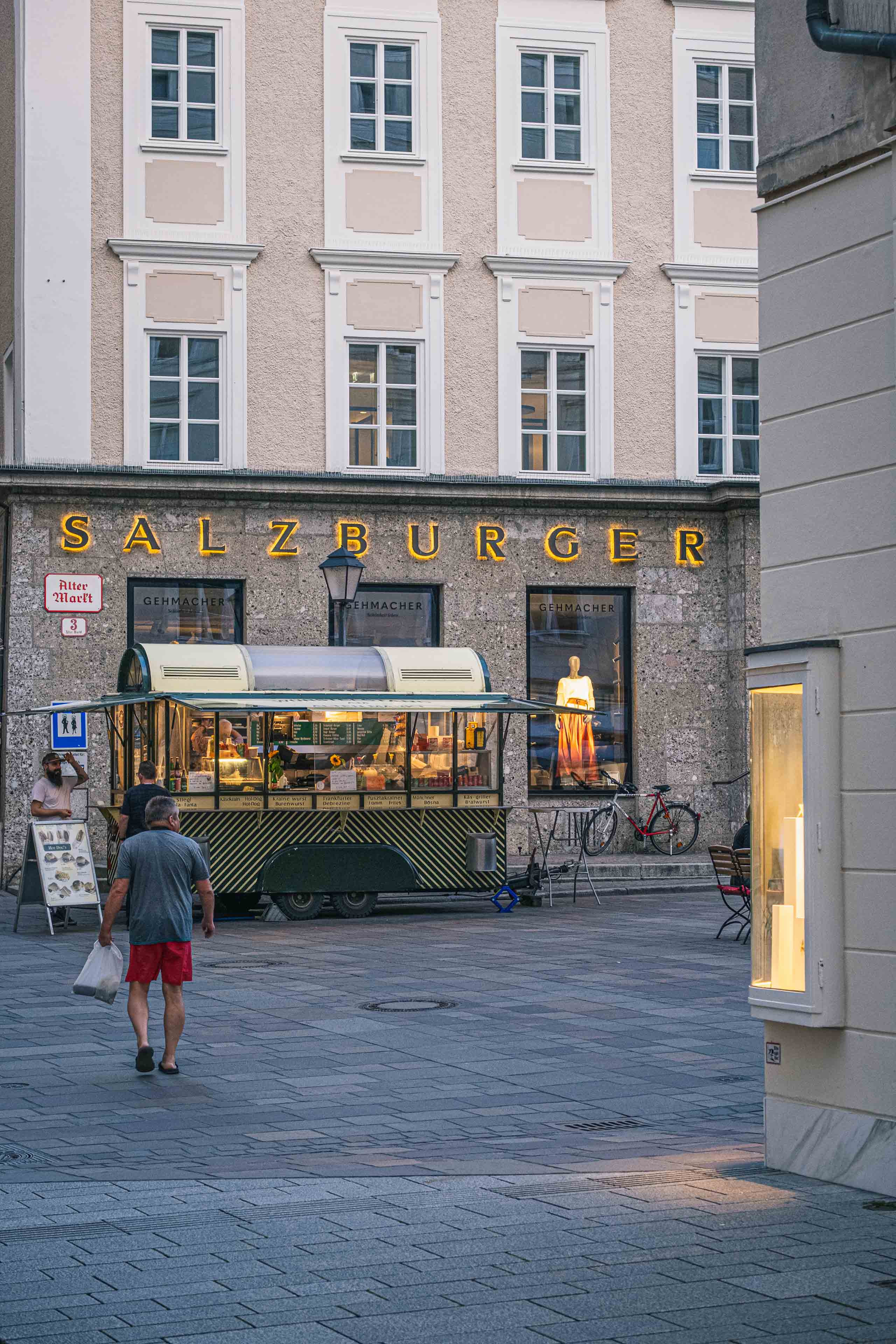
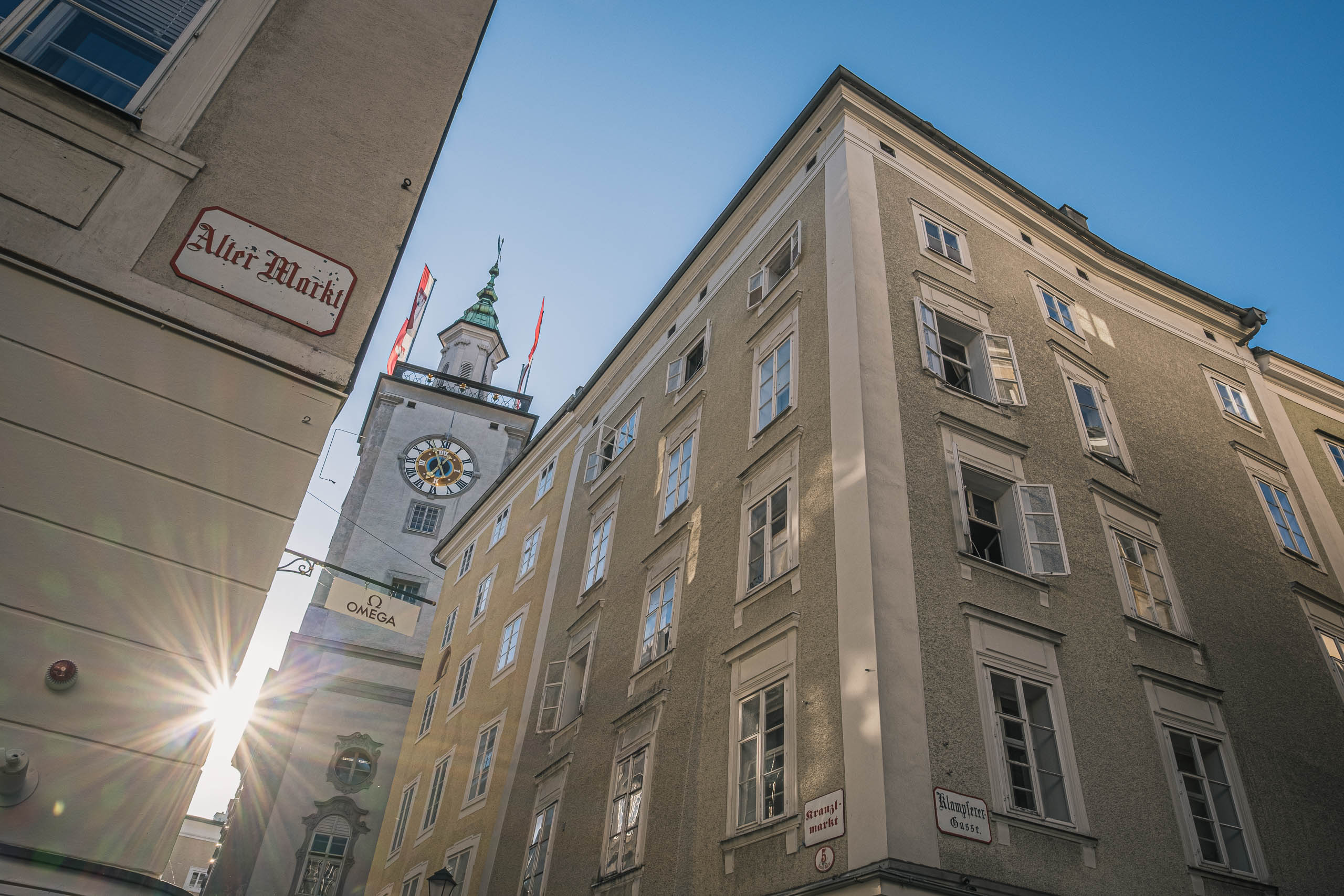
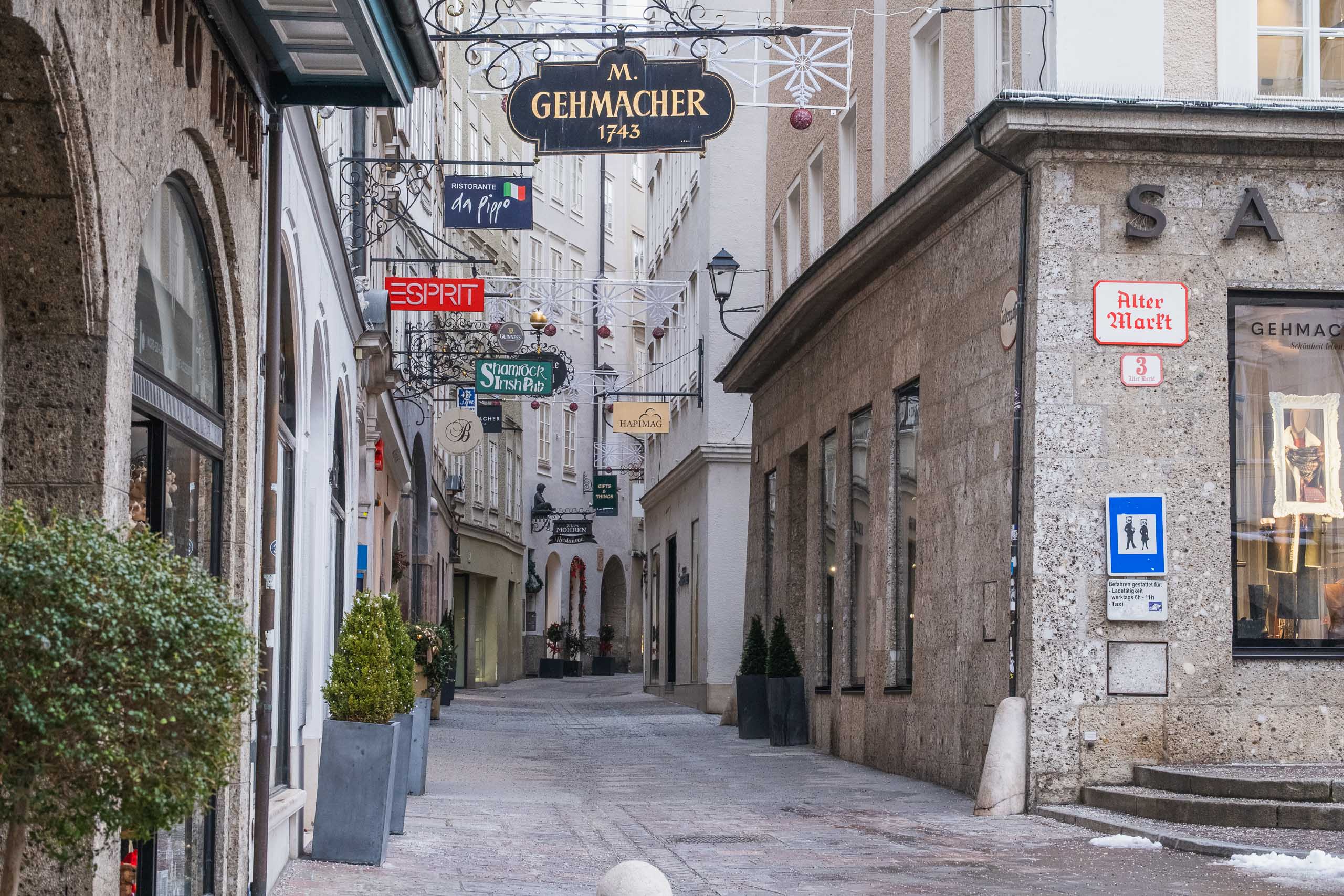
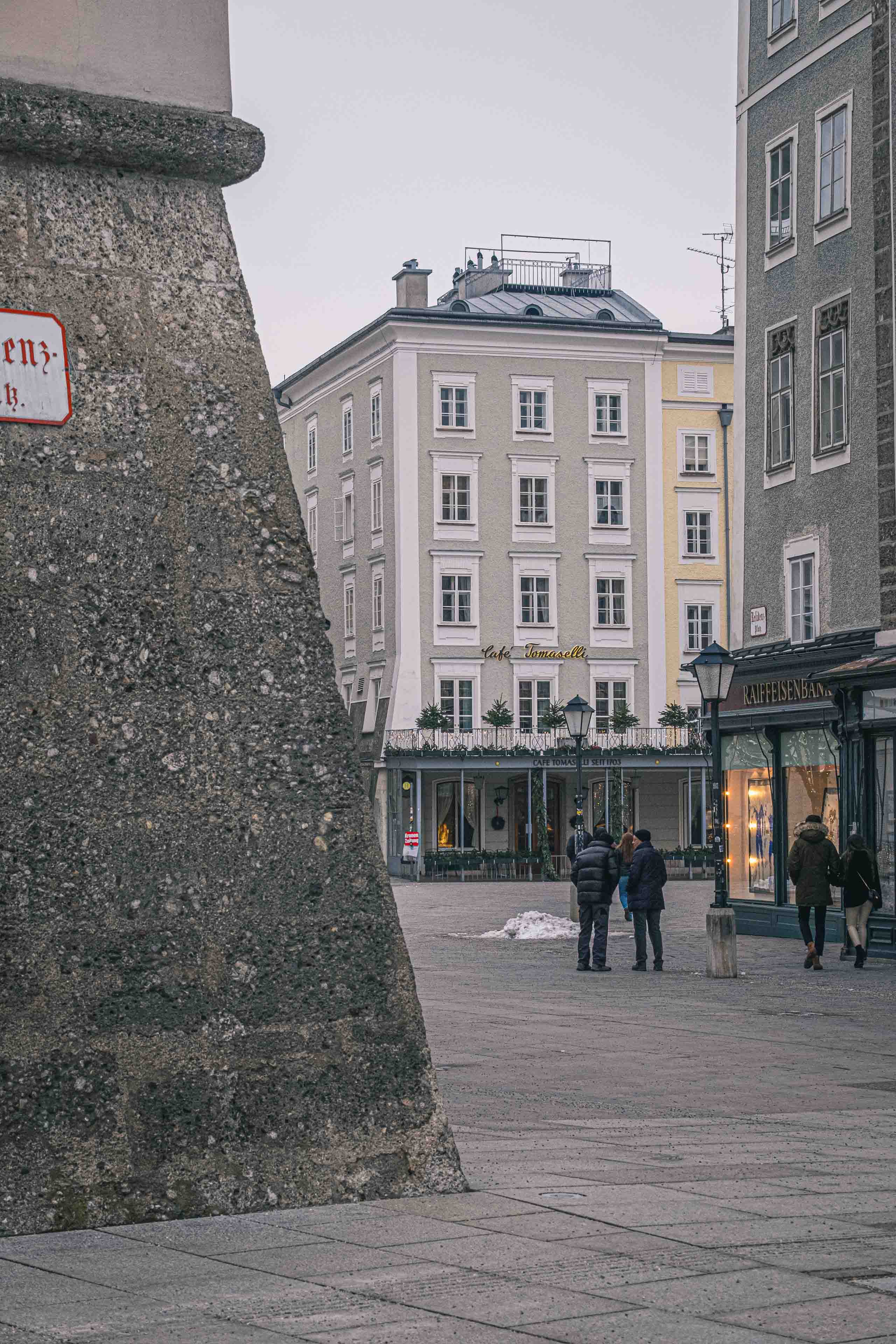
The Alter Markt has been Salzburg’s oldest market square since around 1280, but it does not feel like one anymore. The stalls left in 1857, and what remained was a compact, arcaded square with a 16th-century iron fountain, Austria’s oldest coffee house, and the original shop where the Mozartkugel was invented.
The Story
The square was laid out around 1280 as the city’s primary trading ground, sandwiched between Getreidegasse and the cathedral district. Dairy stalls, poultry sellers, and seasonal Lent markets filled it for six centuries. When the weekly market moved to Universitätsplatz in 1857 and the last seasonal fair closed in 1889, the square shifted character entirely. It became what it is today: a quiet, pedestrian rectangle lined with pastel Baroque façades, independent shops, and two of the oldest continuously operating businesses in Austria.
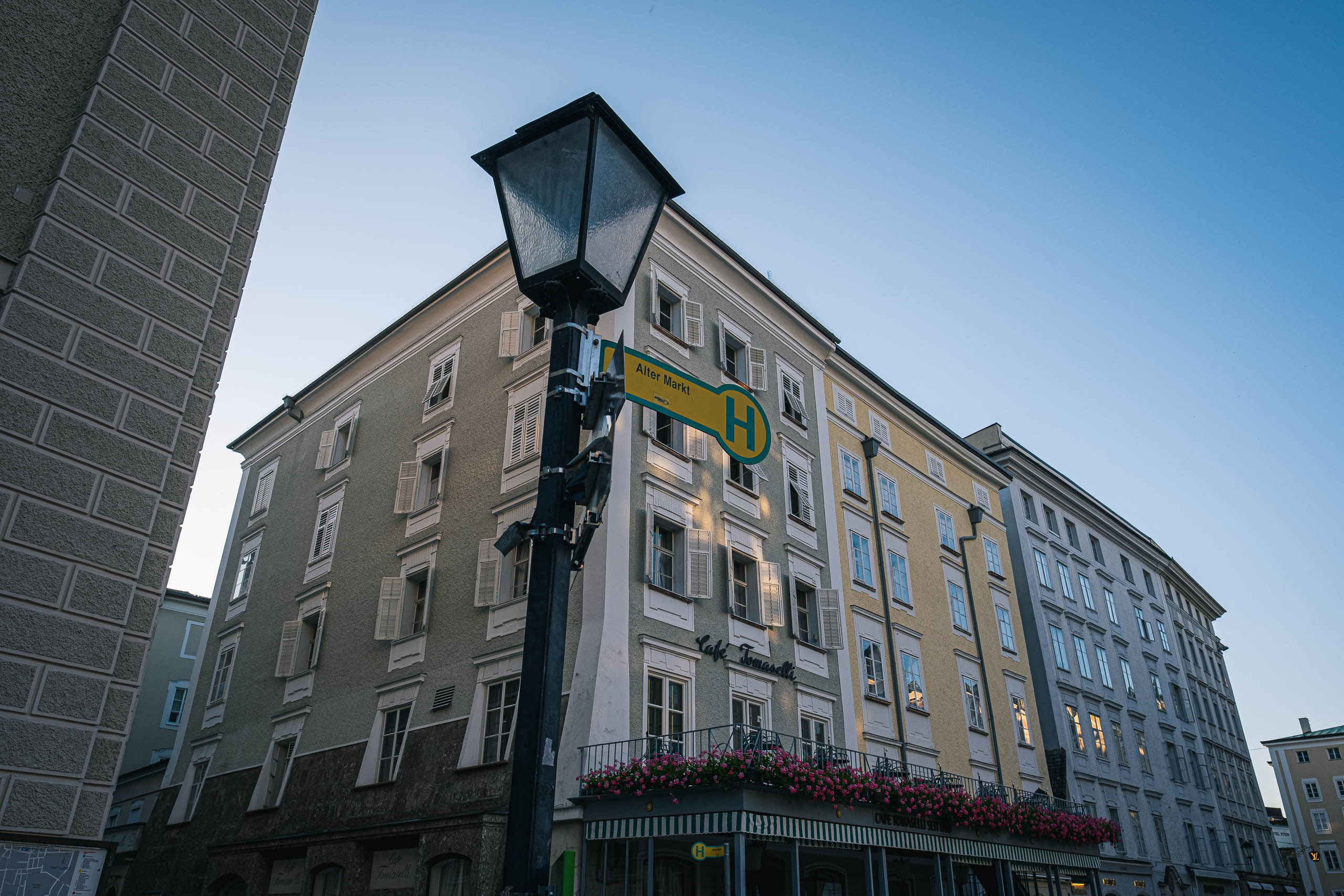
Cafe Tomaselli opened on nearby Goldgasse in 1700 and moved to its current location on the square in 1764, when Anton Staiger, the archbishop’s major-domo, invited aristocrats and scholars to its tables. Mozart visited. The current owners are still from the Tomaselli family. The interior, dark wood panelling, marble countertops, brass chandeliers, terrace tables facing the square, has not changed in any fundamental way for more than 250 years.
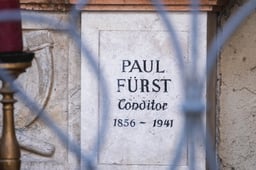
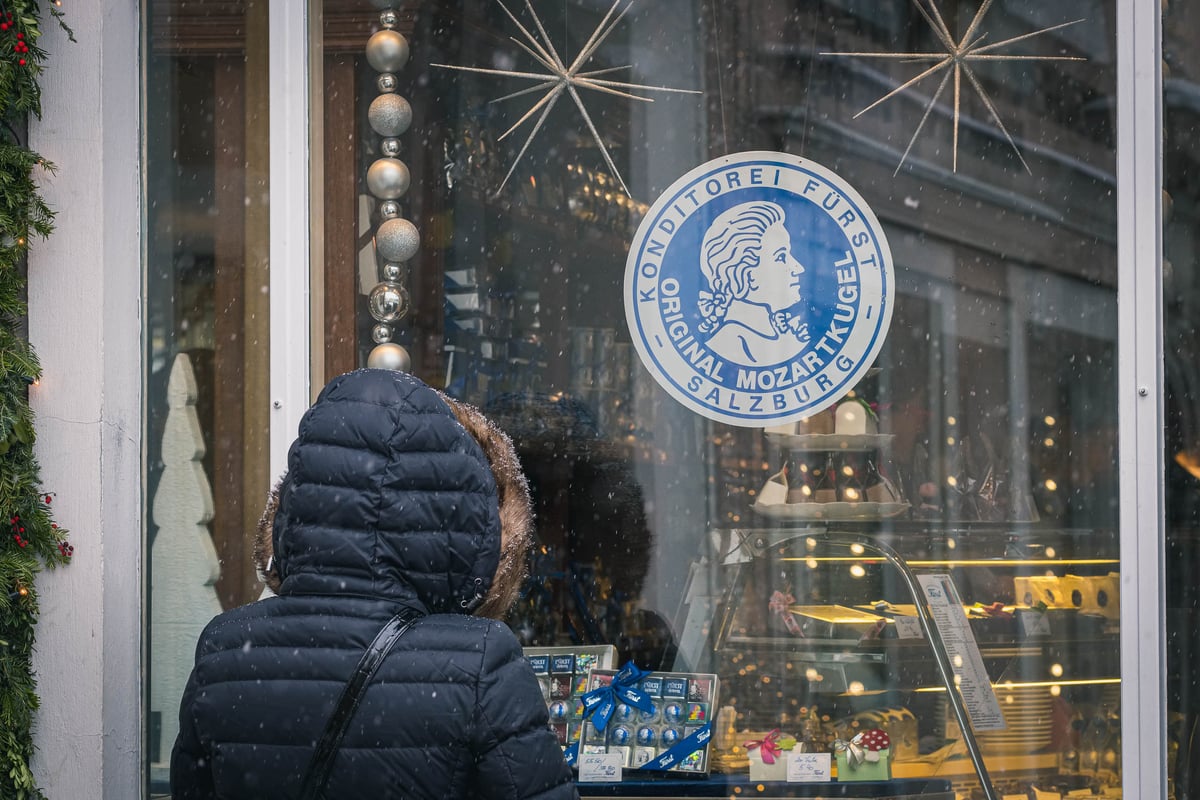
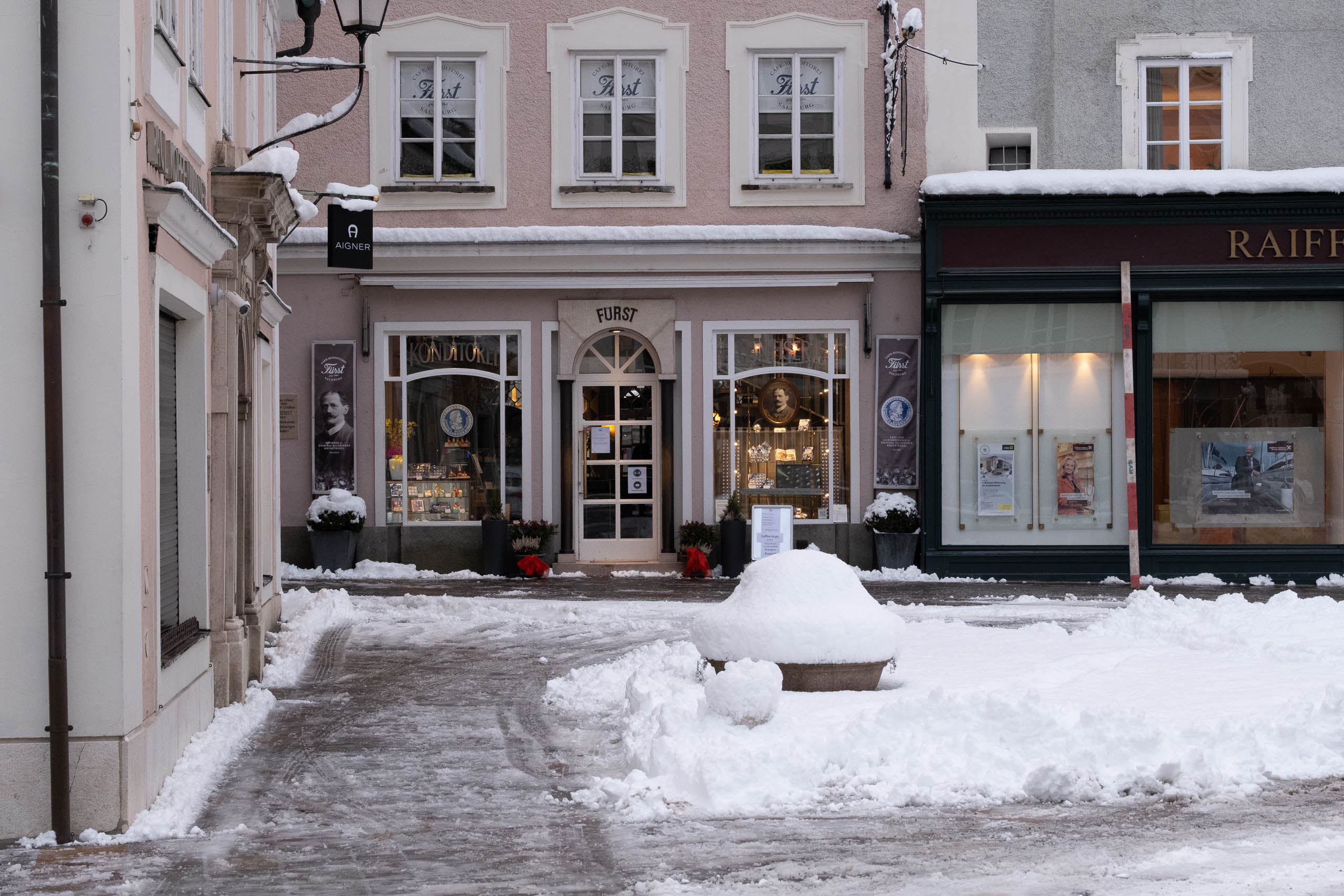
Across the square, Konditorei Furst occupies the storefront where Paul Furst invented the Mozartkugel in 1890. He made it to mark the centenary of Mozart’s death: pistachio marzipan at the centre, wrapped in hazelnut nougat, coated in dark chocolate, finished by hand. He never patented the recipe. Every mass-produced version sold throughout the city under Mozart’s portrait is a licensed imitation; the Fürst shop is the original, and it still makes each piece by hand.
The Florianibrunnen in the square’s centre carries several centuries in one object. The well itself dates to 1488. A wrought-iron fence was added by blacksmith Wolf Guppenberger in 1583, its decorative details including unicorns and mounted riders, one of the most precisely dated pieces of ornamental metalwork in the Altstadt. The octagonal marble basin came in 1685-87, and the bronze figure of Saint Florian by Josef Anton Pfaffinger was placed on top in 1734. Florian is the patron saint of firefighters; his presence in a square surrounded by old timber-framed buildings was not decorative.
The square’s most overlooked building is at number 10a: 1.42 metres wide, built sometime between 1830 and 1860 to fill a narrow gap in the street line. A jewelry shop still operates on its upper floor. The Altes Rathaus on the square’s edge dates from 1407; its Rococo façade was applied in 1772 over a medieval core that the city council has been using as a courthouse and meeting hall for over 600 years.
Visiting
Free and always accessible. Cafe Tomaselli terrace is the best place to sit and observe the square; expect to pay EUR 4 to 6 for coffee and cake. Konditorei Furst handmade Mozartkugeln cost around EUR 1.50 to 2.00 each, sold from the shop facing the square. The square is a five-minute walk from Getreidegasse and Mozartplatz, and ten minutes from Domplatz. Look for the narrowest house at number 10a, the 1583 iron fence detail on the fountain, and the Altes Rathaus moon-phase disk and Justitia figure above the portal.