Snapshot
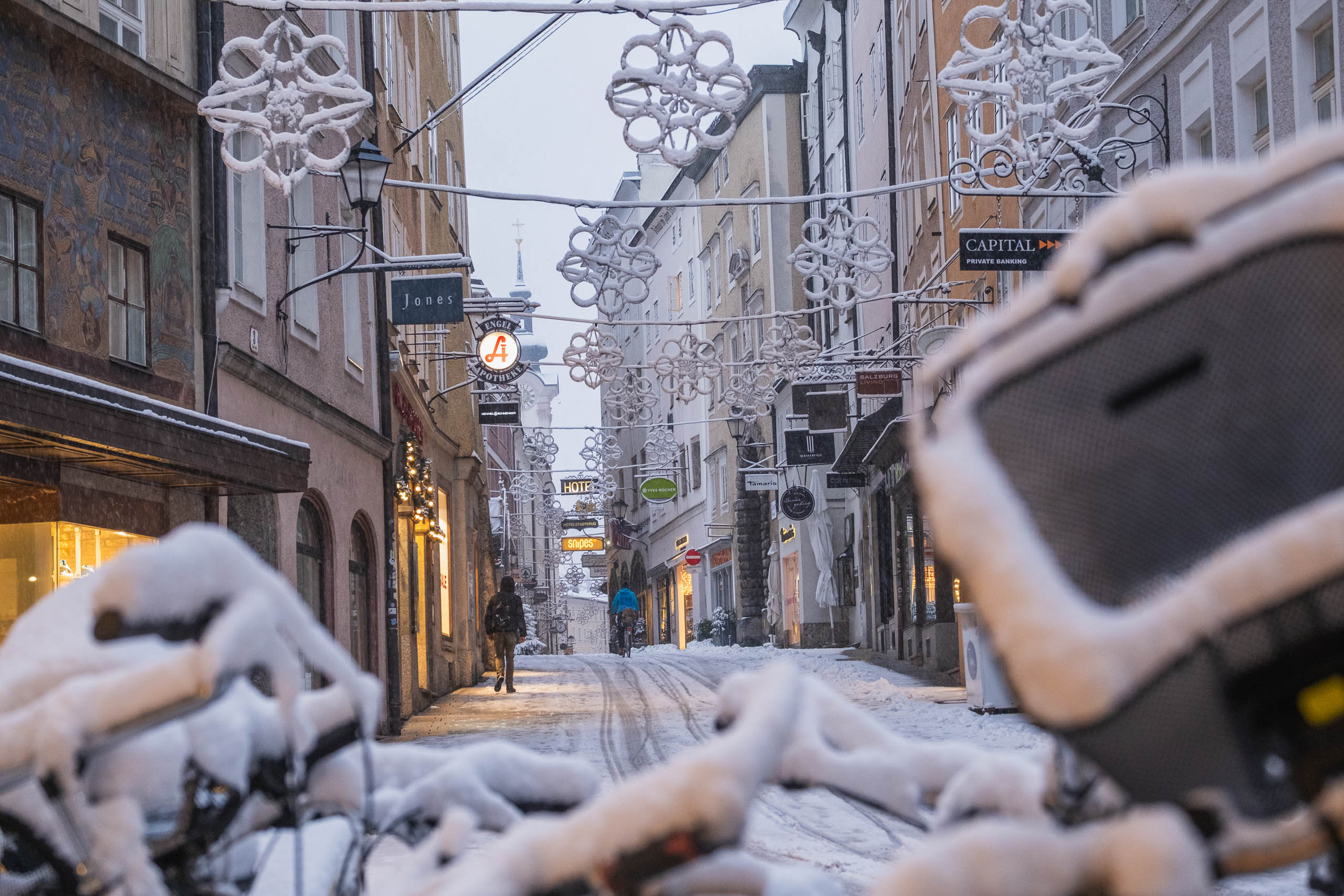
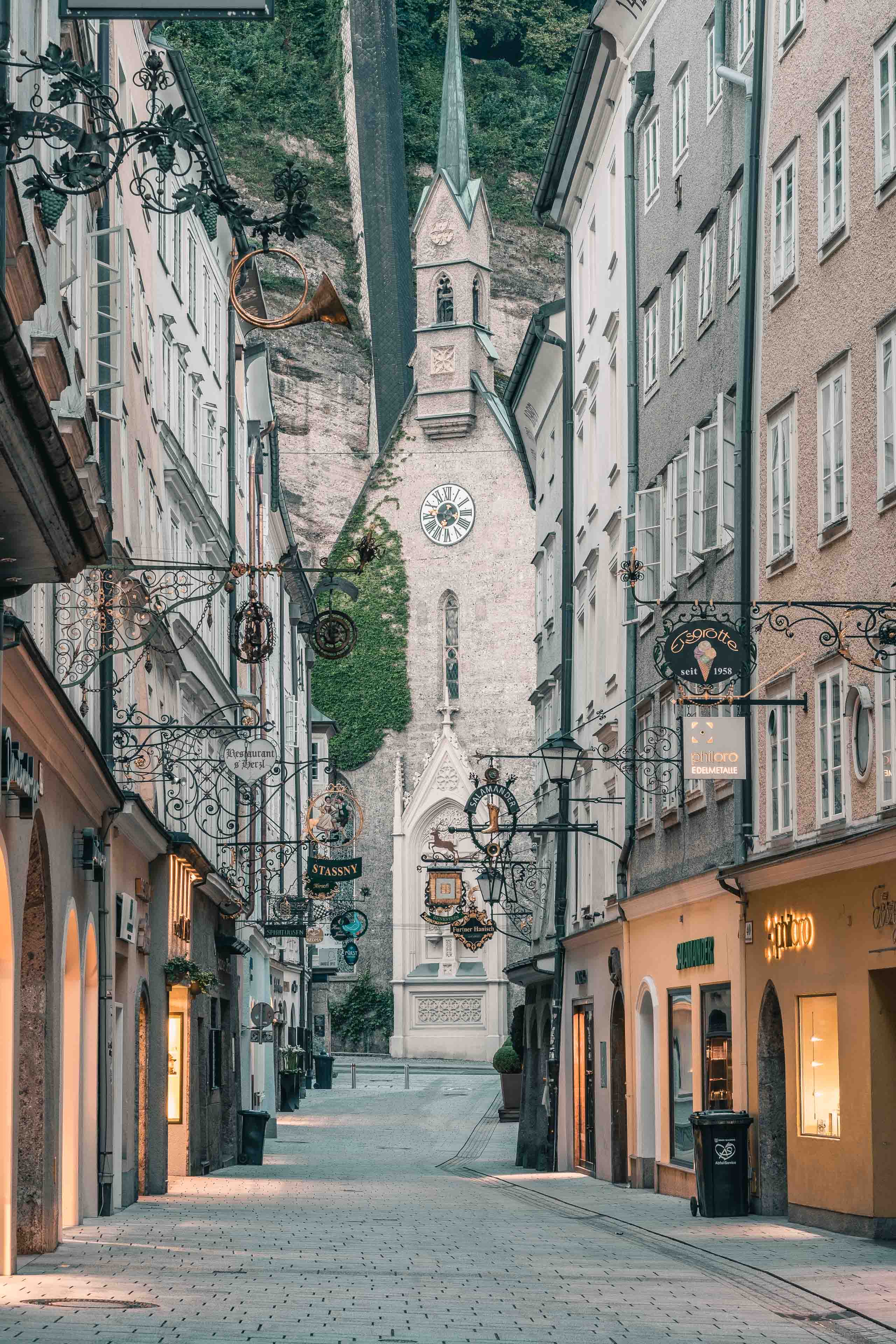
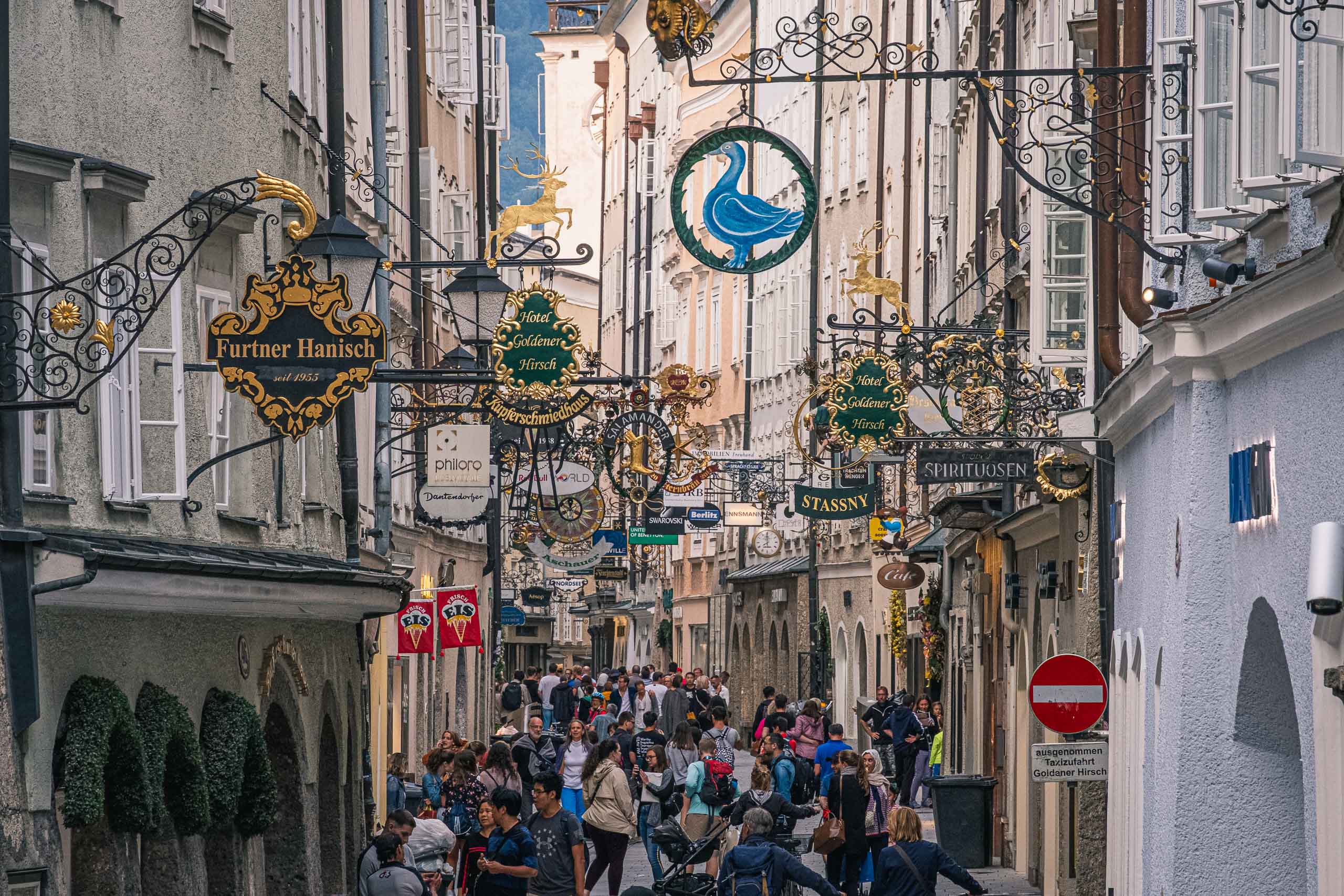
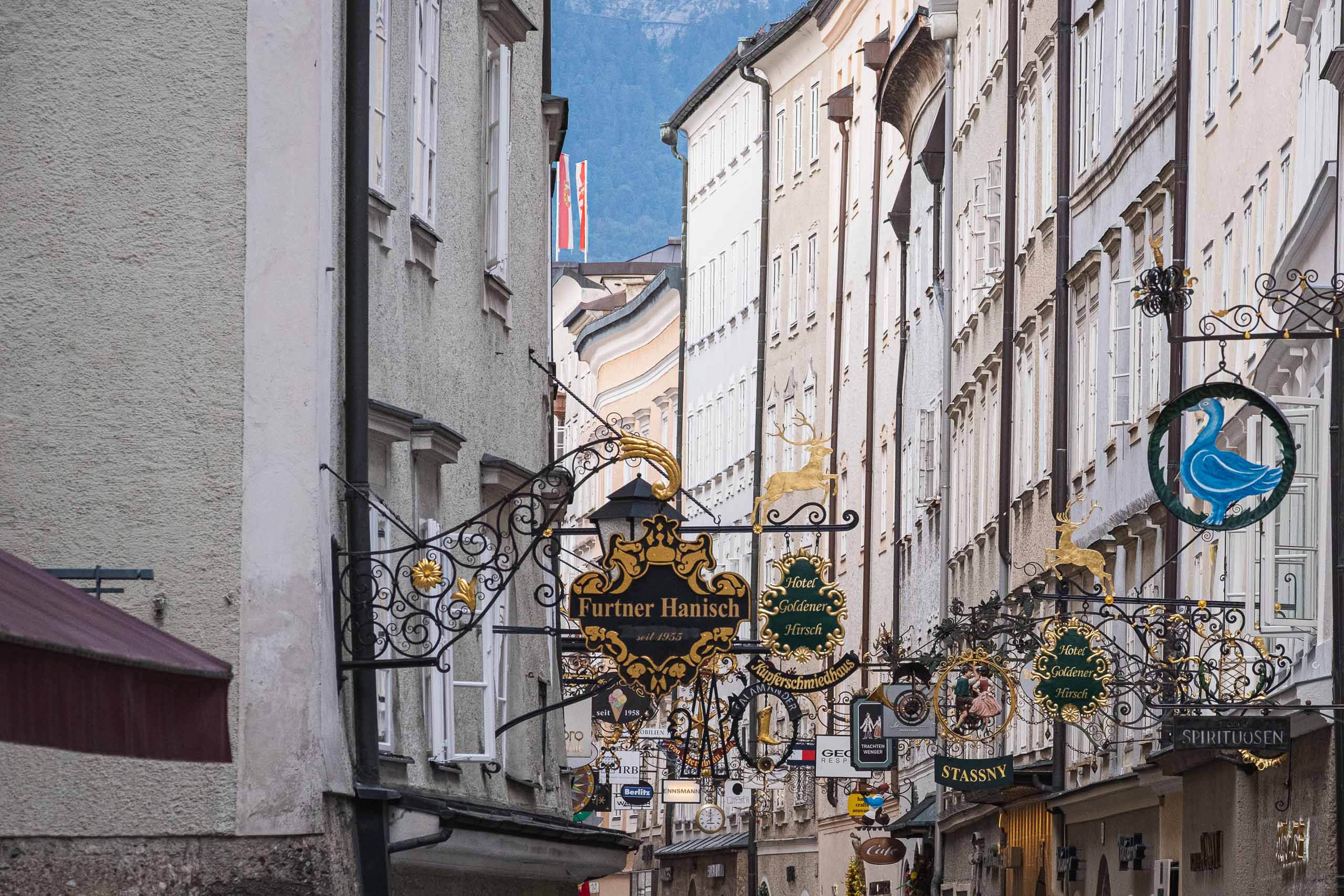
Salzburg’s most famous street is also its oldest trading artery, a narrow medieval lane where Wolfgang Amadeus Mozart was born and where the wrought-iron guild signs above every shopfront tell the city’s commercial history in iron silhouettes.
The Story
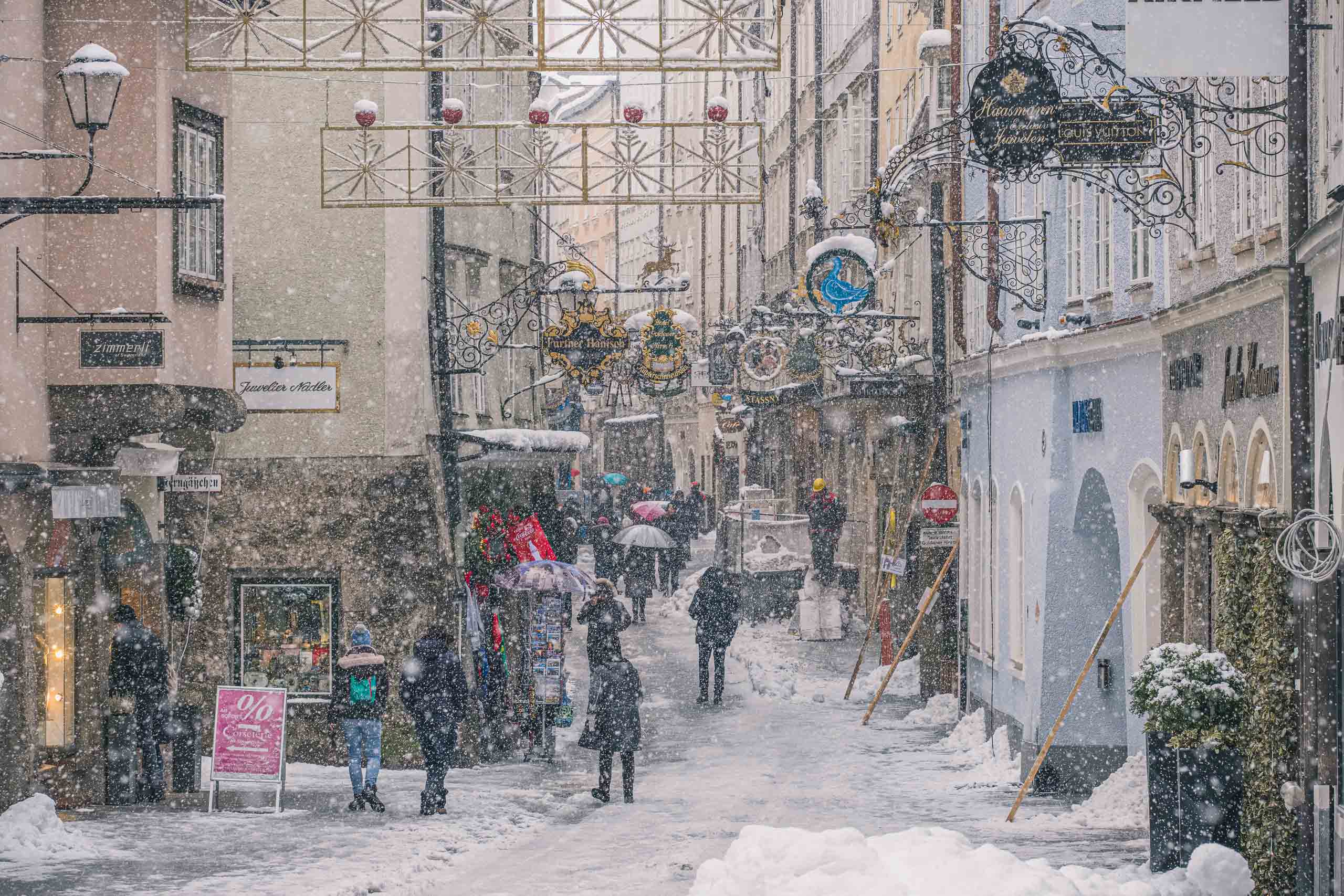
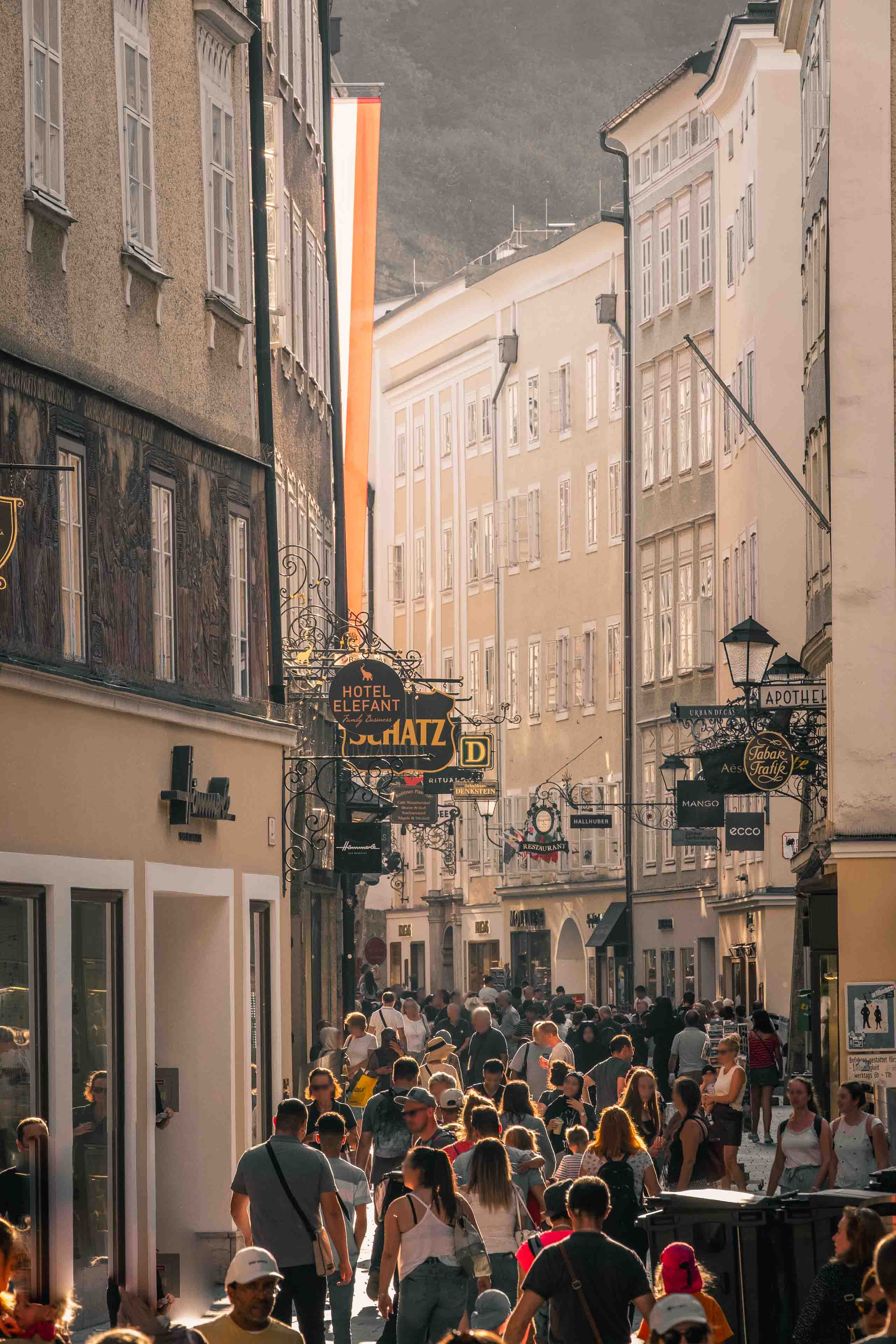
Getreidegasse runs east-west through the heart of the Altstadt, roughly five meters wide, flanked by tall burgher houses whose upper floors lean slightly inward over the lane below. The width has barely changed since the medieval period. The baroque rebuilding that transformed so much of Salzburg left the street’s basic proportions untouched.
At No. 9 stands Mozart’s Birthplace, the yellow house where Wolfgang Amadeus Mozart was born in 1756. The Mozart family rented their apartment from the Hagenauer family, who owned the building and lived upstairs. The Hagenauers were wealthy merchants and among Leopold Mozart’s closest friends, a relationship that shaped the family’s Salzburg life as much as the archbishop’s court did.
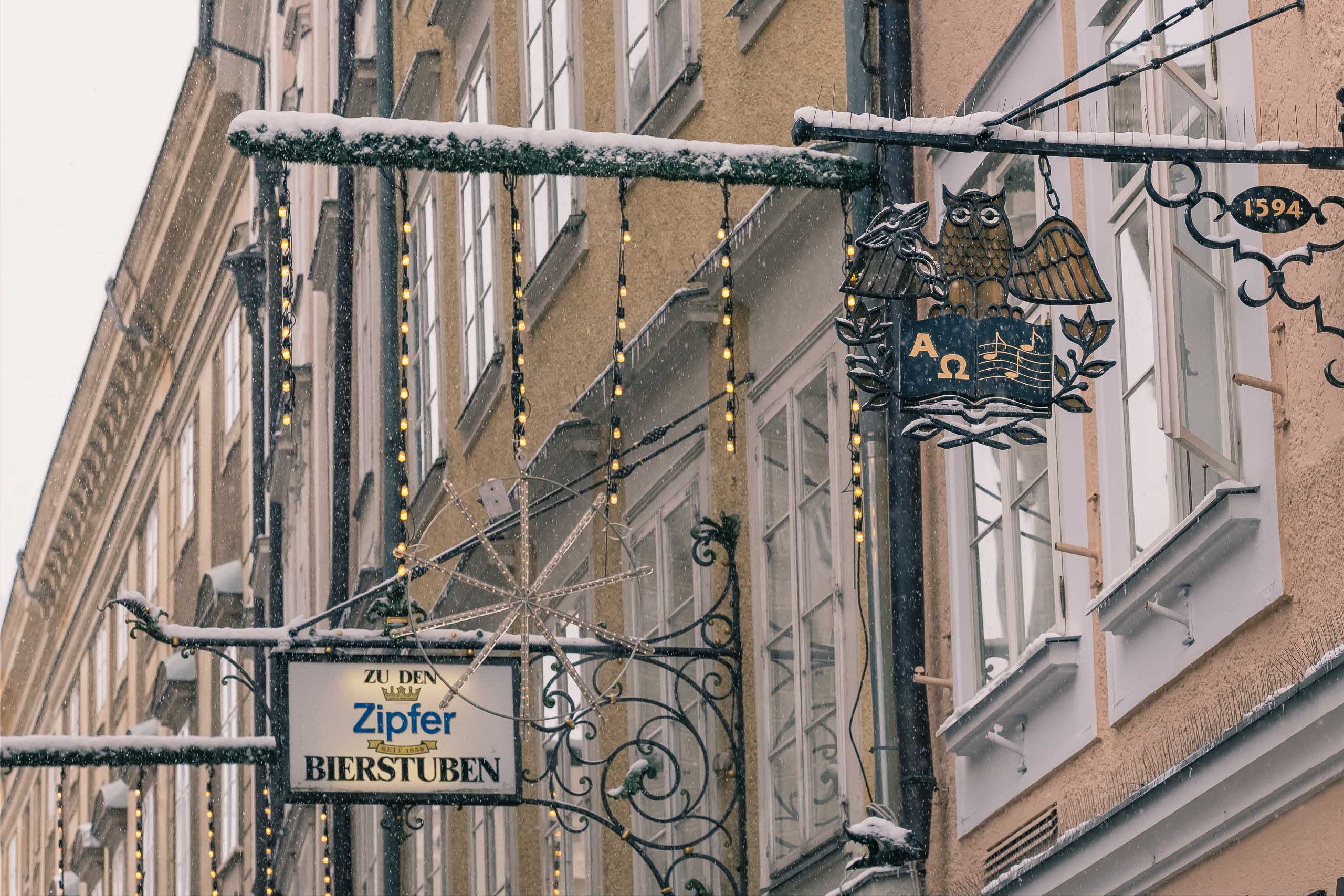
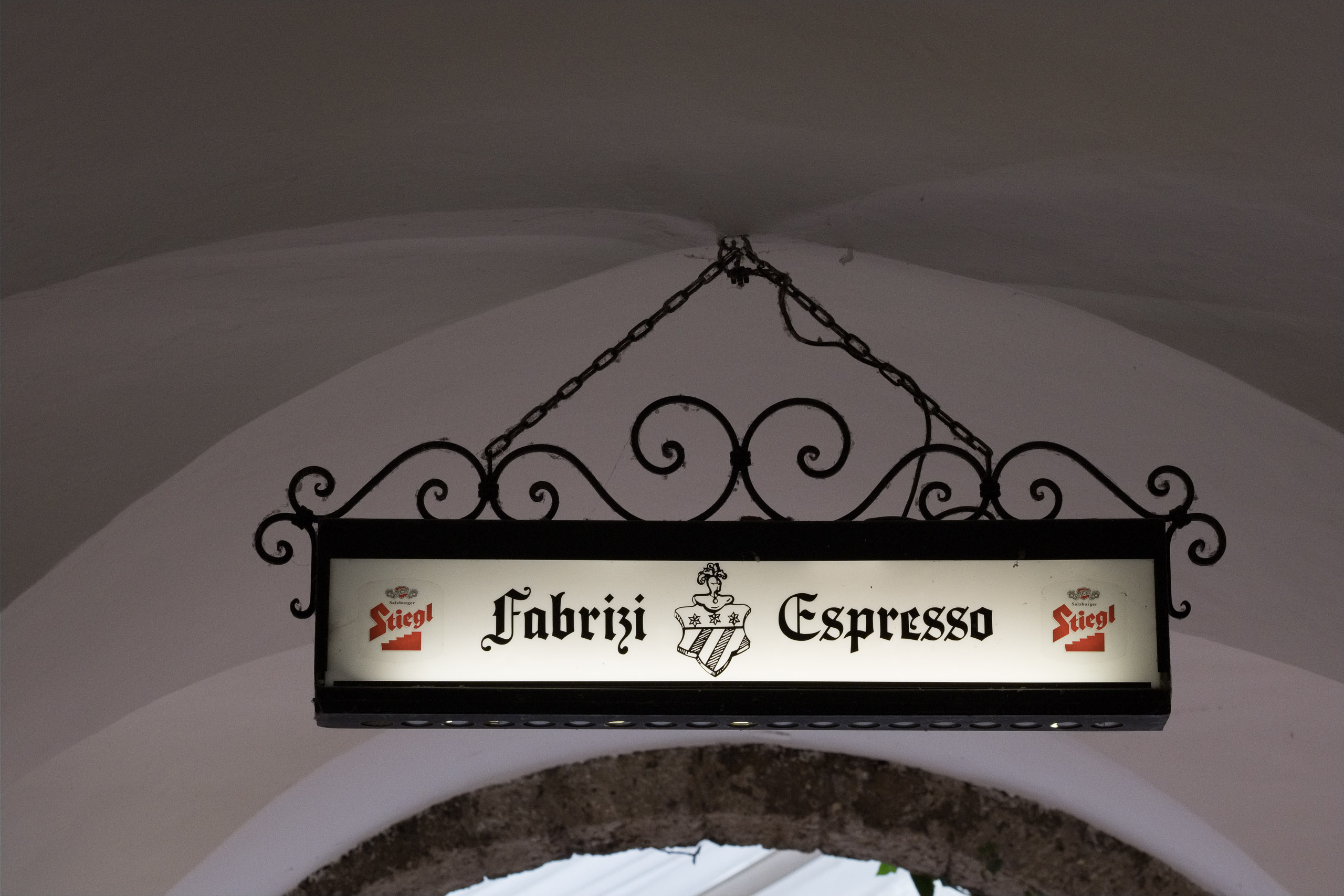
The street’s wrought-iron guild signs are one of Salzburg’s most photographed details, but they are also functional documents. In a city where most residents were illiterate, each iron sign announced the trade practiced below: a pretzel for a baker, scissors for a tailor, a boot for a cobbler. Reading the signs down the full length of the street is a quick course in medieval urban commerce.
The Durchhäuser, narrow passageways cutting through building blocks to inner courtyards and parallel streets, are the other defining feature. They arose from the medieval pattern of land ownership, where plots ran deep from the street to rear yards. The passages gave those rear properties access to the street and gave everyone else a shortcut. Locals still use them. Visitors discover them by accident, stepping out of the main flow into a quieter courtyard and then emerging onto Judengasse or the Universitätsplatz.
Visiting
Walk the full length from Rathausplatz in the east to Kranzlmarkt in the west, roughly 400 meters. No. 9 is Mozart’s Birthplace and requires a ticket to enter. The street itself is always accessible and free. Come early morning to read the facades and guild signs without the midday crowds. The Free Walking Tour Salzburg passes through on every tour. Combine with Alter Markt (directly east) and Residenzplatz (a short walk south). Explore the Durchhauser: the passages are unmarked; spotting them is part of the experience.
1.5 - 2 hours
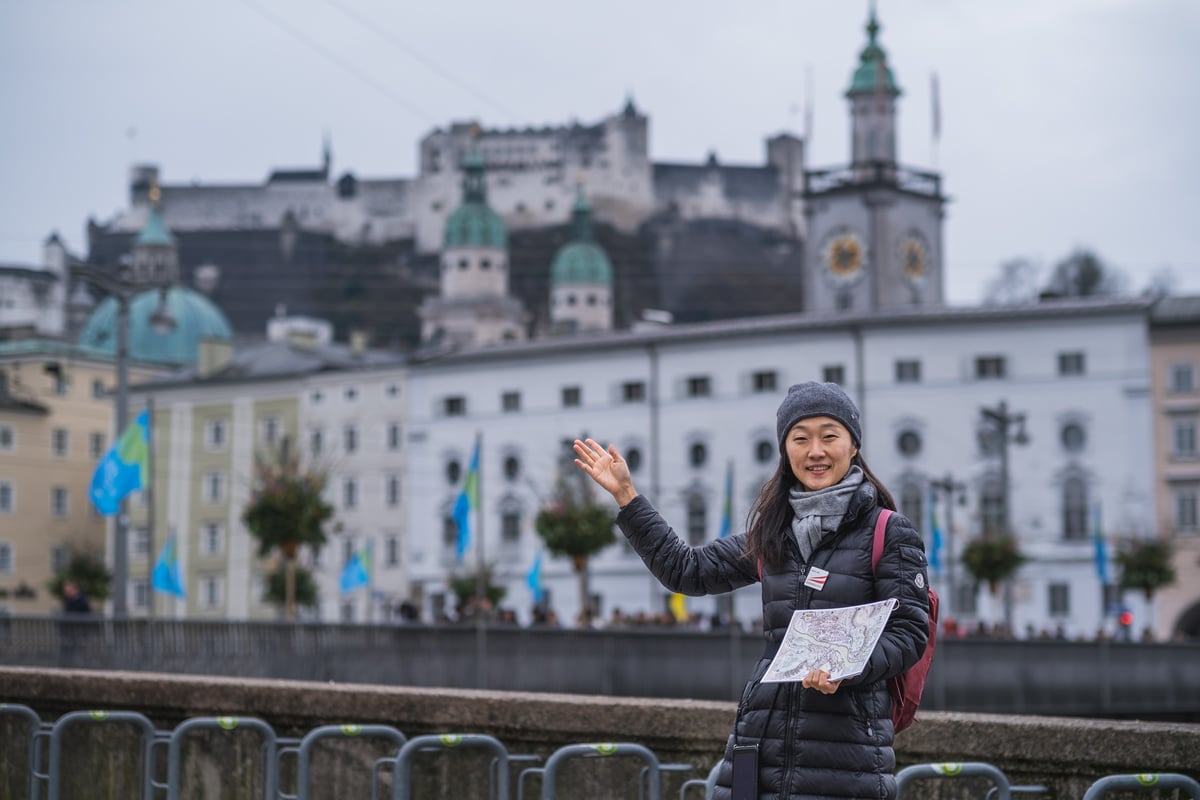
Daily guided walking tour of Salzburg's Altstadt. Tip-based, no fixed price: join free, pay what you think it was worth. Meets at the Spirit of Mozart and covers the essential old town from Mirabell to Mozartplatz in about ninety minutes. Run by Free Walking Tour Salzburg, Gerhard Reus's own brand.
Annual October jazz festival. Vast majority of performances free. Baroque squares become jazz stages. Four days. More local and intimate than the classical Festival. One of the most accessible events in the Salzburg calendar.
2 h
A private guided walking tour of Salzburg's Altstadt. All the essential sights in about two hours, with the pace, emphasis, and questions shaped to your group. Meets at the entrance to Schloss Mirabell. Run by Free Walking Tour Salzburg, Gerhard Reus's own brand.