
Cemetery
Hallstatt Parish Cemetery & Beinhaus
Show all 6 photos
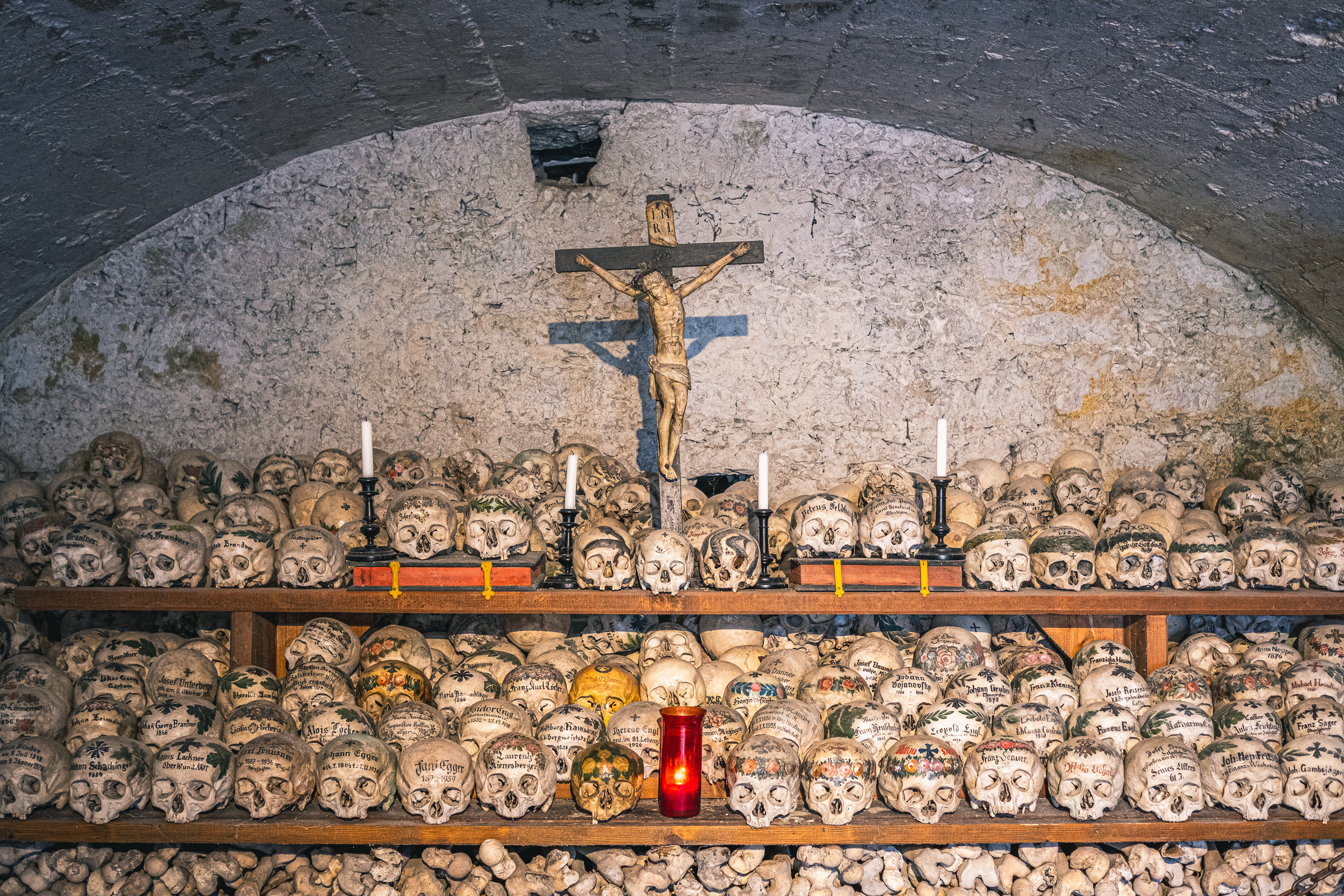
- The vaulted interior of the Hallstatt charnel house, with a carved crucifix on the whitewashed back wall, two long shelves of painted skulls, standing candles and a red votive lamp, and packed bones along the floor. (1 / 6)
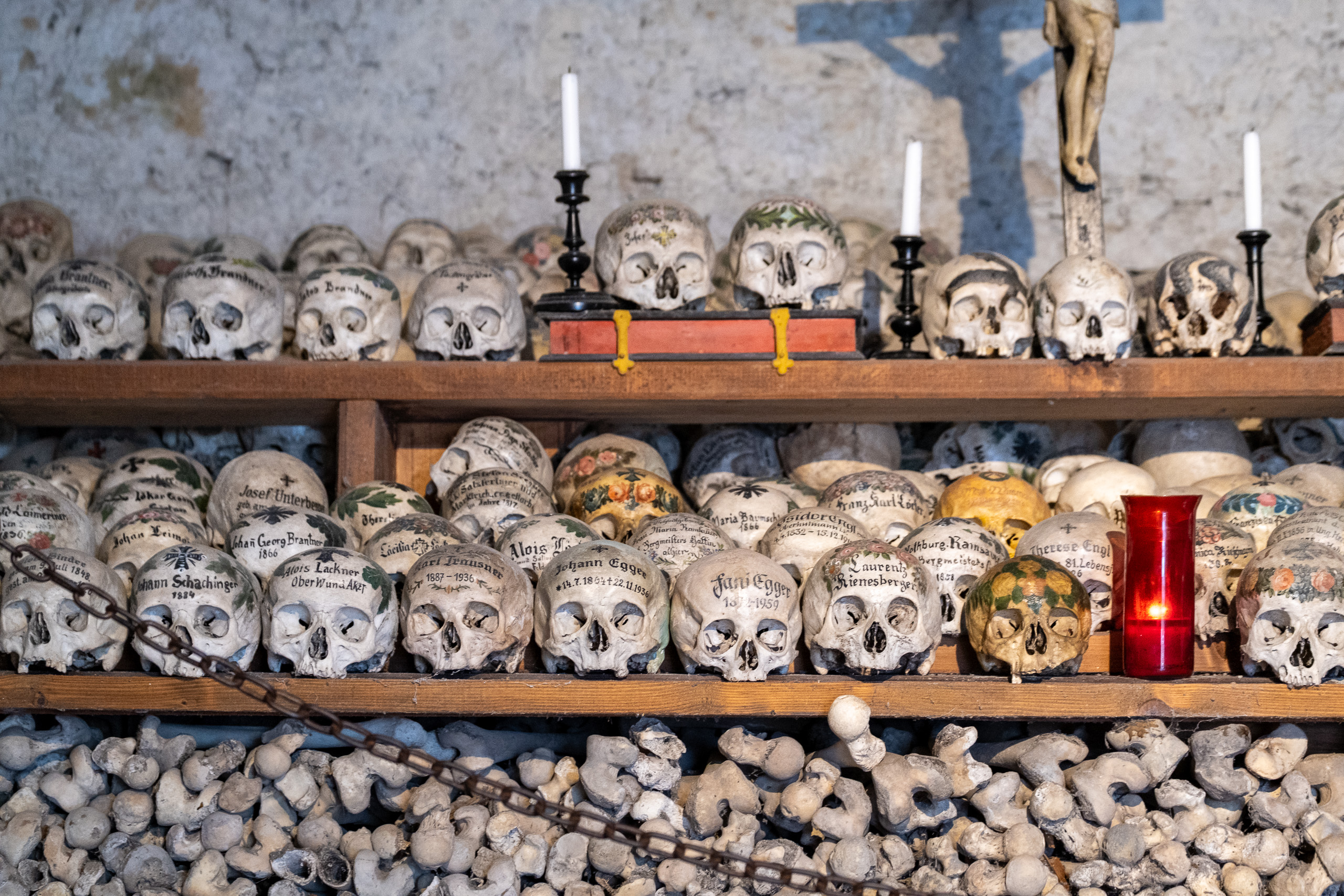
- A wide view of the charnel house wall showing three tiers of painted skulls beneath a wooden crucifix and the blue cross painted on the whitewash behind it, with the lowest register filled by packed bones. (2 / 6)
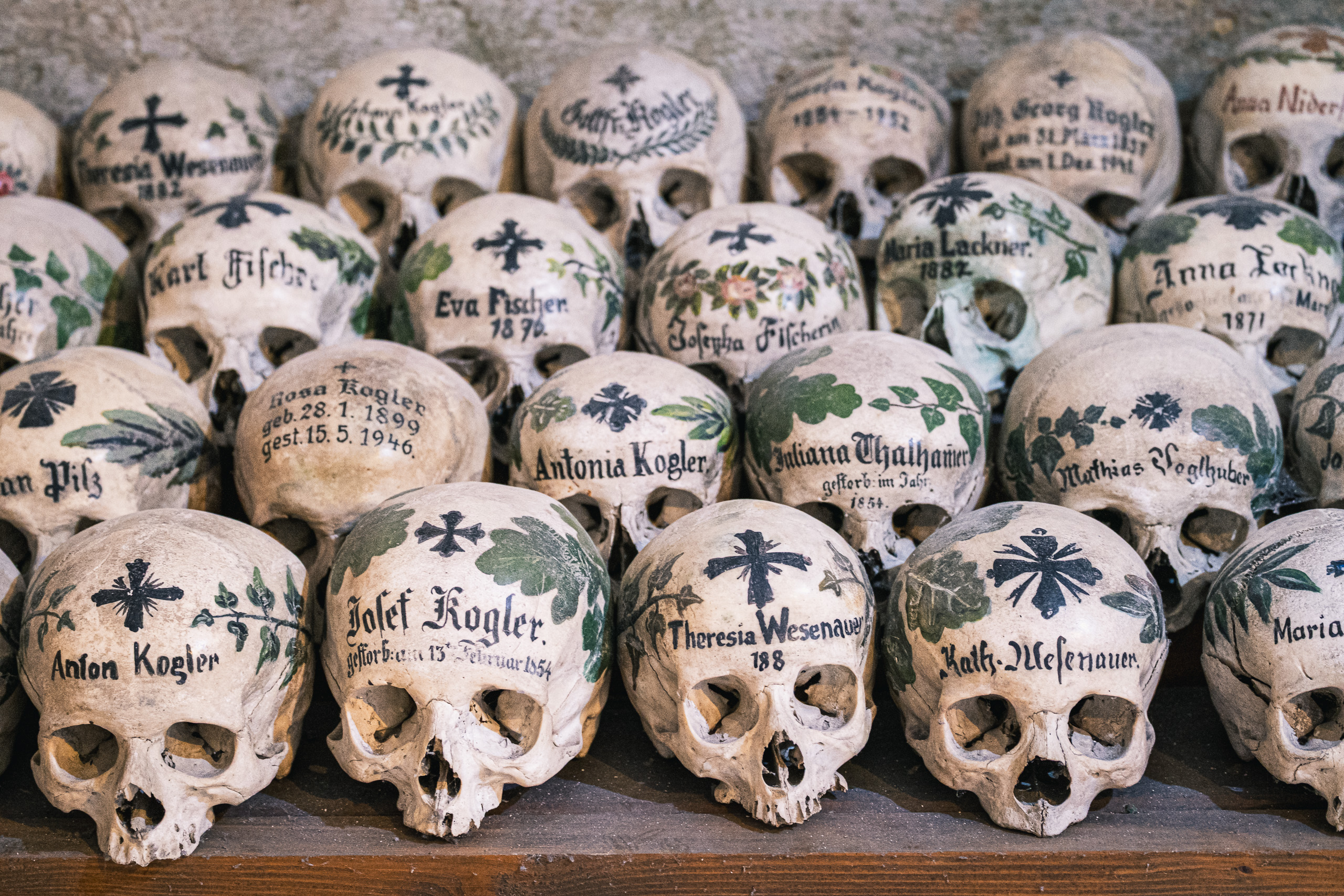
- Rows of skulls painted with names, dates, crosses and leafy wreaths stacked on a wooden shelf in the Hallstatt bone house. (3 / 6)
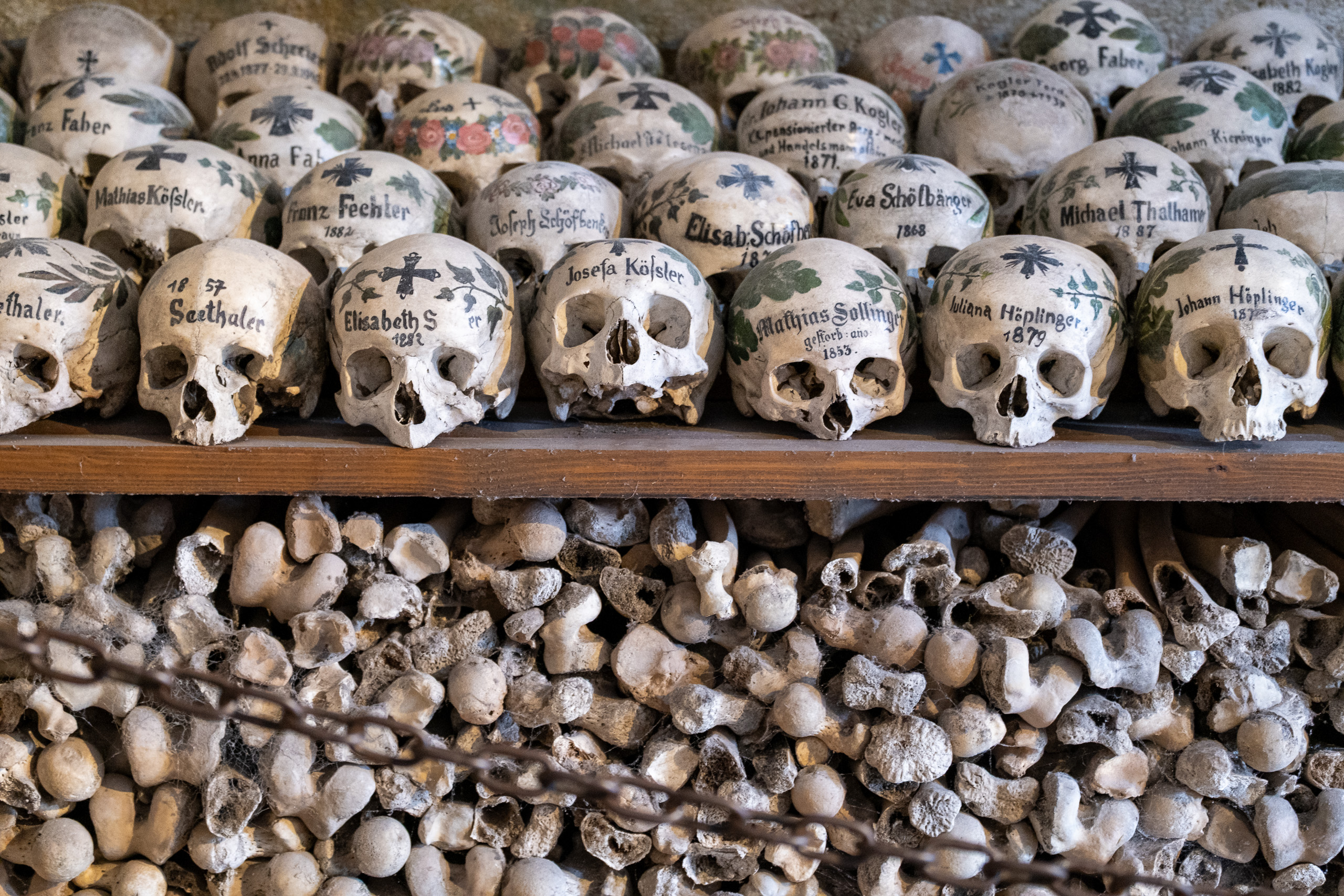
- A long row of skulls painted with names, dates, crosses and leafy wreaths rests on a wooden shelf, with the lower half of the frame taken up by a tightly packed wall of thigh bones. (4 / 6)
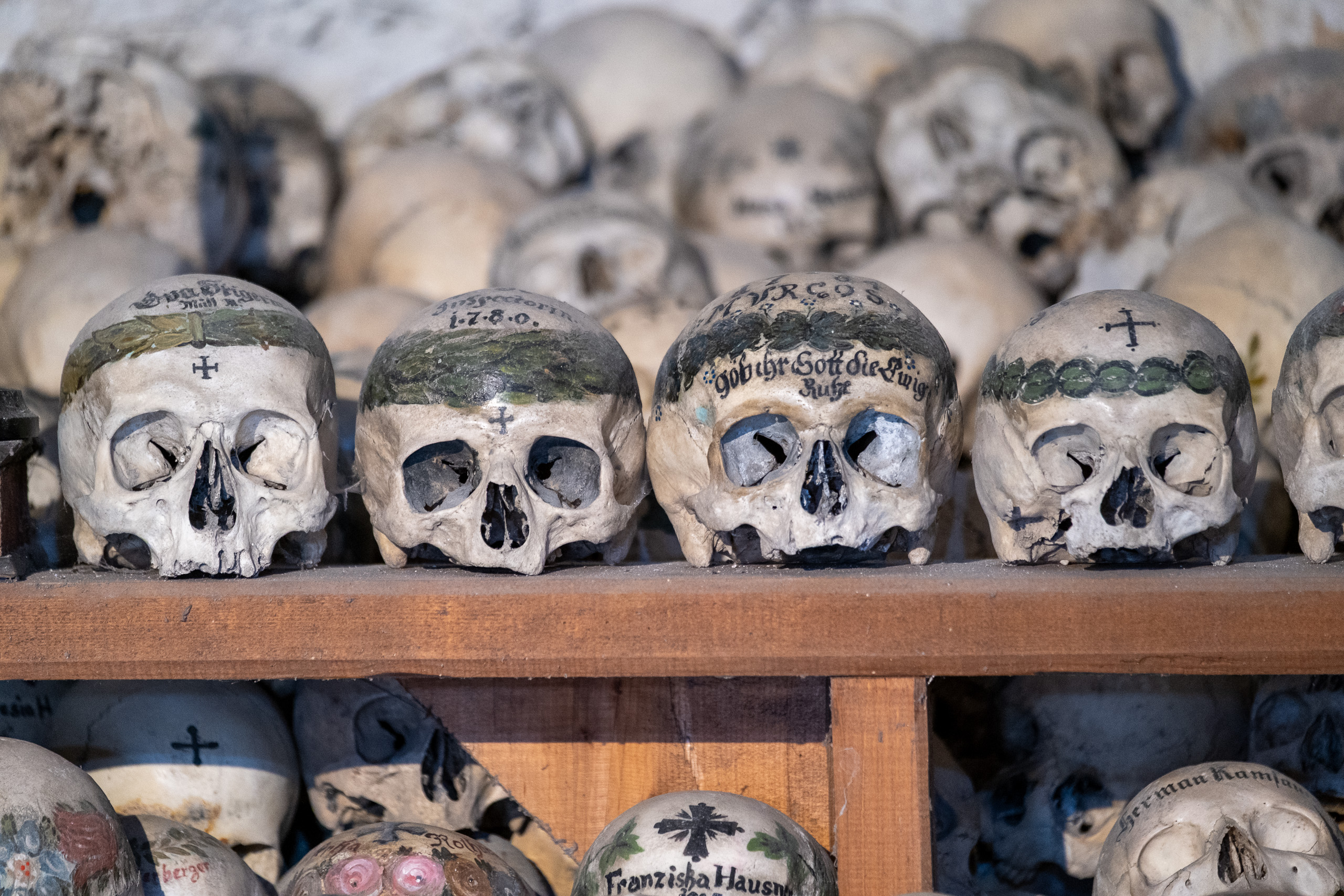
- Four of the oldest skulls in the charnel house sit in a row, their crowns painted with broad green laurel bands, one dated 1780 and another inscribed Gob ihr Gott die ewige Ruhe. (5 / 6)
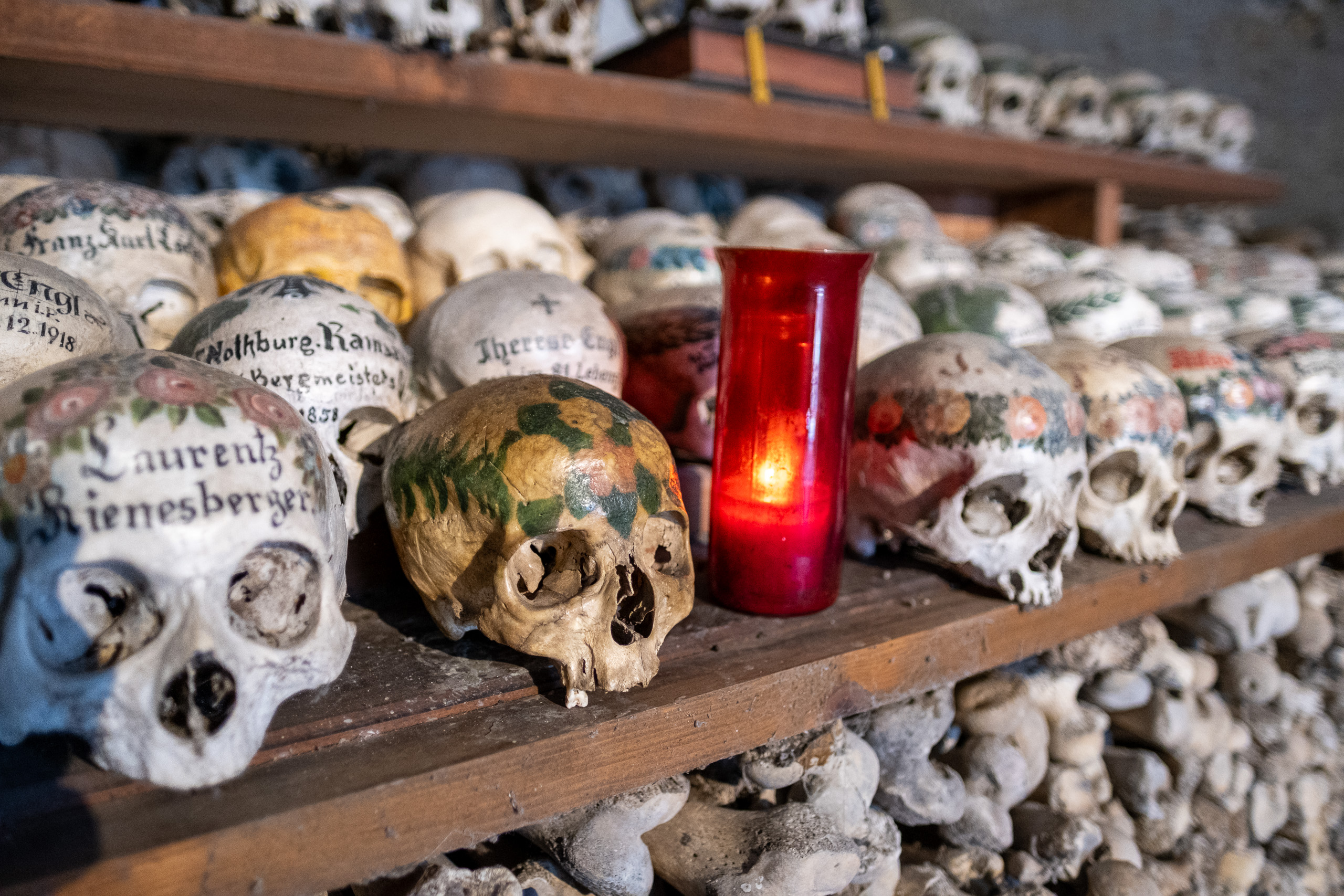
- A red glass votive lamp burns at shelf level among the painted skulls, its light falling on a skull crowned with green and yellow leaves and on one lettered Laurentz Rienesberger. (6 / 6)
Snapshot
The parish cemetery of Hallstatt is wedged onto a narrow ledge above the lake, flower graves facing straight across the water to the mountains. Adjacent to it, inside a small chapel, over 1,200 painted skulls watch from wooden shelves: names, dates, oak leaves, ivy. One of the most striking places in Austria.
The Story
Space has always been the problem in Hallstatt. The village clings to a strip of shore between cliff and lake no wider than a few city blocks, and the cemetery above the Pfarrkirche Hallstatt has never had room to grow. For centuries, the solution was to exhume graves after roughly twelve years, clean the bones, paint the skulls with the person’s name, date of death, and a symbolic pattern, and transfer them to the Beinhaus next door.
The result is a small ossuary containing over 1,200 decorated skulls. Oak leaves for men, ivy for women, roses for those who died young: the conventions were consistent enough to function as a kind of visual language. The oldest skull confirmed by inscription dates to 1720, though the practice almost certainly goes back further. The last skull was added in 1995.
What makes the place unusual is not its strangeness but its plainness. These are ordinary people, farmers and salt miners and tradespeople, commemorated with extraordinary care in the only space available. The graveyard remains in active use. Flowers on fresh graves sit a few metres from the painted dead of three centuries ago.
The Beinhaus is a single small room. Visits take ten minutes. The weight of it stays considerably longer.
Visiting
The cemetery and Beinhaus are adjacent to the Pfarrkirche Hallstatt, reached by climbing stone steps from the village centre. The cemetery is freely accessible during daylight hours. The Beinhaus has fixed seasonal opening hours, typically May through October daily, with limited winter access, and charges a small admission fee of around EUR 2. Photography is permitted in the cemetery; restrictions may apply inside the Beinhaus. Best visited early morning before the main wave of day visitors arrives. Respectful behaviour is expected throughout: this is an active churchyard.