Snapshot
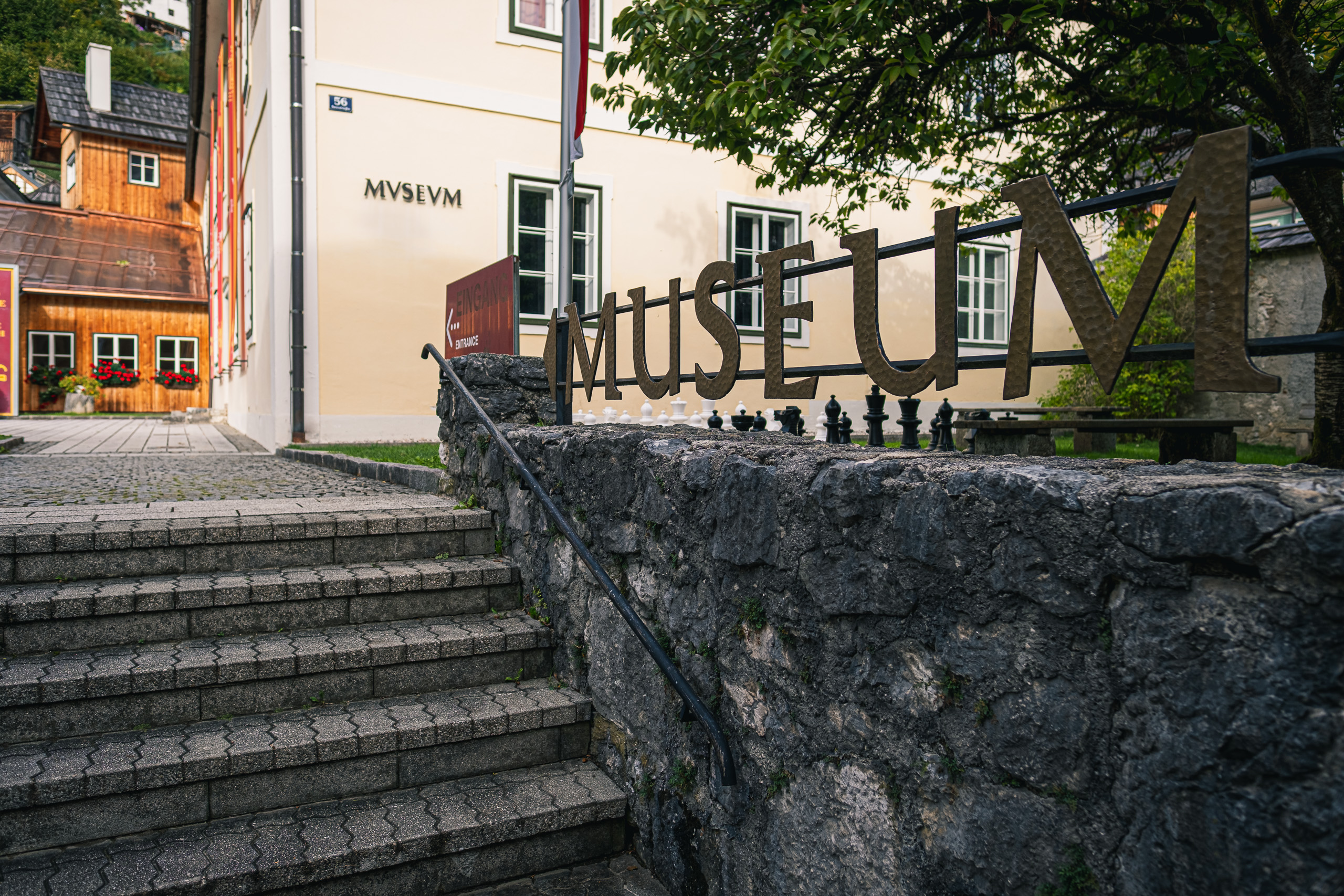
The word “Hallstatt” does not just name a village. It names a phase of European prehistory: the Hallstatt period, c. 800-400 BC, defined entirely by what archaeologists found in the burial fields above this lake. The museum on Seestraße holds the physical evidence for that designation.
The Story
Before the crowds arrived, before the Instagram photographers lined up on the jetty, Hallstatt was a place archaeologists came to rewrite European history. The salt mine above the village has been worked for at least 7,000 years, possibly longer. When Johann Georg Ramsauer began systematic excavations in 1846, he uncovered 980 graves over 17 years, documenting each one with meticulous water-colour paintings of burial positions. His standards were unprecedented for the era; the method he developed influenced archaeological recording across the continent. He was awarded the Gold Cross of Merit with Crown in 1855.
The burial goods from those graves, bronze tools, amber beads, ornaments traded from as far as the Mediterranean, defined a recognisable material culture spanning central Europe in the early Iron Age. Archaeologists named it the Hallstatt period, c. 800-400 BC. A village of a few hundred people in an Austrian lake district gave its name to an epoch.
The mine itself continues to yield remarkable finds. A wooden staircase dated by dendrochronology to 1344 BC is among the oldest preserved wooden staircases in Europe. Bronze Age miners felled the spruce trees in a single year, shaped the steps without chisels, and assembled a modular structure designed to move as shaft depths changed. The staircase survived only because salt stopped decay when the shaft collapsed around 1000 BC. The museum presents this find alongside bear bones and the oldest mine tools yet found, with hologram reconstructions of Bronze Age mining life alongside original artefacts.
The museum was founded in 1884 and now works in partnership with the Natural History Museum Vienna, which holds over 30,000 tissue samples from the site for ongoing DNA and isotope analysis. The burial field remains roughly 2% excavated. Recent work in a 150 m² trench found 75 tightly spaced graves, revising density estimates upward significantly. The museum is not a finished story.
Visiting
On Seestraße 56 in Hallstatt village, a short walk from the ferry landing. Open daily during the main season (April/May through October) with reduced winter hours; check museum-hallstatt.at for current times. Admission currently around EUR 9-10 for adults. Visit takes 60-90 minutes. Guided tours available at set times. Pairs naturally with the salt mine above the village, which gives physical context to the artefacts. Photography permitted. The museum is compact; even visitors with limited time in Hallstatt can manage it alongside a village walk.