Snapshot
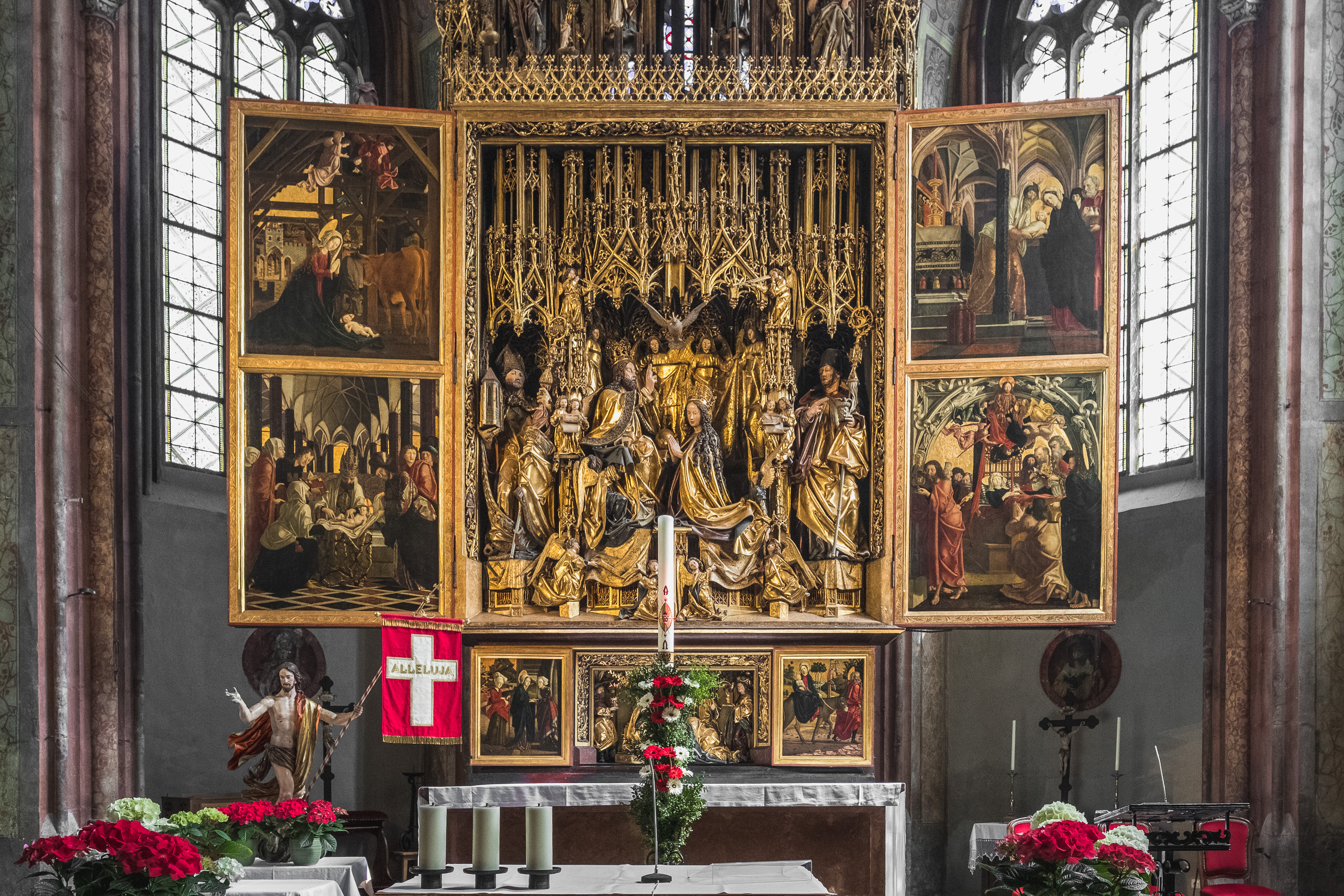
The pilgrimage church of St. Wolfgang am Wolfgangsee contains a winged altarpiece by Michael Pacher, carved and painted between 1471 and 1481, that stands over ten metres tall when fully opened. It is one of the greatest works of late Gothic art in Central Europe, and the church is free to enter.
The Story
Michael Pacher was a Tyrolean artist who worked in both painting and wood carving, which was unusual in the 15th century when the two crafts were typically separated. The Abbot of Mondsee commissioned him to produce the main altarpiece for the St. Wolfgang church, and Pacher spent roughly a decade on it. The result is a structure of extraordinary ambition: carved figures of remarkable psychological expressiveness in the central shrine, surrounded by painted panels that demonstrate an early understanding of Italian Renaissance perspective, all integrated into a single architectural composition over ten metres high.
The altarpiece is kept partially closed for preservation and opened fully only on major feast days, but even partially open it is an overwhelming presence in a relatively small interior. The gold of the central shrine catches the available light in a way that was clearly calculated for the space.
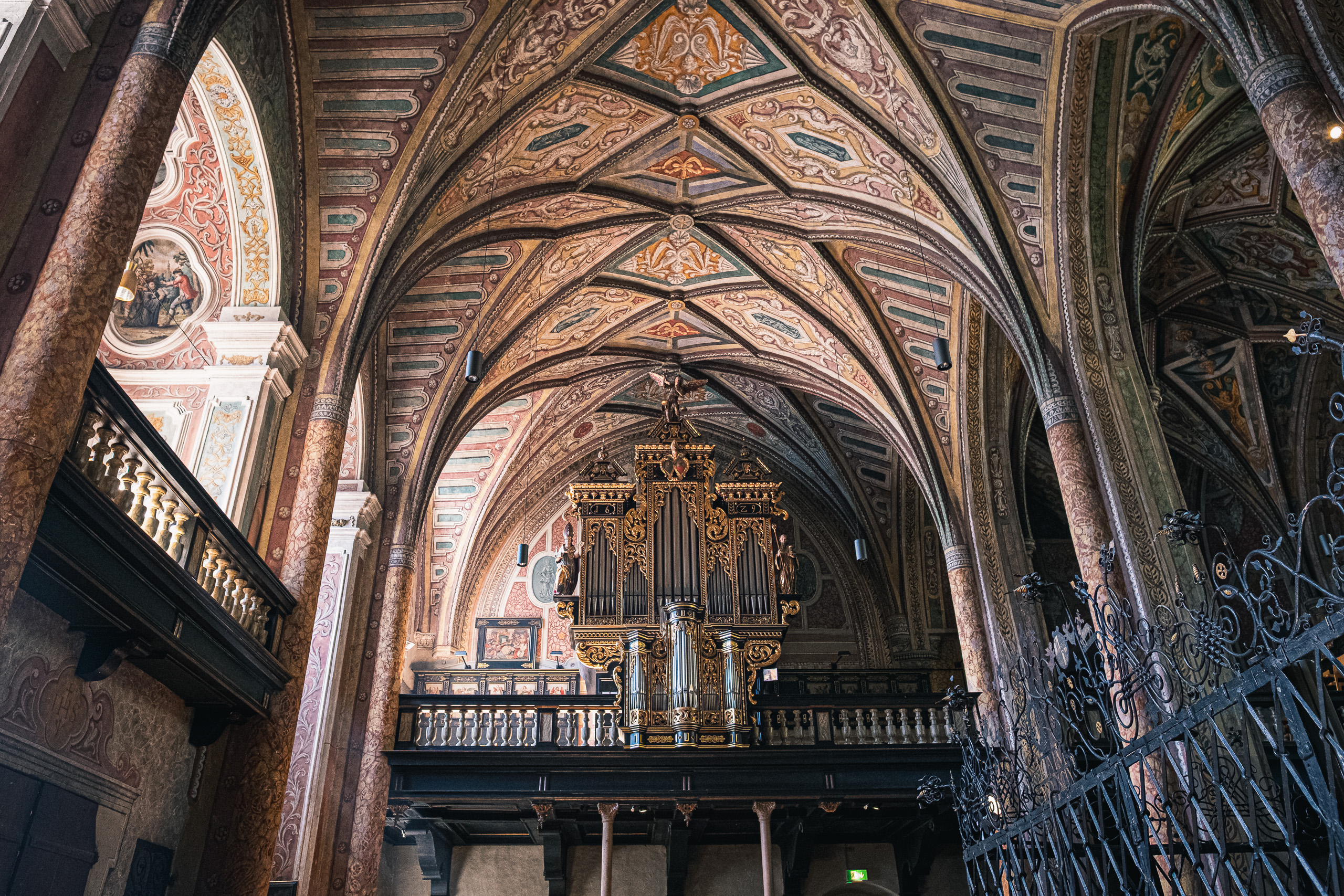
Saint Wolfgang of Regensburg, bishop and later patron saint of Bavaria, is said to have come here as a hermit in the 10th century. The pilgrimage began with his memory and has continued, with fluctuating intensity, ever since. A second major altarpiece by Thomas Schwanthaler, completed in 1675, stands in the same interior; it would be the main attraction in almost any other church in the region.
The church sits directly on the market square of St. Wolfgang, a few minutes’ walk from the ferry landing. A natural combination visit with the Schafbergbahn rack railway, which departs from the same village.
Visiting
The church is at Markt 18 in the centre of St. Wolfgang, directly off the main square. Freely accessible during opening hours, typically daily from early morning to evening. No admission charge; donations welcomed. A visit takes approximately 20 to 30 minutes. St. Wolfgang is reached by bus from Salzburg via Bad Ischl or Strobl, or by the Wolfgangsee ferry from St. Gilgen. Combines naturally with the Schafbergbahn and a lakeside walk.