
Palace
Schloss Klessheim
Snapshot
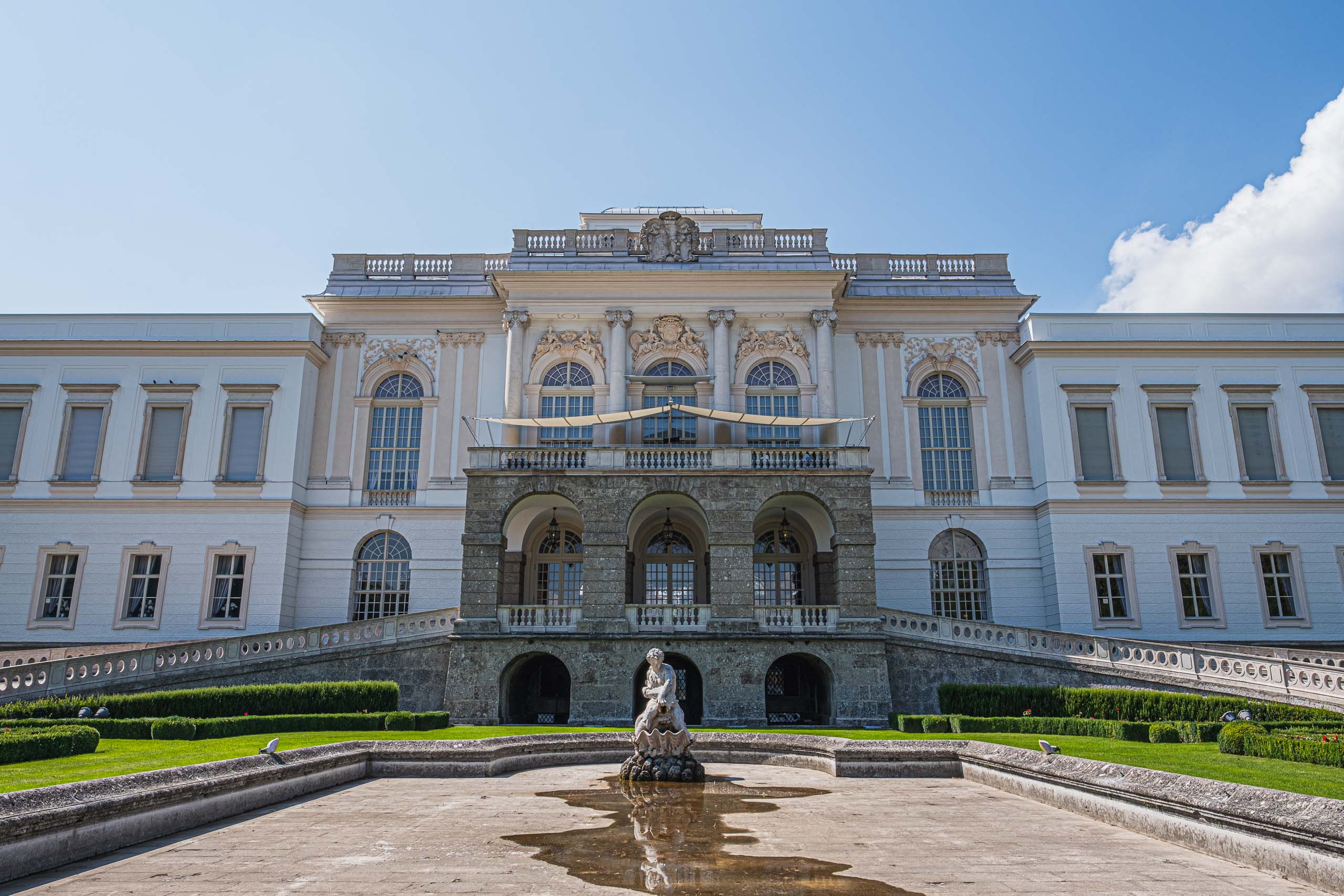
Schloss Klessheim is one of the most architecturally serious baroque palaces in Austria, designed by Johann Bernhard Fischer von Erlach for the Prince-Archbishop of Salzburg around 1700. Its guest list over the following two and a half centuries ranged from Emperor Franz Joseph I to Adolf Hitler.
The Story
Archbishop Johann Ernst von Thun commissioned Fischer von Erlach to design a summer residence that would stand as a statement of ambition. The choice of architect was deliberate: Fischer von Erlach was the most celebrated designer working in the Habsburg world, responsible for the Karlskirche in Vienna and the first plans for Schonbrunn. Klessheim was to be a palace in the full sense, not merely a comfortable villa. The main building rises in a composed, expansive baroque facade over formal garden parterres.
Fischer von Erlach died before the palace was complete. His son Joseph Emanuel finished the work in a style continuous enough that the seam is barely visible. The building was complete by the 1730s.
The palace served the archbishops as a summer seat, then passed through Habsburg hands after secularisation and the dissolution of the archbishops’ sovereign power in 1803. Later it became an imperial guest palace. Emperor Franz Joseph I stayed here. During the Second World War the palace acquired a darker chapter: Hitler used Klessheim repeatedly for high-level diplomatic meetings, receiving Mussolini, the Hungarian Regent Horthy, and other Axis leaders in the state rooms.
Today the palace houses Casino Salzburg. The formal gardens are open to visitors at no charge. The interior is accessible to casino guests.
Visiting
Kleßheim 1, Wals-Siezenheim, approximately 10 minutes by car from Salzburg city centre in the direction of the airport. The formal gardens are freely accessible. Casino Salzburg inside the palace operates under dress code; check opening times in advance. The palace does not run standard guided tours of the historic rooms.