
District / Austria
Flachgau
Also known as Flachgau District
25 places26 destinations within3 experiences
Snapshot
The Flachgau is the district that surrounds Salzburg on nearly every side, stretching from flat agricultural plains near the Bavarian border in the north to the lake-dotted foothills of the Salzkammergut in the east. It is a district of contrasts: commuter suburbs and ancient market towns, quiet lakes and motorway corridors, bog wetlands and forested ridges.
The Story
The name Flachgau, meaning the flat district, describes the northern half accurately. From Salzburg northward, the landscape opens into wide, level farmland, a southern extension of the Bavarian plain, broken by small market towns, wetland remnants, and a string of shallow lakes. The Wallersee, Mattsee Lake, and Obertrumer See sit in this flat belt, close enough to the city that generations of Salzburg families have come here for summer weekends.
The Salzburg Lokalbahn threads north through this landscape, connecting Salzburg to Oberndorf bei Salzburg and onward to Burmoos. It is a working commuter line that also functions as a slow-travel corridor through the Flachgau’s ordinary communities, the kind of places that rarely appear in guidebooks but that carry the district’s actual daily life.
East of the city the character shifts. The terrain rises into hills, the lakes deepen and cool, and the villages take on the look of the inner Salzkammergut rather than the suburban fringe. The Fuschlsee and the communities around it, including Hof bei Salzburg and Faistenau, belong administratively to the Flachgau but feel geographically different: more enclosed, more alpine, and far better known to international visitors.
The southern edge of the district runs up against the Untersberg massif, connecting the Flachgau’s flat terrain to the mountain edge that defines Salzburg’s visual backdrop to the south.
Planning
The Flachgau has no single arrival point; access depends entirely on which part of the district you are targeting. The north (lake district, Oberndorf bei Salzburg, Burmoos) is best reached by the Salzburg Lokalbahn from Salzburg, or by car on the B156 and B155. The east (Fuschlsee area, Hof bei Salzburg, Faistenau) is a 20-30 minute drive from the city on the B158. Summer is the peak season for lake villages; spring and autumn are good for cycling the lake circuits. Most communities are visited as day trips from Salzburg.
Go deeper
Destinations within Flachgau
One level down the canonical map. Every card is a direct child of this destination.
village - village
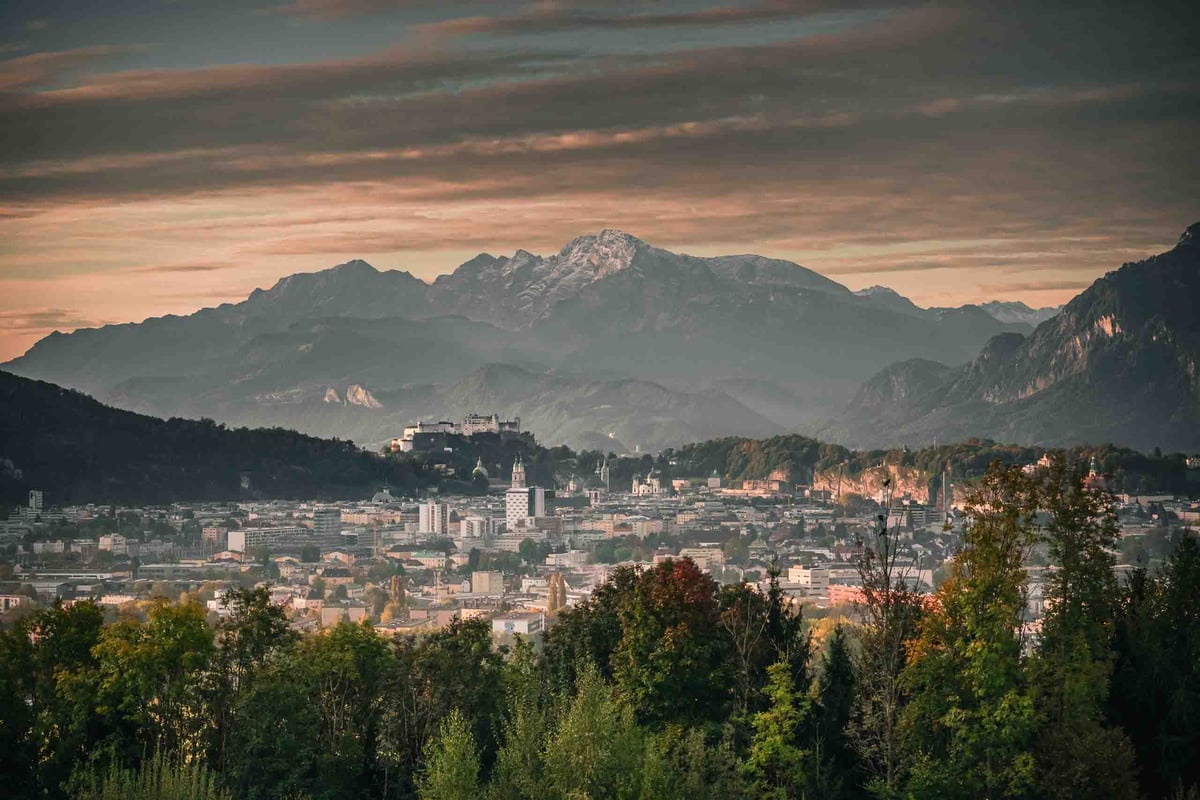
village village village village village - village
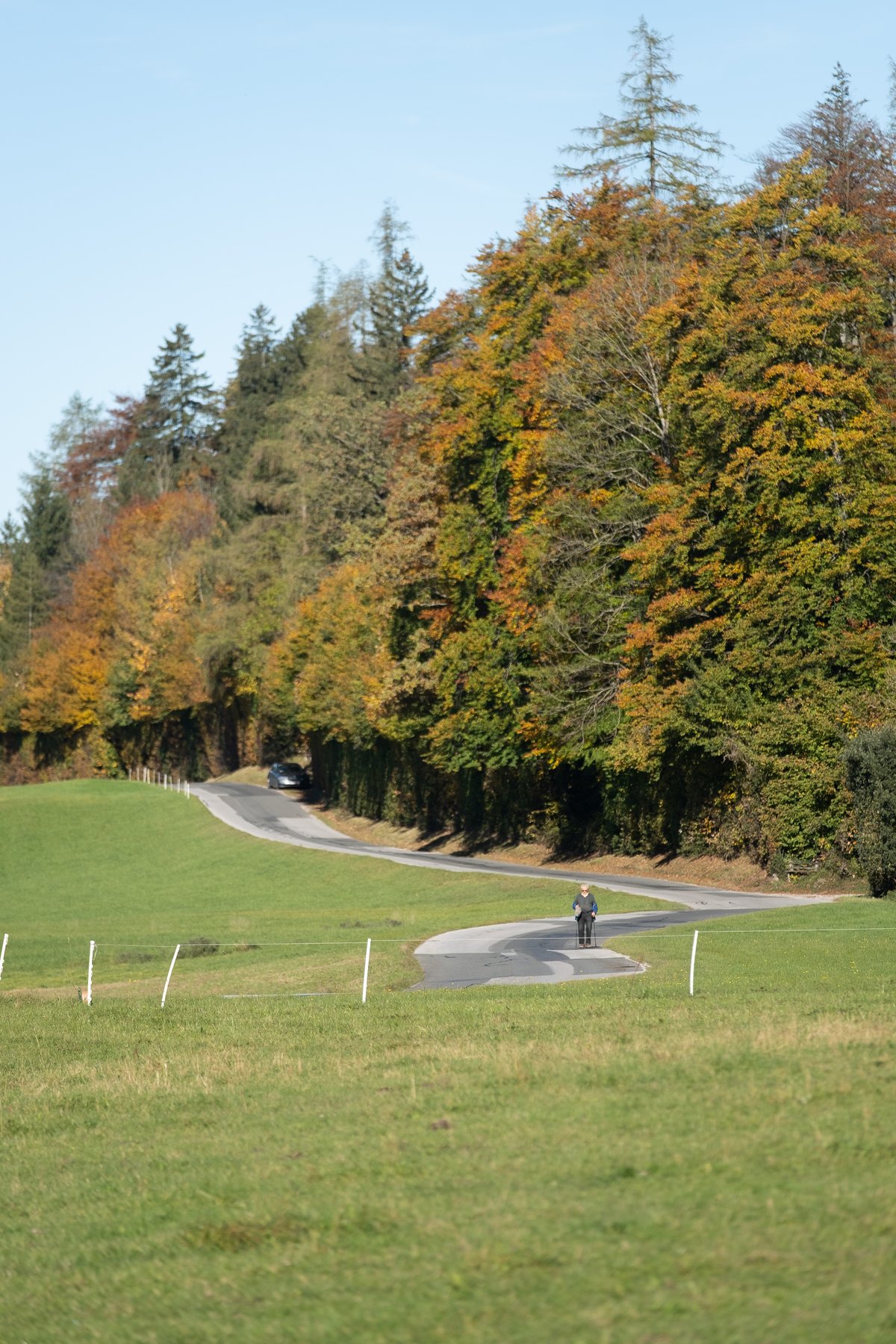
- village
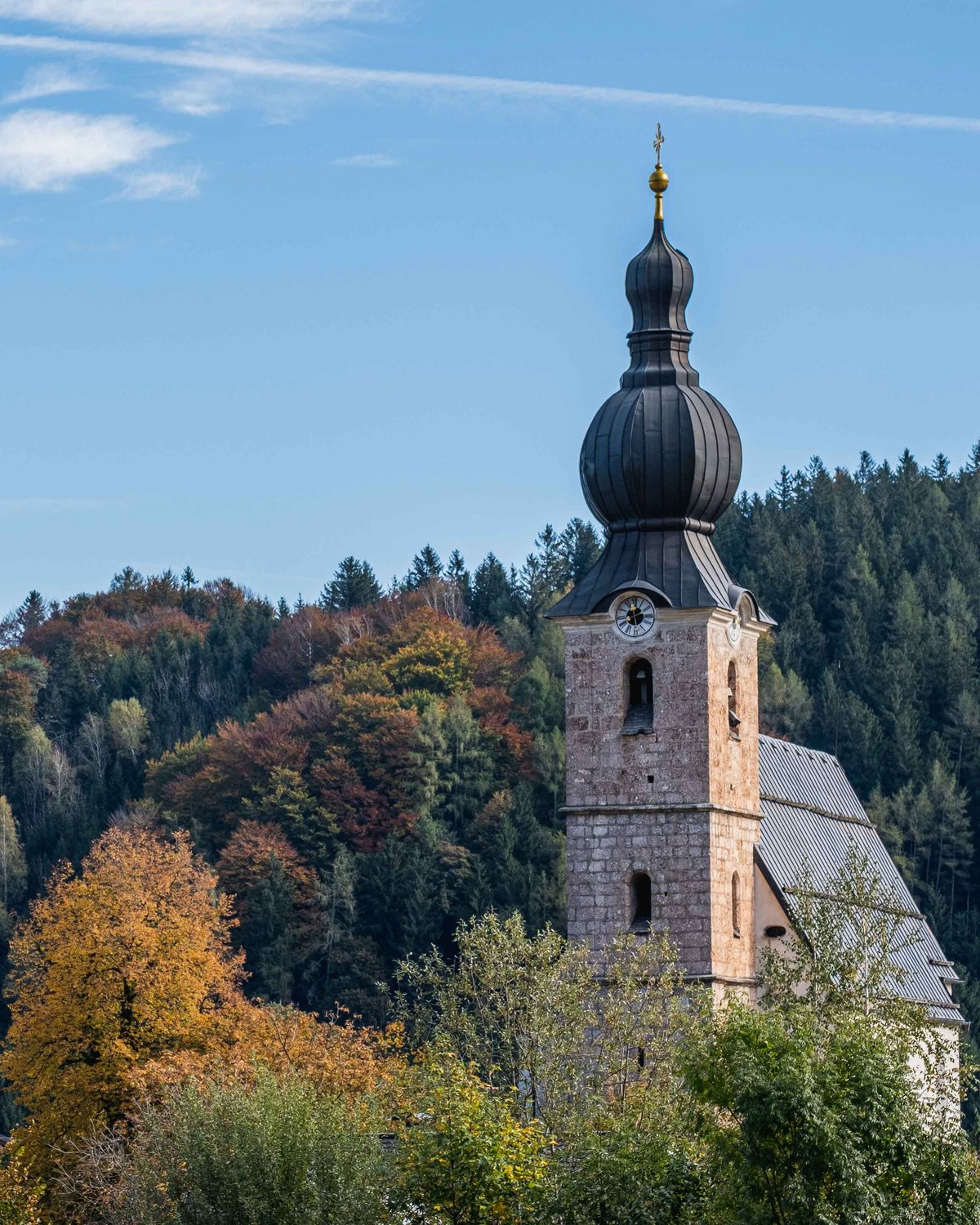
village village village village village village village village village village village town - village
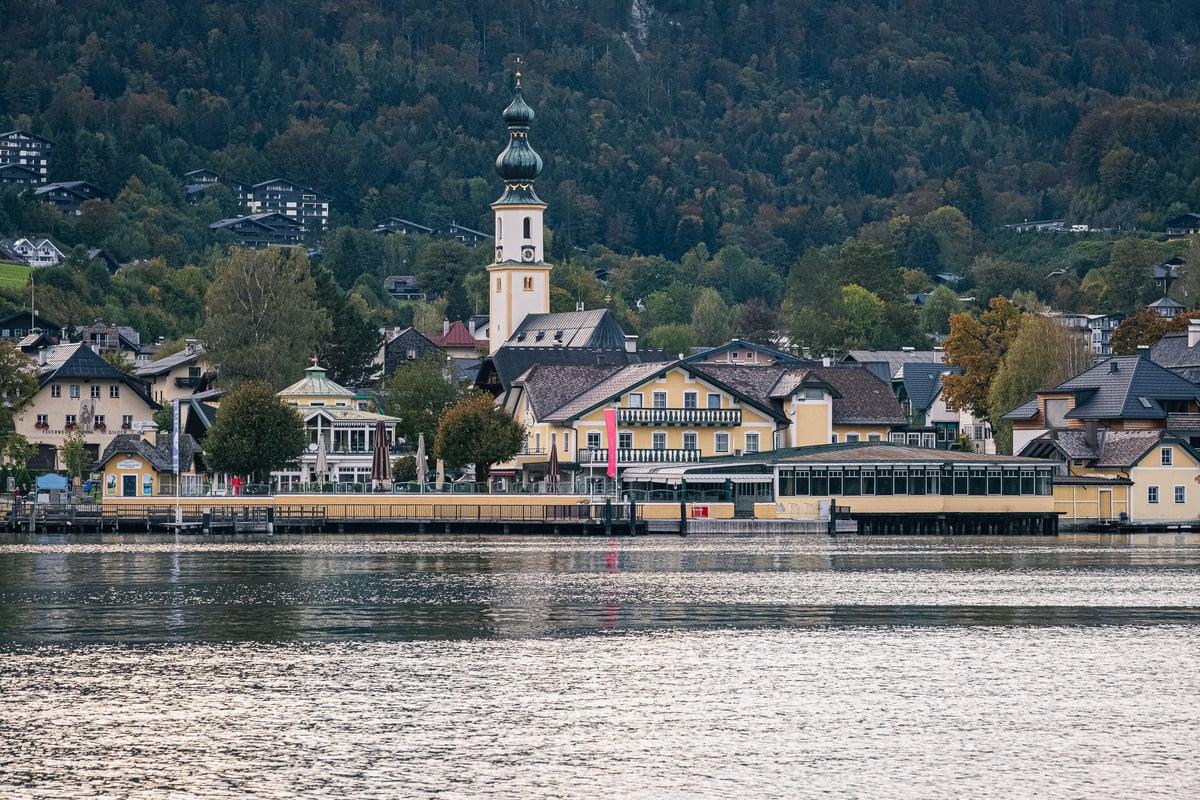
village village village village
Things to do
Experiences in Flachgau
Tours, concerts, markets and walks based in Flachgau. All of them, not a selection.
Fuschlsee-Ellmaustein Half Day
Car-free half-day: bus 150 to Fuschl am See (30 min), hike Ellmaustein (<1 hr to summit), swim in the Fuschlsee, bus back. Optional: Schober (1,328 m, 2-3 hrs) for a full mountain day.
Stille Nacht Konzert
Annual Christmas Eve concert at the Stille Nacht Kapelle in Oberndorf bei Salzburg. On the site where Joseph Mohr and Franz Xaver Gruber first performed Silent Night on 24 December 1818. Intimate, atmospheric, genuinely moving. ~30 minutes from Salzburg by S-Bahn.
Untersberg Day Hike
The Untersberg Day Hike combines the Untersbergbahn cable car to the Geiereck at 1,776 m with self-guided walks on the open limestone plateau above Salzburg. The summit gives views across the German border into the Berchtesgaden valley and back over the city.
Passing through
Tours that visit Flachgau
Based somewhere else, but they come here. Each one names this destination or one of its places on its own route.
Salzburg Card
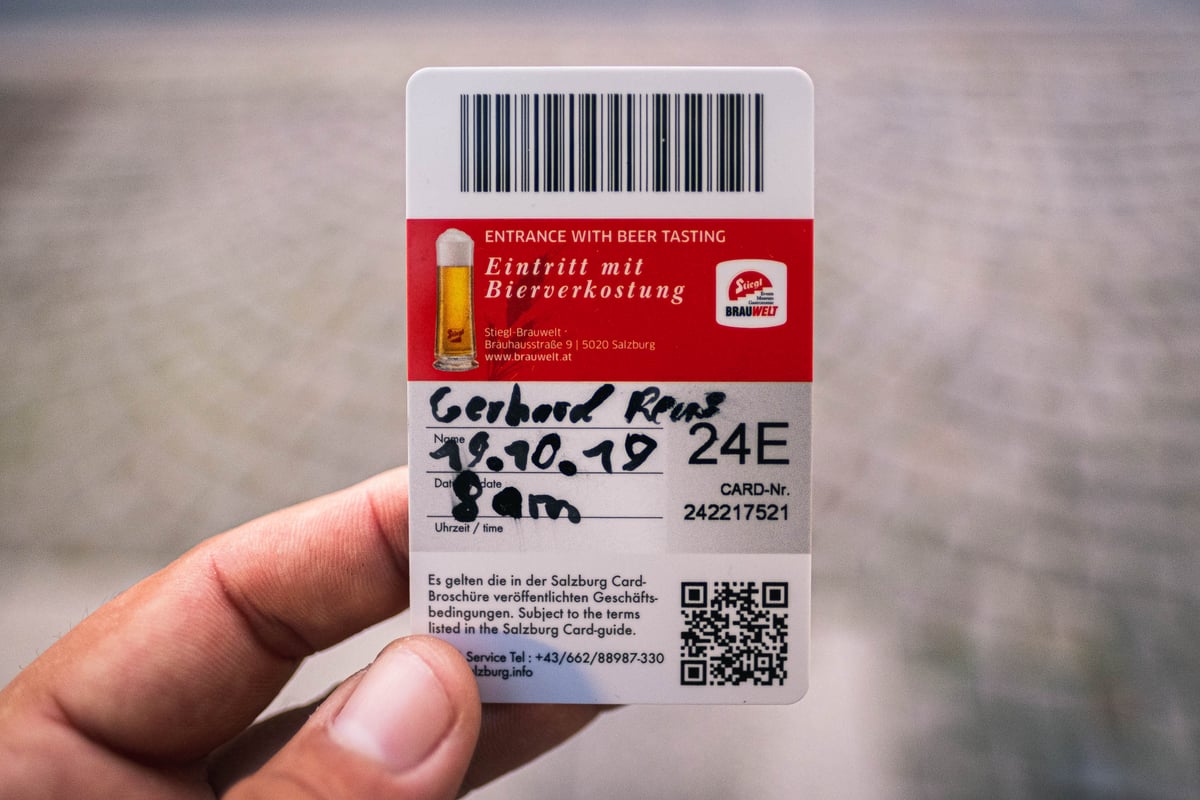
Visitor pass: free entry to most major attractions + free public transport. 24/48/72-hour versions. Covers Hohensalzburg Fortress, Salzburg Museum, Haus der Natur, DomQuartier, Hellbrunn Palace, cable cars. Note: the Salzburg Museum is closed for renovation until approximately spring 2027, so it does not count toward the card's value until it reopens.
Wolfgangsee Day Circuit
The classic Salzkammergut day circuit from Salzburg: bus to St Gilgen (45 minutes), ferry across Wolfgangsee to St. Wolfgang, Schafbergbahn rack railway to the summit at 1,783 m with a panorama over 13 lakes, ferry back, bus to Salzburg. Full day. Salzburg AG operates both the ferry and the railway. The pilgrimage church in St.
Sleep
Places to stay in Flachgau
Every hotel, guesthouse, hostel and inn documented inside Flachgau. A directory, not a booking site.
Schloss Fuschl
Late Gothic / Baroque
A 15th-century hunting lodge on a lake promontory, 30 kilometres from Salzburg, now operating as one of Austria's most celebrated luxury hotels. The setting is genuinely spectacular.
Seehotel Cortisen am See
A four-star hotel on the Wolfgangsee at St. Gilgen. Direct lake access. Views to the Schafberg and St. Wolfgang. Serene Salzkammergut base within 30 minutes of Salzburg.
Where to eat
Where to eat and drink in Flachgau
Every restaurant, cafe, bar and stand documented inside Flachgau, A to Z.
Pfefferschiff
The most serious restaurant in the greater Salzburg region. Long-standing Michelin-starred address in Hallwang. Cooking rooted in Austrian and regional produce. The benchmark for Salzburg's dining scene.
In Flachgau
Explore 25 places
Ellmaustein
A compact rocky peak directly above Fuschl am See. Summit achievable in under an hour. Suitable for children. Fuschlsee view arrives suddenly at the top. Accessible by bus from Salzburg (150 line, every 30 minutes). Near-perfect half-day mountain.
Freilichtmuseum Großgmain
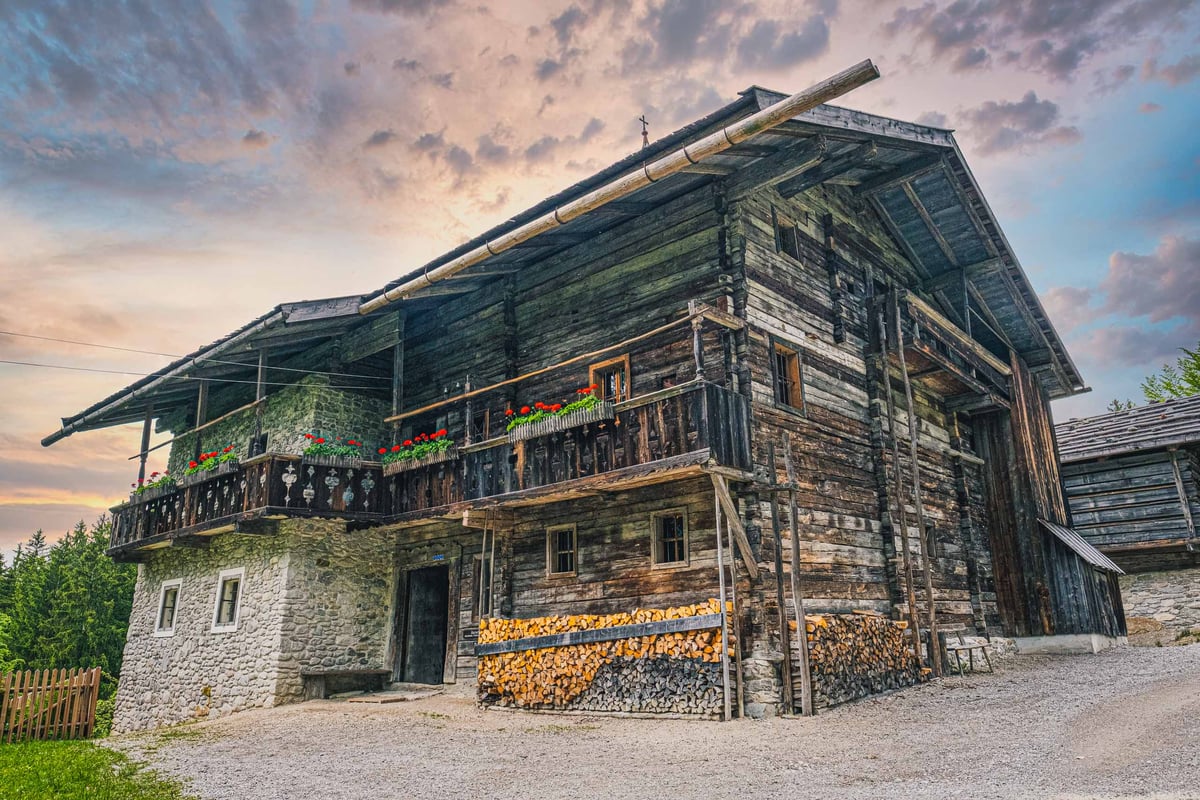
One of the largest open-air museums in Central Europe. Over 100 historic farm buildings, barns, mills, and alpine dwellings relocated from across Salzburg State, creating a complete picture of rural alpine life from the 16th to early 20th century.
Fuschlsee
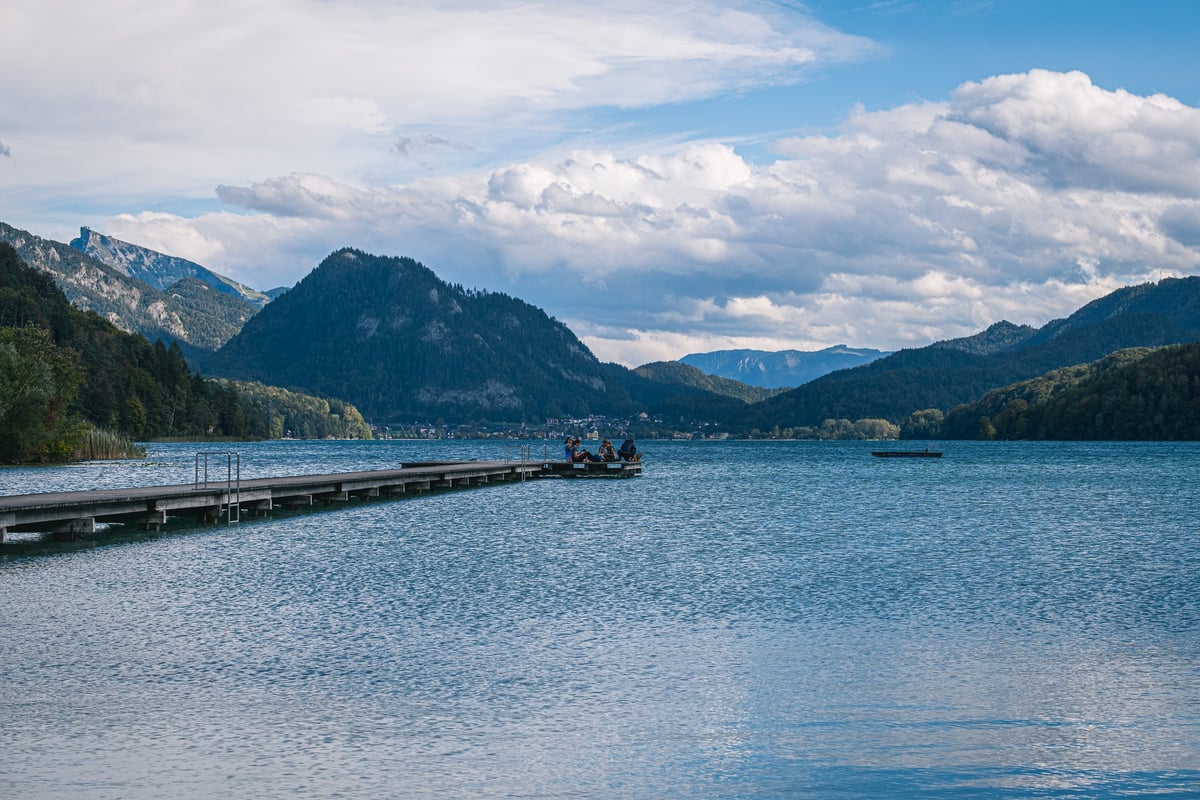
The Fuschlsee is the smallest and perhaps the clearest of the accessible Salzburg-region lakes, 2.7 km long and up to 67 meters deep with drinking water quality.
Geiereck
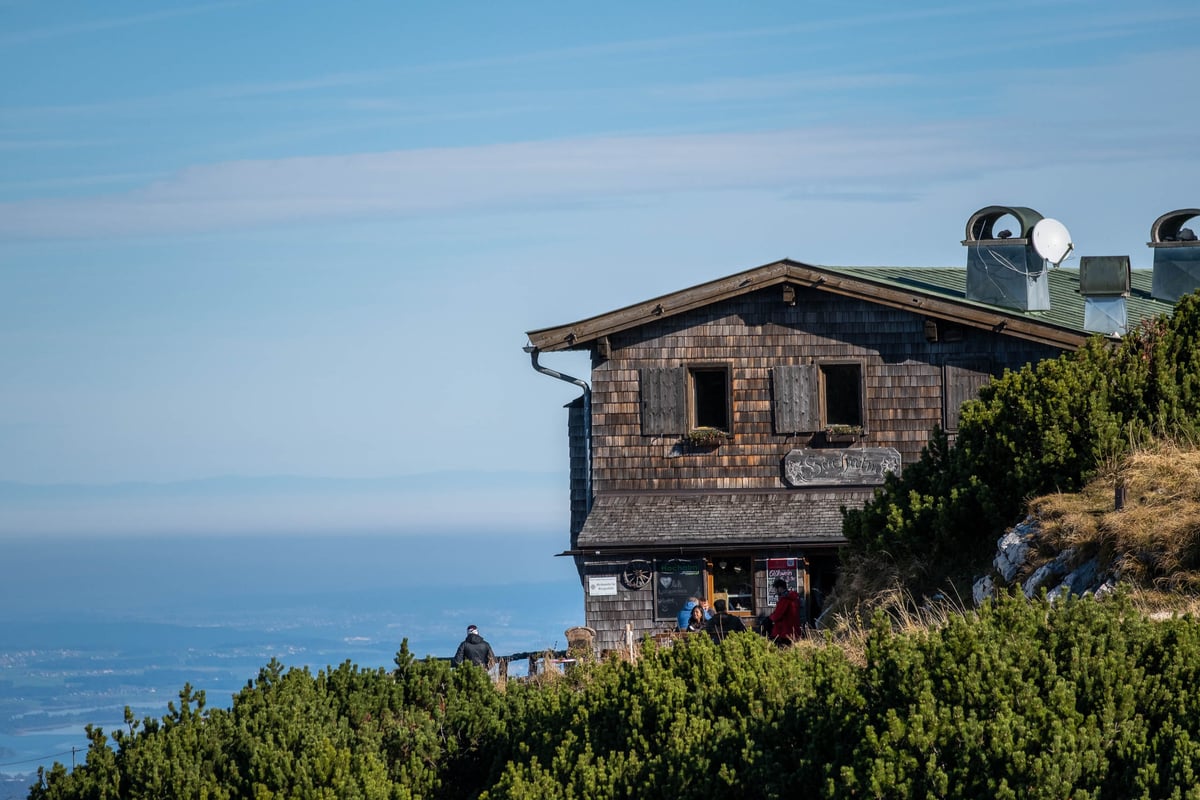
The upper station of the Untersbergbahn cable car on the Austrian side of the Untersberg at 1,776 m. The accessible face of the Untersberg: panorama opens suddenly and completely upon arrival.
Hintersee
The Hintersee near Ramsau bei Berchtesgaden is a small mountain lake at the edge of the Zauberwald (Enchanted Forest), a boulder field from a prehistoric rockfall now draped in centuries of moss and ancient conifer roots.
Mattsee
A small, peaceful lake in the Flachgau. The medieval Stiftskirche Mattsee rises above the water. Local summer favourite. Combines with nearby Obertrumer See and Grabensee for a half-day cycling circuit.
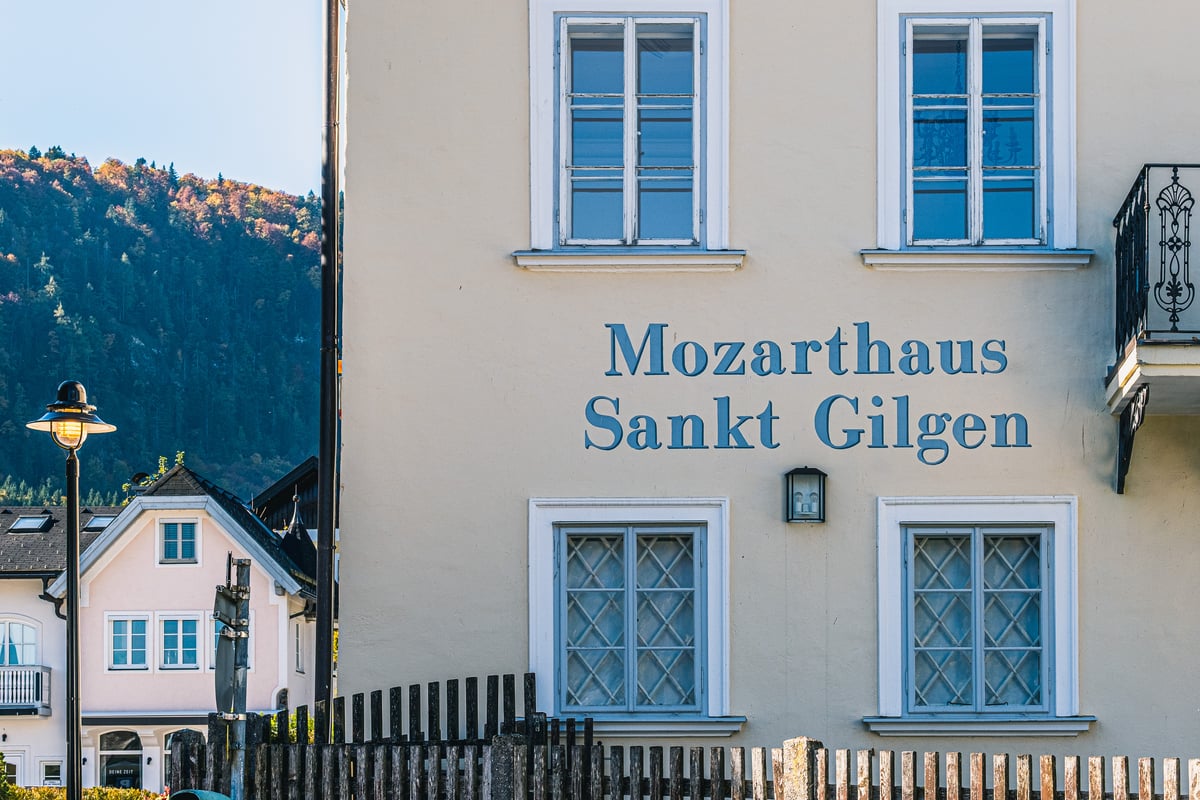
Mozart House St. Gilgen
The house in St. Gilgen on the Wolfgangsee where Anna Maria Pertl, Mozart's mother, was born in 1720. Nannerl Mozart lived here after her marriage to the local magistrate. One of the genuinely under-visited Mozart family sites.
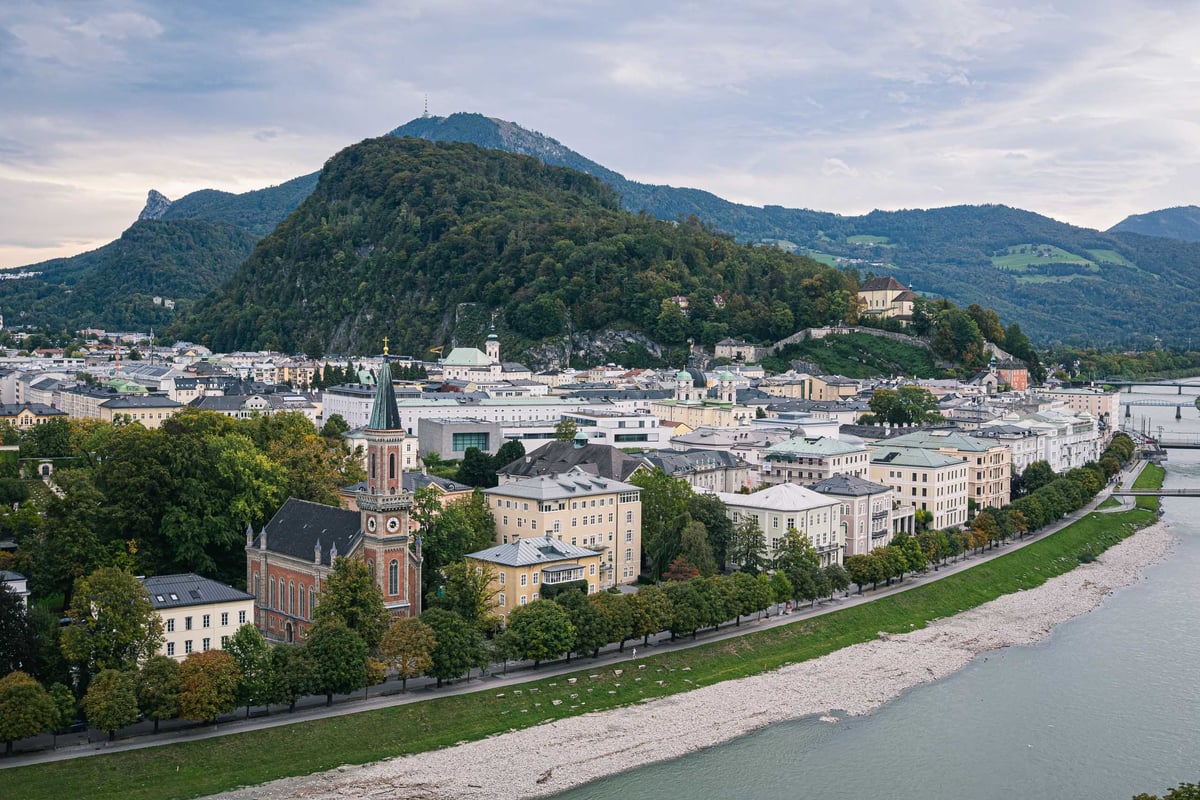
Nockstein
The Nockstein at 1,042 meters is a rounded summit on the border between Salzburg city territory and the Fuschlsee region, one of the most popular short hikes from the Salzburg area.
Pfefferschiff
The most serious restaurant in the greater Salzburg region. Long-standing Michelin-starred address in Hallwang. Cooking rooted in Austrian and regional produce. The benchmark for Salzburg's dining scene.
Postalm
The Postalm is the largest alpine pasture (Alm) plateau in Austria, stretching at around 1,200 meters between Abtenau in the Lammertal valley and Strobl on the Wolfgangsee.
Red Bull Arena
Built 2003
Home stadium of FC Red Bull Salzburg, one of Austria's most successful football clubs. Capacity around 30,000. Also hosts large-scale concerts and events. Built in 2003, part of Dietrich Mateschitz's transformation of Salzburg's sporting identity.
Schloss Anif
A romantic neo-Gothic water castle on the southern outskirts of Salzburg. The site where Ludwig III of Bavaria signed his renunciation of the throne on 13 November 1918, ending the Wittelsbach monarchy. Privately owned, not open to the public, but picturesque from the road.
Schloss Fuschl
Late Gothic / Baroque
A 15th-century hunting lodge on a lake promontory, 30 kilometres from Salzburg, now operating as one of Austria's most celebrated luxury hotels. The setting is genuinely spectacular.
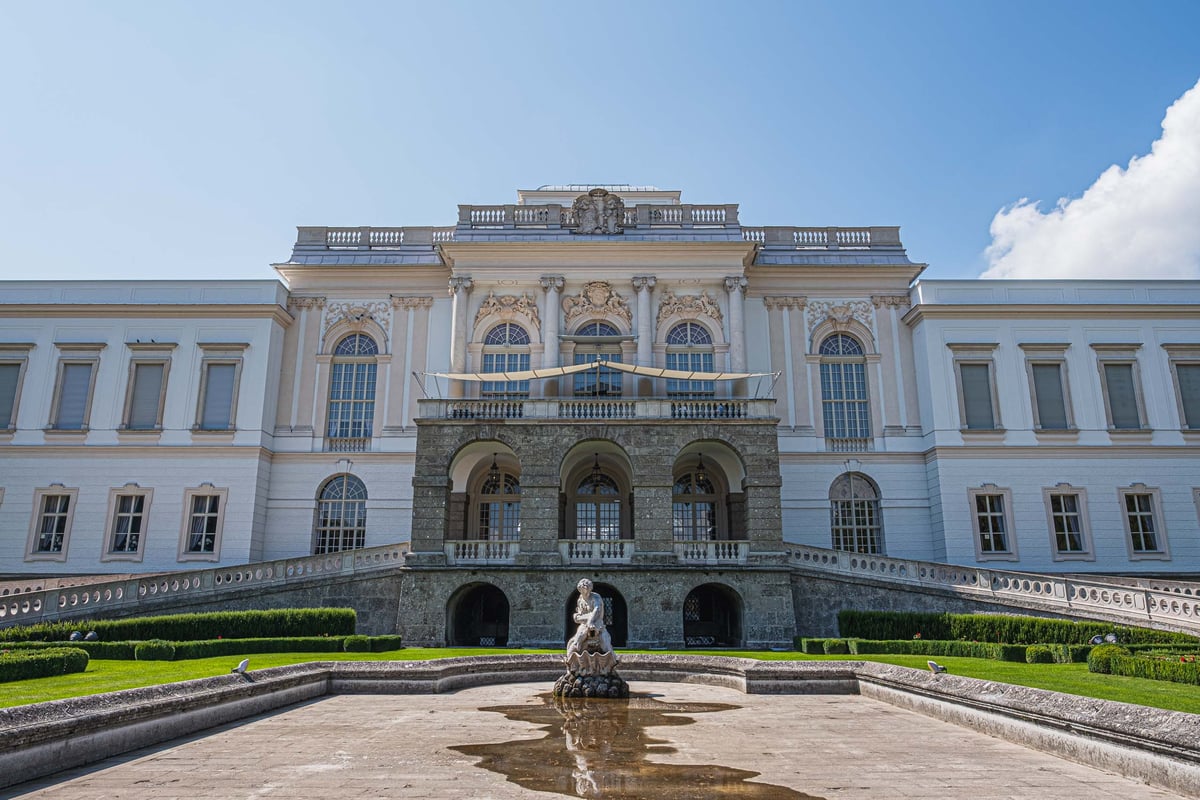
Schloss Klessheim
Baroque palace designed by Johann Bernhard Fischer von Erlach for Johann Ernst von Thun. Served as summer residence, hosted Emperor Franz Joseph I and Adolf Hitler. Today houses Casino Salzburg and hosts events. The formal gardens are fine late baroque landscape design.
Schober
The Schober is a 1,328-meter summit east of Mondsee in the Salzkammergut, offering one of the best combined panoramas of Mondsee and Attersee from a single high point. The two lakes are separated by a ridge, and the Schober summit sits high enough above that ridge to show both basins simultaneously.
Seehotel Cortisen am See
A four-star hotel on the Wolfgangsee at St. Gilgen. Direct lake access. Views to the Schafberg and St. Wolfgang. Serene Salzkammergut base within 30 minutes of Salzburg.
No places match those filters
Try removing a filter or searching for a broader term.
Follow a route
Curated routes through Flachgau
Ordered walks with a stop-by-stop plan. Each one passes through this destination.
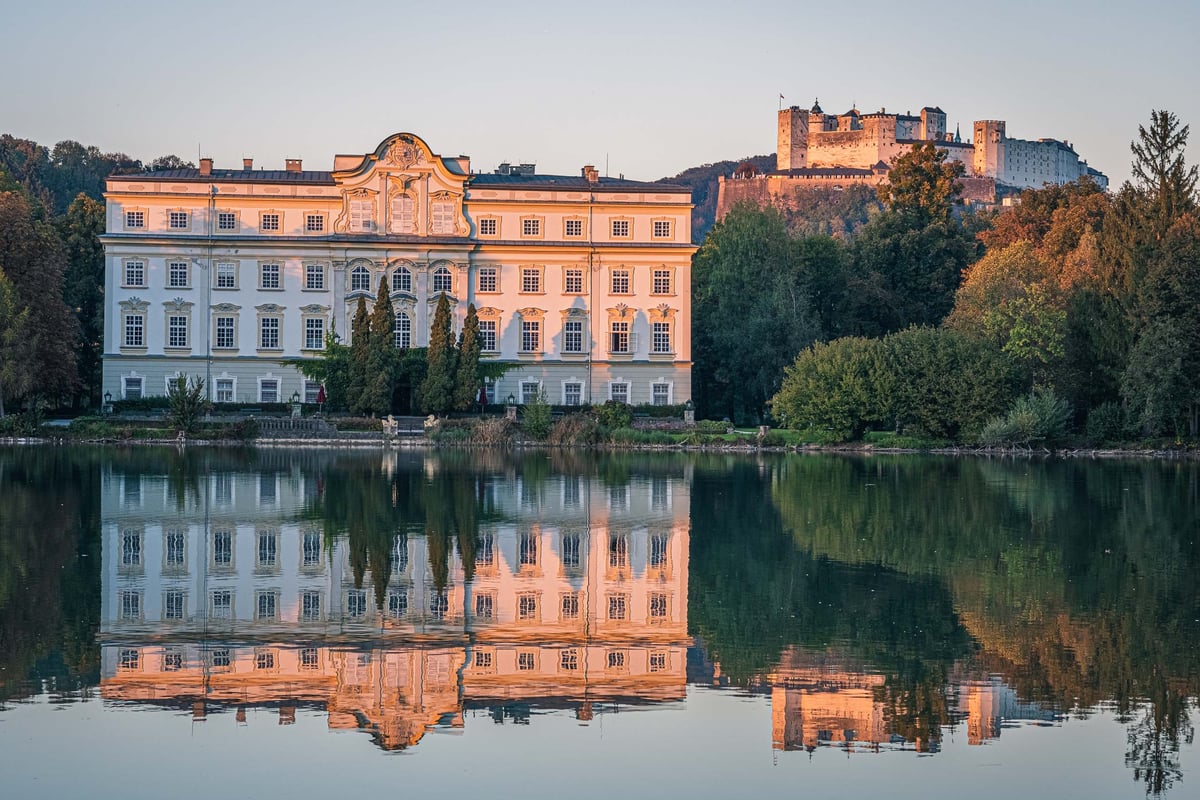
The Sound of Music by Bike or Bus
The two palaces that play the von Trapp house, the gazebo from Sixteen Going on Seventeen, and the mountain behind the opening scene, all south of the old town. Bus 25 connects the four. A bike is more fun, and the first three are part of my daily walk.