Snapshot
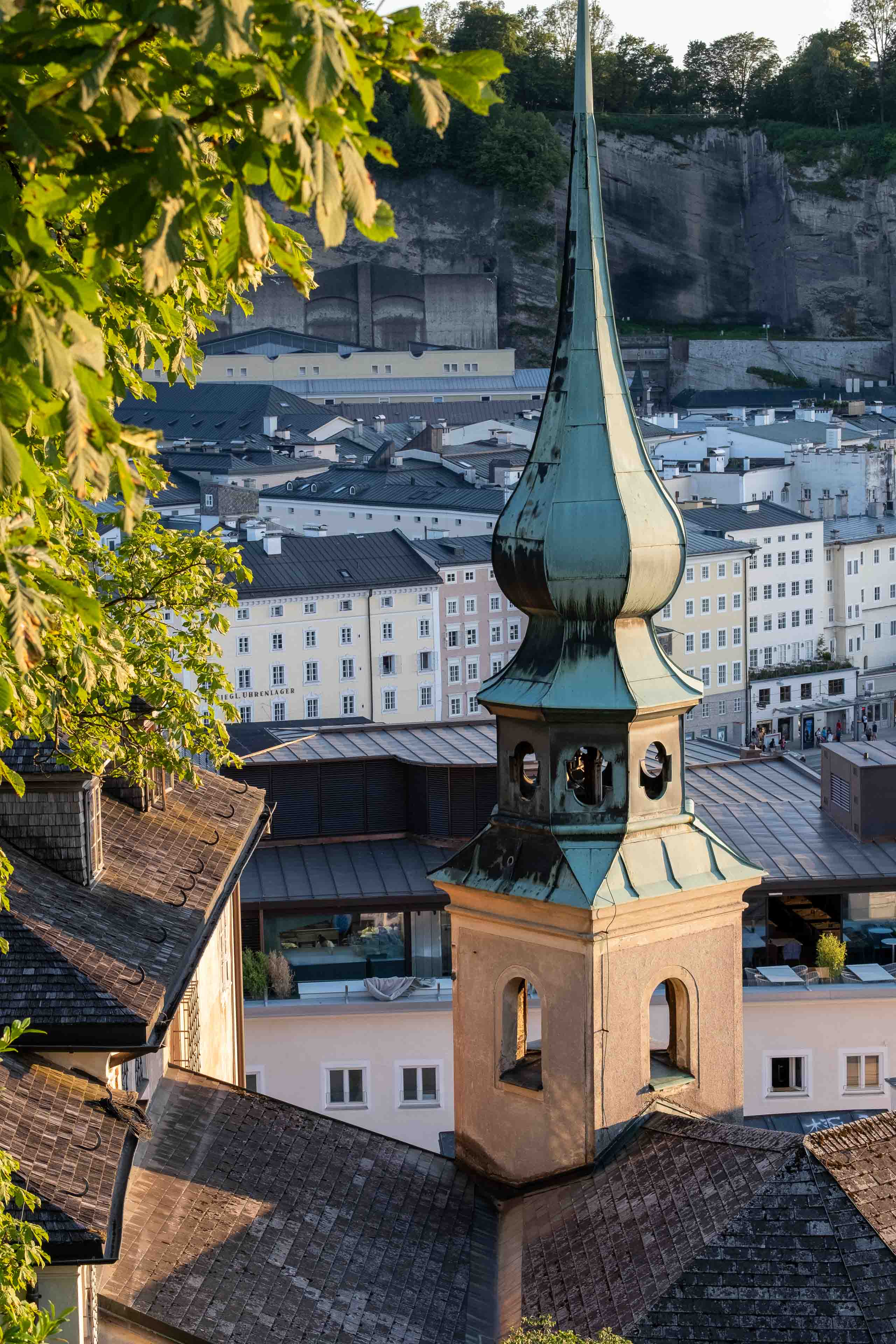
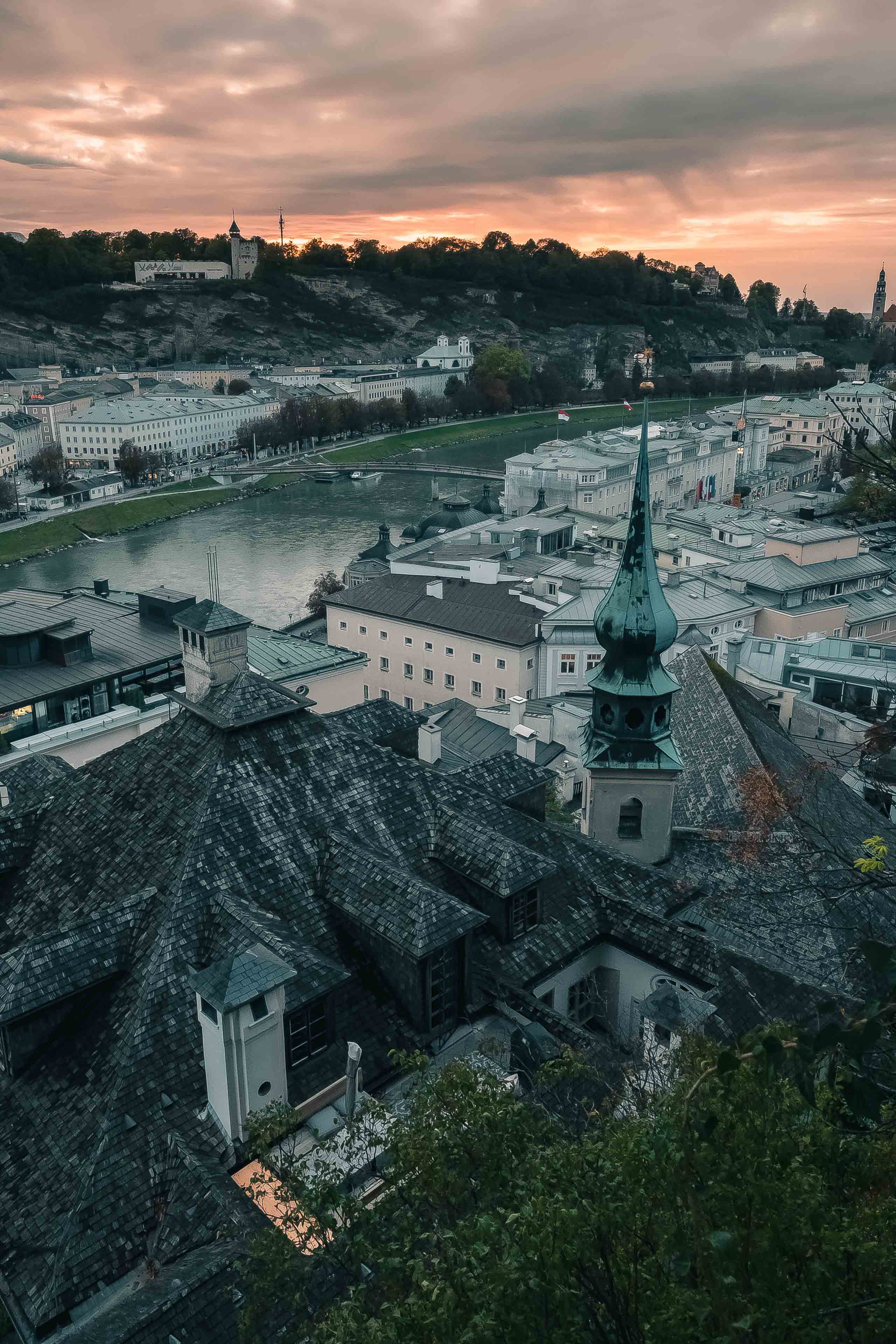
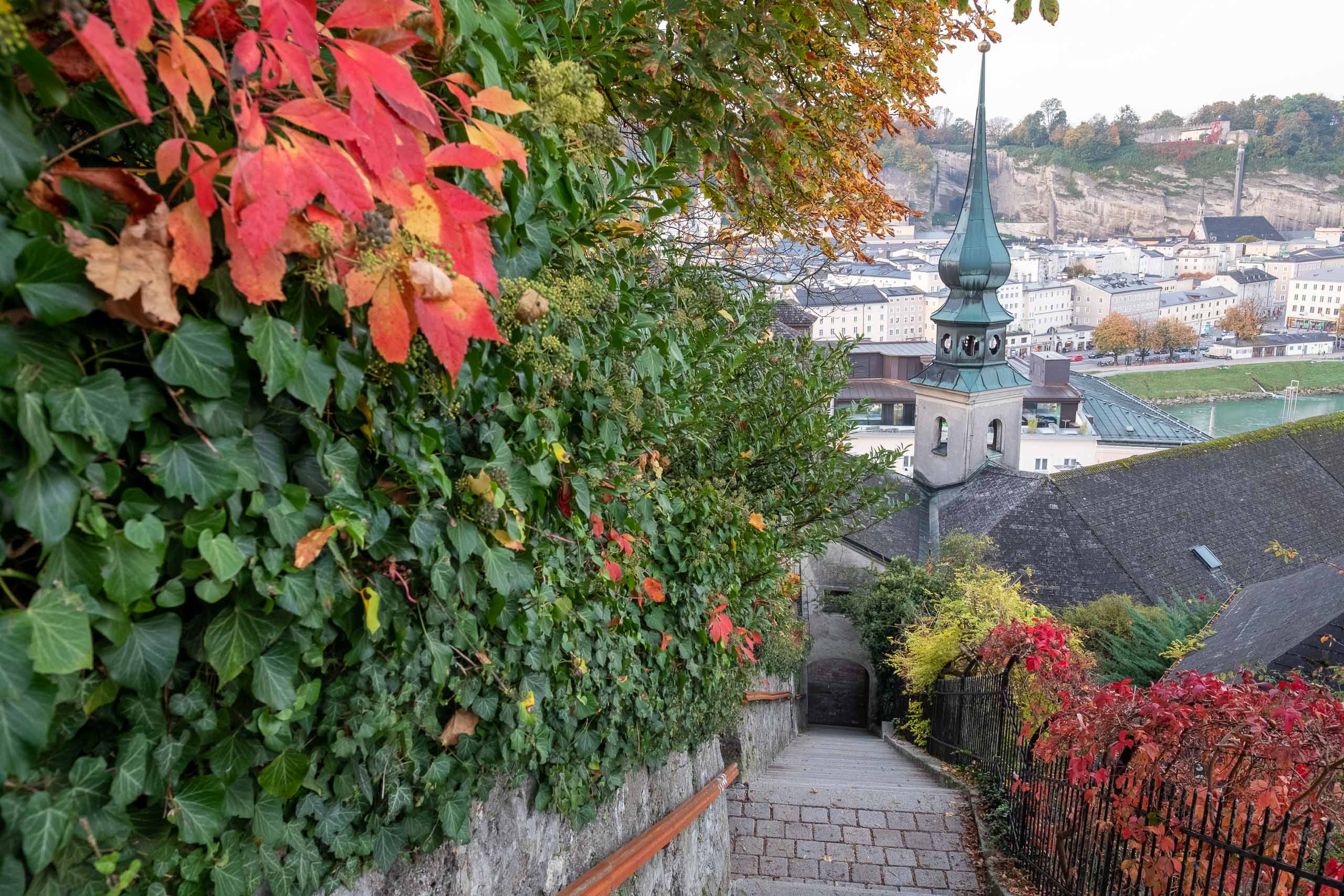
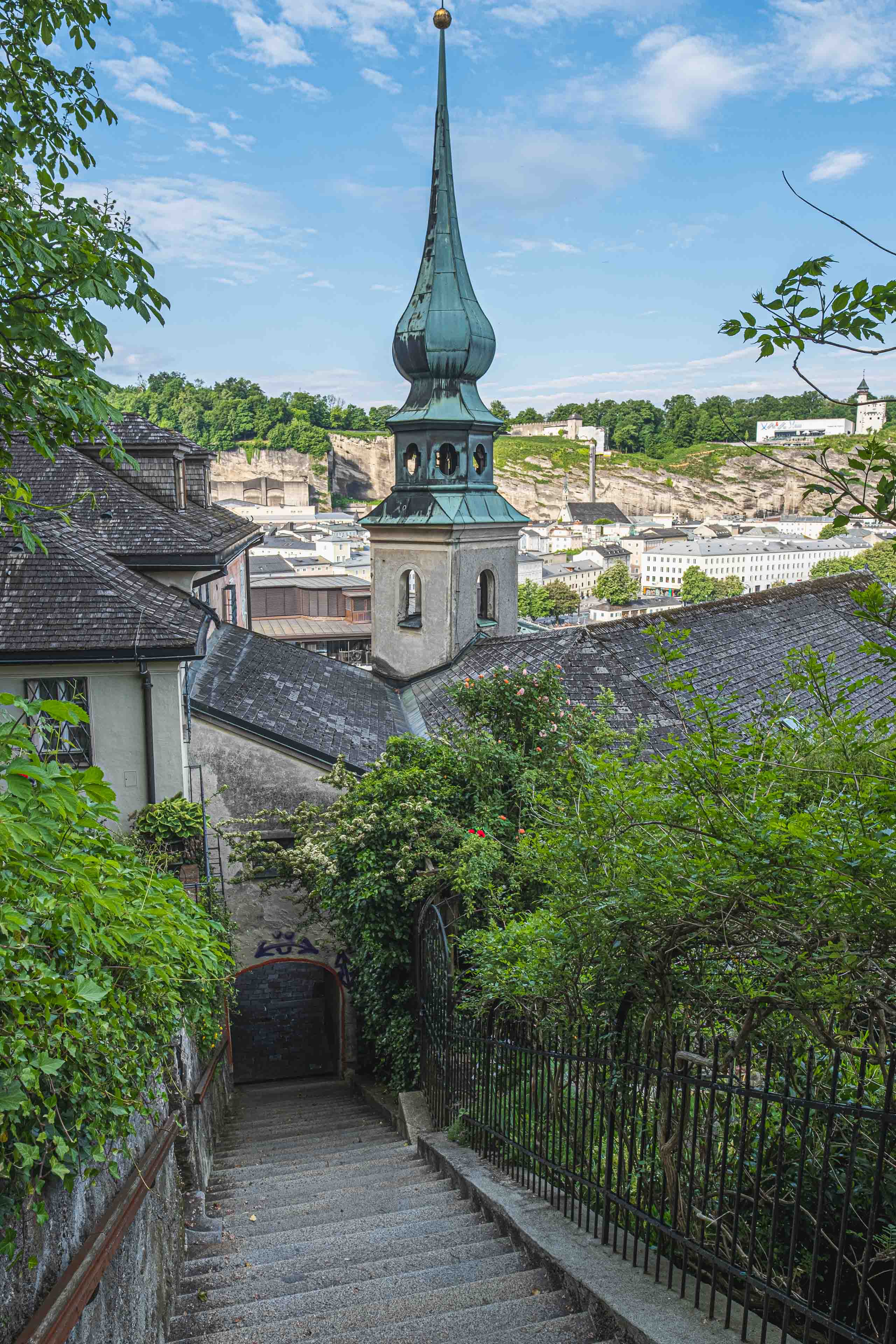
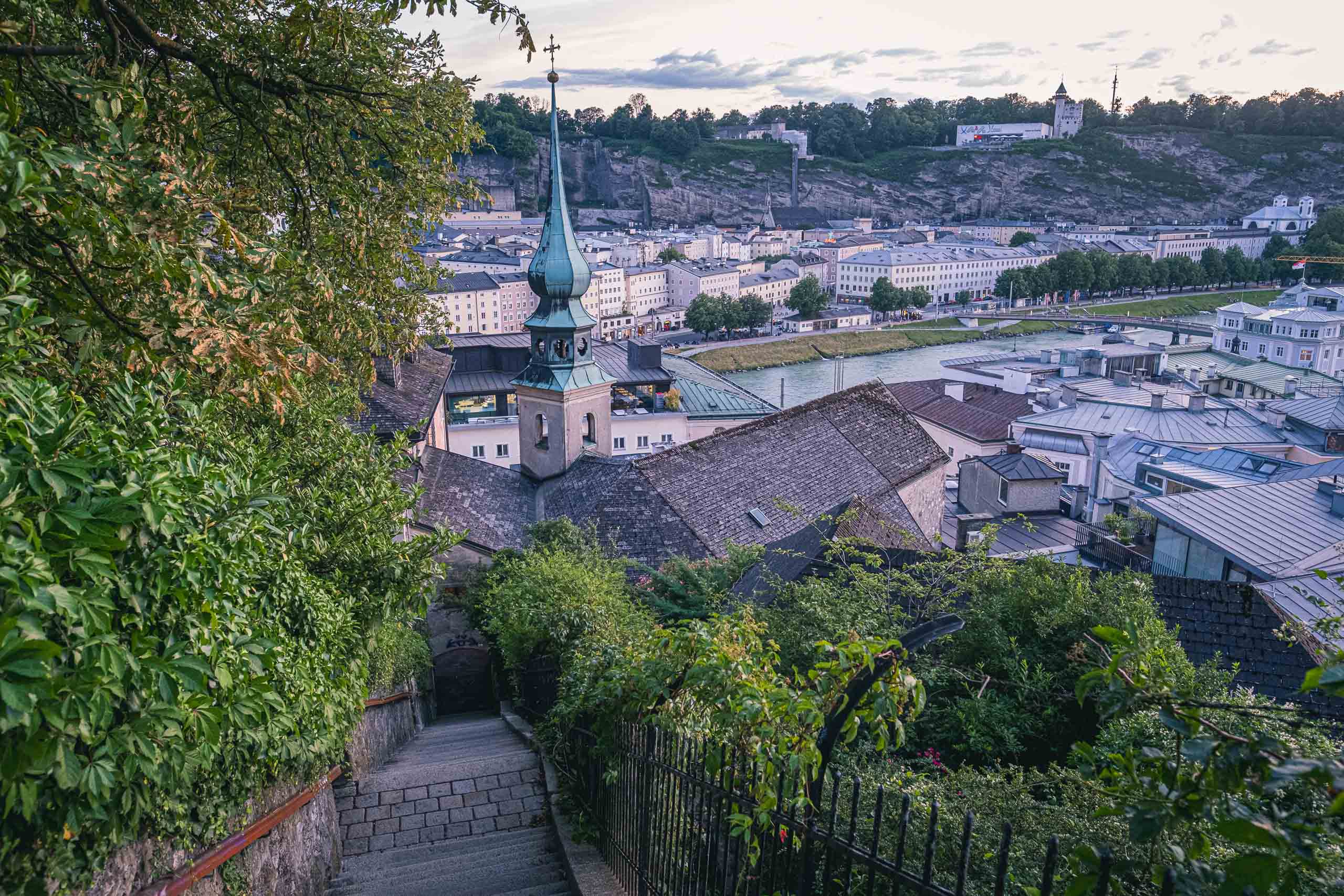
Halfway up the Kapuzinerberg stairway from Steingasse, this small chapel-church has stood in some form since at least 1319. Step inside and the modest exterior gives way to an 18th-century trompe-l’oeil ceiling that creates the illusion of a full Baroque dome in a nave twenty metres long.
The Story
The 1319 document in Salzburg’s city archives names a chapel dedicated to both St. John the Baptist and St. John the Evangelist on the Imberg. The dual dedication is unusual and suggests a locally significant early devotional site. The Romanesque core, with its thick walls and round-arched doorway, still stands beneath the later alterations.
Archbishop Max Gandolph von Kuenburg had the chapel renovated in 1681, adding his coat of arms above the entrance and a new high-altar painting of the Holy Family resting during the Flight to Egypt. His patronage here was part of a broader campaign of Baroque church renovation across Salzburg during his rule.
The more dramatic transformation came in the 1770s. In 1772, Andra Langwieder painted a trompe-l’oeil ceiling that creates the illusion of a proper vaulted dome where the real roof is a low wooden slab. The walls were treated with illusionistic marble columns and arches, and the 1774 marble altars by Johann Georg Hitzl were installed alongside side-altar paintings by Nikolaus Streicher. The effect turns what reads from outside as a modest wayside chapel into a small cinematic Baroque experience. According to local sources, no other church in Salzburg uses a comparable combined dome and wall trompe-l’oeil.
The chapel sits midway up the stairway, a natural breath-catch before the final climb to the Capuchin Monastery above.
Visiting
Halfway up the Kapuzinerberg stairway from Steingasse on the right bank. Free and open during the day. The climb takes roughly 5-10 minutes from Steingasse; the chapel is the natural resting point. Combine with the Capuchin Monastery Salzburg above and Steingasse itself below. Allow 5-10 minutes inside.